1 free read left. Create a free account for unlimited reading + AI research.
Create free account
Game Design for Competitive Gaming
Key insights
6 takeaways- 01Complex control schemes are unnecessary for competitive success, as demonstrated by TrackMania, where simple controls support massive skill gaps through nuanced movement and timing.
- 02Longevity in competitive titles, such as StarCraft Brood War, is achieved by avoiding artificial caps on player performance, allowing the competitive scene to evolve over decades.
- 03Successful competitive design prioritizes pillars like speed, strategy, knowledge, and movement, as evidenced by Quake’s removal of recoil to emphasize movement mastery.
- 04Design choices that remove the ability for individual players to become 'legends' or playmakers—such as those seen in Heroes of the Storm—undermine competitive value and long-term engagement.
- 05Competitive viability is driven by high skill ceilings that allow for individual mastery, rather than artificial complexity or financial incentives like large prize pools.
- 06Games should follow the 'easy to learn, hard to master' philosophy to ensure broad accessibility without sacrificing the depth necessary for a sustainable competitive ecosystem.
Ask AI about this video
Transcript
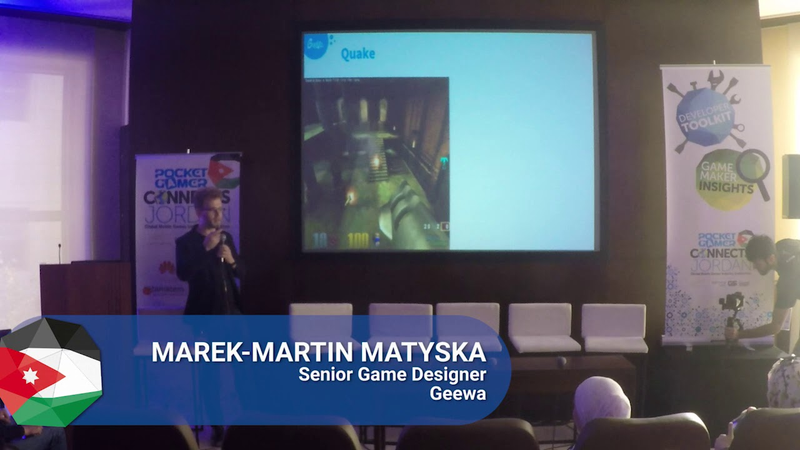
you welcome to my talk I think it will be quite bipolar big because of the previous thought done by my fellow colleague because I will talk about completely opposite thing I will totally about games that are about killing and beating other people and I think nothing's recognizes that more then when I first started as a game designer and I had my first interview I was asked what kind of games do you play and I said the ones in which I can humiliate the other player so that's quite far away from the previous talk I hope you will not murder me about that so let's go just through a short introduction my name is Mark Martin Matuschka I am from Prague I work at jiva currently as a head of game design we are a Prague based studio that makes PvP mobile games we are around 70 people
almost famous recent game is smashing for if you didn't play it play it it's a lot of fun and we have a big female audience so but before all of that started at the age of 6 I became competitive chess player around 2000 ello I found chess as a way of to promote my love of games however there was something else that happened when I was young and it was the golden age of computer games things like quake free Warcraft free Starcraft counter-strike were all coming out so sadly I've ended my chest career and switch it to play computer games all the time at the dota counter-strike Starcraft and I found something really important about competitive games for my life and not just for my life because I was a really fat kid and if you are a fat kid in
school you know it's not fun to grow up in physical education classes and always be big class and especially for us males it's important that we compete for proper psychological development and computer games were my escape where it didn't matter that I had hundred kilograms when I was 12 and I couldn't kick a ball in football because I could beat all my schoolmates encounters right how cool is that for the record no one thought that was cool back then so I spent most of the first when a life's failures of my life playing computer games I looked way differently however even though I did not seem healthy I was really happy back then because I had one and one only purpose in my life and to wake up open my computer pick a game that I lost and beat other players and I was really good at that and it made me fill with joy however
this last photo is really important because it's from Sweden and from Dreamhack in 2010 that was when I ended my career after not qualifying for the main even in Starcraft 2 and I realised I need to do something else with my life because playing games is no longer an option luckily I had a friend that had a video game studio and he hired me as a junior game designer but enough for me enough about the company I work for let's dive directly into competitive games when I speak competitive games these are the games that I think of for purpose I've put most of the old games I want to go a little bit into the history where we all began because in recent times people sometimes mistake competitive games for games that are played for money and just because developers are throwing a lot of money on certain game that doesn't make it competitive the core design principles make it competitive we've been competing in games for cans of beer we didn't need hundreds of thousands of dollars we had we did it for the fun and
for the sport and I think this is really important or we do not forget this because I always thought about video game compete competition as MMA and in recent years we kind of turn into wrestling well there is nothing wrong about watching wrestling it's all fake so what does it make to make a game competitive well one of the most important things is that it must have high skill ceiling what does it mean the game can be really simple but the players have to be able to get really good at least one of the things it can be just jumping over the bridge if the if the jump over the bridge is really hard and you have to do it hundred times per second well that's it usually you can define it by speed strategy or knowledge if you think about card games even it doesn't have to be even video game it can be something like poker you have a lot of knowledge you have a lot of strategy but there is no speed in card games however if you think something
like quake or counter-strike there is speed strategy and knowledge there can even be teamwork surprisingly there and even nowadays there are more games that are popular as team-based games rather than one with one game although when we started back in 2000 there were no team games played it was everything was just about one versus one but hopefully this is something to style and timing this is something that's not really present that much anymore but if we look back especially for racing games they were all about timing and precision I would like to talk about some of the games that are really deep in my heart this is TrackMania nations it's literally one of the simpliest controllable games you control it with just five buttons it's been played by tens of millions of players and it's really simple and really fun you just drive your racing car across a lot of obstacles and have fun however the skill
gap in this game is absolutely insane one of my great friends was the double master of Europe in this game and basically this is how the game looks if you play it for 20,000 hours trust me this is not how it would look if I would play it and although I found this really impressive I could still watch this even though I never played that much of the game and this is something I wanna for all of you to think of when you would want to design a hard competitive game it's not about complexity the game can be controlled super easily but by doing a lot of different twists literally you can take it competitive so let's go into detail super simple controls anyone can play if I would plug this game here on top anyone in the audience could play it within three minutes and have fun however to master it to the level of the of the jib that I showed you it would take you years to master this game you need excellent timing precision as I
said it's five buttons this is not about clicking the keyboard as quickly as possible it's clicking the right buttons at the right time or using joystick which is much easier for director however this game which was played for tens of thousand euros for multiple years had one big problem the players were simply too good they played the game 10 hours a day one single map and they learned every single turn every single detail so one thing that the developer did they made constant map changes and basically they added a different parameter that was not part of the initial game design adaptation before each event they release the map just a week prior to the event and the players had to adapt and learn quickly or play 18 hours a day and drink a lot of Red Bull it's not it's not random that Red Bull was the biggest sponsor of TrackMania Nations another game that I spent more time than I would like to a StarCraft brood war this is a
game that made all eSport possible this was a game that was so big in 2000 that gaming in Europe is still not as big as it was bad back in Korea in 20 years ago and although it is a really hardcore game it looks quite peaceful unless you look at it from the eyes of Korean pro gamer then you kind of think that someone is not doing something illegal on that screen and to understand that we have to think about what realtime strategy strategies require just by the definition of that name they are real-time and they require strategy they require micromanagement that is how well you control your troops they require micromanagement that means how well you can assess your economy and do everything at once knowledge about what you are doing what why are you doing it and what your opponent is doing but ultimately the ultimate factor that allowed this game to succeed and it's still being played even after dude
Cades in Korea for a lot of money is speed the developer didn't put any cap on how quickly the players can play which on one hand for people like me that are big fans of this game I'm literally watching this game on the competive scene for over 20 years it's as people are looking forward for Super Bowl I'm looking forward for the next match of StarCraft it means that people are still getting better after 20 years the game had to balance patches in the last 12 years how amazing is that if any of you is a developer of PvP games you will understand that having to balance patches in 12 years is something that's your dream and your producers dream however all that speed comes at a cost because majority of the Korean pro gamers actually have to retire and go into retirement because they up their arm they literally cannot play the game anymore because of enormous pain and they cannot even work just think about it you play the game for 10 years make a lot of money and then you retire because you cannot do anything else
tell me about sacrifices so gay was raised almost two decades ago 1999 start a brood war its expansion was 2001 it's still being played which is okay there are a lot of games that are still being played what is amazing that the players are still getting better why because they are getting faster because we have new training methods and because there is more money there is more dedication to sacrifice your life and this is another a factor that the developer didn't actually that much think about it I think when they were creating the game because the normal player plays this game its measured in actions per minute around two hundred hundred twenty actions per minute that's a good competitive gamer in a casual environment the Korean players played at four times that speed around 400 to 500 actions per minute if you multiply ten years ten hours a day it's like a hundred million clicks that those players do in their career imagine doing hundred million clicks in one game now
the four thousand five hundred levels of candy crush doesn't seem seem to do that much of a death another game that I think is very interesting when we go to a games that are about shooting and killing people and promoting toxicity I think quake is right there I think quake part of the way because this game is literally about flying on the map and killing other players and it's a lot of fun please if you didn't play it right quake 3 arena but it occasionally did something else usually FPS games that we know now whether it's overwatch counter-strike Papaji that we've mentioned in the previous they use something that's called recoil that means when you shoot your gun your bullet spread around the screen and that creates some form of randomness and also a skill for the player to work around it you can learn how to shoot with certain gowns the developers of quake said now that's not something we're gonna do and they remove this part of aiming completely whatever gun you have you will always shoot to the middle of the screen and you think so well the game is
so much simpler if I don't have to think about that like why would they do it well they wanted to revolutionize the genre so they focus on something else on how do you move around the map and again this is how obviously a casual player plays the game definitely doesn't fly around shooting his rocket launcher and this is something very interesting because you think you can think about FPS game that's a defined genrih you should run around and shoot people into head and then you realize you can just change one thing you can make the aiming simpler but you can make the movement that has unlimited amount of skill involved in it and especially for anyone that wants come up with a new game this is the form of idea making that you need to insist in yourself because nobody wants to play another counter-strike you need to come up with something else maybe skip the running with the knife for running with a pan or wait for tonight did it so quick no recoil recoil
is the speed of the bullet you always shoot to the middle of the screen well I mean it's it was really daunting at the time and I think if anyone would pitch it to the investors or to the producers board they would be like nah FPS game is out tricker no way this game also not being played for money anymore it's still being played a lot and it parted the way for all FPS games till this day is about mastering the movement the map this brought a new unique perspective for the players something to learn how you move it's not just about how you shoot it actually there are a lot of pickup of objects on the map and how the game is played on the highest level it's about picking the Finks and remembering when they respawn so for the best players it turns actually into strategy game because you need to think about all the other things so for us as an amateur we think about it as someone running on the map and stupidly shooting other people to the head which is basically what happens but it's also about remembering all the other stuff and I think this is and again really
interesting pick up on why these games were successful because they brought something new and didn't just copy everybody else but they still kept one thing at core that it's really hard to master those things and they allow people to get really good some of the things that we can pick up and this is a team that's linked to all the games that I'm talking about this allows players to get insanely good at the game and this would be really important at the next slide where I will speak about game that tried to break all of these things and let's check how did it go for them this is heroes of the storm which was developed by Blizzard it was supposed to disrupt the toxic MOBA market of League of Legends and dota the games based on illicit Alec Alec mystic behavior and they decided hey Nemo bizarre being played by millions of players but it's too toxic normal people cannot play them for fun let's casual eyes the competitive aspect of MOBAs that's a great idea right well the result was
that nobody could get insanely good it was basically socialism in competitive gaming and when everybody is really good it means nobody is good it doesn't matter there are no legions and this creative icon where players could not really become the stars of their team the playmakers the super bowl place it doesn't matter how we call them because competitive games needs need to allow players to become legends people then follow these legends and then if you do not allow this such as heroes of the storm didn't it results in disconnection from the game because a we play games or at least the type of players that played these games they play it to be the best one similar as Ash Ketchum and Pokemon he wanted to be the best pokemon trainer we want to be the best Starcraft player and if everybody can be the best there is no value and I don't know if you know it but the heroes of the storm is actually discontinued it's no longer being developed because suddenly everybody realized there is no reason to
play it if you cannot get really good and it kind of shows us that the competition is really necessary for such games to survive there is nothing wrong at making games for casual audience nothing wrong and making mobile games I make mobile games for my job but if you decide to make games like this you cannot do it how fast you had to commit and make it about people that can get really good we go to a brief summary people will compete just about anything if you give them the chance this can mean they can compete in tetris there is word masters of tetris every year I watch that that's a lot of fun and it's also not about money good example why it's not about money there is another developer hi-rez that developed a MOBA game called smite that MOBA game was not doing really well they were really struggling what to do next with the game and they decided let's make tournament for 1 million dollars that will make everybody play our game well it did but after the tournament was over everybody left that game because it was not about competing in the game it
was about getting paid for that non million bucks design your game in a way that players can master at least one game mechanic as I said it can be jumping over bridge it can be shooting movement around the map it can be basically anything remember the games do not need to be complex they just need to be hard and it needs to be fun to learn that skill and games if high skill cap is what made us comparable to realize sport in the first place this is a really important part of the site for me because when I was young and I was playing these games and I really thought of something about myself was really proud gamer everybody around us was laughing it's like that's not a real sport hahaha well now we are now we are being discussed if we will go to the Olympics or not nobody is laughing now but please and this is really I will exercise it once more let us not became the wrestling of computer games let's stay being the MMA and please
let's all keep making games that allow players to be legions because that's what brought me here and I hope that's what bill brought a whole new generation of designers because we need more games like quake and less games like fortnight thank you I should I should declare my bias my first-ever games event was I think a Quaker delica where we had Thresh the guy who beat John Carmack at quake and one is Ferrari playing against the UK champion he won 53 - - - it was the most amazing act of sport I've ever seen on a computer yes I mean like I used to live for this moment and also now I have a job and catch two feet which is a really important part of my life it's still something amazing like there is a tournament if you know dota you know every year the International is being played for 25 millions of dollars
and I have a brother that played most of my life with me and every year we get together and for a week we just binge watching dota like people watch Super Bowl and you can drink what it while you watch computer games only thing about the that prize money is equivalent to the NBA yes that's astounding and when we were sitting in the Ministry of Sound watching this quake match in 1998 and we had no idea that you know more than 20 years later would be sitting there where you having you know billion dollar industry in eSports we have time for a very very quick question if anyone has one one here very quickly gonna microphone they go thank you for the talk as a competitive or excess competitive player and as a game designer currently the do you believe or the opinion that played in depth in game mechanics is essential for competitive gameplay or
can you achieve computer gameplay other ways than depth everything you can obviously achieve it without extreme death I think it's something that the market is really waiting for for really accessible competitive game something that's easier to jump in and really hard to master it's this this quote we used while we design any mobile game we say easy to learn hard to master but it was not really never applied while we were building computer games or console games so I think there is definitely a room and I think there is definitely room for a new racing game on the market so and I think racing games are the ones that were it's the easiest because you're basically race the car it's usually a couple of buttons maybe one for neutral boosts and you can make a really simple game that is about insane amount of skill hill climb racing yes that's amazing game good examples were how you can achieve the highest skill gap without making game as complex a Starcraft and used to throw much cheap anything I think what's interesting that
here is a storm is I would argue that the issue was that they they complete confounded the casual izing of the game with the gameplay where as Hill Climb racing makes a simple competitive skill based game experience that is extremely accessible and I think that's the difference in terms of if you're going to make your game available to a wider audience you need to make it accessible that is not the same as compromising competitors I think I think the biggest mistake was socialism in the skill and see I'm a socialist I think social is a great thing the issue is not socialism it's the issue is dumbing it down and assuming that you can dump down gameplay and it still be a good game oh let's agree to disagree exotic Oh No thank you very much thank you [Applause]
Summary
The core thesis of this analysis is that competitive game design succeeds by prioritizing high skill ceilings and mastery over artificial complexity or financial incentives. True competitive viability is rooted in mechanics that allow players to distinguish themselves through precision, strategy, and speed, rather than merely attracting players through large prize pools or casual-friendly design.
Key findings emphasize that competitive games do not require complex control schemes to be effective. Games like TrackMania demonstrate that simple, accessible controls can support an immense skill gap when paired with deep, nuanced mastery of movement and timing. Conversely, attempts to "casualize" competitive genres—such as the design approach seen in Heroes of the Storm—often fail because they remove the ability for individual players to become "legends" or playmakers. When a game design eliminates the possibility of superior performance, it loses its competitive value and long-term engagement.
The analysis highlights that successful competitive titles often rely on specific, high-skill pillars: speed, strategy, knowledge, and movement. Quake is cited as a prime example of innovation, where developers removed traditional mechanics like recoil to shift the focus toward movement mastery. Furthermore, the longevity of titles like StarCraft Brood War is attributed to the lack of artificial caps on player performance, allowing the competitive scene to evolve and improve for decades.
Ultimately, the industry is cautioned against "wrestling-style" artificiality, where developers attempt to manufacture competition through money rather than organic, skill-based gameplay. The most effective design philosophy remains "easy to learn, hard to master," which allows for broad accessibility without compromising the depth required for a sustainable, high-level competitive ecosystem.