Rare
Company
Documents about Rare
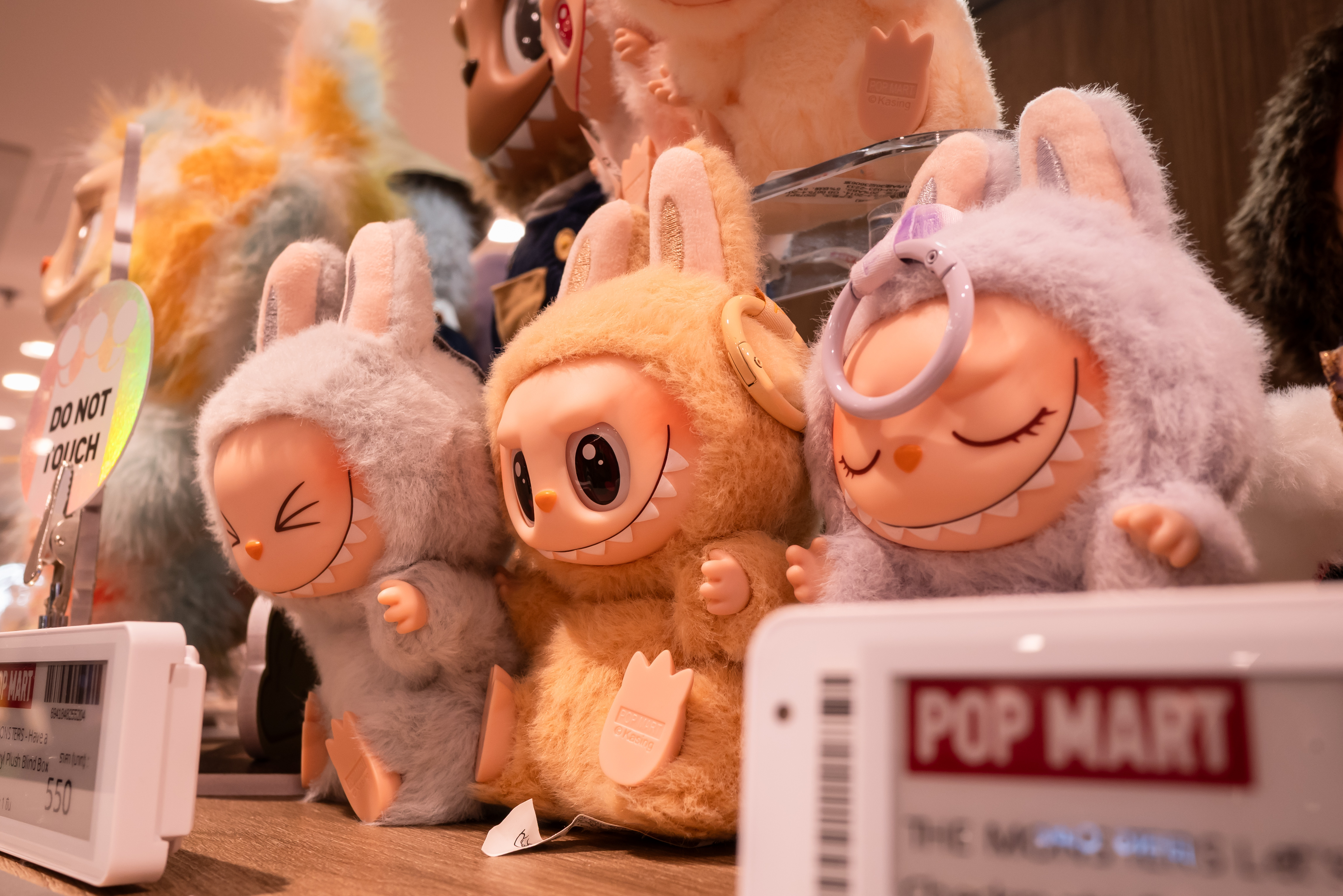
The Collectible Super-Cycle: Why Pop Mart, Pokémon, and One Piece are 2026’s Big Bets
The collectible market is experiencing a significant global resurgence in 2026, driven by a shift toward physical goods that serve as markers of identity, status, and emotional connection.
- The 'kidult' demographic now accounts for 25% of all toy sales, driving a global collectible market that has reached a near 50/50 gender split.
- Pop Mart’s strategy of rapid IP rotation has proven effective, with the Skullpanda line driving a 132% surge in sales volume in early 2026.
- One Piece trading cards have seen significant market appreciation, with early booster boxes yielding returns of approximately 500% compared to previous stabilization levels.

Meet the developer behind Bradley The Badger, The Game Awards’ most bonkers reveal
Day for Night, a game development studio founded by industry veterans Davide Soliani and Christian Cantamessa, recently debuted their upcoming title, Bradley the Badger, at The Game Awards.
- Day for Night, a studio founded by Mario + Rabbids and Red Dead Redemption veterans Davide Soliani and Christian Cantamessa, has debuted its first title, Bradley the Badger.
- The studio operates with a lean team of approximately 24 employees, prioritizing an agile, collaborative structure over the fragmented models typical of AAA development.
- The project has successfully secured funding from 1Up Ventures and Krafton, despite the current challenging global economic climate for game development investment.
The Man Behind the Monkey
The career of video game composer Grant Kirkhope serves as a case study on how minor, spontaneous creative decisions can yield significant, long-term industry influence.
- Grant Kirkhope’s incidental decision to voice Donkey Kong in the 1998 title Donkey Kong 64 resulted in his audio being utilized across more than a dozen subsequent Nintendo releases.
- The 'DK Rap,' originally composed as a minor track for Donkey Kong 64, achieved long-term cultural significance, eventually being featured in the 2023 Super Mario Bros. Movie.
- Intellectual property complexities following Microsoft’s acquisition of Rare left Nintendo with full control over Donkey Kong assets, leading to instances where original creators like Kirkhope were omitted from official credits in later media.
Week in Mobile Games E59 - A dark day for Xbox
Microsoft is currently navigating a period of profound instability characterized by massive workforce reductions affecting approximately 9,100 to 10,100 employees across key studios, including King, Rare, Turn 10, and Blizzard.
- Microsoft has initiated a significant restructuring of its gaming division, resulting in the closure of The Initiative, the cancellation of 'Ever Wild' and 'Warcraft Rumble', and substantial layoffs at studios including Rare, Raven Software, and Turn 10, which saw a 50% staff reduction.
- Microsoft's strategy to integrate Activision Blizzard IP into Game Pass has faced criticism for potentially devaluing premium franchises like Call of Duty without driving a commensurate surge in subscription growth.
- Microsoft's internal mobile gaming strategy remains fragmented, as the company struggles to translate its core console IP to mobile platforms, with King remaining focused on casual titles rather than midcore or high-end adaptations.

Going Dark
The July 2025 layoffs at Microsoft represent a significant escalation in the company’s restructuring of its gaming division.
- Microsoft has initiated its fourth wave of Xbox layoffs in 18 months, cutting 9,000 staff worldwide despite the company reporting $70.1 billion in revenue and $25.8 billion in profit for the last quarter.
- Major project cancellations include the reboot of Perfect Dark at The Initiative, the Rare-developed title Everwild, and a sci-fi looter-shooter codenamed Blackbird at Zenimax Online Studios.
- The layoffs have impacted a wide range of internal studios, including significant staff reductions at Turn 10 (Forza Motorsport), King (Candy Crush), and teams working on Call of Duty and Halo.
Games That Made Us
The recent induction of four titles into the World Video Game Hall of Fame—Williams Electronics’ Defender, Rare’s GoldenEye 007, id Software’s Quake, and Bandai’s Tamagotchi—highlights the industry’s ongoing effort to codify historical significance through metrics of icon status, longevity, geographical reach, and influence.
- Triple Dot has acquired AppLovin’s mobile gaming portfolio for $800 million, a deal encompassing 10 global studios and 2,500 employees across 23 cities.
- The acquisition is valued at a low multiple of 0.6 times revenue and 3.5 times EBITDA, reflecting a high-risk strategy for the buyer.
- AppLovin is divesting these assets to prioritize its high-growth advertising business, while Triple Dot faces the operational challenge of managing live-service games and in-app purchases without prior experience in those areas.
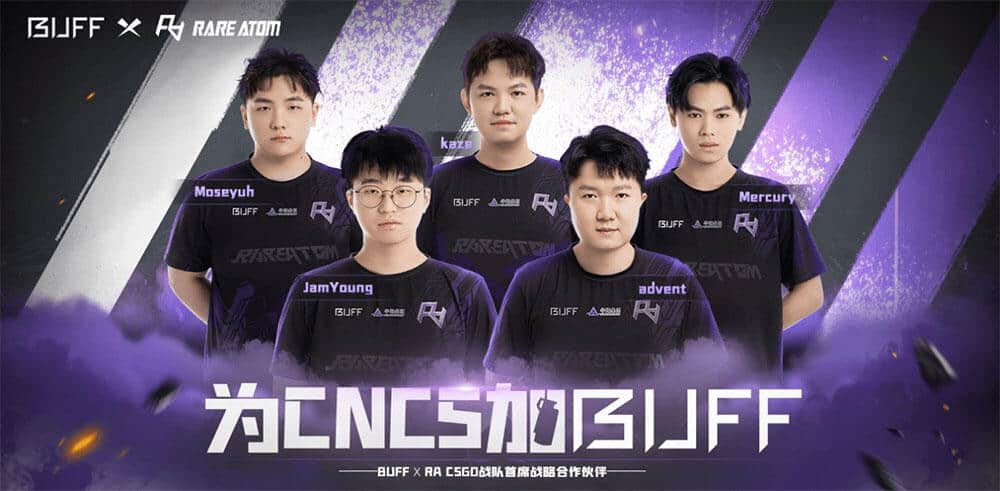
NetEase Buff Becomes Title Sponsor of Rare Atom’s CS:GO Squad
NetEase’s in-game items exchange platform, Buff, has secured a title sponsorship deal with the Chinese esports organization Rare Atom for its Counter-Strike: Global Offensive (CS:GO) squad.
- NetEase’s in-game item exchange platform, Buff, has become the title sponsor for the Chinese esports organization Rare Atom’s CS:GO squad.
- The team has officially rebranded to 'Rare Atom Buff' as a result of the sponsorship agreement.
- Financial terms of the partnership between NetEase Buff and Rare Atom were not disclosed.
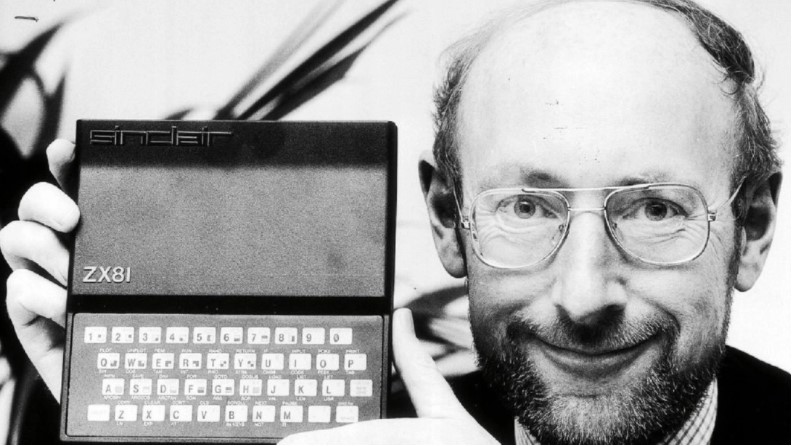
Sir Clive Sinclair: The Trailblazer Who Invented the British Video Game Industry
The primary purpose of this analysis is to examine the foundational role of Sir Clive Sinclair and the ZX Spectrum in the development of the British video game industry.
- Sir Clive Sinclair’s ZX Spectrum, launched in 1982, is credited with founding the British video game industry by fostering a massive ecosystem of bedroom coders and entrepreneurial game companies.
- Despite Sinclair’s original intent for the ZX Spectrum to be used for programming and office applications, the 16k and 48k models sold over 5 million units globally primarily due to consumer demand for gaming.
- The rise of microcomputers like the ZX Spectrum, Commodore 64, and BBC Acorn in the early 1980s directly cannibalized the market for traditional video game arcades and the Atari 2600.
Embracer Group Acquires Rare Earth Games
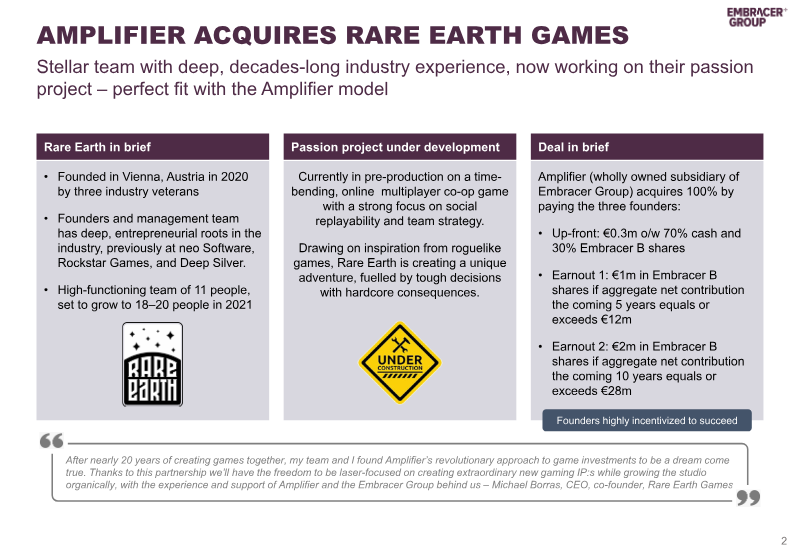
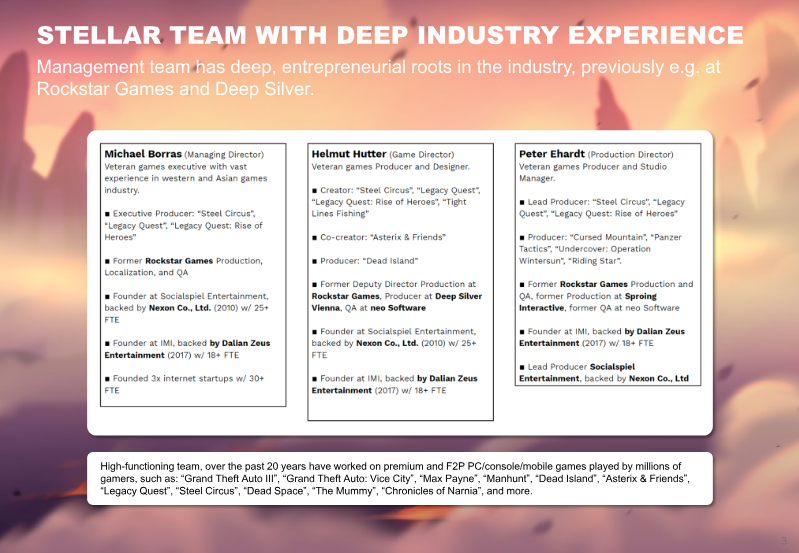
Embracer Group, through its subsidiary Amplifier, has finalized the acquisition of Vienna-based developer Rare Earth Games.
- Embracer Group, through its subsidiary Amplifier, has acquired Vienna-based developer Rare Earth Games to bolster its creative portfolio.
- The deal includes an initial payment of €0.3 million in cash and Embracer B shares, with an additional €3 million in performance-based earnouts tied to net contribution milestones over five and ten years.
- Rare Earth Games is currently developing an online multiplayer co-op game that incorporates roguelike elements and team-based strategy.
Nexon Sale: A Rare Opportunity to Buy a Business That Has Several Fat Years Ahead of It
The potential sale of South Korean publisher Nexon represents a pivotal moment in the gaming industry, characterized by a shift toward consolidation and the entry of non-endemic players like telecom firms.
- Nexon’s flagship title, Dungeon Fighter Online, serves as the primary valuation driver by generating approximately $150 million in monthly revenue from the Chinese market.
- The potential sale of Nexon has triggered a bidding war among major global entities, including Tencent, Electronic Arts, and Comcast.
- Nexon’s acquisition is viewed as a strategic entry point for non-endemic firms like Comcast to secure high-performing intellectual property and establish a foothold in the Asian gaming market.
Microsoft Form 10-K: FY2003
Microsoft’s fiscal year 2003 performance reflects a strategic pivot toward organizational restructuring and long-term technological investment amidst a complex landscape of legal and competitive pressures.
- As of August 15, 2003, Microsoft held a market capitalization of approximately $235.4 billion with 10.8 billion shares of common stock outstanding.
- Client operating profit for fiscal 2003 grew 11% year-over-year, driven by a corresponding 11% increase in revenue despite a 5% decline in reported OEM unit shipments.
- Microsoft transitioned its OEM licensing model in fiscal 2003 to bill based on the acquisition of Certificates of Authenticity (COAs) rather than actual PC shipments to end customers.
Microsoft Form 10-Q: Q3 FY2003
Microsoft demonstrated robust financial health during the third quarter of fiscal year 2003, reporting quarterly revenue of $7.84 billion and a consolidated nine-month revenue total of $24.12 billion.