Digital Games
Company
Documents about Digital Games
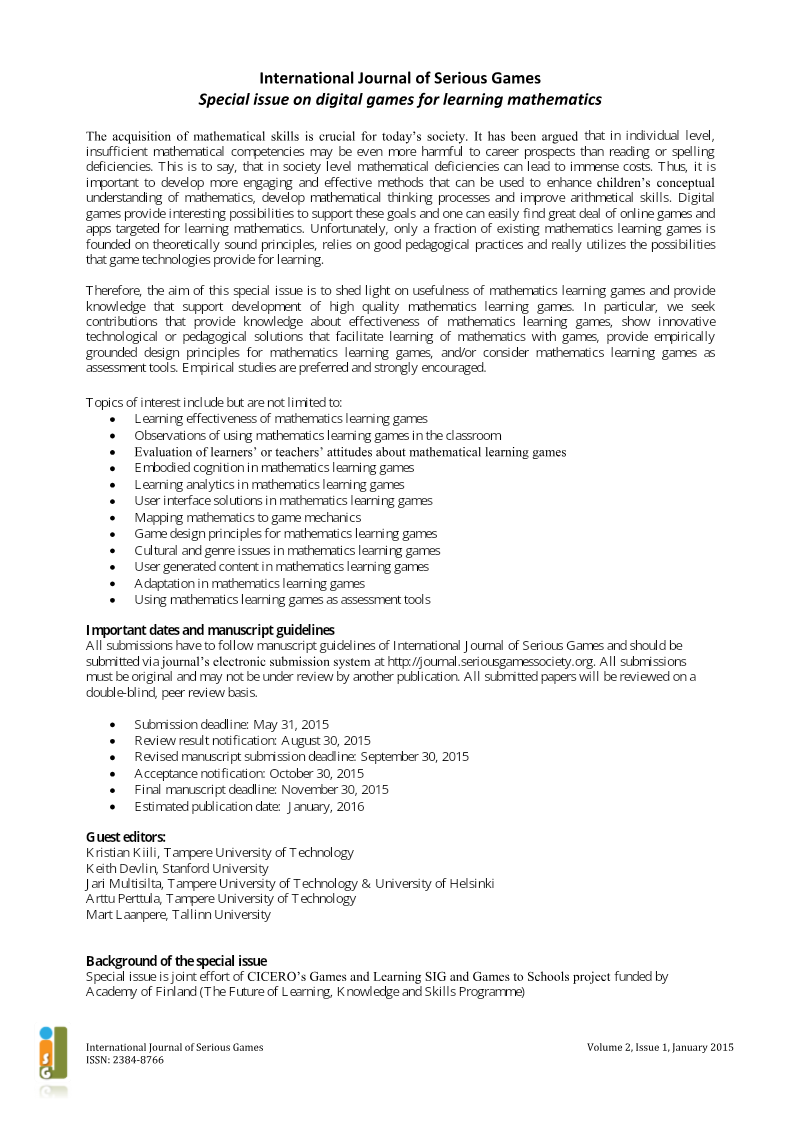
Special Issue on Digital Games for Learning Mathematics
Mathematical proficiency serves as a critical foundation for individual career success and broader societal economic stability.
- A significant gap exists between the volume of available mathematics software and the application of theoretically sound, pedagogically effective design principles.
- The initiative aims to establish a rigorous, empirical evidence base for mathematics learning games to move beyond superficial engagement.
- Key research areas include the integration of learning analytics, mapping mathematical concepts to core game mechanics, embodied cognition, and adaptive difficulty.
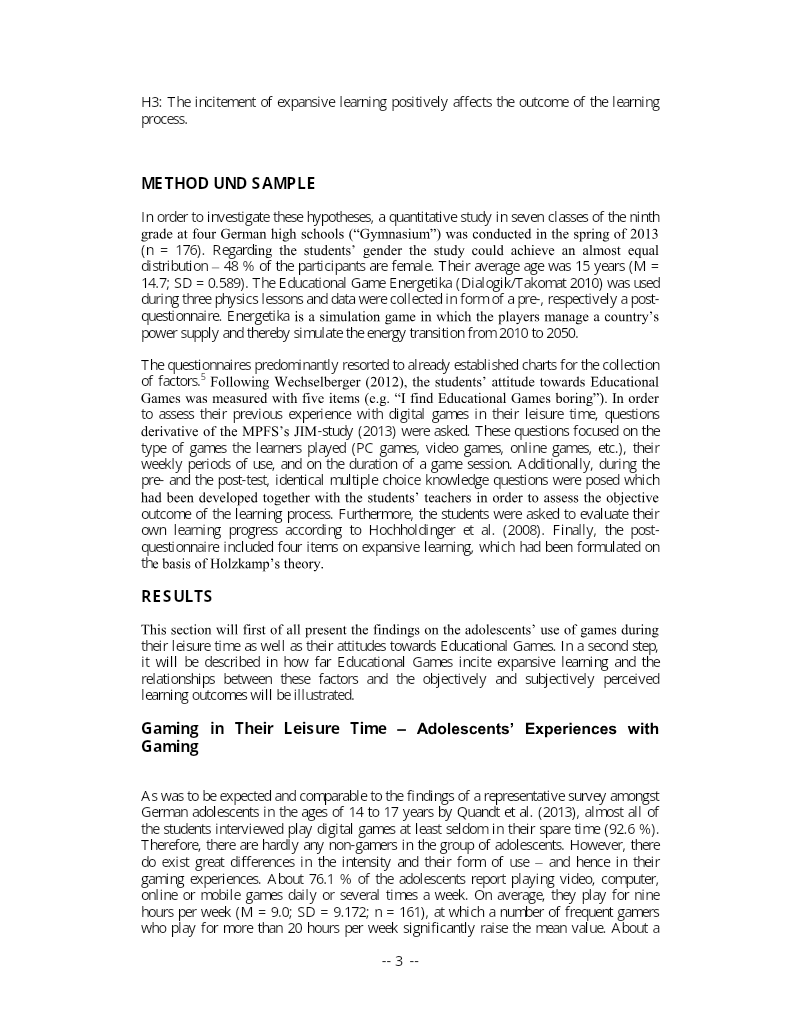
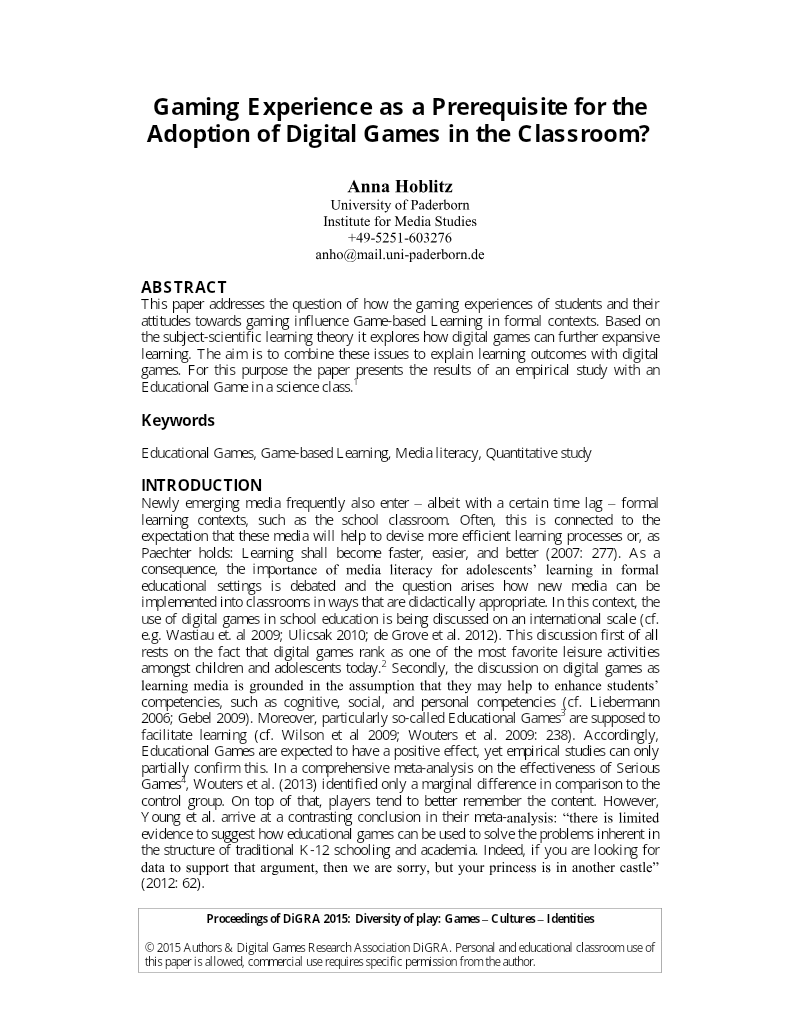
Gaming Experience as a Prerequisite for the Adoption of Digital Games in the Classroom?
This paper by Anna Hoblitz of the University of Paderborn's Institute for Media Studies examines how students' gaming experience and attitudes toward Educational Games affect learning in formal classroom settings.
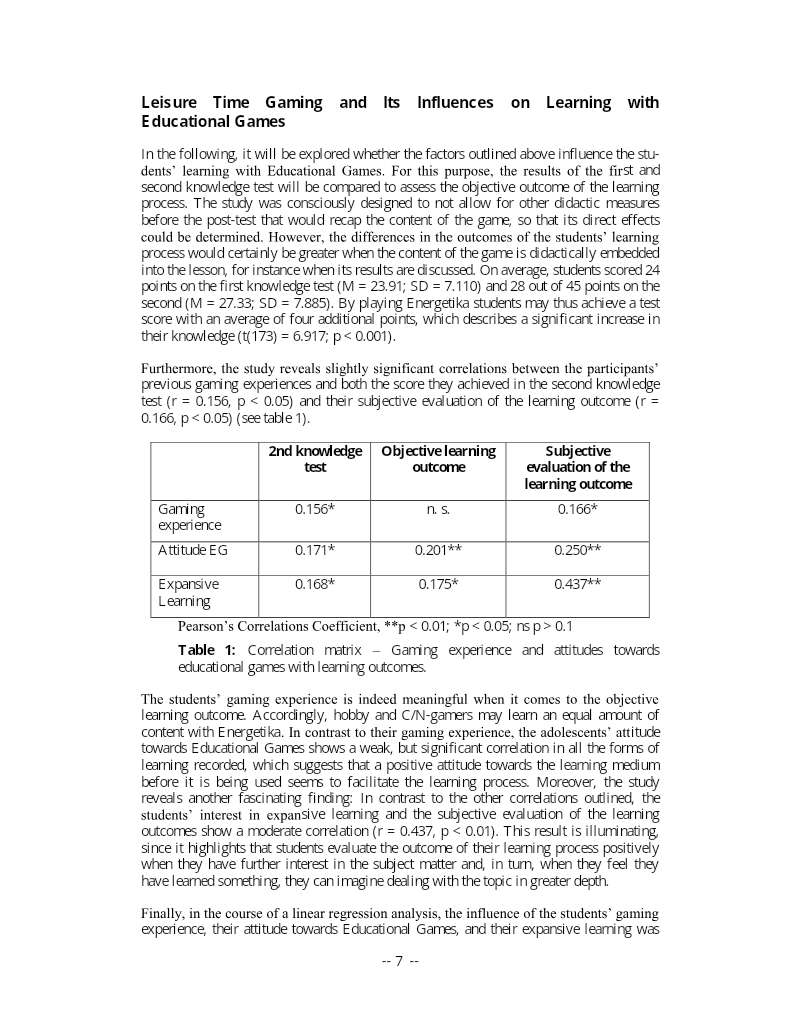
- Gaming experience and attitude toward Educational Games did not significantly influence students' objective learning outcomes in the study. Attitude did show a significant effect in the regression on objective outcomes.
- Students' average knowledge test score rose from 23.91 to 27.33, a significant increase after playing Energetika.
- Expansive learning most strongly predicted the subjective evaluation of learning outcomes, with a standardized beta of 0.385.
Ethical Recognition of Marginalized Groups in Digital Games Culture
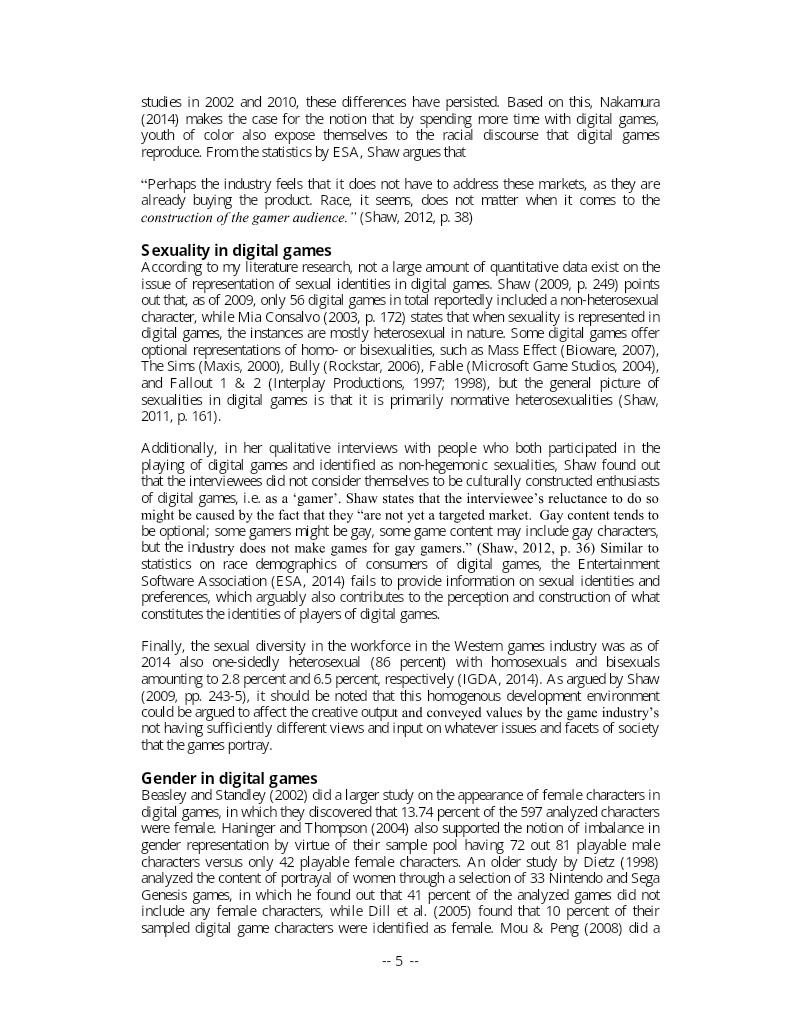
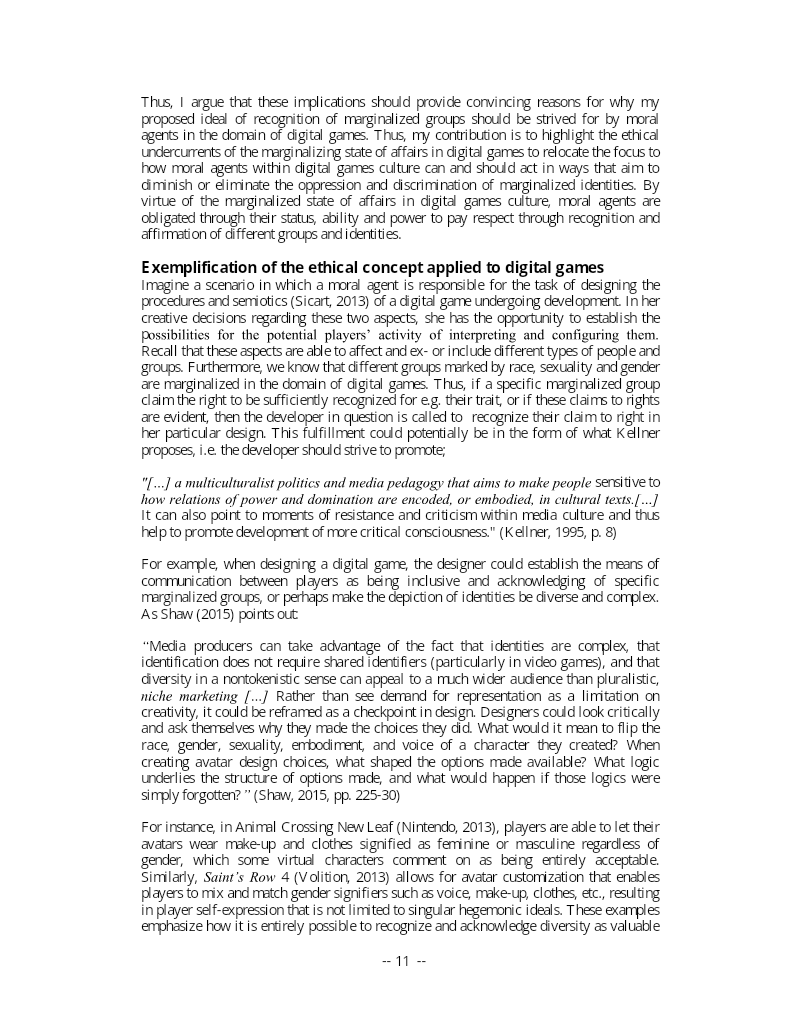
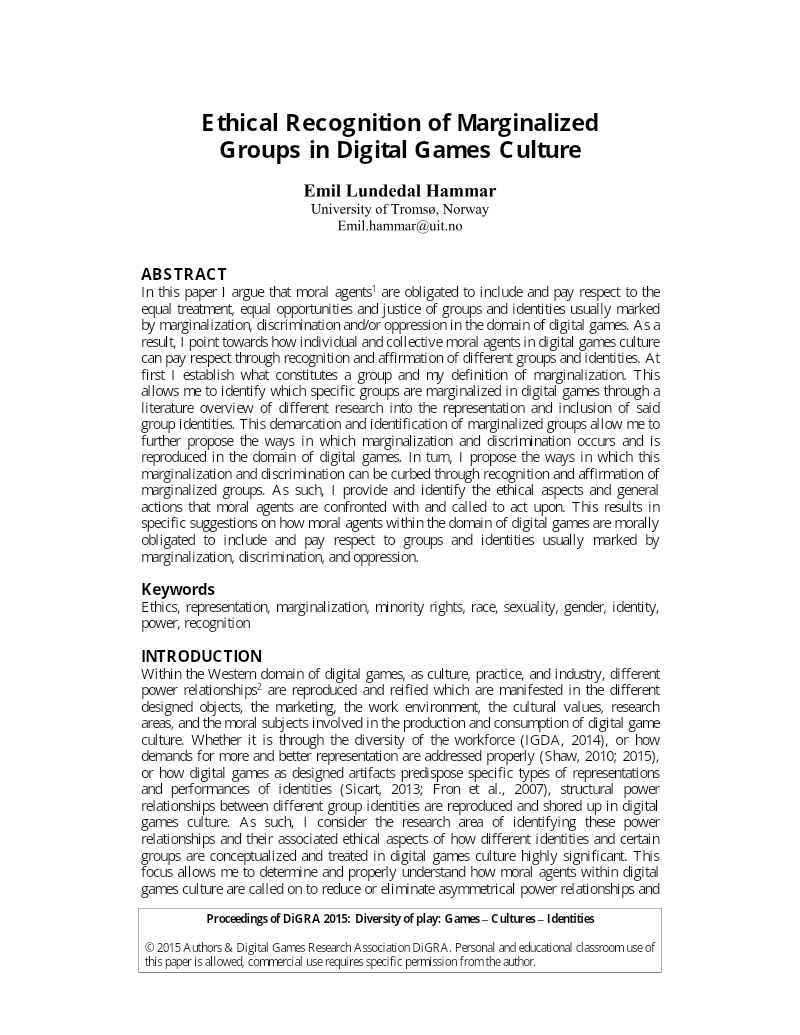
Emil Lundedal Hammar, of the University of Tromsø, Norway, presents a DiGRA 2015 paper arguing that moral agents are obligated to include and respect the equal treatment, opportunities and justice of groups marked by marginalization, discrimination or oppression in digital games.
- Citing Williams et al. (2009), the paper reports that female characters made up 14.77 percent of virtual characters in the 150 top-selling digital games across all platforms in the U.S.
- The paper reports that Dill et al. (2005) found 72 percent of their sample pool was White, and Mou & Peng (2008) found that 74 percent were White.
- The author reports that IGDA's 2014 survey found the Western games industry workforce was 86 percent heterosexual, with homosexuals at 2.8 percent and bisexuals at 6.5 percent.

A Practical Guide to Using Digital Games as an Experiment Stimulus
This paper, by Simo Järvelä, Inger Ekman, J. Matias Kivikangas and Niklas Ravaja of Aalto University, University of Tampere and University of Helsinki, is a practical guide to using digital games as an experiment stimulus.
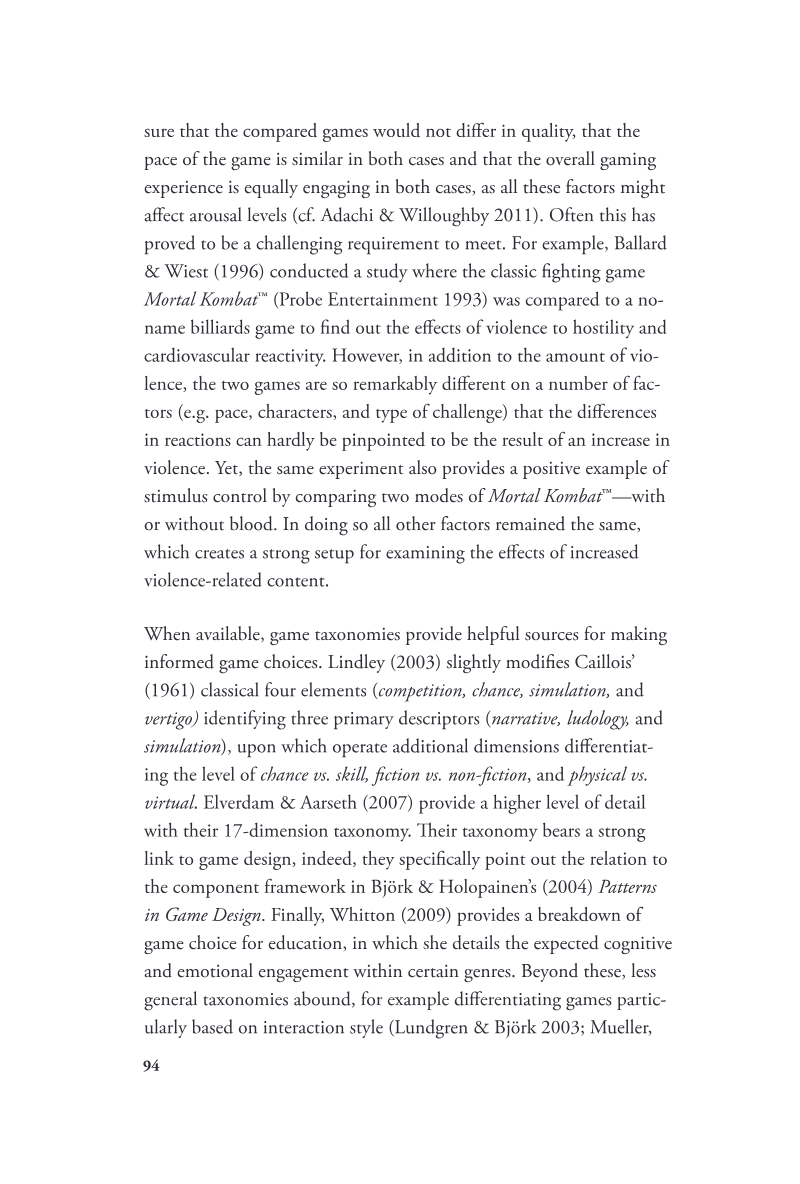
- The authors argue that the choice of game must make the stimulus sufficiently identical across participants in the aspects relevant to the dependent variable. Variation beyond that is treated as irrelevant to the experiment.
- The authors note that commercial games often lack logging, and that log files are highly useful for event-based analysis and for spotting manipulations not evident from video.
- According to the Electronic Software Association (2011), 72% of American households play digital games, and 29% of gamers are above 50 years old.
DeFragging Game Studies: Proceedings of DiGRA 2013
The "DeFragging Game Studies: Proceedings of DiGRA 2013" document serves as the welcome and introductory remarks for the sixth bi-annual Digital Games Research Association conference, held in Atlanta, GA, U.S., from August 26-29, 2013.
- The 2013 DiGRA conference (sixth biannual, Atlanta, August 26–29, 2013) framed game studies as an interdiscipline that must balance growth with coherence, using the theme "Defragging Game Studies" to argue for unity rather than splintering into separate disciplinary camps.
- Presentations were weighted heavily toward the humanities and the social and behavioral sciences, which outnumbered smaller tracks by a considerable margin, partly due to growing student interest and DiGRA's perceived academic standing.
- Some computer science scholars chose other venues such as CHI or SIGGRAPH instead of DiGRA, which the authors cite as a factor in the field's disciplinary makeup.
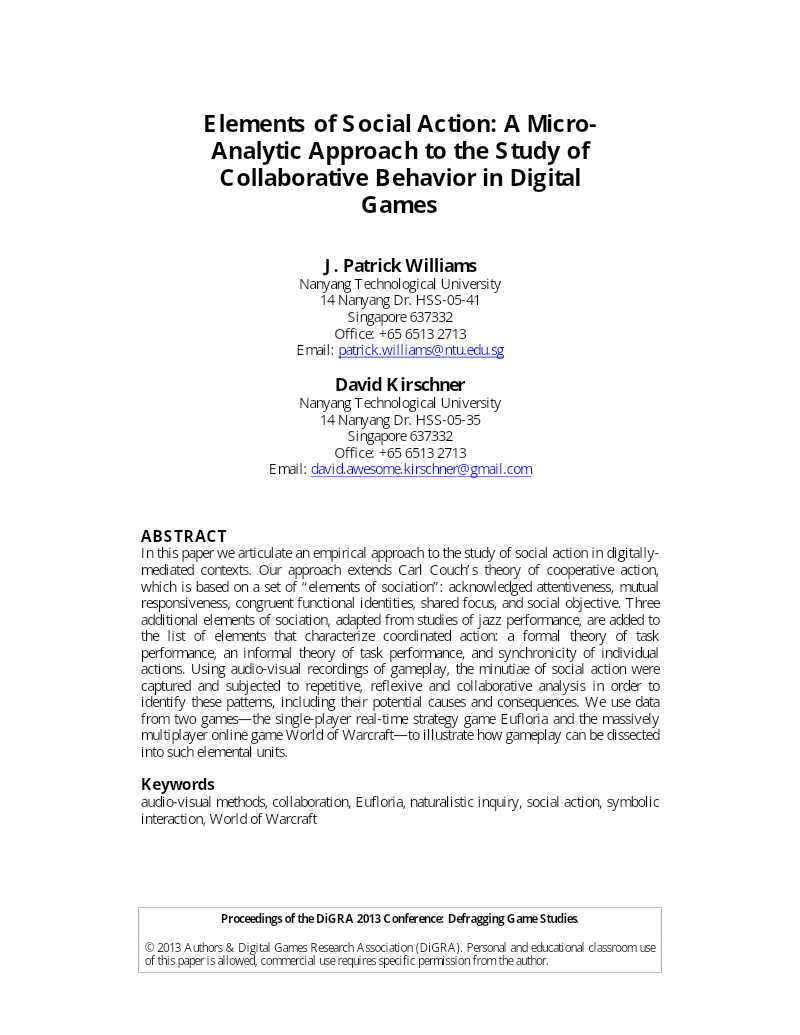
Elements of Social Action: A Micro-Analytic Approach to the Study of Collaborative Behavior in Digital Games
The paper by J. Patrick Williams and David Kirschner of Nanyang Technological University, presented at the DiGRA 2013 Conference, proposes an empirical approach to studying social action in digital games.
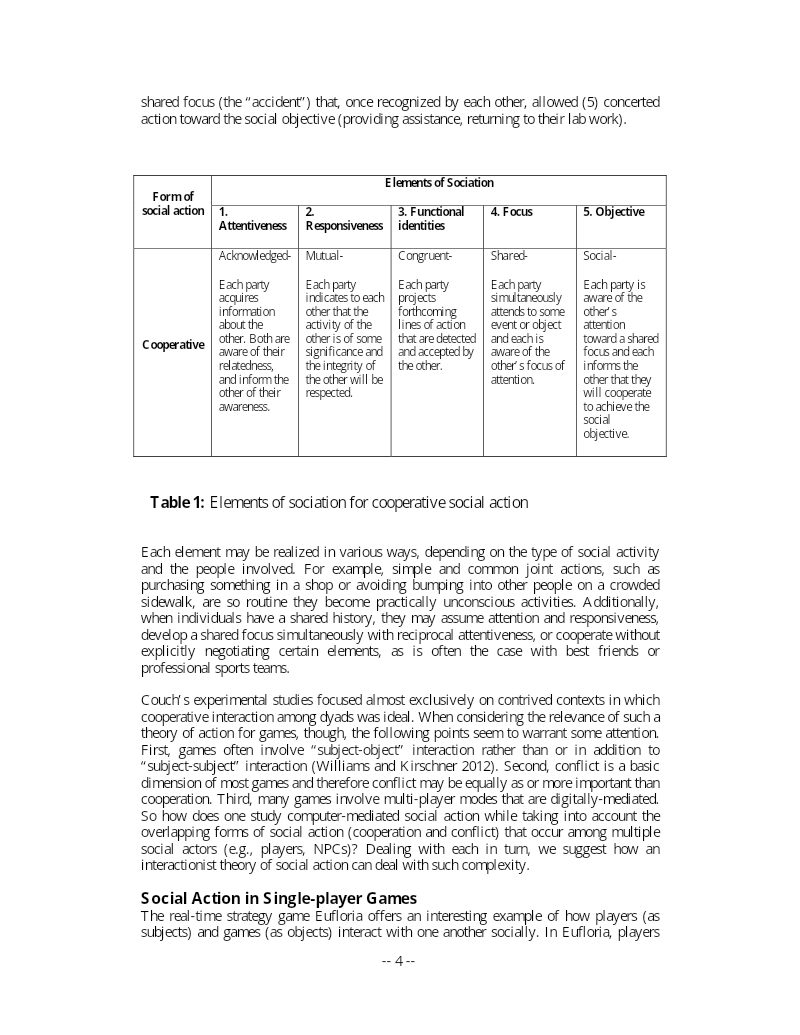
- The authors extend Couch's cooperation-based elements of sociation to conflict, arguing that conflict involves the same generic elements with different functions.
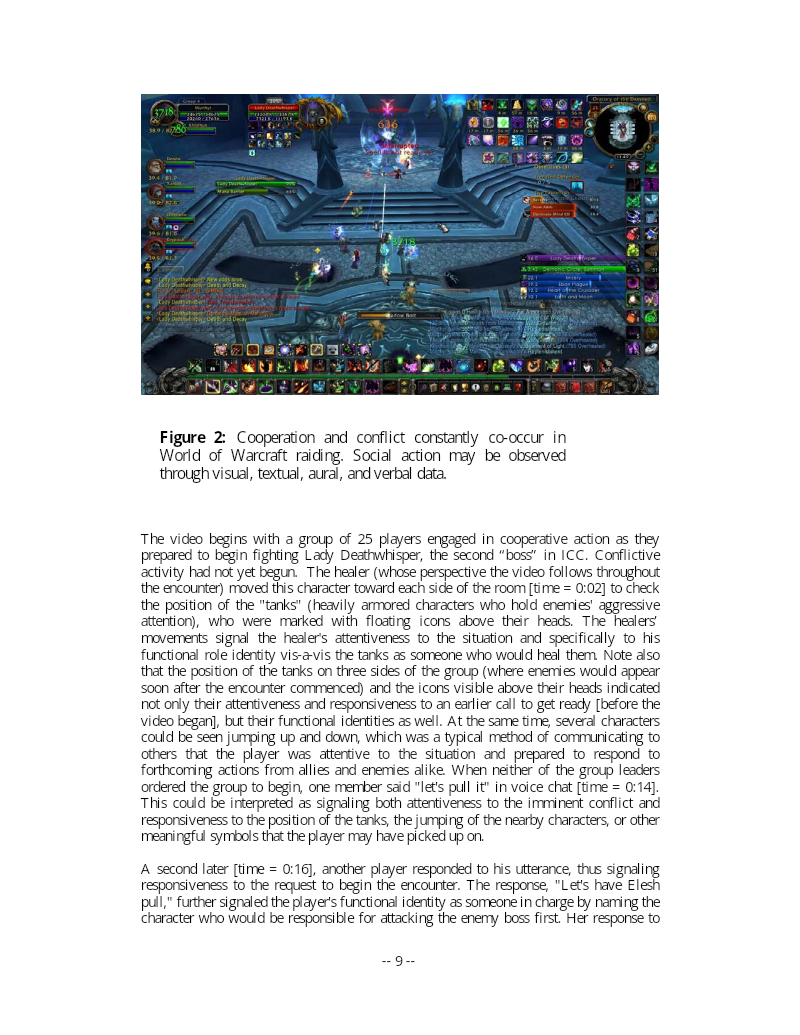
- In the World of Warcraft raid excerpt, the authors counted nearly three dozen ongoing individual lines of action at one moment, with 25 players battling eight enemy NPCs.
- The authors argue that elements of sociation are continuously negotiated processes rather than opening steps, so coordinated action is an ongoing, emergent process.


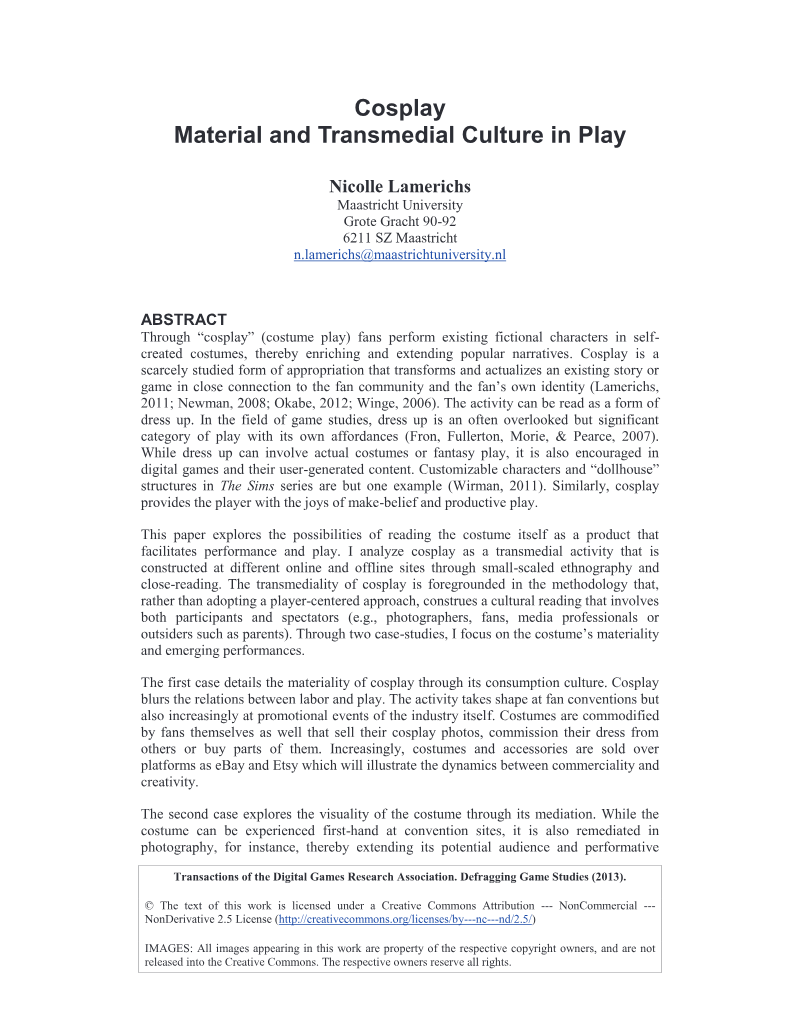
Cosplay: Material and Transmedial Culture in Play
Nicolle Lamerichs, of Maastricht University, examines cosplay (costume play) as a transmedial activity constructed at online and offline sites, published in the Transactions of the Digital Games Research Association in 2013.
- The eBay search for cosplay returned 120,430 items in the top category, "clothing, shoes and accessories", with "women's accessories" as its highest subcategory at 55,943 items.
- The author observes that eBay and Etsy differ in how they treat fan craftsmanship: eBay leans toward professionalism, while Etsy values craftsmanship more strongly.
- Pony ears and horns, sometimes with a wig included, make up 10% of the material found in the Etsy search.
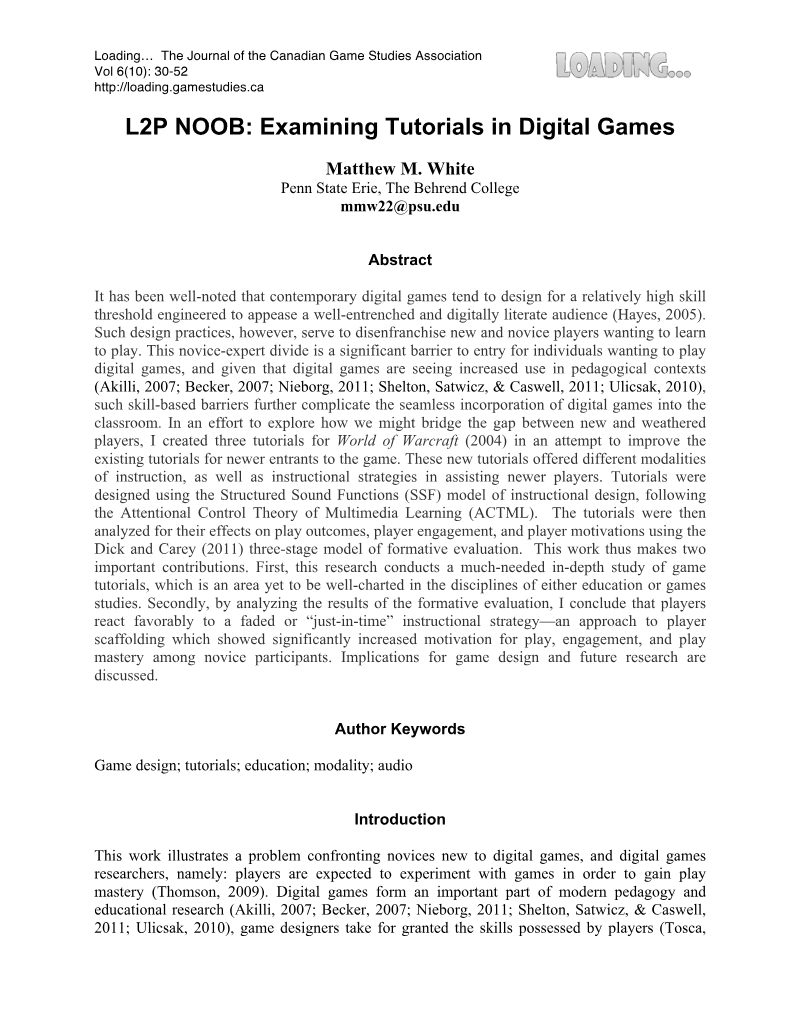
L2P Noob: Examining Tutorials in Digital Games
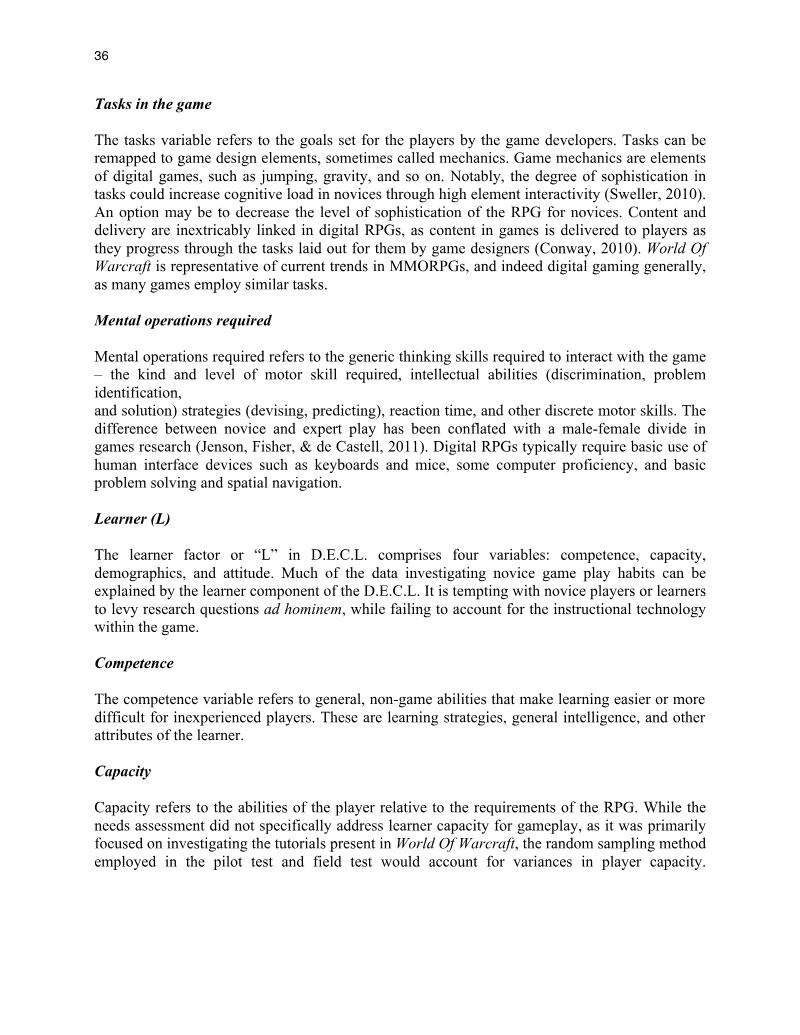
Matthew M. White's paper in The Journal of the Canadian Game Studies Association examines tutorials in digital games, focusing on the novice-expert divide and the design of three new tutorials for World of Warcraft (2004).
- Mean idles per session were lowest for the SSF-JIT group, and the WoW visual-modality groups incurred considerably more idles than their SSF counterparts. However, the independent samples t-tests were not statistically significant.
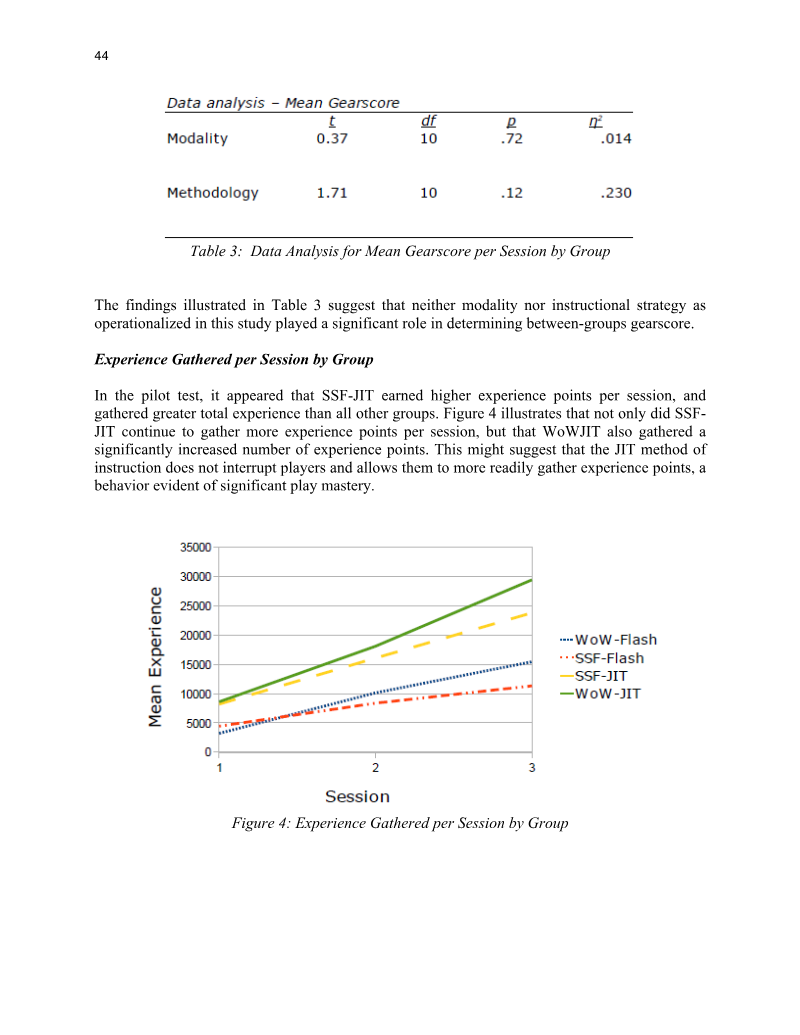
- The author found that instructional strategy, not modality, had a statistically significant relationship with experience gathered per session.
- Instructional strategy played a statistically significant role in player engagement, while modality did not.
Neither Playing nor Gaming: Pottering in Games
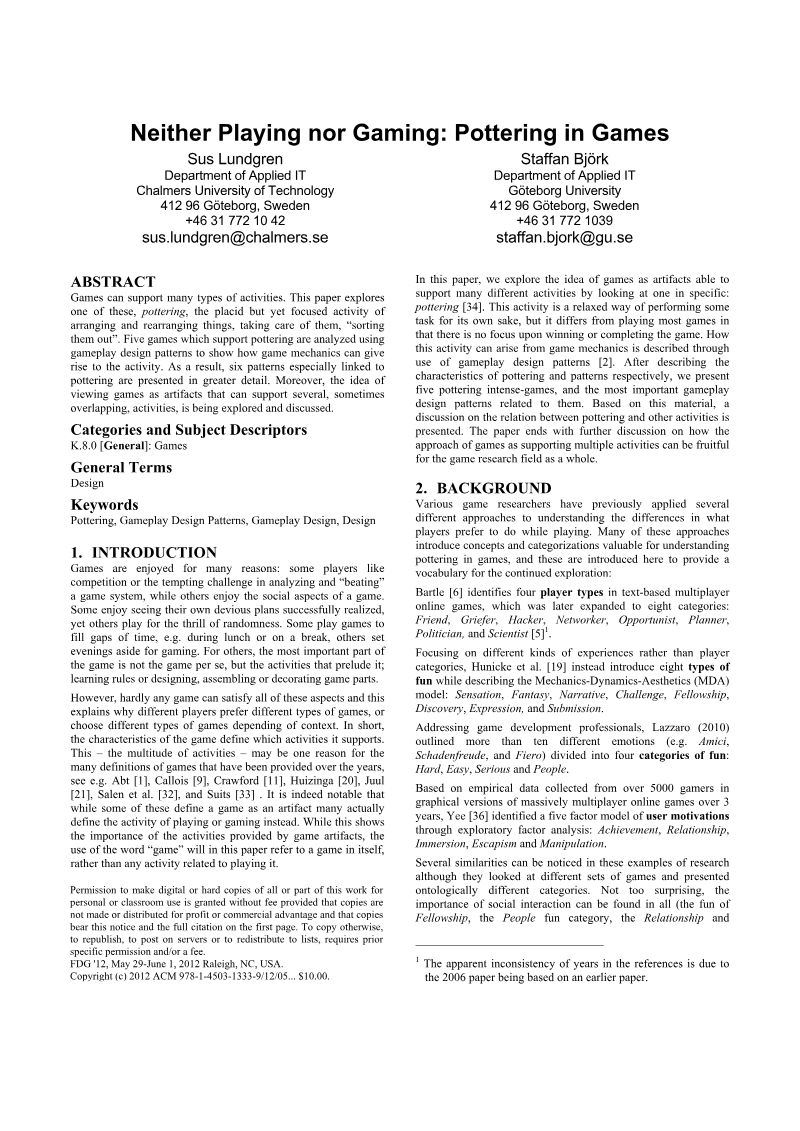
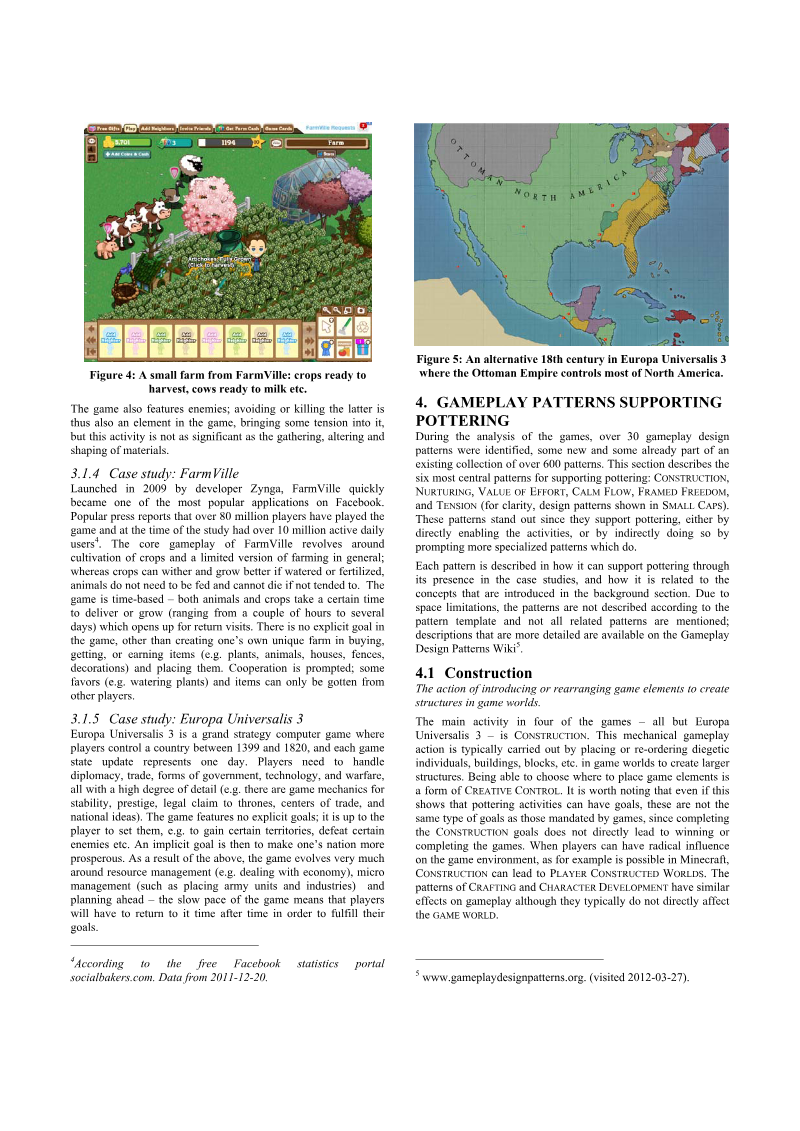
Lundgren and Björk, of Chalmers University of Technology and Göteborg University, examine pottering, a placid but focused activity of arranging, rearranging and taking care of things, as it occurs in five games: Zoo Tycoon, The Sims 3, Minecraft, Europa Universalis 3 and FarmVille.
- The authors identified six gameplay design patterns central to supporting pottering across the five games studied.
- Pottering is characterised as lacking a focus on winning or completing the game, distinguishing it from playing most games.
- The five games were analysed with between 25 and over 200 hours of gameplay time per game by the researchers.
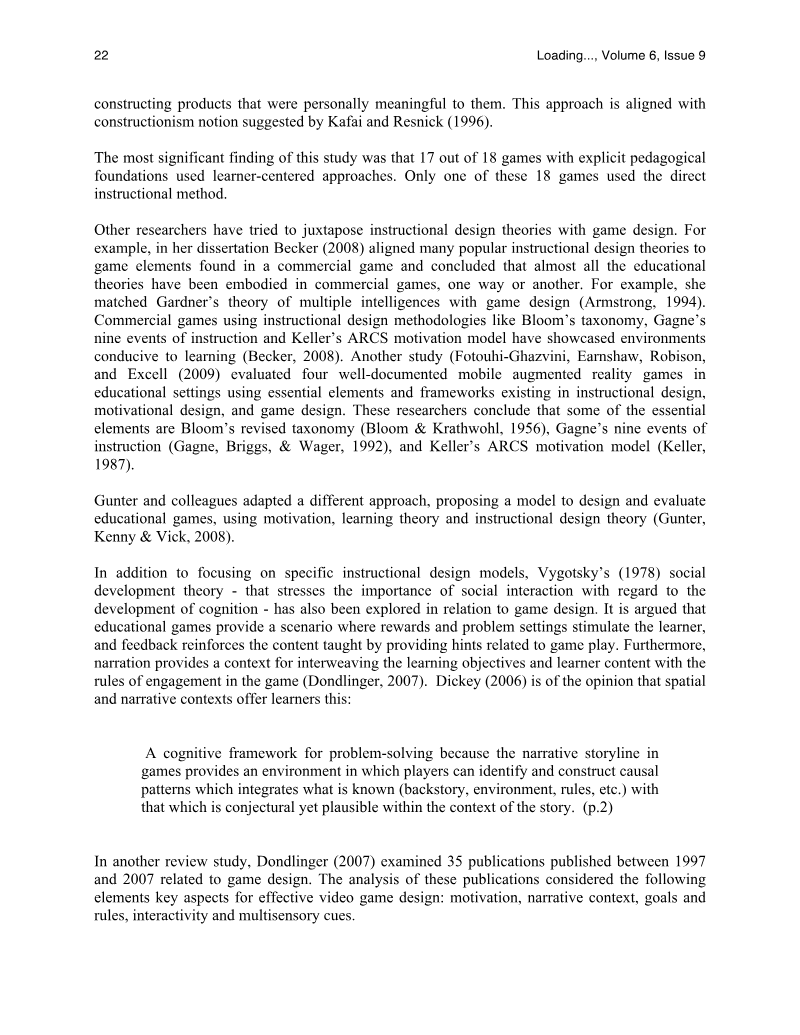
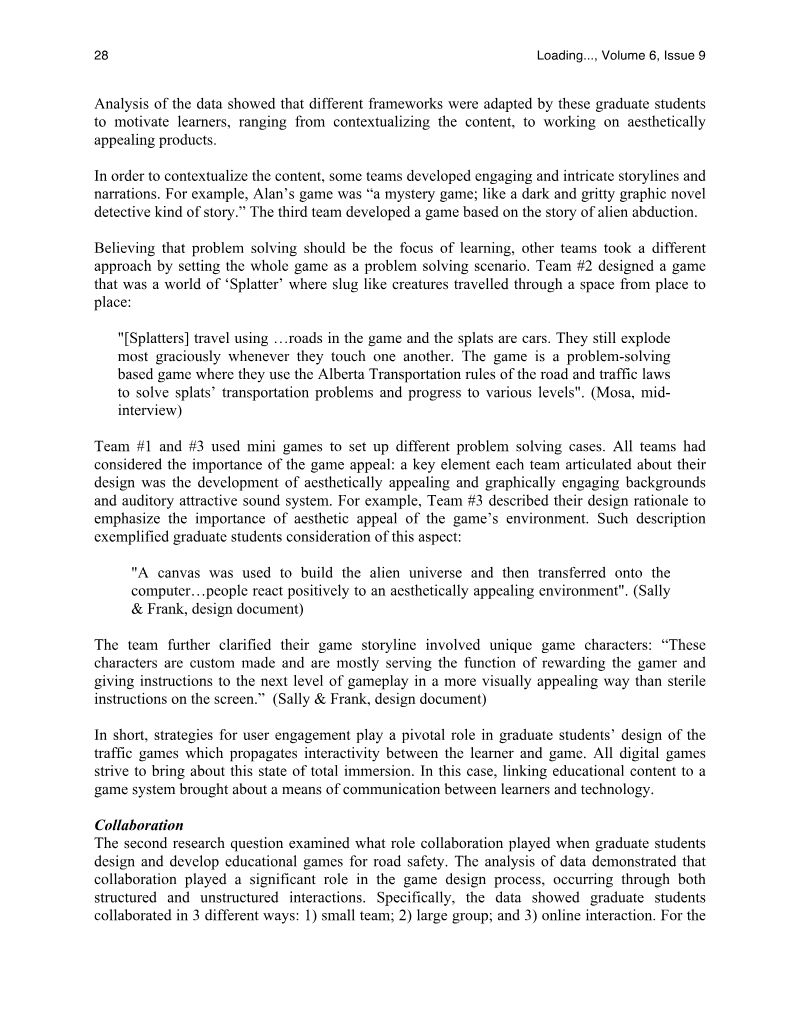
Designing Digital Games to Teach Road Safety: A Study of Graduate Students’ Experiences
The authors examine how six graduate students, all practicing educators and avid gamers, designed digital games to teach road rules based on the Alberta government's drivers' handbook.
- Data analysis revealed four major themes regarding critical design considerations: iterative design, planning, mapping design to content, and learner motivation.
- Of the four games, two carefully planned designs were well developed and high quality, while two with rough and ambiguous plans failed in implementation.
- Students realised they could not cover all handbook content in one game, so they mapped content to game structure in different ways.

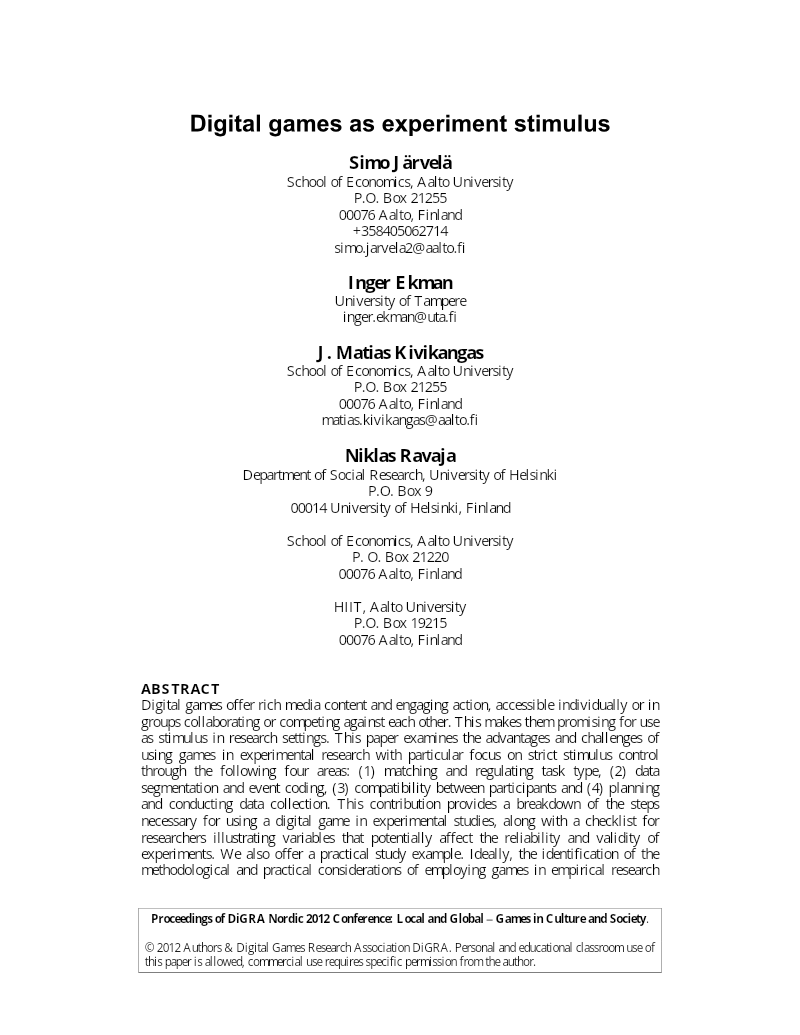
Digital Games as Experiment Stimulus
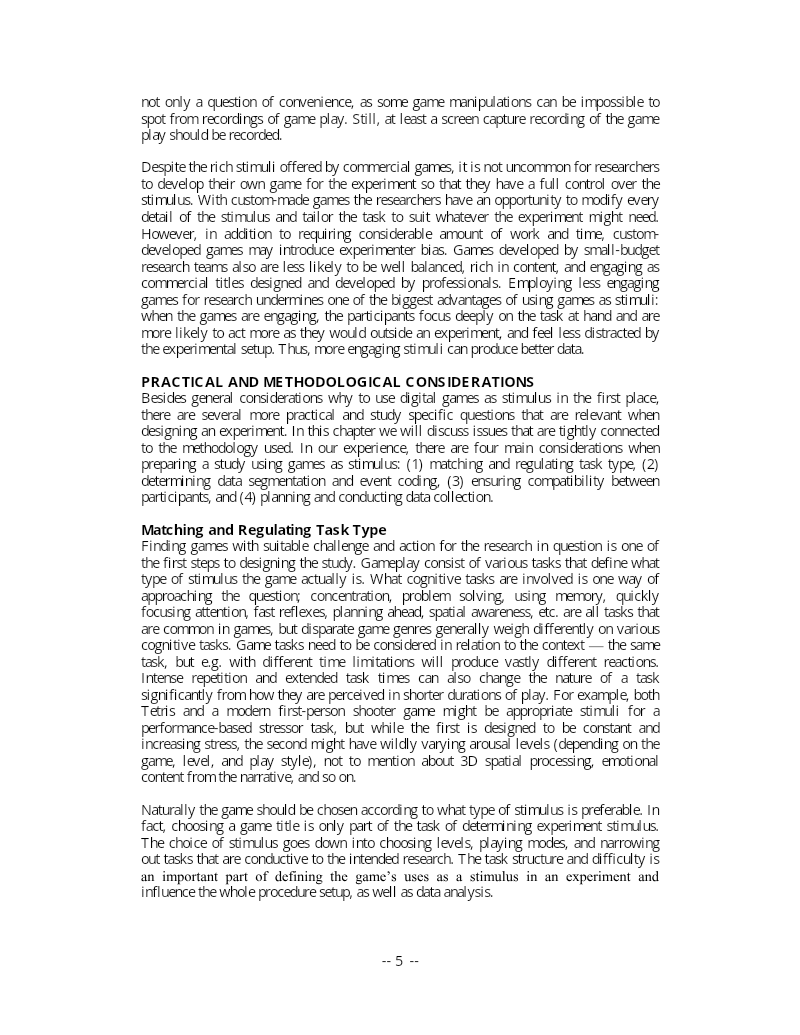
The paper by Järvelä, Ekman, Kivikangas and Ravaja, affiliated with Aalto University, the University of Tampere and the University of Helsinki, is a methodological guide to using digital games as experimental stimuli.
- The authors argue that games can be chosen for experiments because their high population penetration makes them more approachable for recruitment and their high familiarity allows more complex tasks than abstract psychological tasks.
- Interactive game content is never identical across players, so the authors advise that the stimulus need only be identical across participants in aspects relevant to the dependent variable, not every aspect of the game.
- The authors note that many commercial games lack logging, so event data often has to be coded afterwards from recordings, which can be very laborious.
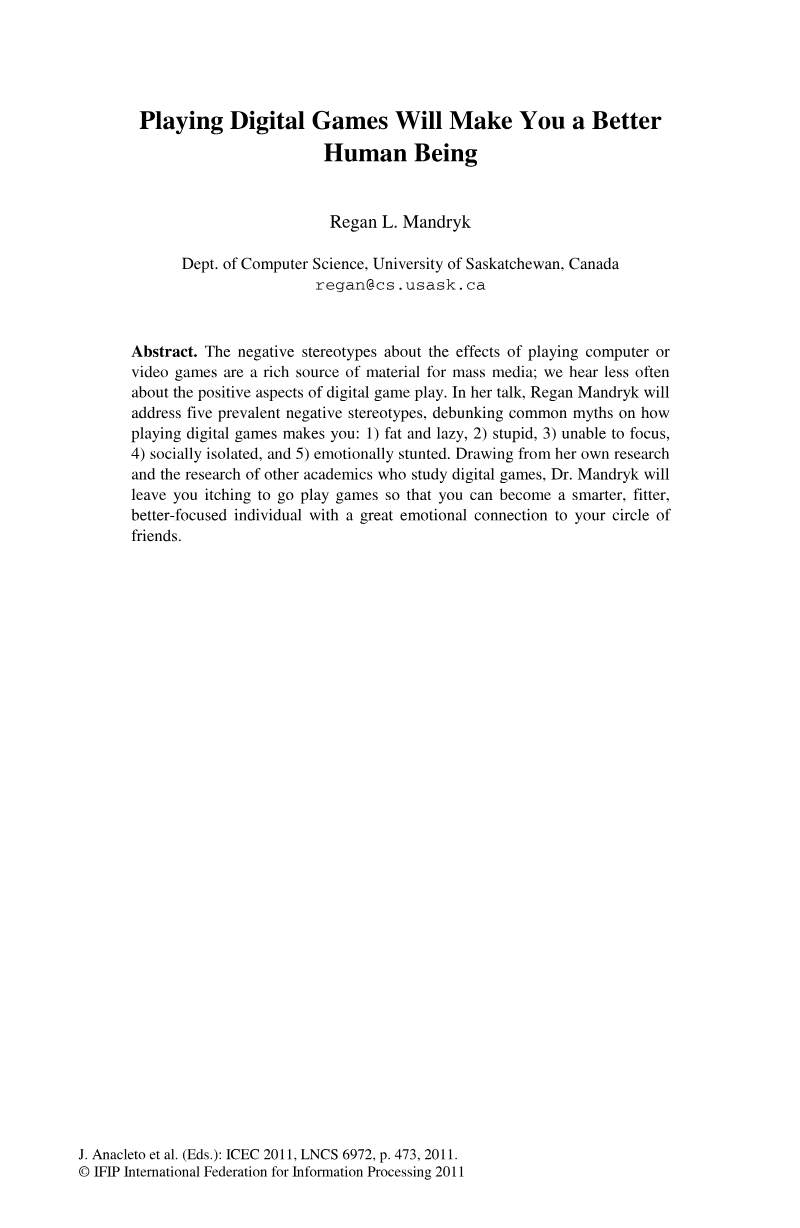
Playing Digital Games Will Make You a Better Human Being
Digital gaming serves as a catalyst for personal development, directly challenging pervasive cultural narratives that frame the medium as inherently detrimental to human health and social functioning.
- Digital gaming functions as a constructive tool for personal development that improves cognitive performance, physical well-being, and the quality of interpersonal relationships when integrated into a balanced lifestyle.
- Strategic and interactive game mechanics actively promote intellectual acuity and focus, refuting the stereotype that gaming leads to cognitive decline or intellectual stagnation.
- Evidence indicates that digital gaming fosters emotional intelligence and social connectivity, countering the narrative that the medium causes social isolation or emotional detachment.