1 free read left. Create a free account for unlimited reading + AI research.
Create free accountWhitepaper DiGRA
1 free read left. Create a free account for unlimited reading + AI research.
Create free accountWhitepaperDiGRA
The study surveyed students across seven classes at four German high schools after they played Energetika over three lessons.
This study, presented as a 2015 DiGRA paper by Anna Hoblitz, asks whether students' prior gaming experience and their attitudes toward educational games shape how well they learn from them. Framed through Holzkamp's distinction between expansive and defensive learning, the research surveyed 176 ninth-grade students across seven classes at four German high schools after they played the physics simulation game Energetika over three lessons. The participants were heavy gamers by most measures: 92.6 percent played digital games at least occasionally, 76.1 percent did so daily or several times a week, and the average weekly playtime came to roughly nine hours.
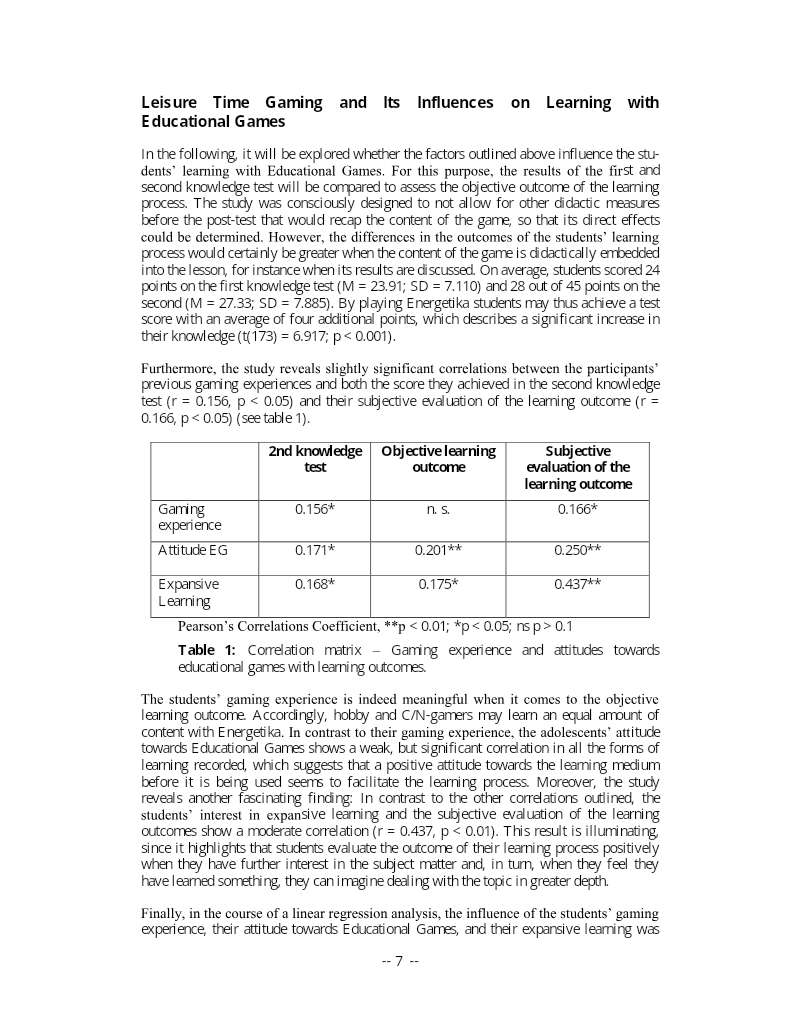
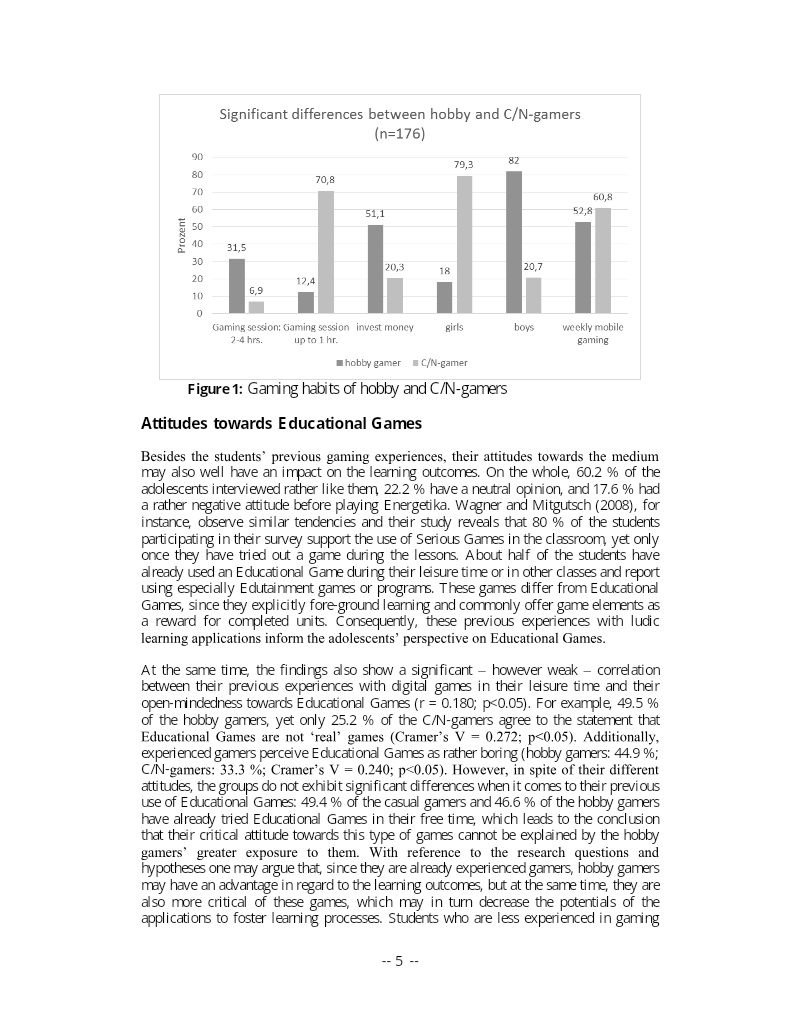
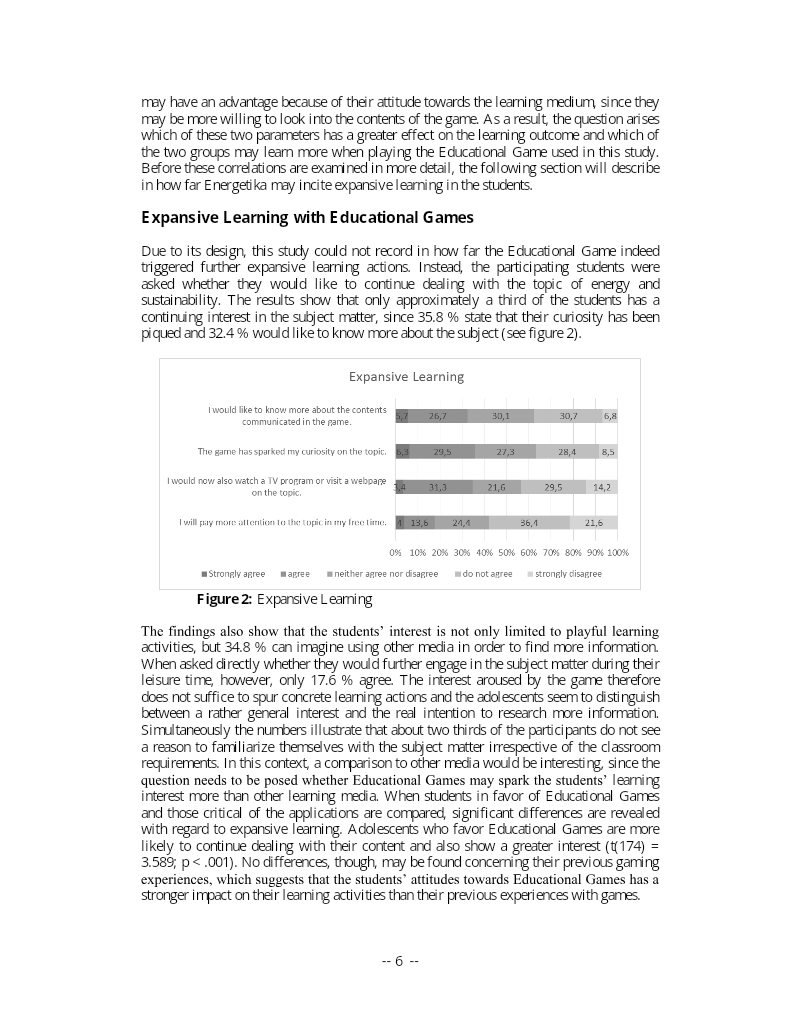
The central finding is that gaming experience did not significantly predict objective learning outcomes. Prior experience showed only weak correlations with the second knowledge test (r = 0.156) and with subjective learning evaluations (r = 0.166). Attitudes toward educational games correlated weakly but significantly with all learning measures, and expansive learning, defined as sustained interest in the topic, showed a moderate correlation with subjective learning evaluations (r = 0.437). Notably, hobby gamers proved more critical of educational games than casual players despite their greater experience. The authors conclude that disposition and continued interest matter more than familiarity with games, a conclusion reinforced by the observation that only about a third of students retained interest in the subject and just 17.6 percent planned further engagement in their leisure time.
The study's scope is narrow: a single game, a single subject area, one grade level, and a small German sample. The closing pages consist of a reference list of roughly 2006 to 2012 sources on serious games and game-based learning, including work on motivation and learning outcomes and a European Schoolnet/ISFE study on classroom use of digital games. These citations provide context for the research but contribute no findings of their own.
Each row is a game or company this document names, each column a document, oldest first. A mark means that document names it. Select a row to see those documents.

DiGRA · 2026

DiGRA · 2026



DiGRA · 2026



DiGRA · 2026



DiGRA · 2026



DiGRA · 2026



DiGRA · 2026



DiGRA · 2026

DiGRA · 2026



DiGRA · 2026



DiGRA · 2026

DiGRA · 2026
European Conference on Games Based Learning (ECGBL) · 2026
European Conference on Games Based Learning (ECGBL) · 2026
European Conference on Games Based Learning (ECGBL) · 2026