Atari
CompanyUnited States
Documents about Atari

What Happens When AI Becomes Your Gaming Teammate
The integration of foundation models into game development is shifting the industry toward autonomous behavior engines capable of managing complex, goal-oriented decision-making at runtime.
- Foundation models are shifting game AI from scripted behavior trees to autonomous, goal-oriented agents capable of improvising based on player intent.
- Hierarchical training models allow studios to reduce AI inference costs to single-digit cents per player hour, making the technology economically viable compared to using expensive frontier models.
- Successful agent implementation requires 'agent empathy,' where virtual entities are designed with environmental awareness to ensure they function naturally within the game world.
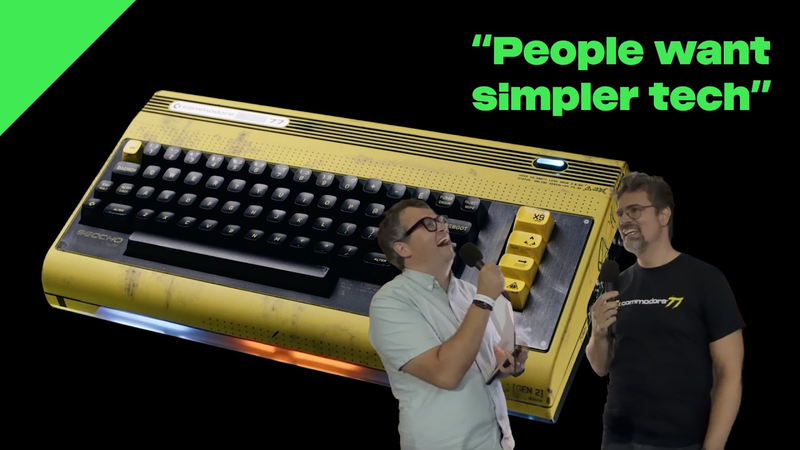
How one Star Wars actor became the CEO of Commodore
Commodore, under the leadership of CEO Christian Simpson, is executing a dual-track business strategy that blends retro-computing nostalgia with modern digital minimalism.
- Commodore has successfully pivoted from a niche hobbyist brand to a multifaceted publisher, selling over 27,000 Commodore 64 units since its relaunch.
- The 'Comeback 8020' flip phone, which promotes digital minimalism by excluding social media, achieved first-weekend sales volume equal to the first three months of Commodore 64 hardware sales.
- The company is executing a dual-track business strategy that balances retro-computing nostalgia with modern digital minimalism to capture a broader market beyond traditional gaming enthusiasts.

Oakever Games shenanigans, King and the Xbox cuts, Hipster Whale, One State, Monopoly Go, more
The mobile games industry is currently navigating a period of significant structural change, legal scrutiny, and strategic consolidation.
- Oakever Games is facing multiple copyright infringement lawsuits, including a loss to Hungry Studio regarding the game Qblock, amid allegations that the company systematically clones successful titles and uses aggressive user acquisition to drown out competitors.
- Xbox’s latest restructuring resulted in 268 job cuts across its first-party studios, though the mobile-focused King division appears largely unaffected, despite looming strike actions in its Stockholm and Malmo offices.
- Hipster Whale, following its acquisition by Atari for $29.3 million, has gained access to Atari’s deep IP archive and plans to develop modern takes on classic titles like Pong, Breakout, and Centipede for mobile.

Is Gaming in an AI Bubble? What the Deal Data Says
The gaming industry is currently undergoing a structural transition characterized by a shift from speculative content creation toward infrastructure, hardware, and artificial intelligence.
- Gaming financing reached a 12-month high in Q2 2026 with over $2.5 billion raised, despite the total volume of deals dropping from roughly 200 per quarter in 2021-2022 to below 100.
- Capital allocation has shifted away from general content and studio funding toward AI, ad-tech, and hardware, with AR glasses emerging as a significant platform bet.
- The current funding landscape for game studios is bifurcated; while AI-native gaming companies are attracting massive capital, studios that raised small rounds in 2021-2022 are struggling to secure follow-on financing.
Why None of Us Saw Cyberpunk Coming Apart I Michal Nowakowski. joint CEO, CD PROJEKT RED
CD Projekt Red’s evolution from a regional distributor to a global AAA powerhouse is rooted in a strategy of intellectual property ownership and creative independence.
- CD Projekt Red restructured its development operations by abandoning proprietary technology in favor of Unreal Engine 5 to mitigate technical risks and streamline production.
- The studio transitioned from a siloed, waterfall production model to a unified, multi-platform approach that utilizes rigorous gating milestones to prevent future launch failures.
- Despite a 75% decline in stock value following the technical failures of Cyberpunk 2077, the studio achieved long-term commercial recovery with 35 million base game units sold and 10 million expansion units sold.

The Man Behind Most Gaming Deals | Affan Butt, Aream & Co.
Successful gaming mergers and acquisitions are fundamentally driven by long-term relationship building rather than transactional, high-pressure sales tactics.
- Successful gaming M&A is driven by long-term relationship building rather than transactional tactics, as evidenced by a track record of over 110 deals totaling $40 billion in value.
- Founders should prioritize meticulous data hygiene and financial validation to ensure deal certainty within a typical six-month timeline, as aggressive, unsuccessful outreach can permanently damage a studio’s reputation.
- Advisors often recommend delaying sales if internal metrics or market conditions are suboptimal, prioritizing the studio's long-term health over immediate transaction fees.

The Miraculous Story Behind Baldur’s Gate 3
The development and release of Baldur’s Gate 3 represents a significant anomaly in the modern video game industry, characterized by a complex history of licensing, financial instability, and creative perseverance.
- Larian Studios' success with Baldur's Gate 3 is attributed to its status as a rare, large-scale, privately owned developer, which allows it to avoid the short-term pressures of quarterly earnings and investor demands faced by publicly traded companies.
- The development of Baldur's Gate 3 required a massive scaling effort, with the studio growing its workforce from 140 to 450 employees to manage the complex production pipeline required for full cinematic integration.
- Baldur's Gate 3 has achieved significant commercial success, selling over 20 million copies and winning multiple Game of the Year awards despite facing major external challenges, including the COVID-19 pandemic and the forced relocation of staff due to the 2022 Russian invasion of Ukraine.
Number of video game journalists plummets. Plus! More on Xbox and Atari launches IMDB rival
The global video game industry is currently navigating a period of profound structural instability, characterized by widespread workforce reductions, the contraction of traditional media, and a strategic pivot toward consolidation and niche sustainability.
- The global gaming media sector has faced a significant contraction, with over 280 journalists exiting the industry during the first half of 2026.
- Xbox is undergoing major internal restructuring and shifting its strategic focus toward massive, mainstream-oriented franchises like Call of Duty and Minecraft following ineffective post-acquisition integration.
- Atari is attempting to revitalize its operations by centralizing administrative functions and expanding its MobyGames platform into a professional networking tool for developers.

Supercell, King and Sybo slam EU plan, Atari buys Hipster Whale, Zynga's Mark Pincus, more
The mobile games industry is currently navigating significant regulatory, corporate, and strategic shifts.
- Industry leaders from Supercell, King, and Sybo are lobbying against EU legislative proposals, arguing that new regulations on free-to-play mechanics could render mobile games unplayable and threaten a sector that generated 7.5 billion euros in revenue and supported 63,000 jobs in 2025.
- Atari has acquired Hipster Whale, the developer behind Crossy Road, as part of a strategy to expand its retro-adjacent mobile portfolio through projects involving Amazon, Netflix, and Air Console.
- Zynga founder Mark Pincus, in his upcoming book 'Life at the Speed of Play,' advocates for a 'proven, better, new' design methodology, citing Supercell's Hay Day and Clash of Clans as examples of games that successfully adopted this iterative approach.
The Onslaught of Summer Games Fest, Steam Deck price go BRRRR & the Logo Wars! | Games for Breakfast
The modern gaming industry is currently navigating a period of significant structural and ethical turbulence, characterized by the oversaturation of promotional events and the aggressive consolidation of corporate power.
- Summer Game Fest (June 1–8) has been criticized for its cluttered schedule, with organizers grouping diverse showcases into single days rather than spreading them out, which risks sidelining niche and identity-focused game presentations.
- Take-Two Interactive has effectively shut down RageMP, a prominent multiplayer modding platform for Grand Theft Auto V, by asserting that it is the only authorized platform for the game.
- Rising hardware costs, specifically regarding the Steam Deck, are being driven by persistent component shortages that impact even newer iterations of the hardware.
Long development cycles are putting off video game investors
The video game industry is currently undergoing a painful financial correction following a period of post-pandemic over-investment that fostered unsustainable budgets and unrealistic growth expectations.
- The gaming industry is facing a financial correction due to a misalignment between traditional venture capital models and long, multi-year production cycles that lack early-stage performance indicators.
- Investors are increasingly deterred by the industry's reliance on legacy titles, as 92 percent of current sector revenue is generated by games older than six years.
- To mitigate high-risk, massive-budget development, major publishers are adopting agile strategies and leveraging artificial intelligence to optimize workflows and reduce prototyping costs.
Can Atari make its retro games strategy profitable?
Atari is currently navigating a strategic pivot toward becoming a leader in the retro gaming sector, focusing on high-quality remasters, remakes, and sequels to classic intellectual properties.
- Atari is executing a strategic pivot to focus on high-quality remasters and remakes of classic intellectual properties, supported by the acquisitions of specialized studios Digital Eclipse and Night Dive Studios.
- To compete with unauthorized emulation, Atari’s business model centers on providing a 'better than free' user experience that justifies premium pricing through technical excellence and authenticity.
- The company maintains a release cadence of approximately four titles per year, balancing high-profile commercial projects with niche, passion-driven releases to mitigate financial risk.