VideoDeconstructor of Fun
The Man Behind Most Gaming Deals | Affan Butt, Aream & Co.
17 Aug 2026101 min video
Transcript
Loom Games out of Istanbul, a team of 15. The company was 4 months old. They had one game, Pixel Flow, doing nicely, but very young. And your company, ARM, sold it to Scopely for $1 billion. Can you walk me through that deal?
Yeah. Well, firstly, I' I'd love it if there were a lot more of those deals. Um, but yeah, this was a bit of a throwback to the good old days. I think uh but jokes aside, yeah. So I was uh I remember we were walking out back from a dinner, me and a kin walking up Regent Street to Oxford Circus and he was telling me about you know this rocket ship and they were looking to raise money the best metrics and stuff. So I asked him I was like how much money have they raised? And at that time you know him and Arcadia and E2VC I think it either just closed around Yeah. Yeah. they had closed around that was December and um so I said okay well why wouldn't you consider M&A because you know it's a it's a growing business it's in hybrid casual so you don't know you know um and
uh you know the founders they've been doing this for for a while as well not at at loom as you said
um and then you get on the kind of hamster wheel of uh the you know capital raising and And I was like, hey, if this becomes big at the end, you're selling to either the Saudis or the Chinese in some way, shape or form. So maybe given the size, given the scale and the growth,
why not consider, you know, strategic um kind of outcome and uh so I think that kind of sparked well, okay, I did, you know, they I don't think they had thought about like that that was something that was, you know, potentially interesting at at at the time. Um so I had a sense of kind of you know who I guess had been around uh in in in the process. We weren't we weren't advising on the fund raise. It was a small early stage fund raise
and um and I guess knowing the various
you know players uh you know in in the in the industry. So, we said, "Okay, why don't we make a couple of uh couple of calls to some of our good friends?" Um, and uh so that's kind of how it uh that's kind of how it it started. Um and in the end, you know, it was a win-win for for everybody. Uh I think for Scopely, you know, finding something that was growing nicely cuz, you know, it has to move the needle for for these guys cuz they're getting quite big. um Turkey was a strategic uh you know market for them. I don't think Scopi I don't think they had anything in Turkey at time. Um
and uh I think you know the structure gave the founders the ability to to obviously realize money for the hard work u and for what they' built so far but also
four months of hard work.
Well, I was talking more for you know
with previous uh previously what they were doing as well. Um but then give a path to uh you know make sure that they felt good that they weren't selling you know early um or too early I suppose.
Uh and I think we achieved that. So yeah it was a great outcome I think for all.
So the elements that come together is that there's I mean there's FOMO clearly.
Yes.
So for the companies to jump in on that big of a deal
where does that FOMO come from? Of course, one part is Aon gives you a call about something. So, that's naturally a plus. You've done over 110 deals, so it's a real call.
Um, the second part is the location, as you said, is stumble.
But what what comes to the rest to get to 1 billion? 1 billion is a lot of money in these days in gaming.
Yeah, look, I think, you know, credit to uh, you know, Kubra, Emry, the rest of the, you know, Loom games team and obviously Aken and E2VC for going in. I think the the uh the growth is such a uh
it's hard to find these days. You know, we've had these panels over the last couple of days talking about that. Um and for a for a game to kind of break out like the way, you know, Pixel Flow did with a team of I mean, we said 15, but I'm guessing
they started with, you know, let's say a handful, right? And so they were just hiring people as we were as we were speaking. So I think people were like wait a second this has a lot of uh you know potential and maybe part of as part of a bigger uh organization where they can you know add on uh more help with you know live services or you know relationships with the the ad networks or you know marketing stuff or IP that there could be a lot more uh you know potential. So, at the end of the day, um, you know, we'd love to think we're some sort of magicians, but the reality is it's the the game and the team that,
um, people, you know, that creates the real FOMO, right? And then, yeah, you're right. I think when it's somebody like us making a call, then it adds a level of seriousness that something is is happening. It's actional. There are plenty of gaming companies or any other companies that are for sale next year every year and never sell. So, [laughter] so, so the buyer the buyers also want to know, you know, is there something actionable here?
How does a founder get a backing off of like how can Yeah. How can they get a call on their behalf?
Yeah, look, it's it's interesting. I mean, you know, we've jumped right in, but which is good, I think. But, uh, we I've been in tech banking, you know, throughout my career. Um, and when I moved to Europe in London, that was for a year. Uh, and that was 26 years. Uh, no, 24 years ago.
Wow.
Um,
it's a long year.
It's a long year and it's it's still happening. It's still going the year. [laughter]
And uh but when I moved here uh you know this was in the the day of like SAP and Nokia and Altusent being the exciting you know tech companies of of Europe and I was like maybe not for me.
So I started kind of running around more midcap companies and you know the internet companies you know cuz that was a thing. Um, and then, uh, so, so one, so one thing I'm trying to tell you is that I've just been kind of around for a while, you know, years. Yeah.
Um,
then when I started looking at new sectors, uh, kind of what was interesting and all that,
gaming hadn't really taken off yet, right? Because freeto play only came 20. Yeah, something like that, right? So when I moved here, I think at Mini Clip was was, you know, the web portal. We had uh I did a couple deals with Atari,
um Square Enix, the Idos deal. So, but
you know, so I I wouldn't say I was like right into gaming, but slowly slowly you build the relationships and then when the first gaming deal I did, actually the first gaming deal I almost did in in mobile free play was we almost sold King to Real Networks for 60 million bucks. Uh, and then they backed off.
Yeah.
And then Ricardo said, "You know what? Let's just launch
this Candy Crush thing on mobile and see what happens." So, [laughter]
so, so there was people like that that I just knew from a long uh long time ago.
So, my first gaming deal was Supercell.
Yeah. Wow. A good start.
Yeah. And that was
Supercell Soft Bank
just before that when uh they wanted to raise uh they did the secondary rally.
Supercell secondary 2013. Yes. 2013. Um, and uh, you know, I knew some of the investors around for a while. Uh, Ken Lamb at Initial Capital. I'd helped them with like, you remember macro space,
which I think they sold to Glue or it became glue. I like, you know, some small stuff, right?
But those weren't deals that I was working on. These are just relationships I was building.
And at the end of the day, this is a people business. They want to like you and trust you. So if you've been around for a while doing the right things.
So Supercell was the first deal and then that left to the Soft Bank deal. And then from there, you know, we we just started doing more and in gaming and building relationships and things like that. And because it's such a founder-driven business, they were less, you know, a lot of the gaming founders are less worried about, well, wait a second, you're not at big bank XYZ, who like who the hell are you? versus saying, "Oh, wait. Ilka said some nice things about you."
Do gaming founders really care if you're Morgan Stanley or Goldman Sachs or JP Morgan? Like, like is is that like do they
I Yeah, you know, I think it's it's there's kind of the public companies that have boards and have, you know,
they want to have certain types of uh banks to, you know, and you've seen some of the big
big deals. Um where I think we shine uh if you look at our track record has been a lot more with founder driven where I think they are more about you know okay wait a second you did that deal you work with that person that person said good things about you oh that person introduced you
and then they're not they're not sitting there going wait a second you know how many offices do you have and you know uh so stuff like that so I think you kind of break it on into that. But for the most part, I mean, you you know, these gaming guys, they're they're busy just making games. Um, they're not spending time trying to figure out, you know, how many financial services companies can I get to know and it's going to be so cool that one day I'm going to call, you know, the big bank and stuff. So,
my private [laughter] financial Exactly.
Yeah. Or like, I'm a wealth management client of, you know,
maybe I'll get to SpaceX with that. [laughter]
Yeah. We're like, let's get you that money so then you can go do the
Yeah. Exactly. They really care that you first have the money and then they'll give you the
Yeah. Yeah. So I think the uh so the founders we work with we're lucky enough that you know there's relationships uh around like I said you know my my brother is an armed like akin who um you know loom games uh obviously we had we had connected them as such before just because we like to get to know companies early but you know having him around you know things like that I think that's how we've built the business um and so sometimes s, you know, you get a call that says, "Hey, I just got a term sheet. Can you come and help me?" And but most of the time, we've just been building these relationships for a long period of time.
And I got plenty of stories where, you know, it's it takes a long time.
We'll jump in all the stories. I'm just going to go through like for people to
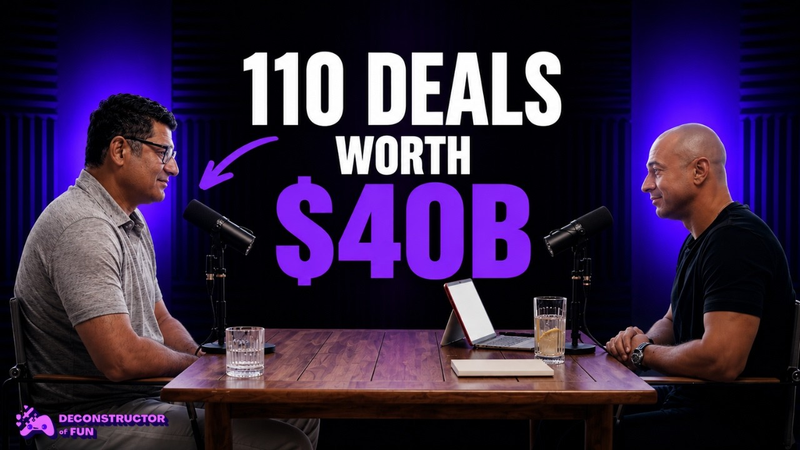
understand what a re is. So, you're a boutique investment bank. You're focused on interactive entertainment, consumer, and media. You deliver strategic advisory service across M&A and later stage capital raising and track record. This is the most important in gaming. Over 110 M&A financing transactions. You have $40 billion in transaction value till date. The company was set up in 2019. Over half of the over hund00 million deals have come through with ARM or have been executed with ARM. And you have offices, this is the most important part. You have offices in London, Berlin, SF and Singapore. But the the main question is like what does an investment investment banker in gaming actually do? You so you say you build relationships and are you a connector between the founders and the the corporations in the sense
Eiffel Tower iconic Tower of London historic the two towers simply epic but none of them tell you anything about
mobile app intelligence downloads revenue active users and my personal favorite weekly cohorted retention get the real story get the real data get sensor tower today
yeah I think it's uh maybe it's not that well understood but I think at the core of it especially in gaming where you know look these cliches maybe but it is they're people businesses you know this is not a you know software company or whatever where you're like hey you know what I'm going to come in I'm going to get rid of you know all the founders and CEOs and all that I'm going to put in a new head of sales I'm going to move engineering to this like this is not that kind of you know sector which is one of the reason why I got attracted to it
so A big part of it is those connectors um and when but also when to connect and who to connect you know to it makes a world of a difference where you're going. These are things are a bit hard to uh explain. So the good news for us is like
people speak to other people who've been
through the experience cuz they're sitting there going hey do I need an investment banker? Why? What are they doing?
And so part of our job is like one of the reasons we are in gaming is because we love the sector. No, that doesn't mean we should be playing games all day long. That's they're not hiring us because we're leaderboards in Call of Duty. [laughter]
You don't come in and you show, oh, Loom games, check out what level I am and take some flow.
Cuz you know, my day job, I don't pay attention. I just play games all day. [laughter]
They're trying to hire the best adviser. So, but but you got to love the sector and and so and we do and we h we do have those people who are playing games all uh free time. All free time, right? Exactly.
Um
but you know, they want to hire the right advisor. But so a you got to love the kind of sector that you're in. I just think it makes a difference. It shows when you know
cuz these are people like we like we like hanging out with them, [laughter]
you know. Oh, we want to like we want to build those relationships.
Clearly, there's hundred of them here.
Yeah. So, so, so, so I think it's um to me that's the first and foremost like we build the relationships. Now, sometimes, of course, it happens where they're like, "Hey, I have a friend who just received a term sheet. Can you help him or her out?" Great.
But a lot of times it's we've just been out there building relationships this event, some of the other events that you know of. Um, and so that over time we're kind of getting to know companies early. So we're we're trying to figure out, okay, how do they think? What's important to them? Um, we're not in there going saying, "Okay, man, you know, next quarter this company is for sale, so let's get to know them." Some of our relationships are many many years. Um so uh so I think it's it's it it's and then for the buyers uh so for a lot of the bigger companies I mean you you uh you mentioned I think 100 plus deals I I think there's less than five or maybe
five deals that are buy side. M
so we are always on the sell side or substantially always uh
so meaning that sell side is that you are
just like in in loom games described you call the buyer
correct
and you represent the seller
but part of the connector job is well if we don't know the buyers really well and kind of what makes them tick and why like why would I call you know scopely for loan games u because I'm I I should have an idea that hey what what would be a good fit where etc. So then we you know we want to build relationships with the with the buyers as well and the buyer universe changes um and it has changed over the years
um private equity and this so so we're kind of doing both sides uh you know building relationships on both sides even though most likely we're going to be advising on the on the sell side. So
I think a big part of you know what's an investment banker in gaming at least doing because it's very people focused because it's not a transaction of here's a bunch of money thanks go away most of the deals have you know deferred payments long-term relationships etc. So, we're trying to put people uh you know together um and try to make you know make something happen that way and organically versus we getting called in from a let's say a public company who's decided to sell and says let's go run a broad formal process which we do as well but our bread and butter where our origins at least have been that and that's where I think the investment banker is probably the most um interesting I should say
seven years that's not a sponsorship That's a marriage. And that's exactly how long we've been partnering with Appsfire. And the reason [music] it has lasted is simple. Every growth team I talk to on this podcast, every operator who comes and breaks down [music] what is actually working for them, eventually the conversation lands on measurement.
And in gaming, [music] we refer to reliable measurement with a single word, absor [music] back this platform, too. Which means the people competing hardest [music] for your budget all agree where the single source of truth lies. [music]
So relationships, you mentioned that multiple different times. The four, correct me if I'm wrong, the four most important stakeholders are founders, strategics, strategics meaning corporations, so other gaming companies that are buying smaller gaming companies. Uh venture capitalists as you mentioned Aake and others who are essentially talking to you about the 100 investments they've done and kind of surfacing the most important ones. And then fourth one, you mentioned private equity. Are there any other stakeholders that are missing? No, I think that's as far I mean sometimes you you know if it's public company they might have independent board members and stuff which have a different
mandate if you will
boards. Yeah. How do you build those relationships? So um that's that's a lot of different stakehold like what is a rel is it wine and dine? Is it events? Is it like how with with all these different stakeholders?
Yeah, look it takes time. It and there's just no substitute for it. you know, we've been and that's one of the reasons why I've felt like we start we needed to start ARM because the world has too many investment bankers. It's a commodity business.
So, how do you add value, right? Um why should people work with us versus the 200 other banks or however many out there, right?
Um
so I [snorts] said, well, we should focus on a sector. Now, everything in life has pros and cons, right? Now gaming dies tomorrow. I got to figure out, oh, now what do we do?
More relationship building.
I start I got to start building relationships [laughter] with somebody else. Um, but we made that strategic bet that said, wait a second, this is a sector we
really enjoy. Um, it's not some winner takes all market where, you know, one company in Mountain View or wherever sneezes and the whole like world falls apart. um you know our base is Europe you know we had this debate of Europe is dying or not you know but our base is Europe and in gaming it's been a fantastic uh you know area so we said okay there's a lot of US companies want to come to Europe and Asian companies want to come so this is a good place to be so there were a lot of different factors which uh and first foremost like I said before that we just like the sector and the people around it
so we're like well if we really focus on a sector yeah okay we go in the ups and the downs of that sector. We don't have 10 other verticals which are like oh well if one is down at least the other's up or 10 other products and stuff but we said fine let's be a
ride or die
yeah and this you know boutique or whatever you call like focus investment bank
that just covers this and so then
that means I'm spending I have more time
to spend with these four or five constituents you know that you've mentioned and so if let's say a private equity firm is deciding to look into gaming well we should know them. Uh uh there's no excuse to not know them. And we know if we talk later about some of our other deals, we've shown that that's been the case.
And so then we said if you focus on one industry, then we kind of grow with it. Um
and uh so over the years, uh I mean, you mentioned, you know, 2019, but the core group of us have been working together since 2012. Yes. And we weren't fully gaming then, but if you think about what I said in 2013 was our Supercell dealers. Yeah. So, we started focusing more and more on gaming uh since then. And then co
obviously initially like the rest of the world, we thought, okay, we're all dead and bankrupt and all that good stuff. But, you know, then gaming took off. So we we we had decided already that
let's just do more and more uh you know gaming deals where we're becoming sector experts I suppose
and and um and so I think it's just there's no other way to explain other than the fact that it's good old you know long years of doing it
and you know I keep telling my team Mishka the bar is really low.
Yeah. You just got to be liked.
Yeah.
And that sounds silly, but actually unfortunately in our industry, it sounds silly to be like, well, you just got to be hungry and h we we we like to say hungry uh humble and happy.
Uh because these these are clients that they want to part of the reason they work with us is because they like us.
Yeah.
Right. And they trust us. It's not necessarily because oh, they have to use X advisor or not. So it's just been years and years of building relationships and having people
like from the early days the Ilkas
Ricardos and then you kind of build on that uh just saying good things.
Walk me through the story like uh of each of them like let's say you mentioned Ilka multiple times. How did you meet how do you build relationship with founder of Supercell Il Kapan?
So I reached out to Ilka and Ilka unfortunately or fortunately for me
didn't know that he shouldn't be meeting with bankers cuz they're useless. [laughter] So, you know, we had uh we had done some stuff in in Helsinki. Uh
maybe we'll come to it later. I'm very sad that Helsinki is not a big market for us anymore, but anyway,
uh we used to come we used to go there quite a bit. And um I reached out to Ilka, I think on LinkedIn and and I said, "Hey, I just want to come hang out." Um and for some reason, Ilka was like, "Sure." I think we had some mutual connections and stuff and I went there.
How did you know that you should reach out? You looked at the the charts.
Uh the charts, we didn't have all those
kinds of charts back then, right?
Um it was again back to relationships where you know, shout out to Ken Lamb at Initial Capital who like I said, you know, I had done a bunch of things with him for no fee. It was just tiny stuff.
Yeah.
And then actually he sold uh what's what's the uh the business sold to Playfish? They sold Playfish to EA, but I didn't work on it. So, thanks for that, Ken. But, uh, but that was partly because they were just in such a hurry to do a quick deal that they were like, let, you know, let's just get it done.
Okay. [laughter]
Before this, before the air run.
Exactly. Exactly. It's like, oh, wait. You offer from me yet? Yes, please. Thank you.
Cuz I think a lot of I think a lot of the stories for these founders is like,
man, it's hard work. You know how it is. And
things look good and then they suddenly don't. Mhm.
And they're like, "Oh, I didn't take any money off the table, and you know, I've been working 100 hour weeks, not seeing families and making all these sacrifices." And so sometimes they're like, "Oh, you know what? Yeah, let's hit that bid."
But again, we stayed friends. And I' I'd meet Ken and every time I'd meet him, his smile would be bigger. And I was like, you know, cuz he had this company. At the time, they had launched Heyday.
Mhm.
I think Clash was just coming. Clash and Heyday launched almost at the same time but heyday scaled first.
Haday scaled first but it wasn't as like as
it was looking good. It was looking really good. It was it would have returned even that
fantastic right and then Clash comes along and I think every month you know Ken Lamb and I think it's XL was in they're probably going
hey yeah this this looks all right.
Still still vertical.
This looks all right. So then yeah I think um but I don't think I asked anybody for uh you know intro and connection. I just reached out to to Ilka showed up in Helsinki
and we spent almost the whole day me him and Petri from Lifeline just just talking.
I wasn't there to pitch anything. I don't even know what there was to pitch.
What did what do you what do you talk about? Like how
I was just interested in what they were
doing, right?
Okay. Just the the business and so forth. So,
and they were such nice guys and they are still nice.
Still nice guys. [laughter]
Yeah. And still even more successful than them.
Exactly. and you know
as vertical
there are there there are people you meet who you know make a ton of money and they're still the same people you met you know
back whenever
so we just had a genuine connection I was like wait these guys I didn't know how numbers or you know cuz we didn't have these
it was just more like these guys are really cool
there was no sensor tower
there's no sensor tower if there was I didn't have access to it [laughter] but
it was just a fun conversation for a few hours
we just bonded Um, and Petri was also again one of these kind of down to earth really, you know, nice guys. Um, still is
and still is.
So, I think we just built a we built a rapport. No, I don't know. After that, maybe he called around some people like, "Who the hell did I just meet? [laughter]
Who the hell did I just spend the full day with?"
Um, and then, um, so yeah, that was that. Um, so, so my philosophy was always like it wasn't
and you left, you just spent the full day and be like, "Hey guys, it was really nice to meet you. Thank you for showing me around the office, showing me the business."
Um,
yeah.
Yeah.
And I was wearing good socks that day. So, so, so that worked out, you know, came prepared.
Yeah. If I had a hole in my socks or mismatch then that, you know, but, uh, they probably wouldn't have cared. But, uh, but yeah, thank you very much. All that good stuff. And um that thing moved quickly because they suddenly you know obviously started scaling and investors and others started you know reaching out um and I think uh they uh they did I think I don't think we were the first choice bank um but it just worked out that some of the relationships the particularly with Ilka Patrick Ken um I think that that held us in good and then
we just work with them on uh uh um on the financing round which is all secondary cuz obviously they need money.
Yeah.
Um but I think there's a lot of these stories, you know, I try to tell my team those because I want them to also be focused on the long term.
You know, these are all cliches. I get it. But so the only way to show it is the proofs in the pudding.
Yeah.
I showed up at uh I don't even know why. I can't remember now. I think I'd read something about Peak Games in uh Istanbul.
Mhm. And um and I just rocked up in to Sedar's office when there was four or five of them.
Oh wow. That early.
That early.
Like 2012.
Yes sir. Or 11 maybe.
Right. And I was I was at UBS at the time.
Yeah.
So imagine me telling UBS that hey I'm going to go check out this this guy. I think I just read something about him. And I mean I like going to stumble anyway. How many of these sorry do but
how many of these didn't turn out positively? Like is this like a survivor bias? Is he somebody and that turns to nothing?
Yeah, there's plenty of those. Of course. I mean, if I knew that
uh who, you know, 10 years later who's going to be who's going to be a unicorn, then I guess I should be doing some investing or doing something else.
I think you should be doing exactly what you're doing. [laughter]
I think for me it's just more like again it was one of those I hit it off with him.
Yeah.
And he he was like, "Why are you coming to see me?" Mhm.
You know, in the subsequent years like I'm never going to sell. I'm never going to do anything. I was like, dude, I just like hanging out with you, right? [laughter] So, and you know, you do my view is like you do good things around good people. You know, good things happen. Um, so yeah, these are not
examples of where I was like, oh, you know what? I smell a deal here. So, let's uh
you smell potential.
You smell potential. And you you literally want to be like if you walk around this summit
uh there are many people here who are friends from many many years now.
Yeah.
And then every year we hopefully add uh
more friends and then the vibe it creates um and part of the reason why I bring the my team to a lot of these events is because I mean it sounds so weird but the amount of feedback we get from clients saying hey wait a second you guys like like each other. you guys uh the way you treat each other is really
it's not like in TV show with bankers.
Yeah. So then they feel like oh wait if maybe I want to work with these guys.
Yeah. We watch billions. You're not like that. [laughter]
That is a documentary about investment.
Exactly. So I think uh so yeah it's just I think with a lot of these the ilkas of the world look [snorts] man they're such amazing guys. They're very nice to us when they don't have to be. Um, they say nice things about us when they don't need to. They open doors for I mean, we're still friends. I can call those, you know, today.
So, yeah, it's really nice.
Unless you've been living under a rock, you know, this is web store rumbringer. 70% of top apps are using a web store. And the best ones, they're doing it with
app charge. Do you want a $20,000 inapp purchase? [music] Yeah, Appcharge does that. Do you want to pretend that subscriptions are still a viable monetization strategy [music] for games? Yeah, Appch even lets you do that. They get what high average revenue per paying [music] customer means, and they're already doing over half a billion dollars in [music] transactions a year. So, are you going to be the first to do a $20,000 AP? [music] Don't accept microtransactions, embrace macrotransactions. Learn more on appcharge.com. [music]
And okay, so we talked about VCs. VCs lead to founders. uh and sometimes you bypass VCs by just finding something that is really interesting and make your way and form form a relationship.
How about forming a relationship with strategic? So meaning like the EAS, the uh I don't know if EA is any under buying, but
um Wow, there's so many of strategic being bought already. Hold on. I'm like the the the Sony's of the world, the uh the the the Microsoft and those ones.
Yeah,
cuz that's a you can't just rock up and
you can't just rock up. Yeah, you can't just rock up. I guess it's chicken and egg a little bit. I mean, you mentioned VCs. We we it's really nice that VCs introduce us to to the companies as well, but my view is we got to build a relationship with the founders. We don't want to be sitting there going like well the VC
they need to feed us.
Yeah. cuz you know um and um and the way we looked at VCs because you know when we starting ARM everyone's like well you need to have a fund um because you know the only way to make real money is you need to have a fund um and uh look at uh everybody has a friend who has a friend who has a friend who put a penny into something and is now a trillionaire right [laughter] so that's what you got to do exactly right but we we said no no no we we got to stick to our day job
not create any conflicts I know there's people who do it differently but so we actually invested in a lot of these uh VC funds that's tiny uh you know for so
we want to have the relationships and all that stuff but we got to build so similarly we got to build relationship with the founders and get their trust uh so similarly for the strategics how did it be well I guess some in the early days I guess it was like you got to show them uh you know you know deals And it's very interesting when we first worked with Supercell on it was a capital raise
but we thought it was a good opportunity to at least you know for them to meet some
activ oh you're just getting lucky with this with this game and you know this is a hit business hit driven business all the stuff we've all heard of
unlike their business
unlike yeah content you know you got lucky the clash plans mobile
mobile's all this kind of stuff you're like oh I think Candy Crush has been around for a while but anyway okay let's we've we've been through all those [laughter]
you know but I guess again they're being
early showing them uh you know that we're in the flow we're not just showing up with hey guys have you heard of these you know 30 companies out there cuz they get books like that
all day long so again it goes back to the point of like making some of those connections and that took a while too Right. So it's like okay at uh at a Sony or Microsoft or you know pick a pick a big head what
you know are we introducing them to the right people? Are we bringing them the right deal versus just showing them like everything. So you got to build your credibility and that takes uh that takes time. And I think it's it's worked really well if you look at um people like uh MTG Embracer Stillfront who we built that trust over time. And even though we we were always on the initially always on the sell side to them, even being on the sell side, you can still build that trust. Yes, you're on the opposing side, but there's a right way to do deals. There's a right way to do things which are a win-winwin
for everybody.
And the proof in the pudding is that all those companies I just mentioned, we have then worked for them. Um now some of the super big strategics look they're as much as you know we'd like to do every deal under the planet um you also have to be self-aware. So with these comp these companies that I just mentioned in the Nordics we're like we're going to build a relationship and one day work with them. Whereas EA, I could have had 500 meetings with them, but the PIFF EA, you know, I wasn't going to be on it 99.9%. So, so you pick your So, I think it's like, okay, where do you build relationships? At what level?
Why couldn't you be on it? because I think uh well maybe we're not giving ourselves enough credit but yeah I think for a lot of these it's you know getting the kind of bulge bracket uh banks to you know sign off on deals or do fairness pins advise the board they have and they've
built those relationships over long period of times these are more institutionalized
relationships they've maybe worked with them on
deals in their other companies that they run maybe they're wealth management clients maybe you know there just a lot of other um you know relationship but of course I'm not saying they're amazing institutions themselves so it's not like I'm put I'm just saying to get to that uh level you know might take us more than just the few years for 100 years
correct
and so whenever I get annoyed that why are we not on this $55 billion deal I'm like okay maybe because we've been around for 5 years so let's let's wait a little bit [laughter]
yeah they're literally probably 100 year old institutions
yeah yeah yeah literally Yes.
Yeah.
Yeah.
So, yeah.
So, um Okay. So, we talked about strategics. That's the slow road and that is where you present these lists to to corp dev. You try to understand their their strategy. What are they looking for? What type of companies? What kind of deal? So, you understand all of those buyers. And then the last one or the
last two is is basically the private equity that is kind of like the new player. Would you call Savvy a priv private equity?
Uh at this point
or MTG?
No, no, no. I would call them strategics.
Okay. I think what I would call Yeah, I hear what you're saying. I hear what you're saying. But where
it's like a private equity with a with a mask on. [laughter]
Moving on. No, no. I think I where where we what we would what I'm talking about private equity is the traditional like with the CBC Jagex
daily. Yeah,
that's a good question because you know
again part of this back to the judgment call. There's a lot of people who talk about getting into gaming, but there's very few who have done, you know, deals in there. So, we also have to be judicious with like, okay, where are we where are we spending time? And if we get a call from somebody that says, hey, come in and tell me about gaming.
Yeah.
To figure out, okay, you know, that
could we could be doing that for for for years that time.
So, there's only 25 hours in a day. So you have to kind of figure that out. So So yeah, part of it is a judgment call and part of it is like uh you know I think um CBC Havlli type are good examples where we built early relationships and um realized that they were serious about uh gaming.
Um and you know we've
How do you know how do you know if somebody's serious?
I think like uh the well the proof in the pudding is when they actually do a
Yeah. Yeah. A is a bad example cuz they launched the gaming fund. They're not serious about gaming then it's in the name. So let's leave that one aside. CBC,
you know, we got introduced to them um
uh I think the this was this would have been maybe several months before, let's say half a year to nine months before the Jagex deal actually happened. So if I'm
remembering correctly, Jagast Steel happened in a December of whatever that year was and maybe we met them in the spring, something like that.
And CBC is also with Dream,
correct? But uh so at the time we got introduced to, you know, the CBC team at Vietn
um and you're right, they said they were serious about gaming, but they could have just been
Blackstone.
Yeah, they could. Yeah. So they but I think the thesis which which was interesting for me was that the fact that they had done all these uh sports deals and they wanted to move into to bring that same kind of how do we leverage IP and community and all that stuff that kind of resonated and we introduced them to Jagex cuz we thought wait a second there's a lot of things that you're talking about that could be relevant for them and it's also not a company that is some uh you know they have long history. They've had cohorts for at the time 20 25 years whatever. Um, so maybe it would
be a bit easier to understand than introducing the something that was just a one game, one game that was about to launch and was going to be massive, but you never know.
That's not a private equity.
That's not a private. So
So we kind of brokered that, you know, well well before kind of any any process. So I think just the way they were approaching it and the kind of followup and the seriousness, you know, that showed that and and so we were like, "Hey, if we can get in, build the relationship early cuz again, these PE guys have 100 different uh relationships and uh
they're massive,
massive." And um
uh there's banks lending them money, they're doing all kinds of other deals, and there's always like, "Oh, you missed out on the healthcare deal, so let me give you this gaming deal." You know, there's all kinds of things going on. So again, it was back to a personal uh you know, connection if you will and relationship and um so yeah, we and this and they've translated into again let's leave a cuz they're but we've done a bunch of stuff with them.
Um so the the CBC stuff working with Blackstone on the dream deal, this uh play stack we just announced. So again, I think what we said was let's pick a few that we think
are interested. And you're right, we we might be wrong on some of them. Um
their strategies change,
their strategies change and all that.
Change, they don't
things happen. Yeah. So, so we I guess we picked a few where we thought, you know what, let's let's spend time with them.
But I think if you walk around here, u you'll see that it's way more tilted towards companies versus uh just financial investors. And this for the for the listeners who are not maybe uh all aware what private equity is. It is a fund much like venture capital but unlike venture capital they come in much later uh and they focus on improving the business and getting to back to growth or profitability whatever it is increasing its valuation and putting it
back on the market. So they fix them up in in a way versus VCs come in early bet on that this might be something or nothing
well and and get the upside. Correct.
In sickness and in health, in soft launch and in live ops, through every meta shift and every platform policy change. That's the kind of loyalty vibes built between your game and your players. AI [music] powered targeting, a real metalayer rorowass optimization that actually compounds. That's what makes Vibes the fastest growing loyalty platform in mobile games. Till churn do us a part. vibes vybs.co. [music] So that and then the reason also is VCs can lose a bunch of deals and money. Private equity cannot lose anything. They're not they're measured not on how much they earn but how little they lose.
Correct. So VC needs, you know, a VC model of where one one knocks it out of
the park, makes fun happy days.
Yes. private equity they're doing way fewer deals and they're not about oh yeah we lost a few money on a few deals at least we made no
you can't lose anything you'd rather stay in the middle of a pack earn less but don't lose anything because they're they're investors like did you lose money on something so it's it's a whole different game
just to understand
but we thought that as the business is mature as the industry is maturing
um the private equity can play
uh a role and you know Jagex is a great example where
magic spoon is a great experience.
Yeah. So,
bending spoon.
Bending spoon. Yeah. So,
Jagax's been around for a long period of time. Um, and they've they've
20 years.
No, 25.
25. Yeah. That's that that looks private equity looks at the data. Yep. Correct. And then they look at stuff that, hey, wait a second, we can improve this, we can improve that, maybe we could leverage the IP into trans media, maybe we could cut this and but grow that. And so I think um
with with after the CBC Havi deal of Jagex X the business has you know
grown significantly. John was on the podcast.
Yeah. JB is doing a great job there. And um so you know it's starting to uh to work. So we saw that I guess early and said okay let's build a few relationships there as well.
Okay. And then uh final one is the boards. Yeah.
How do you build relationship with the boards? I think that more is a uh you know we we would get introduced to them via the probably
you know the founders uh if you will and I'm talking more of a public company
and they're
um I think if we if we have been working with you know the management team for a while we've had a track record etc then it's a matter of just building the you know trust with the rest of the rest of the board I think they're if they're independent we might not have and they might not and they're probably independent because they're not do much in gaming otherwise. So yeah, those are relationships that are um I guess less
our you know dayto-day.
Yeah, they're fewer. For sure. For sure.
Um all right, let's go behind the curtain and back to the stories.
Sure.
So um
from a first conversation to a sign deal that was really fast with with Loom games.
Yeah,
probably not typical type of a source. Can you give me an average or not actually an average? Um, can you talk about like typically like what is the the range of of the time between the conversation start and the deal actually happens and how much that range varies and and actually just an example of somebody that took a really long time and not my deal please but uh [laughter] somebody else's
I the the I guess the range is few days to infinity but [laughter] uh but I think uh yeah the quickest quickest deal done is crazy. It's not in gaming, but it literally was, you know, 4 days. But that's not how it happens. Uh that's not how it normally.
Is it like you're on the call?
But it's a nice It was a nice It's a
nice thing to have in my in my uh arsenal, I guess, if you will.
Fastest knockout.
Fast. Exactly. Um but from a typical, let's call it, you know,
loom would be on the very fast uh side. not impossible but very fast because you know the the um and let's be real when things are going up and to the right magically the diligence process becomes easier.
Let's [laughter] were you on Supercell Soft Bank?
Yes.
Were you on Supercell 10cent?
No.
Okay. Let's talk about Supercell Soft Bank as an example. So this was uh 201 14
14. It happened literally
six eight months after. Yeah,
that was that was when Supercell was sold to SoftBank. Can you talk about like that deal as an example? Uh the market was of course a little bit different, but we had a company that already took a secondaries in the 2013 and now you have a big acquirer from Japan who's also invested into Gung-Ho and Supercell and Gung-ho were doing
things together like how did how did that come about and like what was the speed of of that deal? Saturi, it's the Japanese Zen Buddhist term for sudden enlightenment. That flash where everything clicks. We're told that Heroic Labs team had theirs when they realized that most studios run live ops like a horoscope. Vague, kind of generic, same advice for everyone. So, they built Sattorii, realtime experimentation, player level personalization, events that actually respond to player behavior. say Sananara to your old live ops stack and Konichiwa to Sattorii from Heroid Labs.
Yeah. So that's that deal is also atypical because you're right Soft Bank was this massive organization but at the end of the day it was a handful of us just s sitting around the table you know um me and you know my good friend and then um
Masa and his brother Tao and Ilka and Miko and a lot of the deal was literally you know getting
and I remember we kind of had we had kind of shaken hands on a deal and then we got presented a deal which was
in Tokyo.
Yeah. And then we got we go back to Helsinki and they sent us a deal uh a term sheet
which was completely in a different spirit of what we [laughter]
like I would assume not much better.
Yes. It was literally like it was literally like somebody told uh somebody said, "Hey, yeah, we need to do Z." And the lawyer was like, "Oh, you know what? Let me just let me just put in what we would typically
hallucinate on this."
Yeah. and and you know, we're going to have a bunch of back and forths and we'll get there in the end. We were like, uh, no,
we we had a deal that was agreed and that. So, it's really an interesting kind of amazing setup going straight into, you know, a blowup into, okay, let's get in a room back again and put it on paper and hey, you lawyers, you look at what we're talking about and then go put that on a piece of paper.
So, so you traveled back to Tokyo.
Back to Tokyo. Yeah. So but that deal was also quick but again it's because you know Masasan is like hey I need to do this then we're you know and him and Tao and Ilka and Miko obviously built a you know good good relationship. I think the reality is is when we're telling people like hey if you're starting to thinking about selling there's a there's an element of I don't want to call it pre-arketing relationship building but that is a bit undefined cuz that could take
the fo the FOMO
no that like hey you don't want to go call a company for the first time ideally and be like
it's it's like if you want to go and talk to somebody in a
in a club setup or whatever it is you need to have a look before you can't just walk just do your thing. You have to have like an interest.
Yeah. And if you know if a friend of you if a friend of yours introduced you
6 months ago and you've at least been like okay this person seems this coming seems okay let's keep you know so I
think
so the the typical but but when you say you know what okay go
and let's lo
letter of intent.
Yeah. So, I think even before that, if we say, you know what, let's start the official outreach to buy,
you're typically looking at a 6-month uh process.
Um, we've had deals that have gone on much longer. When we announced the the Loom deal, we had a few clients say, uh, this company was formed, launched the game, and sold in less time than we've been in a process. [laughter] And so they're basically calling you like, are you working on our case? What's going on? And uh we're like, you know, every every situation is different. But look, the
the problem with deals is they take they take a little bit of time and things happen, right? We've had we had a deal we were uh about to announce on the morning of Friday, whatever, and the
Thursday night, you know, Ukraine was invaded and that deal didn't happen. So, it's such a wide variety of things uh that happen. So, ideally, if you've signed an LOI, I mean, I'm telling you motherhood and apple pie stuff, but but at that point, you want to move as as quick as possible. But what we're trying to say is, hey, before that time, let's make sure that at least the key buyers you've had some interactions with versus us going to them for first time ever saying, hey, cuz
then we want to move quick, but they might be a large organization that has to go through their various,
you know, steps. They might be
they might not be a large organ, but just want to get to know you. And so then you want to
so basically you're helping the founders to or
establishing for them that relationship with the company.
Correct.
That when the official start clock starts.
Yes.
They're already a known commodity and you don't have to spend that time to getting to know each other and building that trust in the process.
If we have that luxury sometimes you're
not going to have the luxury cuz somebody just launches sends a term sheet and you're like oh but I want to check with
you know these three four other people. They might be busy on but those are things you got to deal with. good problems to have too.
What do founders have to do to get through this due diligence phase faster? Because from founders perspective, it is very risky and it takes your focus away of what you're doing. And in the situation, if it blows up, let's say you've spent that 6 months and the deal blows up for one or another reason, it must be a big psychological hit because in your mind, you're already shopping. You're thinking about your life. You're thinking about your life after, you know, not not even like you're not retiring, but what is it going to be like when I've become wealthy essentially?
Yeah.
Look, it's Yeah. And and because the process is colonoscopy or prostate, whatever you want to call it, it's a pain in the ass.
Yeah.
It costs money. The money is that's a separation time. It's a time
CEO's time.
And the biggest thing you've mentioned is the psychology part of it because we're all humans. No matter how many times we we try to manage expectations that nothing's done till it's done,
we we try to tell founders all our stories of how deals have literally fallen apart in the last like hour. But it's human nature. You start um and so there's things you can do, right? You want to have the company prepared. And part of our job as well is to you're not going to be in investment banking for as long as you know we have and say, "Oh, well, we've never ever not sold." It's just not that's just not reality.
There's things that are under your control and there's things that are not. Um, and it's it could be that your own company has suddenly missed something and underperformed and all that kind of stuff, but it could be that you're actually doing great and something on the buyer end changed
or you're doing too good
or you're doing too good and you you know, so things happen in that period of
time and but if when it when you're right when it at the end of several months and time and money and exhaustion all that kind of and you've you've taken maybe the eye off the eye off the ball a little bit cuz you're a small team on your own day-to-day and your family sacrifice and then when it doesn't happen. Yeah, it's it's uh it's it's a it's a hit. So I guess we we are trying to minimize that period of let's call it in you know deal language you know exclusivity where you have now said you know what we're locked in
with this one party cuz we think there's a high likelihood
of a deal happening and we've told everybody else to go away
right
do you help with the hygiene of everything like the data hygiene and everything because
sometimes you kick things in and they start asking questions like oh what is your security on this and your IT setup. Where's your server base? Like what?
Yeah. Yeah. A lot of those things. So we we we talk about this time. People are looking at us like, "Yeah, it's not that
important." Like no, it is cuz it shaves time off. So if if it takes us an extra 3 weeks to prepare, it's going to shave us time at the end, but more important, it's going to shorten that window.
And you know, look, we have all the kinds of I remember deal we kicked off. Let's leave the name.
No. and uh and and they they they made us pitch made us you know agree on terms and everything. Literally one week later uh without exaggeration we went for the kickoff meeting
and they're like oh actually you know what the numbers are 25% lower
of the offer.
No of our own projections. So, so we, so we're in, you know, we're about to, so we we've we've we've discussed valuation, we've discussed the timeline, we've discussed buyers, we've discussed fees, everything. We're now ready to launch the process now. Actually, you know what? Our numbers are 25% lower. So, you're like, okay, let's
at least they told you because it would have been even sadder if you would be in the process and the buyer finds out that the the ones you've been fomoing are not even true.
Exactly. So things like this this happen a bit too much. And so we h yeah we're like guys we're on the same team here.
Let's let's get to know everything and so how can we prepare you? And the answer might be actually guys now that we've learned all this stuff. You shouldn't be selling.
Mhm. You should be fixing your business.
You should be doing XYZ or waiting for a better or whatever the case is. There's plenty of those conversations we had which don't they're not they're not fun conversation either because they're thinking wait a second this guy have an ulterior motive. I'm like no no no we make money when there's a deal not when there's not a deal.
Your advisory service is literally for the selling
literally. Yeah. So but yeah that prep phase people uh under maybe underemphasize it or not focus on it but
it it's so important. It saves so much time at the end. Um but but more importantly it's all about deal certainty.
Yeah.
So yeah that's a big part of our job. So it's not that we can run a you know we have the best data room technology than any other advisor or we're like so amazing at Q. It's the whole hey we've seen this 100 times so let's f let's get you ready in the right way.
And um I want to talk about FOMO before that I want to talk about more about like when do you say no? Like what are those situation? One is of course pretty clear that the numbers that we're projecting are not true. So we can't be selling something that is so volatile. What are the other situations of no when you tell a founder like don't don't sell now.
Yeah.
That let's hold off the process.
So there's that's there's two parts to it. One there's a uh no this isn't for arim and that's an easy that's well not easier size.
That's a that's a size or that's
actually not even size. I think we are trying to when we're saying no to somebody, I guess they could question that, oh, you know, uh, this guy is just maybe too busy or we're too small or whatever the case is. We're trying to be genuine in that, hey, so we would say, you know what, this is maybe too small for us. So, you should, you know, there's other advisers who uh, you know, it could be it could be relevant. But when we're saying no for other reasons, it's mainly because back to the earlier conversation, right? We should know what the buyer uh landscape is like.
We're never going to be 100% because life is not and things change.
But if we think, hey, the financial profile or the genre that you're in or this size that you're at or you know what these different kinds of things, h you know what, there's not a big market for that right now. um so why don't you
you know just sit tight or they'll say no but we had an outreach from XYZ companies we think it's a good time to sell we're like okay great let's talk about those outreaches
because just like we are trying to build relationships with all these compan it's the job of the corp dev person at xyz company
to be reaching out to everybody
and so we're like uh this interest let's qualify it a bit you know who's reached out to you what have you shared What meetings have you had?
A director from some company.
What's going on? Right.
Not even ahead of
Exactly. So, um, so I think we're, look, we're trying to give the right advice because I know again that sounds like motherhood apple pie, but because we're going to be around for a while.
Mhm.
And for for us to just say, "Yeah, yeah, well, let's just let's just sell you." And then have tons of failed processes. Well, that's not a very good look.
No.
If you want to be around for a while.
Yeah, that's true. and have the kind of people who are walking around this conference. So,
so when you're saying no, essentially
what you're saying is I don't think we can get you sold right now.
Exactly. Yeah.
That's it.
Yeah. And I think it's that it's that trust thing because we could say, "Yeah, yeah, amazing. We'll sell you for
hundreds of millions. Don't worry."
And then we'll boil the ocean for you.
Yeah. And then when we go do that, oh, actually it's for, you know, a fraction of that. So, we're very happy to put our money where our mouth is to say, you know what? When we say X valuation, let's tie the engagement letter to it. Let's build in the ratchets around that. Because if I say, "Hey, Mishka, I can sell you for a billion dollars and I send you an engagement letter that says, hey, but out of the first 20 million, we need to make 10 million of fees." It's like, okay, there's a little bit of a [laughter] a mismatch in what I think is going to happen versus what I'm telling you.
Yeah. Yeah.
That again, that just takes time. So, when we're saying no, it's because we're based on we don't think we can sell you right now and you should wait. And a lot of times people don't want to hear that.
Yeah. Then they take the uh the other opinion from somebody else.
They take another opinion, they give it a go.
Yeah.
Um I you know
what happens when you let's say a
company takes another opinion, they give it a go.
Um and that is a no.
What's their like what's the outcome of that? Is it just like nobody cares? They just they were being sold or do are they now in the penalty box?
Yeah. Look, I think once once there's been a no, um it's not like there's no way out of it, but you know how it is. The bar is just much higher, especially
well, even if it's not some large corporate, but they'll be like in it's in the database. We said no because of XYZ.
So, they're not even interested. It's like, okay, yeah, we we looked at that.
We looked at it and said no. So, I so a lot of times I'm telling the founders, why do you want to get like 20 nos when you know it's going to be a no? Like,
I have high conviction it's going to be a no. Yeah, let's just test anyway.
You're a massochist.
But why? It's different if you're like, hey, I've got these, you know, amazing term sheets, but let's just check with these two other guys cuz we know we told them and it could be a good fit. Yeah,
it's different. But if you're just like, yeah, let's just I think it's uh it's a tough road, but you know what? Let's just boil the I've just never seen that work.
So, I'm trying to tell them
or we're trying to tell them that it's there's no good getting a bunch of nos. So, let's hold off on that. Let's go to them when they're ready. So, if somebody's told us, "Hey, we want a business
that is got 15% margin or a path to it and we're at zero."
Like, let's not just test it for for fun cuz those guys, they'll they'll still want to look at it cuz it's their job.
Yeah.
They want to be able to say, "Hey, XY deal got announced. Yep. We looked at it and we passed
cuz they have a boss as well." Yeah.
So, you know, it's this
it's for their reporting.
It's for their reporting. So, we're trying to say, so to your point, but we do have many of examples where, you know, there was a process that didn't work and then maybe we work with them a while later and hopefully it does work and it just yeah,
there's just a bit more of an up hill to climb.
Um, let's get into the the FOMO part, the bidding wars, cuz that that feels like from the outside that that happens. Can you talk about a case where where you had a deal going and there was somehow this FOMO created where more and more companies were jumping in because the way I feel it is like if somebody says yes and somebody's interesting in buying then others are immediately interested in buying because somebody else did a due diligence for them and said this is a good case.
Correct. So again I think one is the you know you have a rocket ship like loom and everybody's like oh we should
were there other biased and scopely trying to
Yeah. So there's plenty of people who look at that and be like we want to you know we want to get in.
Why does Copley get it and not can you mention the other ones
the usual uh larger suspects uh you know there's and sadly there's not hundreds of them around. So I think you know
I think there's look these days there's so many different things that come into play. There's geop things that we didn't even think about years like geopolitical issues
or that guy can't talk to that guy that guy can't travel to that person.
Yeah. Like an Israeli company cannot buy a Turkish company.
It's difficult. as an example.
As an example, there might not be an official
verdict, you know, some official ruling.
It's kind of written.
It's kind of it's kind of like, you know,
kind of clear.
Kind of clear. So things like that.
Um I think look, we are at the end of the day,
you know, to pick Luma because you asked for it's a multi-year relationship. So yeah, we I could, you know, you know, bang my chest all I want be like, ah, Scoply guys are amazing. they have to they have to build that connection and that you know uh you know relationship and trust and you know all that good stuff and so the founder feels like hey at least for the next 5 years whatever it is
I feel good about you know being there um so I think there's a big big piece of big piece of that cuz there's plenty of deals we've done
where it's not about the highest price
even on loom there were pe there were
deals that were u more attractive from a day one standpoint really bigger with a less earnout and and bigger payout at the beginning,
but still a massive, you know, for somebody,
look, everybody has different financial uh circumstances, but
as me and you, if somebody said, "Here's 100 million bucks." Yeah, that's a lot of money. Yeah. Right. Um, and that's more than 60 or whatever. So, so I could say, you know what? Yeah, let me take that because you know what? If it doesn't work out, who cares? I have 100 million bucks.
But that's not the way. It's their company. it's their baby and they uh look, I don't know what's going to happen in 5 years, right? And they nobody does. But if you're planning and if you have the mindset that says, well, no, I want to go for gold. I I want to build this thing and make all that money and all that versus if you had the if you had the
thinking that, oh well, somebody's offering me x million more day one. Let me just go take that.
It's a different
So, so do you advise on that part where you talk about with the founders of the
reputation essentially of the acquirer? Yeah, I think it's our job. It's our job to talk about where do we think the deal certainty is higher and I I I don't think it's my job to be like, well, I think you're a better fit with that person. That's not But what what it is my job to be like,
you know, we've we've dealt with all these people. The deal certainty is higher. The way they work with other portfolio companies because we might have sold some to them is like this. the diligence process is like you know so it is our job to guide them through all that stuff I think we would
not be doing our our job if we didn't
um at the end of the day it's their
uh their decision
because the founder can be in due diligence process with multiple different acquirers there's only one because you signed the exclusivity
yeah and I think look of course you can push back on the exclusivity and all that but I think from the founder standpoint as well I think a lot of times they're like no this is the one this makes the most sense let's go for it
It's a tough enough uh uh process with one party this diligence to you know
can this sort of a FOMO and bidding war can it backfire? Do you have a situation when that did?
Look I think in gaming and we say this it's less even about the FOMO. It's it is a it needs to be it sounds so trite but it needs to be a win-win situation. It just needs you cannot for it to be a good outcome.
Yeah.
Um especially in gaming where it's people and it's long-term. You're going to be there after day one and all that good stuff. Uh so I think if you are I think part of our job is to of course we make more money if it's gets sold at a higher price and all that good stuff
but part of our job is to be like you know what like let's let's let's not optimize on on valuation now maybe we can optimize on some other thing because it's all a package right?
Yeah. So, it's it's part of our job to
say, "Hey, I think this is now in a place where we we should, you know, it's a great deal for everybody kind of thing. Everybody's equally happy or equally unhappy is the right deal, right?" So, where it can backfire is first of all, it can backfire if you've, you know, just projected something that's just a bunch of nonsense, right? Um,
and it sounds stupid, but people still, you know, sometimes try that. Um, so there's during the process and then also if you've been kind of if you've been pushing pushing pushing so hard and you're seen as like really just transactional because in the in any process there's going to be lots of ups and downs. Um, and even in the Scoply one, it it looked straightforward, but there was lots of things that needed to be sorted out. And the Scoply team were great, but part of it is because they were like, "Hey, we we we were transparent. the founders were, you know, so, so then you kind of work
through that. If you had come across as just more transactional and literally the only thing you're worried about is finding that last penny,
then in that 3-month process when anything kind of goes sideways, then the buyer can be like, "Oh, you know what? Then I want some of that money back." Versus saying, "Hey, you know what? We signed a deal. Don't worry about it. Let's sort this problem out together because we're entering into a multi-year yes relationship." So I think I think the I think the idea of well we got to screw over the buyer to get the best deal for the seller is just wrong.
What I meant by backfire also is like if you really create that FOMO and you have many buyers coming in, can that backfire? Well, you're essentially let's put it this way uh situation where somebody sends you a term sheet and you start shopping around that term sheet really hard to get as many buyers as possible. Can that backfire? Yeah, I think I think that can backfire. I think it's unreal. I don't think it's right for a buyer to say, "Hey, we should you should only talk to us."
But let's say you've built a relationship where it's all about, "Hey, this is a great fit. It's a bilateral conversation." All that good stuff.
And then you're telling them, "Hey, look, I'm not running a wide process, okay? I'm just talking to a few people."
And then your banker goes out and sends it to everybody who has, you know, an email account. Um, but jokes aside, it's a small industry. And then suddenly everybody's like, so you're like, "Oh, wait a second. You told me you weren't for sale. You're just looking to a few people and finding the right home and all that."
And now my mother and my brother have, you know, a teaser, so which one is it?
Yeah. And the teaser that says I'm buying it.
Yeah. Exactly. On top [laughter] of that, it's like, oh yeah, this guy's the one buying it. So, you know, I think, you know, that that's a very dangerous you you have to be really careful with how you do that outreach. And also, like I said, there's no point the the the adding in a
bunch of buyers who, you know, are going to say no just to create pot. You know, sometimes the FOMO is, hey, I have other options and those might be that might be the FOMO versus, you know what, I have 10. And you know, we're in a market right now where again, we try to be look, we're on the sell side, so there's not we're not going to be like 100% transparent on like, oh yeah, here's all our buyers, but but you do try to create that level of, you know, again,
even on the other side of the table, you can create that level of trust. So, and it's a small industry and there's not hundreds of buyers and for each deal, you know, for some of them it's too big, for some of it's too small, for some of it's this that. So, the uh so I think if you're being disingenuous about, oh yeah, I got like 20 buyers and all. So, I think those kinds of things you just need to be careful about. But especially when you've built a relationship and then you're trying to and then you are somehow out there in the market abusing it. Yeah, I think
they're bad first.
And so out of like this 110 deals that you've done in gaming alone, the pattern for the those that blow up the way I understand it is if you're being disingenuous.
Yeah. So the ones if I don't have the exact numbers, but if I look at the deals of ours that have not worked, it's been for like genuine reasons. it's been for um you know the company just started to underperform and the buyer you know there's within their right then
they're like wait a second
or market changed
or the market changed or the war happened or the
there have been one or two occasions where a big company you know right at the end says no and you have to learn from that cuz you're like okay well what happened cuz everything was going great and and these big companies have layers and layers of IC's and boards and this and that.
And I'm sorry, but no one's ever fully going to know exactly what's going on there. But the next time it happens,
you're like, you know what? Let's lessons have learned. Should we not talk about exclusivity so early?
Yeah.
Should we say, hey, have you checked with your parent company? Are they on board? Is the board sign What level of sign offs? Yeah. So things like that do happen but for the most part I think for our deals that have not happened it's the market has you know shifted or performance to your point could have
could have uh outperformed and then like ah you know what I don't want to sell. Um but it's it's it's it's for that I think we've been lucky in that in that regard. Do you think founders are still very actively selling or how do I put this like I've heard this from multiple very successful founders now uh from from all the uh the the geographies is they're almost like putting this plays model as the the best possible outcome where you just keep your company keep it running grow it into this massive size and you know the dividends are probably fantastic at at that level like have you
heard about that type of a thing being said, of course that's a player is quite unique of a company. Yeah, I think player is a big unique I think look there are there are founders who've built very nice businesses and they want to stay independent and that might not be good business for me
but I totally get it right uh life is good
but it is a good business for you if they buy out their VCs like dream
yeah but some of them don't even have VCs
some of them are here very very successful businesses with no VCs um and you know they can ask me hey wait a second you're founder owned business you haven't sold. So you know
well then to become acquired.
Yeah. So I think so I think uh that now in certain industries certain like set mobile it is getting harder to do that to just completely bootstrap and become a player. I mean that's there's not that many players around 11 play. Exactly. Yeah. Um but yeah I think uh
but to my earlier point we're we just
we're hanging out with them just because it's it's fun and the other people can learn from them and things like that. Maybe one day they will uh you know transact but yeah I think I think there are certainly in PC console there are many companies you know you meet and they're like oh yeah I started this business 30 years ago
and I'm still coding yeah and so or exact and frankly life is good.
Yeah. Yeah.
And I get it right. So, and we were just like, "Cool, let's just hang out, but no worries. We're not looking to sell you. Just come and hang out with us. We'd love to Other people would love to learn from you and all that good stuff." All good.
Yeah, that's that's that's what I see on Roblox right now.
Yeah, Roblox the same. We have a couple guys here.
Yeah, just
walking around chilling. Life is good.
No bored, no nothing.
Funny. Their parents are like, "Wait, go finish your exams." But other than that, the pressure
19 22.
Exactly. [laughter]
Driving a McLaren. Why do I need to sell?
Why do I need to sell? and um or why do I need a boss or you know whatever the
case is. Um so I think uh that's that's great you know and great for the ecosystem to have you know those guys around as well and then maybe one day they'll become buyers
they or sellers
or sellers
life changes
life changes
and I think these are not these are not uh
people who are necessarily saying well I want to build something for my children you know so at some point
they are children
yeah [laughter]
that's really true but uh so in our selfish little in our little we're like yeah one day they will become sellers and when they're there, we want to have built a relationship because those kind of people in particular
are probably not going to be like,
"Oh, now let me go, you know, call 10 investment banks and run a bake off and all that." You know, you want to be there having built those
relationship running on claude. What is the investment bank? [laughter]
Um, what is [clears throat] the most expensive mistake you've seen founders do in these processes?
I think it is the look, it's a judgment call this this wholesaling thing, right?
Um and and it's like well did we sell too early kind of thing. But I can tell you from my experience on all the deals we've done and if they're structured right
I can't there's very few that the vast majority are the ones that didn't happen where they're like ah we should have we should have listened and sold. So I think and you know in that part you can be in the well the banker is obviously going to tell me to sell cuz they don't make money. So I I can understand that but at that point we are saying hey go speak to other entrepreneurs and your wife husband family you know whatever the the case is
because look theoretically tomorrow you're always going to be more valuable today but that's theoretical and that's an excel and that's in a world where things aren't changing
so you know our part of our job is to kind of give a full you know wholesome
advice price if you will. But the most expensive has been where they've been either greedy during the process
and then you know the business has just changed or the market has changed.
Yeah. Being greedy, the process has taken too long, the market has changed, their eye eye was off the ball because they're focusing on the the deal going through for months on end and everything kind of collapsed.
Correct.
Um do you advise founders to take on secondaries? So secondaries meaning like sharing for the audience not for you of course but selling part of their shares and through that get a little bit that cushioning and kind of a be ability to focus more on the business and also more incentive to grow the business larger before they sell.
Yeah, we've seen great examples of that. I mean I remember you know the supercell deal where we said everybody gets to sell 16%. Now this is back in the day. So, but
what happened there was even the, you know, and I say everybody. So, even if
an assistant
is getting €1,000. Yeah.
They're like, "Wait a second. This is actually real."
Yeah. The options that were given,
these whatever they're called, what are these options? But yeah, sure. I'll sign up for them, but I don't know what they are.
Wait a second. Yeah. This actually something real. And so, one of the concerns we had, people were like, "Ah, you're going to become rich and not work." Actually, it's the in most cases it's the opposite. Uh where people are like, you know, they get a taste of the of money, I guess.
U but it's not just money. They're like, wait a second, I can take maybe bigger risks. I can be maybe more long-term focused.
Um so, I can put a little bit of money away for Okay, I've bought my now first apartment, house, whatever. Maybe some toys. Uh but for my kids, you know, put money away
and now I can focus on
building a a bigger business.
Yeah.
Um and not having to sell too early.
Yeah.
So most situations where we've seen
that's been a positive thing versus cuz look, the people that are doing these of course at some point you're maybe going to retire I suppose and whatnot for but for the vast majority especially in the early days they have big ambitions. So it's less about, oh cool, I made a few million bucks and now I can just the rest of my stake I don't need to worry about this doesn't happen.
Yeah. It's again it's their company. It's so unique.
Correct.
That that that unless you have your own company, you couldn't quite understand the difference.
Exactly. Yeah.
Wow.
And and so do you run those secondary processes? Yeah. Okay.
Yeah. So Superell is an example and there's been others. Um, so I, you know, and and that could be
when do you push for secondary versus a full sale?
I think it's one of those I think for the again when it's a full sale done, right? For example, this loom. Yeah.
They might say, you know what, why should we do another round even if it's
secondary? because all the stuff you just talked about where I get to I get to um make life-changing money day one, but I get to keep my baby. I get to keep running it within obviously certain guard rails. Um and I
I'm savvy.
Yeah. And I get and I get the massive upside if I do what I think I can do. Um then that's kind of a you know a win-win situation. So I think that's why maybe some of these companies are getting a bit sold a bit earlier because the buyers are saying we can solve your problems where otherwise you would have had to go do uh a secondary
because you know you're going to come if you get big you're going to come sell to me in a year anyway. So let's talk now and let's build a structure
because you know the IPOs and all that it's just not a a viable route in in gaming. Now some big ones might might
now private equity seems to be there.
Now private equity. Yeah. So you can push that liquid you know the public market event if at all to to later.
Are founders open for secondaries in your opinion equally across geographies?
No. I think uh I think as you go east it becomes more you know of a question mark
right. I've noticed the Turks are like secondaries. It's like, are you questioning my commitment? It's like, no, I want you to be
like, no, no, we want you to do even better.
The counter of it.
Yeah. Yeah. We want you to do even better. [laughter]
Yeah.
Versus Israelis, like every update is on secondary.
But I think you look the one of the reasons why the Turkish have done so well is because they do have business sense. It's not just this romantic like,
you know, pragmatism.
Yeah. So,
and they want to do well. They want to compete. They want to make money and and nothing wrong with that.
Yeah. Yeah. But still
if you Yeah. But like if I look at, you
know, our beloved Finland
Yeah.
Uh let's leave Supercell aside, obviously a huge amazing success. But where are the rest of the It's almost bad to make money.
Yeah.
Right.
Yeah.
Or like if they do make a little bit of money, it's like, well, now I can, you know, I'm massively over. But like if you think of where are the second third time uh founders where are the
summer cottages retired with their two station wagons
if pe if if peak was the supercell of Finland why aren't there 10 studios that have come out of supercell I know life is good there and everything I'm not saying everybody should leave you [laughter] like but why hasn't that
it's a launch pad
but why hasn't that happened right
it it it's um it's interesting because I think peak has spawned was it 45 different companies Not even gaming.
There's definitely less out of and now since it's always so small, it's actually pulling all the talent into it. So it's almost like this black hole of
talent that every other studio has just given away to it.
Yeah. Uh so I I feel like uh you know this secondary question I think that the the um the ambition for a lot of these I mean let's just pick on Turkey because we've been talking about it
and now you're like you said it's out of outside of gaming too and some of the consumer apps.
I'm whispering. I'm like take secondaries. I'm like they're like why? I'm like
because you can focus on your work.
Yeah. I think I I guess they think that wait a second if we're
like some of these consumer apps guys who are printing a lot of money. Yeah. I I guess they're thinking, you know, uh I don't I guess they're not thinking about the the the derisking and how I can get even bigger and stuff like that as much because like again, life is good. And I think a lot of them are like, if I'm going to do something, I'm just going to do the whole like go all the way.
Yeah.
Um but some of it is changing. I think I think so. You'll see a couple deals hopefully that
Yeah, I hope so because some of them are growing really really nicely and they
don't take the secondaries and they're kind of like they're not earning that much. They're kind of like
poor at these companies valued at hundreds of millions and it must be a mind
Yeah. Because like at some point you have a time to think of what because I know they work long hours but at some point you be like wait a minute I'm ringing living living in like a one-bedroom apartment
and there's all this money talk around me
and my games are making insane money and [laughter] and I don't have a car
and sometimes it's good and sometimes it's good to have the gradual more more and more money versus like you know like you're like
I'm buying a yacht on Bosphorus [laughter] like
who do I call Um yeah yeah yeah so uh so take secondaries and long for work for longer times um I want one more thing about the uh the founders is earnouts it's like a lot of the times
founders seem to asking for a friend a lot of a lot of the times founders sign these earnouts terms that are not very
good for them why do they keep doing that
look I'd like to think that you know most of our situations are where the earnout s have worked out extremely well and I think it's because you try to do them to get the incentives aligned. Um, and I know that because you know we get paid when they get paid. So
Oh, so you're you're part of the house.
Exactly. So we're not trying to take it all up front. Our model is we'll get paid when you get paid
unlike VCs typically.
Yeah. VCs you know they they'll say we have funds this. Anyway,
so I think if the incentives are aligned it works. Now, the problem is um when the incentives are not aligned, you get into uh you can play games and as soon as you're having to reach into the drawer for the contract you signed, that means shit's happened and it's too late, right? [laughter] Cuz that really should be like, hey, we had to do all that negotiation at the time of the SPA, SHA, whatever, because
that's just you have to keep solving for
these edge cases. But if you actually have to go back to it, uh you know, you're the rel the means relationship is kind of broken. So for the most part,
you know, all these these small giants and all these deals we've done which had these earnouts, it's worked out well for everybody.
Um
and because the incentives were aligned, it it really just comes down to that. And you can't be like, oh, what's the the the IBIDA in the last year of earnout? Cuz then you're like the buyer is like, hey, you have some cool games. We should launch them. And I'm like, I don't want to launch him because it's going to eat up into my IITA. So, I think
it might not be ever be like super perfect, but I think if it's aligned, you can do well.
Yeah. The the way I've seen these term like these earnouts not work is
if the acquirer has been in a much more stronger position. So, meaning that the company was selling,
you would have told them don't sell now. They did go through it. Correct.
And now they took a much worse term in the earnout. So, that the uh they were
Yeah. they were in a weak negotiation situation. So that could be one.
The other one that I've seen um give an example like actually in Finland Reworks had uh had had earnouts and I believe that that that was challenging but the game actually collapsed after acquisition
and then I don't know exactly who's who's who and what not but it to my understanding they were making a lot of technical changes to the game. So, a lot of things that were outside of it and the game was being restructured after the acquisition that didn't work out and now the earnouts are hurt.
Yeah. And I think this goes back to when we were talking about the prep. If you've now said, you know, I'm going to grow like hundreds of percent and do all kinds of great things. So, buyer can be like, okay, great. Well, let's tie your earn out to that,
right? Yeah.
Cuz you're telling me and I'll pay you billions if you're going to do all this great stuff.
Yeah, of course.
So, then again, we're like, guys, we need to find the balance because
Yeah. Like Subnotica is the great example. So I so I think the if you if
you set yourself up for for failure like that well yeah then that's probably a bad bad situation.
Um but otherwise uh
you know I think the earnouts can be a great way to to to do these deals where you know buyers are afraid of people leaving and you know sellers are afraid of that we've sold too early and so we've uh I'll touch on wood it's it's been a good experience. There are also cases where there's no earnouts to my understanding like at least not public ones like peak I think was straight up cash
correct but there was a there was a management plan which was quite um uh you know generous
um
yeah retainer packages now a lot of public deals like uh if you're embracer and you're selling easyrained you're you're you're selling it because you're getting a cash
you're in trouble
and you're selling this cuz like you know what with this billion two of cash I get to pay off all my debt blah blah It's not interesting if they're like, "Well, here's 500
and over the next 10 years you're going
to make 2 billion." It's like, well, as a corporate, that doesn't make sense. So, at that point,
you're you need to put in an incentive place for the management team and stuff, but the seller public company, it's not going to be an earnout situation.
Um, so you you're always going to have a management retention or incentive plan. talking [snorts] on the buyer side. So, this is who who are the other side of the table of most of your deals. What do the buyers obsess about that most founders didn't even have a clue or would be surprised about?
Would be surprised about? Um, I don't know. I think No, I don't I would imagine that the stuff that they obsess about is I don't I don't know if it would be surprising because I think it would be around I think what's uh what sometimes happens is there's a lot of these guys are creatives and so as a as a financial adviser to me
some of those things are obvious and to the buyer they're obvious but for that person like wait a second this makes no sense. So maybe, but otherwise, no, I think it's it's it's it's it's it's actually more of the the technical stuff of like the escros and the liability on they're like, "What the hell is all there?" Just llming it all.
Yeah. Exactly. So, but but no, I can't think of
I can't think of
That's good.
And how about this part? So, now on the buyer side, you're seeing more private equity. You talked multiple times about CBC. Um, does the private equity playbook does it actually work now in gaming?
I think it depends. Like I think on Jagex it's working.
Yeah.
But I don't think you're going to go into a
dream
a dream game and be like which is a very like they're you know a select group of people handcrafting these uh these games and making these beautiful games. I don't think it's not
a playbook to say, "Hey, you know what? Let's uh let's find new uh
that is very interesting PE deal to be honest."
Yeah,
cuz it's a growth company.
It is a growth company. I think it's I think the angle there for CVC for example is probably that hey this is like you know the top of its game company or unique situation that they can get in an IP that maybe can be made into something I suppose but I I it's not a but it's not a situation where they can
come in and fix
come in and say hey let's it's not a it's not a fixer he's a great company he's doing so
so and that's why I guess it's a minority deal which for CBC normally they're looking at um I mean I think for normal pees for the audience like they want to control stuff.
Yes.
Um so I think this is more like
change CEOs and change leadership.
Yeah. This is much more like hey it's a growth story. It's uh one of a kind company. Let's
But you're right. Normally you would
think that's more of a a growth uh growth investor growth capital a VC with a larger fund versus you know a private equity. But I think some of these private equity guys um if the check is big enough I guess we'll do uh
yeah KKR did it with with Applvin. So
yeah. Yeah. Huh.
Um how about sovereign wealth funds? I'm talking about Saudis of course. Like how has that changed the the the rooms the buyers essentially? Yeah, I think it's uh it's been a dramatic shift because now you suddenly have this, you know,
infinite wealth.
Yeah. And it's also interesting because, you know, there's somebody at the top who was like, I'd like to go buy that.
Who loves games?
Who loves games? Um, and you know, even in if there's crises going on, stuff said, well, let's buy Moonen because you know,
cuz MOBAs are fun.
Yeah. So, so I think that does change. I I don't think they're like uh you know, it's not like they're like financially, you know, the the the model is so different.
Yeah.
You know, there's not there's not LPS, there's not, you know,
but what's the long game like like is it that they're going to build a super gaming company and assuming like Savvy is a or PIF? It's like well that's sovereign wealth fund. The other one is private equity, but are they building something they put back on the market?
Yeah, it would be interesting to see like if you let's say you've you know you're whether it's on the EA side or the Scopely side at some point,
put them together, put them back.
Well, I'm just saying even if let's say you just take them separately,
um and now you're Scopi and you've you've bought a number of big companies now you're worth whatever however many tens of billions
then uh I mean look Aramco they listed in the Saudi stock exchange. Maybe is
that a way to
Sounds like a good retainer for the talent.
Yeah. And also I guess you could offer minority stakes to then use that as capital to buy even more stuff maybe.
Yeah. So we're we're kind of like in the uh
but we're in the early stages.
Early stage the first part of the act.
Yeah. Yeah. Yeah. And you know with the sovereigns things change, right? Um live golf is now a different uh situation versus you know I don't know. So,
but my sense is that you're not buying EA just to kind of just buy EA. I would imagine you want to build out more stuff on top of that. And then what do you do with a business that's worth 100 billion? I don't know.
Yeah. Like do they buy Xbox now?
Do they buy, you know, these kinds of things? And then is it like this super massive giant, you know, gaming company? And then
that's actually a great gaming company name. Super massive giant gaming company.
Yeah, that actually would make sense. It's a good ticker. [laughter]
Yeah. Yeah. So, I don't I don't know,
but it's definitely changed the
the game. We thought maybe some of the other sovereign wealth funds would then also um not just cuz they're going to copy, but because it hasn't happened.
No. No. No other Gulf state has cuz they because they tend to do the same things.
Yeah. I think UAE uh was offering a lot of gaming incentives and things like that. I think Qatar as well but we haven't seen any big gaming track. Yeah. Yeah.
Uh finally like like what's the exit path for a studio today?
Yeah. I think the buyer universe has changed a lot. Um because a lot of the buyers themselves have been bought. Um you know we we like the days when
you had the zingas and the Nordic friends and you know all those kind of guys. So now you have some large you know you have you have the large you have the strategics the public ones you have the private strategics which are getting quite big and have a lot of
money like the moon activives and triple dots and those kinds uh of guys but if you're getting to a certain size I mean I was not really half joking where you're ending up with the Saudis or the Chinese
10-centent or
10-centent or whatever you want to call it
pretty much that net is not anymore
exactly um so now on some of on the more midcap size things you've seen, you know, we we we sold business to the Koreans. Uh we've got, you know, Nazara coming in. So there, you know, some newer uh entrance uh coming coming in there as well.
Yeah.
Um but yeah, you you certainly have a a much more shrunken um buyer pool. And it's is it geographically more focused like Turks selling to Turks maybe in in the future as as they build out their regional champions or
Yeah. Well, they have they have to like each other first. But uh that's true. Yeah. I think uh
um no I don't see I think
buy each other out of spite too.
[laughter]
I think other than the geopolitical issues we talked about
I don't see that oh certain have to only buy you know certain um companies countries. Yeah,
everybody's becoming global.
Yeah. Yeah, I think so.
So, other than like like I said where you aren't allowed to.
And and you also talked about the gaming being cyclical, where do you think we are currently in our cycle? Like are we in the hangover phase or are we on the up and up or
Yeah, I think we feel more positive today than a year ago.
It's not that it's
booming up and to the right, but it's certainly got some uh
I think some Yeah. some and some good things coming. and you know you have you sprinkle in a loom here and there. Um so kind of re reaffirms belief that actually there's still you can do stuff you know you look at all these indie hits that keep coming and so I I think let's put this way is still going to be focused on gaming.
Yeah. Yeah. Yeah. You don't have to you don't have to form new relationships.
Exactly.
Yeah. Yeah.
Well you've uh is now seven years old and that that's the times you left with Cartik. You left Code Advisors in 2019, right?
Yes.
And you formed another investment bank. It's your own shop. You now have 40 people working for you. It's uh it's quite the setup. The the amount of friends you have here in in in the in the summit is astounding, especially the level of of of friends and the relationships you've built. Um the last question is like are you proud of where you are today?
Yeah. I know it's really nice, you know, to sometimes when you come to kind of especially this kind of event, you just step back a little bit. I remember the first uh evening was more casual. There's different layers by the pool and you look left, right, there's just people there and mingling, having a good time. So, yeah, it's really nice. But I think things like, you know, we've got two people uh running Julian running uh uh San Francisco
where he started off as a as an intern. Anjan wanted to open Singapore. He
started off as an as an intern uh you know Iran we just promoted at the sum. So I think to seeing, you know, to seeing that happen, yeah, it's really nice. And the the core team having just been around and everybody's still there and um yeah, this you know, you don't do that as as a founder enough, I guess. Uh but like sometimes moments like this, the sun's setting and you look around, there's 150 people kind of
there. Yeah, it's nice.
Do you feel like there's there's a meaning now? like you've actually
affected very many lives, not only the people who you employ, but the ones you worked with. And that kind of creates the the sort of a positivity.
Yeah. And I think for some of these people,
look, they're the ones doing the real work, but in a teeny way, you've helped change maybe generations for them and they've entrusted you with the most important financial decision of their life, at least up to that point.
And that's pretty cool.
I think what you're doing is pretty cool. Thank you.
So, thank you for doing this podcast.
Oh, pleasure. It was good fun.
Thank you.
Thank you.
You did it. You made it to the end of the episode. As a fan of the show, it would help us out if you'd subscribe and leave us a review on the podcast service of your choice. Those stars and likes, while a small action on your part, mean a lot to us and help to grow the show. More importantly, are you a member of the Deconstructor of Fun Slack group? If you have 5 years or more of gamesindustry experience, go to deconstructoroffund.com/slack and apply to join. Join the games [music] industry best professional community filled with peers always willing to lend a hand or subscribe to our newsletter to get all the latest insights [music] from the Deconstructor of Fun content creators. Thanks for listening.
Auto-generated captions from YouTube — names and numbers may be misheard.















Comments