1 free read left. Create a free account for unlimited reading + AI research.
Create free account
How one Star Wars actor became the CEO of Commodore
Key insights
6 takeaways- 01Commodore is expanding its revenue streams through strategic game publishing partnerships, including collaborations with Team17 for 'Alien Breed' and CD Projekt for a 'Commodore 77' project.
- 02The 'Comeback 8020' flip phone, which promotes digital minimalism by excluding social media, achieved first-weekend sales volume equal to the first three months of Commodore 64 hardware sales.
- 03The company is executing a dual-track business strategy that balances retro-computing nostalgia with modern digital minimalism to capture a broader market beyond traditional gaming enthusiasts.
- 04The firm is exploring potential avenues for public investment to allow fans to participate in the brand's future while aiming for market recognition comparable to major tech companies like Apple or Google.
- 05Commodore has successfully pivoted from a niche hobbyist brand to a multifaceted publisher, selling over 27,000 Commodore 64 units since its relaunch.
- 06Operational efficiency is maintained through a lean, centralized structure of approximately 30 employees, with all major strategic decisions managed directly by CEO Christian Simpson.
Ask AI about this video
Transcript
My philosophy is we need to build Commodore into the same level as Google and Apple. C64's alone we sold over 27,000 of those machines, which is mind-blowing, right? For a 40-year-old computer.
Yeah.
So, that's been amazing. But, what was really interesting was when we launched the phone, that did the same in its first weekend as the C64 did in its first 3 months. Our whole philosophy here is we do retro and we do future. We do the two [music] hand in hand.
Hello there and welcome to the Game Business Show. This is our Tuesday edition of the show. This is where we do our big interviews of the week and they're completely free for everybody. So, if you want to listen to them on your podcasting platform, you want to watch them on YouTube, watch it on Spotify or Substack, if you want to read it on Substack, you can do so for absolutely nothing. We also do a show on Thursday, which is our news analysis show. That's also completely free. And if you want to make sure you don't miss any of those, you can sign up for free at the gamebusiness.com. Now, we do have one additional show that we put out on a Monday. It's called
Here's the Dream and that one is for paid subscribers of the Game Business. Now, paid subscribers of the Game Business obviously support everything that we do. If it wasn't for them, we wouldn't even be able to do our free shows. If you're interested in becoming a paid subscriber, if you happen to like what we do at the gamebusiness, you can subscribe to it via our website. Just go to the gamebusiness.com. There's more details there. Anyway, on to today's show and I have one last interview that I've been hanging on to from Gamescom. It was actually one of the most surprising ones that I did. It was with Commodore and specifically its CEO Christian Simpson, who is better known as Perry Fractic. Now, what I expected to be a sort of classic retro interview about resurrecting an old video game brand turned out to be something far more ambitious. Now, Commodore has, yes, created some classic hardware for people to play on in the form of the Commodore 64 Ultimate, but it's also now publishing video games there and new games for the Commodore 64 Ultimate, but also releasing uh some games on classic platforms such as its partnership on the Alien Breed game with
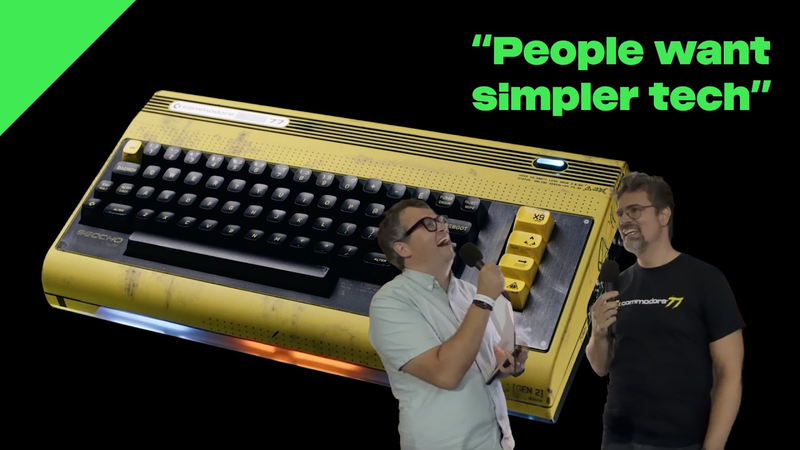
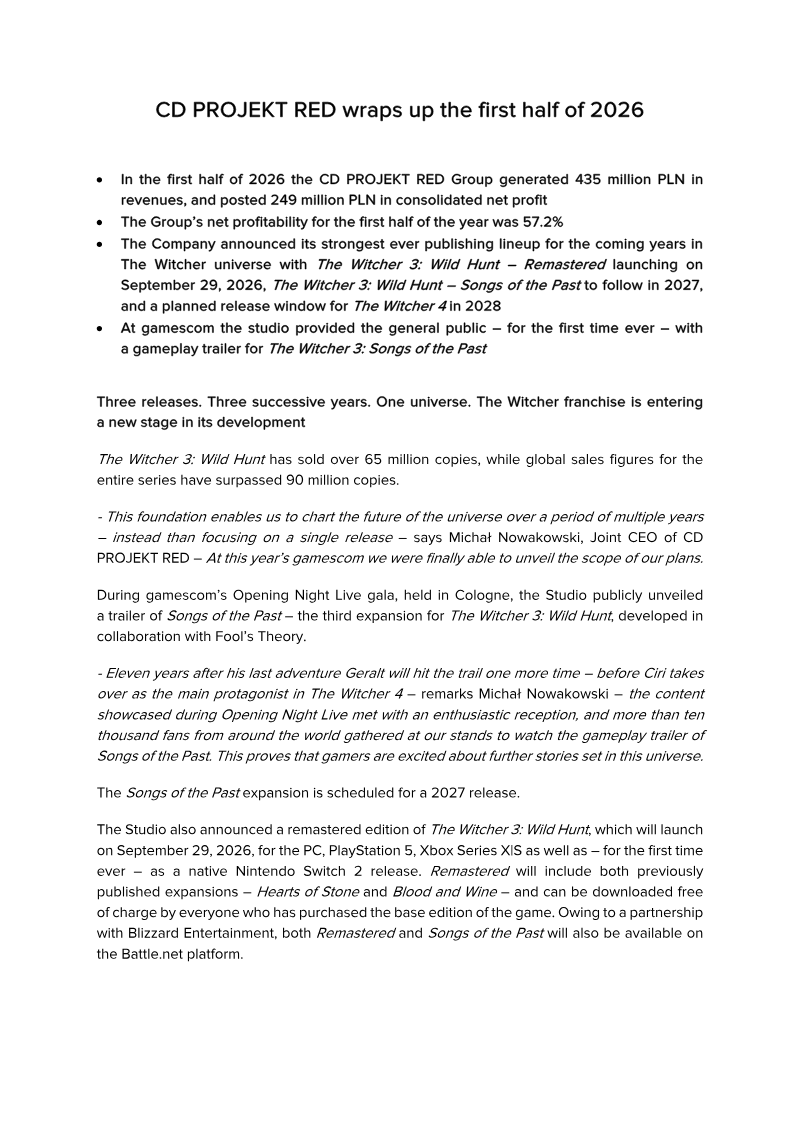
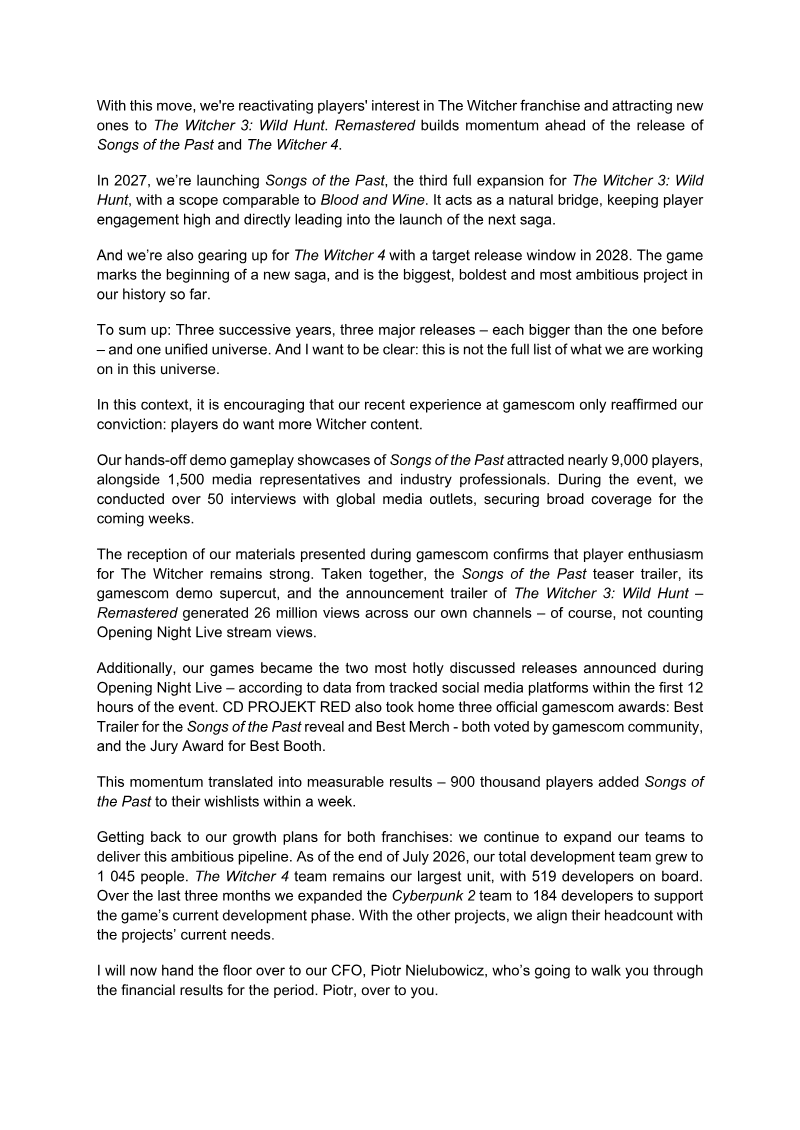
Team17. They're starting to compete with companies like Atari. It's also partnered, surprisingly, with CD Projekt for the for Cyberpunk version of the Commodore, which they've called the Commodore 77. They showcased that at Gamescom. Now, on top of that, it has released a flip phone, the comeback 8020, which is a digital minimalist device in that it has plenty of apps and connectivity. You can still use Google Maps to help yourself get around whatever city you're in. But, it doesn't include things like social media. It's a stripped-back phone for the for those that don't want to be connected 24/7. And that in particular is proving to be a hit to the point that Commodore is talking about itself in comparison to companies like Apple. And now, this is a short interview. We did it on the booth uh Commodore's booth at Gamescom, but I felt it was a surprising one. And when you think around some of the conversations we've been having on this show regarding nostalgia and how that seems to be infiltrating younger audiences that didn't actually grow up with a lot of this stuff. I think Commodore is really leaning into this trend. Just as Blizzard is right now with World of Warcraft forever, just as you know, RuneScape seems successful
with old school RuneScape. What if we go back in time and take things in a slightly different direction? That's what a lot of people are thinking at the moment. Anyway, I thought it was a really interesting chat. It's not too long. I think you'll find it interesting. So, here is my conversation with Perry {slash} Christian. Hello, Perry. Welcome to the show.
Thank you. Welcome.
I was trying to look up your background. It's quite uh you have quite a unique well, a literal background. You have quite a unique journey into this role at uh uh Commodore. Can you tell us a little bit about where you've who you what your experience is and what you've done before?
Well, I was born at an early age.
[laughter]
So, um I was an actor I guess originally. So, came out of college, did drama in college, and very lucky my first film part was Baptism of Fire on The Phantom Menace, so I was Episode 1.
Wow.
Literally running in first half, hang up being shot at, and [laughter] squibs exploding off off the hat and stuff. So, did that for and still do that to a degree for for about 20 years. Um so, I'm been very lucky that the
films I got to work on. I still do voice acting, but alongside that I started doing YouTube.
Just on a on a whim I thought, well, I love retro like I'm into
Yeah.
I had a Commodore 64 and Amstrad PCW. I was building up my old collection. So, I thought I'm just going to do a repair video for a Commodore 64.
Yeah.
And someone said I always remember I read in a forum they said "This is amazing. Please keep doing this." I saw I didn't understand why or what what it might be, but you know, I I try and I try to make jokes in videos and stuff. So, I kept doing it and 8 years later I got to review something called the C64 X, which is a PC like a Linux PC that was licensed from the still existing Commodore brand. So, it was a Commodore 64 X.
The video got a million views. That put us on the radar of the license or the the brand owners.
Oh, wow.
And we started talking, you know, myself, Shawn Donahue and Leo Leo Nigro, who kind of
created that product and licensed it. We started saying, you know, I wonder if we could maybe do something with the real Commodore.
Maybe license it. We put a proposal together with three options for them. It was like, you know, we could work together or we could license it or kind of almost half tongue in cheek at the end like, you know, or we could maybe buy the brand. And I always remember we waited for a couple of weeks and they came back to me and they said "You know, they're Dutch. They said, you know, you you seem to know to know Commodore better than we do. We might like to sell you the whole company." And it was like
Wow.
What? And from there we just we went full steam ahead. Got investments. The beauty of it was just to sum up, we, you know, being in the retro community and Commodore uh Commodore YouTube videos, I knew what people wanted because I was one of those people.
Yeah.
I'm the customer. So, it's to put together a Commodore 64 Ultimate, which you'll see inside the
booth. You'll see it inside the booth. Um was very easy to to put together thanks to Gideon who'd already created the parts and yeah. That's That's the Believe it or not, that's the short version.
And how you're finding the baptism of suddenly being a you know,
It's another baptism of fire, yeah. It's a privilege, folks. I say to people all the time, I am just honored to be able to be in this position and to get to be a steward of the brand. So, I just feel lucky constantly that it's a company that people already recognize. You know, I could be working on a startup that we have to sell from the ground floor up. Here, it's people immediately understand what it is. Yeah, very lucky.
We'll get on to the game stuff, which is, but I have to say, I was really fascinated by the disconnect sort of trend that you've you've been tapping into with the phone. I didn't even know much about it. I had to read a little bit more into it and I find it really appealing. How do the two things come together, Commodore and that that sort of idea?
It almost looks too obvious to me, but
I'm on the inside. People want to go back to simpler tech.
Mhm.
They're getting sick of smartphones being, you know, their data being harvested and sold, tracking everywhere, tracking cookies, which we don't have on our website for that reason. People want to go back to a simpler tech. Commodore is from that time.
Yeah.
And we left or I'd say the lights dimmed is how we say it um or we blipped out in 1994, right before the internet became a thing, right before, you know, the iPhone started to to be a thing in 2003. So, it's almost makes sense if you reboot Commodore, you start where you left off. 1990 now so now we're in 1995 to 2000 era for Commodore. Which is perfect because that's what people want to go back to.
Right.
So that that's where the digital minimalism fits in perfectly with Commodore, yeah.
I can see the appeal myself. Can you Is there a groundswell of people that are sort of craving this?
Oh, yeah. Oh, the the movement is huge towards this this you know digital minimalism, more intentional tech.
Yeah.
You've seen people buying you know vinyl records again.
Mhm.
Uh going back to flip phones organically.
Yeah.
And just getting off Facebook and that is a huge movement. So we uh again are kind of lucky that it's happening with or without us. But my philosophy is we need to build Commodore into the same level as Google and Apple. So we can do the cool retro things for the retro fans. For you know myself being a retro fan. How do we build Commodore to be that big based on nostalgia alone? That's a niche and you can't do it as a hobbyist computing brand. So my philosophy with the flip phone for example with other things that you're going to be seeing from us is those bring in the bigger audience.
Yeah.
Like I I'll tie in with Cyberpunk.
Yeah.
It brings in that bigger audience so we can afford to do bigger things for the original fans.
Yeah.
So it is a a symbiotic win-win uh
relationship.
I was going to ask this at the end actually. That Cyberpunk partnership. How do Well, I get it. It's a broader game, big massive mainstream mega hit.
Yeah.
What's the connection between that and Commodore?
So a very interesting one. So Cyberpunk that timeline of the their 2077 version of the future it stems away from our real future in the early '80s, right? So if you some people say '82 '84 is when the Cyberpunk timeline diverges. So we go back to Commodore the Commodore 64. In our story officially Commodore survived continued on, and in 2077, it's still a brand that people love.
Mhm.
So, in their world, you can still buy a a 64, but it's now a 77. It's been upgraded a bit. But also, retro-futurism is what how you describe cyberpunk.
Yeah.
Right? Like Blade Runner is retro-futuristic. Our whole philosophy here is we do retro, and we do future.
Yeah.
We do the two hand in hand.
Yeah.
So, it just fits.
Yeah. It's It's really fascinating.
And guys, it's great you've got micro probes there, Atari over there.
Yeah.
But you But you are
days.
Yeah, it is like the old days, but at the same time, you're doing stuff that is not just leaning cuz I was going to ask like, you know, I bought myself an Analog 64 recently. I'm I love these old these old products.
Um and I'll just going to ask if the nostalgia-driven market for these sort of premium devices is large enough to sustain a business long-term. And I'm guessing the fact that you're doing this other thing is maybe not.
Well, there's two answers to that. It is big in the sense that all those parents, even grandparents, are now introducing their kids to it.
Yeah.
So, the nostalgia sort of permeates through two three generations. We're seeing that now, right? I mean, you look through the window, there's a kid playing on a C64 right now.
Yeah.
Who's next to him? His dad.
Yeah.
Right? That's So, that works really well for keeping nostalgia alive. But it is still if you if you look at it as a segment, it's still, you know, small hobbyist, even with that.
So, also, we're not getting any any younger, right? So, you could argue that that eventually will dwindle. But I'll go with this. As you attract Gen Z with maybe the Y2K aesthetics, those kids, instead of just like saying, "Oh, yeah, Dad, that's cool. Thanks, Dad." and then going back to their iPhone,
Yeah.
they're now going to see this surrounding them and feel like, "Oh, I actually This is a vibe I like."
Yeah.
And that way it becomes sustainable, right? Those kids grow up, and they show their kids, and we keep doing this. But, the other side of it is, of course, it can dwindle away, which is why we always have to do modern products alongside it, like a flip phone, and like other things we'll be bringing out.
How did the Commodore 64 launch relaunch go?
Phenomenal. Like, I knew it would be big, but we've we've sold Okay, in our first week, we sold uh I mean, I talked about I talked about numbers a bit, so I can say this again.
Like, our first week of 3 weeks, we had generated over 2 million in revenue. We are orders of magnitude more than that today, but C64s alone, we've sold over 27,000 of those machines, which is mind-blowing, right? For a a 40-year-old computer.
Yeah.
So, that's been amazing. But, what was really interesting was when we launched the phone, that did the same in its first weekend as the C64 did in its first 3 months.
Ah.
So, the phone immediately went
to the sky.
Amazing.
And that's because when you look at those market segments, as I was saying, the retro the the Commodore community, specifically, if you look at it as a segment of the phone market,
Mhm.
it's 0.0.00063% of the phone market. So, you can see what we can tap into, what the potential is to bring Commodore to that much bigger world. Yeah.
I imagine lots of people that come in for the Commodore 64 come in quite near the start, and it might be That's where you get most of those fans. Whereas, with the phone, potentially
Yeah.
if if the momentum builds around that idea and that concept, it can keep it can keep growing.
Yeah, exactly.
This might be a naive question, but have you been heavily impacted by the component shortages?
We've been somewhat impacted, yes. So, we we've been quite lucky that you know, we we made a decision early on to buy up a bunch of FPGAs, more than we needed.
Okay.
And there was talk of using them in a separate product, so we had them on standby. Then, when the FPGA prices more than doubled, we were able to tap into our existing stock of 10,000 FPGAs. It It does continue to impact us. We see a lot of complaints about the phone price. We found a way to drop it by $100, but even then, you know, understandably, $399 for a flip phone, although it's not a
Yeah.
It's not your granny's flip phone, but it can seem expensive, but that is purely because the RAM price went from $11 per unit to $86 per
Absolutely.
per phone. Just for the memory. That's before you look at development, software licensing, that everything
else. So, to release that phone for $400, we have a tiny sliver of a margin on that, but it is it's great for the company and for the awareness as well. So, there are other financial benefits.
not just a flip phone. It does It does do apps and things. It is It isn't It isn't completely disconnected. It It just
No social media, so social media is blocked because there is a huge growing market that want that. But, it runs 99% of Android apps. It has a 48 megapixel Sony camera. Uh and so, just some really cool stuff. You can remote control the C64 you using it like it from the from the LED colors. As long as it's on the Wi-Fi, same Wi-Fi network, you can configure the RAM, you can save your game, you know, uh game configuration. Everything you can do in the menu of that, you can do from the phone. Yeah. So, we're building an iPhone-like ecosystem where the iPhone can control the Mac. The The Coleco can control the C64.
That's cool. That's very cool. Well, you
know, you're expanding into software, right? With Alien Breed uh the collection. Uh what's the ambition here? Are you taking on Atari?
Uh I I would say we're we're friends with Atari, right? It's like
Oh, yeah. Well,
It's not like the rivalry.
Retro scene's all very friendly with each other. That's what I think I'm always quite
Yeah.
surprised by and pleased by.
Yeah, but I think joining them, you know, a rising tide
Yeah, yeah. all boats if you if you want to put it that way. So, that everyone doing good stuff for the community and the market helps everyone. But, our first publication was Jupiter Lander, which you see running on one of the machines. Jupiter Lander 2, I should say. Jupiter Fracture. And that's that was the first Commodore game uh out of the gate for us. And again, as I say, we go retro, we go future.
Yeah.
So, retro was Jupiter Lander 2. Future was Alien Breed for PC and console.
Yeah.
Keep following that uh methodology because it it's working. Like, it's working well. Yeah.
So, you're planning to do quite a bit more in this space, then?
Yes. There We have some very interesting launches hopefully at CES in January.
Oh.
Uh from a software and hardware perspective. But, software's definitely part of the road map. And uh yeah, we've we had a lot of fun doing Alien Alien Breed, yeah.
Yeah, I like it. Um they're exciting.
Have you had to I know you added uh Martin Nelson to the team. You had to expand quite a lot to sort of do that?
Um yes, that that's been really interesting. He was here yesterday, lovely guy. Uh we're we're very lucky to have him. So, expansion is is tricky, right? How do you do it without getting too big?
Yeah.
I everything still passes across my desk, every single decision. Because it's very I want it to have a one very clear vision.
Mhm.
There's there's a reason I can Hollywood you have one talking about Hollywood at the start. You have one director on set.
Yeah.
So, the movie is is one vision. So, we're we're definitely being very cautious about expansion. We have about 30 team members now, 30 30 30. Which is almost feels too big for a startup. But, when you look at the scale of what
we're doing, I couldn't do it alone. So, we have to we have to have that. So, we're we're very slowly bringing on team members and and just being cautious with the cash flow and all of that.
Yeah. So, the the the the games that you're doing, how is that working? Are people pitching stuff to you? Are are going out looking for people to work on specific projects?
Yeah,
so Alien Breed was something that was pitched to us by Ann Stream and Team17. And we're very lucky they've done a lot of the leg work already. We were able to come in and help with the publishing side and the marketing. And obviously, you know, it's got our our name front and center, which is amazing as well. Um but we we receive pitches almost daily, I would say.
Okay, great.
So, we just announced something called Made for You or Made for Ultimate, which is to develop games specifically for the C64 Ultimate to take advantage of the extra, you know, 24 channels of sound, the extra RAM and CPU speed. So, if you go to the bottom of our website, there is something that says work with us or build with us. You can submit stuff.
All right.
a very purpose-built form. I look at
every single submission myself personally. Not every day, cuz I don't have time, but I
[laughter]
I have a a growing list, which I need to get back to after Gamescom. But that's how we will, you know, be able to work with people, co-brand, and help them publicize their games on our website.
Amazing. I'll ask one final question, which is is it I I always ask this question at the end of our interviews. Where would you like to be in 5 years?
Um still here. Still doing interviews and just being in the booth. I think it's [laughter] as far as
Physically here.
Physically here. As far as Commodore goes, I do see it alongside Atari, you know, in a level kind of way, like the the the level they're doing, the turnover they're generating. They're a public company. I don't know if we'll we'll become a public company.
Yeah.
But we get a lot of requests for that from the fan base. They want to own a piece of Commodore.
All right.
And that would be one one of couple of ways we could literally allow you to have a share
certificate
Yeah.
on your wall. So, I think just still doing what we're doing sustainably, maybe I originally said I want to do two things really well every year. We've done, I think, six or seven things.
Okay.
Every single one's been successful. We're very lucky. You know, knock on knock on wood.
Yeah.
So, I'd like to still do that. Not do too much and and just keep growing that in that way.
Well, I'm excited to go back. I think it's a really interesting approach to do with the phone component too. I know that's not necessarily games per se. It's got Commodore games on it. So.
Well, I guess a little bit.
Yeah, maybe.
But yeah, well congratulations on this lovely booth. It's really cool. I'm going to look around it in a moment. And yeah, congratulations on the getting up
to that.
Yeah, thank you.
That's it for today's episode of the Game Business Show. Thank you to Perry / Christian for talking to us today. I do find this phenomenon quite interesting. Not just because there's obviously lots of older gamers that remember these days and they want to go back to how they felt when they were younger. Um but because there's actually lots of younger gamers too that sort of missed out on all this and they're wondering, "Hey, what if our games were a little bit
simpler? What if we can go back to those sort of moments? What if we could have a phone that doesn't connect me to the internet every 30 seconds?" I don't know. I I think it might be an interesting trend or maybe that's just the older man in me thinking. But that's it from us today. We will be back of course with more news analysis insight and interviews in the days and weeks ahead. If you want to make sure you don't miss an episode, you can go to the gamebusiness.com, put in your email address, and become a subscriber. You can. It's all for free. Um but if you'd like to receive our Monday episode called Here's the Thing, that is only for paid subscribers. If you're interested in becoming a paid subscriber, please do. It helps us fund everything that we do. But that's it from me today. Until next time, thank you for tuning in.
Summary
Commodore, under the leadership of CEO Christian Simpson, is executing a dual-track business strategy that blends retro-computing nostalgia with modern digital minimalism. By leveraging the iconic Commodore 64 brand, the company has successfully transitioned from a niche hobbyist entity into a multifaceted hardware and software publisher. The firm’s core philosophy centers on the concept of "retro and future" existing in tandem, aiming to scale the brand to a level of market recognition comparable to major technology companies like Apple or Google.
The company’s recent performance highlights the viability of this approach, with over 27,000 Commodore 64 units sold since its relaunch. A significant driver of growth is the "Comeback 8020" flip phone, a device designed for digital minimalism that excludes social media while retaining essential connectivity and app functionality. This product has seen rapid adoption, with first-weekend sales matching the initial three-month performance of the Commodore 64 hardware. By targeting consumers seeking to disconnect from data-harvesting ecosystems, the company is successfully tapping into a broader market segment beyond traditional retro-gaming enthusiasts.
Operational strategy involves maintaining a lean, centralized vision with a team of approximately 30 employees, ensuring that all major decisions remain under the CEO's direct oversight. The company is also expanding into video game publishing, exemplified by partnerships with Team17 for Alien Breed and CD Projekt for a themed "Commodore 77" project. These initiatives are designed to attract mainstream audiences, thereby generating the capital necessary to sustain and expand offerings for the core retro-gaming community. By focusing on sustainable growth and avoiding over-expansion, the company intends to solidify its position within the industry alongside established peers like Atari, while exploring potential avenues for public investment to allow fans to participate in the brand's future.





Comments