2015
Company
Documents about 2015

New Media Ecosystems: Amazon and the Advancing Game Economy
Eric Freedman's paper examines Amazon's expanding presence in game-based technologies and the broader implications of that presence for digital economies.
- Amazon's 2015 acquisition of the CryEngine codebase (rebranded as Lumberyard) and its 2016 purchase of the Twitch streaming platform, combined with Amazon Web Services, form an integrated ecosystem linking game developers and players.
- The paper positions Amazon as a media company whose influence spans e-commerce, middleware, and consumer hardware, and argues that game engines are becoming foundational to commerce, artificial intelligence, and everyday interfaces.
- Amazon reportedly uses game spaces as testing grounds for new interaction models, linking its Alexa voice service and connected devices to engine-driven infrastructure and crowdsourcing research through its developer and streaming communities.
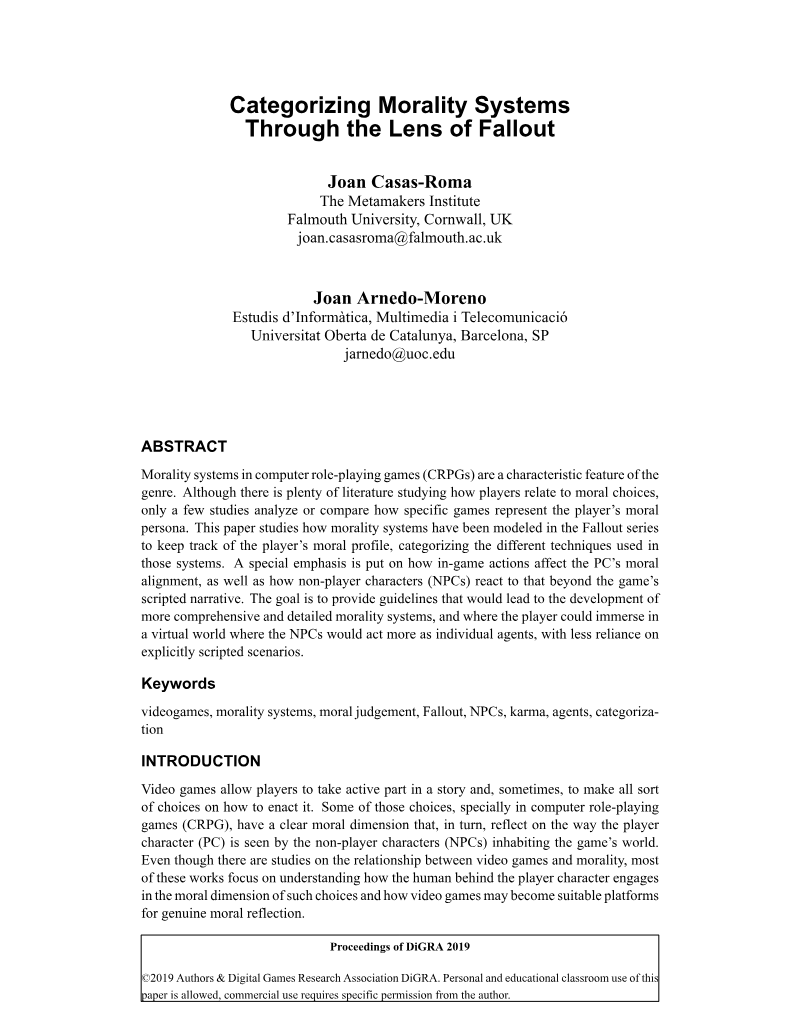
Categorizing Morality Systems Through the Lens of Fallout
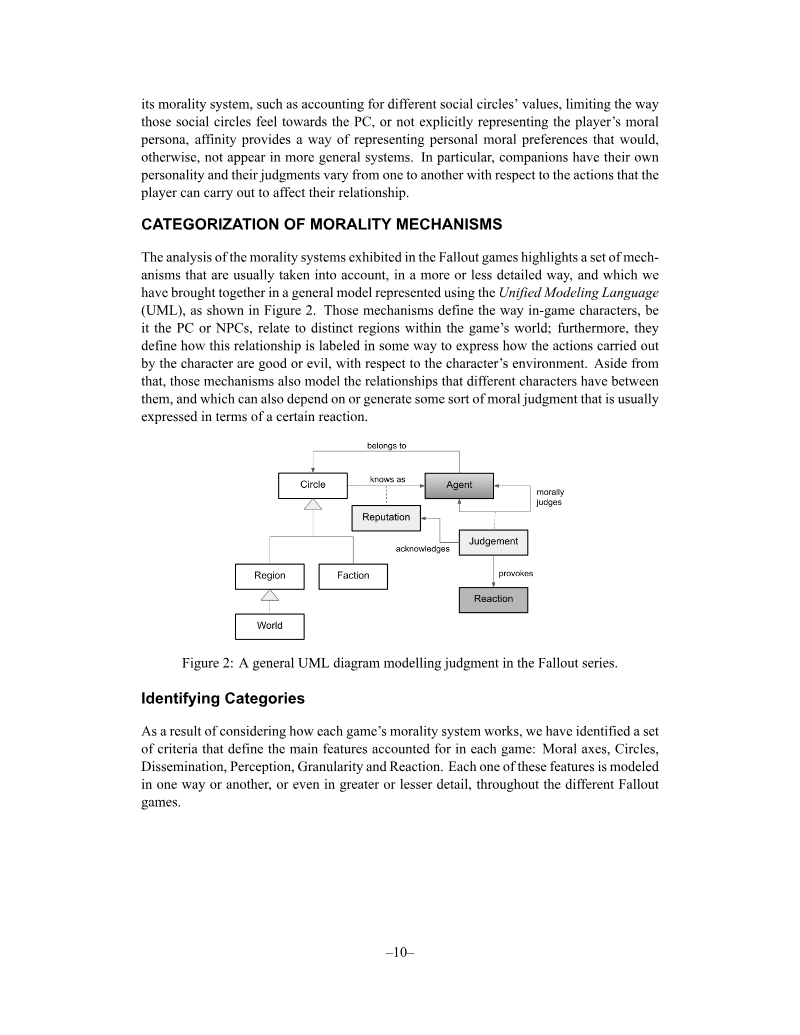
The paper examines how morality systems in the canonical Fallout CRPG series track a player character's moral persona, focusing on how in-game actions shift moral alignment and how non-player characters respond to that alignment.
- The paper analyzes how the five canonical Fallout CRPGs (1997, 1998, 2005, 2010, 2015) model moral weight, excluding spin-offs and Fallout 76 because it lacks NPCs, shifting focus from prior player-experience scholarship to the games' own mechanics.
- The authors argue that Fallout: New Vegas has the most comprehensive morality system in the series because it tracks good and evil on separate axes, so deeds do not cancel each other out.
- New Vegas tracks Fame and Infamy per faction and town, reflecting that different social circles hold different values, a design that the authors identify as the most nuanced in the series.
Game Streaming Revisited: Some Observations on Marginal Practices and Contexts
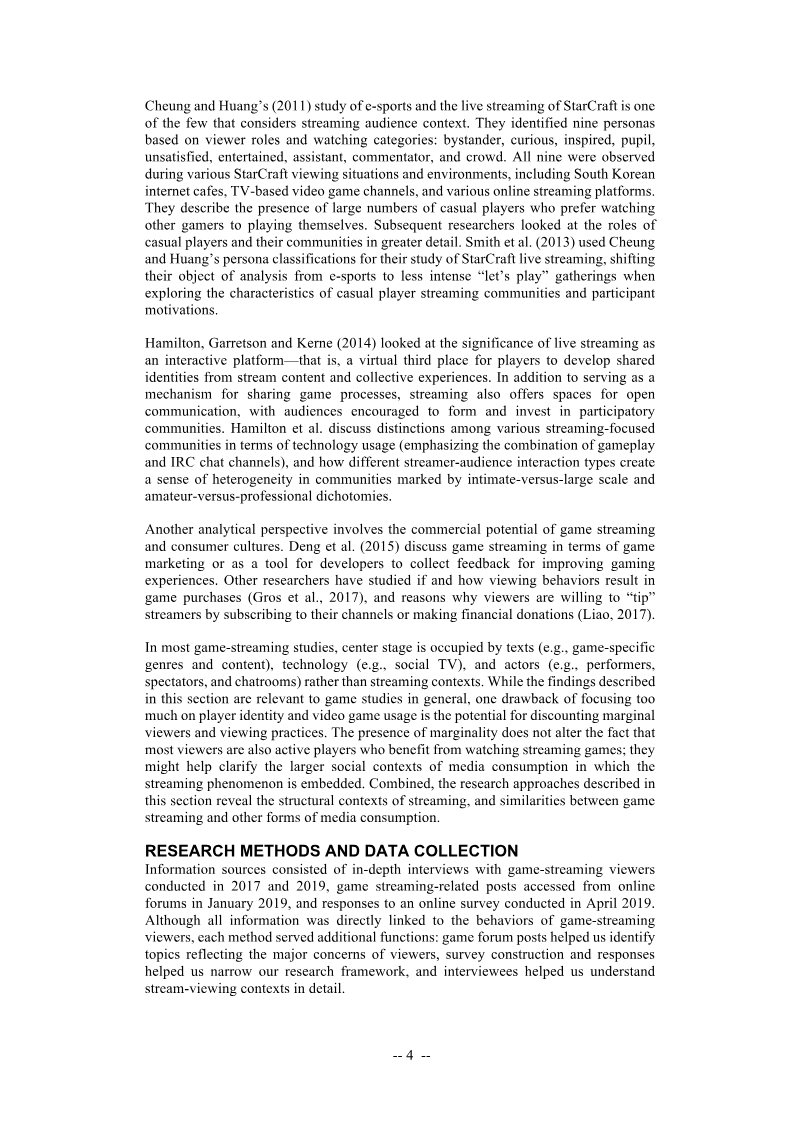
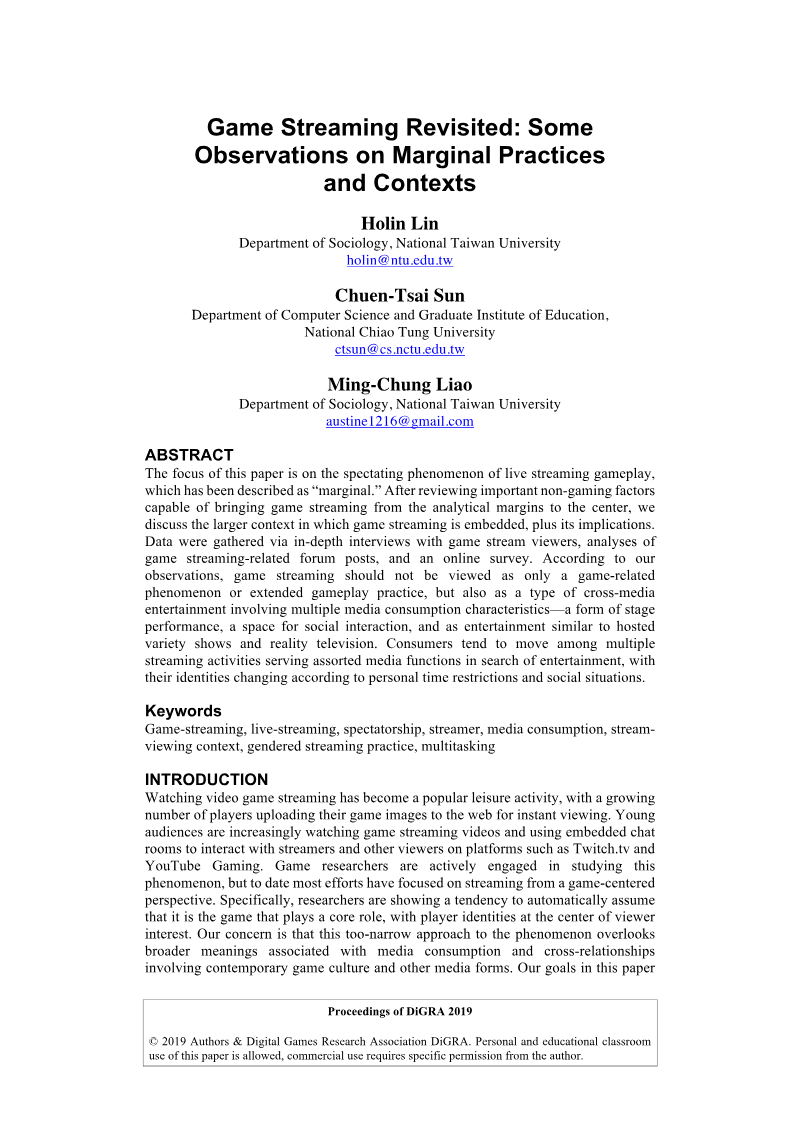
Game streaming, this study argues, should be understood not only as an extension of gameplay but as a form of cross-media entertainment, comparable to stage performance, social interaction spaces, and reality or variety programming.
- Game streaming is framed as cross-media entertainment comparable to stage performance, social interaction spaces, and reality or variety programming, rather than merely an extension of gameplay.
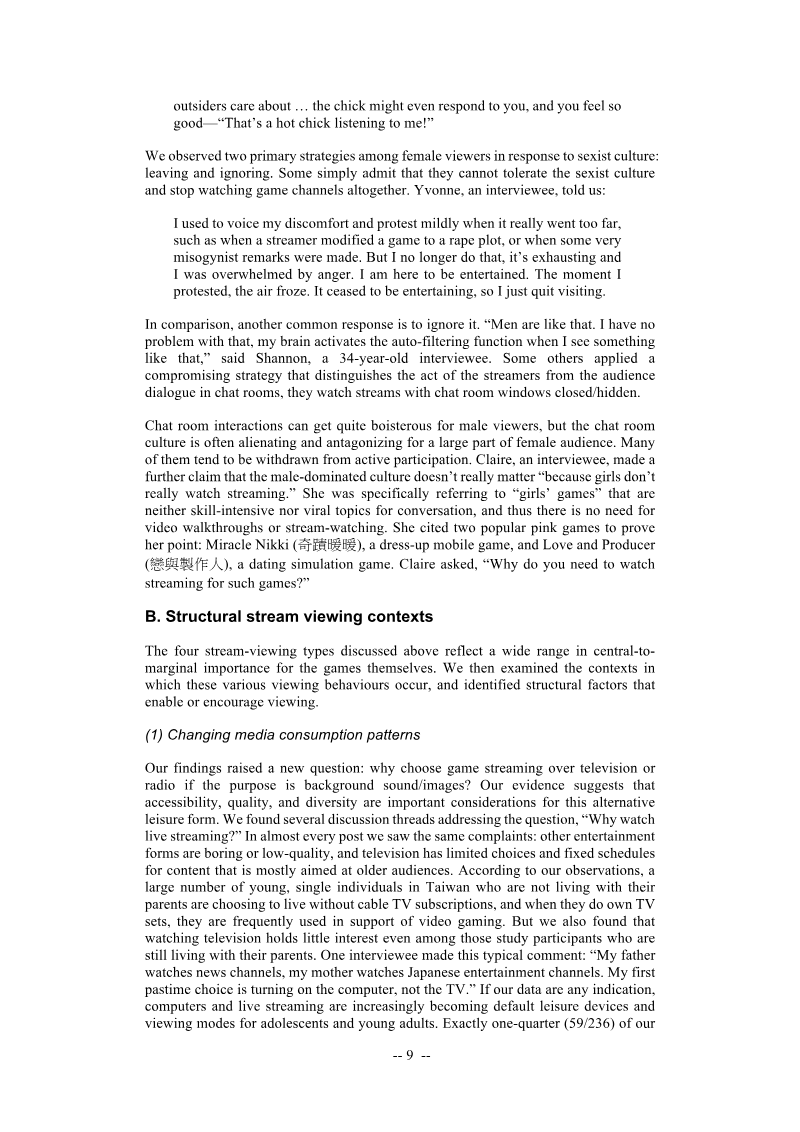
- The study identifies four viewer types: play-centered viewers, fan-based viewers, vicarious audience players who experience games through others, and background media users.
- Background multitasking and social companionship are the principal motivations for many viewers, and roughly one quarter of survey respondents said watching live streams had become a habit.
Character-Driven Narrative Engine: Storytelling System for Building Interactive Narrative Experiences
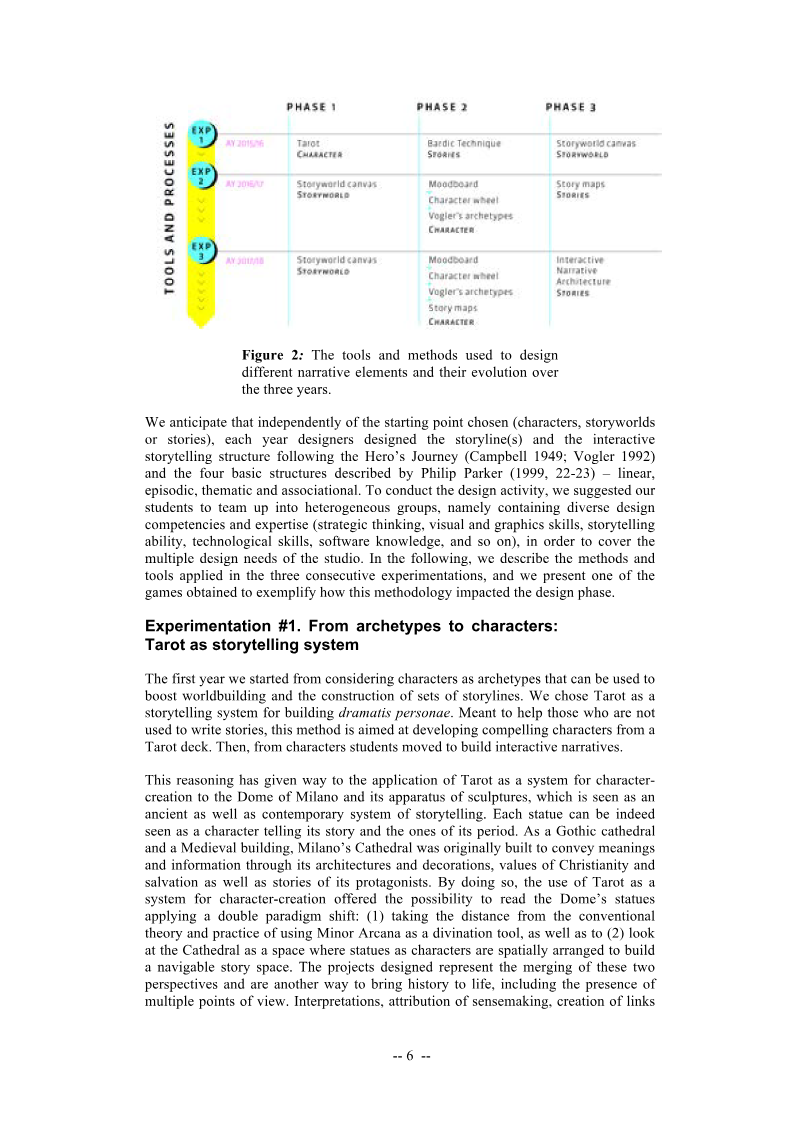
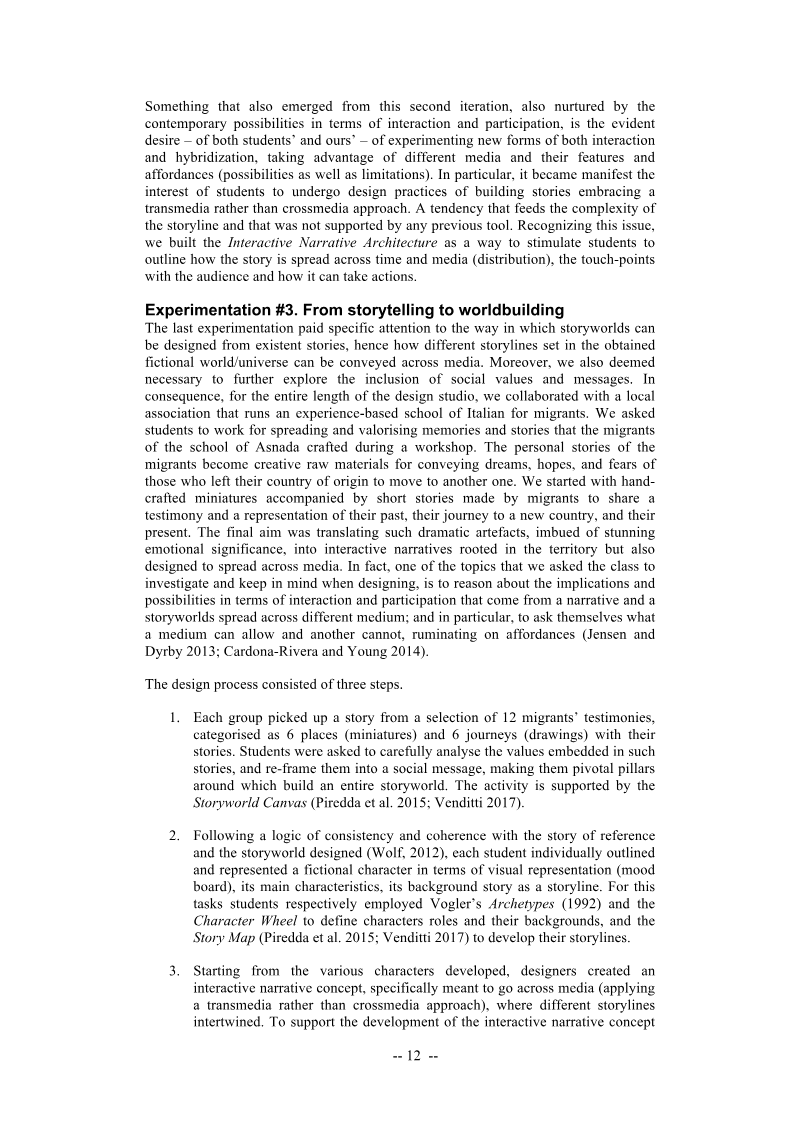
This document presents a practice-based research program conducted at Politecnico di Milano between 2015 and 2017, with a fourth edition in progress, in which roughly 150 MSc design students developed interactive, character-driven narratives.
- The research program at Politecnico di Milano (2015–2017, with a fourth edition in progress) involved roughly 150 MSc design students developing interactive, character-driven narratives, with findings drawn from qualitative ethnographic observation rather than quantitative audience measurement.
- Standard character-development tools such as Vogler's archetypes, the Storyworld Canvas, and the Character Wheel helped build characters but proved insufficient for designing interactive narrative structures, prompting the authors to move beyond them.
- Beginning from existing literary sources, such as Calvino's Invisible Cities, improved the completeness and consistency of storyworlds compared with starting from Tarot-archetype characters, which students found hard to make credible.
21st Century Soul Guides: Leveraging Myth and Ritual for Game Design
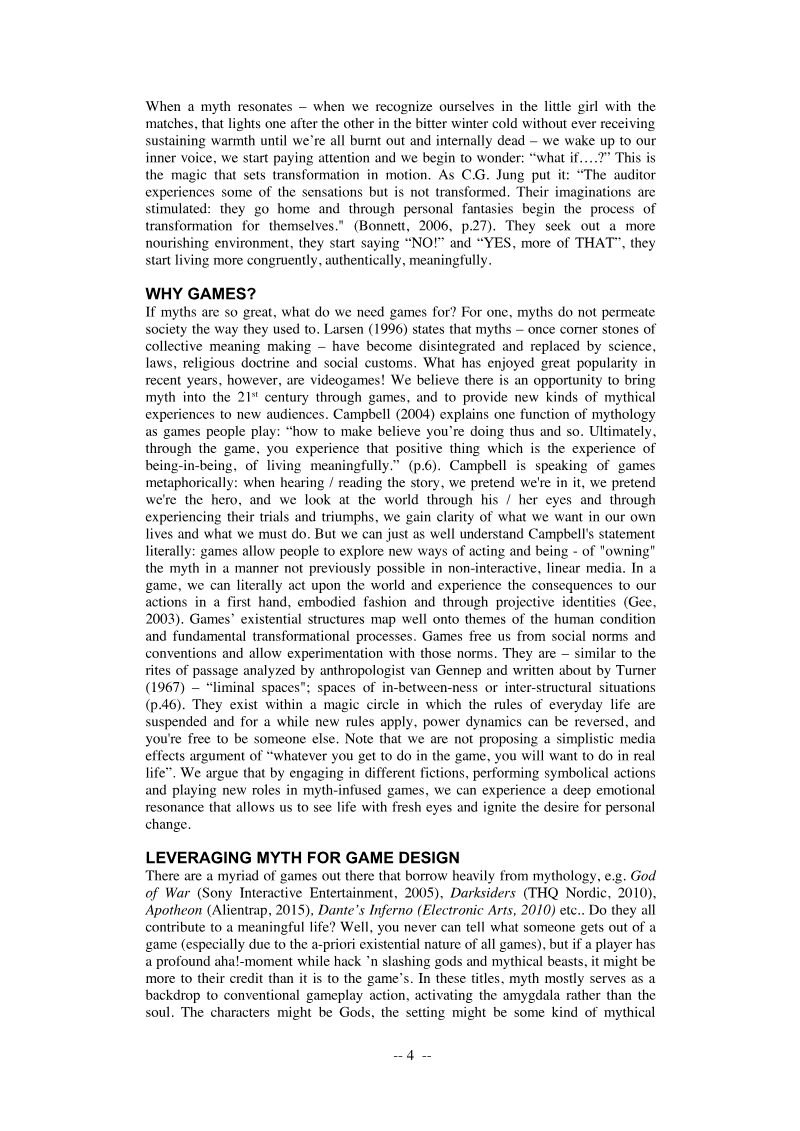
Doris Rusch's paper "21st Century Soul Guides" advances a theoretical argument that myth and ritual, traditionally used to help people confront existential givens such as death, freedom, isolation, and meaninglessness, can be revived through video games as modern vehicles for meaning-making.
- Doris Rusch's paper argues that myth and ritual, historically used to help people confront existential givens like death, freedom, isolation, and meaninglessness, can be revived through video games as modern vehicles for meaning-making.
- The paper contends that prior game research has focused on myth's social and aesthetic dimensions while neglecting its psychological and spiritual function, and it is framed as a call to action rather than an empirical study with no measured claims about player outcomes.
- The concept of the 'soul guiding' game distinguishes titles such as Journey, Shadow of the Colossus, and Never Alone from action-focused mythic games, favoring contemplation and reduced rigid structure over using myth as mere backdrop.
The Significance of True Line of Sight in Warhammer 40,000
This extended abstract, presented at DiGRA 2018, examines "true line of sight" (TLOS) in Warhammer 40,000 as a lens for understanding miniatures, perception, bodies, and gameplay.
- True line of sight (TLOS) is a Warhammer 40,000 rule that determines which miniatures can see and attack one another, requiring players to trace a line from a model's head or weapon to a target's body.
- The paper argues that vision in wargaming is inherently tied to violence, since TLOS only has meaning within the shooting and damage resolution rules that follow it.
- Because the rule takes models and terrain positions at face value, a miniature's size, shape, and pose directly affect its vulnerability: a crouching figure is harder to shoot but less able to fire, while an exposed figure invites more fire, making modeling decisions strategically consequential.
Incentivizing Correct Waste Sorting by Game Design
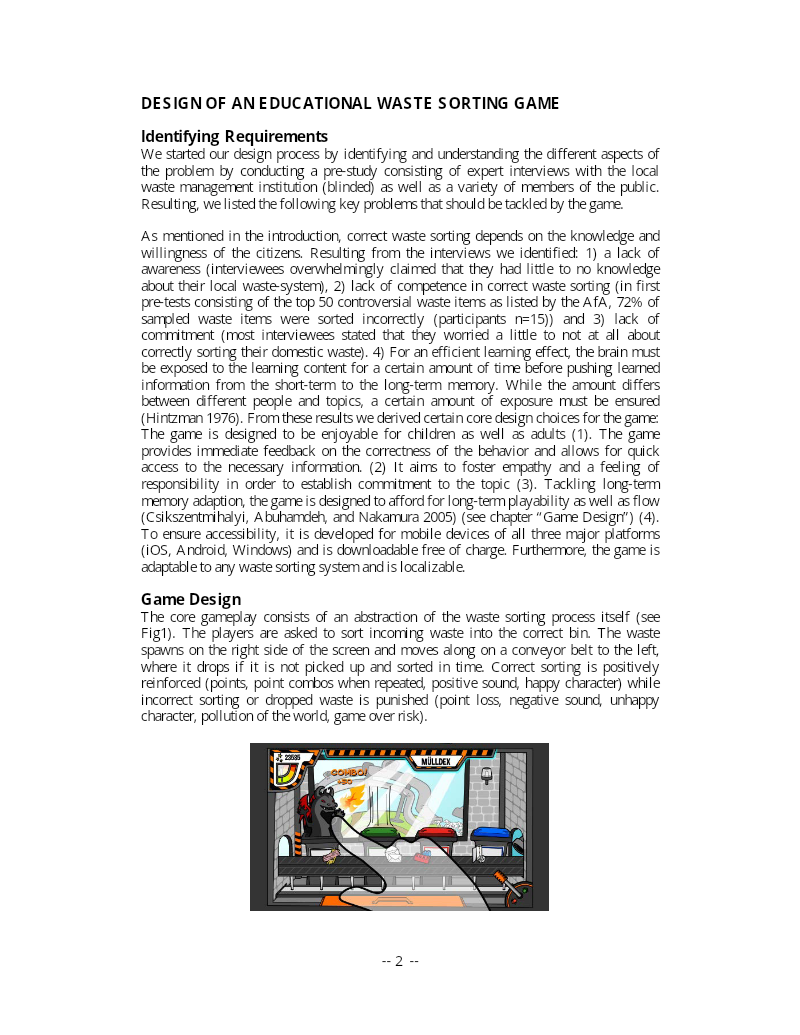
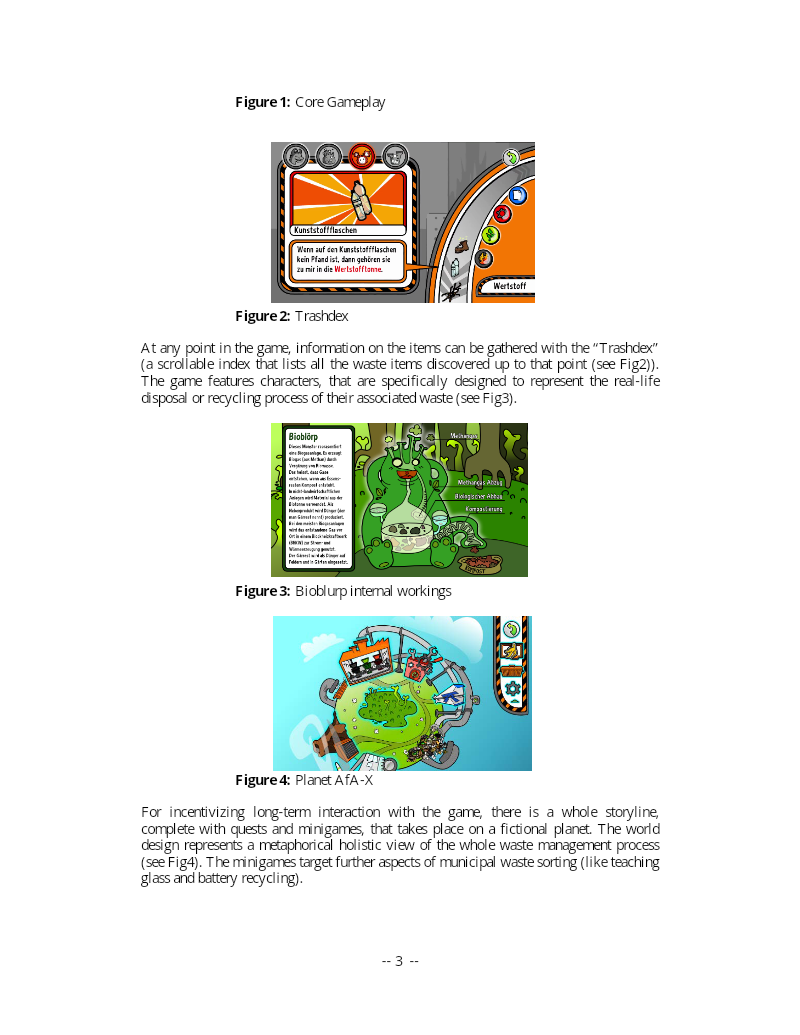
This extended abstract, presented at DiGRA 2018, describes the design and early evaluation of a free mobile serious game intended to teach and motivate correct household waste sorting.
- A pre-test found 72% of 50 controversial waste items were sorted incorrectly by 15 participants, and most interviewees reported little knowledge of their local sorting system or concern about sorting correctly.
- The authors frame citizen sorting errors as stemming from three gaps (low awareness, weak competence, and limited commitment), and argue game design can address all three.
- Because EU municipal waste systems differ, the authors propose a localizable app that adapts to any local sorting scheme as a substitute for the absence of a uniform EU-wide recycling system.
Blank Arcade: Exhibition of Games and Toys as Art
The Blank Arcade is a recurring exhibition of games, play art, and interactive media, organized by Lindsay Grace of American University in association with the Digital Games Research Association's annual conference.
- The Blank Arcade is a recurring games-and-play art exhibition organized by Lindsay Grace of American University in association with the Digital Games Research Association's annual conference, aiming to bring game art practice and history into the game studies community.
- Prior editions were held in Salt Lake City (2014), Lüneburg, Germany (2015), and Dundee, Scotland (2016), and the abstract proposes a 2018 edition.
- The model is designed to be sustainable for host conferences: organizers handle curation, outreach, advertising, and web hosting, while local hosts provide space, equipment, and logistics, with sponsorships sometimes covering shipping and catering.
Interpretive Challenges in Games
Jonne Arjoranta's paper argues that games contain a distinct category of mental challenge, the interpretive challenge, which is separate from the logical or strategic challenges usually discussed in game studies.
- Jonne Arjoranta's paper defines the 'interpretive challenge': a mental challenge in which a player must draw on knowledge outside the game (understanding people, cultural frameworks, background concepts) to progress or win, distinct from the logical or strategic challenges usually discussed in game studies.
- Most games involve some interpretation, but only a small number make successful interpretation a condition of play, which is why the category is useful for identifying a specific class of games.
- The paper's central case study is Her Story (2015), in which players search fragmentary video interview clips about a murder and revise hypotheses to connect vague statements to narrative events.
Wrecking the Game: The Artist as Griefer
Gemma Fantacci's analysis examines a set of artists who practice what she terms "anti-game" subversion, working inside commercial video games as "griefers" who exploit the rules and affordances designed into play to produce unexpected behaviors and artistic meanings.
- Fantacci argues that artists like Kent Sheely, Marque Cornblatt, Justin Berry, and Alan Butler practice 'anti-game' subversion by repurposing a game's designed rules and affordances as 'griefers' rather than by editing code or visuals, halting goal-driven play to create unexpected meanings.
- The analysis frames these interventions as destructive-creative: they first dismantle standard gameplay and then build a new artistic grammar from the same materials, a dual process the author links to Dada and Situationist strategies.
- Theoretically, the work draws on Galloway's counter-gaming and Schleiner's concept of ludic mutation, situating the practice within a lineage of avant-garde art movements and game studies.
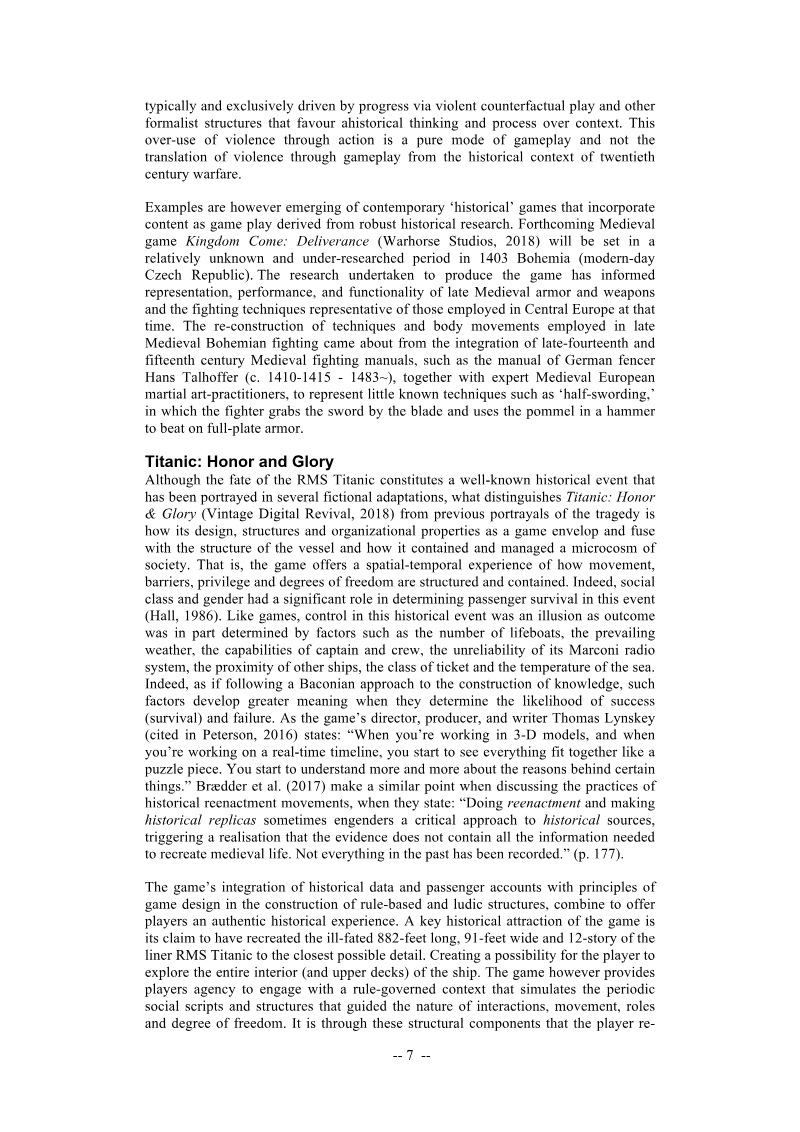
Presence at History: Toward an Expression of Authentic Historical Content as Game Rules and Play
Schott and Redder's paper argues that game developers are increasingly functioning as historians, using practice-led research to build authentic historical experiences rather than treating the past as decorative backdrop.
- Game developers are increasingly acting as historians, using practice-led research to build authentic historical experiences instead of treating the past as decorative backdrop.
- The authors argue that a newer wave of historical games pursues authenticity as living socio-cultural systems rather than mere accuracy of surface detail.
- Some recent titles embed historical research directly into rules and mechanics: Assassin's Creed: Origins was built with Egyptologists and linguists, 1979 Revolution: Black Friday drew on more than forty interviews with people who were present, and Kingdom Come: Deliverance reconstructed combat from medieval fighting manuals with martial arts experts.

The Games Monitor 2018
The Games Monitor 2018, the third edition after 2012 and 2015, maps the Dutch games industry and concludes that it is accelerating.
- The Dutch games industry saw a net job growth of over 60% concentrated in Utrecht, Eindhoven, and Amsterdam between 2015 and 2018.
- The total number of entertainment game companies increased by over 50 since 2015, continuing a previous trend, while the number of applied game developers stabilized at 114 companies.
- Applied games have a strong foothold in the Dutch industry, with healthcare and education remaining the largest market segments for applied game companies, and 62% of studios working on five or more projects in 2018.