1 free read left. Create a free account for unlimited reading + AI research.
Create free accountWhitepaper DiGRA
1 free read left. Create a free account for unlimited reading + AI research.
Create free accountWhitepaperDiGRA
Dr Merlyn Seller's paper examines trans embodiment and haunting in works by developer Kitty Horrorshow, including Rain, House, Eternity (2015), Anatomy (2016), and Hornets (2015).
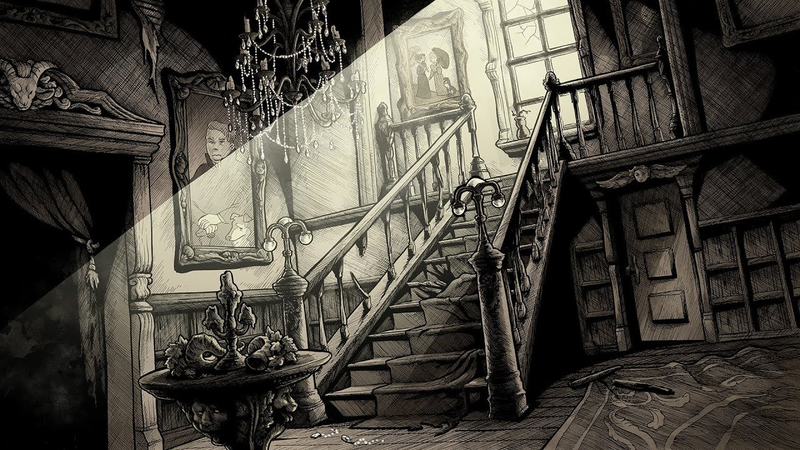
Dr Merlyn Seller's paper examines trans embodiment and haunting in the small-scale horror games of developer Kitty Horrorshow, focusing on works such as Rain, House, Eternity (2015), Anatomy (2016), and Hornets (2015). Responding to calls for a new wave of Trans Game Studies, the paper combines audio-visual-haptic and textual analysis of Horrorshow's corpus with autoethnographic reflection from the author's own experience as a trans player. It positions Horrorshow's minimalist 32-bit environments, with their uncanny architectures, forced reboots, and disembodied first-person avatars, as a means of exploring the affective darkness of transition.
The central argument is the concept of "diapolar haunting," a condition in which the trans player is simultaneously haunting and haunted, existing in an ambivalent state of present-absence and absent-presence both inside and outside the game. Drawing on Fisher's notions of the Weird and the Eerie, Derrida's hauntology, and trans-studies accounts of temporal splitting and haunting by transphobia, the paper argues that Horrorshow's designs make the player feel both insider and outsider, inaccessible and inescapable. This challenges conventional notions of immersion, which the paper presents as historically contingent and inadequate for describing trans play.
The analysis extends prior scholarship on Horrorshow's Anatomy, which has been approached through the glitch and through Gothic and disability studies, by proposing a more general model of trans (dis)embodiment in games. The paper contends that this model resists both tokenistic inclusion, which grants minorities a flat presence, and reductive narratives of trans affirmation. Its scope is primarily interpretive and theoretical, grounded in a close reading of a small, understudied body of independent works rather than in large-scale empirical data.

DiGRA · 2026

DiGRA · 2026



DiGRA · 2026



DiGRA · 2026



DiGRA · 2026



DiGRA · 2026



DiGRA · 2026



DiGRA · 2026

DiGRA · 2026



DiGRA · 2026



DiGRA · 2026

DiGRA · 2026
DiGRA · 2026