User Acquisition reports and market data
Documents
Holistic LTV: A Unified View to Drive Growth & Efficiency
Maximizing user lifetime value (LTV) requires moving beyond fragmented, siloed data to a unified, holistic approach that integrates user acquisition, monetization, and product development.
- Transitioning from siloed metrics like ARPDAU and eCPM to a holistic LTV model is necessary to capture the total revenue generated by a user across their entire lifecycle.
- Fragmented data and reliance on waterfall-based ad reporting obscure true revenue performance, whereas programmatic bidding provides the granular, impression-level data required for accurate LTV calculations.
- Organizational silos between user acquisition, product, and monetization teams often lead to conflicting goals, such as increasing ad load to boost short-term revenue at the expense of long-term retention.
Superstar Session: Build a UA Strategy Around Affinity With Contextual Ad Targeting
The mobile gaming industry is shifting toward contextual ad targeting as a primary strategy for user acquisition (UA), moving away from a reliance on traditional player data and behavior.
- Mobile user acquisition is shifting toward contextual targeting, which uses granular game metadata rather than personal identifiers to reach players based on their affinity for specific mechanics, art styles, and themes.
- This strategy relies on a framework of 52 distinct sub-genres, developed through expert analysis of major gaming markets including the US, Japan, and China.
- Machine learning models process this qualitative data to generate hundreds of specific data points per game, covering player personas, motivations, and core gameplay attributes.
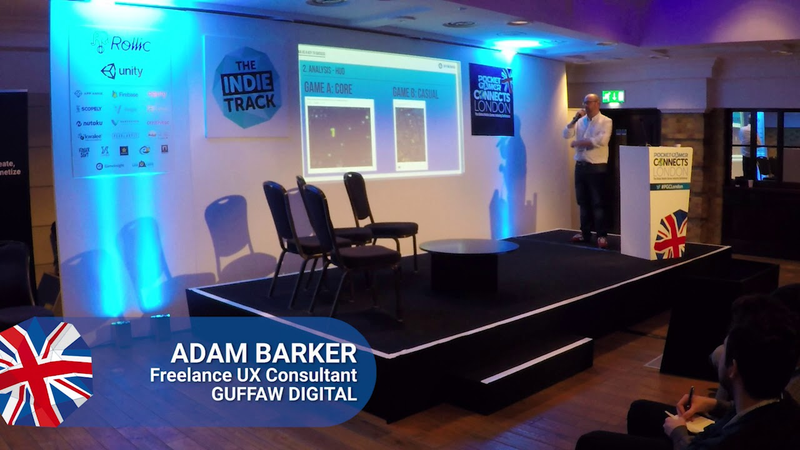
How a Well Designed UX can Improve Monetisation, UA and Retention and Keep Users Satisfied.
User experience (UX) design serves as a critical driver for monetization, user acquisition, and retention in mobile gaming.
- Approximately 30% of users abandon mobile games during the initial onboarding process, highlighting the critical need for optimized tutorial design.
- UX research and testing should be integrated early in the production cycle, ideally before coding begins, to validate design assumptions and identify friction points.
- To reduce tutorial drop-off, developers should use a 'chunking' strategy that delivers essential mechanics in small, action-oriented segments rather than overwhelming players with full system information.
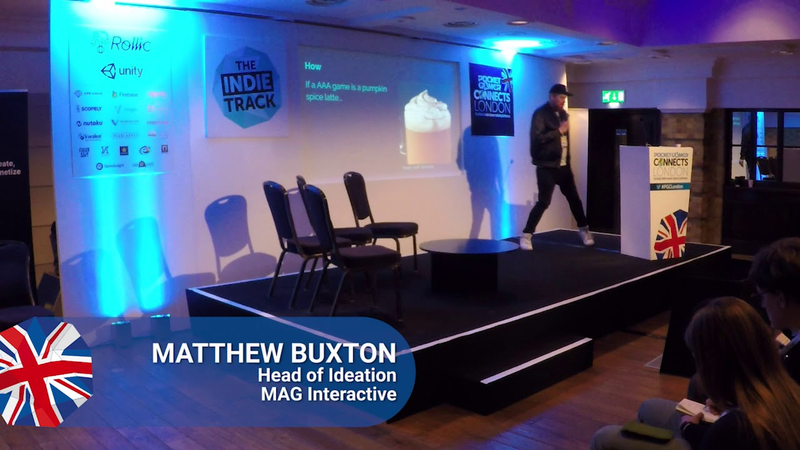
When to Prototype and Why
Prototyping serves as a critical, data-driven bridge between conceptual ideation and full-scale production in the mobile gaming industry.
- Prototyping must be used to answer a single, specific question—such as mechanic fun or technical feasibility—to validate concepts through objective metrics rather than subjective opinion.
- Prototypes should be treated as disposable tools to be discarded once the core objective is met, preventing the accumulation of technical debt and team burnout.
- Development teams should utilize a disciplined, time-boxed approach that prioritizes core gameplay functionality over visual polish.
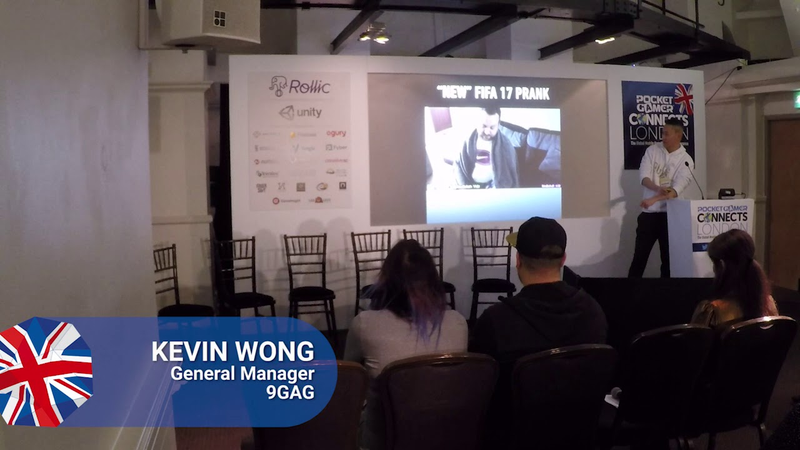
Bridging the Gap: Connect With Your Gamers on Social Media
The primary objective of this presentation is to provide game developers and publishers with strategies for effectively engaging global gaming audiences through social media.
- Successful brand integration relies on creative, narrative-driven content rather than traditional, direct-sales advertising to foster organic community interest.
- A February 2019 survey of over 400,000 global gamers identified a strong preference for gaming memes and humorous social content over standard promotional material.
- High-performing campaigns for titles like PUBG Mobile, FIFA, and Kingdom Hearts 3 achieved millions of views by prioritizing creative assets—such as custom makeup or musical performances—over overt sales pitches.

Influencer Marketing in Eastern Europe! A Hidden Gem or a Waste of Money?
Influencer marketing in Eastern Europe presents a distinct, high-potential opportunity for game developers, provided they adapt to the region's unique cultural and economic landscape.
- Influencer-led campaigns in Eastern Europe outperform traditional digital advertising by achieving 15% higher engagement rates than Facebook or Google ads.
- Influencer marketing in the region attracts a younger player demographic, averaging 18 years old compared to the 35-year-old average seen in traditional acquisition channels.
- While the region suffers from lower GDP per capita, it offers a high-value opportunity for long-term user acquisition due to significantly lower costs per install and high player retention.
Superstar Session: Influencer Marketing Sucks (and Some Best Practices)
The influencer marketing landscape for mobile applications is currently plagued by inefficiencies, lack of transparency, and poor scalability.
- Transitioning from flat-fee influencer payments to a performance-based, pay-per-install (CPI) model ensures advertisers only pay for verified user acquisition, guaranteeing positive ROI.
- Traditional influencer marketing suffers from low scalability and inefficiency due to manual outreach, reliance on unreliable vanity metrics, and the prevalence of bot activity.
- Integrating mobile measurement partner (MMP) tracking allows for the automation of influencer campaigns, removing the need for manual negotiation and constant oversight.
Firebase, Analytics, Google, and Understanding How They Work Together
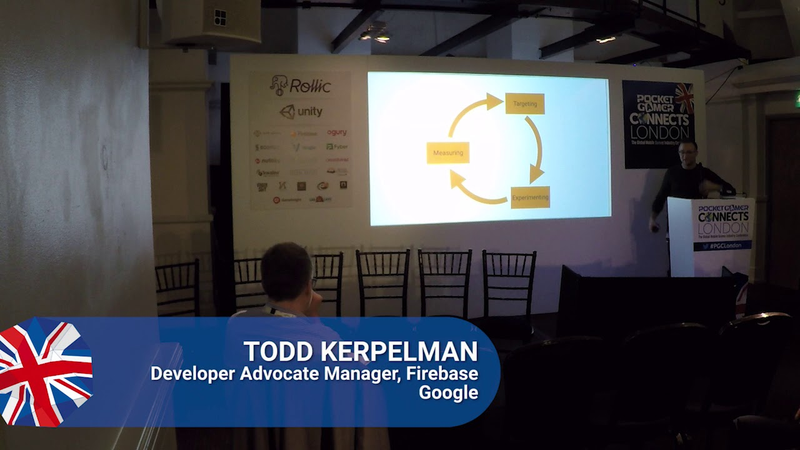
Firebase provides a comprehensive suite of backend-as-a-service tools designed to assist game developers in building, managing, and optimizing mobile games.
- Firebase integrates backend infrastructure, quality assurance, and user engagement tools into a centralized console to support the full lifecycle of mobile game development.
- The platform utilizes an event-driven Google Analytics model instead of legacy session-based tracking to identify specific user segments, such as high-value players or those at risk of churning.
- Developers can use Remote Config to adjust game variables in real-time without requiring new app store updates, facilitating immediate optimization of the user experience.
Bringing a Desktop Subscription Model to Mobile
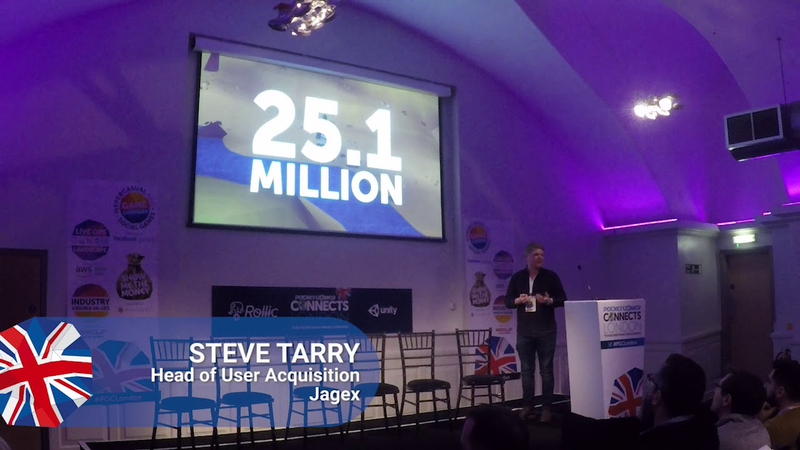
Jagex successfully expanded its desktop MMORPG, Old School RuneScape, to mobile platforms by prioritizing a seamless, cross-platform experience that allows players to maintain progress across PC and mobile devices.
- Jagex generated 25 million in gross revenue and 8.6 million installs by expanding Old School RuneScape to mobile, proving the viability of a cross-platform subscription model.
- To maintain a unified view of user value across PC and mobile, the company integrated internal data with mobile measurement partners, enabling more effective scaling of advertising spend.
- The mobile launch strategy utilized pre-order campaigns on the Apple App Store and Google Play, which drove the game to the top of free-to-play charts in the US and UK within 24 to 72 hours.
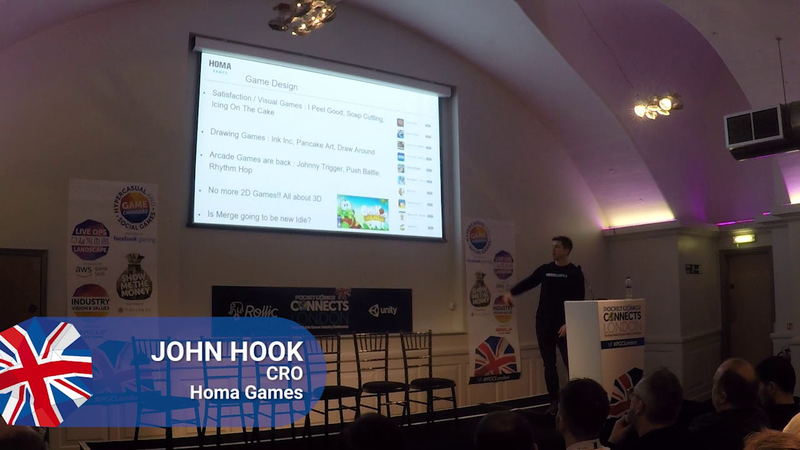
What we Have Learnt from 100 Million Hypercasual Downloads
The hypercasual gaming sector is currently undergoing a significant evolution, transitioning from simple, high-volume mechanics toward more complex, hybrid models that prioritize long-term value over raw download counts.
- The hypercasual market is shifting toward hybrid-casual and idle models to improve lifetime value (LTV) and session duration, moving away from the traditional focus on raw download volume.
- Retention benchmarks for arcade-style titles show a significant gap, with top-tier games achieving 15% day-seven retention compared to just 8% for average titles.
- Publishers are utilizing impression-level data to implement personalized bidding and ad strategies, allowing for the segmentation of players based on their preference for in-app purchases versus ad-supported experiences.
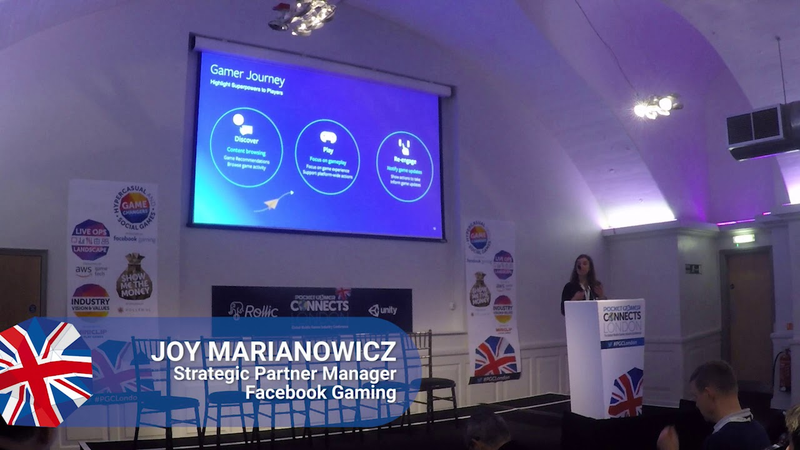
Superstar Session: New Ways to Optimise Your Instant Games Design
The Facebook Instant Games platform aims to foster a global gaming community by integrating social connectivity with accessible, high-quality gameplay.
- The Facebook Instant Games platform serves a massive audience of 700 million people who engage with gaming content, necessitating a strategic shift from simple turn-based mechanics to real-time, multi-player experiences.
- The platform's primary value propositions are the elimination of download requirements and the integration of social play, which drive user acquisition and engagement.
- User experience design must prioritize 'snackability' and low friction to capture players during short intervals, such as commuting or waiting.
Monetisation Trends & Tips for 2020
Mobile ad monetization serves as a critical revenue pillar for the modern gaming industry, particularly as global mobile ad spend continues to rise.
- Global mobile ad spend is projected to increase by 26% in 2020, with industry forecasts suggesting ad revenue may surpass in-app purchase (IAP) revenue for the first time.
- Approximately 94% of free-to-play mobile games now incorporate in-game advertising, with a growing year-over-year trend of developers generating between 40% and 100% of their total revenue from ads.
- Rewarded ad placements are a critical strategy for monetizing the non-paying user base ('the fish') while simultaneously boosting retention and IAP performance for 'whales'.