1 free read left. Create a free account for unlimited reading + AI research.
Create free account
When to Prototype and Why
Key insights
6 takeaways- 01Market viability should be validated early by creating high-quality marketing assets alongside the prototype to test cost-per-install (CPI) metrics.
- 02Prototyping must be used to answer a single, specific question—such as mechanic fun or technical feasibility—to validate concepts through objective metrics rather than subjective opinion.
- 03Prototypes should be treated as disposable tools to be discarded once the core objective is met, preventing the accumulation of technical debt and team burnout.
- 04Development teams should utilize a disciplined, time-boxed approach that prioritizes core gameplay functionality over visual polish.
- 05Prototyping must be integrated into the broader development pipeline to ensure only the most promising concepts proceed to the expensive, long-term production phase.
- 06Visual fidelity should be scaled based on the audience, using simple white-box testing for internal evaluation and higher-quality assets for external player testing.
Ask AI about this video
Transcript
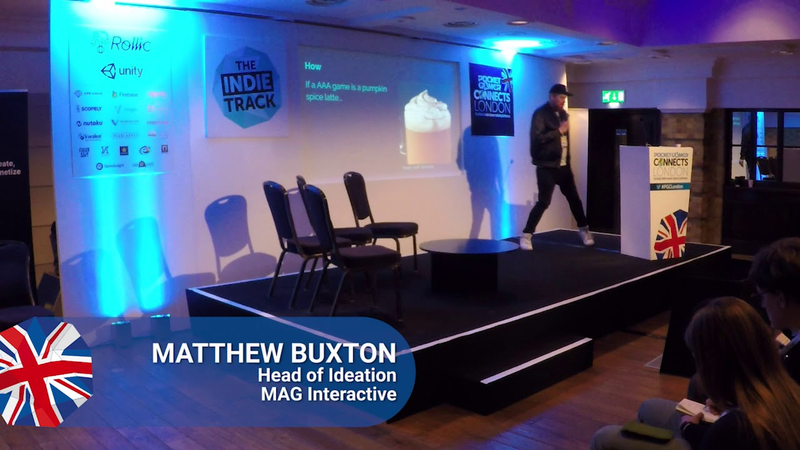
[Music] mmm starting off when to prototype and why I'm Matt Buxton I am the ideation lead at mag interactive we are mostly known for quiz and word and trivia games I've been in the industry 15 years as well seems to be a nice round number thank you oh Jesus I like walking around it's good shouldn't forget this three questions that will help us really understand how to do prototyping slightly better everyone does it but the three main things you need to sort of ask yourself when you're starting a prototype when why and how how we gonna
do it and we're gonna make it my so kicking off prototype anxiety and this is a big one if you're ever in a mobile gaming company just polish it up and launch its vertical slice what can we use it's just a clash Royale matter all of these things you kind of you kind of hear them a lot in the industry it's one of the things that makes prototyping hard because you don't know the objective of the prototype you don't know if people are going to extend it infinitely and it's one of the things that's kind of worrying so that's when you need to figure out why do we even need one and what's the purpose of it do you need it yeah you really do with an important caveat it's you made it before and it's just a reason it's never just a reskin but yeah generally you need to make prototype if you're doing something like a core even if it's called that's
been out there for years unless you're literally cloning it and you've made it before you need to work out whether you can make it do you have the tech do you have the technical ability is your team able to do it so this is also the things like when you're starting the idea for a prototype you need to understand can you actually finish the damn thing will you be able to get this from a small scrappy Unity thing into full production launched ready out there you a marketing PR and all of those other lovely good things and can you launch it do you have the availability do you have the multiplayer tech technology to be able to hold lots of people on your server can you keep it updated also who's it for a prototype should have an objective it should be a very small should be a very small piece of code or even piece of paper that actually answers a question and to know what kind of question you are answering you need to know who your audience is is the prototype for the team if it's for the
team it's can we make this thing can we make this new strategy core do we actually know how idle games work are any of us good at maths one of the big questions is it for the management is it to show them something where they can say actually we believe in this product and that will inform how much you need to make and the fidelity of your prototype if it's four players for example plato's cloud or any of these other kind of things where you can test it or just release it on your own if it's four players again slightly different rule set so exactly what I just said unnecessary slight understanding the audience sets how how much you have to do with a prototype you really need to know exactly how long the thing's going to take and it sets the expectations for the team the team themselves want to be able to do something and move on afterwards and it's why what does it prove there's many questions that you can answer with a prototype chiefly fun
and that's one of the hardest ones to do and it's one of the things that you need to make sure your prototype is answering that question no excess no additional features they're just going to hide the core technical ability to make the core mechanic that is also something you might want to prototype if you've never made a particular kind of game again super important that you you actually understand how it works and a new core mechanic if you have somehow merged a catapult and a match-three game you might want to actually test that before releasing it to people and spending year building it so you need to test it you need to get it out for people to the audience or your prototype also very important how will you validate you prototypes actually successful you can make a fun prototype if it's fun for you but you have to actually validate it office test that's always always handy if you can get people in your company
experts in your field to back your idea then it's more likely to be a successful idea it's the most basic player feedback as before get it out to people and you need to make sure that they understand it as well release him that's also a possibility it's very easy to release something under a different name or just an indie or a personal account just get it out there tested ask people get feedback from them technical considerations so you also have to make sure that like your prototype isn't demanding something too big of your company or your team so you have to make sure that you're actually prototyping something to answer the tech question can we do it and what we do at Mack we use these objectives and key results and it's a really handy way of kind of codifying what you want from your prototype so the prototype objective is fun key results are everyone in the office passed it to someone else that's a very simple basic one but you
can do something more complex and something more detailed for example objective players get to level 20 key results we see half the people play to level 20 what happens after literally the most important thing with the prototype kill it kill it with fire always you're never keeping a prototype it will just make your devs nervous and sweaty and panicky because it is literally asking someone to do two things in a different way first of all your prototyping you're making something quick you're making it for a very specific goal and then you're asking it to just merge seamlessly into clean production code never gonna happen if you're close to your objectives and key results if you're very very close and you want to improve something you can iterate when you iterate timebox super important that you don't take too long on this and then what you do successful or not kill it again
then you start the real game or you put the idea on ice and that's really as simple as that so how do we do this if a triple-a game is a fantastically slightly odd-looking pumpkin spice latte a mobile game is a flat white and a prototype is a cup of tea so you keep it simple tea water milk three three ingredients that you can combine in a way to to make a drink exclusive for one Brit alone you can piss off everyone by making a cup of tea wrong so that's why you have to keep it simple a prototype should be simple it should be answering your question for the right people and that's why you don't if you're making a game that you know will have systems like inventories and all of that kind of stuff get the ability to batter someone with a sword first it's important it doesn't matter if you then invent a really fantastic set of boots if it's
only fun playing the game in the boots you've got a bad game so how how should you do it quick make the tea not the kettle on a long enough time line all coders will start making game engines how many coders in here a few how many of you have tried to make game engines at one point there we go a lot of hands stayed up and the ones who haven't when you starting but yeah no but this is important because you may have proprietary tools that you make your real games in you may actually be using unity or you may be using something that you've you've cooked up yourself but for a prototype it's it's not the same thing you're not building how to you're not building how to make future games and that's something that a lot of people get confused with you can you may need to make the tea bag tools are important reusable tools are great for prototypes but don't try and bundle the engine into the prototyping project it'll just dilute what you're actually trying to
achieve prototype is a simple question and you you need to know the answer otherwise it's pointless asking it do you know how the prototype ends its killed you know the audience who's it for management and therefore you notice cope we're going to do a month-long prototype for management to show that we can build this game simple complete make everything you need to validate it nothing more don't make extra stuff as I was saying earlier it's it's kind of its kind of difficult when you see your game in someone else's hands not to jump in there and tell them how to play it and to that end you need to make everything as simple as possible it's the same as if you go to another country and you go to a station and you use the ticket machine you stand there like a lemon you don't know how to use it's the simplest thing in the world hundreds of thousands of people use ticket machines every day you go to a different country you're stuck and
that's the thing with the prototype your game is a new ticket machine to everyone you hand it to it could be the simplest thing in the world but they're still going to stand there and look at it confused so complete non broken loops don't start off in the middle of the game end the game have at least an end end game state it's something really important for for making people understand what's going on they win they lose they can start a new game they can go back to the screen all of these things are kind of essential just to give it that kind of feeling that it is actually again also prototyping isn't done in isolation it is part of the process the process of tiny baby Yoda drinking I just like tiny baby Oda so but that's we have it mag we have an ideation process where prototypes are made for games and then they feed into production we do research wood market testing and all of that kind of stuff sometimes you need a gate whether it's a
gate with management whether it's a gate for passing some key results something that will tell you to carry on or stop the project early and the thing is if you do these things quickly you can fail quickly and the other important thing about this the process allows developers and people with ideas to fail on the strength of their idea and not be told no and that's one of the principles that we have is you can validate your idea with met Drix then your idea is good and that's as simple as that it's not someone's opinion saying me saying I don't think that game with goats or bread would work who would want to play as a goose I mean it's it's terrible all of these things are really successful kind of game jam style games and it's it's great so let people do it let them try it let them fail and keep it quick and keep it timed and then you don't have to worry about having a pipeline that's empty of games and every game you make is two years to make so conclusion when generally always
if you haven't made it before you're going to want to have a start at it before you start trying to write production code for it why to answer a question a specific objective it's a simple question is it fun can we build it what is it like does this new core mechanic work just one question don't answer two or three to different people you can make different prototypes for different audiences for different parts of the game you can use things like figma or UX or UI design tools to take the load off putting everything in unity something like figma it's collaborative allows you to make all of the UX and click through prototypes outside of the game and what you really want to answer is is my core good not can I copy supercell because you can you'll fail but you can how fast but complete make it quickly use bad code make tools to make it easier but make it
complete so you can play it you have an end state and you can understand what's going on and killed whatever happens don't punish coders by making them work on terrible code and the other thing is don't punish coders by making them work on someone else's code who here likes working on someone else's code there we go first no hands up everyone hates other people's code and that's why you don't want to a prototype is an idea you hand it to someone they make something different they don't touch your code questions questions but yeah I think when you did the that talk we did in Portugal I think it was I am you Matt did a talk about design technique plus warning I think yes I still to this day cog that thank you seriously is it's a really really insightful designer and everything he says is absolutely spot-on
well maybe want everything but everything I've eaten in stage anyway any questions guys we'll try to get a microphone to you when creating like prototypes how much do you put into like polishing it like at all like when making like 3d prototypes do you just use white boxes or maybe already made assets how much effort do you put into that stuff it really depends on the audience if your audience is players and if you intend to put it through anything like a play test cloud or to some testing or release it you need to have you need to have enough that they can understand what's going on if it's the case 3d assets if you if you're in already making 3d assets try to reuse try to reuse as much as you can and try to make the most important asset with the one with the most fidelity so if you have a game where you're running
around a little character maybe shooting arrows maybe that's a game that everyone's making right now if you're making one of those games by all means buy everything from Unity store I mean they did in Archer oh and you can still buy those assets very cheaply today yeah buy the assets a low level of fidelity higher for players essentially it's about the question you want to answer if you're trying if you're trying to work out whether your games going to be successful then that's maybe a different thing a mag we call a minimum loveable product it's not the minimum viable product because that will fall over it's something that you can play for a few days and you can get a little bit of experience in the loop in that case we tried to make it relatively relatively high quality art I had that answered thanks good to me any more questions couple coming up so there's one over there and then we'll come to you afterwards if
you want to release a prototype to simper of audience you have any tips on sort of where you can post it or anything so what you can do it depends what you want to do if you're going to really I would say that you would push it on to the Play Store most likely maybe under a different account name to your main account push it to the Play Store and then you can also you can validate a little bit of the user acquisition as well because that's one thing that we we do this starts to work really well is while we're not making the high quality artwork for the prototype we will be making high quality adverts that we can show and what that allows you to do is it allows you to make to make your UA art and your storefront are at the same time as your prototype then if you have a little prototype to release you already have nice art that you've already tested CPI's on and then you can actually you can actually utilize the the art that you've been building to attract people to your prototype so it's kind of a double win on that one so when you're
first starting out and you go from being a person with an idea on a deck to wanting to go out and start building some prototypes yes have any suggestions for how you make that leap and where you might find good diapers so it depends who you are if you're a coder with an idea it's a lot easier and if you're if you're like me a traditional boring paper designer who somehow still exists what you need to do is you need to excite other people and you need to bring them in early because as as a designer my primary job is to listen to people to listen to the team to listen to the industry you're not going to be a game author if you can't code you need to have someone with you and discuss the idea and bounce it off each other and then you actually you you can provide the things that they can't you can provide the push they can provide the code and then you can help out with the whole sort of marketing it into people perfect and on that note thank you very
much Cheers [Applause] [Music]
Summary
Prototyping serves as a critical, data-driven bridge between conceptual ideation and full-scale production in the mobile gaming industry. The primary purpose of a prototype is to answer specific, singular questions—such as whether a core mechanic is fun, if a team possesses the technical capability to execute a concept, or if a new game loop is viable. By establishing clear objectives and key results early, developers can validate ideas through objective metrics rather than subjective opinion, allowing teams to fail quickly and minimize wasted resources on unproven concepts.
Effective prototyping requires a disciplined, time-boxed approach that prioritizes simplicity and functionality over polish. A prototype should be treated as a disposable tool rather than a foundation for production code; once the core question is answered or the objective is met, the prototype should be discarded to prevent technical debt and team burnout. While the level of visual fidelity should be tailored to the target audience—ranging from simple white-box testing for internal team evaluation to higher-quality assets for external player testing—the focus must remain on the core gameplay loop.
The methodology emphasizes that prototyping is not an isolated task but an integrated part of the development pipeline. By utilizing tools like Unity or external UX design software, teams can create complete, playable loops that allow for meaningful feedback. Furthermore, integrating user acquisition testing by creating high-quality marketing assets alongside the prototype allows developers to validate market interest and cost-per-install (CPI) metrics simultaneously. Ultimately, the goal is to foster a culture where developers and designers can test ideas against reality, ensuring that only the most promising concepts transition into the expensive, long-term production phase.


















Comments