1 free read left. Create a free account for unlimited reading + AI research.
Create free account
Superstar Session: New Ways to Optimise Your Instant Games Design
Key insights
6 takeaways- 01Social connectivity features, including leaderboards and tournament mechanics, are essential tools for maximizing reach and viral growth within the Facebook ecosystem.
- 02The Facebook Instant Games platform serves a massive audience of 700 million people who engage with gaming content, necessitating a strategic shift from simple turn-based mechanics to real-time, multi-player experiences.
- 03The platform's primary value propositions are the elimination of download requirements and the integration of social play, which drive user acquisition and engagement.
- 04User experience design must prioritize 'snackability' and low friction to capture players during short intervals, such as commuting or waiting.
- 05Retention and re-engagement are significantly improved by utilizing high-quality media assets and consistent navigation units like the 'Recently Played' section and dedicated gaming notification inboxes.
- 06Developers should implement context-aware user journeys, ensuring that players arriving via tournament links are dropped directly into gameplay while library-based users are provided with standard menu-driven experiences.
Ask AI about this video
Transcript
[Music] welcome everybody I can see a few more people standing outside not sure if they want to come in or not but I think we'll just we'll just get started for now perfect cool sounds good well welcome welcome to the session about optimizing instant games design we'll talk a bit about how we are thinking about designing instant games designing features and products but also share a bit about how this can be applied to games in general and how you can kind of make the most out of the games platform I spoke about instant games here I'm here as well last year's very excited to be here again this year I was told to click in that general
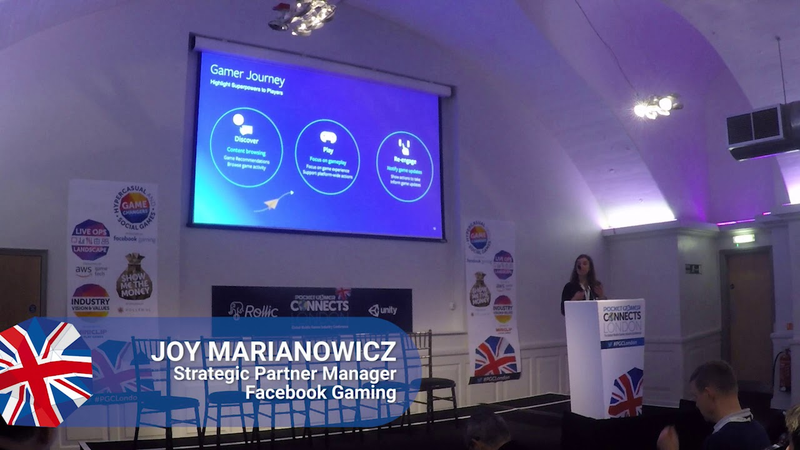
direction there we go perfect so before we kick off my name is joy I'm part of the games partnerships team based here out of our London office I've been with Facebook for almost four years now which was quite a while I'm also very excited that this year we have a larger larger team with us apart from me there are three new games partnerships managers and very excited for you all to meet them over the next few days all right so what we'll cover today around and some games design is first of all looking at our superpowers so really looking at what makes instant game's unique why do people come to play and some games will then look at how we translate that into design principles how that works in terms of like how we are how we are I da ting around designing for the platform at the look and feel and then lastly okay this clicker and me are not getting along there was well number three was
basically I'm looking at how you can apply that to designing your games now Before we jump into instant game specifically I wanted to talk a bit about Facebook gaming as a whole the mission we have set ourselves and why we have been investing so much into the gaming space over the last few years and also moving towards the mission we have set ourselves as an overall gaming team at Facebook is to build the world's gaming community and really the idea here is for Facebook to become a hub and a home for gaming content no matter what type of care you are no matter whether you come to Facebook to play games or to just connect with others or to talk about games and so as we were looking at this we are partnering with developers and a lot of your partners that we work with in the room already and we are also working with content creators over the last few years we have ventured into the gaming video space and started to look more at how we can bring how we can bring video streamers to the platform how they can build their communities there and and bring their content and then lastly
we're obviously not forgetting the game enthusiasts in the ecosystem and really kind of as with the mission of building the world's gaming community we're really striving towards helping connect these three stakeholders of the industry in a scalable and in a relevant way making sure that no matter who they play was or what they play or where they play from they have a rich and exciting experience on Facebook go back we're gonna get there guys we have a couple of slides to go and at some point it'll work now perfect so we already see that this is happening on Facebook quite a bit we see that 700 million people already engage with gaming content on the platform and that is whether they play in some games which is a very large part of this or whether they follow streamers or whether they join gaming groups to talk to others about games and 700 million is a massive number every time I talk about it I get excited again and so we're really looking at growing that in the future and moving forward with a large part of that being what we are building for
instant games so as a hub and a home for instant games and I said that that kind of very much connects to to the way we are looking at gaming on Facebook in general we have earlier this year introduced the Facebook gaming tab which is a very large step into that direction of building the world's gaming community the gaming tab is a personalized feed for gaming content depending on what type of player or gamer you are it lives in the Facebook main navigation and we've been rolling this out over the last year and we will continue rolling this out moving for it a large part of the content that you have in the Facebook gaming tab is instant games and so that's what we will mainly look at from now on so looking at instant games specifically I think as many of you know when we initially started instant games we very much focused on messenger and on what the experience for instant games looks like inside of the messenger app over the last year we have started looking more and more at what the what the instant games experience looks and feels like inside of Facebook and as we have made that transition and kind of
shifted our focus on to building instant games inside of Facebook we've also realized that there's a ton of opportunity in terms of the services and the virality that the Facebook app generates so here's some of the different surfaces that we were thinking about when we're looking at instant games obviously the gaming tab being a massive part of it news feed and the virality that generates notifications as a higher urgency channel and many many more that we are all leveraging to really make instant games the best platform possible and so with all of these new surfaces and with all of these kind of new new things to discover inside of the Facebook app we are also looking at at what what we can build inside a Facebook that we potentially couldn't build inside of the nature of messenger and so we're looking at expanding the social mechanics beyond a turn-based one-to-one gameplay for that we are very much looking at real-time games and thinking about how we can bring people together at the same time as they play inside of Facebook and last you were obviously looking a lot at leveraging feed based
morality and really the social nature in the way that I'm content spreads on Facebook so I said we will talk a bit about superpowers and when we're talking about superpowers we're really talking about why do players come to Facebook and why do they want to play instant games what do they love about it and in order to find that out we didn't do any magic we did some good old user research and asked some players in terms of what what they loved about the platform and what we really need to amplify and so here are some of the most common answers around why users wanted to play in some games we asked them why when and who they play with and what the main benefit is they see from playing on the platform so looking at the why I think that's not that's not too surprising it's obviously a form of entertainment it's a form of relaxation it's a form of filling time and of connecting with others the when became a bit more interesting and was mainly around snackable gaming around traveling around commuting around
waiting around watching and really kind of diving in and out of these games in an easy way the who was mainly around family and friends which is exactly what we have built instant games for and so that is very much aligned with how we've already been building the platform and then lastly the value proposition and what people really see as a benefit compared to other platforms was that there is no download required and that it's short and quick to dive in and out of the games and so as we looked at these different superpowers we then started to kind of bucket them and to kind of the overarching themes of what we hear from users so the first one is obviously instant playability making sure that you can instantly play games that it's very easy that there is no download required the second one is that they are socially connected and so one of the things we're really looking at is amplifying how we can really bring people together in a more meaningful way and then lastly it's all about real time presence about having that guarantee and knowing that your friends are on the platform that you can invite them and they will be
there and they can play with you very easily and in a frictionless way and so we took these overarching themes and we kind of divided them into different into different UX principles and these are the UX principles that we kind of design the entire instant games experience features and products by the first one is fun everything about the platform should convey fun to the user it should be rewarding it should be phat satisfying it should be delightful and really kind of the fun should be there in every single action that they take as part of the kind of fun UX principle we have designs daily challenges I'm sure a lot of you have seen this already it lives in the in the Facebook gaming tab it's a very prominent unit and it's really made to make discovering games in a fun in a fun way so what happens here is every day the user gets a new daily challenge we pick a different game they get they need to score specific points and afterwards they get a reward so again the kind of rewarding delightful satisfying feeling is there for this - for this feature next obviously things
should be social and in terms of social we don't only mean connecting with players but we also mean making something worth sharing making it meaningful enough for the user to really feel like this is something they want to share with their with their broader friends and so one thing we are looking at and I hinted at this before and was kind of the way that newsfeed virality works and we're currently testing not only sharing videos or sharing assets but having a more interactive way of sharing and this interactive way of sharing comes in the form of a poll which is something we're beta testing at the moment where a user does not only where user actually shares something with their friends that is something that they can actually do something with and not just something that you show them [Applause] and then lastly game should be snackable and by snackable we don't mean that there's can't be or that there shouldn't be long engagement or deep engagement but what we mean more is that it should be easy to find the game and it should be easy to find the game again once you've played it already and so for this and this has been feedback we have heard from a lot of our from a lot of our developer partners sorry one second
we'll get there again yeah we've heard from a lot of our developer partners you can see the recently played unit and the reason we played unit really was something that kind of that kind of goes into the snackable idea into finding games again so every game that a user has played on platform no matter where they played it from gets recorded into this recently played unit and is easy to dip back into and then lastly things should be things should be low friction bear with me the clicker and I will at some point manage okay there we go thank you low friction and for low friction we're currently this is more like kind of the devil being in the details and we really want to provide a consistent experience one thing that we're working on here and you see this is another Vita product we're testing is direct invites which goes more into kind of the low friction bringing people together in real time direction where user can directly invite a friend from a game we sent them a notification on Facebook and if they
click on that notification they find themselves in the same game together and they can play in the same context in real time so those are generally the principles that we're looking at as we kind of id8 new features and as we look at as as we look at building them and so as we think about where they apply we're thinking about kind of three main buckets the first one is obviously the discovery bucket and so we're thinking about how does the user usually behave as they discover new instant games that usually happens in kind of a content browsing mode on one hand either because they're browsing the gaming tab and all the gaming content there or because they're browsing newsfeed and they're stumbling across the game that either a friend shared or maybe it's an ad and so on and so forth the next one is actually playing the game and this is hopefully where the user spent most time where they have the most fun and as a platform we're really looking more at supporting this with game level contexts making sure that the user understands where they are and then lastly we obviously want to re-engage users and for that we'll focus on Facebook specifically we're looking at notifications are not providing timely updates
[Applause] okay and so as we're looking at the gamer journey we're also looking at the touch points and kind of what are the main surfaces that the user interacts with obviously one of the main services for both discovery and furry engagement is the gaming tab then they're obviously playing the game and lastly we're looking at the in-game menu which the user encounters as they exit a title and so we'll look a bit more and that's as well so looking at the gaming table specifically we're really looking at making the gaming tab kind of a one-stop shop for either discovering games or Rhian gauging with games and so one of the things that we have designed according to kind of things being snackable things being easy to deal with we build a dedicated surface for browsing or publish games you can see here at the top of the games tab there is a play games pill which really offers the entire catalog it makes it easy for users to browse according to what is interesting to them apart from the various recommendations channels that we
have built into the games tab already perfect next up according to kind of the low-friction principle we have realized that there's obviously a lot of notifications a lot of updates whether that is invite some friends whether that is updates from the games or whether that is reminders of a game you're already playing and so we have launched a notifications inbox inside of the gaming step of the gaming tab which is specific to only game updates and anything related to gaming and so really in terms of making it consistent making it intentional making it easy to find this is kind of the one-stop shop for everything that is around the games that you have already engaged with and then obviously social as core and social is something we think a lot especially as we as we design the gaming tab and so the continue to playing unit which you see here again relatively prominent on the gaming tab really is kind of a persistent entry point for the user to continue playing games that they are already playing with their friends so apart from just the game sending reminders we're actively making it easy
for the user to keep playing socially and so as we are looking kind of UX learnings and everything that we have gotten from all these different experiments that we have run over over the last over the last few months one of the main things that we have realized is that media quality is really really key if you look at the two different videos that I have here let's let's hope this works perfect so you see in the first video we have suggested for you unit on the gaming tab and suggested for you unit on one hand provides a bit of social context it usually shows how many people are already playing and it uses static images in order to get the user to understand what the game is about we are testing out this in the same unit with video content and with making it much more social making it easier to actually like the page making it easier to interact with the game but also showing more context and as we have started trying this we have obviously realized that users users speak touch my users speak to it much better they react to it they react to it better but we have also
realized that the media makes a huge difference instant games has a lot of entry points and there are various ways that a user can discover a game and so really think about investing into inter media for all these different entry points I know where we're not making it very very easy to understand where what video is shown but really kind of making that effort to make sure all of your all of your assets that you upload are the highest quality and really convey what your game is about makes a huge difference as we keep building our discovery services for the platform and then obviously the user interacts with instant games mainly around gameplay and as I mentioned before as a platformer we're taking a relatively prominent but minimal space just in order to make sure that the user understands the social context they're in there and Tenant there as the user plays they have a little toast up there which says Chris invited you to play you are currently kind of playing your first turn against Kristin and so the user is kept up to date with which social context they're inside of lastly and as the user kind of exits the
game as they finish their play session we have introduced the in-game menu and the Indian menu really is a place for the user to do two things one is to engage deeper with the game they are already playing and so you see kind of the first the first half almost of the of the in-game menu is around engaging deeper with that game creating home screen shortcuts sharing it inviting friends to it and so on and so forth the second half of the screen is used to really kind of according to the fun principle making sure that users have an easy way of discovering new games and so we are showing new games according to what the user would potentially like so that they can easier discover them so as we look at UX learnings and how we apply these principles one of the features that we have launched over the last few months as our leaderboards feature and what it looks like is basically this as I play an instant game as I create a high score I can very easily share this by creating a tournament to my timeline and as I create this tournament this is
what it looks like my friends can kind of jump in their scores get recorded and we have an interactive unit that lives on my profile and in their news feeds it can get pretty fun pretty quickly as you have a lot of people engaged there's reactions there's comments and so on and so forth it's been very exciting we've seen that a couple of tournaments have gone completely viral with thousands of people playing and so we knew we were onto something but we also realized that we have a little bit of a problem which is there's lots of tournaments where no one else is playing and so you kind of stuck in like Jays position where you've created a score none of your friends are joining it's a little bit awkward and the tournament expires and it wasn't very fun and so with this cause our problem we realized that we on one hand need to get a second player to actually start engaging with the person that initially posted the score and we need to look at making this and making this an experience that is worth sharing that is meaningful and worth for the user to actually post their timeline and so what
we have done is redesigned the way that tournaments work we have redesigned the look and the feel of it and we have done that according to our design principles we have started using playful iconography and more colors really kind of making it very fun as we as we wanted to do we have started putting an enhanced call to action really making it streamlined making it frictionless making it clear for the user what their engagement with this should be and then lastly we have adnan information hierarchy again making its snackable making it easy to understand what is happening making it easy to type dive in and dive out of the game and so this is what it looks like I think it looks much more fun and we will keep doing this with with more and more of our features as they come out one of the things that we have realized around tournaments which currently which currently are used mainly by hyper casual games is that the experience can be very different and the engagement can be very different depending on how the developer handles what the user journey inside of that
looks like if you look at the first video you will see that I'm currently entering a tournament from a tournament post and as I enter I immediately land on the game there is no menu inside of the game I just land there and I immediately start playing if you compare this to the second video on the second video I am entering dunk shot which is the game by ketchup from my recently played unit I'm entering in solo modes and instead of having instead of landing straight inside of the game I actually land on a menu I can invite friends and I can take more actions there so really thinking about where does the user come from and what experience are they expecting depending on where they come from is really key as you design for your instant games so as we are looking at kind of building out more and more experiences inside of Facebook and you see a few of the ones that we're building up here really kind of keep in mind these these principles just as much as we do and hopefully they will help guide you in terms of prioritizing in
terms of prioritizing your game design and in terms of understanding which features you should be using and if you want to know more about all of this please visit us at FB GG slash developers and you'll find a ton of best practices info interviews and so on over there and that's it for me thank you very much [Applause] [Music]
Summary
The Facebook Instant Games platform aims to foster a global gaming community by integrating social connectivity with accessible, high-quality gameplay. The primary thesis centers on the application of specific user experience (UX) design principles—fun, social connectivity, snackability, and low friction—to optimize player engagement and discoverability. By leveraging the Facebook ecosystem, including the Gaming Tab, News Feed, and notification systems, developers can create more meaningful, viral, and persistent gaming experiences.
Key findings indicate that users are drawn to Instant Games for entertainment, relaxation, and social interaction, particularly during short, "snackable" intervals like commuting or waiting. Research highlights that the lack of required downloads and the ability to play with friends are the platform's most significant value propositions. Data shows that 700 million people engage with gaming content on Facebook, necessitating a shift from simple turn-based mechanics to real-time, multi-player experiences. Furthermore, the use of high-quality media assets and clear, consistent navigation—such as the "Recently Played" unit and dedicated gaming notification inboxes—significantly improves user retention and re-engagement.
The methodology relies on internal user research and iterative testing of platform features, such as leaderboards and tournament mechanics. Analysis of these features reveals that the user journey must be context-aware; for instance, players entering a game via a tournament link expect immediate gameplay, whereas those accessing a title from their library may prefer a menu-driven experience. By aligning design choices with these behavioral insights, developers can reduce friction and enhance the social nature of their titles. The platform continues to evolve its infrastructure to support these principles, encouraging developers to prioritize intuitive design and social integration to maximize their reach within the Facebook gaming ecosystem.