1 free read left. Create a free account for unlimited reading + AI research.
Create free account
How a Well Designed UX can Improve Monetisation, UA and Retention and Keep Users Satisfied.
Key insights
7 takeaways- 01HUD design must prioritize clarity through intuitive placement and labeling to ensure players understand objectives without confusion.
- 02UX research and testing should be integrated early in the production cycle, ideally before coding begins, to validate design assumptions and identify friction points.
- 03Approximately 30% of users abandon mobile games during the initial onboarding process, highlighting the critical need for optimized tutorial design.
- 04To reduce tutorial drop-off, developers should use a 'chunking' strategy that delivers essential mechanics in small, action-oriented segments rather than overwhelming players with full system information.
- 05Store monetization is improved by using a 'shelf' layout that strategically surfaces timed offers and highlights best-selling items.
- 06Technical responsiveness is a baseline requirement, and developers should use progress indicators during loading sequences to manage user expectations.
- 07Objective data from usability testing tools is essential because self-reported user feedback frequently contradicts actual player interaction patterns.
Ask AI about this video
Transcript
[Music] I'm gonna tackle how well how well designed UX can improve monetization you a and retention so it's a little bit about me I spent six years in games I've done six years obviously in web and apps i'ma split producer and UX I did my time in Chillingo I was kind of like part the freemium game in paid game rush and I've been freelance three years and I've shipped as a producer /ux about 100 projects in my time most of those when I was part of that big prolific publisher so I'm gonna cover two things and the
process so how to get to sucess as well he only said the he said a bad word there got to get success and then I'm gonna look at an analysis with the hood the tutorial and the store the process is actually quite key so in both games and apps you generally do a persona in the beginning this can come out of your prototypes it's basically who is your target so you can do this via workshopping and you can have many of these so you could have a core get a core game but maybe at a track attract a slight mid core audience and then you can create stories around your personas and this will basically how you basically affect how you approach to UX it can also feed into your pitch decks basically if you're pitching for investment and all the rest of it you can bring in UX very early into the process this is also part the
problem solving and research point you may have a Pio where I producer come at you saying the game is short so we need to get players through the store with as little friction as possible show an advert and view the leaderboards and do everything but the kitchen sink and as a UX sir you've got to make that choice of what you're actually gonna do thinking of it in kind of timeline think of it it in a lot of different ways which I'll come to in a bit but well what I mean by friction because a few people probably be thinking what is friction it's basically obstacles to reaching a girl everything is borrowed I've listened to a few kind of you know of these presentations today and you generally are cross-pollinate in certain mechanics with others so you know what I would suggest at that point is if you've got a direct competitor out there map out their journeys physically print them
and put them up on the walls there's nothing like having like an old-school kind of paper trail of journeys up on the walls because then you can look look for pain points as a team and there's nothing stopping you testing your competitors as well so I think a few other people have touched on this so design tools certain ones that I use Photoshop sketch illustrator I'm less about the unity and unreal encoding I'm a bit more or like I I create the images and then I test them separately before they even go into production but for certain things not great for everything but at least it gives you an idea of the journey itself testing tools there's a variety of testing tools you can use obviously various SDKs allow you to kind of get the thing up on so you can test it from like a video testing point of view but certain things if you want quick testing I would probably suggest user testing calm usability hub there's
a nice thing called mr. Tapie which I'll show you in a minute I know I'm not getting paid to push this at all and focus tests and remember your script it's like your objective how they're going to get from A to B once you're alive you've got a variety of things you can use such as app C ga-ga game analytics swerve which obviously you will a be test this is mr. Tapie a yeah not being paid to show you this I know your SDKs can do this well the good thing that I find reviews in this if you do in your office testing by one of these the three hundred quid the made by a guy in New Zealand they've got magnet so if you do mobile you see the webcam it shines down well focuses down on the actual iPad and then it actually allows you to also use a webcam to record the facial expressions as well because the thing in testing is people will lie they'll say yeah that was great
and actually their face is telling is something completely different so this is an example actually getting rapid feedback is it muster for success do you actually need to build that prototype do you need to actually have unity time you know your code is doing time before even gets there and I'm talking about the HUDs or anything UI related you can string those images together and make full prototypes with one journey ok maybe different logic paths would be a bit of an issue but you know you can usually find out whether your journey is correct even before you start even before it touches code basically so there's six types of tests and your first click test is good for basically giving you a heat map which you just seen on a single image the navigation test so that'll give you a drop off rate usually it's in seconds so you know are they overloaded by that certain navigation and you may
think you know you may have designers that go well of course my designs correct what you don't know until yes you get out there this is part of the rapid iteration you can actually send out design questions I know you probably already do this in terms of questionnaires but that can actually feed into your production a lot earlier so that you're actually getting that feedback and designing and building for the market actually once and then obviously you can eat a B test and a five-second test for me that's probably the most useful as a UX designer you basically put a piece of paper up on the wall cover it up and then ask a user to basically tell you what they remember after seeing it for five seconds so it gives you an idea of information hierarchy are they being overloaded so basically on to the tutorial part the analysis see you day one drop off ready gear these are the kind of figures being bounded around by various industry
people it's about 30% your day 7 drop-off is between 7 and 10 like quite a lot of people will say it's 10% I have seen it about 7 and your completion rate is about 30% on your oops and drop-off sorry on your on your first time tutorial so on that I basically did a bit research myself so I kicked out a load of questionnaires spent a bit of money on actually asking how long do you spend reading a tutorial 46% were below 30 seconds 38% were 31 to 2 minutes I reckon in hindsight I could have probably distilled that down even more and had a minute and a half to two and a half minutes and then basically everyone else sees like four minutes plus and there were some passes so what was the main reason for skipping a tutorial
slightly loaded question but we already know that a load of people don't read them Borden tutorials don't really get to the point enough and basically they're not giving you the basic information that they need or they're not intuitive so again what frustrates you most about tutorials basically yeah the latest gameplay feels restricted there's too much information or information overload if it's too long all this is my favorite I've played Streets of Rage over a hundred times I know what I'm doing so basically they they're fine with it so in in essence for me tutorial we found that asking those questions which took ten minutes and cost me something like $20 we know that we want to chunk information because they don't read anything you need to use John I made actions introduced action reward reinforce the learnings and then only teach what they
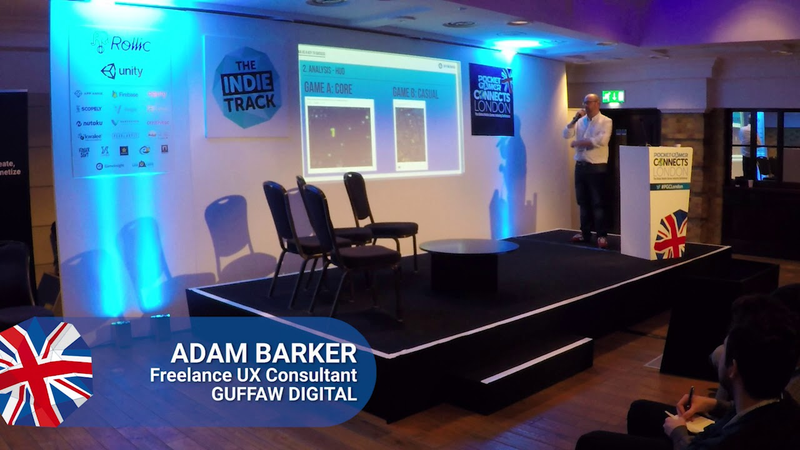
want you to see basically on that certain day so if we're going to look at the hood I've got two games here there's a core / mid core game and then is a casual game as you can see I've done a little bit of a first click test all I've done is ask them where basically where they would need to click or tap to get to the next thing I I do know that they haven't been as subjected to the tutorial but we've also you know determined that people don't necessarily read tutorials so look at the first one the top we have all of our score currency and store items news and timed offers along the top and along the bottom we have stuff that is actions which is you know it's quite easy but it's basically stuff you need to use next year thumb basically so when we ask them did they know what to do next some responses such as too small
an iPhone don't know what's going on yes there's about 54% didn't know what to do even though they weren't shut through a tutorial and yeah some of them were like that's a punctuation mark that's urgent so if we look at the casual game obviously sport rate slightly different again it follows very much the same rules but they've tapped stuff and the actions obviously in the center of the screen all of you you kind of head up this play in four majors at the top so you know you score and everything else when we ask them did you know what to do yes do next it was really difficult easy to a difficult to understand yes I tapped on the teardrop and then you know you have some random feedbacks which of the faces of people who are uninvited in the tabs at the bottom the screen don't show their purpose so which one did bear for a looking at time in terms of are
they overloaded as a user are they actually wondering what you know working out what to do when actually was game a that did a lot better than Game B which is very strange because you'd think that the core game would have slightly longer time for people to work out what was going on what game a label digits but it's buttons game B didn't you know there's a multiple amount of things that could go wrong there but that's basically why why the tie was a lot a lot less if we look at the store we're gonna look at basically the the standard things to do on a store if we're going for a freemium game base you got your special offers I'm kind of your left hand side always make sure you selling your offers as much as possible and they usually I have a second I ap with a label on bestseller that's usually actually the one the
sells probably most units and it's usually mid mid tier its how where you need to and just make sure all of your these your base your shelves so make sure you are kind of using them as a shelf as it were again you can surface your special offers and timed offers usually on day one with like you know you buy it now but it's actually a modal so the user can kind of get rid of it and then as we've attained on the hood your you can surf is your special offers in the right hand side of the screen if it's if it's a landscape its portrait it's usually roughly the same place but Padre look displaying these in time so time is important you don't have to show everything at the same time so think of it in day one two three four and five or seven all the way up to your first month and you can push people with push
notifications back to those timed offers and so I've got basically an example showing day one three and five so your analysis for the stories basically make sure there's no friction from the hood special officer facism in timed and then reinforce your offers in the game loop and top if you need to finally as a little add-in make sure your game is responsive 400 milliseconds is baseline from the Doherty rule if you've got a spinner make sure you put the percentage in it's nothing worse than a spinner going around if the user doesn't know how long it's going to take for that thing to load and if there's multiple things to load on a and the bar to make sure you're kind of showing them what's actually loading beneath the bar so we've covered to answer the question
testing your prototypes will pay dividends even a really quick testing and again you know you've got to know what why you're testing and what you're testing but just test and make it bring it to the forefront of your production systems need to be quick to load and then pods Newton not overload the user label and tab where possible and stores need to be surfaced easily and that's it thank you and making sure you X is right and simplicity and the fact you're talking about testing it I mean it's a luxury we don't often have exactly yeah yeah and I love your mr. Tapie great reminds me though of because the fun of games we had worked Sony when we had people coming into our lab to test playstation home the biggest thing is don't let yourself do it exactly yeah don't yeah because I questions we got
question right there thank you I've got a question about the heat maps so these screenshots they were made from mr. Tapie or some other tools no that was that she used a testing comm so you can buy in users from from that shove the screen shot up and then ask the question and then it'll it'll basically give you a heat map of where they're clicked so that was the actual first click test so that if you use user testing comm again I'm not being paid to tell you about that but it's a really quick tool for you to get really quick feedback and it costs dollars you know demographic you know if you choosing different demographics that's where it gets expensive but if you just stick into standard demographics it depends because there are a couple of sites something to do different levels of testing I think yeah I think it's worth being paying attention to what they actually good for rather than trying to make them solve problems they can't do exactly yeah yeah
yes so you'd use them you'd use them just basically work out that you're on the right track yeah and I think interesting one is because you can go up to the level of someone might play research where you've got a dedicated teams to do my biometrics and all that kind of stuff or you can just do simple I will check what they actually do by data not what they tell me they're going to do exactly that all cost loads of money doesn't it so one last quick question Sarah canary continued so did you ever try to integrate some heat map tools inside your games like to get up-to-date data about me steps of the players for the new future something like that so something like app see yeah we kind of used that before and I think kind of us thinking that that would be after the horses bolted do you not I mean I kind of want to test it really early on if you can before you even release it but that's what I've used
before is ab c-- and that kind of does the same thing actually in a lot more detail so you can actually track the flow all the way through see if the user you know converts on the store after X game loop and all the rest of it I love though because you know when you get data analytics of shows you know if you get your data design right in terms of what you're capturing you can capture you know their activity and filter intact that all the way to the Freddie fine level of detail yeah and then map it up against heat maps it's fantastic and improve it as well totally my favorite was Killzone 3 when that was first being tested back in Sony Studios they was the first time I ever saw a first-person shooter mapped as a heat map that's amazing yeah it's good anyway oh no oh we have one quick question here I think yeah sorry yeah could you just go over again how you set up the surveys for the two tutorials how it's basically
I basically wanted to get across so obviously there's a there's a big industry kind of paper that says you know people don't play tutorials so I was kind of coming at it from you know I want to ask people exactly you know whether they do complete them or not because I want to use my own data in front of you to show you how to do it kind of a so really all I did was I kind of worked out so I kind of that the first question is obviously how long so then then that kind of leads you into you can be more loaded the further down the line you get because if you suddenly if if your first question is loaded it affects the whole or the other question process so start with you you can e number metrics you know I how long or like a more of a logical way of asking something and then you can kind of tease tease it out basically does that answer it is that yeah cool and then up regains that are killed by their two turrets either being too long
or not long enough yeah anyway thank you thank you very much [Applause] [Music]
Summary
User experience (UX) design serves as a critical driver for monetization, user acquisition, and retention in mobile gaming. By integrating UX research and testing early in the production cycle—often before a single line of code is written—developers can identify friction points and validate design assumptions. The core methodology involves creating detailed user personas, mapping competitor journeys, and utilizing rapid prototyping tools to test navigation and information hierarchy. Tools such as first-click testing, five-second tests, and remote usability platforms allow teams to gather objective data on player behavior, which is essential because self-reported user feedback often contradicts actual interaction patterns.
Tutorial design remains a significant hurdle, with industry data indicating that roughly 30% of users drop off during the initial onboarding process. Research suggests that players frequently skip tutorials due to information overload, lack of intuition, or a perception that the gameplay is overly restrictive. To mitigate this, developers should employ a "chunking" strategy, where information is delivered in small, action-oriented segments that reward the player immediately. Tutorials should be designed to teach only the essential mechanics required for that specific day of play, rather than overwhelming the user with the entire game system at once.
Effective HUD and store design are equally vital for maintaining engagement and driving revenue. HUDs should prioritize clarity, using clear labeling and intuitive placement to ensure players understand their objectives without confusion. In the store, success is often found by surfacing special and timed offers strategically, using a "shelf" layout that highlights best-selling items. Furthermore, technical responsiveness is a baseline requirement; loading sequences should include progress indicators to manage user expectations. By prioritizing simplicity, rapid iteration, and data-driven design, developers can significantly improve the overall player experience and long-term retention.




















Comments