1 free read left. Create a free account for unlimited reading + AI research.
Create free account
Superstar Session: Build a UA Strategy Around Affinity With Contextual Ad Targeting
Key insights
6 takeaways- 01Mobile user acquisition is shifting toward contextual targeting, which uses granular game metadata rather than personal identifiers to reach players based on their affinity for specific mechanics, art styles, and themes.
- 02This strategy relies on a framework of 52 distinct sub-genres, developed through expert analysis of major gaming markets including the US, Japan, and China.
- 03Contextual targeting provides a privacy-compliant alternative to traditional tracking, ensuring UA strategies remain unaffected by evolving regulations like GDPR and CCPA.
- 04Machine learning models process this qualitative data to generate hundreds of specific data points per game, covering player personas, motivations, and core gameplay attributes.
- 05The methodology allows developers to analyze ad creatives by matching specific video assets to the most receptive audience segments based on their established gameplay preferences.
- 06By aligning game features with ad content, developers can demystify ad network performance, leading to more precise bidding, improved traffic quality, and higher user lifetime value.
Ask AI about this video
Transcript
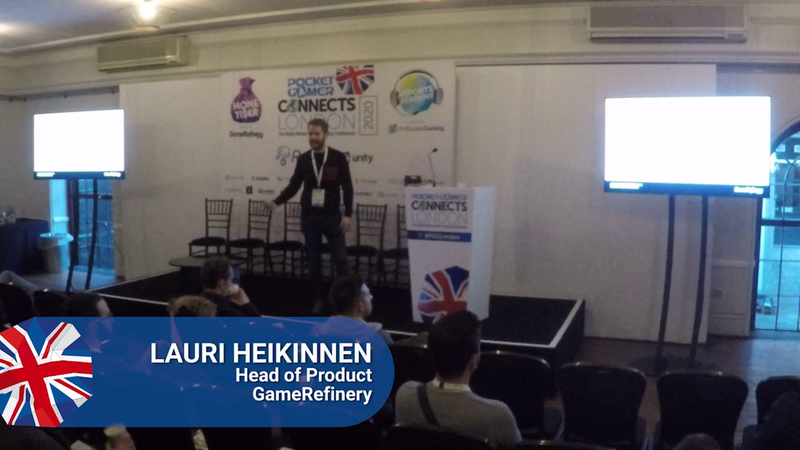
[Music] this is supposed to be a superstar session but I gotta tell you are the superstar being here 9:50 on the second day so hopefully you had a good night's sleep last night anyway I'm allowed hey Keenan and I'm the head of product that's game refinery and today I'm going to talk about contextual metadata and how to use didn't in in the u.s. targeting and a little bit about the game refinery so some of you might know us from a little bit different angle so we'll be working with feature level data so we analyze
games break them down to a feature level and then make the data actionable to game developers so this is basically operator butter our SAS platform that we've been selling and now we're moving towards that kind of contextual metadata which is a kind of new angle for us now how we do it is that we have dedicated team teams of analysts for our major markets which are US Japan and China so the analysts play the games they break them down and then we refined the data and you might have seen our sub-genre categorization around the web so we've come up with this sub-genre characterization with 52 days things up genres that are based on the features
that are in the game just we think that App Store and Google Play categorizations aren't enough sub genres make it much more actionable and this is basically how we got started with the context or metadata that we are now pushing out so while we are mostly focusing of each day something that we heard time and time again from our customers was that is there some way you could help us with with you a data or help us out so that we could improve our UA and this kind of originated organically so one of our customers future play they had been using our data our sub genre categorization to find games they would then try to target try to bid on and buy you a traffic from and what they saw kind of makes sense is
that when you buy traffic from it's game similar to your own on average the quality of the traffic tends to be better it kind of makes sense so player is more likely to like a kind of similar type of games and this is basically how we got started and then the solution is context or metadata which we then brought forward from charge this up generated and basically the idea is to acquire higher LTV better users faster so what we did is that we used our traditional analysis data manual analysis that our analysts have been providing we used use that as a training set for a bunch of machine learning models and the metadata consists of over several hundred data points for each of the games that we have analyzed and we
basically covered all of the relevant games in the App Store using all of these models and we build this huge database and I'm going to the next few slides show a little bit of how all the data how the data works again the idea is that find similar games so it doesn't have to be an exactly the same game like in order to get good users you don't have to target Eyler games it could be some other features of the game maybe visual style maybe there's PvP elements in the game maybe they're storytelling that are actually tying it all together and the only problem is that how to identify those games so you usually rely on App Store genres or Google Play on race or
then you just try to come up with your list manually now what we've been able to do with the meta data is that we've covered all of the games and we can easily provide you over the long list of games like all of the game developers they usually know their biggest competitors like I want to buy from candy crush saga ok well that's not possible but if you're able to tackle that long list fit on those it'll most likely yield good results as well what does the contextual metadata do so it's able to improve your performance quality of traffic as I mentioned but it also is able to enrich audience data so if we're talking about ad networks or DSPs they know about device IDs where they've seen those device IDs now we're able to using a by using contextual
method a that we are able to build audience profiles for individual device IDs which then puts it together and and connects it to the advertising game and yeah as it's not based on personal data it's totally gdpr and CCPA compliant and there might be more and more privacy legislation is coming in in the coming year so contextual targeting becomes more and more relevant as we go forward now here's an example I am sorry this of the font so I'm gonna walk you through so this is actually one automated analysis that is straight from the data system so the game in question is lost mobile war of Kingdom and this is the breadth of the data that we're covering so in the left you'll see this option
right so all of this is predicted by our models so model said that it's 4x strategy game which is correct it's a little bit more casual take on the 4 for X Chandra than for example game of war or in king of Babylon but then on top of that we are also predicting a plethora of different features such as well predicted demographics player personas and motivations these are all based on the rest of the data set that we we've analyzed from the games for example Los Lobos is very very much nail driven and from blade personas they're the biggest ones based on our analysis is a strategist and networker then in motivations we have for example social working with others competing with others and strategic planning and
resource optimization then we got defining features this is actually like the bread and butter that comes from our manual analysis mostly so we got PvP strategy exterminating units characters PvP and what have you and then go into kind of a more visual side of the game we got art genre and art style so here we have a historic fantasy art genre art style cartoonish then we get boots and styles so what's the kind of ambience of the game that excitement a colorful adventurous and so forth so very very vast amount of data that you can basically use to find similar games or if you were to optimize maybe even targeting algorithms this is all possible now chess second game so just
to give you an idea of the differences there's episode choose your story totally different game sub-genre being an interactive story but the model also finds that there's a little bit of customization in it demographics is female-driven play personas expressionist and then we have like escapism thinking and then discovering new worlds expression we have customized integration and so forth yeah and from art-style again modern and cartoonish motion stylists stylish feminine and so forth so a lot of different data points I mentioned about building an audience profile now this is me and this is the games that I've been playing during the past three years so so got ten different games and using the
same data I built a profile of myself just to see if it makes any sense so we've got like Marvel Strikeforce afk arena best fiends toy blast Pokemon ago oil farming Empire home escapes garden escapes clash Royale and summoners war now if we look at the profile it kind of makes sense at least to me so even if we have six different subgenres there if we look at the motivations and defining features they are actually very very similar in all of these games for example in motivations we got thinking and solving collecting treasure or stuff like that and it actually predicts that I'm 58 percent male which is kind of correct then we got defining mechanics like at PvP competitively guild mechanics all which I do usually enjoy and when it comes to moods and styles and art genre it seems
like I do really have a type of a game that I usually like so cartoonish colorful and easy to go casual look and feel so that's a few different interpretations of the data now we talked about matching two games or advertising game and the publisher game or the advertising game and then a user if you know about the user and where they received them but what we are also able to do is that we we can analyze the ad creative using very the very same models as we've as we do for the games themselves we can identify objects identify art styles looks and feels when the excitement happens in the video and so forth our plan is to complete the whole cycle being able to provide
contextual data in order to basically just being able to analyze the feeds between the whole whole flow when it comes to aua targeting and key takeaways from from the contextual data metadata that we we are providing is that it can improve at performance and quality of traffic benefits benefits both the advertisers who are looking to buy you a as well as at networks or DSPs who might want to enrich their own data and then it also brings more transparency to add performance because most of the times when you're working with the trucks or DSPs or even Facebook at Google it's really a black box but what's happening there and with contextual metadata
you're able to explain what could be the factors that are affecting to put traffic at least on average and especially in in-game advertising yeah that was my talk about contextual metadata Thank You antastic thank you very much I do have a I do have a question for you so I've got I've got a game I have no idea where my game falls in the middle of all of that analytic stuff that you're tracking I'm guessing the game refined me I can I can give you my game I can give you my ad creatives and you can analyze both and let me know which creatives are most likely to be appropriate for my game is that yeah what you're doing that's the kind of idea so we're able to analyze all of the games out there if they have an
irrelevant app store presence so if you got screenshots descriptions all that you know you're out there and you've got videos we can make the analysis for a game and then we can calculate the fit and then find that the rest of the relevant games that could be a good targeting kind of pool for you help me targeted audience for marketing as well yes as helping we picked the right creatives yeah yeah okay that's always a target [Music]
Summary
The mobile gaming industry is shifting toward contextual ad targeting as a primary strategy for user acquisition (UA), moving away from a reliance on traditional player data and behavior. By deconstructing games into granular, feature-level metadata, developers can identify audiences based on affinity—targeting players who enjoy specific mechanics, art styles, or thematic elements found in similar titles. This approach aims to improve the quality of acquired users and increase lifetime value (LTV) by ensuring that marketing efforts reach players who are genuinely predisposed to enjoy the gameplay experience.
The methodology involves using manual expert analysis of games across major markets—specifically the US, Japan, and China—to categorize titles into 52 distinct sub-genres. This qualitative data serves as a training set for machine learning models, which generate hundreds of data points for each game, including player personas, motivations, visual styles, and core mechanics. Because this contextual metadata relies on game attributes rather than personal identifiers, it provides a privacy-compliant alternative to traditional tracking, remaining unaffected by evolving regulations like GDPR and CCPA.
Beyond game-to-game targeting, this framework allows for the analysis of ad creatives, enabling developers to match specific video assets with the most receptive audience segments. By identifying the "fit" between a game’s defining features and the elements present in its advertising, developers can demystify the "black box" of ad network performance. This strategy offers greater transparency in UA campaigns, allowing for more precise bidding and audience profiling. Ultimately, by aligning the game’s core appeal with the player’s established preferences, developers can optimize traffic quality and streamline the acquisition process across the global mobile app ecosystem.
























Comments