USA reports and market data
Documents
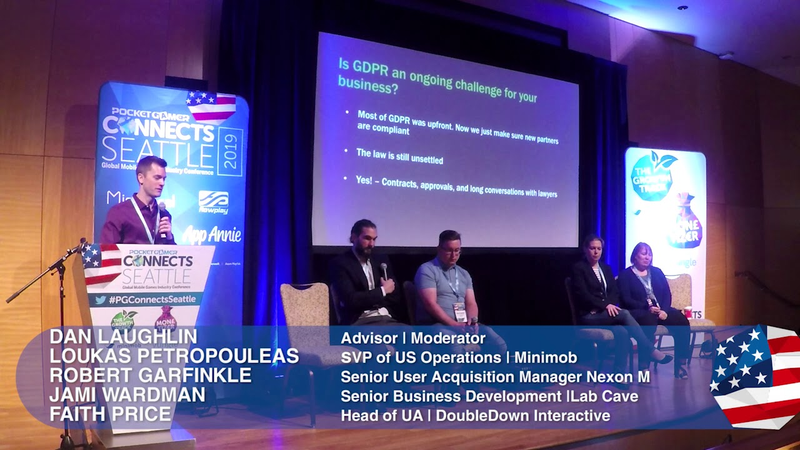
Embracing complexity and compliance in modern user acquisition
Modern user acquisition in the mobile gaming industry is defined by a fundamental paradox: developers possess unprecedented access to sophisticated automation and targeting tools, yet they must navigate an increasingly volatile landscape characterized by intense competition, sophisticated ad fraud, and stringent regulatory…
- Sustainable user acquisition requires balancing aggressive scaling with the operational friction of GDPR compliance and the need for high-quality traffic.
- Google and Facebook remain the primary drivers of scale, while smaller networks and demand-side platforms are essential for specialized targeting and personalized service.
- Developers should prioritize partners offering proprietary inventory and demonstrate high responsiveness while maintaining skepticism toward traffic sources that promise unrealistic results.
Lessons from triple-A game development applied to blockchain games
The integration of triple-A development methodologies into the blockchain gaming sector offers a strategic framework for smaller, agile studios to navigate the complexities of emerging technology.
- Keep core game logic within the game engine to ensure performance, using the blockchain exclusively as a specialized ledger for digital assets to avoid high latency and transaction costs.
- Adopt an 'open kitchen' community-first development model to replace traditional secretive marketing, allowing for cost-effective, continuous market research and playtesting.
- Prioritize rapid prototyping to identify the core engagement 'hook' early, enabling teams to 'fail fast' and validate technical architecture before scaling.
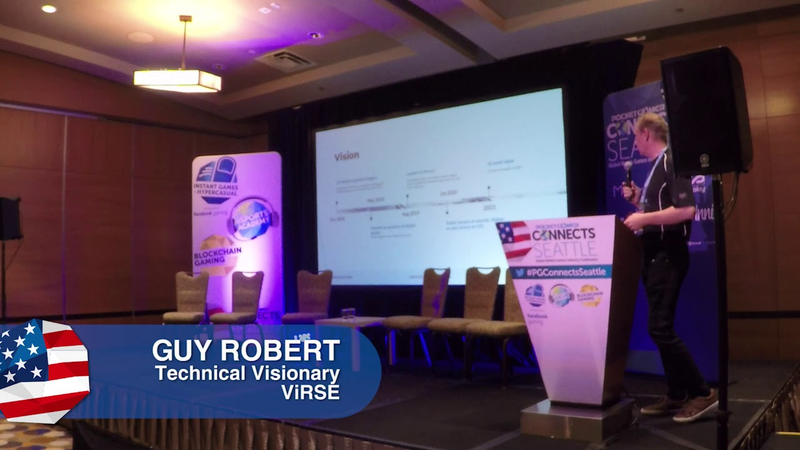
Diversify your game income with blockchain and ViRSE
The ViRSE ecosystem aims to bridge the gap between virtual reality, blockchain technology, and real-world commerce by creating a decentralized, cloud-based virtual universe.
- ViRSE is a decentralized, cloud-based virtual ecosystem designed to bridge virtual reality, blockchain, and real-world commerce by offering tangible utility, such as physical goods discounts, for digital assets.
- The platform aims for significant financial scaling, targeting $4 million in digital inventory value by late 2019 and $2.1 billion in real-life discount value by 2021.
- ShopVerse serves as a specialized distribution platform for blockchain-based games, functioning as an alternative to mainstream app stores to bypass restrictions on crypto-integrated applications.
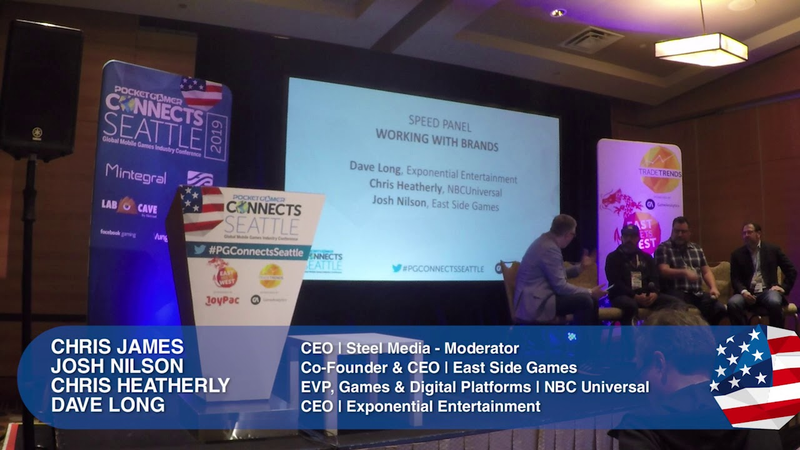
Games industry panel: Working with brands
The games industry faces increasing competition and rising user acquisition costs, making brand partnerships a strategic avenue for developers to gain visibility and lower customer acquisition costs.
- Successful brand partnerships require deep alignment between game mechanics and the brand's core fantasy, as simple 'reskinning' of existing titles is rarely effective.
- The industry is shifting away from traditional licensing toward collaborative models where developers and brand owners co-fund prototypes and share investment risks.
- IP-based games in the live-service era must function as extensions of the brand's universe, offering continuous content and live events to maintain fan engagement.
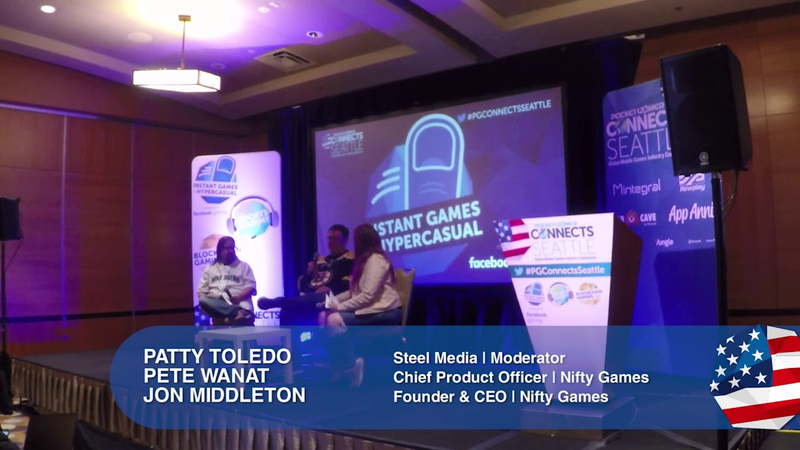
Creating enticing sports games with short and fast play time
Nifty Games executives Jon Middleton and Pete Wanat discuss the strategic development of mobile sports games designed for short, fast-paced play sessions.
- Nifty Games targets the 'core-casual' mobile market by bridging the gap between complex console simulations and hyper-casual gaming through shortened, fast-paced play sessions.
- The development strategy prioritizes maintaining the authenticity and rules of a sport while streamlining mechanics to lower the barrier to entry for casual or younger players.
- User acquisition and retention leverage the inherent social and community-driven nature of sports fandom, which encourages high engagement and spending on digital content.
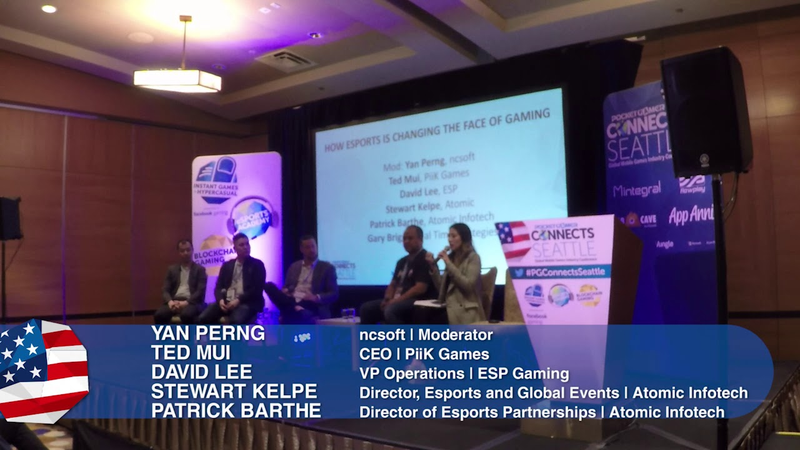
How esports is changing the face of gaming
Esports is fundamentally reshaping the gaming industry by transitioning from a player-centric model to a spectator-driven ecosystem that mirrors the structure of traditional professional sports.
- The gaming industry is shifting from a player-centric model to a spectator-driven ecosystem that mirrors traditional professional sports to generate self-sustaining revenue.
- Publishers are increasingly integrating competitive features, such as spectator modes and fair balancing, during early development to drive user acquisition and long-term retention.
- The sector is attracting mainstream corporate sponsorship, allowing publishers to move beyond internal funding and leverage gaming as a primary marketing engine.
Trump Tarriffs on XBOX, PLAYSTATION, and NINTENDO | Games ReCAP Episode 012
The imposition of tariffs on gaming consoles manufactured in China represents a critical intersection of geopolitical strategy and industrial policy.
- Proposed tariffs on Chinese-manufactured gaming consoles are expected to increase costs for consumers, as companies will likely pass manufacturing expenses directly to the end user.
- The gaming industry is accelerating a strategic shift away from hardware-dependent business models toward cloud gaming, subscription services, and software-focused ecosystems to mitigate tariff impacts.
- Tariffs are failing to reshore manufacturing to the United States, instead incentivizing corporations to relocate production to other low-cost regions while China maintains structural dominance in the global supply chain.
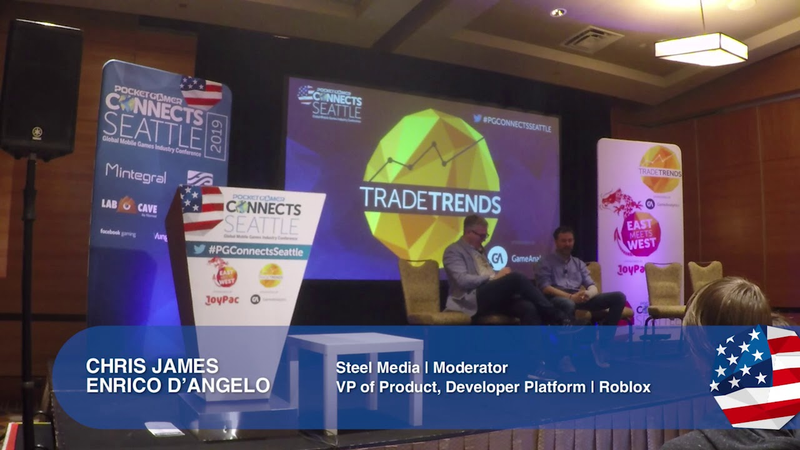
Gaming platforms: Going beyond distribution [Roblox]
Roblox operates as a large-scale, decentralized user-generated content (UGC) platform that functions as a game engine, distribution network, and social ecosystem.
- Roblox functions as a decentralized UGC platform supporting 90 million monthly active users and a developer community of approximately 2 million creators.
- The platform’s infrastructure removes backend engineering barriers by providing cloud-based tools that allow developers to scale multiplayer experiences to millions of concurrent users.
- Roblox utilizes a unique streaming architecture that delivers assets directly to the client, enabling seamless cross-platform play without the latency issues typical of cloud video streaming.
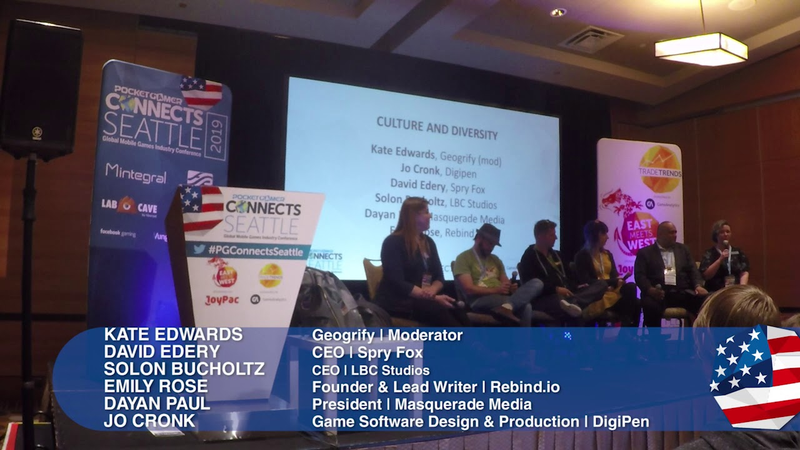
Culture and diversity in games
The global gaming industry is undergoing a fundamental transition toward greater inclusivity, driven by an increasingly diverse player base and the rise of female-led development studios.
- Diverse teams consistently outperform homogeneous groups, making the cultivation of inclusive office cultures a strategic necessity rather than just an ethical choice.
- Studios must transition from traditional, insular recruitment pipelines to active engagement with underrepresented communities and the implementation of unconscious bias training to improve hiring outcomes.
- Leadership must shift from rigid human resources policies toward a culture-first approach that prioritizes transparency and team health to improve long-term employee retention.
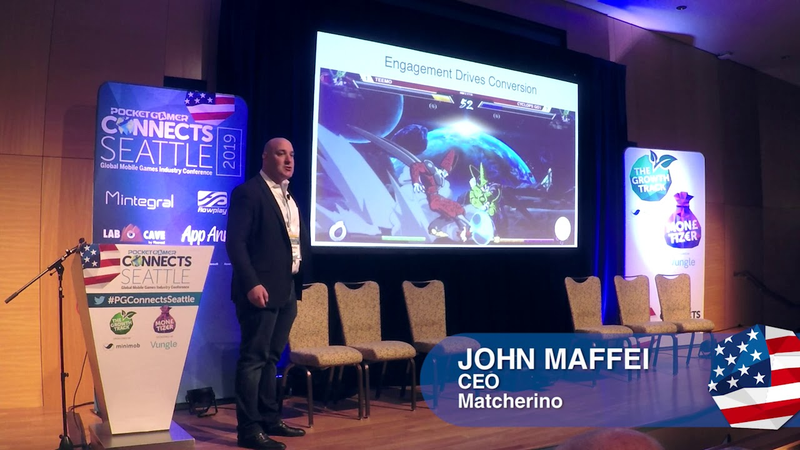
Monetisation for esports
The esports industry is experiencing rapid growth, with fan bases now rivaling major traditional sports leagues like the NFL and NBA.
- Esports monetization currently averages $4 per user, significantly trailing traditional sports like the NBA at $35 and the NFL at $55 per fan, indicating substantial room for revenue growth.
- Esports fans are three times more likely to make e-commerce transactions and two and a half times more likely to retain in a game, making esports a high-value channel for publishers.
- Increasing prize pools directly correlates with viewer engagement; for example, raising a prize pool to $10,000 can increase viewership from 25,000 to 200,000 by incentivizing higher-tier competition.
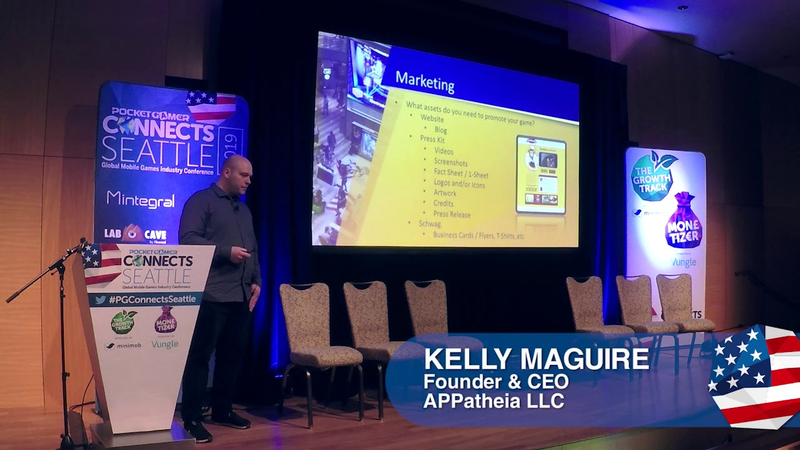
Marketing and business on a budget for indie developers
Indie game development requires a shift in perspective from viewing a project as a creative passion to treating it as a commercial product.
- Indie developers must treat marketing and monetization with the same level of rigor and resource allocation as the actual game development to succeed in a competitive market.
- Marketing strategy should focus on identifying a unique selling proposition and communicating it through concise, digestible content tailored to short attention spans.
- Paid acquisition should leverage sophisticated targeting on platforms like Facebook, Instagram, and Google, while utilizing cost-per-install networks and micro-influencers for scalable growth on limited budgets.
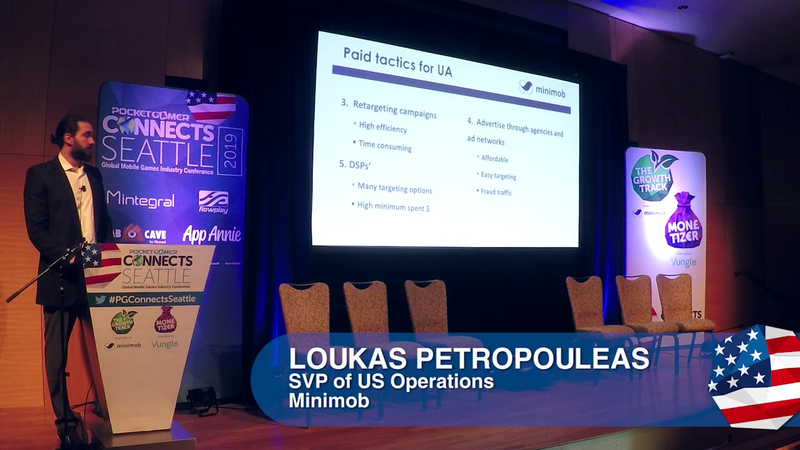
Creative user acquisition tactics for mobile apps
Effective mobile user acquisition requires a disciplined, data-driven approach that balances aggressive growth with long-term retention.
- Prioritize user retention over acquisition, as acquiring a new user is four to ten times more expensive than retaining an existing one.
- Adopt a 90/10 budget allocation strategy, dedicating 90 percent of funds to proven acquisition channels while reserving 10 percent for testing new sources to mitigate risk.
- Implement sophisticated user segmentation based on geographic data, purchase behaviors, and interaction timelines to trigger personalized re-engagement campaigns, such as targeted discounts for abandoned purchases.