1 free read left. Create a free account for unlimited reading + AI research.
Create free account
Embracing complexity and compliance in modern user acquisition
Key insights
6 takeaways- 01Google and Facebook remain the primary drivers of scale, while smaller networks and demand-side platforms are essential for specialized targeting and personalized service.
- 02Sustainable user acquisition requires balancing aggressive scaling with the operational friction of GDPR compliance and the need for high-quality traffic.
- 03Developers should prioritize partners offering proprietary inventory and demonstrate high responsiveness while maintaining skepticism toward traffic sources that promise unrealistic results.
- 04App Store Optimization strategy must rely on rigorous A/B testing to ensure store assets are grounded in practical user intent rather than aspirational design.
- 05Mitigating risks in a volatile market requires fostering peer networks to share insights on emerging ad fraud patterns and maintaining a disciplined approach to partner vetting.
- 06Social channels currently provide more consistent performance and reliable post-install data than programmatic networks, necessitating an adaptable approach to platform-specific behaviors.
Ask AI about this video
Transcript
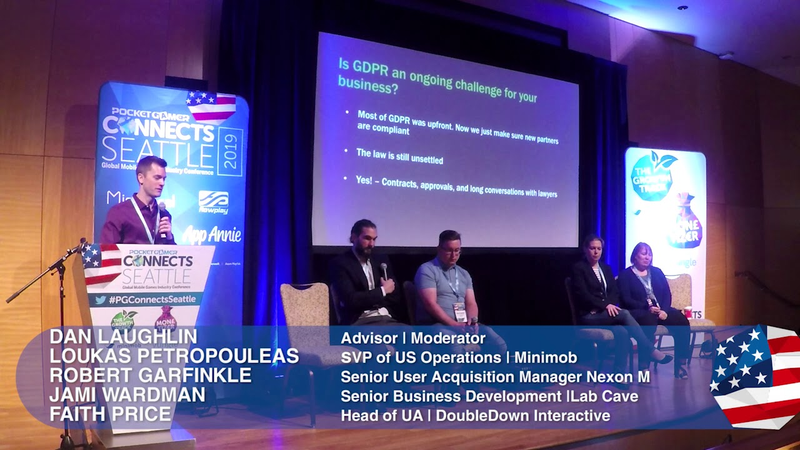
all right we're gonna talk about user acquisition as we like to do on this track my name is Dan Laughlin I have actually spent the last seven or so years on the monetization side of the business and recently switched over to the user acquisition side so this is quite fun for me and I'm learning a lot and I look to learn a lot from our panelists today here we go here's a little clicker so today we're gonna talk about both the the fun and the pain of modern Newegg with with great tools and technology comes great responsibility so we're going to touch on the challenges as well as the opportunities that come from everything that's going on in our space so let's see here clicker yes there we go so real quick about myself my company as I said Dan I'm with a company called loot cakes we're a new newer entrant in the space
we actually created a network of spenders basically verified in-game spenders for mobile games and so we're able to leverage that data to help user acquisition teams acquire more spenders so if you're interested in looking into spender data and how we can help you there come find me after the panel all right I'm gonna introduce our panelists here I don't like to let the panelists introduce themselves because they just go on forever and ever so I'll try to do a decent job of this and if I miss something you know jump in or pitch your company better than I am or something like that guys all right so first we've got Robert from Nexon who just got off a plane and ran here from the airport so just on time you guys are quite all familiar with Nexon based in Korea some big games dominations one that's well known more recently like a XE and darkness rises so he works out of the San Francisco or Emeryville location there but Roberts the middle of a global man he speaks Mandarin which I do not he
also worked it at Gameloft and lived in China for a while and and this is fun if you're interested in finding your way to Robert's heart professionally do you see the end of his LinkedIn profile in his description he will tell you how to do that I'll leave that all right Lucas from mini mob one of our sponsors here today oh there we go alright so I met Lucas actually in Vegas a few weeks ago and he delivered for me what I needed most at that exact moment which is a spicy margarita which I was very happy happy to have Lucas is a also another international man of mystery lives in Athens but yet runs the US operations for many mobs so probably on planes a lot also into school in London and if you're not familiar with mini mob he can describe it better than I but DSP all sorts of different solutions like a white label ad network solution you can tell you a bit more about that and a bit alright faith is our local
representative yay all right so you're probably all familiar with doubled-down huge in the casino game space faith is part of a local kind of big fish alumni you a mafia kind of runs the town around here so a lot of experience here in Seattle doing user acquisition previously was in the affiliate space with Expedia and a few other spots so you know anyone with affiliate marketing knowledge be a little afraid of she's got all the tricks alright and finally Jamie from lab cave another sponsor here today so I first met Jamie many years ago when she was at DDM an agency in the gaming space and more recently she's moved over to Madrid and learning Spanish and traveling the world if if your picture on LinkedIn of your badges that you've collected since just being a lab cave or any indication she's been to every single conference in the gaming space in the last 18 months alright so in lab cave if you're not familiar so both a game publisher some pretty
popular casual titles but also a service provider so in the ASO space and more recently in monetization on the mediation side of things so Jamie can tell you more about that in a second as well alright so we're gonna dive into some questions here I have pre asked them these questions I'm going to throw their answers up on the screen in most cases I got answers from from several of them so that we can kind of get to the meat of things really quickly and you know if you've got a question in real time just blurt it out because you know by the time we get to the end who's gonna remember what we talked about you 20 minutes before that so just just go for it all right first question this is the high level one all right kind of best of times worst of times type thing right now there's so many tools and technology and like endless amounts of data about you a if you think back to where we were five or seven years ago it's it's crazy to think of what we did without all this data back in that time but also you know like I said lots of responsibility with this data with gdpr and all that so is today the best or the worst or the easiest or the hardest time
to be in you a and nobody took the bait on this they all opted it to a it's neither it's both you know I guess no one wants to be on record saying it's an easy time to do their job but I'll let you guys dive in who said that it is neither hard or easy right now I mean it was probably me so the challenge that we have now is that the space is very very crowded and especially for for publishers who are only in one particular categories like DoubleDown is in the casino space and I feel like the barrier for entry for mobile games is getting lower to a certain extent so there's a lot there's just a lot more competition but we have more tools which can make it somewhat easier to do you a we know a lot more about how you a works how the consumer is looking for things
and so I think in that way you know it's it's got its challenges but I don't feel like it's it's either of them just to kind of dovetail on that it it is really both the easiest and the hardest time as you've kind of touched upon we have better access to tools and better access to segmentation and the ability to identify the right users at every point then we've ever had in in the history of marketing as a discipline however there are so much just so much competition and so many fraudulent actors and so many pitfalls and just an amazing array of different audiences to target that make it also an extremely difficult time for user acquisition
[Music] alright well we'll jump on in the next one which is right after you know very much aligned with the difficult part so GDP are coming up on its one-year anniversary happy birthday GDP are so question here is is this still a thing for you every day that you're dealing with that you're paying lawyers for or is it kind of okay we set it and forget it this has all kind of been figured out you know what what is the tax on your business today I would say first for our team in terms of GDP our it's making sure that contracts are properly set up so that we are addressing the needs of GDP are and for us it's still ongoing because what we do ask for permission and you know those pieces are all within your email system you know there's confusion among if I get a business card at a trade show you know can I can someone else on my team I had talked to you can we send you a newsletter I know that there's opt-out reasons but which makes it you know we can obviously delete you from our system but in terms of legality just making sure that each and every step and
everything that our team is trying to to implement that we're keeping GDP our in mind including new tools coming onboard making sure that that that GPR has been thought about externally and then additionally how do we incorporate that in Cerner inside our own team because as a as a service provider what's what's your take on this well as long as you have a good lawyer on payroll just be careful and making sure that they do the job I think we I think pretty covered in terms of the HTTP are like in the beginning was a big issue for us like we had to make sure that we're compliant and you know when are we in like when you mentioned when we're not compliant but a year later I think like as far as I know we had no more complaints and everything is alright I guess Robert with next on being a very global business is this something that you're dealing with and I know you touch on contracts and it's definitely delayed
the onboarding speed of contracts you know we've there are fewer partners now that we're able to work with just because there's a big bottleneck you know BPA's and getting all the paperwork everybody wants to sign on their own paperwork we want to sign on our own as well so of course it takes twice three times four times as long to sign anything fun stuff so last last I think relatively negative topic all along the same lines how do you actually you know mechanically share data with partners while keeping these lawyers happy and we've got some interesting answers here about you know the MMP being you know mobile measurement partners and then about data security tools I was actually curious whoever if someone has to say who said the right tools to keep data secure are you using like third-party systems just dedicated to data sharing I don't know we said that wasn't me but I can tell you in terms of the tools that
we've used for keeping data safe we do a lot of research before we implement something that's going to hold any data external tool why is making sure that they've implemented the proper security so the research on again the tool is incredibly important anyone else want to touch on this one at all or we want to run away from this as fast as possible okay we'll do that all right here we go the ESPYs and networks in the UA space and and maybe Lucas I'll point at you for this one since you're in that space directly you know that the the big thing in this space is always you know Google and Facebook and they're their share you know how do you guys think about kind of biting at those those heels and what do you do to try to kind of gain back some of that share because it doesn't take a lot of their share to be very big for you so how do you guys think about that right now well first of all I won't say that hey although like Google and Facebook Cover like 90 95 percent of the world traffic and actually have a great rates on both
of them and at the same time with PSPs I think it's more personal than Facebook and cook like you know who it's not that just a big corporation like you know as you know we are officers you can work in any day we notice big like so you can't fight Facebook or Google if you want but you can get much more scale so it's easier to talk with us and court everything us and at the same time I think a lot of these peers right now offer some my targeting that the Facebook and Google are now catching up and the function mode that and that's why we see them creating now they look like sighs you mentioned and we're going to talk about later on more and give you more options as you know to compete with them further up from the game inside as a developer it is difficult to take you know marketing budget share from Facebook and Google because of the level of segmentation that those platforms kind of well Facebook gives you the the
real challenge here is the one in consistency and traffic quality most networks have challenges in finding that balance between scale and the right audience for foreign audience that is to say like a game or a product and and in doing so they they kind of fill in a whole bunch of junk media you know that sort of like cheetah of the world that gets kind of stuffed in there and I would also say that it's for us when we look at who our partners are and we would love to do more with ad networks in and DSPs but it is an issue of consistency and quality and it's also a little bit of an issue of being a trusted partner and for all that there are challenges in dealing with Google and Facebook they tend to be the only
partners that come back to us and say hey we're giving you a credit because this technology piece broke or this you got traffic from this and you shouldn't have in the case of DSPs and ad networks it's incumbent on us as publishers to figure out if there's fraud and to go to them and prove to them and we'll still have those like we'll still say like here's you know here like five metrics where it's very clear that this is not quality that you sent us and suddenly those metrics will come back to normal and be like okay well that's really odd why did that happen oh we don't know why that happened that kind of creates some questions and so that's part of the challenge and how to other channels media channels grow is you know be more primed if something happens in the network like tell us don't wait for us to figure it out that's actually one of the lessons I give to every new Account Manager and
that works for me is like always be one step ahead of the other ties if if you make a mistake or if something goes wrong then let the advertiser know first goes either way he's gonna find out it's better to find out from you and tell him hey that's an ass or hey we made a mistake like this figure out what happened that him coming to you I think you hey you made a mistake what's going on losing the account once and for all actually this is one I was discussing that with some accountant one just last week because initiation that's what I told about you guys I Grant Achatz all but to be good and great the difference is being one always one step ahead make sense all right next question now along the same lines actually that what should developers look for when they're evaluating a new you a partner and and maybe robber if you wanna jump into this one from from the developer side and you know obviously with with Jamie and Lucas here as service providers they can kind
of offer the counterpoint as well as far as you know what they think that developers should be looking for as well inverters so the first and foremost thing that will make or break my decision to work with a new partner is whether or not they have proprietary inventory like if it's wholly owned and internal and there's no other way to buy it outside of that technology is the next step and then the reputation really it's kind of is a step ladder on that way I mean we in terms of looking at partners I mean a lot of it is oversupply you know the responsiveness is important because if I need to ask you a question I have something I want to know if at this stage while I'm deciding you can't get back to me then at the stage in which I paid I'm a little concerned and I know that that you know as someone who works on a service team and knowing that the the sales team is different than the team that's also providing the work if the
sales team isn't responsive it makes me concerned about what I'm gonna find from the rest of the team because the sales team is designed to be responsive [Music] anything else dad I would also add that trying to if you're a media source or ID number a DSP be able to articulate what makes you different and we have a question there as we send out to people who want to partner with us and the answers I get back are so cookie cutter that you would never be able to guess like if I gave you ten names and and you know ten questionnaires like which ones go with any of them they're just they all say the exact same things so there's like again we said earlier it's it's one of the most difficult times because there's a lot of competition in our eco space in terms of publishers there's
also a lot of competition and in terms of different you know media channels and so it's up to media channels to be able to talk about why they're different than any other you know literally I mean I've literally seen spreadsheets with four or five hundred different networks you could partner with so you need to be able to stand out alright let's get into some tactical stuff here ASO so you know everyone knows the app store featuring has become kind of a less of an important factor not as much impact there so ESO is more important than ever yeah I asked the crew here what are some of the latest things and and got varied responses and in some cases heard that you know it's not really about what's latest is the same try and true things it's just that you need to be more and more diligent about how you work on it and Jamie this is an area where your company does a lot of work you wanna start sure-sure for us it's it's a lot of testing I mean
you you can look at your competition and you can see what it is they're doing you can look and see you know what what's going on around you but realistically once you kind of assess that you need to then kind of dive in and I mean the a/b testing on that google allows is incredible we also you know looking at ASO is a tool for helping your conversion rate as well because as users are coming to your page you know you want them to not only visit but you want them to install and so looking at that tap through rate and and how can we assess that so for us what we see is the most useful there and your creatives it is you know when people are looking for a game maybe they find your game because you've got proper keyword usage but then they look at your icon and maybe it's just not appealing to them your game could be exactly what they're looking for but they're not seeing your pages appealing and realistically looking at ASO I mean we all know that SEO is so important for your website and if someone's gonna want to work with you and you don't have a website that clearly says what you do they're gonna move on there's a plenty of other
options out there and so for us when we focus on ASO we're focusing on what it is that you know what makes your game different and how can you appeal to the users that are looking for you so having that really clear cut page that is well defined you have you know on Google Play obviously it's looking at the descriptions and how you are able to rank for keywords and then looking on iOS for how are you using the character space that's allotted to you there's a lot you can do with the little bits that are given to you it's pretty amazing what the what the teams are able to to do with that little bit of space yep go for it belt it out I'll repeat it for everyone so on iOS you can use a different tools so for example our team uses split metrics when we want to do a specific iOS testing and we know that users are different on iOS but we also know that you can only update on iOS when you update a build so it's a something where you can only update it every 30 days or so as so as us as a third-party we have
to work with our clients to be able to make the iOS update so you can't make them as often as opposed to Google Play where you can make tests there within the console constantly so some of the testing if our client does not wish to use split metrics cuz it obviously comes with needing the additional user acquisition cost is to be able to apply things that we've seen work on Google Play and just see what happens on iOS does it apply properly lots of times it does there are specific instances where it doesn't work but being agile enough to make those changes so I guess an answer to your question there's a third-party tools that help you with iOS I also want to say if you can as you a if you can get involved in the ASO process in soft launch or even before it's really helpful especially if the product teams are willing to partner with you when I was working on ASO at big fish we would get a chance when they're bringing out new games to talk
about like what do you want the title to be and how is that gonna impact what you rank for in the in the App Store and the Play Store and really trying to help communicate like it's all about practicality it's all about reflecting what the game is and what the user is searching for and it's not aspirational and I remember I had a conversation once where they were like well we want we want the this is a mid core game so we want people who play who used to play magic and we want people who play clash of clans we're not people people who play clash Royale and I'm like but your games nothing like that and you have none of those descriptors anywhere in the game anywhere in the title anywhere in the subtitle and so trying to rank on those four keywords isn't going to be useful because there's no connection to the game so don't you know getting them to being it's not aspirational it's really nuts-and-bolts what are people looking for for these keywords and does your game fit it cool
alright we're gonna move on to another tactical question here and Jamie you mentioned creatives something I've been more exposed to recently is just how how much how many offers there are to help with usually finding the best creatives and creating the best creatives for user acquisition like on Facebook there's a dynamic creative optimization tool different networks and systems and DSPs and everybody offering different things then you've got tools like bid dalgo that can kind of stitch together different variations and just thinking as a developer and maybe robert you can touch on this and see what you guys do it next on how do you manage all this there's a million creators flying around you've got all these different platforms doing different things how do you think about it holistically the short answer is that we don't really think about it holistically we think about it as a bunch of little compartments so we we work with a digital asset manager a dam that is curated and managed by the
creative team which is large big companies have really large teams but there's not like one flow from one end to the other and then once it hits the network's everybody has their own special sauce that they want to to try to you know leverage so different creatives might actually perform better on one network or one platform or in different countries or on different platforms yeah yeah I mean the different countries creatives obviously I mean artwork is different in in Japan that it is in Madrid or in Spain like it's just a completely different set of creatives that are necessary and looking at how Google allows you to have a different icon and that's incredibly important in terms of you know looking at that but for our team in order to manage all of this we have project managers that are required to keep up on all of that and make sure internally that everything is coming up as it needs to and the nice thing for us by having that project manager it means if there's an issue we can go to one person and kind of address ooh who then can address those things
with a team so it allows us to have more OnPoint meetings that are that are faster and then we can move on and make the changes necessary and Lucas as a service provider in this space how do you work with clients on the creative side there and anything goes give us give us everything you've got or do you help them kind of curate well they always asked us if we have a creative team on our side and we say yes but they both know that you won't need it because every developer and like big companies like in action and DoubleDown especially liked Appa Don has to with coziness or the special keywords cannot you know say some words in their art so everyone prefers to use their their creatives and so we just use the KDS we're given but what we do is encourage our advertisers to change get is often and I as many carriers as possible but at the same time yeah we just have to listen to them and do as I asked us is this an issue
like the same with GT PR you don't want to make mistakes it's same thing with the creatives you don't make a mistake so we try to do everything possible to keep the advertising happy and having us make the creatives is not the process the step that you might make a mistake so we try to avoid that as much as possible we only use ok Tim usually to change the to translate like if you want a different language and even then we have them sign the paper saying if there's something wrong there in the translation it's not their fault it's a lot can go wrong there all right next topic look-alike audiences so in the new business I've been working in we're taking you know suspenders and and the the email addresses and the data related to the suspenders throwing them into Facebook and creating look-alike audiences that are driven from the spender data and it's proven to be really powerful and I'm really impressed with the technology from Facebook that they can you know find the signal if you will between say a couple thousand people and then go find you a million people that are gonna look the most like them so we're kind of creating and
sharing those audiences with our partners and it looks like Google's gonna be doing more of this and it's kind of rolling that out and you know I guess the question is and and Oscar mentioned this in his last talk you know this is a powerful model it probably not going away that we have one dissenting opinion here which is pretty interesting about GDP are curious you know do we think that look-alikes will be kind of the go-to way of building audiences going forward and will all types of companies be building and leveraging these you know what and maybe from Lukis perspective from a DSP how do you guys think about look-alikes and because it's it's definitely magical technology but it's it's it's science and data science that anyone can can get after if they have the right people on the right data so how do you guys think about it so actually I with the look-alikes and how they work Facebook and I looked a little bit now it said Google is launching it on our side is
lookalike and how do you find out what look like so it's basically some traits in the users that basically do well in your app so with targeting having many targeting options as it as a DSP targeting can be social behavior can be income or like thousands of things you can have like so basically you can't create look-alikes in a sense using it is because it looks like a certain trait so you can target that these certain traits we in the DSP as although you mentioned like you can have like a million people and I think the more specific you are and the smaller the group you focus on I think the higher chances to getting a better its expression gets back for your money like a better return on your money any other perspectives on the look like market I I think every couple of years look-alikes become kind of the big next thing that is going to be the game changer and then everybody except
Facebook realizes that they were actually kind of difficult to make and stops talking about it for a couple of years they do have a unique set of data to work with what that Facebook [Music] [Music] you're talking about like brand strategy [Music] yeah you are hitting the same people
across everything but there's different technological ways to address that media there's simple waterfall mechanics that work in the networks and the networks are full of a lot of other inventory that you're not necessarily trying to buy whereas with Facebook there's kind of a gravity that falls on that one user that is going to come in and drop $500 and that one impression is going to cost a lot more than everything else and and so they know that that's likely so they're going to to find a way to charge for that in a way that is acceptable for you but I guess the question of why would you address them in all four different places is because at some point you're going to know you're likely to get a conversion but you don't know when that's gonna happen it's just a little spin of a roulette wheel over and over again I think - that's why creative differs between medias between you know
the media channels you're using and so when we look at creative we look at you know what performs best for an ad network versus what performs best for social media we try to think about what is the user doing when they're seeing that piece of media or a piece of creative so usually in a game they're doing something very different than if they're on Facebook or if they're on YouTube or if they're doing a search so keeping that in mind like what's the best experience you can provide for whatever their intention is when that piece of when they see that piece of creative is helpful but it lets you build for the right experience all right we'll skip ahead to the last question here any piece of advice that you guys have to those companies and people new
in the UA space entering into this crazy world right now hmmm I think I'm the I think testing is incredibly important but I also think that when you find something that works you can't assume it will continue to work I think that there's you know you're constantly addressing new users there's new cohorts happening there's new people coming in and seeing your ad and creatives that work for a game that within the RPG space it doesn't mean that if your game is an RPG that that exact same thing will work you really just need to make sure that you've you learned from your mistakes or and your successes and that you adjust as I mean this is a market that changes constantly I mean I think every six months something new is coming up here and that you have to be ready for those changes and just keep up on what's what's happening and watch your data I feel like networking is really useful and meeting with other people in the UA
space and it is important to realize that what works for one of your competitors might not work for you or what works for somebody who's in a different different category might not work for you but it's good to have all that knowledge so that when it comes time you can apply your own strategies to it and also again it's it's kind of a small eco space and when we talk about like what are you looking for in partners and Robert mentioned reputation so being able to talk to other people and learn from their experiences about different ad networks and channels and things like that I think is really useful as well it could keep you from making mistakes I think you need to keep a close eye on what your target audience is and what the kind of media that you're buying is networks that give you site level transparency you're really helpful for this purpose I wrote in there be aware of hyper casual which is a little glib but what I mean to say is that there's open dude there's a rather small actual
gaming audience it's it's maybe three or five million people in the US that really play mobile games in like the mid core and core space that has changed radically over the course of the last couple of years with the advent of hyper casual so now there's tens of millions or hundreds of millions of people in the u.s. that are playing games on their phones but it's not quite the same experience and the people who are you're ostensibly paying a nominal CPI for are not as familiar with core gaming concepts as the older audience that is maybe more established actually I'm gonna use something someone told me last week at the Mau and he told me if it looks good too good to be true then it probably tees and that's a very good piece of advice because right now the way the market has involved in the beginning the fraud was like boats and
all of its stuff but now they didn't the fraud right now the market is not like looking like bad traffic actually the best type of fraud I've seen is like looking like great great great traffic so if I see a source with amazing traffic out make sure you like I look over it again and again until it's foolproof that's a good one all right we got a few minutes left we'll turn it over to questions anyone have anything for the crew here yes I'm curious [Music] there's quite a big difference between those two but a lot of it comes down to the the way in which you're addressing the media by and large programmatic is bought on display and it's interstitial
so it's like pop-ups so you have a lot more impressions and fewer a lot fewer clicks and a lot fewer installs in a in a broad sense so the creative conversion is much lower and because the CPMs are also lower hugely you can kind of ride the line between that but the part that most DSPs don't really take into account is what's happening after the install they're really focused on that impression click install funnel whereas with the social channels they're pretty squarely focused at the post install level at this point so just in broad terms social will almost always look better than programmatic right now I think it's an issue of consistency as well which is something you'd brought up its social tends to have a fairly steady kpi's across the months and with programmatic and and networks you know
some ones are really good some months are not really good and there's it's very difficult to predict and so and it's part of that the challenge is like what do you do when things are not going well and I think that comes back to you know how do how do DSPs compete with Facebook or any of the social media when they have so much more data on the on the customer and they're able to not have the high highs and the low lows that you get with with with programmatic because programmatics kind of you know shooting off everywhere and hoping that they hit something [Music] other questions we're good all right well thank you to the panelists thank you all for coming [Applause]
Summary
Modern user acquisition in the mobile gaming industry is defined by a fundamental paradox: developers possess unprecedented access to sophisticated automation and targeting tools, yet they must navigate an increasingly volatile landscape characterized by intense competition, sophisticated ad fraud, and stringent regulatory frameworks like GDPR. Achieving sustainable growth requires a delicate balance between aggressive scaling and the operational friction introduced by rigorous compliance standards and the necessity for high-quality traffic. While major platforms such as Google and Facebook remain the primary drivers of scale due to their reliability, smaller networks and demand-side platforms provide essential value through specialized targeting and personalized service.
Success in this environment demands a disciplined approach to partner evaluation and creative strategy. Developers should prioritize partners that offer proprietary inventory and demonstrate high levels of responsiveness, while simultaneously employing rigorous A/B testing for App Store Optimization to ensure that store assets remain grounded in practical user intent rather than aspirational design. Furthermore, the effective use of look-alike modeling and decentralized internal teams allows firms to manage the diverse requirements of multiple platforms, provided that these efforts are supported by a healthy skepticism toward traffic sources that promise results appearing too good to be true.
Ultimately, the most effective user acquisition strategies are rooted in continuous experimentation and data-driven decision-making. Because social channels currently offer more consistent performance and reliable post-install data than programmatic networks, practitioners must remain adaptable to shifting audience demographics and platform-specific behaviors. By prioritizing transparency, vetting partners thoroughly, and fostering peer networks to share insights on emerging fraud patterns, developers can mitigate risks and maintain a competitive edge in a market that increasingly rewards those who embrace both technical complexity and regulatory compliance.