Serious Games reports and market data
Documents
Copyright and Games Preservation: Lessons and Opportunities in De-colonization
This extended abstract examines how copyright law and institutional preservation practices struggle to accommodate video games in a global, post-colonial context.
- Copyright frameworks and heritage institutions were built around static, physical, territorially bounded objects, while digital games require ongoing copies, updates, and platform maintenance, exposing these limitations.
- Digital distribution and 'service' business models mean libraries and archives often hold only licenses rather than ownership, which limits their long-term capacity to preserve games.
- Territorial licensing creates uneven global availability; the authors cite Sony's PlayStation Network restricting access to roughly 85 countries.
Virtual Burden: Representations of Animal Disabilities in Video Games and Their Posthuman Contexts
This paper examines how animals with disabilities are represented in video games and how these representations participate in posthuman questions of agency, embodiment, and relationality.
- The paper treats animals with disabilities in video games as ambiguous figures, both computational constructs and narrative agents that shape players' subjectivity within hybrid systems of affect, automation, and human and non-human causality.
- It identifies recurring strategies for deploying disabled animals: cultivating sympathy through "cute animals with dysfunctions," depicting "transhuman camouflage" where implants or exoskeletons fully compensate for impairment, framing disabled animals as monstrous, and treating animals as military or war resources.
- The authors attribute these patterns to converging conditions: the predominantly agonistic structure of gameplay, the general underrepresentation of disability in games, instrumental attitudes toward animals, and broader cultural stereotypes.
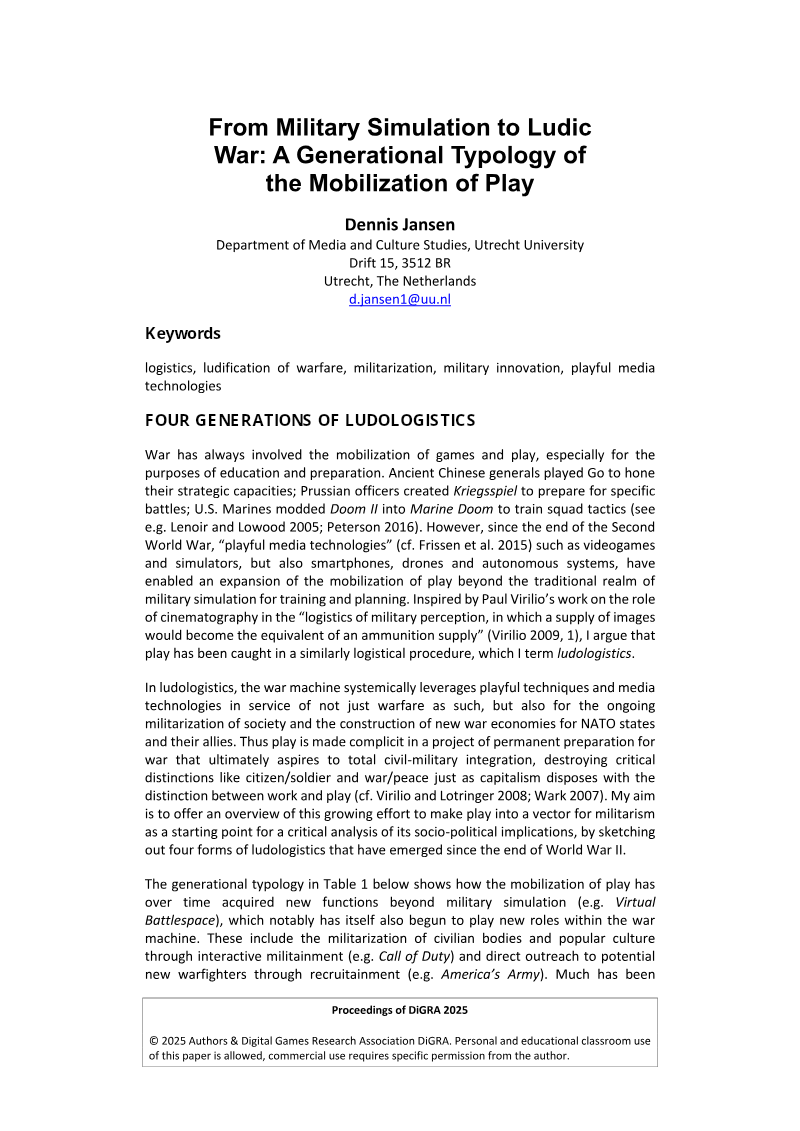
From Military Simulation to Ludic War: A Generational Typology of the Mobilization of Play
This paper, presented at DiGRA 2025, proposes a generational typology of how play and games have been mobilized for military purposes since the end of the Second World War.
- The paper's central thesis is that play has been absorbed into a logistical procedure it calls "ludologistics," which serves warfare and the militarization of society in NATO states and allies, eroding distinctions such as citizen/soldier and war/peace much as capitalism erodes work/play.
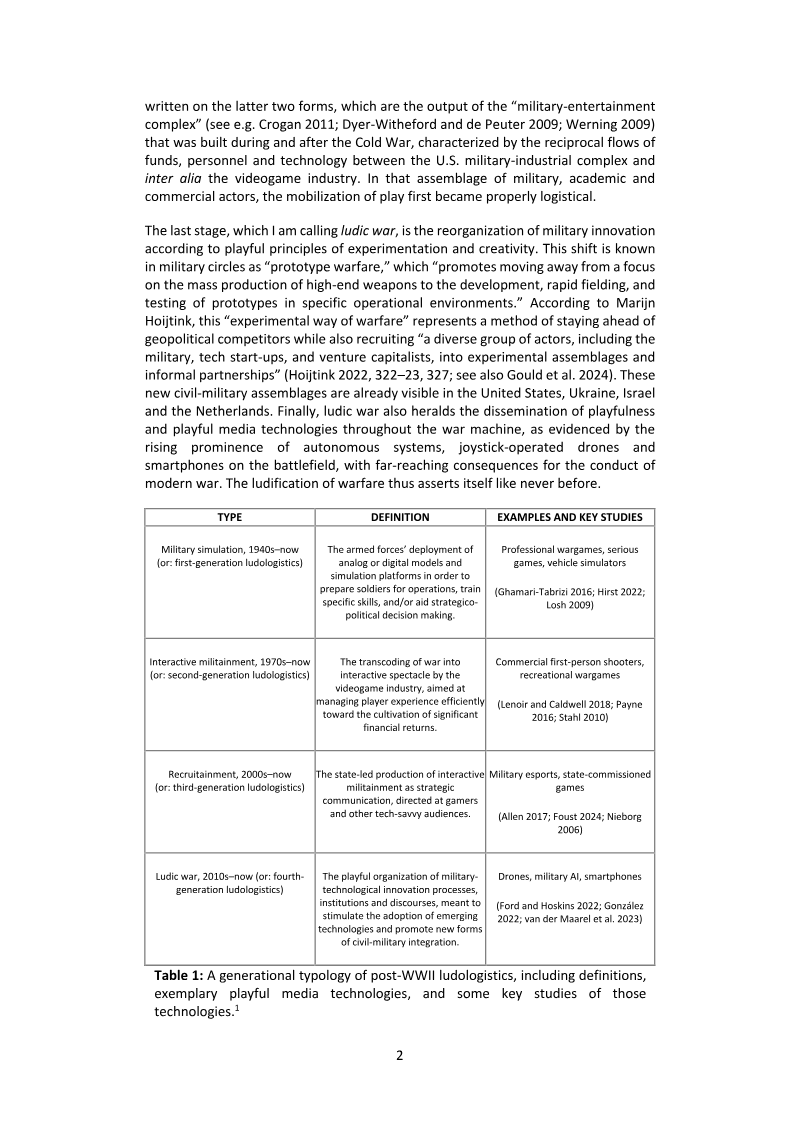
- A four-generation typology traces military play from first-generation military simulation (1940s: professional wargames, vehicle simulators, training platforms) through second-generation interactive militainment (1970s: commercial shooters and recreational wargames), third-generation recruitainment (2000s: state-commissioned games and military esports), to fourth-generation ludic war (2010s).
- Fourth-generation ludic war is characterized by "prototype warfare," which relies on rapid experimentation and civil-military partnerships with tech start-ups and venture capitalists, producing examples such as drones, military AI, and battlefield smartphones.
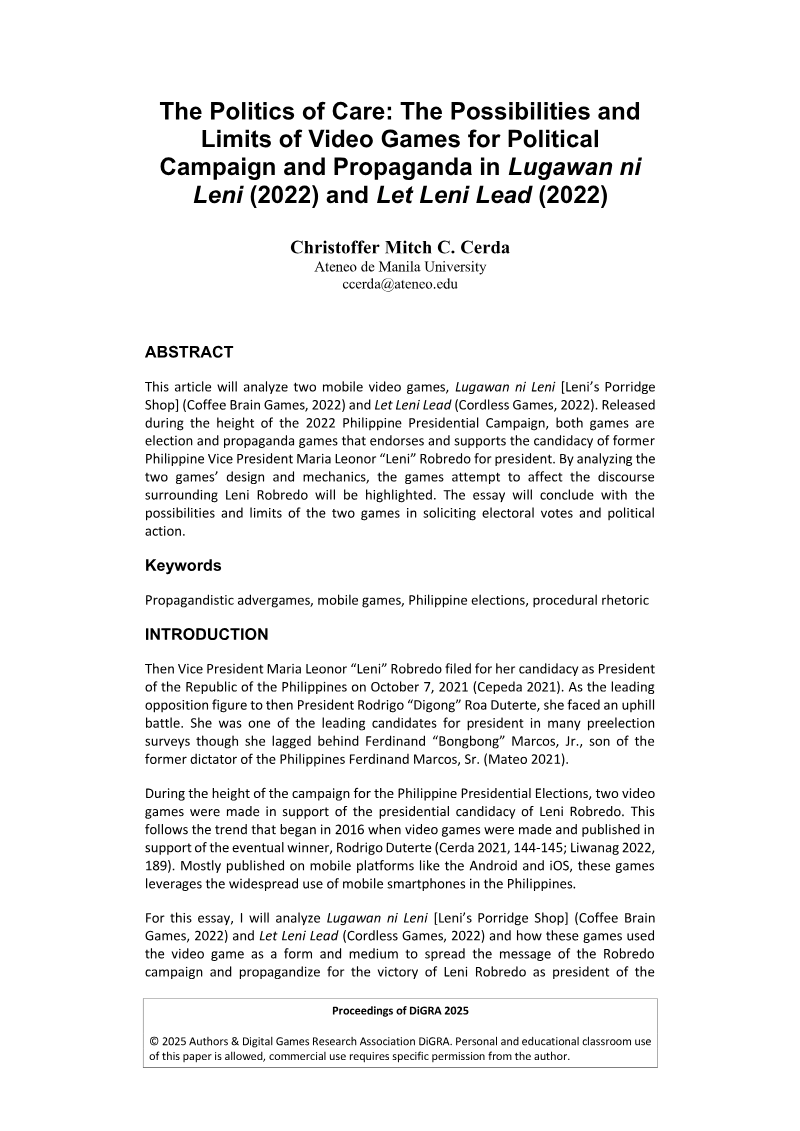
The Politics of Care: The Possibilities and Limits of Video Games for Political Campaign
This article examines two 2022 mobile games, Lugawan ni Leni and Let Leni Lead, released during the Philippine presidential campaign to support Leni Robredo's candidacy.
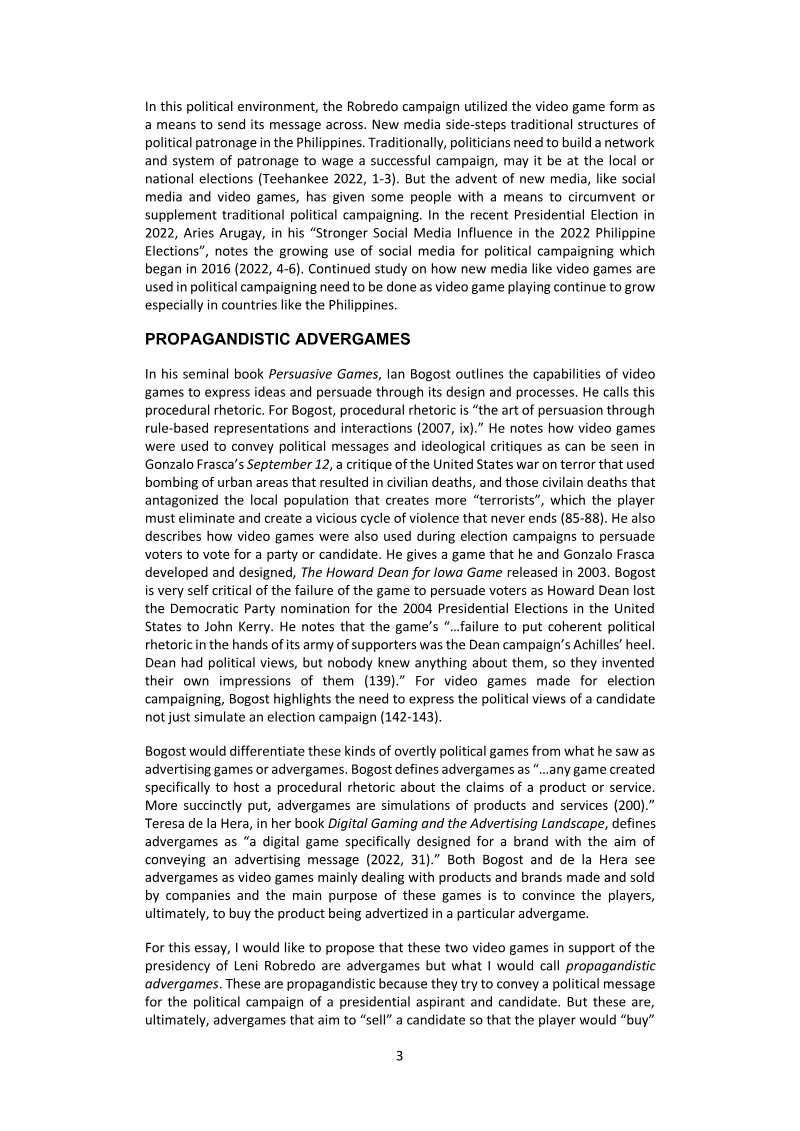
- The article introduces the category of "propagandistic advergames," arguing that political games sell a candidate the way commercial advergames sell products, drawing on Ian Bogost's concept of procedural rhetoric.
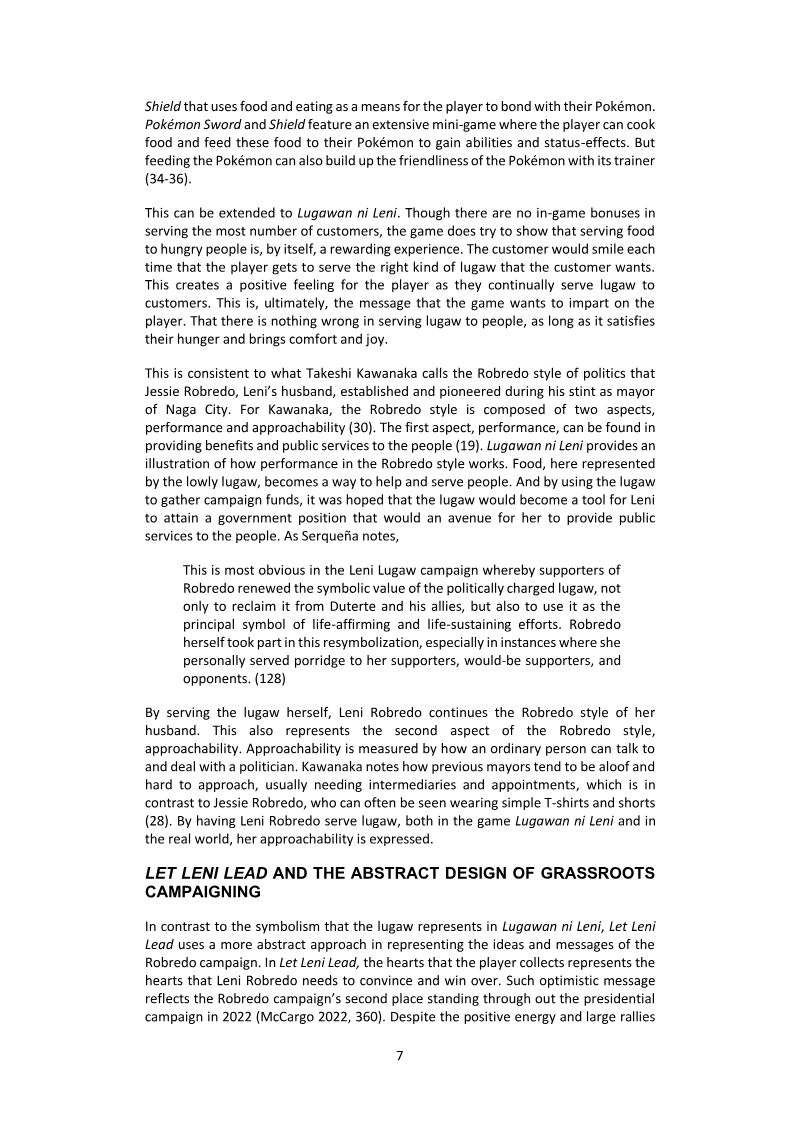
- Two 2022 mobile games supporting Leni Robredo's presidential campaign, Lugawan ni Leni and Let Leni Lead, express the "Robredo style" of politics, which combines public service performance with personal approachability.
- Lugawan ni Leni uses the lugaw (rice porridge), a humble campaign symbol, to frame serving others as inherently rewarding, while Let Leni Lead adapts the campaign's house-to-house volunteer strategy into an infinite-runner format.
D5.3 Prototype Report: Games, Heritage, Arts, & Sport
The GAMEHEARTS D5.3 Prototype Report presents an early-stage, player-centred video game prototype designed to support youth social inclusion.
- The GAMEHEARTS prototype is a player-centred game for youth social inclusion, grounded in the Positive Youth Development framework and its "5 C's" (competence, confidence, connection, character, caring).
- Its central thesis is that connection itself can serve as the core gameplay mechanic, requiring moderator-supervised collaboration among young people to advance the narrative.
- A needs assessment with a Helsinki youth work centre serving people aged 15 to 25 identified uneven gaming proficiency, limited basic technical skills, language barriers, and loneliness as key challenges.
Escape Racism: Using the EscapED Methodology to Inform the Design of Educational Escape Rooms
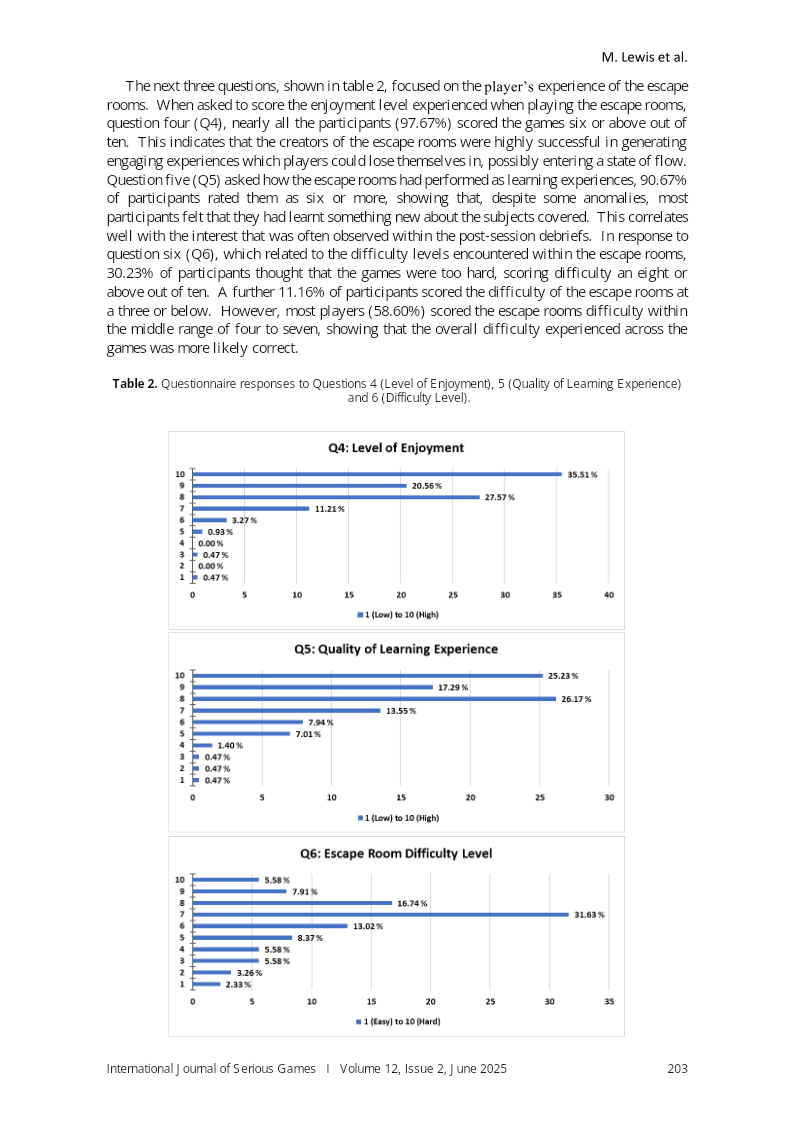
The escapED framework serves as a robust, adaptable methodology for the design of educational escape rooms, specifically those addressing complex social issues such as human rights, modern slavery, and human trafficking.
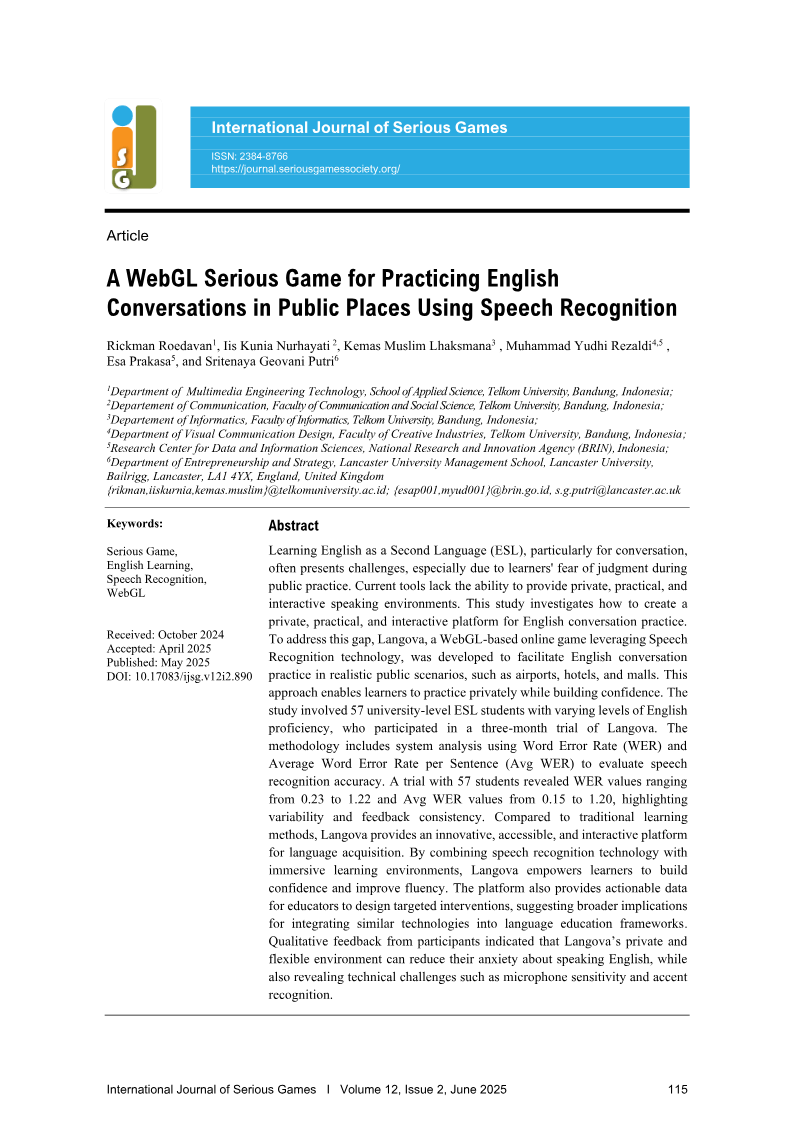
A WebGL Serious Game for Practicing English Conversations in Public Places Using Speech Recognition
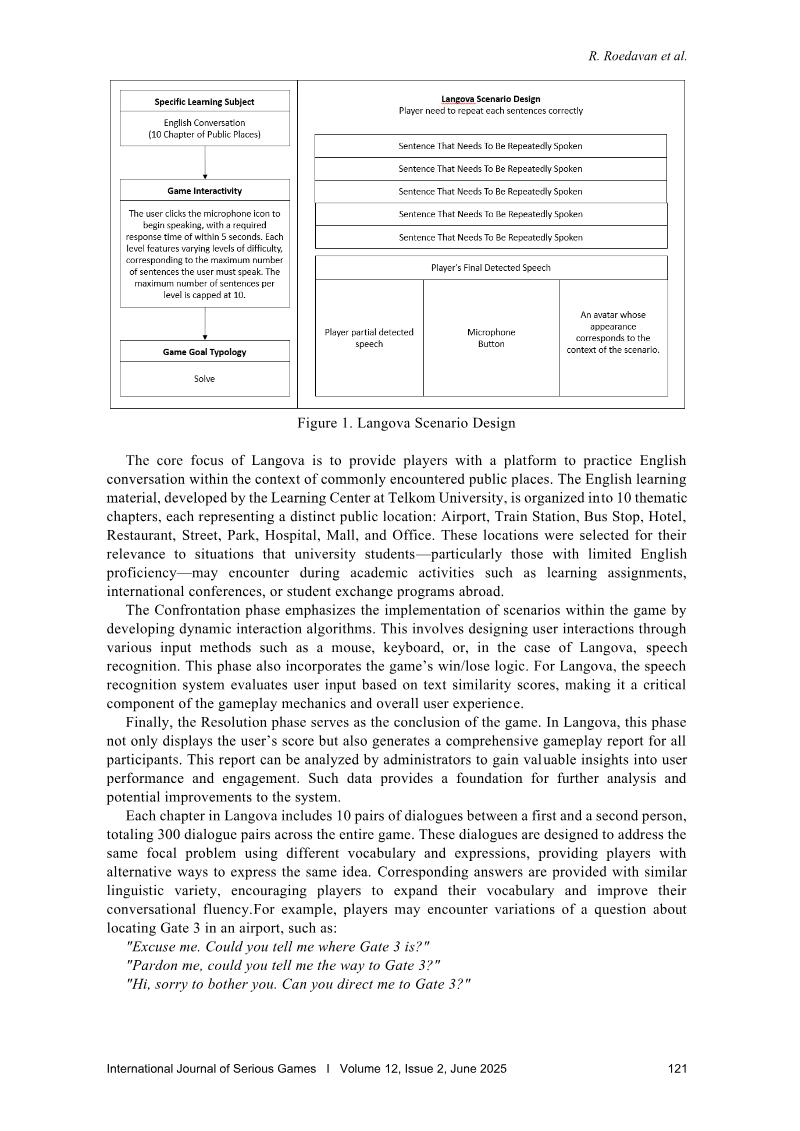
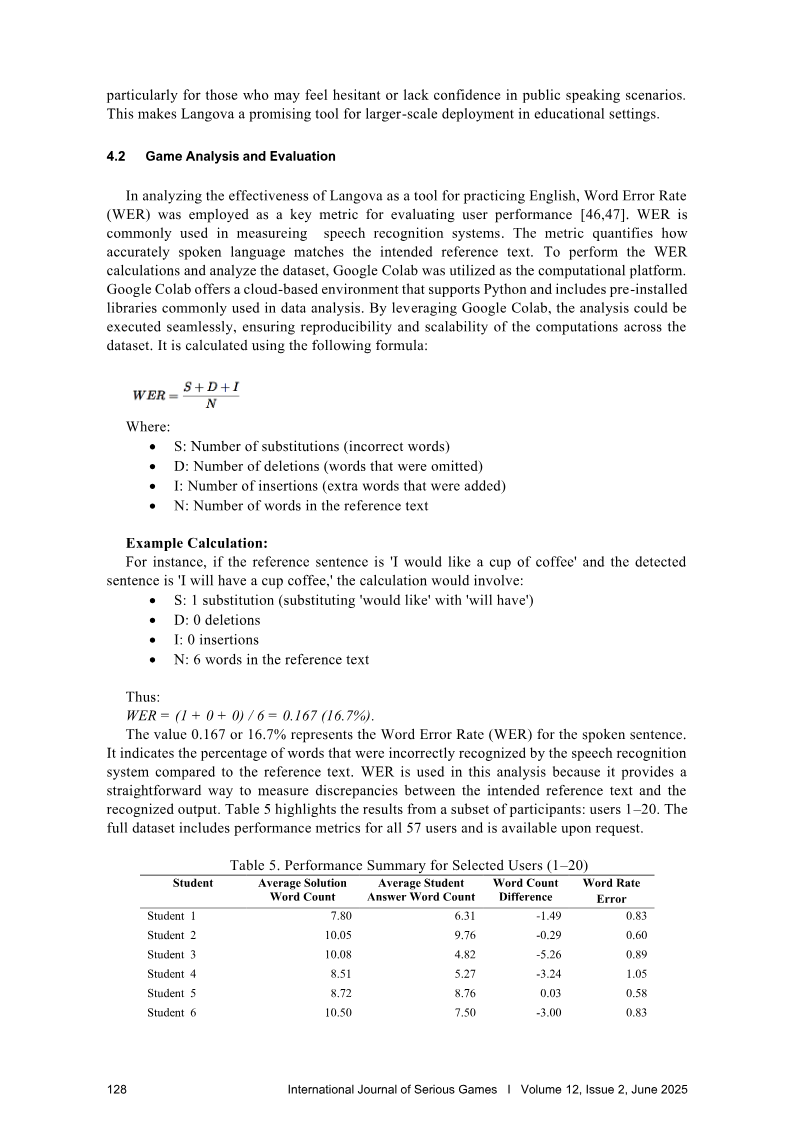
Langova functions as a WebGL-based serious game designed to bridge the gap between theoretical English language acquisition and practical, real-world communication.
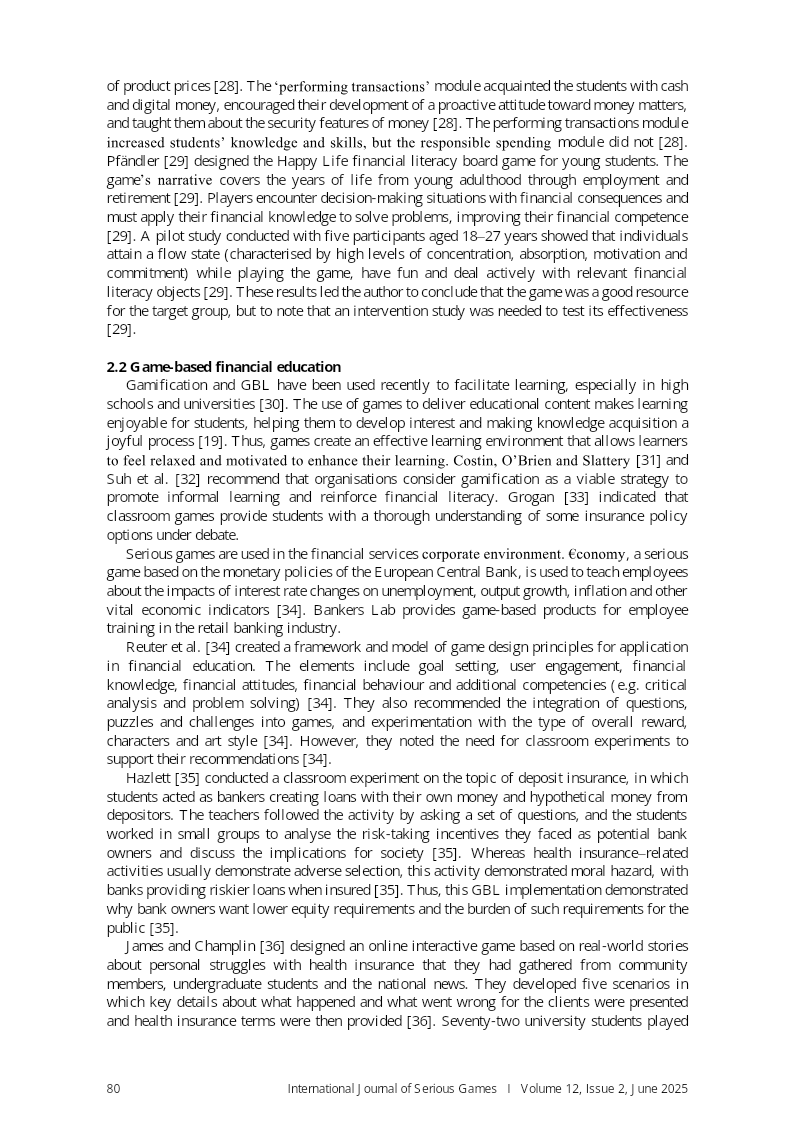
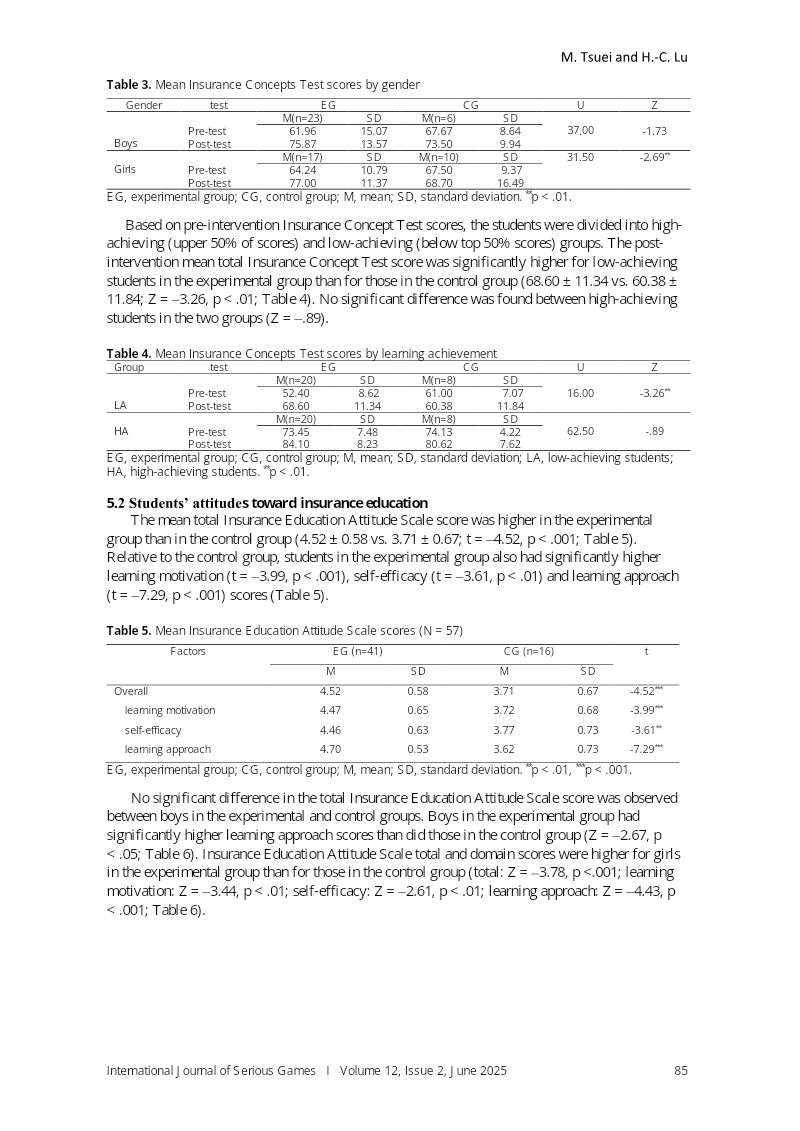
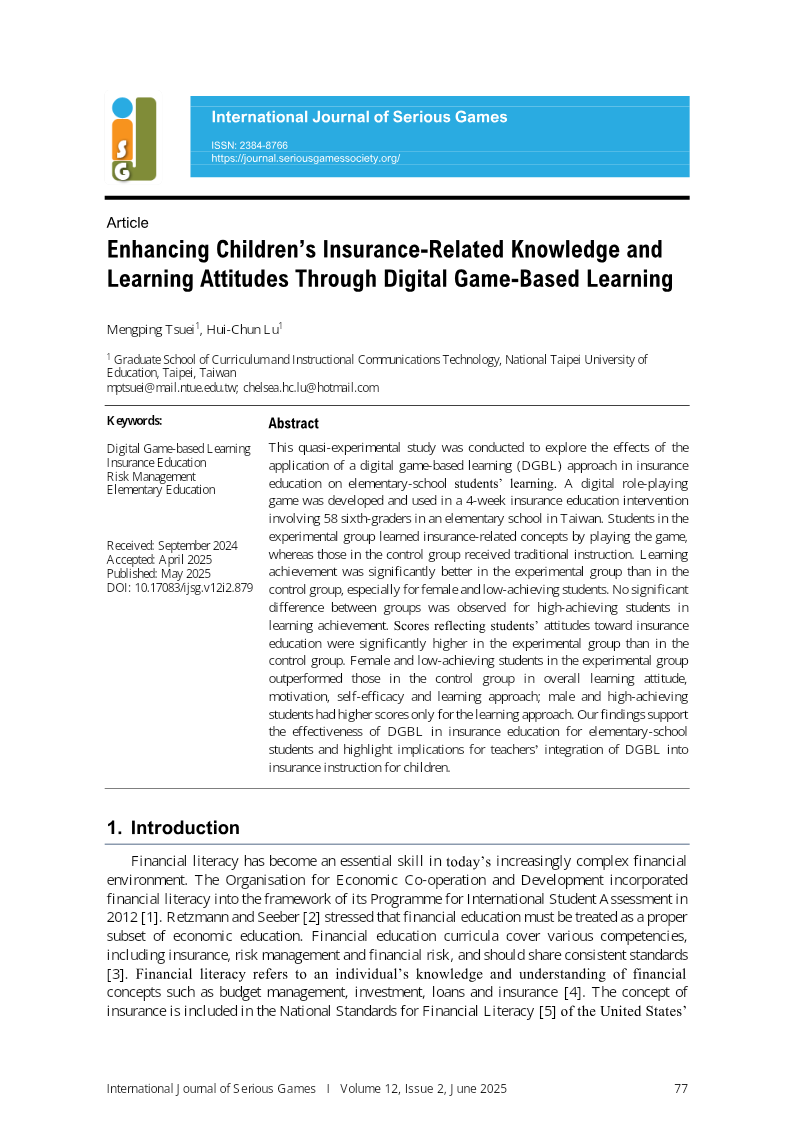
Enhancing Children’s Insurance-Related Knowledge and Learning Attitudes Through Digital Game-Based Learning
Digital game-based learning serves as a highly effective pedagogical framework for introducing complex financial concepts, such as insurance and risk-sharing, to elementary-level students.
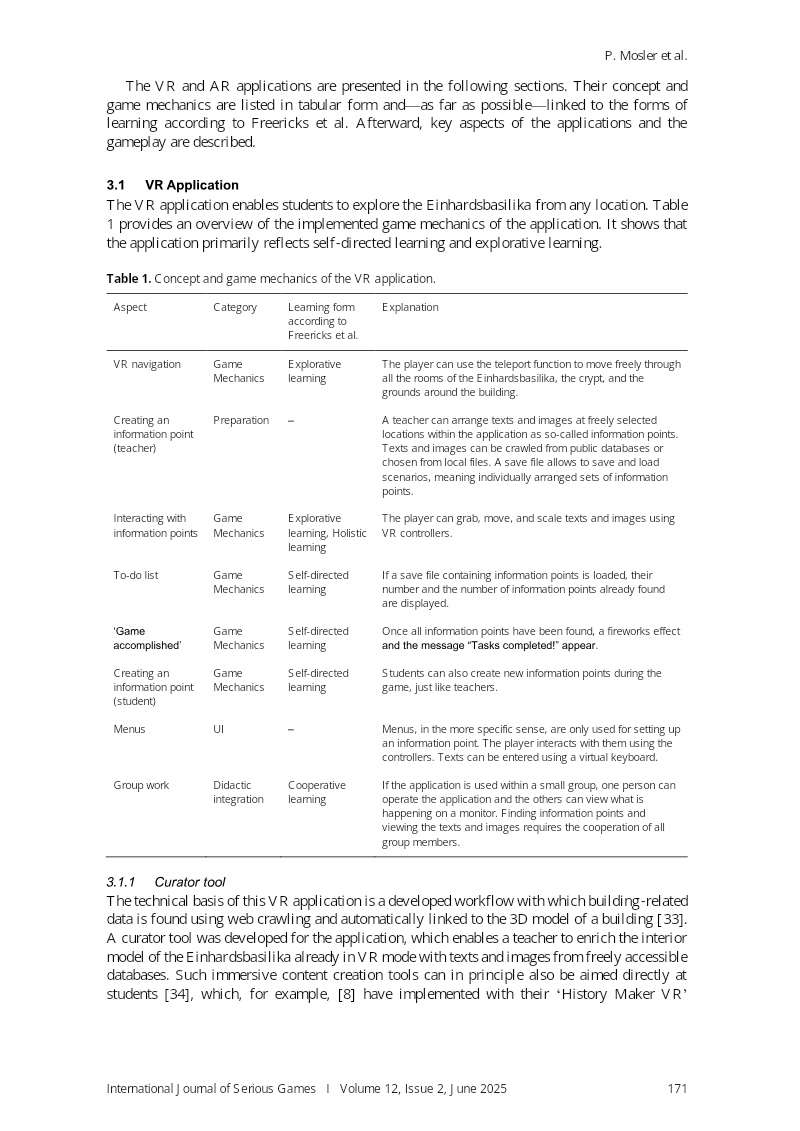
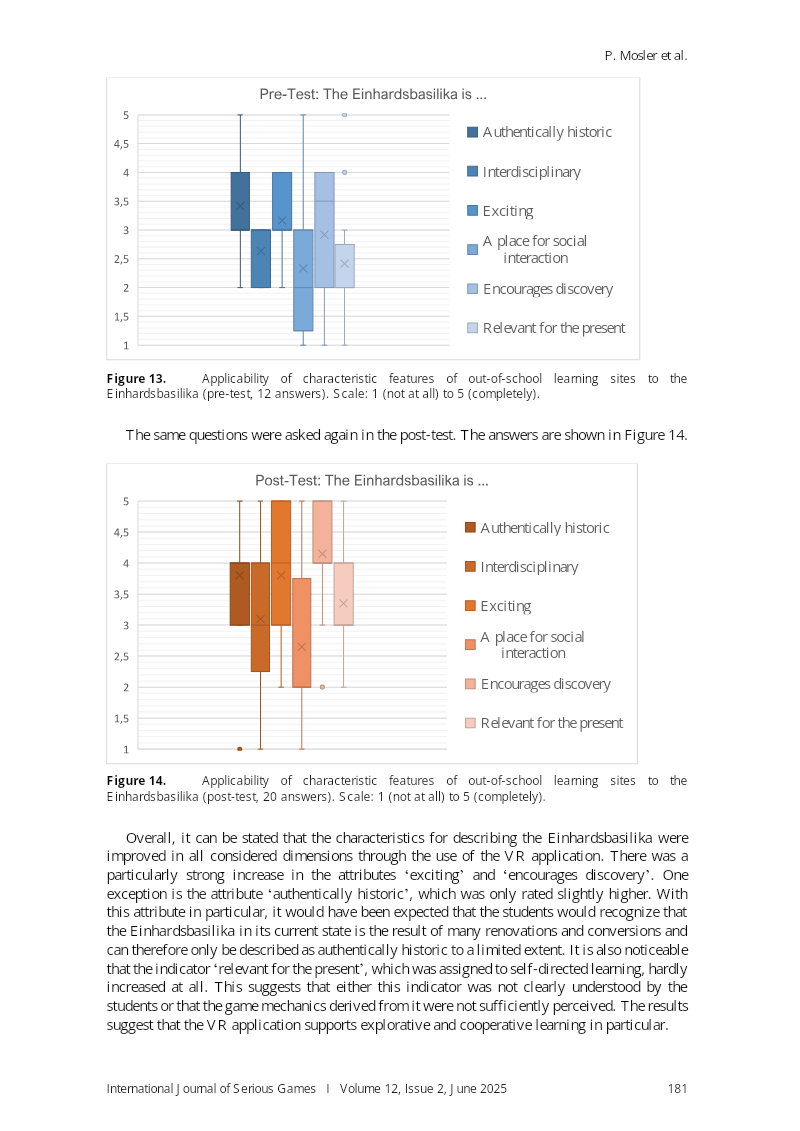
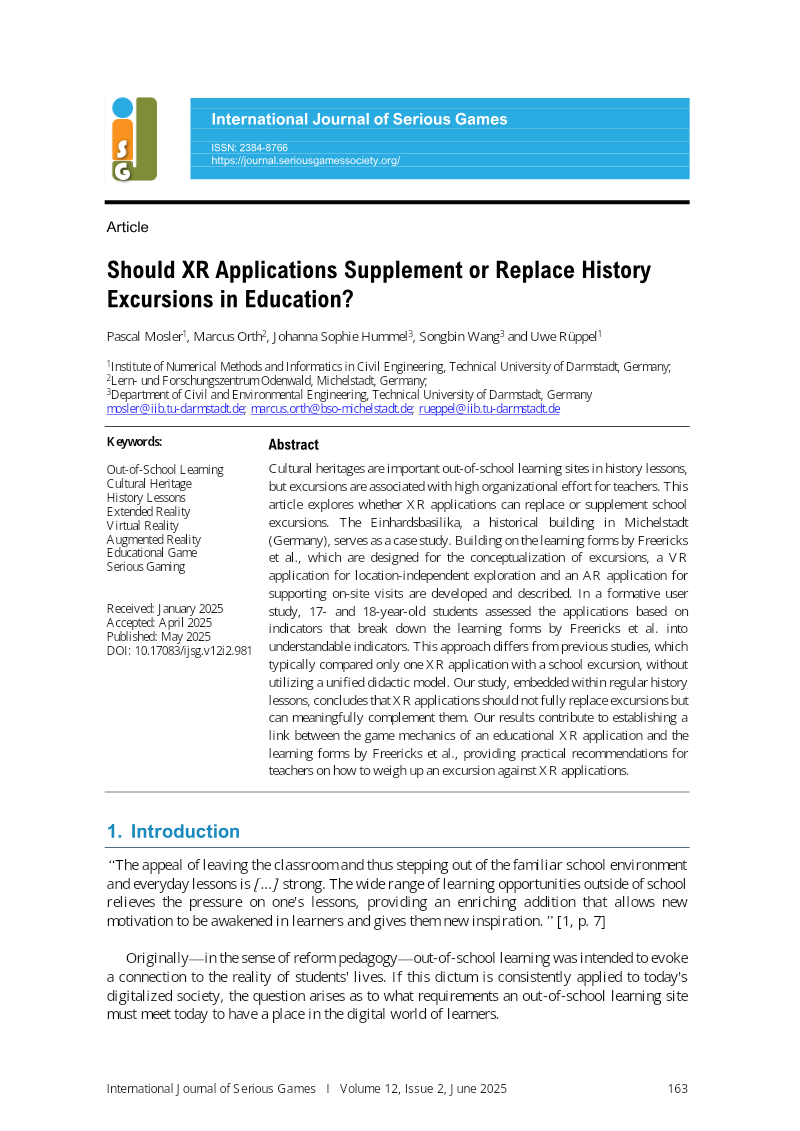
Should XR Applications Supplement or Replace History Excursions in Education?
Extended reality (XR) applications serve as powerful pedagogical tools that enhance historical education, yet they function most effectively as a supplement to, rather than a replacement for, traditional physical excursions.
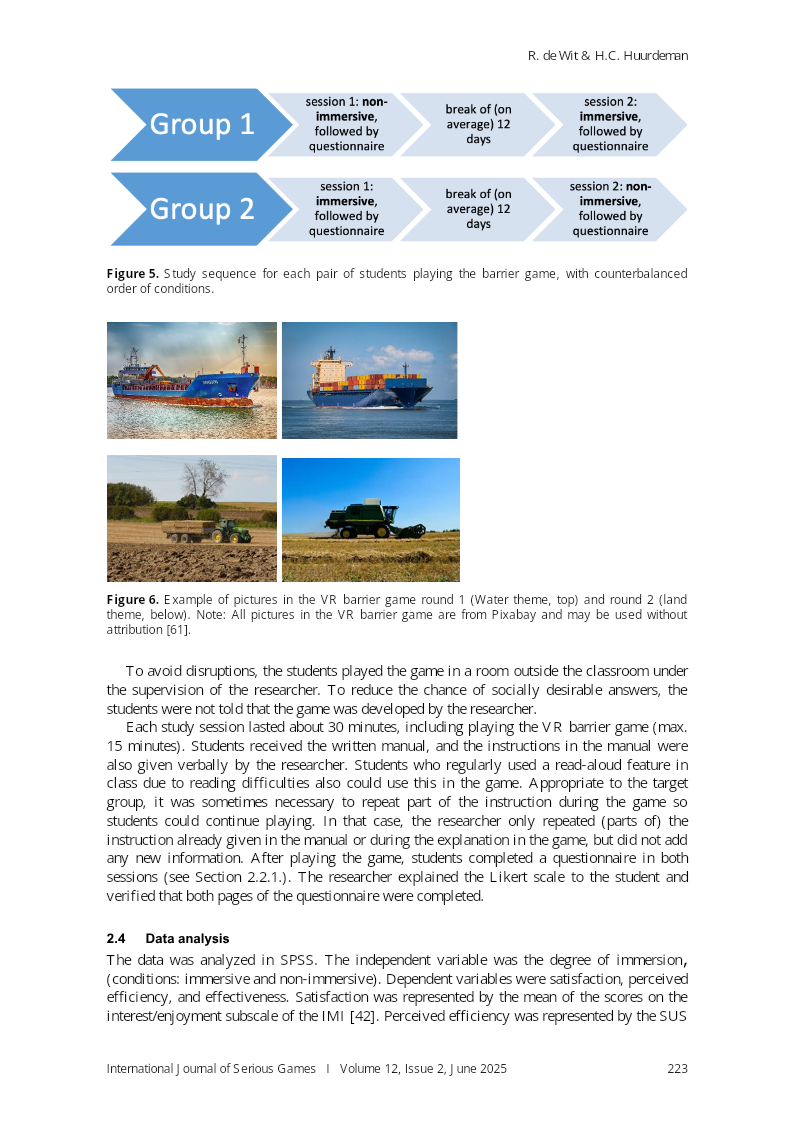
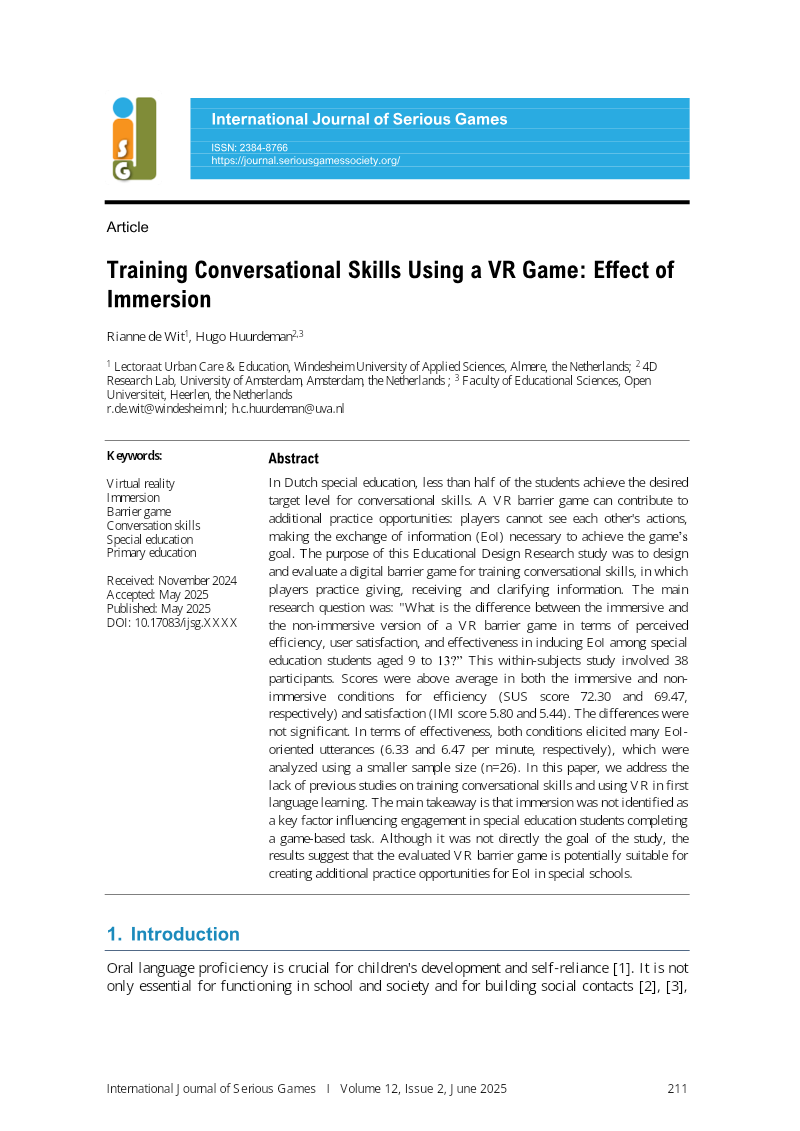
Training Conversational Skills Using a VR Game: Effect of Immersion
The Exhibition serves as a specialized educational tool designed to enhance conversational information exchange skills among students with special educational needs.
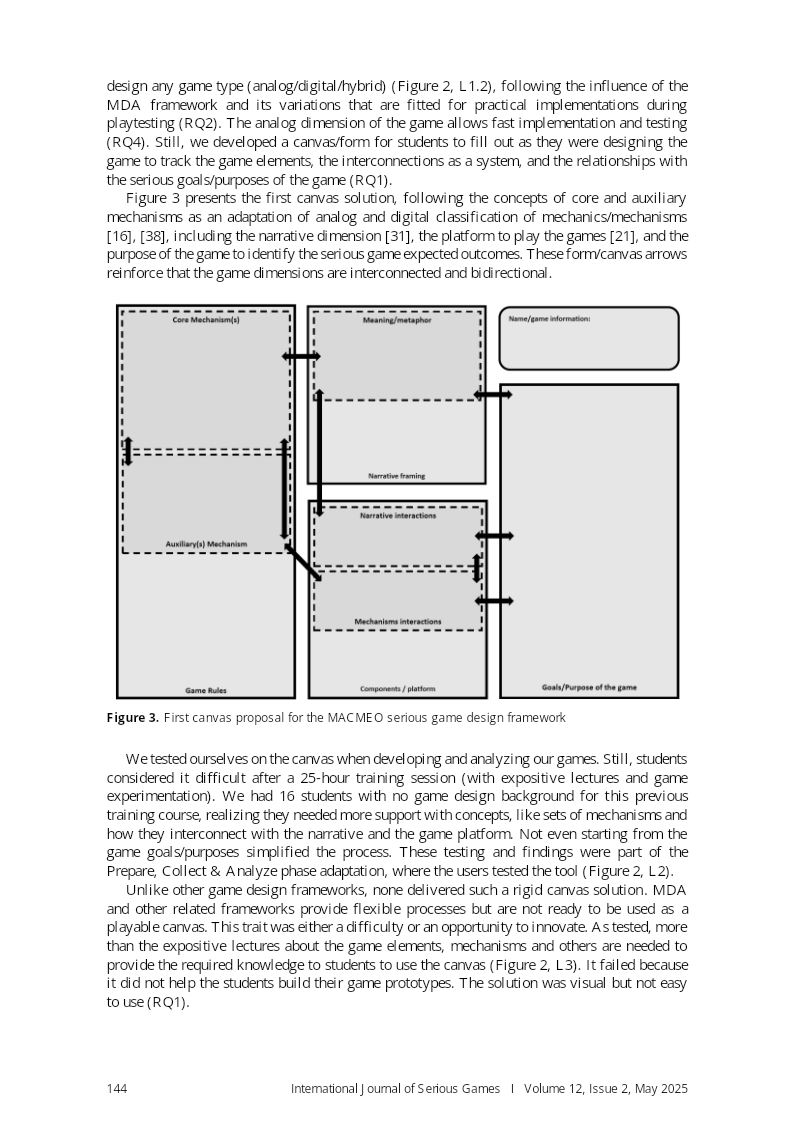
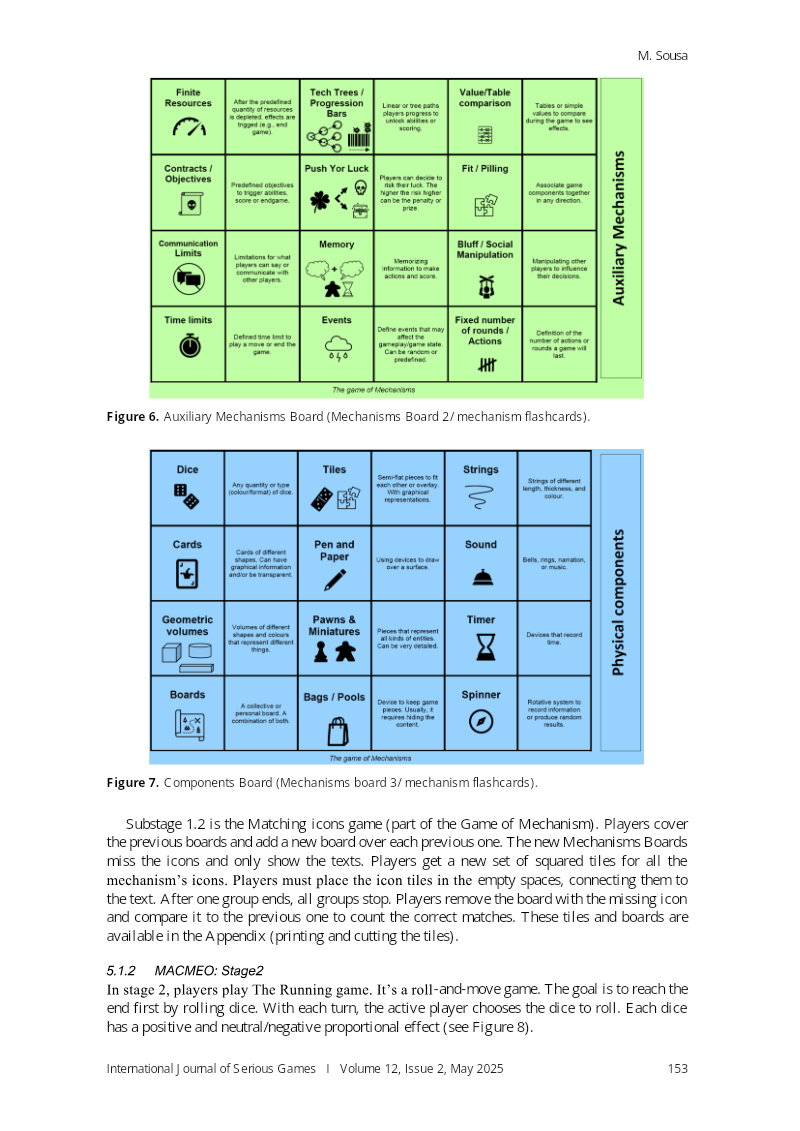
MACMEO: Playable Framework for Analog, Hybrid and Digital Serious Game Design
The MACMEO framework functions as a structured, analog-based toolkit designed to democratize the creation of serious games.
MnemonicMaker: A Serious Game for Reconstructing Bitcoin Wallet Mnemonic Phrases
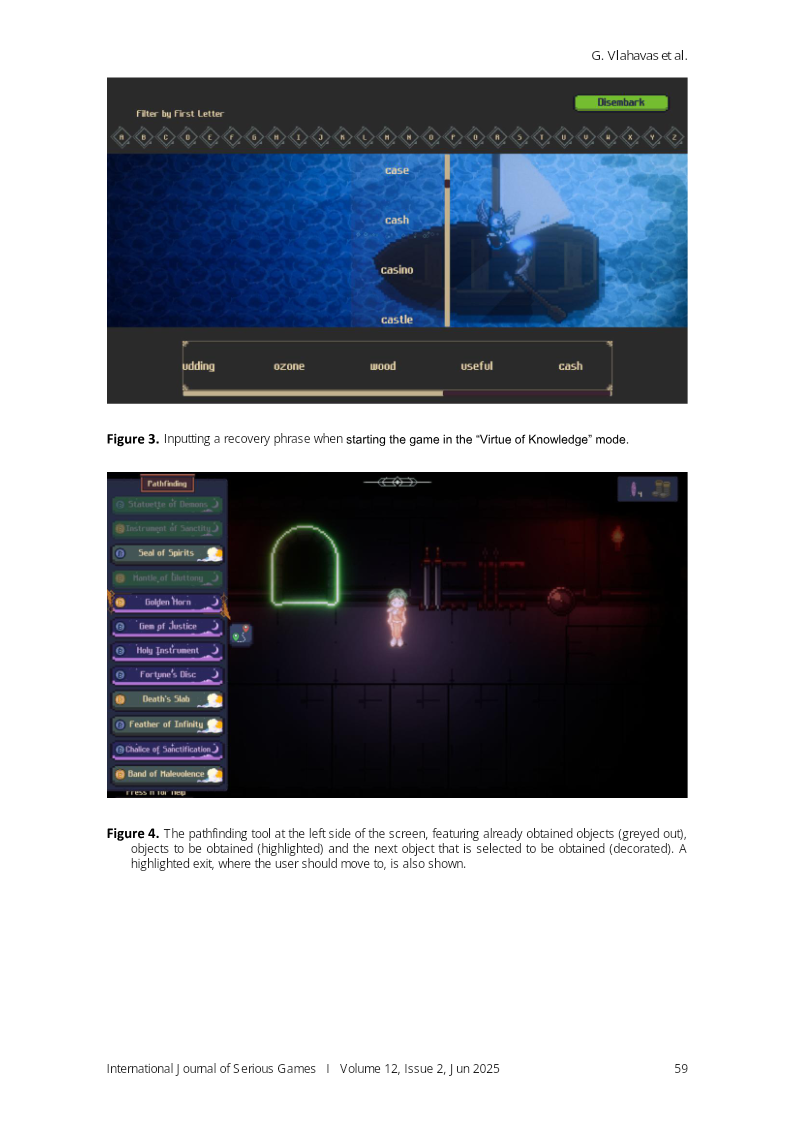
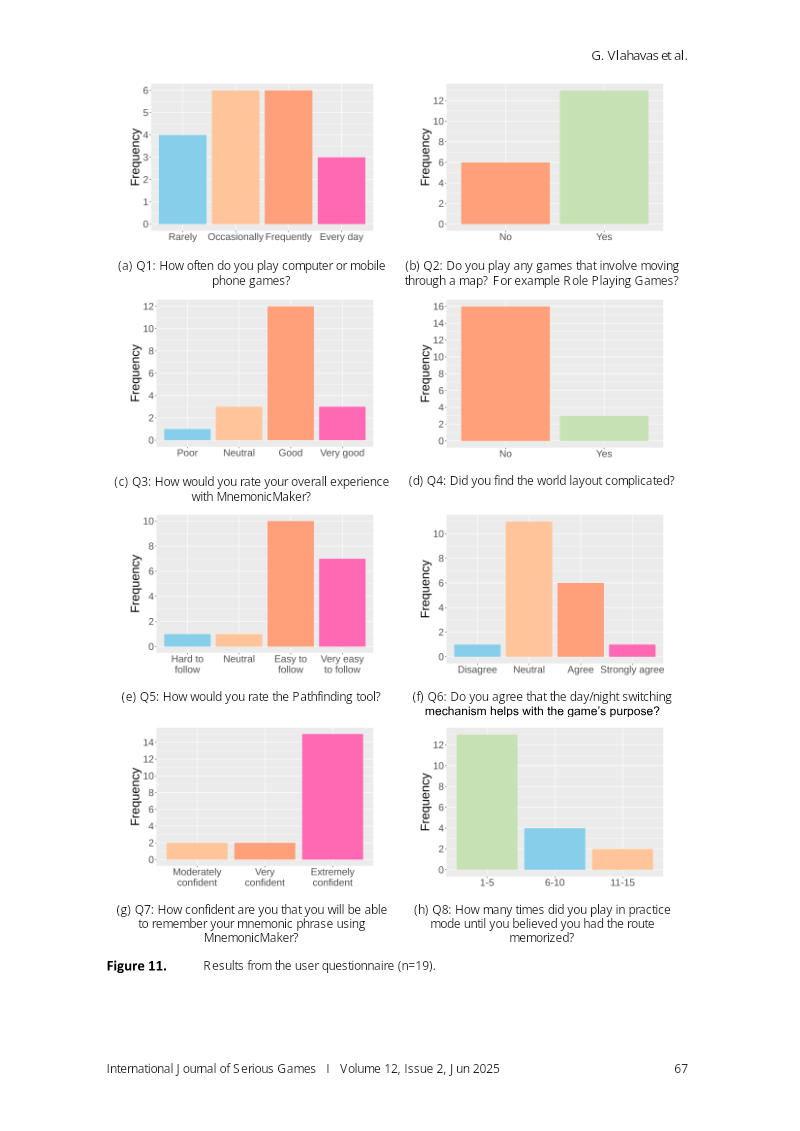
MnemonicMaker functions as a serious game designed to enhance the security of cryptocurrency assets by facilitating the memorization of BIP 39 recovery phrases.