Games and companies in this document


Connections
Each row is a game or company this document names, each column a document, oldest first. A mark means that document names it. Select a row to see those documents.
More on Game Studies
View all


Whitepaper
What Now?: Ecogames after Missed Climate Targets
DiGRA · 2026



Whitepaper
Monstera pocketii: The Botanical Vitality of Pokémon
DiGRA · 2026
Whitepaper
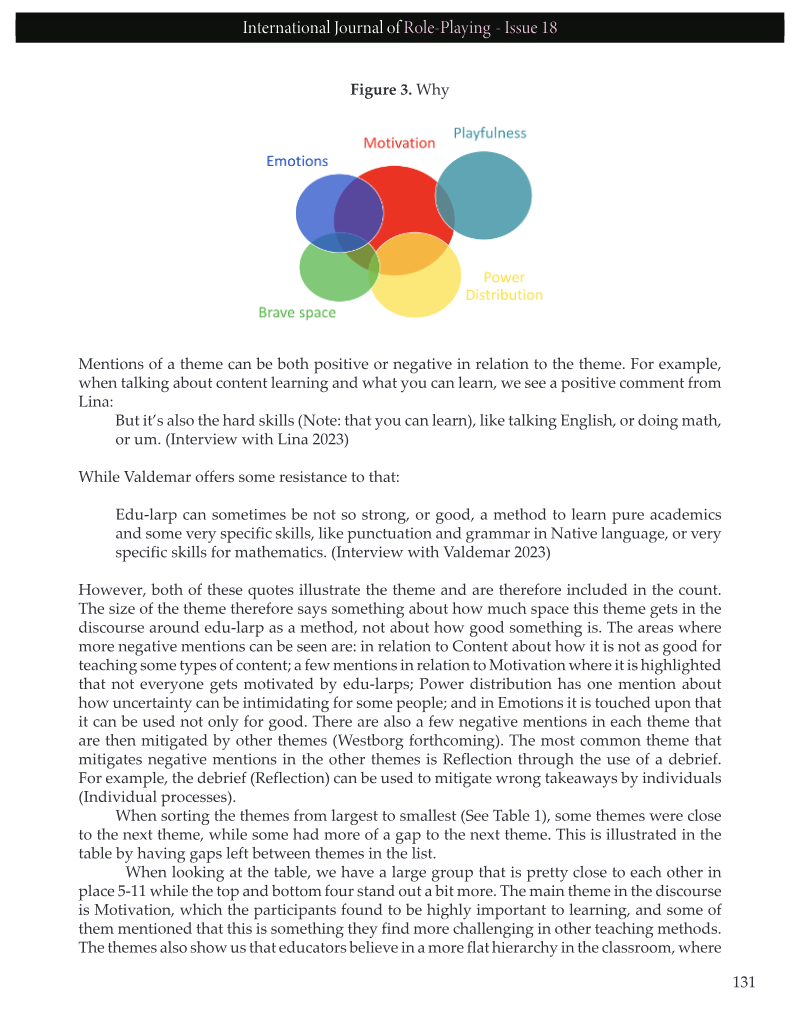
How is Learning in Edu-Larp as a Method Described and Seen by Practitioners?
International Journal of Role-Playing · 2026
Whitepaper
From Tradition to Interaction: A Systematic Literature Review of Cultural Heritage Representation in Entertainment Videogames
Eludamos: Journal for Computer Game Culture · 2025
Whitepaper
Virtual Burden: Representations of Animal Disabilities in Video Games and Their Posthuman Contexts
DiGRA · 2025
Whitepaper
From Military Simulation to Ludic War: A Generational Typology of the Mobilization of Play
DiGRA · 2025
Whitepaper
Speak with Blocks: Minecraft, Environmental Education and Activism
DiGRA · 2025

Whitepaper
Gamevironments Revisited: 10th Anniversary Issue
gamevironments · 2024
Whitepaper
Poverty (Is All Fun) and Games
DiGRA · 2024
Whitepaper
Big Brother Meets Joystick: Ethical Perspectives on Surveillance Imagery in Digital Games
University of Tübingen · 2024
Whitepaper
Radical Digital Fishing: From Minigames to Bad Environmentalism
DiGRA · 2024
Whitepaper
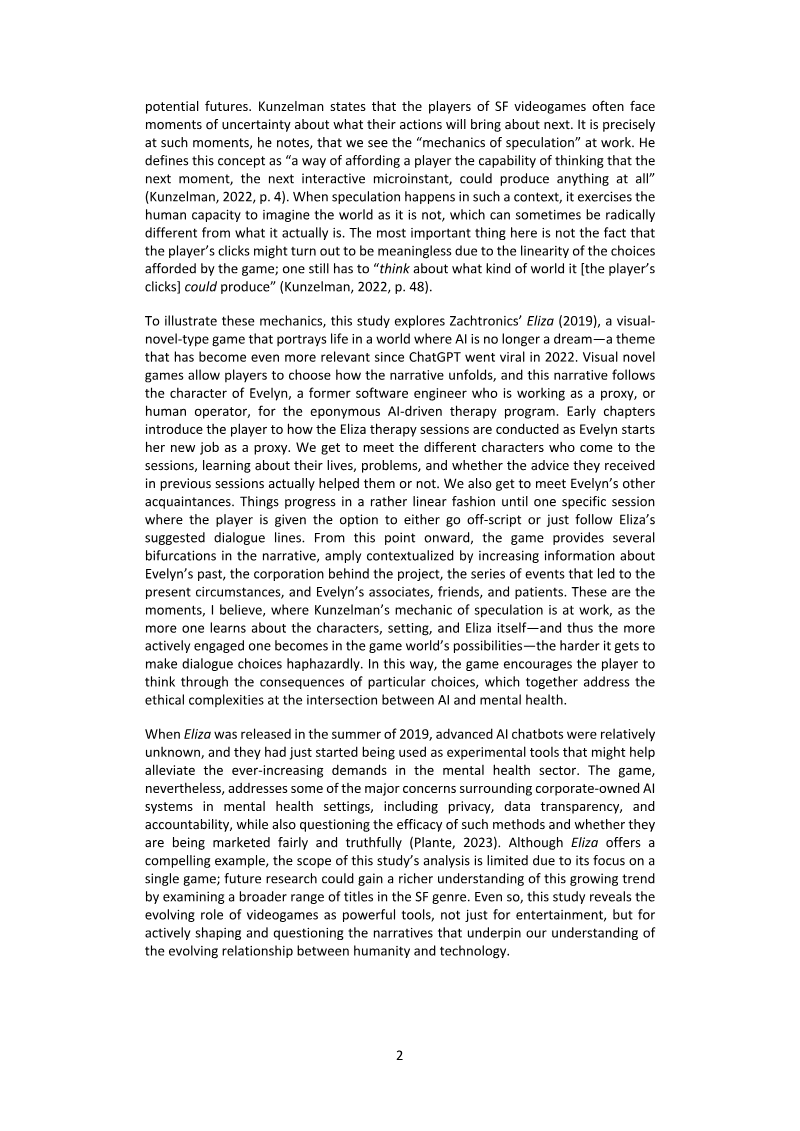
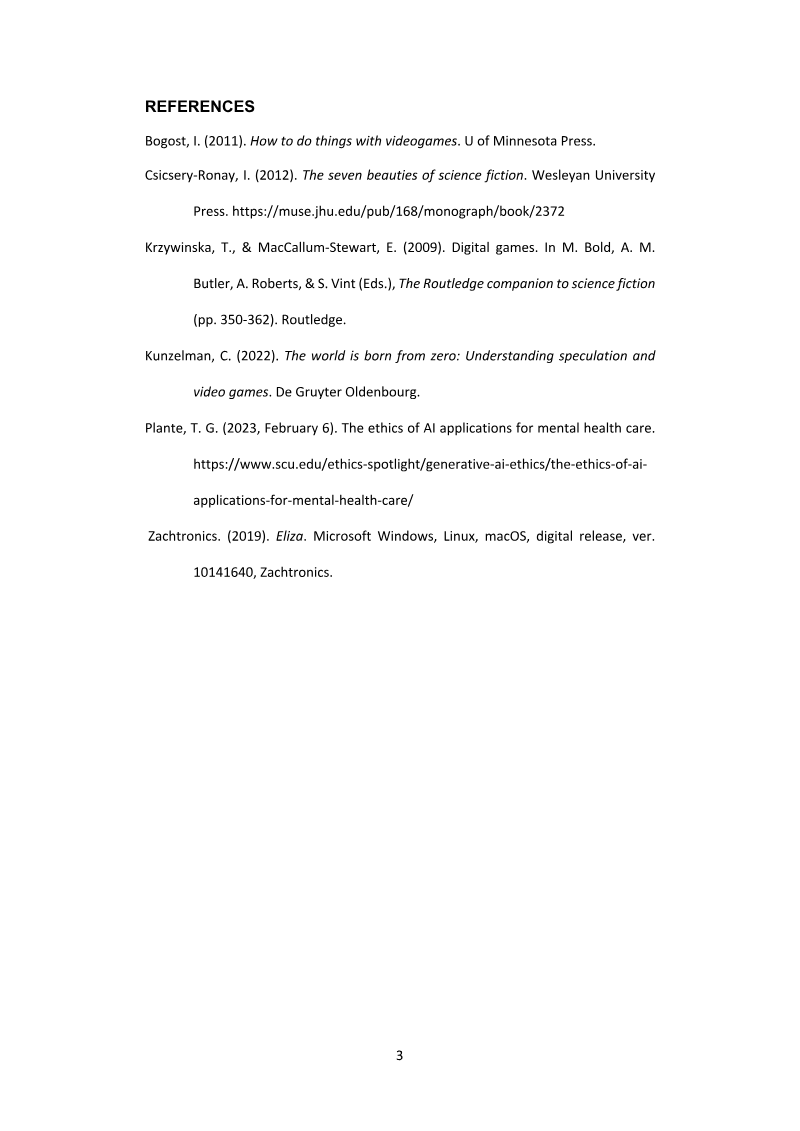
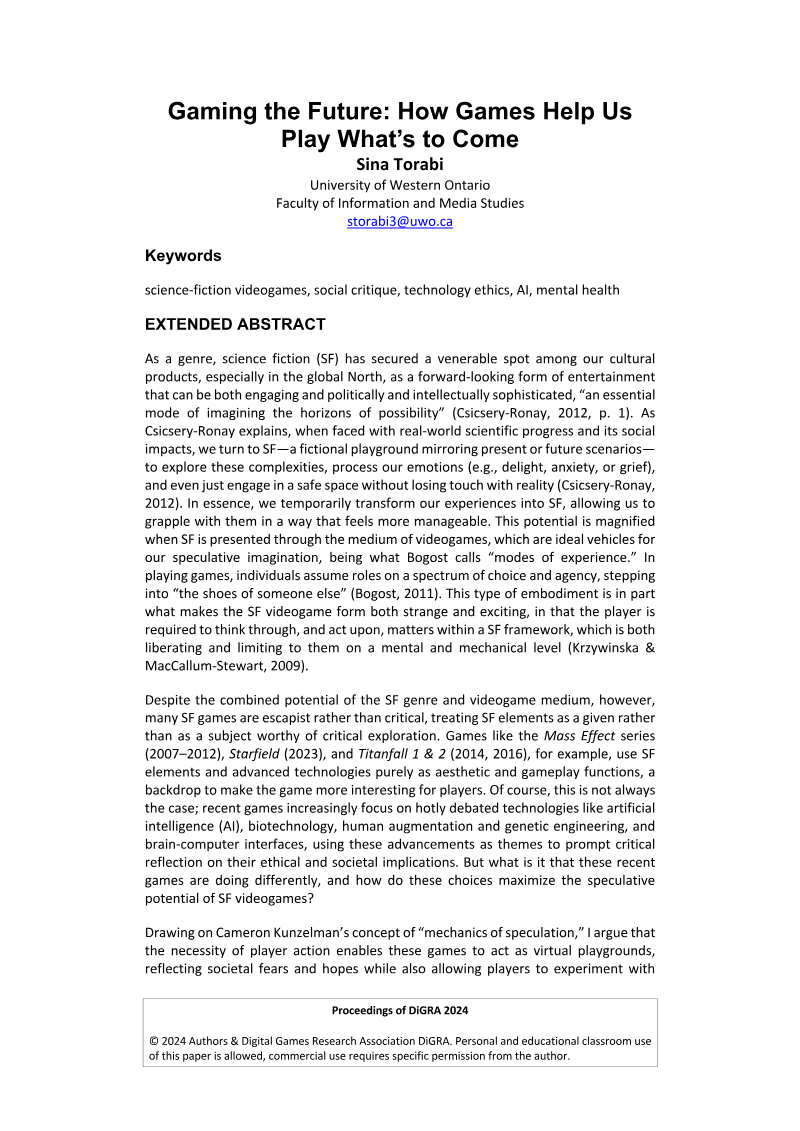
Gaming the Future: How Games Help Us Play What's to Come
University of Western Ontario · 2024