Serious Games reports and market data
Documents
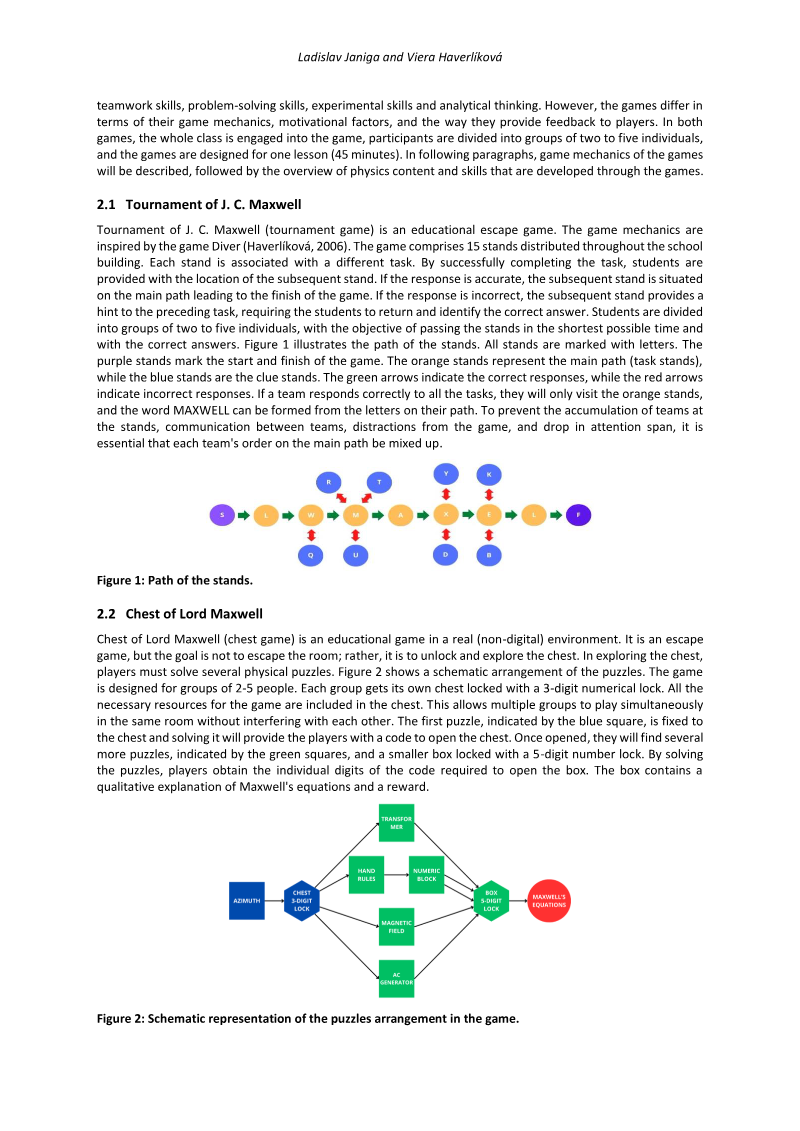
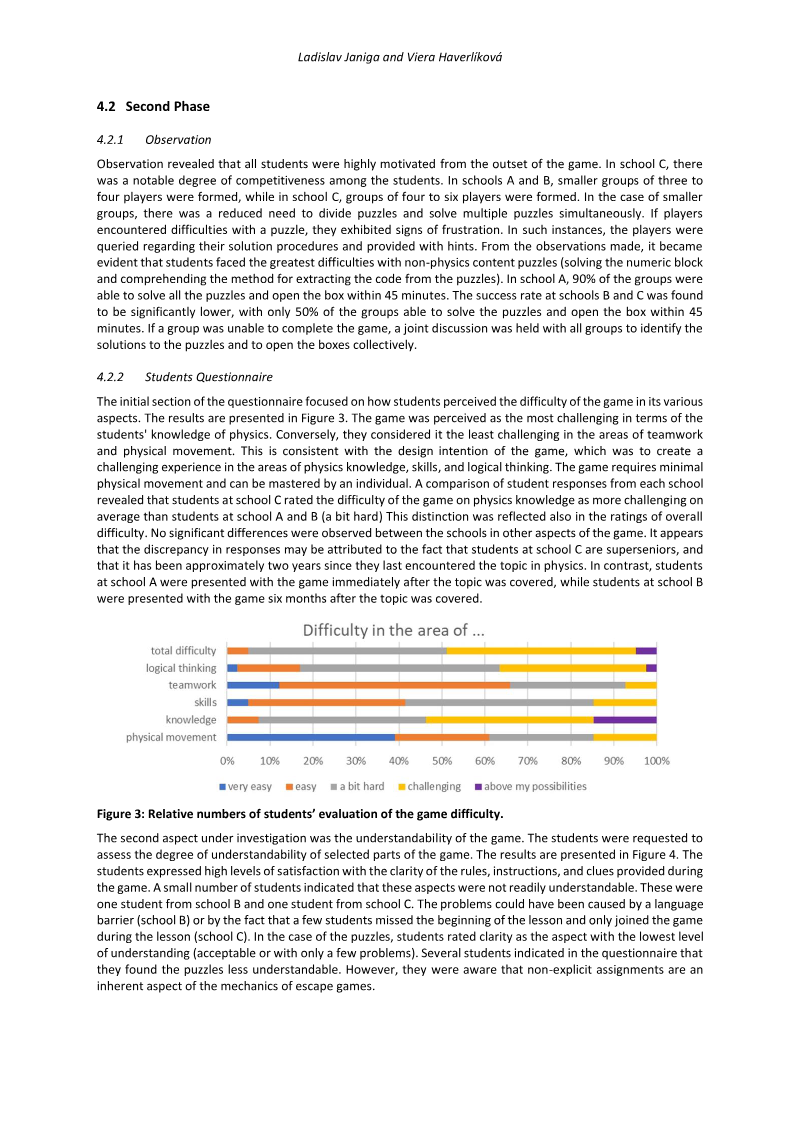
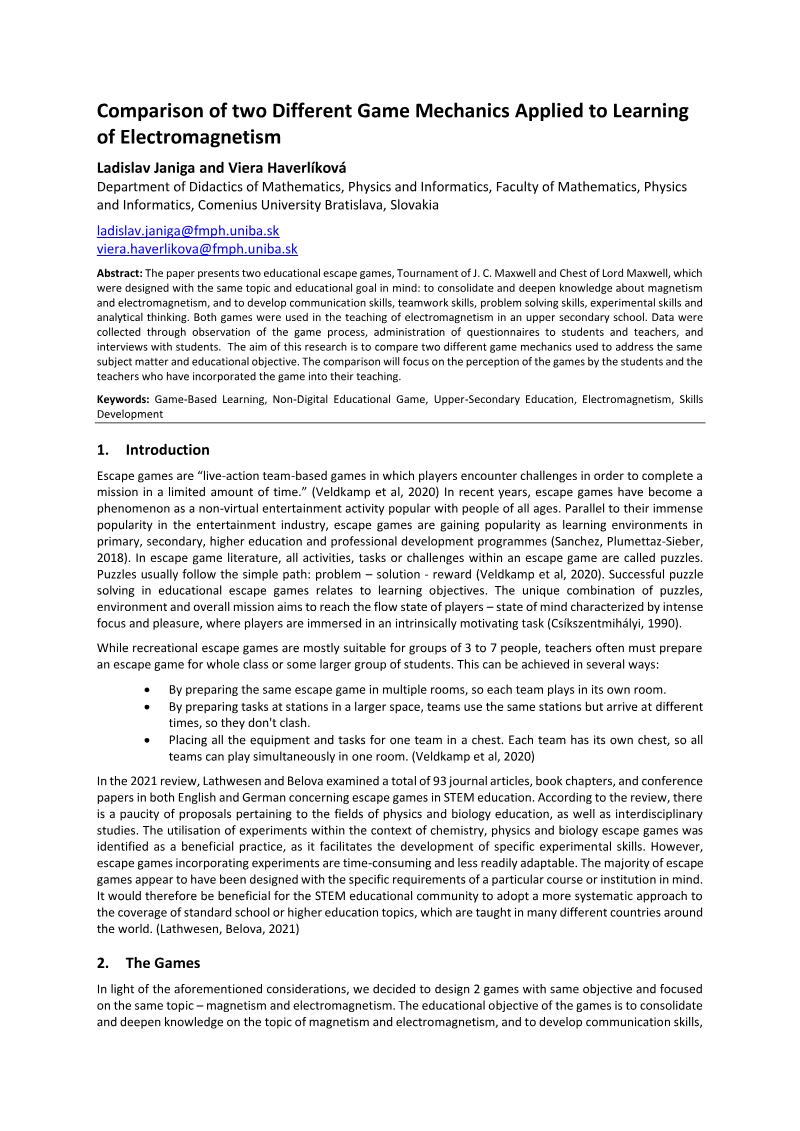
Comparison of Two Different Game Mechanics Applied to Learning of Electromagnetism: Slovakia
This paper compares two educational escape games designed to teach magnetism and electromagnetism to upper secondary students in Slovakia, with the goal of reinforcing physics content while building communication, teamwork, problem-solving, experimental, and analytical skills.
- Two escape games teaching electromagnetism to Slovak upper secondary students were compared: a distributed 15-stand tournament across a school building and a non-digital puzzle sequence inside a locked chest, both designed to a 45-minute lesson format.
- Students rated both games as challenging yet achievable, with the physics content judged the most demanding element, across a first phase of 55 students and a second phase of 142 students at three schools in Bratislava.
- Teamwork was consistently seen as a strength, but group composition was critical: weaker teams sometimes became discouraged or gave up.
Limes (the Roman Frontier): Developing a Video Game for History Learning
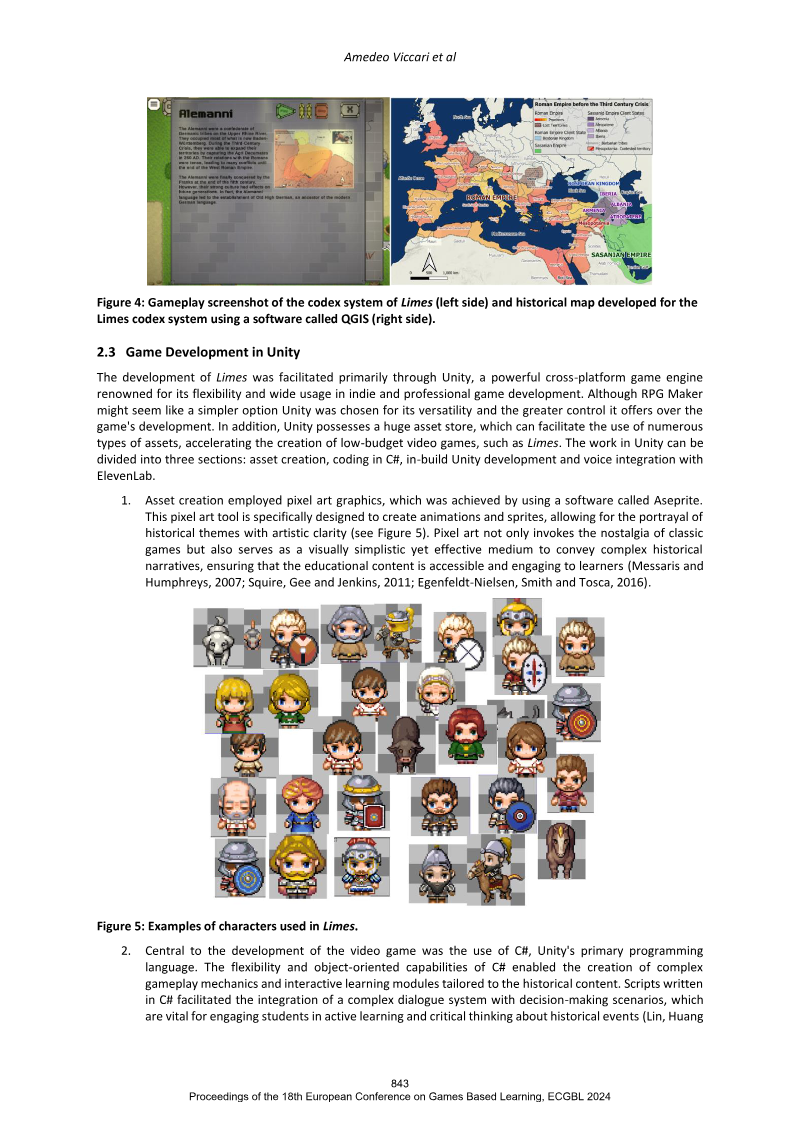
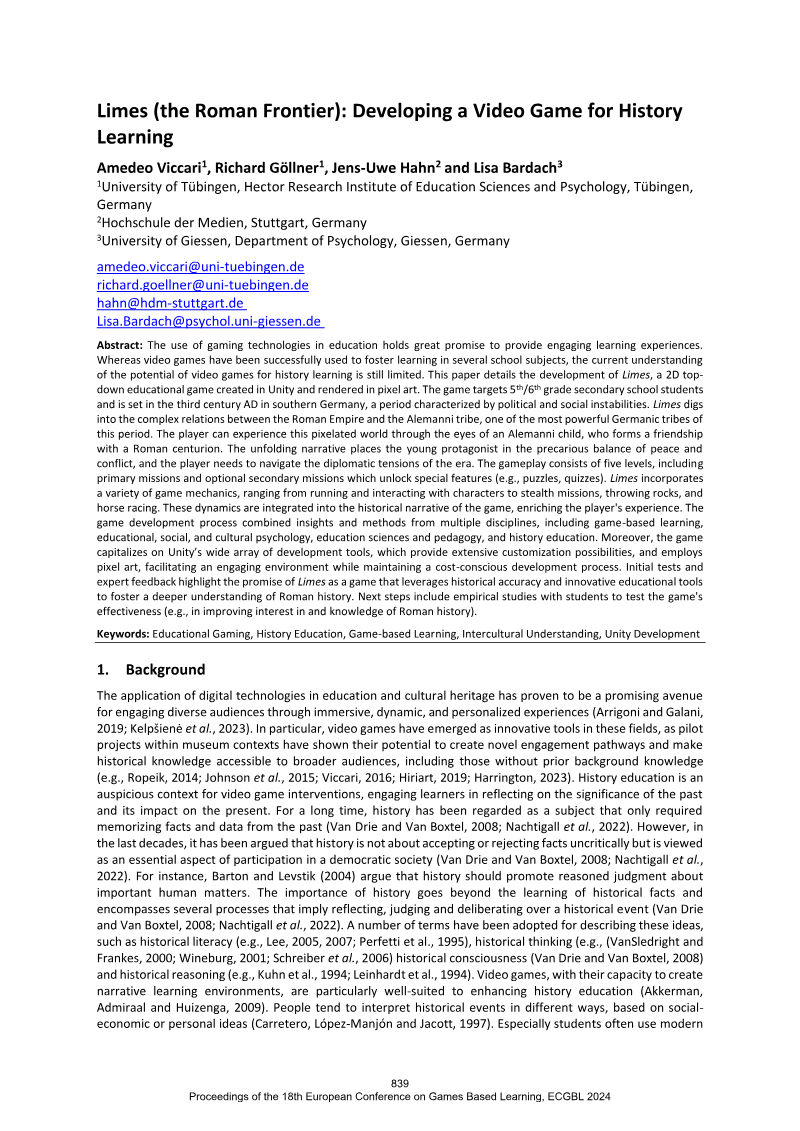
The paper presents the design and development of Limes, a 2D top-down educational video game built in Unity with pixel art graphics, intended for use in 5th and 6th grade German secondary school history classes.
- Limes is a 2D top-down educational game built in Unity with pixel art, designed for 5th and 6th grade German secondary school history classes and aligned with curricular objectives so it can be integrated into classroom teaching.
- The game is set in third-century AD southwestern Germany and follows an Alemanni child who befriends a Roman centurion, Ariovist, amid rising tensions between the two groups, targeting goals such as motivation, Roman-Germanic relations, historical empathy, critical thinking, and intercultural outcomes.
- Gameplay spans five levels, each with a mandatory main mission and an optional secondary mission featuring stealth, combat, puzzles, and horse racing, plus a performance-based star rating.

Impact of LEGO® Based Therapy on Skills Development and Quality of Life in People with Neurodevelopmental Disorders
This thesis evaluates whether LEGO® Based Therapy, a structured social-skills intervention that uses collaborative LEGO® construction, can benefit people with neurodevelopmental disorders beyond autism, and whether it improves quality of life for beneficiaries and their families.
- LEGO® Based Therapy was evaluated in France on 108 analysed participants aged roughly 5 to 88 with diverse neurodevelopmental and other diagnoses, after 317 learners were trained to deliver it to 76 practitioners' service users between February 2022 and June 2024.
- Individual sessions appeared more effective for children aged 5 to 7 in language and vocabulary and for young adults aged 18 to 25, while group sessions seemed more beneficial for most other age groups.
- Participants with ADHD showed notable gains across several domains, whereas participants with schizophrenia showed the least change, likely because their baseline scores were already high, suggesting the evaluation grid may not suit that functioning level.
Exploring the Affordances of Vernacular Digital Games in Developing 21st-Century Skills
This paper argues that the boundary between formal and non-formal learning should be bridged rather than dismissed, and it proposes shifting the focus from gamification, which adds game elements to non-game contexts, toward adding an educational layer to entertainment games that were never designed for pedagogy.
- The paper argues for adding an educational layer to entertainment games not designed for pedagogy, rather than gamification, which adds game elements to non-game contexts.
- Vernacular digital games are presented as capable of cultivating 21st-century competencies such as critical thinking, collaboration, multimodal and information literacy, emotional competence, and technology literacy, but no single game or context can develop them alone, so a holistic combination of learning environments is needed.
- Design features shape outcomes: multimodality supports literacy but excessive or purposeless multimedia can impose cognitive load, while adaptivity sustains flow by balancing challenge and skill.

Understanding Stakeholder Perspectives: Towards the Design of a Serious Game for Positive Energy Districts
This study examines how serious games might support the adoption of Positive Energy Districts (PEDs), urban areas that produce more energy than they consume, by addressing the shortage of data, tools, and guidance that local administrators face when implementing them.
- Serious games are seen by stakeholders as a way to improve attitudes toward learning, encourage positive behaviours, and make education on Positive Energy Districts more enjoyable than conventional approaches.
- The study rests on six in-depth interviews with local administrators and experts in Italy, Sweden, and Turkey, which produced 38 driver statements and 20 barrier statements.
- The main stakeholder reservations are skepticism about whether game elements belong in serious contexts and privacy concerns tied to the data involved.


Games in Mathematics Education: Trends and Methodological Approaches in the CERME Review
A systematic review of games in mathematics education examines sixteen studies drawn from twelve CERME conferences held since 1999, selected from an initial pool of thirty-two papers that contained "game" in their titles and were filtered against criteria covering full-text availability, research design, and centrality of the…
- Across 12 CERME conferences since 1999, a systematic review narrowed 32 candidate papers to 16 studies on games in mathematics education, and publication counts peaked in 2020, which the authors link to heightened interest in digital tools during COVID-19.
- The field has shifted from non-digital didactic games in the early 2000s toward digital puzzle games and dynamic geometry environments in recent years.
- Qualitative designs dominate, with 13 of 16 studies using them, most often case studies, and observation combined with interviews is the most common data collection pairing.
The Expert, The Novice, and The Skeptic: Game Literacy and Pedagogical Practice
This qualitative case study examines how teachers' video game literacy shapes their pedagogical use of The Walking Dead in an ethics course at a Norwegian high school.
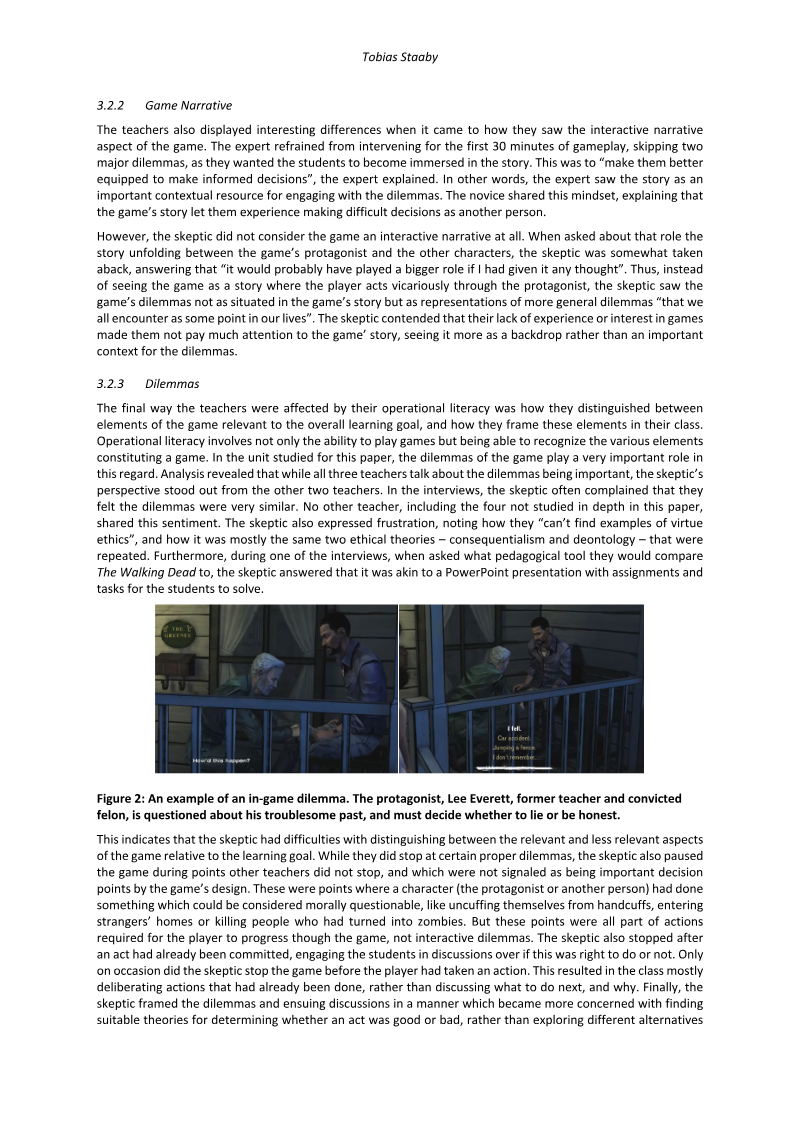
- Operational literacy, the ability to play and interpret a game's mechanics and structure, strongly shaped how teachers navigated gameplay and identified its moral dilemmas in a Norwegian high school ethics course using The Walking Dead.
- The teacher with low operational literacy (the skeptic) treated the narrative as mere backdrop and struggled to separate pedagogically relevant decision points from routine, incidental actions.
- The skeptic tended to pause only after actions had already occurred and framed discussions around identifying ethical theories rather than exploring alternative choices.
Radical Digital Fishing: From Minigames to Bad Environmentalism
This paper examines digital fishing in video games through a posthumanist and ecocritical lens, arguing that fishing mechanics can expose and complicate the binaries that separate human society from the natural world.
- The paper argues that fishing mechanics in AAA games such as Red Dead Redemption 2 serve as a reflective counterpoint to neoliberal game temporalities, but tend to reproduce an idealized, escapist vision of nature that mirrors real-world angling attitudes.
- Drawing on social science research by Adrian Franklin and Jacob Bull, the paper characterizes angling as ambivalent: it can reinforce the modernist separation of humans and nature while also foregrounding embodiment and the materiality of water and flow.
- The paper proposes "radical digital fishing" as a category, reading Ridiculous Fishing through absurdist humor and irony and Dredge through a grotesque conflation of human subjectivity with the nonhuman waterscape, drawing on Jeff VanderMeer's concept of the new weird.
Big Brother Meets Joystick: Ethical Perspectives on Surveillance Imagery in Digital Games
This paper examines how surveillance is depicted in digital games and evaluates those depictions from an ethical and epistemological standpoint.
- Games shape players' imaginaries of surveillance, and their depictions, both visual and mechanical, can either normalize questionable monitoring practices or make distributed surveillance visible and open to critical reflection.
- The authors propose a two-dimensional framework for analyzing surveillance in games: visual aesthetics (e.g., eye-in-the-sky cameras, scan lines and glitches, blue/green overlays and binary code) and ludic, rule-based embedding.
- Many games, including some ostensibly critical of surveillance, reward players for hacking cameras or data mining in consequence-free minigames, which can create a false sense of empowerment.

Gaming the Future: How Games Help Us Play What's to Come
This paper argues that science fiction videogames can serve as critical tools for examining technology's social and ethical implications, rather than merely providing aesthetic backdrops.
- The paper argues science fiction videogames can serve as critical tools for examining technology's social and ethical implications, not merely as aesthetic backdrops, drawing on Cameron Kunzelman's concept of "mechanics of speculation."
- Speculative play works best when player action is necessary and outcomes remain uncertain, turning games into virtual playgrounds where players imagine alternative futures and confront the consequences of technological change.
- The study contrasts escapist SF titles such as the Mass Effect series, Starfield, and Titanfall, which treat advanced technology as set dressing, with newer games that foreground contested technologies like artificial intelligence, biotechnology, and brain-computer interfaces.
Poverty (Is All Fun) and Games
This paper examines how poverty and minimalism are represented in digital games, arguing that games simulating financial hardship occupy an ambiguous space between social education and playful entertainment.
- The paper argues that games simulating financial hardship, such as Spent, Ayiti: The Cost of Life, Broke: the game, and Nanopesos, can build empathy and awareness of privilege, but risk trivializing poverty when played purely for pleasure.
- The author links the trivializing risk to 'slumming' and to the exploitative genre of 'poornography,' cautioning against treating poverty as entertainment.
- Most of the poverty-themed games analysed are 'broken games' that make victory difficult or impossible, a design choice the paper suggests serves their didactic purpose.
Framework-based Roguelike Game for AI/ML Education
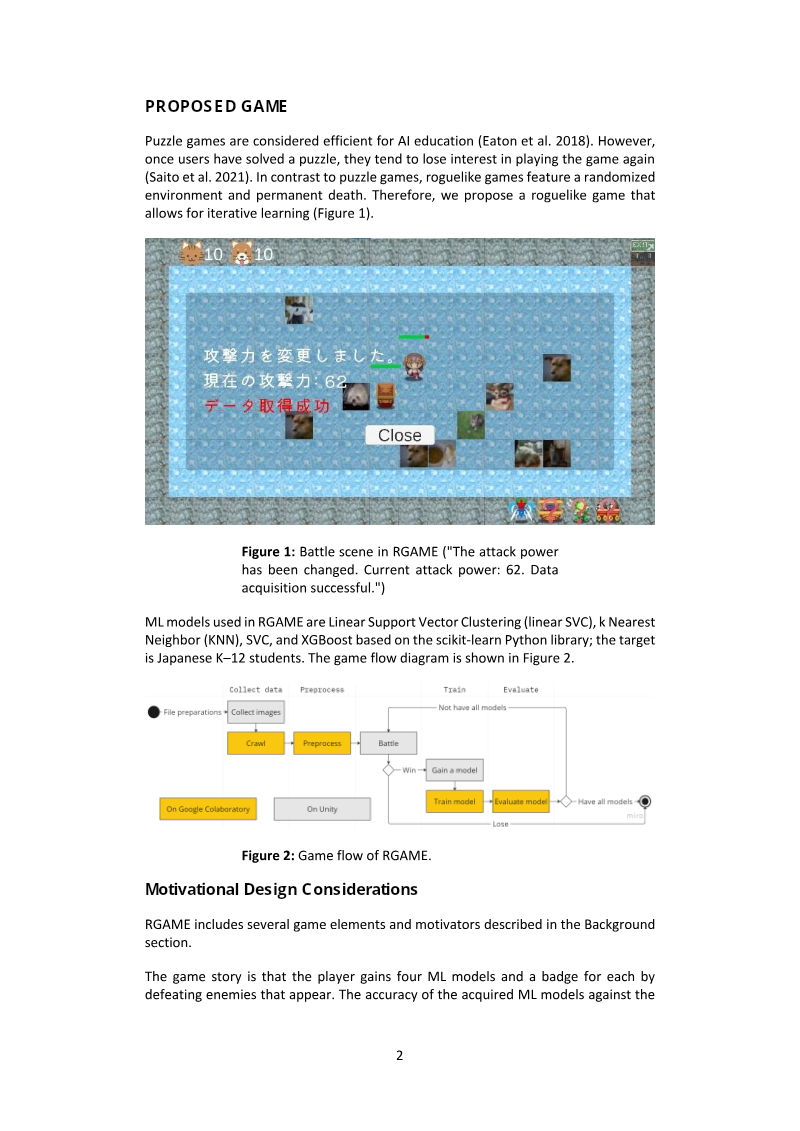
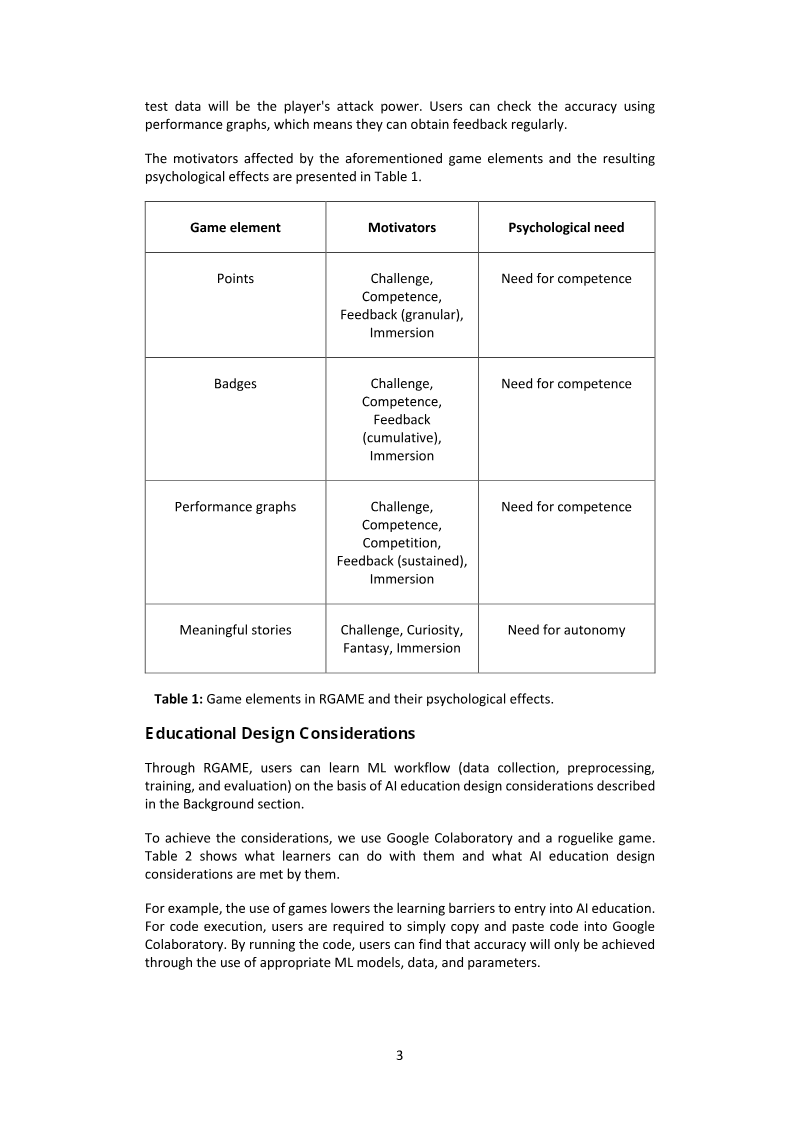
The paper introduces RGAME, a roguelike serious game designed to teach the machine learning workflow (data collection, preprocessing, training, and evaluation) to Japanese K-12 students, specifically middle and high school learners aged 13 to 18.
- RGAME is a roguelike serious game that teaches the machine learning workflow (data collection, preprocessing, training, evaluation) to Japanese K-12 students aged 13 to 18, pairing game play with Google Colaboratory where players run scikit-learn models such as linear SVC, KNN, SVC, and XGBoost.
- The authors argue that most existing AI/ML education games emphasize coding over conceptual understanding and have seen limited adoption or evaluation, which motivates RGAME's focus on conceptual learning.
- Game design is grounded in self-determination theory, mapping points, badges, performance graphs, and stories to the psychological needs of competence, autonomy, and relatedness.