1 free read left. Create a free account for unlimited reading + AI research.
Create free accountWhitepaper European Conference on Games Based Learning (ECGBL)
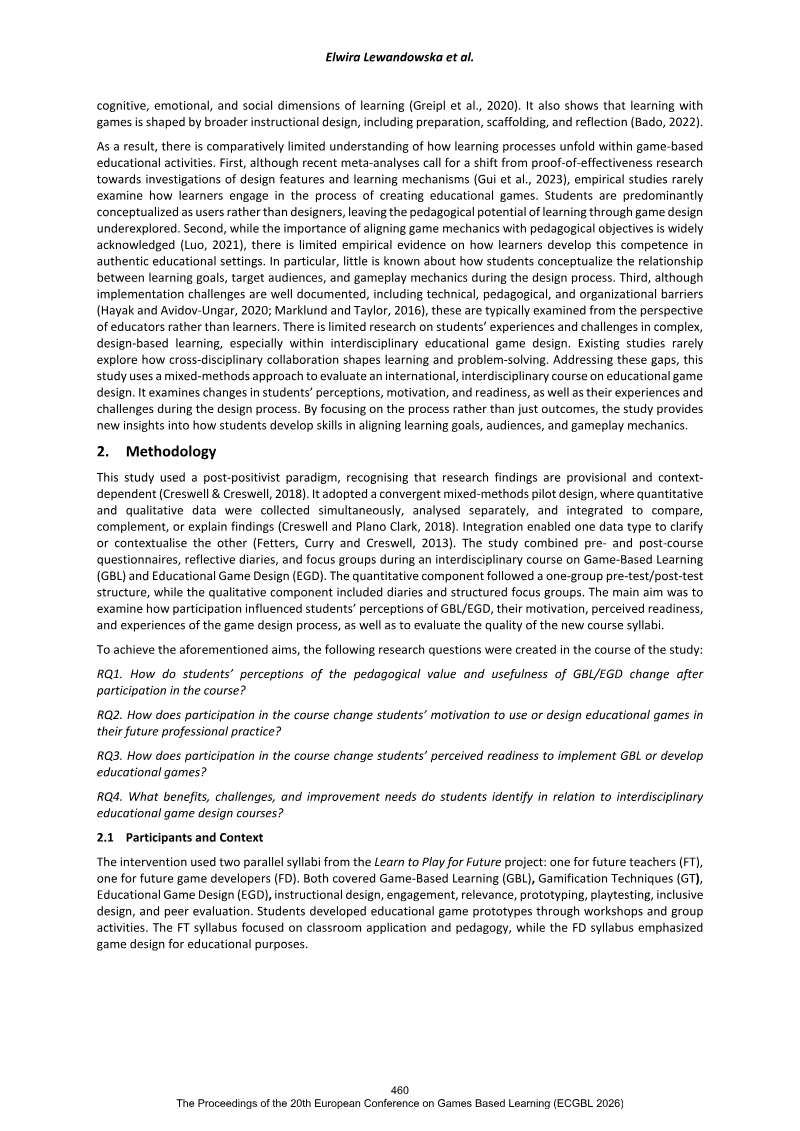
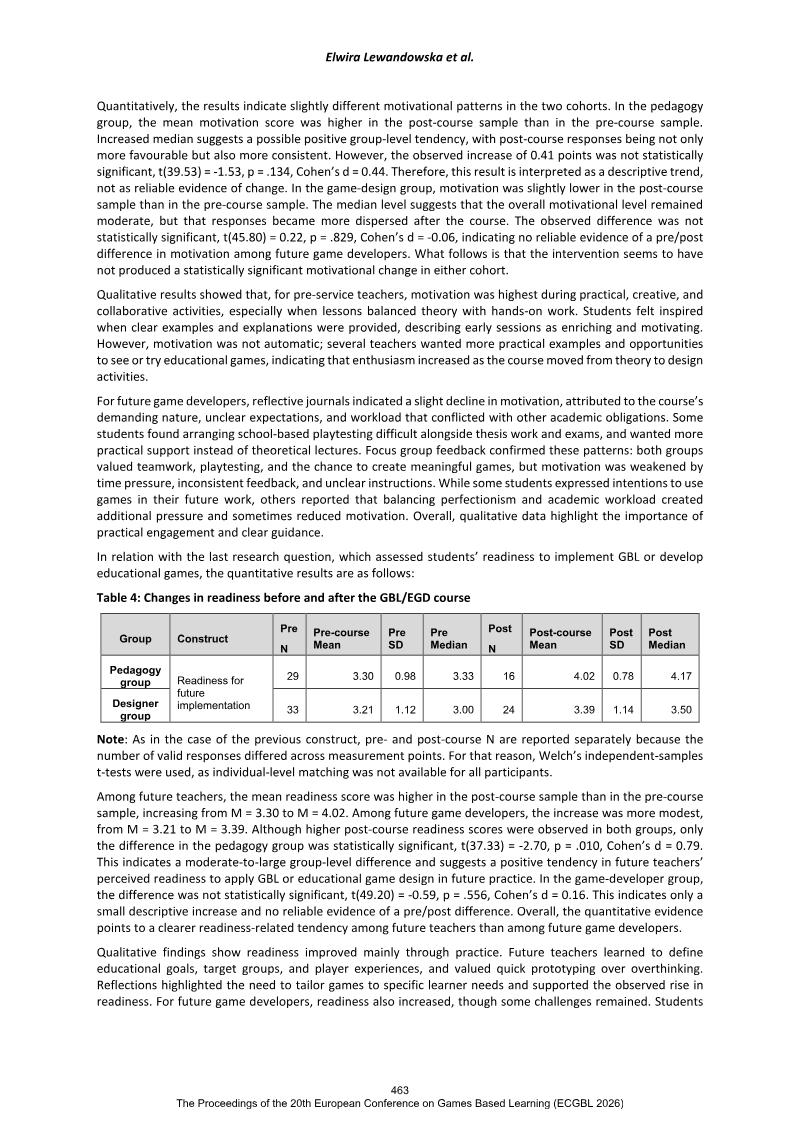
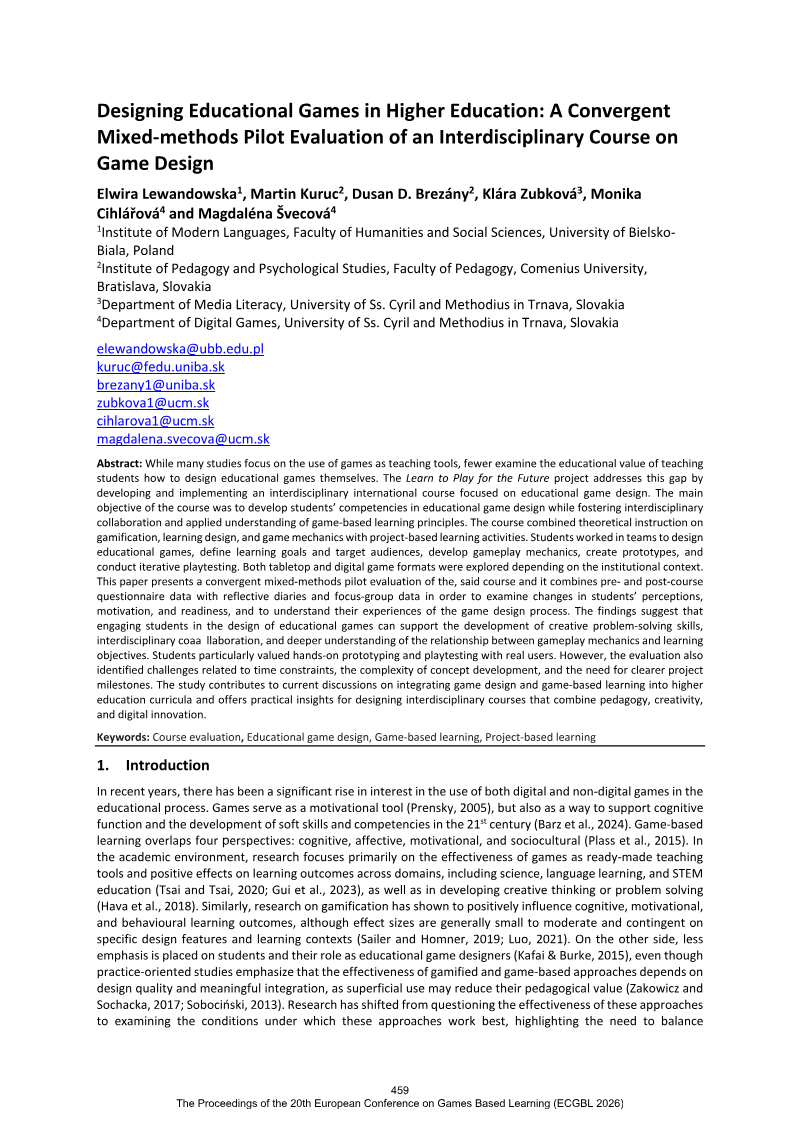
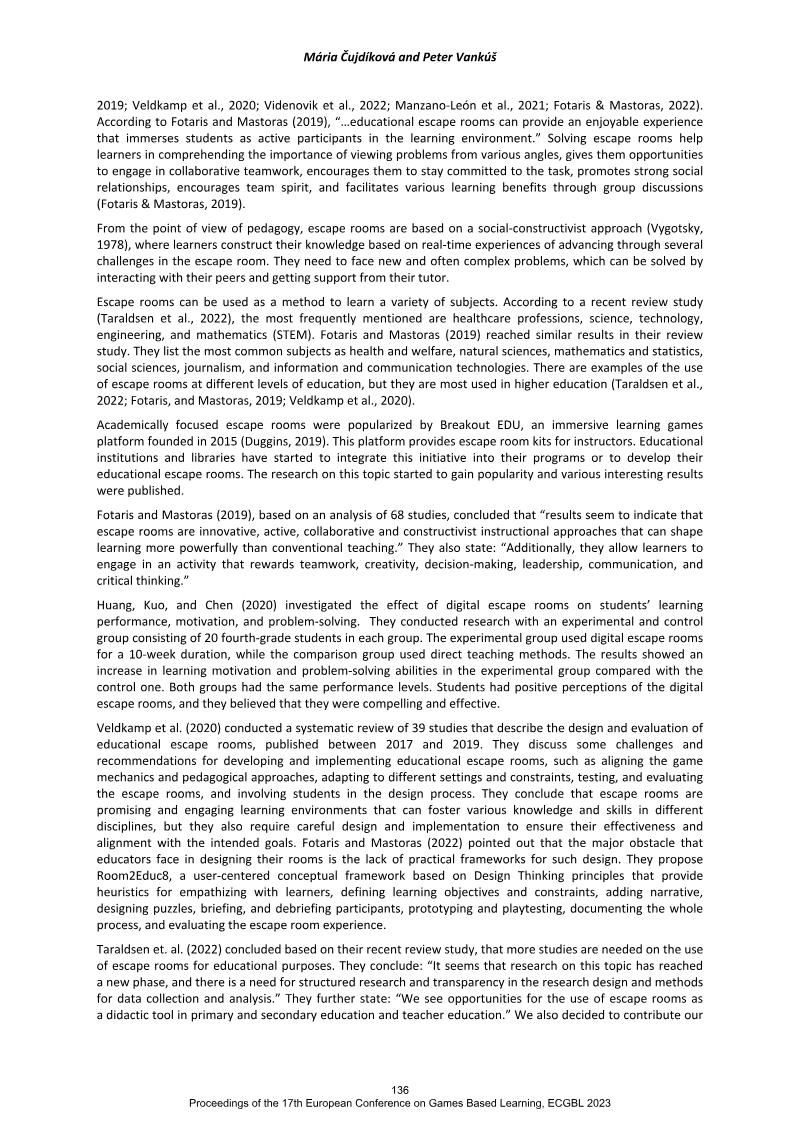
1 free read left. Create a free account for unlimited reading + AI research.
Create free accountWhitepaperEuropean Conference on Games Based Learning (ECGBL)
Both fit a 45-minute lesson.
This paper compares two educational escape games designed to teach magnetism and electromagnetism to upper secondary students in Slovakia, with the goal of reinforcing physics content while building communication, teamwork, problem-solving, experimental, and analytical skills. The first game, Tournament of J. C. Maxwell, distributes 15 stands across a school building, where teams race to complete tasks and follow a path that rewards correct answers and redirects students with hints after errors. The second, Chest of Lord Maxwell, is a non-digital puzzle sequence in which each team works within a locked chest containing physical puzzles that yield digits for a final code. Both games were designed around the same curricular standards and lasted one 45-minute lesson.
Data were gathered through observation, student and teacher questionnaires, and student interviews across two research phases in Bratislava, involving 55 students in the first phase and 142 students across three schools in the second. Students rated both games as challenging yet achievable, with the physics content judged the most demanding aspect. Students in the tournament game valued the physical movement, while chest game participants appreciated the opportunity to explore and open a locked object. Teamwork was consistently regarded as a strength, although group composition was flagged as critical, since weaker teams sometimes became discouraged or gave up. Teachers judged that both games achieved their aims, with the chest game easier to prepare and supervise and the tournament game requiring more logistical planning.
The authors caution that the small and uneven samples, along with differing timing of implementation relative to the topic being taught, prevent broad generalization. They conclude that effective escape-game design depends on calibrating difficulty, providing prompt feedback, structuring teams thoughtfully, and aligning the game with learning goals and available preparation time.



European Conference on Games Based Learning (ECGBL) · 2026



European Conference on Games Based Learning (ECGBL) · 2026



European Conference on Games Based Learning (ECGBL) · 2026



European Conference on Games Based Learning (ECGBL) · 2026



European Conference on Games Based Learning (ECGBL) · 2026



European Conference on Games Based Learning (ECGBL) · 2026



European Conference on Games Based Learning (ECGBL) · 2026
University of Toronto · 2026



European Conference on Games Based Learning (ECGBL) · 2026



European Conference on Games Based Learning (ECGBL) · 2026



European Conference on Games Based Learning (ECGBL) · 2026



European Conference on Games Based Learning (ECGBL) · 2026
International Journal of Serious Games · 2020