
Bina Nusantara University
Bina Nusantara University is an Indonesian university. It publishes reports on topics such as game development, educational technology, and the social impact of games.
Documents

Combining Search-Based and Evolutionary Techniques for Autonomous Pac-Man Gameplay
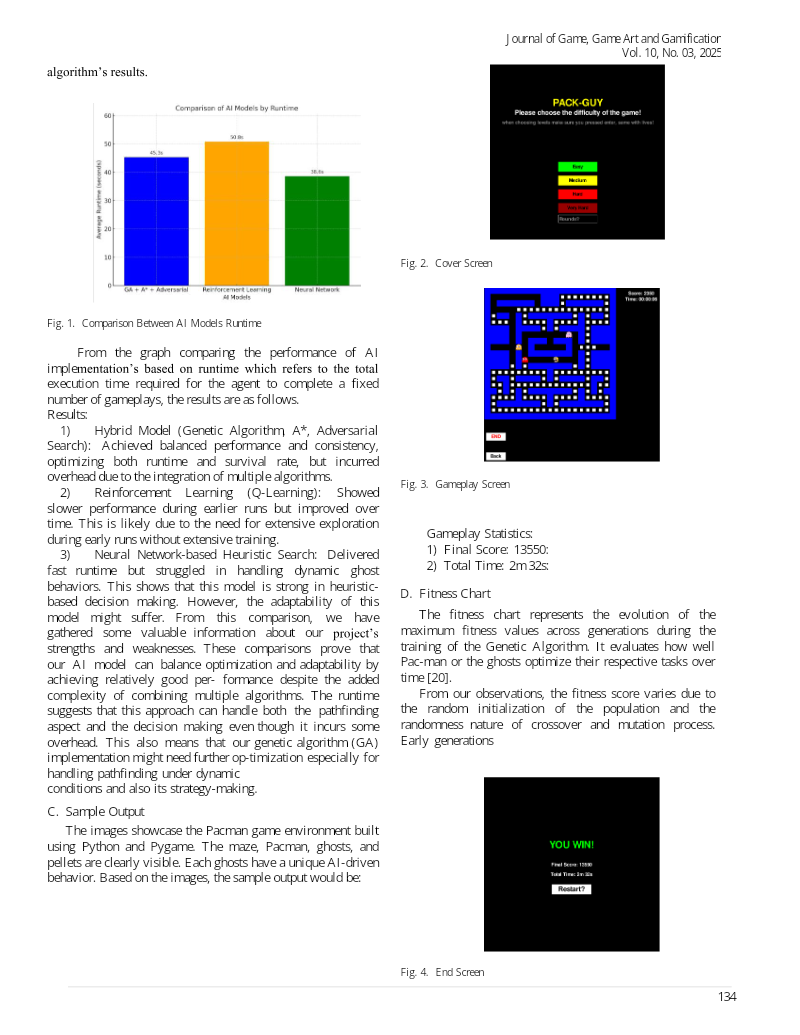
This research explores the development of a hybrid artificial intelligence architecture designed to enable fully autonomous gameplay in a classic Pac-Man environment.
- A hybrid AI architecture combining Genetic Algorithms (GA) for high-level strategy and A pathfinding for tactical movement outperforms single-technique models in Pac-Man survival and navigation stability.
- The system utilizes Breadth-First Search (BFS) and Depth-First Search (DFS) to specifically model the distinct adversarial behaviors of the four ghost agents.
- Comparative analysis shows the hybrid model provides superior adaptability in dynamic environments when measured against Reinforcement Learning (Q-Learning) and Neural Network-based Heuristic Search.
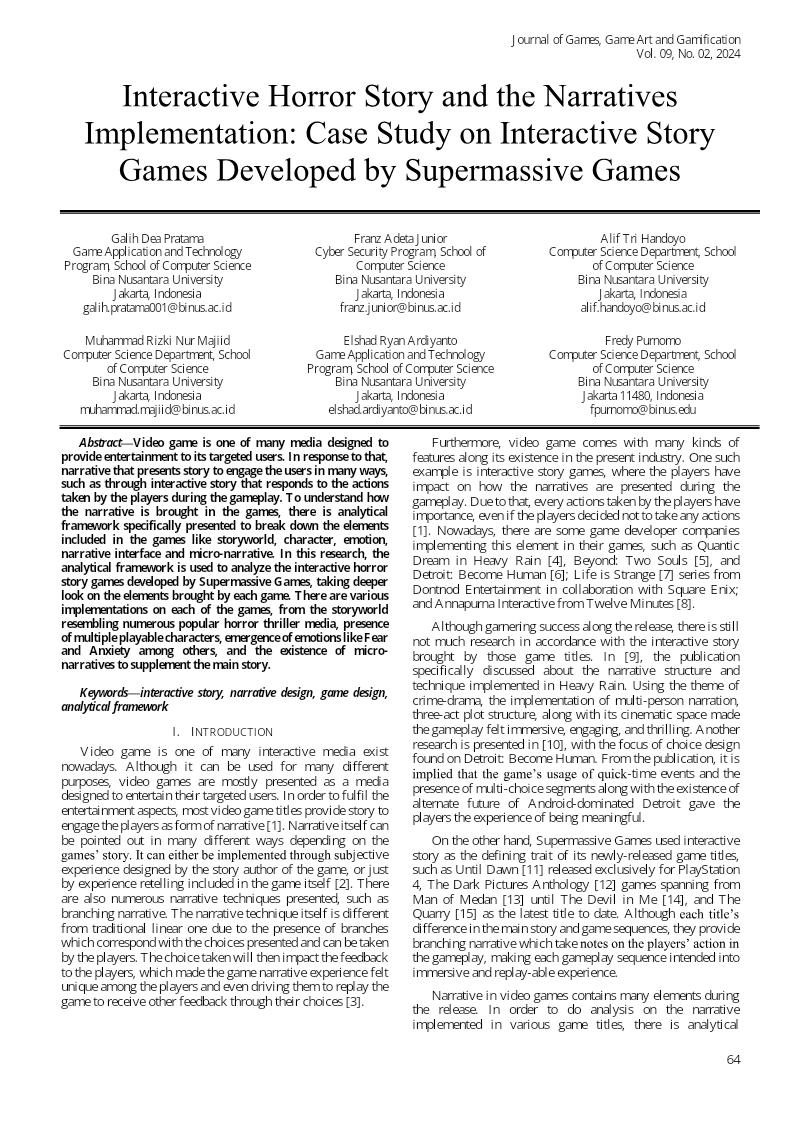
Interactive Horror Story and the Narratives Implementation: Case Study on Supermassive Games
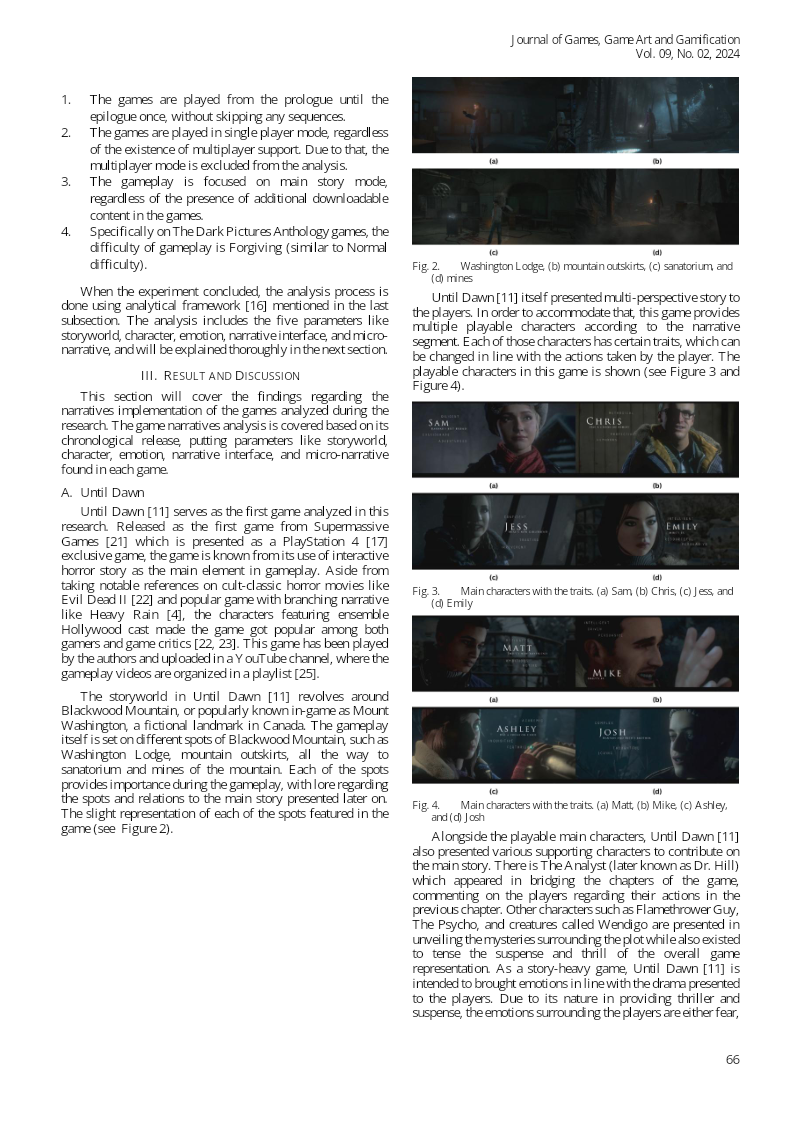
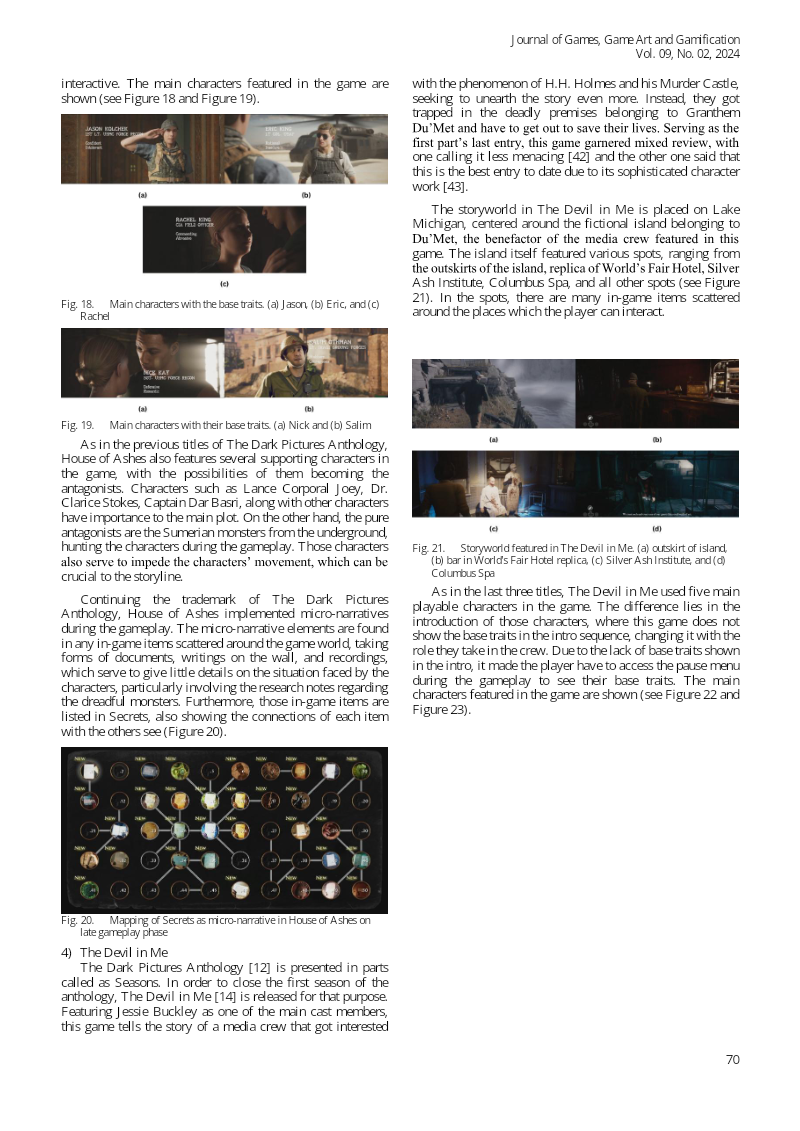
Supermassive Games has established a definitive blueprint for interactive horror by integrating branching narratives with complex emotional triggers.
- Supermassive Games maintains a consistent structural blueprint for interactive horror by balancing player agency with cinematic tension across titles like Until Dawn, The Dark Pictures Anthology, and The Quarry.
- The studio’s narrative efficacy relies on the interplay between environmental micro-narratives and high-stakes decision-making to elicit player fear and curiosity.
- The Dark Pictures Anthology utilizes a recurring narrator and a fixed set of playable characters to provide a stable foundation for diverse thematic exploration within the horror genre.
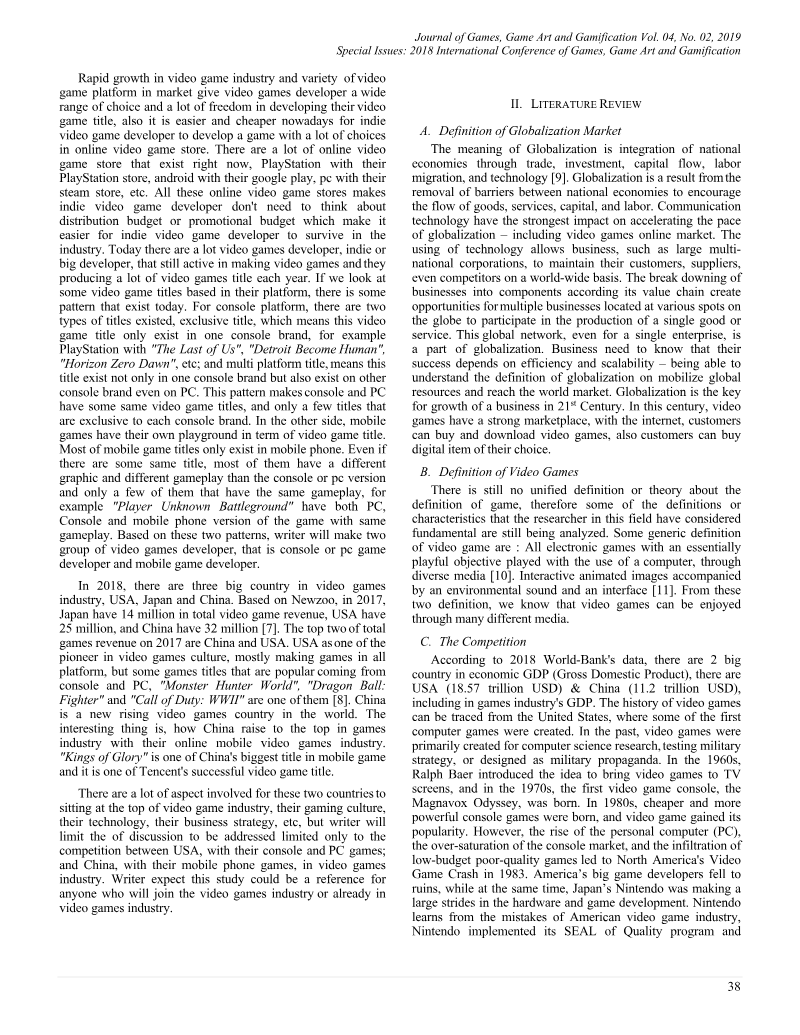
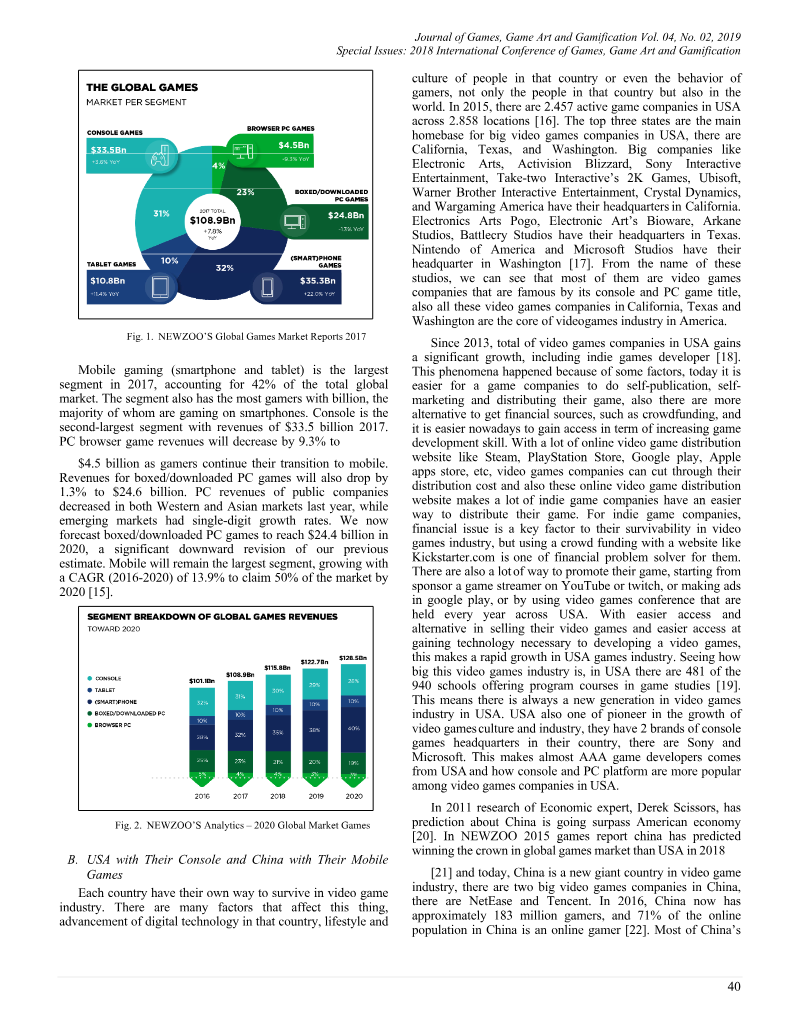
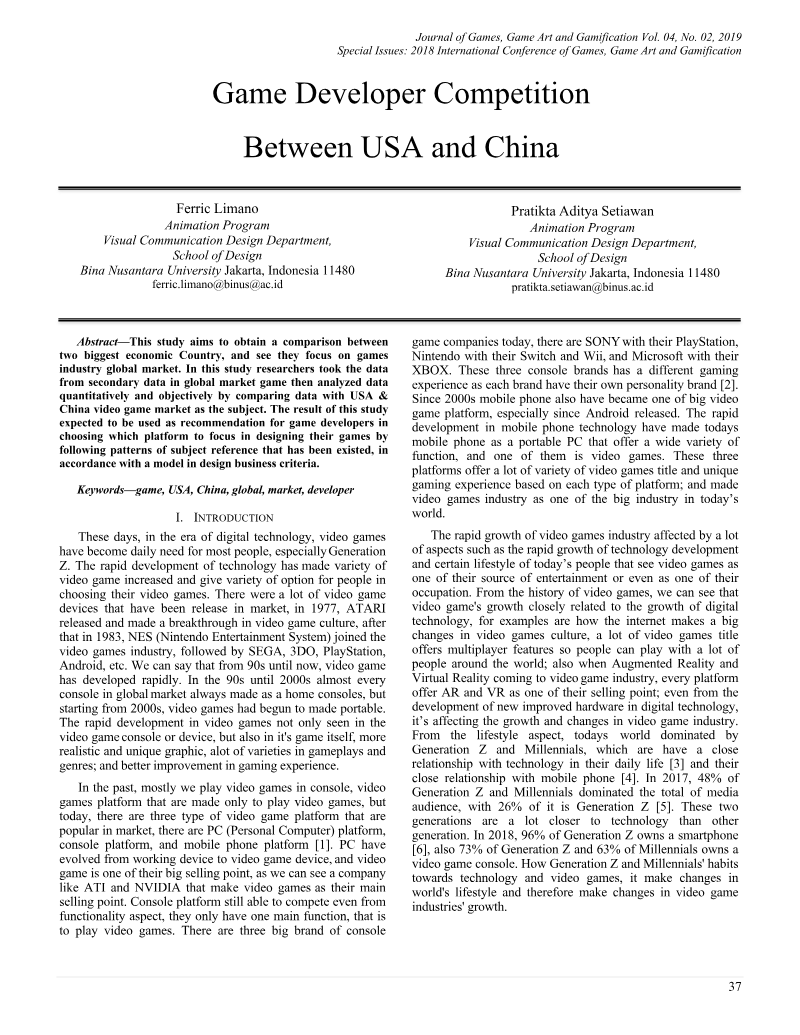
Game Developer Competition Between USA and China
The global video game industry is currently defined by a strategic divergence between the United States and China, the world’s two largest gaming markets.
- The global gaming industry is defined by a strategic divide where the U.S. leads in high-fidelity console and PC 'buy-to-play' titles, while China dominates the mobile 'free-to-play' and socially integrated market.
- Mobile gaming represents the primary engine for long-term industry expansion, driven by the consumption habits of Gen Z and Millennial demographics who prioritize mobile-first technology.
- China’s competitive advantage is built on a massive user base and integrated social-media-to-game ecosystems that foster high-stakes development environments.

Lego-based Game as a Way to Improve Student's Physics Education
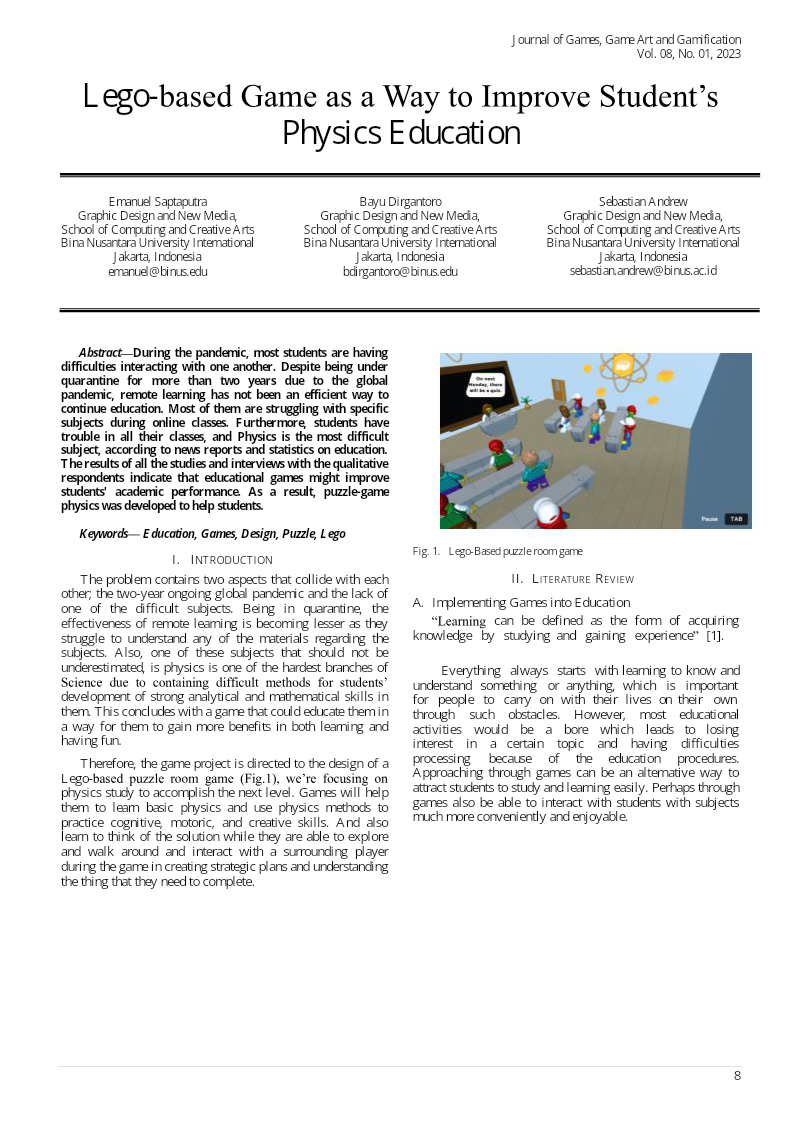
This study addresses the decline in student engagement and academic performance in physics, particularly during the remote learning challenges imposed by the global pandemic.
- Optimizing asset settings and scene mapping in Unity reduced initial game loading times by 50%, dropping them from 10–15 minutes to 5–7 minutes.
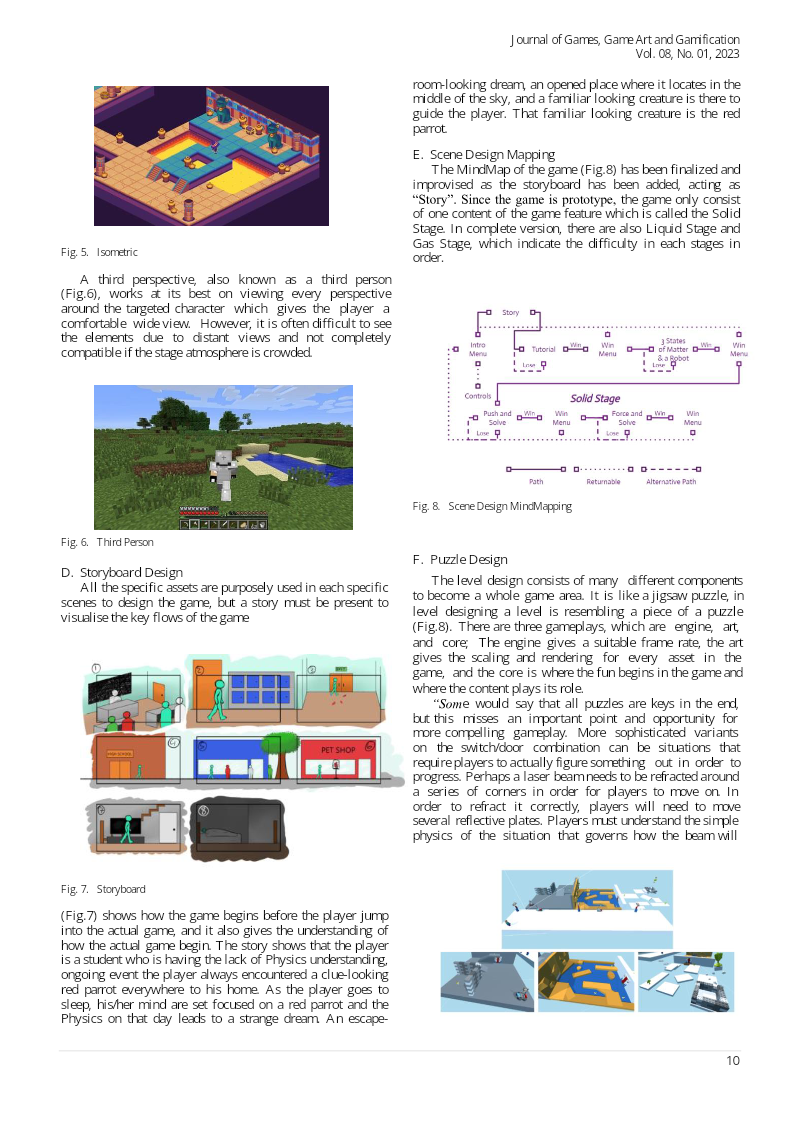
- The project utilized BrickLink Studio for asset creation and the Unity game engine to develop a narrative-driven environment focused on teaching physics through puzzle mechanics.
- Integrating puzzle-based game design into physics curricula serves as a viable pedagogical tool to improve student engagement, cognitive skills, and analytical problem-solving.

Performance Comparison of Text-Based Game Prototypes Using GTmetrix
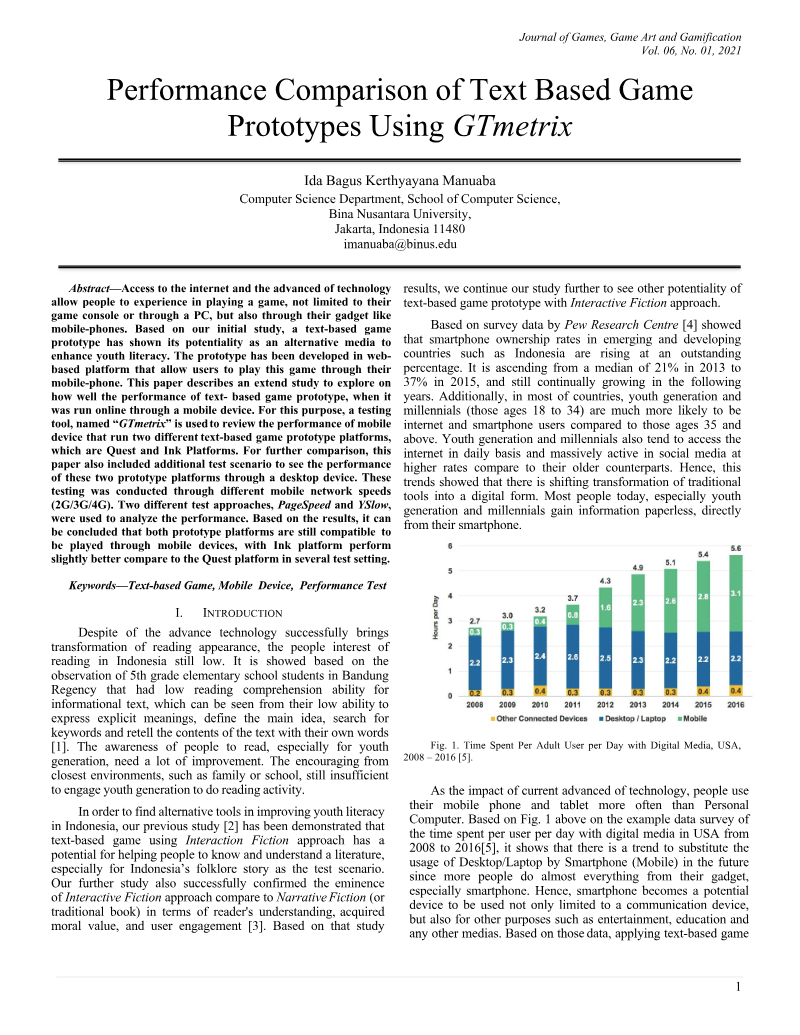
This study evaluates the performance of two web-based, text-driven game prototypes—Quest and Ink—to determine their viability for mobile users in Indonesia.
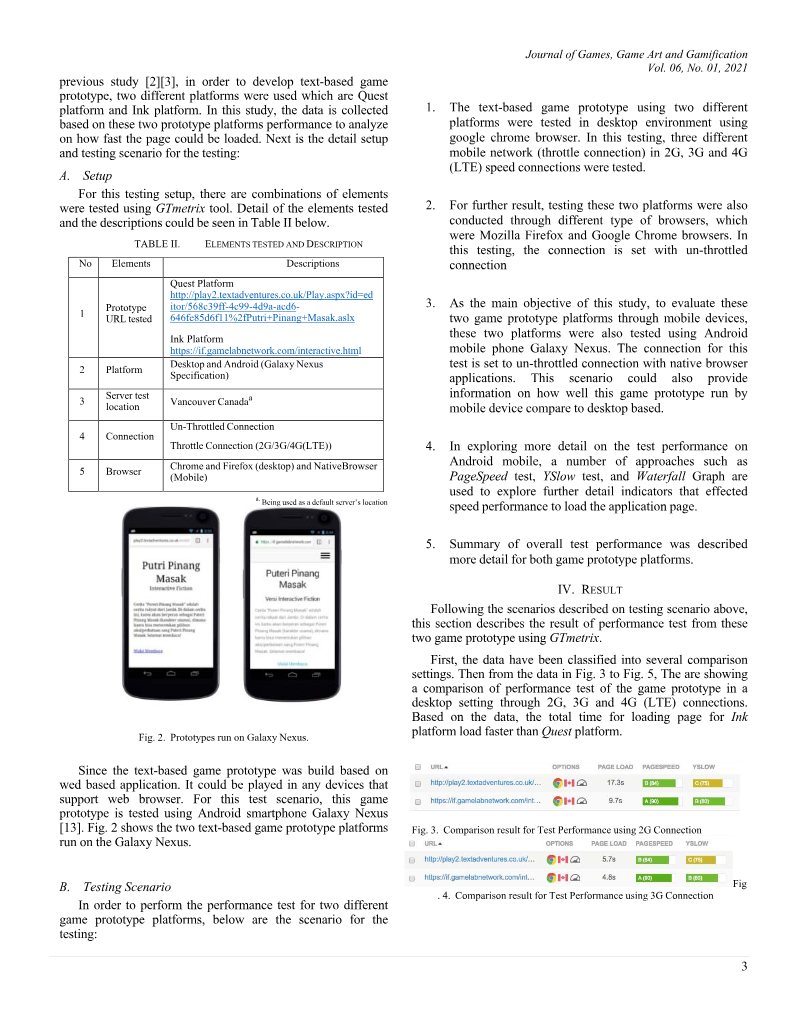
- The Ink platform outperformed Quest across PageSpeed and YSlow metrics, making it the superior choice for mobile-first deployment.
- Both Ink and Quest prototypes maintained page load times under 3.8 seconds across all tested mobile-simulated environments.
- Ink demonstrated higher technical efficiency by consistently maintaining smaller page sizes and fewer HTTP requests than Quest.


Comparison of Xbox One and Steam Joystick-based Operating System User Interface using KLM-GOMS
This study evaluates and compares the user interface efficiency of the Xbox One and Steam Big Picture operating systems, both of which are designed for joystick-based navigation.
- The Xbox One interface demonstrates superior overall efficiency compared to Steam Big Picture for common joystick-based navigation tasks.
- Steam Big Picture consistently records higher average task completion times than the Xbox One across gaming, media consumption, and music playback categories.
- The Xbox One’s tile-based design and integrated shortcut methods significantly reduce the user learning curve and improve navigation speed for frequently accessed content.

Improving English Learning by Gamification with MDA Framework
This research investigates the efficacy of gamification in enhancing English language learning outcomes and student motivation.
- The integration of gamification elements like points, badges, and leaderboards resulted in statistically significant improvements in English language learning performance, as confirmed by a paired t-test.
- User feedback from 32 respondents identified exploration, competition, and self-identification as the primary psychological drivers for increased engagement in educational software.
- The application of the MDA (Mechanics, Dynamics, Aesthetics) and 6-11 frameworks provides a validated model for increasing user interest and facilitating deeper learning in e-learning environments.


A Preliminary Survey of Game Developer's Perception on Game Clone: Indonesia
This study examines the perceptions of Indonesian game developers regarding the practice of game cloning—the act of replicating game mechanics or ideas without necessarily infringing on trademarked assets.
- Indonesian game developers generally accept game cloning if the practice is used for non-profit, educational purposes or does not harm the commercial viability of the original title.
- There is a strong industry consensus that current protections against the negative consequences of cloning are insufficient for both creators and consumers.
- Developers advocate for platform providers, such as app stores, to implement more rigorous detection and certification processes to curb unoriginal copying.
Subliminal Paradigmatic on Designing Character in Games
Character design in video games extends beyond aesthetic appeal, functioning as a critical psychological bridge that facilitates player immersion and ideological communication.
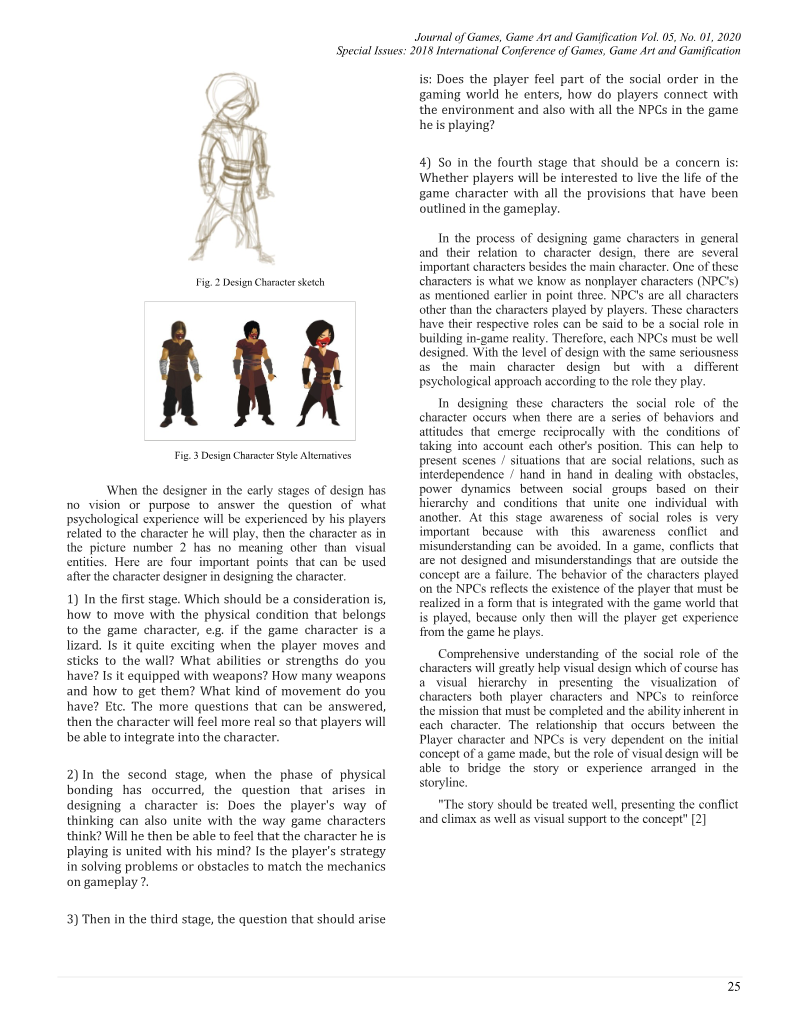
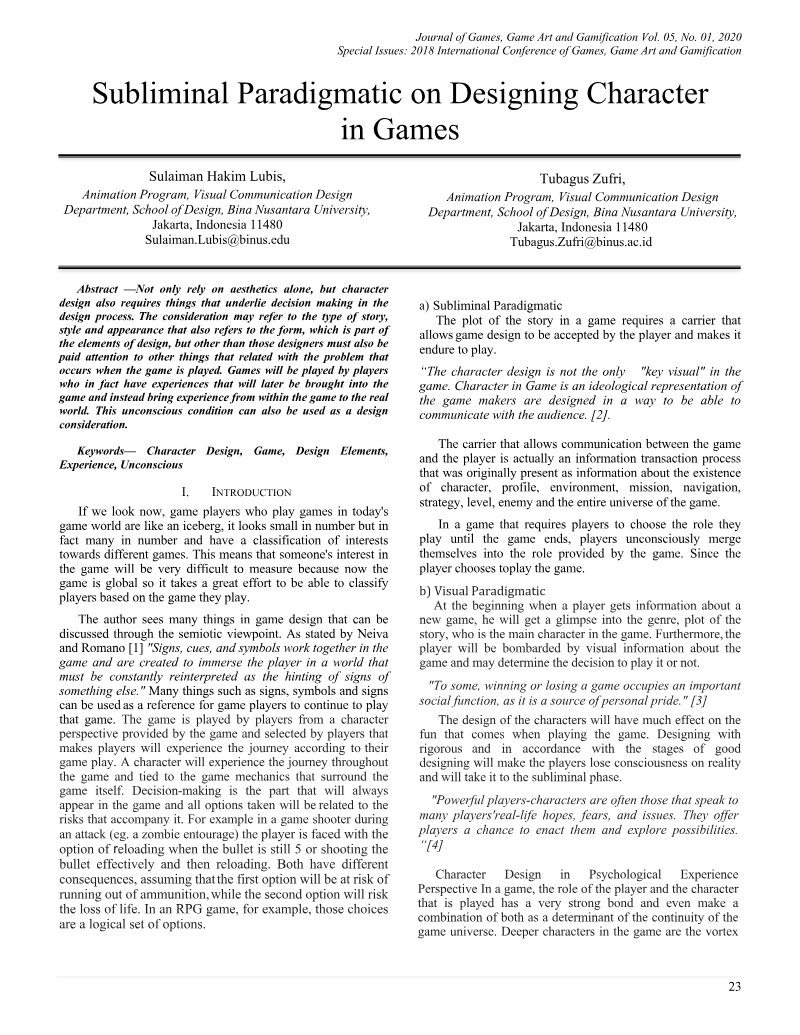
- Effective character design functions as a psychological bridge that aligns physical traits, abilities, and social roles with the player’s unconscious experience to foster deep immersion.
- Designers should treat characters as ideological representations rather than purely visual or mechanical assets to ensure they function as vessels for player agency.
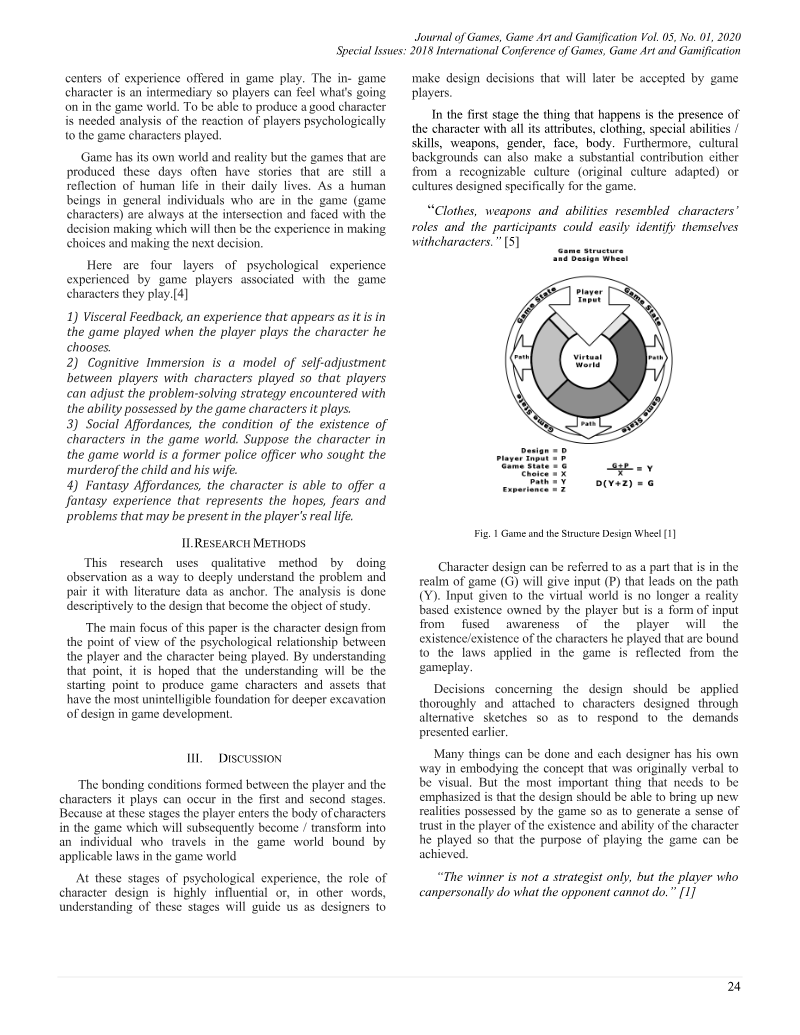
- The player-character relationship is built through four distinct psychological layers: visceral feedback, cognitive immersion, social affordances, and fantasy affordances.
Gamification Analysis in UI and UX for ParkingSpot Apps
This analysis explores the application of user interface (UI) and user experience (UX) design principles to the development of mobile parking applications, specifically addressing the challenges of navigating crowded urban environments like Jakarta.
- Effective UI/UX design in parking apps significantly reduces user frustration and time spent locating parking in high-density urban environments like Jakarta.
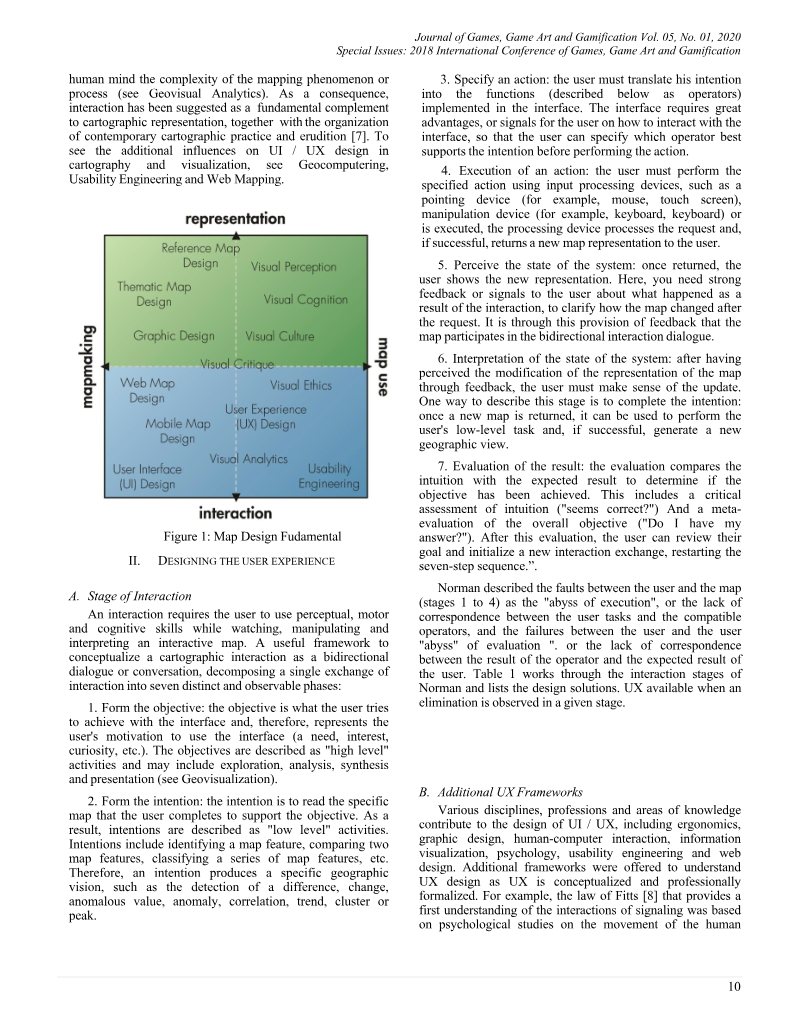
- The design process should utilize a seven-stage interaction framework to balance interface complexity with necessary geographic data tools like panning, zooming, and filtering.
- Visual design serves as a functional requirement for navigation efficiency and emotional response rather than a purely aesthetic choice.
Framework of Mobile Game Design as an Assistive Technology for Children with Motor Disabilities
This research proposes a specialized design framework for mobile games intended to improve accessibility for children with motor disabilities.
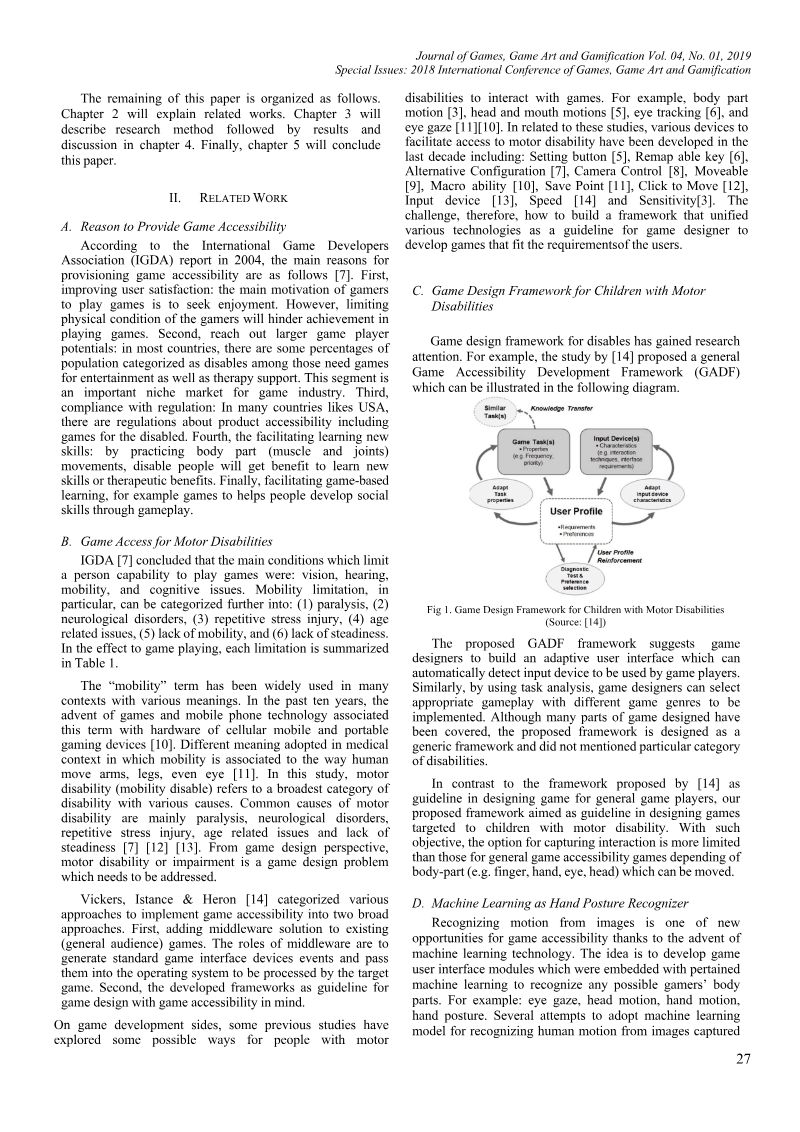
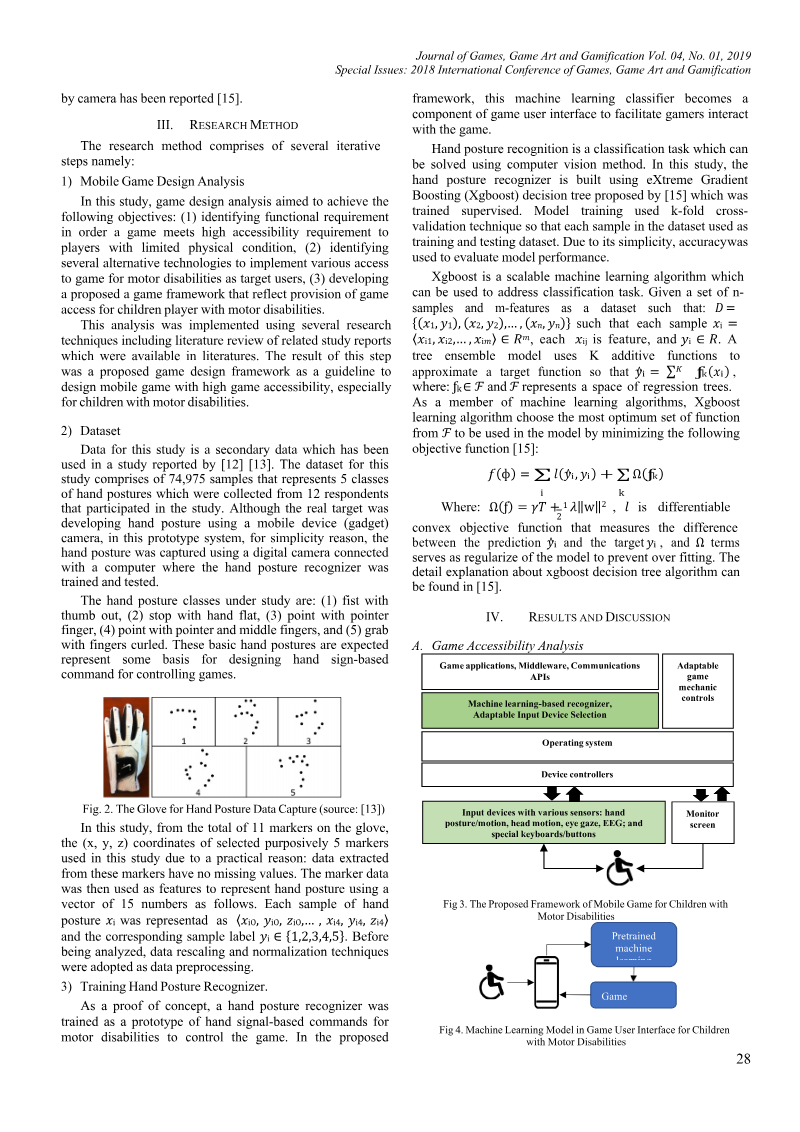
- Integrating machine learning-based hand posture recognition into mobile game interfaces allows developers to map limited physical movements to functional in-game commands.
- A prototype hand posture recognizer using the Xgboost algorithm achieved 98.48% training accuracy and 96.76% testing accuracy across five distinct hand postures.
- The model was trained on a dataset of 74,975 samples collected from 12 participants, validating the technical feasibility of adaptive input systems.
Gamification Analysis for Motivation and Engagement Using Running Apps: 2018
This analysis examines the role of gamification in mobile running applications, focusing on how game-design elements—such as points, levels, rankings, and social rewards—influence user motivation, engagement, and brand loyalty.
- The gamification market saw significant growth between 2013 and 2016, with projections indicating an increase in value from $522 million to $2.83 billion.
- Running applications function as effective marketing channels by utilizing social networks and immediate feedback loops to build brand communities and long-term customer commitment.
- User engagement in fitness apps is driven by three primary categories: content-oriented functional feedback, relationship-oriented social validation, and self-oriented competition and status.