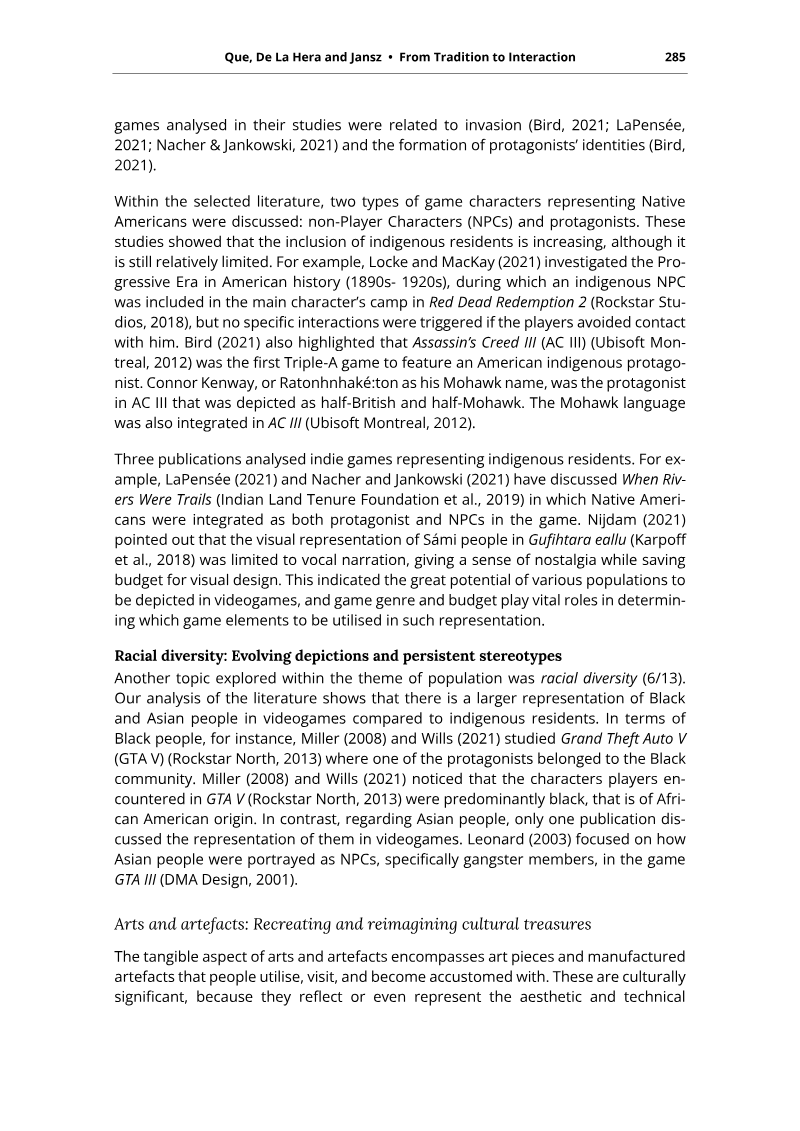
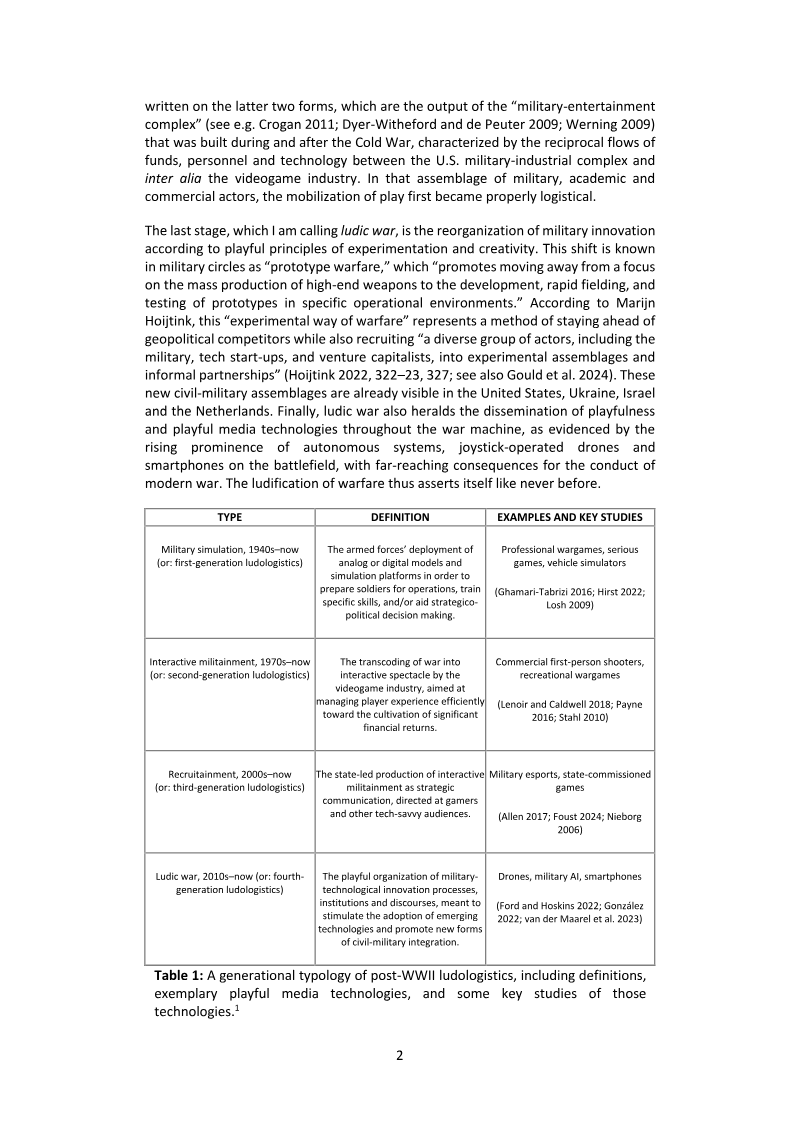
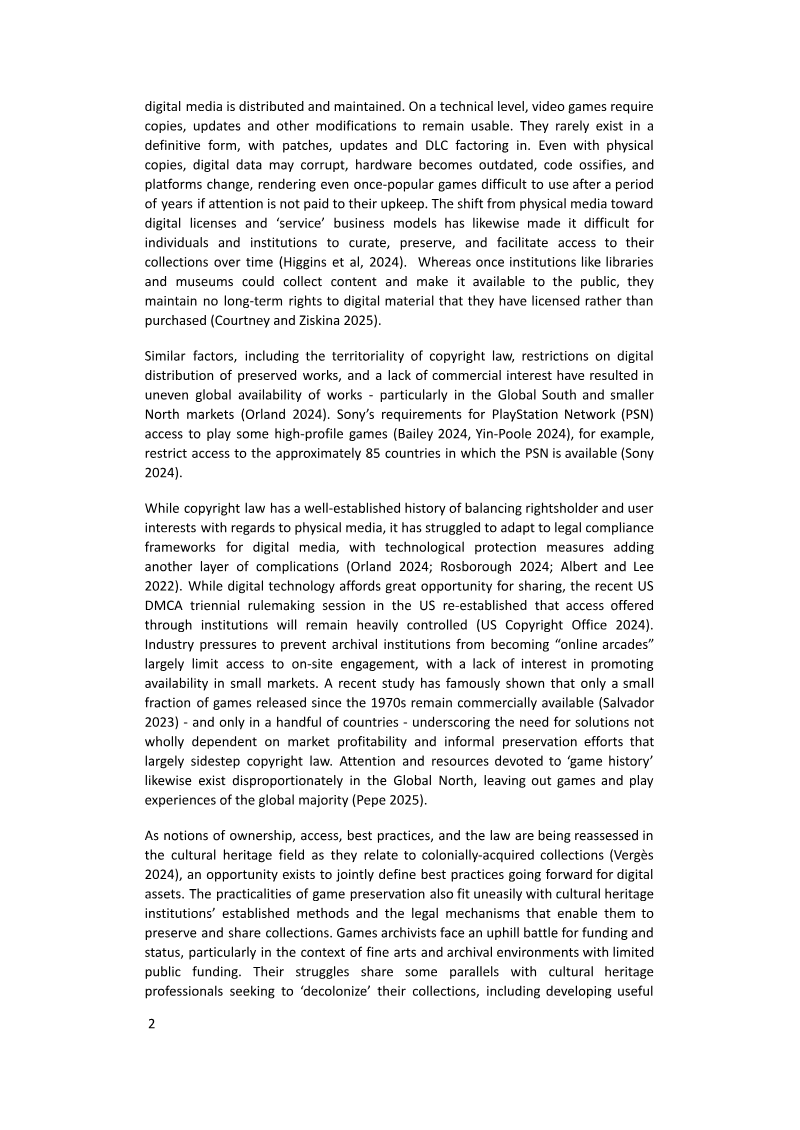
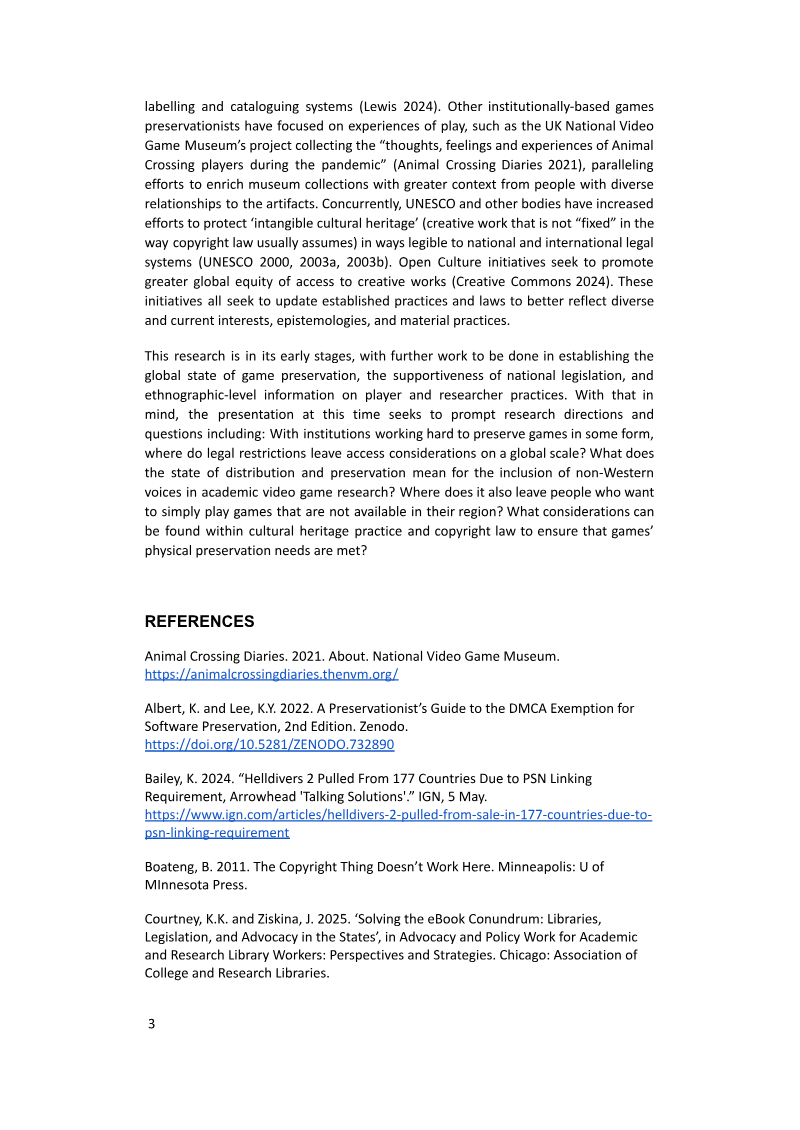
Games and companies in this document



Connections
Each row is a game or company this document names, each column a document, oldest first. A mark means that document names it. Select a row to see those documents.
1 free read left. Create a free account for unlimited reading + AI research.
Create free accountWhitepaperUniversity of Western Ontario
The paper argues that science fiction videogames can serve as critical tools for examining technology's social and ethical implications. It draws on Cameron Kunzelman's concept of "mechanics of speculation."
This paper argues that science fiction videogames can serve as critical tools for examining technology's social and ethical implications, rather than merely providing aesthetic backdrops. Drawing on Cameron Kunzelman's concept of "mechanics of speculation," the author contends that when player action is necessary and outcomes remain uncertain, games become virtual playgrounds where players imagine alternative futures and confront the consequences of technological change. The analysis contrasts escapist SF titles, such as the Mass Effect series, Starfield, and Titanfall, which treat advanced technology as set dressing, with more recent games that foreground contested technologies like artificial intelligence, biotechnology, and brain-computer interfaces.
The study's central case is Zachtronics' Eliza (2019), a visual-novel-style game in which the player takes the role of Evelyn, a human operator for an AI-driven therapy program. The game's early chapters follow a largely linear structure before presenting a pivotal moment where the player may deviate from scripted dialogue. Thereafter, expanding information about Evelyn's past, the corporation behind the system, and the characters around her makes dialogue choices increasingly consequential, prompting reflection on the ethical complexities at the intersection of AI and mental health. The paper notes that Eliza anticipated concerns now widely discussed, including privacy, data transparency, accountability, and the efficacy and honest marketing of AI tools in mental health care.
The paper's methodology is a single-case analysis of one game, which the author acknowledges as a limitation. Its conclusions about the broader genre are therefore suggestive rather than comprehensive, and the author proposes that future research examine a wider range of SF titles to assess whether this pattern of critical engagement holds more generally. Overall, the study positions videogames as active instruments for shaping and questioning the narratives through which people understand their evolving relationship with technology.
Each row is a game or company this document names, each column a document, oldest first. A mark means that document names it. Select a row to see those documents.
International Journal of Role-Playing · 2026