Game developer salary surveys and reports
Documents


Developer Satisfaction Survey 2023 - Summary Report
The 2023 global game development landscape is defined by a period of intense economic contraction and employment volatility, marked by the highest rates of layoffs and terminations recorded since 2014.
- The 2023 game industry experienced its highest rates of layoffs and terminations since 2014, reflecting a period of intense economic contraction and employment volatility.
- Labor conditions remain poor, with nearly one-third of developers working over 60 hours per week during peak production cycles, fueling increased interest in unionization.
- A significant disconnect exists regarding workplace equity, as two-thirds of developers report that equal opportunity is absent and fewer than half believe existing policies are adequately enforced.

Canada’s Video Game Industry: Powering the Future of Play
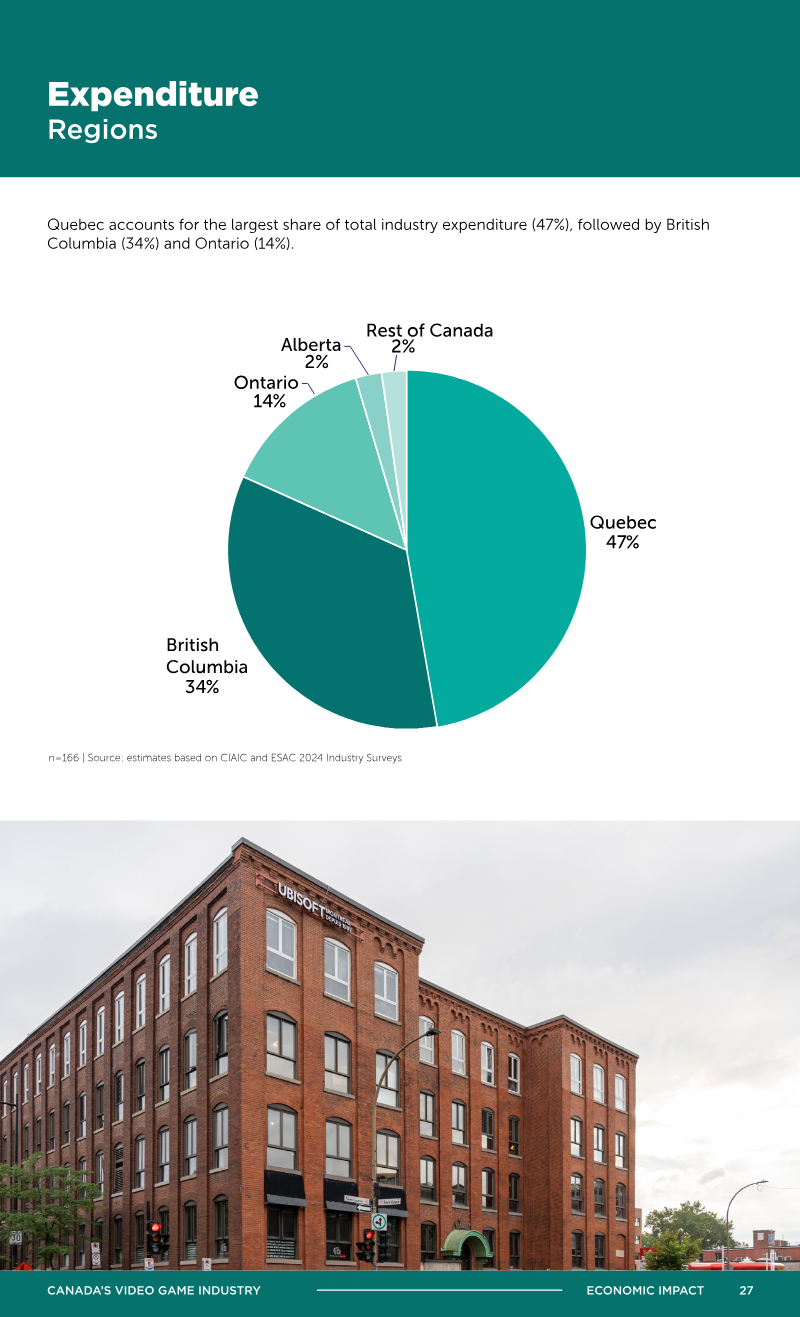
Canada’s video-game industry is portrayed as a mature, high-value sector that now consists of 821 firms employing roughly 34,000 full-time workers and delivering a $5.1 billion economic impact.
- Canada’s video game industry supports 34,000 full-time jobs and generates a $5.1 billion economic impact, with direct labour income reaching $3.5 billion in the 2023-24 fiscal year.
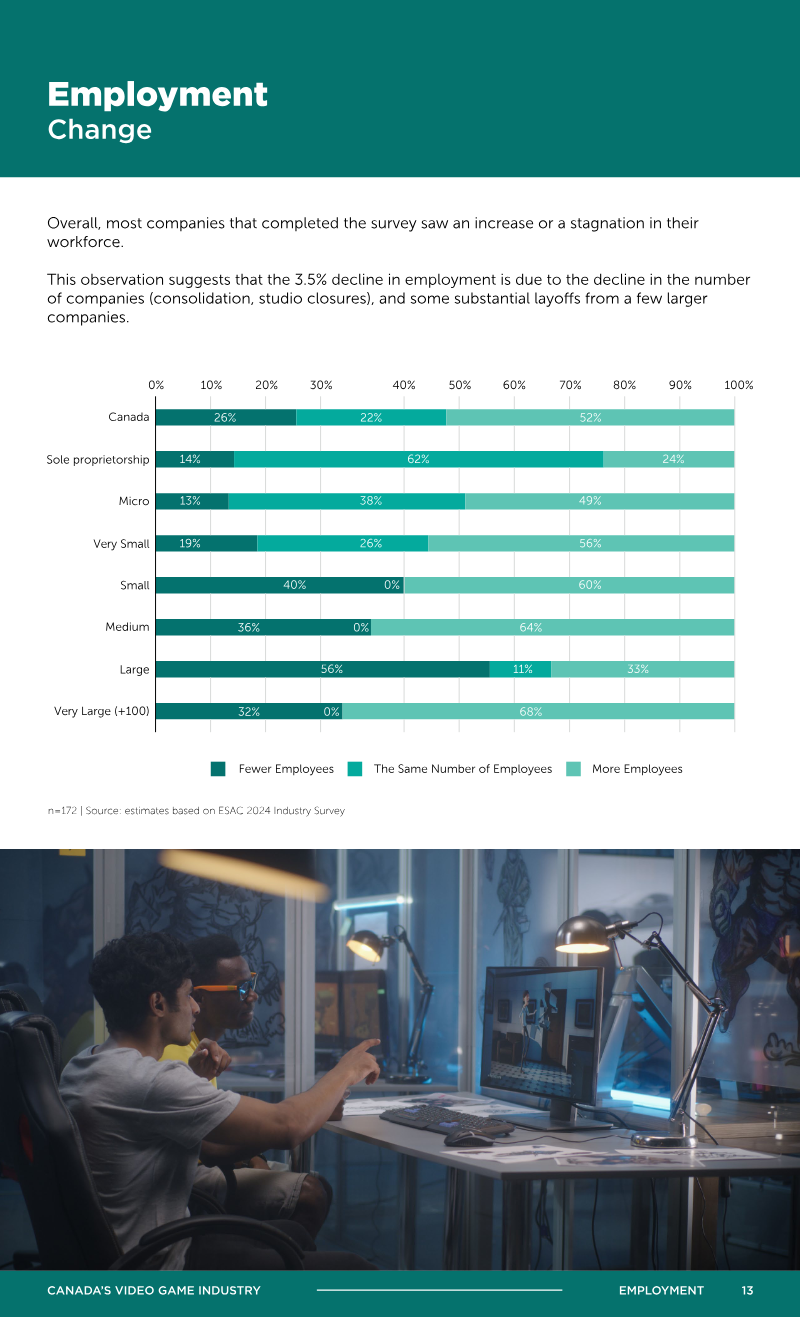
- While the total number of firms contracted by 9% since 2021, this decline was limited to micro-studios, while studios with 51 or more employees remained stable or grew.
- The sector achieved a $356 million operating surplus in 2023-24, reflecting a 7% profit margin.
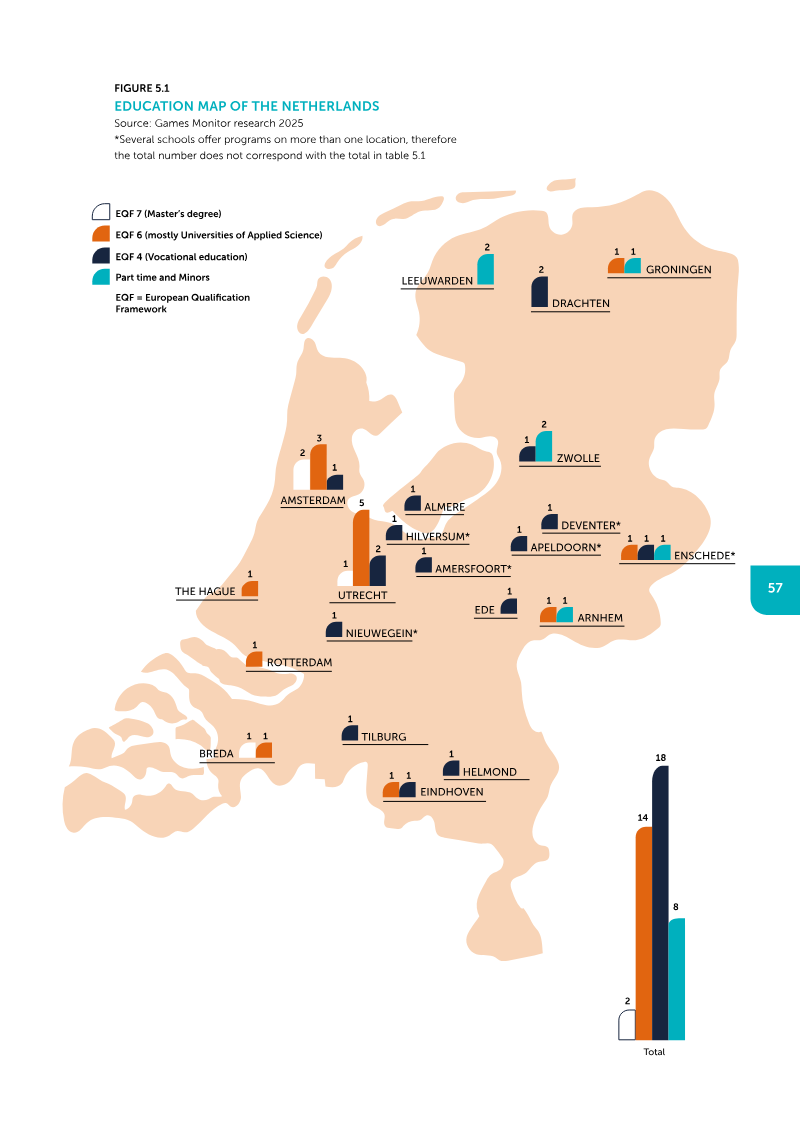
Netherlands Games Monitor 2024
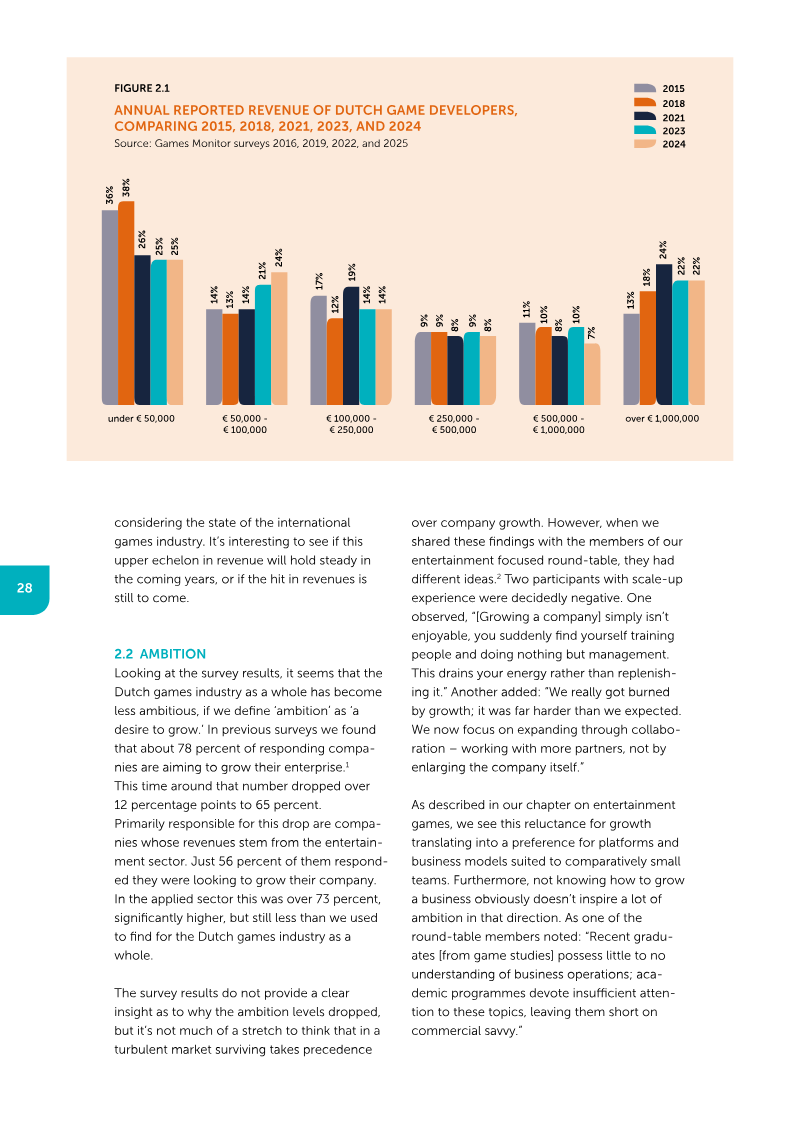
The Dutch games industry is currently navigating a period of maturation and consolidation, characterized by moderate financial growth despite a challenging global economic climate.
- The Dutch games industry employed 4,291 people by the end of 2023, a decline of 269 persons compared to 2021, with employment decreasing by 3% per year between 2021 and 2023, though revenue increased by an average annual rate of 10.5% to €763 million.
- The percentage of female workers in the Dutch games industry is rising, reaching 23.2% currently, aligning with broader European and North American industry averages.
- Applied games studios are adopting generative AI faster than entertainment studios, using or testing it for localization, dialogue, training content, and audio, with clients open to custom AI-enabled solutions, while entertainment studios are more hesitant due to potential player backlash.
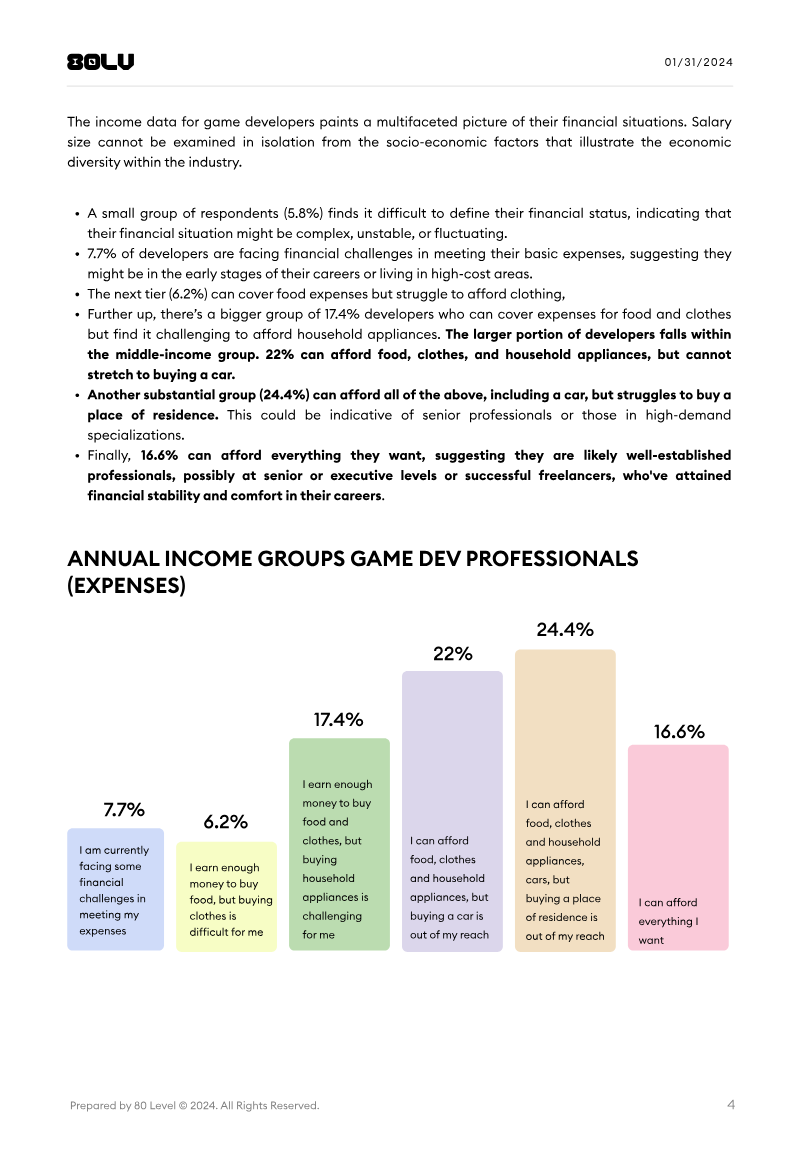
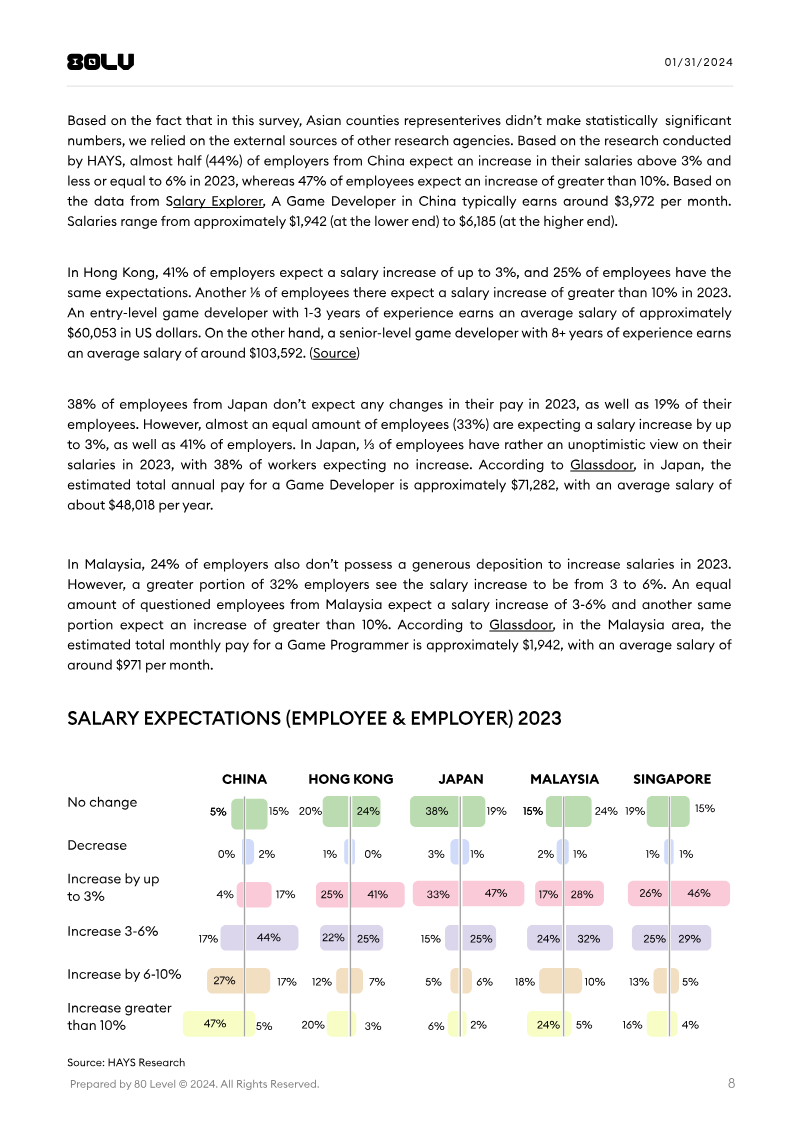
Behind the Screens: The Salary Stats in Gamedev
This research, conducted by 80 Level in January 2024, examines the global compensation landscape and financial well-being of professionals within the video game development industry.
- The game development industry is highly stratified, with nearly 40% of professionals earning under $40,000 annually and only 11% earning more than $150,000.
- Geography is a primary driver of income disparity, evidenced by 36% of U.S.-based professionals earning over $150,000 compared to 54% of developers in India earning under $9,999.
- Financial instability is prevalent, as 24.4% of the workforce can afford a car but cannot afford a residence, while only 16.6% can afford all discretionary purchases.
2024 Professional Gamer Workforce and Career Structure in Korea
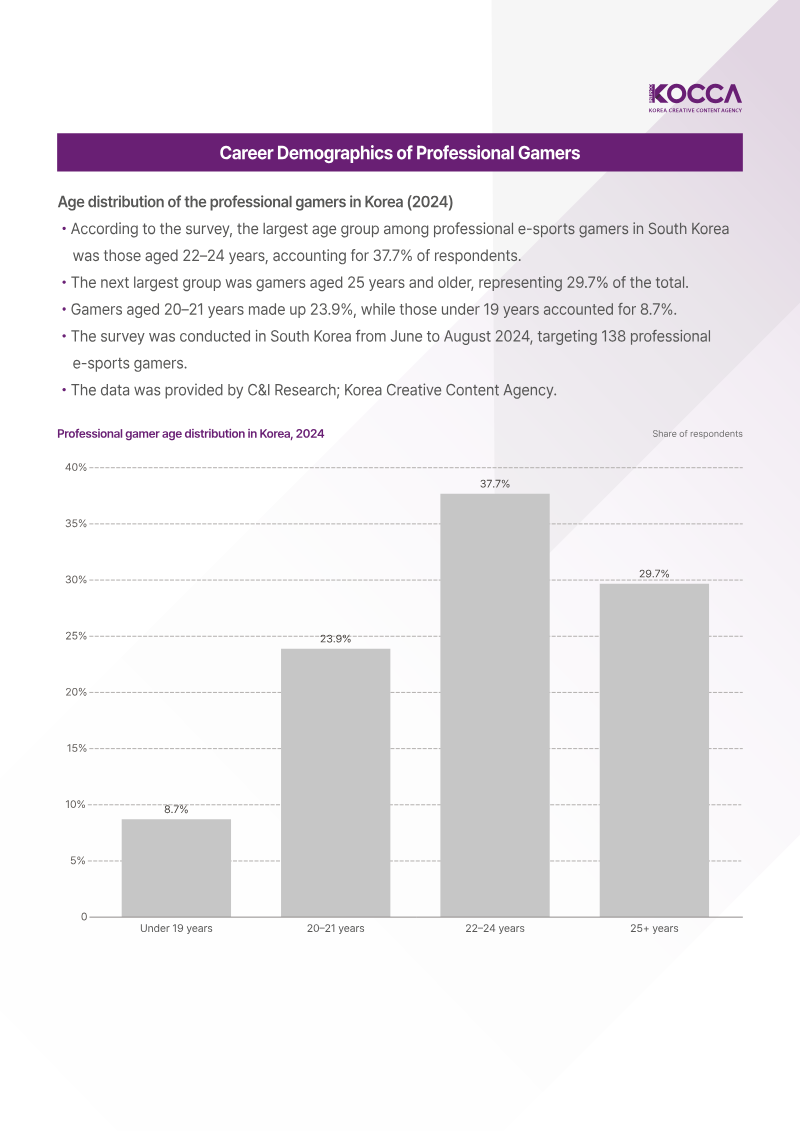
The analysis aims to map the composition, demographics, career trajectories, and income streams of South Korea’s professional e-sports workforce, drawing on Statista surveys conducted between June and November 2024.
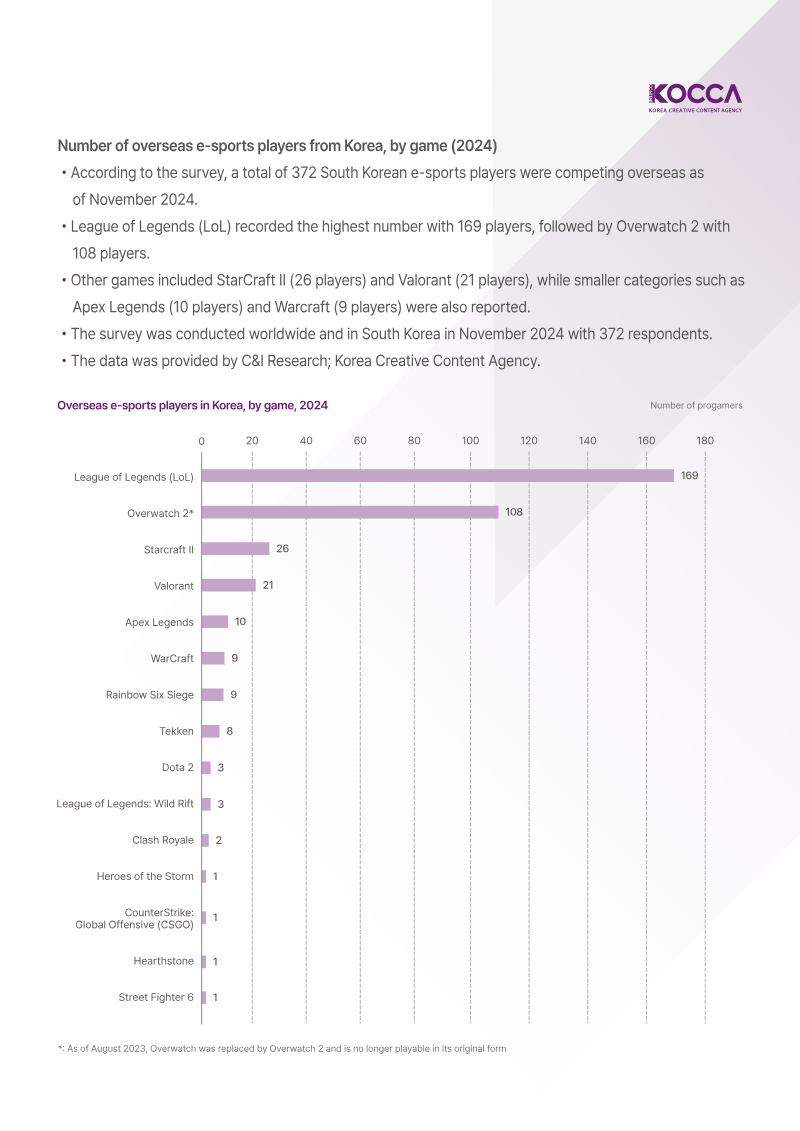
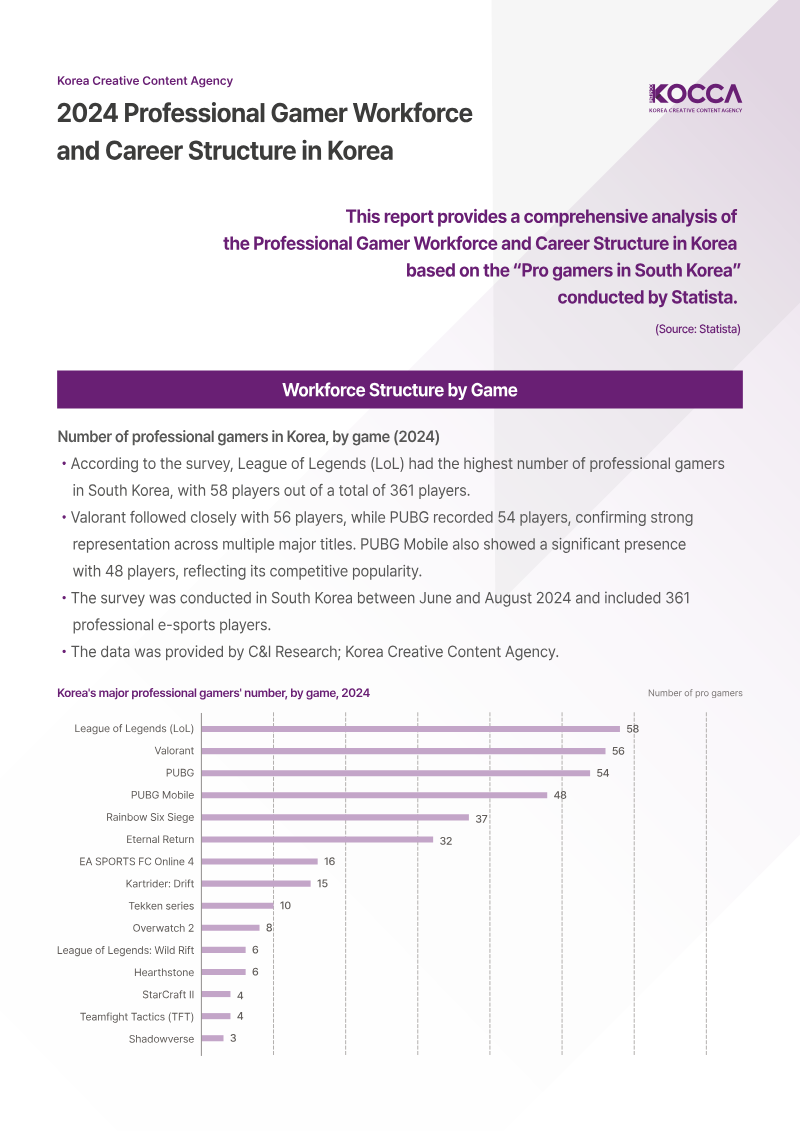
- South Korea’s professional e-sports workforce consists of 361 domestic players and 372 athletes competing in overseas leagues.
- League of Legends is the dominant title for Korean professionals, accounting for 58 domestic players and 169 athletes competing internationally.
- The professional player base is heavily concentrated in four domestic titles: League of Legends (58), Valorant (56), PUBG (54), and PUBG Mobile (48).


ゲーム開発者の就業とキャリア形成 2024
The 2024 Game Developer Survey for Japan provides a comprehensive snapshot of compensation trends among the nation’s game development workforce, focusing on individuals with formal vocational-school or university education.
- Over 80% of game developers with formal vocational or university education in Japan received a salary increase in 2024.
- The trend of rising earnings is consistent among full-time employees, with approximately 80% reporting wage growth over the past year.
- Formal academic credentials serve as a significant predictor of wage growth, as employers prioritize these qualifications when determining compensation adjustments.



L'Industrie du Jeu Vidéo au Canada
The 2024 Canadian video-game sector is presented as a mature, high-value industry that contributes $5.1 billion to national GDP and sustains 34 010 full-time-equivalent positions, with an average compensation of $102 000.
- The Canadian video game industry contributes $5.1 billion to the national GDP and employs 34,010 full-time equivalent workers with an average annual compensation of $102,000.
- Industry spending reached $4.8 billion in 2024, an 11% increase since 2021, with labour costs now accounting for 72% of total expenditures.
- The sector is increasingly dominated by foreign-owned companies, which now account for 88% of total industry employment.
Big Games Industry Employment Survey 2024: Salaries, Compensation Trends and State of the Games Sector in Europe
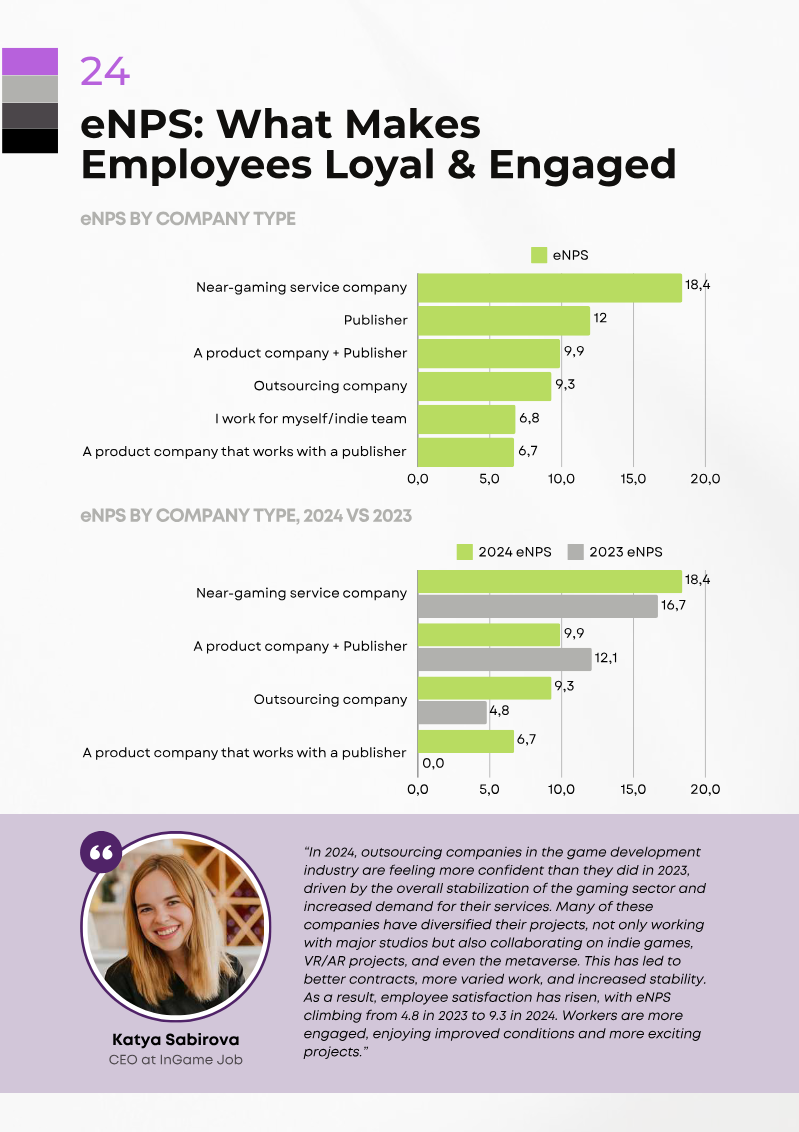
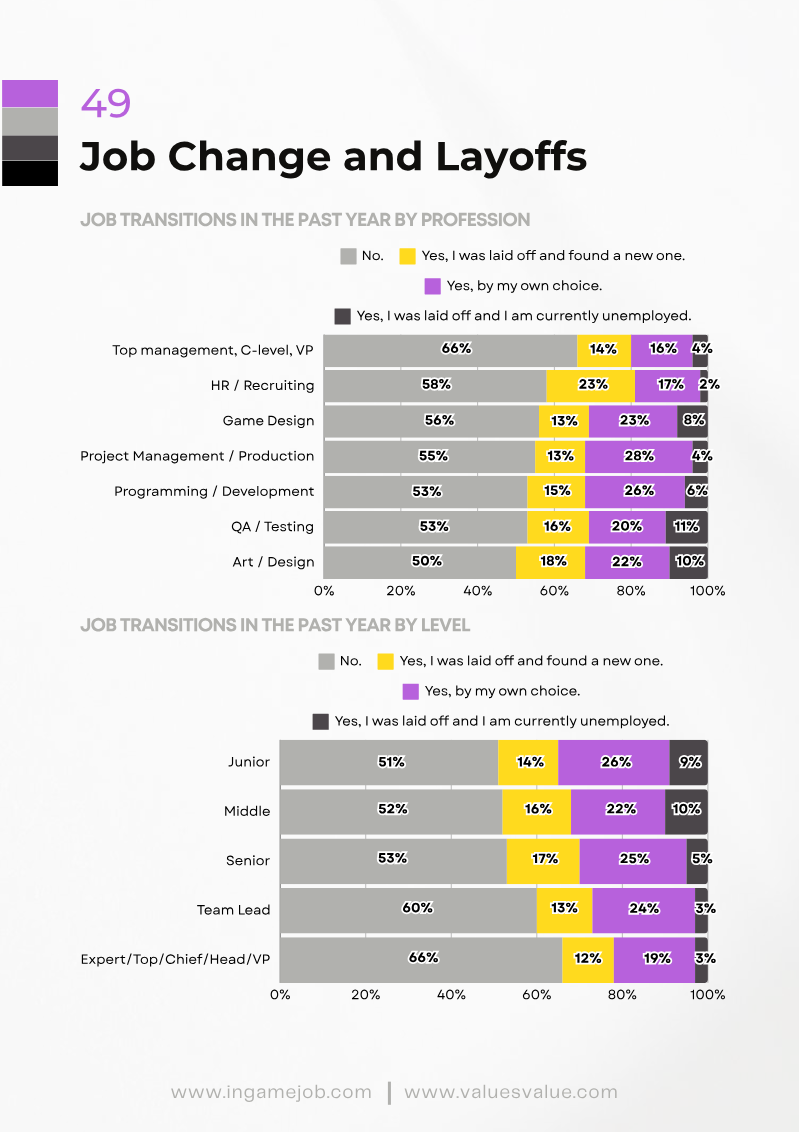
The European games industry in 2024 is characterized by significant volatility and structural transformation, with 15% of the workforce experiencing layoffs and 10% exiting the sector entirely.
- The European games industry faces significant instability, with 15% of the workforce experiencing layoffs and 10% leaving the sector entirely, disproportionately impacting junior professionals.
- AI adoption has surged by 17% year-over-year, with 54% of industry professionals now integrating these tools into their daily workflows.
- Systemic workplace issues persist, as 32% of respondents reported gender-based bias and 26% cited ageism, contributing to a gender pay gap rooted in a lack of female leadership and technical representation.

Open Salaries: Ensuring Equitable Pay Through Pay Transparency
Open salary policies serve as a critical mechanism for achieving organizational pay equity and addressing systemic wage disparities.
- Open salary policies improve pay equity and trust by replacing opaque negotiation-based compensation with a standardized, rubric-based system that links specific job levels and expectations to clear salary bands.
- Lightforge Games, which has practiced open salaries for three years with nearly 40 employees, maintains a 3.1x pay ratio between its lowest and highest-paid staff, demonstrating that transparency does not require flat compensation.
- Younger workers prioritize corporate transparency and ethical leadership, with Millennials and Gen Z ranking employee well-being as their top workplace concern and diversity/inclusion as their third.

The Harsh Truth About Game Development
The professional landscape of game development is defined by three significant challenges that impact both AAA and independent creators.
- The vast majority of independent games fail to achieve financial viability, with a significant percentage of titles generating less than $10,000 in total revenue.
- Sustainable success in the independent sector requires treating projects as commercial products rather than hobbyist experiments, often necessitating multiple development cycles to achieve stability.
- Game development in AAA environments is highly specialized, often relegating developers to granular, repetitive tasks like tool creation or specific asset modeling rather than holistic creative work.
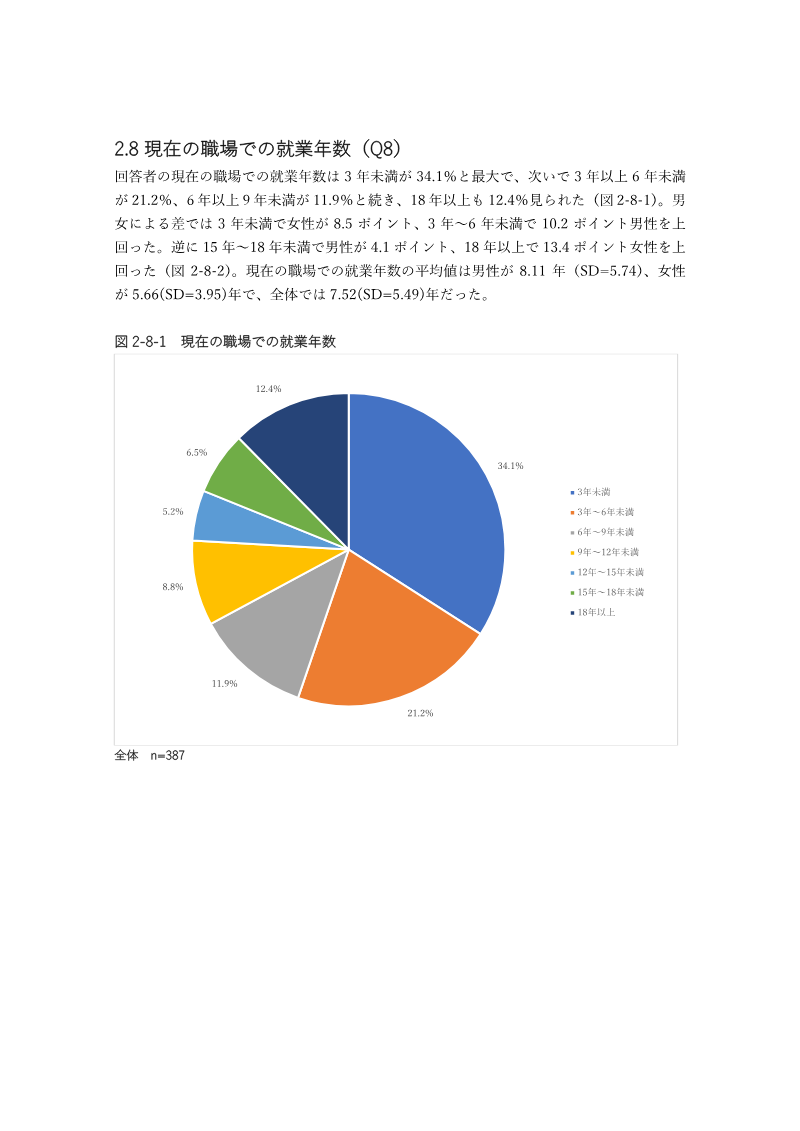


Employment and Career Development of Game Developers 2022
The Japanese game industry is characterized by a workforce primarily composed of male university graduates in their mid-thirties, predominantly concentrated within large enterprises in the Kanto region.
- The Japanese game industry workforce is primarily composed of male university graduates in their mid-thirties, with engineers serving as the core labor force earning an average annual income of 6.06 million yen.
- Nearly 75% of game developers now operate in remote work settings, a shift that has improved perceived work-life balance but created new challenges for interpersonal collaboration and workplace support.
- Significant salary disparities persist between large corporations and smaller firms, with executive, management, and technical artist roles commanding the highest compensation.


2023 Games & Interactive Salary & Satisfaction Survey
The ninth-year Games & Interactive Salary & Satisfaction Survey demonstrates that financial remuneration has become the predominant catalyst for career moves, eclipsing flexible or remote work as a primary motivator.
- Salary has overtaken flexible work as the primary driver for career moves, with 31% of UK and Western European respondents citing higher pay as their main reason for leaving a position.
- Artist compensation has seen a sharp 35% increase between 2021 and 2023, with mid-level artists now earning approximately £75k.
- Project close-out periods are a critical retention risk, as 22% of UK respondents decline new offers to finish current projects and 46% of global staff are actively job hunting.