Player Behavior reports and market data
Documents
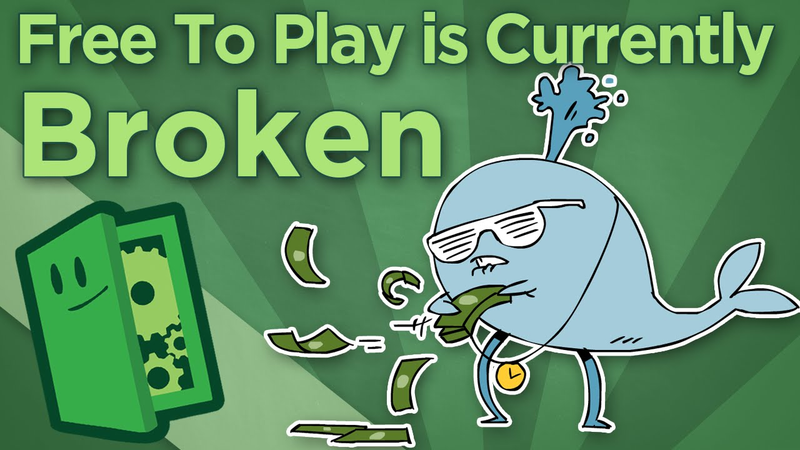
Free to Play Is Currently Broken - How High Costs Drive Players Away from F2P Games - Extra Credits
The current free-to-play (F2P) business model is fundamentally flawed and unsustainable due to an over-reliance on a small percentage of high-spending users, commonly referred to as whales.
- The current F2P model is unsustainable because it relies on less than 10 percent of the player base to generate over 90 percent of total revenue.
- Aggressive targeting of 'whales' creates a negative feedback loop where the alienation of non-spending players forces developers to constantly increase advertising spend to replenish the user base.
- Escalating user acquisition costs and development budgets are driven by intense competition for a limited pool of high-value spenders, leading to market instability.
Randomness in Esports - How Chance Affects Competitive Play - Extra Credits
The integration of randomness into competitive esports is often viewed as a threat to the integrity of skill-based play.
- Competitive integrity in esports is best maintained by shifting focus from individual match outcomes to aggregate performance over large sample sizes.
- Tournament structures such as round-robin or long-term league play are superior to single or double-elimination formats because they mitigate the impact of short-term variance.
- The concept of expected value, borrowed from professional poker, demonstrates that elite players distinguish themselves by consistently making statistically superior decisions over time rather than winning every individual instance.
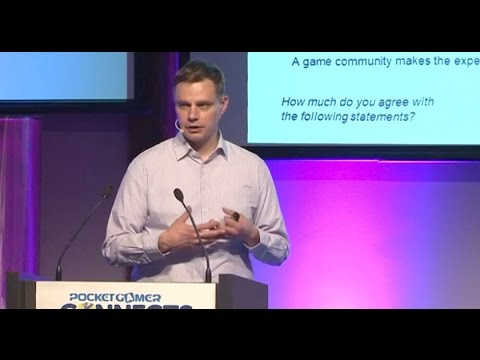
Getting inside the heads of F2P players who pay $50 per month
This analysis examines the behavioral patterns and motivations of high-spending players, commonly referred to as whales, within the free-to-play (F2P) mobile gaming market.
- High-spending players, defined as those spending $10 to $50 monthly, are highly social and competitive, contradicting the stereotype of the isolated whale.
- YouTube is a critical discovery and engagement hub for heavy spenders, rivaling Facebook in importance for this demographic.
- Heavy spenders are significantly more likely than non-payers to discover games through online word-of-mouth, social media, blogs, and video content.

SkyMobi on why it's focusing on casual Chinese mobile gamers
The Chinese mobile gaming market is undergoing a significant shift, with growth increasingly driven by users in third-tier cities and below rather than major metropolitan hubs like Beijing or Shanghai.
- Sixty percent of China's mobile gaming population resides in third-tier cities or below, representing the primary driver of current market growth.
- SkyMobi’s Maopao app store reaches 147 million users and maintains 25 million monthly active users by securing pre-installation on 40 percent of new Android devices in China.
- Lower-tier city gamers prioritize Android devices and require lightweight game files due to hardware limitations and restricted 3G/4G network infrastructure.

Wooga's Sebastian Kriese says inflate your player's ego. Don't crush it
The primary objective of successful mobile puzzle game design is to maximize player engagement and retention by fostering a sense of accomplishment while avoiding feelings of inadequacy.
- To maintain a casual experience, developers should limit player choices to between three and seven moves per turn to prevent the game from becoming overly strategic or mentally taxing.
- Integrating randomness into puzzle mechanics prevents players from feeling inadequate by allowing them to attribute failures to bad luck rather than a lack of personal skill.
- Randomized elements ensure every session is unique, which helps avoid the frustration and self-doubt often associated with static puzzles that have only one correct solution.
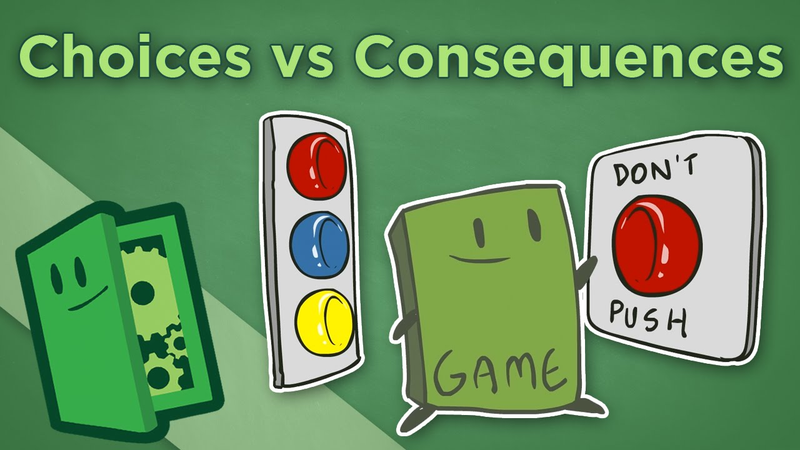
Choices vs Consequences - What Player Decisions Mean in Games - Extra Credits
Game design often conflates the concepts of choice and consequence, yet these two mechanics serve distinct psychological and narrative functions.
- Choice-based design focuses on the player's internal conflict by presenting dilemmas without clear numerical solutions, forcing them to weigh personal values in real-time.
- Consequence-based design relies on retrospective analysis, where the impact of a player's past actions is revealed later to prompt reflection on previous behavior.
- Effective consequence-based systems, as seen in Chrono Trigger, require a clear causal link between minor actions and narrative outcomes to prevent players from feeling unfairly punished.
The Waiting Game - Why Weird Games Become Cult Hits - Extra Credits
The emergence of unfolding games, such as Candy Box, Frog Fractions, and A Dark Room, represents a significant departure from traditional AAA game design.
- Cult hits like Candy Box, Frog Fractions, and A Dark Room succeed by using gradual revelation rather than the high-octane, immediate hooks typical of AAA game design.
- Developers can leverage intentional simplicity or boredom to create a sharp contrast, making the introduction of unexpected, complex mechanics feel more impactful and magical.
- Strategic use of time-based delays and waiting periods builds player tension, functioning as a psychological trap that sustains long-term curiosity.
The Fighting Game Problem - How to Teach Complicated Mechanics - Extra Credits
Fighting games are often defined by their high-level strategic depth, functioning more like complex war games or chess matches than simple tests of reflex.
- Fighting games currently suffer from a high barrier to entry because they require players to memorize hundreds of button combinations and mechanics before they can engage in meaningful strategic play.
- Traditional tutorial systems relying on static text and practice rooms are ineffective at bridging the gap between novice button-mashing and the decision-making required for competitive play.
- Developers should utilize single-player campaigns as structured training grounds by adopting RPG-style progression, where players start with a limited move set and unlock abilities over time to ensure mastery of fundamentals.
How Minecraft Changes the Future of Games - Minecraft Generation - Extra Credits
The long-term influence of Minecraft on the video game industry extends far beyond its immediate commercial success, representing a fundamental shift in the developmental experiences of a new generation of players.
- Minecraft is shifting the gaming industry away from reflex-based, instant-gratification design toward a paradigm centered on patience, construction, and creative labor.
- The maturation of the 'Minecraft generation' into the primary consumer base is expected to reshape industry standards over the next decade.
- Future AAA game development will likely move away from strictly action-focused mechanics to accommodate more methodical genres like deep simulations and tactical shooters.

Education: Agency - How Games Empower Us - Extra Credits
Video games serve as a powerful educational tool by fostering a sense of agency, teaching students that their choices have immediate, tangible consequences.
- Video games function as an educational tool by providing immediate feedback loops that demonstrate the direct connection between personal choices and tangible consequences.
- Games help students move beyond present-focused thinking by encouraging the formulation of long-term strategies and goal-setting behaviors.
- The interactive nature of games combats fatalism in marginalized or low-income students by proving that personal agency can alter outcomes and influence one's future.
Comedic Games - Can We Make More Funny Games? - Extra Credits
The primary challenge in creating comedic video games lies in the fundamental conflict between the rigid timing required for humor and the unpredictable nature of interactive player agency.
- The core challenge in game comedy is the conflict between the rigid timing required for humor and the unpredictable nature of player agency.
- Traditional scripted comedy, as seen in titles like Portal, fails to leverage the medium's potential because it relies on removing player control to preserve comedic pacing.
- Effective game comedy should shift toward 'comedy by choice,' where players generate humorous outcomes through their own actions rather than consuming passive, scripted content.
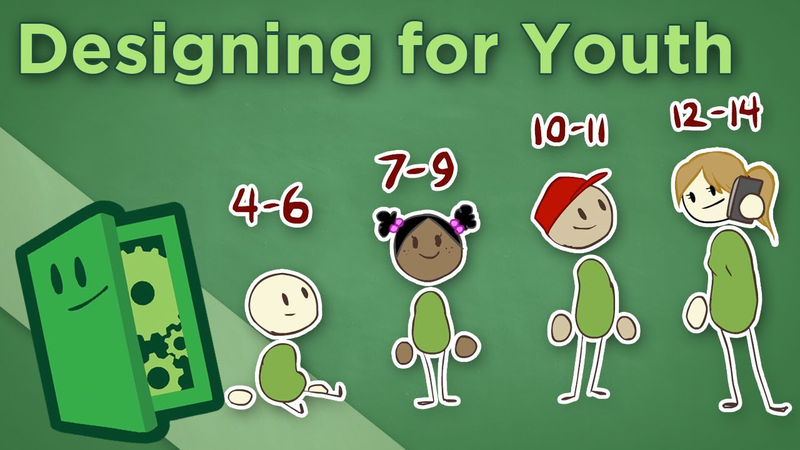
Designing for Youth - Making Games for Players Under 14 - Extra Credits
Designing games for children under 14 requires a fundamental shift in development philosophy, moving away from the historical reliance on licensed intellectual property and low-budget production toward creating genuinely engaging, age-appropriate experiences.
- Developers must segment the youth market into four distinct age brackets—4–6, 7–9, 10–11, and 12–14—to account for rapid shifts in cognitive, social, and literacy development.
- Designers should avoid the 'box art' strategy of relying on licensed intellectual property and instead prioritize gameplay quality to meet the expectations of increasingly discerning parents.
- Games should incorporate multiple levels of success to ensure accessibility for novices while providing sufficient depth to reward strategic thinking.