1 free read left. Create a free account for unlimited reading + AI research.
Create free account
Comedic Games - Can We Make More Funny Games? - Extra Credits
Key insights
6 takeaways- 01The core challenge in game comedy is the conflict between the rigid timing required for humor and the unpredictable nature of player agency.
- 02Traditional scripted comedy, as seen in titles like Portal, fails to leverage the medium's potential because it relies on removing player control to preserve comedic pacing.
- 03Effective game comedy should shift toward 'comedy by choice,' where players generate humorous outcomes through their own actions rather than consuming passive, scripted content.
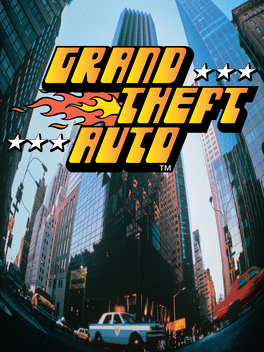
- 04Open-world games like Grand Theft Auto and Just Cause demonstrate that humor often emerges from physics-based exploits, absurd interactions, and emergent gameplay.
- 05Developers can foster organic humor by building expansive, flexible physics engines that allow players to discover and exploit ludicrous edge cases.
- 06Designing for 'controlled chaos' through the intentional introduction of randomized or erratic behaviors within a stable world creates an environment where spontaneous, player-driven laughter can occur.
Ask AI about this video
Transcript
We've been asked many a time why there seem to be so few comedic games out there, or at least fewer than there once were. So, today we would like to tackle the question of why comedy is so hard in games. But, one disclaimer before we begin though, one of the few types of games James hasn't worked on is one in which humor was the principal method of engagement. This is something he's discussed a great deal with other designers, but from a practical standpoint, this is all just speculation on our end. As a general rule, comedy is pretty challenging no matter what medium you're working in. The first problem with building a humor-driven game is that comedy, as we traditionally understand it, is all about timing. Timing is something that can be tightly controlled in a film, TV show, or a stand-up routine, but in an interactive environment, timing is something designers have no control over. If you look at the early games of yore, the early adventure games which were principally based on humor, you'll find that a lot of that humor was contained in moments more akin to traditional media. In these adventure games, you'd finally find what doohickey to use your sprocket on, and most of the time the gag was something visual that would happen, something you had no control over. It was almost like a cutscene that
hammered home why using that item on that thing was funny, only it happened in engine and usually only took about 3 to 5 seconds. The other place old adventure games found much of their humor was through dialogue, which again, they could do much more to control the pacing of. In fact, even if you look at most games intended to be humorous today, this is still the case. Take Portal. The vast majority of Portal's humor comes from a very carefully scripted and timed voiceover, a voiceover that you can't affect or interact with, a voiceover where at most you control when it triggers, but your actions can't fundamentally change it in any way. So, all right, games can imitate comedy techniques from other media by keeping it out of the player's direct control, but is there some way we can rethink comedy for the interactive age? Truth be told, I'm not sure, but I think a clue to it lies in where we find unintended humor in the games we already play. Have you ever watched someone who doesn't have much GTA experience try to get a car out of a tight parking spot? It's hilarious. Or what about someone doing that terribly sadistic kill-revive cycle on a civilian in Infamous? It's disturbing, but also absurd. Or how about grappling hooking a car to an airplane in Just Cause? Heck, Just Cause
is littered with comedy like that. Comedy by choice is a vector of design that fascinates me. Giving the player the tools to enact real-time interactive comedy is something that's totally underexplored in our industry. And yet, that's where some of the most engaging, satisfying, and certainly most hilarious moments in games come from. What if we could actually harness that? What if we actually designed a game around that? Where would we begin? Well, I won't claim to be a comedian nor by any means an expert on humor, but in the broadest sense, I'd say that a lot of comedy falls into two categories: satire and the absurd. Satire for our purposes being anything that highlights the frustrations, inconsistencies, or hypocrisies in everyday life by taking them to the extreme. The absurd, on the other hand, is just taking things we know from everyday life and offering them to us in a way that breaks our understanding of how they should work. Of the two, the absurd seems as though it's easier to deliver as a player-driven form of comedy. It's not that satire is impossible. In fact, the Saints Row series is almost entirely satire. The problem though is that most of the interactive satire in Saints Row, the satire that's not delivered to you in a cutscene, voiceover, or static prop, is almost all about lampooning
other games. Games are very good at presenting us the frustrations, inconsistencies, and hypocrisies of games because they're something the audience is very familiar with in the first place and will be very tuned into as they play. But to make the player enact satire on a broader scale may require that the player understand how to approach these games in a way that I'm not sure we've reached yet. The absurd, on the other hand, is something that players reach for all the time. With just a few quick YouTube searches, you'll find Assassin's Creed guards humping walls with the player joining in. You'll witness the most ludicrous kills in Battlefield. You'll watch FIFA glitches that players milk for all their worth. Taking things to the point that they break our understanding of how they work is something we already love in games. Whether it be Daisy party buses or even just the concept of rocket jumping, players seem to gravitate toward finding the places where they can flip the common understanding of a game on its head. So, how do we build a game around the possibility of creating the absurd? Well, that is an incredibly tough question, but were it me, I'd say it would require two elements. First, you'd need a lot of freedom. You see players exploiting the absurdities inherent in virtual physics systems all the time because systems like that are so vast they inherently allow for
ludicrous edge cases. The broader you can make your systems while still mimicking on the surface things that we already understand, the more opportunities you provide players to craft the hilariously absurd. Second, you must embrace things going wrong. Were it me, were I creating this type of game, I'd actually intentionally throw in bugs. I'd randomly but very rarely allow standard behavior to just go haywire. One out of a thousand times, I'd have a car which normally drives down the road in a straight line obeying all the traffic laws pick random angles to turn every few seconds and have it turn the opposite direction if it hit anything. So, on occasion you'd get a crazy car veering down the street. I'd periodically assign the wrong animations to skeletons or have guns that randomly choose a physics object to shoot instead of bullets. I mean, imagine finding the rifle that shoots cows or the machine gun that limply mimics a garden hose. Creating this chaos in an otherwise mostly sane world will allow your player to find humor in ways you couldn't possibly imagine. It sets the stage and lets them dictate the comedy in real time, making it truly interactive in a way that voice over or a cutscene simply can't be. But, with those thoughts, I will leave you to ponder the problem of
comedy. This is just the barest most surface exploration. It's something that games have to delve much deeper into and something which quite sincerely we are not totally qualified to talk about. But, in the end if I can say one thing for certain, it would be this. If we can make comedy interactive rather than simply a passive part of an interactive experience, we'll open whole new doors on design and hopefully create thousands of hours of laughter the world over. We'll see you next week.
Summary
The primary challenge in creating comedic video games lies in the fundamental conflict between the rigid timing required for humor and the unpredictable nature of interactive player agency. Traditional comedic approaches in gaming, such as those found in classic adventure titles or modern hits like Portal, rely on scripted dialogue or pre-rendered visual gags that function similarly to film or television. Because these methods remove control from the player to preserve comedic pacing, they fail to leverage the unique potential of the medium.
A more effective approach to game comedy involves shifting from passive, scripted humor to "comedy by choice," where the player generates humorous outcomes through their own actions. This phenomenon is already observable in open-world titles like Just Cause or Grand Theft Auto, where players derive amusement from physics-based exploits, absurd interactions, and emergent gameplay. This type of humor generally falls into two categories: satire, which critiques established norms, and the absurd, which subverts the player’s understanding of how game systems should function.
To design games specifically around this interactive humor, developers should prioritize two key elements: expansive systems and controlled chaos. By building vast, flexible physics engines, designers provide the necessary foundation for players to discover and exploit ludicrous edge cases. Furthermore, intentionally introducing unpredictable, randomized behaviors—such as erratic physics or unconventional item interactions—within an otherwise stable world can foster a environment where humor emerges organically. By embracing these design principles, the industry can move beyond passive comedic delivery and create truly interactive, player-driven experiences that prioritize spontaneous, emergent laughter.



















Comments