1 free read left. Create a free account for unlimited reading + AI research.
Create free account
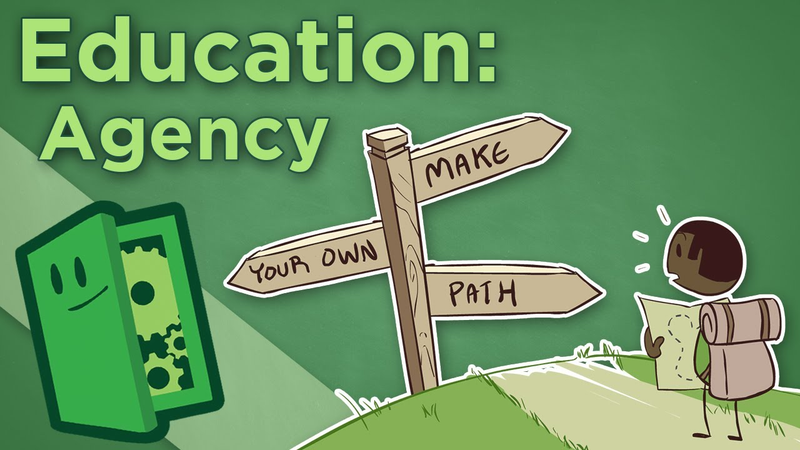
Education: Agency - How Games Empower Us - Extra Credits
Key insights
6 takeaways- 01Games help students move beyond present-focused thinking by encouraging the formulation of long-term strategies and goal-setting behaviors.
- 02Video games function as an educational tool by providing immediate feedback loops that demonstrate the direct connection between personal choices and tangible consequences.
- 03The interactive nature of games combats fatalism in marginalized or low-income students by proving that personal agency can alter outcomes and influence one's future.
- 04By allowing for repeated experimentation and failure, games cultivate a mindset of persistence and self-determination that is often missing in traditional educational environments.
- 05Integrating games into school curricula shifts students from passive observers to active participants who understand their responsibility in shaping their own life paths.
- 06Dismissing games as an educational tool overlooks a critical opportunity to provide students with a safe environment to practice complex decision-making.
Ask AI about this video
Transcript
Once when visiting a lower-income school, James had students play the original Super Mario Brothers. As they played, he watched the kids try and fail and then try something new and succeed. He was planning on talking to them about the scientific method, about hypothesis and confirmation, but the conversation that evolved was much, much different. This was the sort of school where students didn't think of going to college, where pregnancy was just something that happened. This was a school where many students lived completely in the present without too much being spent on goals or thoughts for the future. And I don't mean that to sound harsh. This wasn't the students' fault and it wasn't the teachers' fault. Society had failed these kids and so had their communities, even though they both often had the best of intentions. When these kids started playing Mario, they did what everyone does when they play games, try something and if that doesn't work, try something different. But instead of this leading to a conversation about the scientific method, it led to a conversation about agency, about the fact that their choices mattered and it wasn't all pre-written, that what they did now affected who they'd get to be. This is an incredible empowering thing. It's
something that we all need to recognize to hold our own in the modern world. And while that classroom session was nowhere near enough, it was a first step. That talk wasn't going to change the reality of these kids being in poverty or change who they were, but no one takes control over their life without first realizing that it's a possibility. So one of the most valued uses for games in education may be one of the most overlooked, the fact that they can help impart agency. In a game, all of your choices are your own and you get to see their consequences on a compressed scale. In the real world, you may have to wait weeks or months to see the ramification of a choice. Heck, in the real world, you may not even be able to connect to its real consequences or the choice might be so small that its impact can't be seen but compounds over time. Say I just ate a candy bar instead of a balanced meal. What are the consequences? Who knows? It's one out of 10,000s of eating events I'll have in my life. Would I even really put together the cause and effect if I made the same choice hundreds of times? If I did, would I even feel like I had the power to change it? Well, in games, you have none of that abstraction. You make a choice and you see its results right away, often in a few seconds, never more than in a few hours. Your choices are
often very casual and very concrete. You lived or you died. You made numbers go up or you made them go down. These things train us to think about our choices, to understand that all of our actions have ramifications. What's more, by letting us remake our choices over and over again, games let us see just how variable these ramifications can be. They teach us that minor changes can be the difference between glorious success and abject failure. And in this way, they get us to care about the decisions we make. Games take us away from being solely rooted in the present. Even in games that many people may not associate with planning, you always have a goal and you always have a route that you think will take you there. Even in Call of Duty or in Mario, you're always thinking about the thing you're trying to accomplish and crafting strategies for how to do so, even if that thing you're trying to accomplish is just getting over a pit or racking up another kill. Unlike in life, in games we never do something without having a reason, even if that reason is just to mess around or amuse yourself. In life, you may surf a website or choose a restaurant to have lunch or even take more serious actions like saying things you can never take back to the one you love without forethought, without consideration. And that's the abandonment of agency. Games train us to
not act this way. The other half of agency is the feeling of being empowered, of not taking choices off the table because you don't think they're possible for people like you. And actually, our schools are pretty good at this. Even though they may not have a plan to get there, go to any school in America and you'll have kids telling you that they want to be an astronaut or a president or a rap star or an athlete. And video games can help reinforce that. Games let you tell your own story. They make you the hero or the one who has to save the world. What's more, a well-made game can help channel this away from turning into ego and towards becoming a healthy empowerment that helps kids escape the idea that it's not their place in the world to do better than their parents, their community, or even their peers. That's an amazing thing. It's a magical thing that our games can give and our schools can give. This feeling of agency, this idea that you have some control over your destiny, is something that is every person's right and something that we can without a doubt achieve in a world as prosperous as ours. So, as we draw this series to a close and as we for the last time respond to that all too frequent question, why should we have games in schools? I'll just say this. One of the most important gifts we can give children of tomorrow is the freedom to choose for themselves the world they
want to live in and to let them know that they have the power to make that world. To know that there is greatness in us and that only by thinking that we don't matter, that we don't have a choice, that we can't affect or influence things, do the greatest evils get perpetrated. You should allow games in schools because when it comes to the young, when it comes to learning and the future, it is a shame out of bias to dismiss any tools we might bring to bear. But more than that, you should allow games into schools because they help reinforce one of the greatest lessons our schools teach, that in the end, it is up to us to make of this life what we will. See you next week.
Summary
Video games serve as a powerful educational tool by fostering a sense of agency, teaching students that their choices have immediate, tangible consequences. While traditional education often struggles to connect long-term actions with outcomes, games provide a compressed environment where cause and effect are visible within seconds or hours. This feedback loop trains players to move beyond living solely in the present, encouraging them to set goals, formulate strategies, and recognize that minor adjustments in behavior can lead to significantly different results.
The core thesis posits that games empower individuals by demonstrating that their future is not pre-written or predetermined. For students in marginalized or low-income environments, where systemic factors may foster a sense of fatalism, games act as a catalyst for realizing that personal choices matter. By allowing players to experiment, fail, and try again, games cultivate a mindset of persistence and self-determination. This process helps dismantle the belief that one’s circumstances are fixed, replacing it with the understanding that individuals possess the power to influence their own destinies.
Ultimately, integrating games into school curricula is a vital strategy for modern education. Beyond academic content, games reinforce the essential life lesson that individuals are responsible for their own paths. By providing a safe space to practice decision-making and experience the weight of one's actions, games help students transition from passive observers of their lives to active participants. This sense of empowerment is framed as a fundamental right, suggesting that dismissing games as an educational tool ignores a significant opportunity to help children envision and build a better future.
























Comments