1 free read left. Create a free account for unlimited reading + AI research.
Create free account
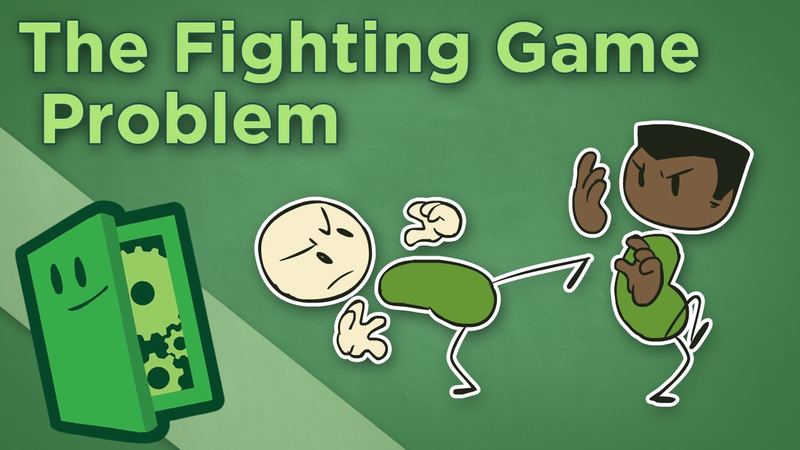
The Fighting Game Problem - How to Teach Complicated Mechanics - Extra Credits
Key insights
6 takeaways- 01Fighting games currently suffer from a high barrier to entry because they require players to memorize hundreds of button combinations and mechanics before they can engage in meaningful strategic play.
- 02Traditional tutorial systems relying on static text and practice rooms are ineffective at bridging the gap between novice button-mashing and the decision-making required for competitive play.
- 03Developers should utilize single-player campaigns as structured training grounds by adopting RPG-style progression, where players start with a limited move set and unlock abilities over time to ensure mastery of fundamentals.
- 04Without fundamental improvements to how complex mechanics are introduced, the genre risks continued isolation and limited market growth.
- 05Interactive design elements such as slow-motion prompts for reversals and rewind mechanics can help players learn to counter specific attacks without becoming overwhelmed.
- 06Implementing puzzle-based game modes can shift the focus from mechanical execution to strategic decision-making, better preparing players for high-level competition.
Ask AI about this video
Transcript
We haven't talked much about fighting games on this show because high-level fighting game design is often incomprehensible to anyone but designers and aficionados of the genre. And actually, that in and of itself is something we should talk about. At the highest levels, fighting games are a beautiful chess match. They aren't about reflexes, not really. They're about strategy, about move and counter move, about positioning and luring your enemy exactly where you want them to be. In many ways, they play more like a war game than what the layman thinks of as a fighting game. And this is where fighting games shine. If you're not a fighting game player and you've ever wondered why some of your friends are so enamored of the genre, this is why. This high-level play. This play that you've probably never experienced. And that's the rub. Fighting games are a niche genre. They have a small, intensely loyal fan base, but they don't reach anywhere near the audience they could. Why? Because most players never end up getting the play experience these games are designed around. Anyone who's ever tried to pick up a fighting game knows what an informational brick wall they tend to be. Before you can make any
meaningful choices or informed decisions, before you can think through strategy or come up with clever plays, you have to memorize dozens of moves, hundreds if you really want to know how all the characters play. You have to memorize the button combinations that fire off the moves, what triggers them, and what they do. This is an impossibly large amount of information to learn for most people. So, many people give up before they ever get to the real meat of fighting games. This is compounded by the tutorial system most fighting games tended to present us with. Because many games in the genre tended to be focused on the genre's core audience, the tutorials tend to be walls of text followed by a practice room where you can try out moves. That simply is not good enough for games of this level of complexity. We need to think about how we might better bring the player into the experience. To me, the single-player campaign seem like the perfect vehicle for addressing the problem. Right now, many fighting games simply present a single-player campaign that plays exactly like the multiplayer only with an AI opponent. The only concession these campaigns tend to make to new players is to ramp up the difficulty of the AI over time. We can do way better than that. If we think back to some of the concepts we discussed in our tutorials 101 episode, one of the most
important was the idea of breaking up how much information you're presenting the player, so you're not front-loading everything they have to know. This is what the single player in fighting games should be for. So, how do we do this? Well, I think an excellent example is the old brawler MMO Dungeon Fighter Online, which is being revived as we speak, if you guys hadn't heard. This was an MMO that used fighting game conventions for the combat, but otherwise relied on mechanics often associated with RPGs, most principally leveling. In this game, your character only started with one or two moves to memorize, and then slowly as you leveled, you'd acquire more. But, since leveling takes time, you'd have a while to get comfortable with your character's moves and really think through how to use them before you were given access to more. Then, you'd get time with those new moves while grinding out levels and getting loot before you were presented with anything else. By doing this, the player felt empowered rather than overwhelmed, and in the end, many players graduated up to that chess match level of play where fighting games shine, simply by not being expected to start there. The same general idea can be applied to concepts like reversals or cancels. Some games already build in single player levels where the enemies
can't be harmed except by pulling off one of these techniques, but we can do more to reinforce their use and to make them engaging. If you're using an RPG-like system, you can give bonus rewards for using these types of techniques, or you can make it so reversals and such give you a chance to steal an item or something. Even if you aren't using an RPG system, though, you could do things to help make players more aware of how to use these concepts. Things like having the game go into slow motion with a big reversal opportunity flashing on the screen when this concept is introduced. Or, you could do a Sands of Time thing, where when the player is defeated, the game rewinds to just before their last chance to interrupt the attack that killed them and tells them what to do. Heck, you could even have a puzzle mode where the player doesn't even have to execute the attacks. Instead, they get to see a few seconds of play, and then the game freezes, and they're given three choices of move for the player to do, and they have to choose the right one for the circumstance, thereby training the player to think through how their moves can be utilized and when to use which move. But, however you do it, the thing to recognize is that fighting games will never reach the audience they could until they do more to help people get to the level where they can experience real fighting game play. Fighting games need to move past being an informational
brick wall, a deluge of moves and techniques, and instead graduate their new players from the button masher to the type of player who can think through the problems that a fighting game presents and come up with their own strategies and responsive play. I propose that single player is the best place to do this, it being the safest space in the game, outside the pressures of competition or other people. A place that can be a training ground and a good time all at once. Because if we don't use our single player better, as fighting games become more complex, they're only going to become a smaller and smaller niche. And that would be pretty tragic. Catch you next week.
Summary
Fighting games are often defined by their high-level strategic depth, functioning more like complex war games or chess matches than simple tests of reflex. Despite this potential, the genre remains a niche market because of an extreme barrier to entry. New players are frequently confronted with an informational brick wall, requiring the memorization of hundreds of button combinations and mechanics before they can engage in meaningful strategic play. Current tutorial systems, which typically rely on static text and practice rooms, fail to bridge the gap between novice button-mashing and the sophisticated decision-making required for competitive play.
To expand the audience for fighting games, developers must rethink how they introduce complex mechanics. The single-player campaign serves as the ideal environment for this transition, provided it moves beyond simple AI-driven matches. By adopting design philosophies from other genres, such as the gradual skill acquisition found in role-playing games, developers can prevent information overload. For instance, limiting a player’s initial move set and unlocking new abilities over time allows for mastery of fundamental concepts before introducing more advanced techniques.
Furthermore, interactive design elements can reinforce learning without overwhelming the user. Techniques such as slow-motion prompts for reversals, rewind mechanics that teach players how to counter specific attacks, and puzzle-based modes that focus on strategic decision-making rather than execution can effectively train players. By transforming the single-player experience into a structured training ground, the genre can successfully guide players toward the strategic depth that defines high-level competition. Without such improvements, the increasing complexity of modern fighting games risks further isolating the genre and limiting its growth.















Comments