Player Behavior reports and market data
Documents

'Flirtual Reality' and designing for female gamers
The gaming industry is increasingly recognizing the significant economic potential of female players, a demographic that has historically been underserved.
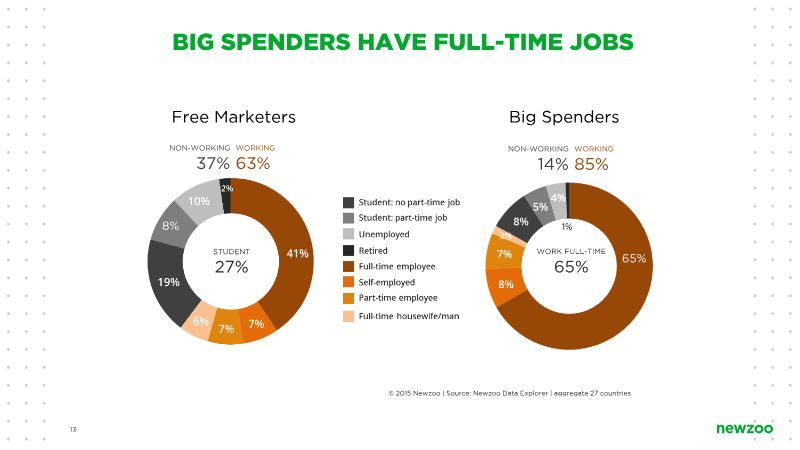
- Female gamers represent a high-value demographic, spending 35 percent more time in-game and 31 percent more on in-app purchases than male players.
- Effective engagement relies on prioritizing high-quality, innovative mechanics over gender-specific aesthetics or patronizing stereotypes.
- Game design should emphasize social interaction, deep customization, and clear progression paths to naturally attract and retain female users.

Understanding Your Player: Play Sessions - How Will People Play Your Game? - Extra Credits
Determining the ideal play session length is a critical design decision that directly influences player retention and overall game success.
- Design session length as a deliberate constraint that aligns with the player's lifestyle, platform, and core gameplay loop rather than treating it as an arbitrary metric.
- Games intended for high-frequency, multiple-times-daily play should prioritize short, satisfying sessions of approximately five minutes.
- Titles designed for daily engagement typically benefit from session lengths of 20 to 30 minutes.

Exit Points - Putting Down the Game - Extra Credits
Exit points represent a critical design concept in game development, defined as the natural junctures where a player chooses to stop playing, either for a single session or permanently.
- Designers must balance the inclusion of humane, intentional exit points with the minimization of unintended exit points that cause premature player abandonment.
- Unintended exit points are frequently caused by friction-heavy design choices, such as excessive loading times after failure or poorly placed save points.
- Rapid-fire respawn mechanics, exemplified by Super Meat Boy, effectively reduce frustration and prevent players from quitting during difficult gameplay segments.

Humane Design - Games Must Be Good to Their Players - Extra Credits
Game design carries a profound responsibility to treat players as human beings rather than mere revenue-generating engines.
- Game design should prioritize intrinsic player enjoyment over exploitative, habit-forming mechanics like Skinner boxes that treat users as revenue-generating engines.
- Successful titles such as Minecraft and Dota 2 demonstrate that long-term profitability and player loyalty are better achieved through genuine engagement rather than addictive loops.
- Designers should intentionally incorporate exit points and avoid punishing players for attending to real-world responsibilities to foster a healthier relationship with the audience.

2015 game user research summit
Game user research functions as a specialized discipline rooted in rigorous scientific methodology, primarily drawing from the fields of cognitive psychology, statistics, and data science.
- Game user research relies on rigorous scientific methodology, integrating principles from cognitive psychology, statistics, and data science to drive objective development decisions.
- Testing environments must be designed to mimic real-world conditions, such as domestic living rooms, to ensure that data accurately reflects how players interact with hardware and software.
- When testing with children, researchers must mitigate groupthink and peer-influence bias by separating participants or using structured, independent questioning techniques.

What Makes Us Roleplay? - Why Game Worlds Feel Real - Extra Credits
The primary challenge in game design is transitioning players from mechanical optimization to genuine roleplay, where decisions are driven by character persona rather than systemic rewards.
- To foster genuine roleplay, developers must move players away from mechanical optimization and toward decision-making driven by character persona.
- Incentivizing choices through mechanical rewards like alignment points often discourages immersion by forcing players to prioritize game-state progression over narrative consistency.
- Implementing permanent consequences for actions, such as the irreversible loss of a unit or a failed mission, forces players to treat the virtual environment as a consequential, living world.
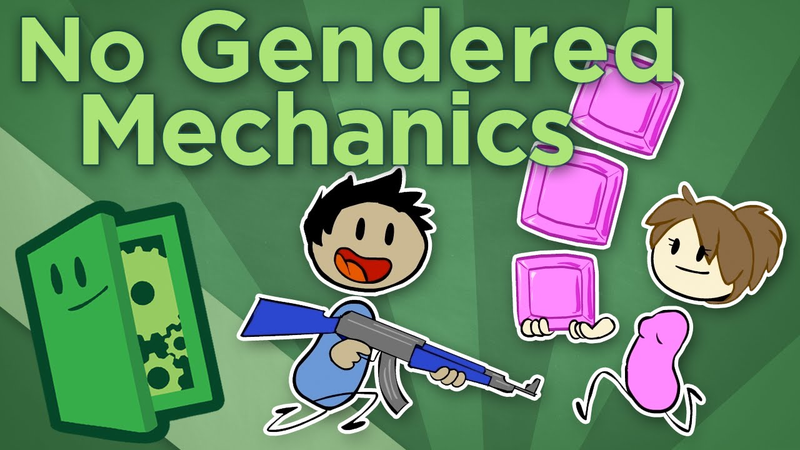
No Gendered Mechanics - How Genre Stereotypes Limit Games and Players - Extra Credits
The modern game industry is hindered by a pervasive, oversimplified belief that specific gameplay mechanics are inherently gendered.
- The game industry's practice of categorizing mechanics as inherently gendered—such as labeling shooters as masculine and match-three games as feminine—is a self-perpetuating cycle that restricts creative development.
- Gendered associations are products of cultural theming and marketing strategies rather than the mechanics themselves, which are inherently gender-neutral.
- Titles like Kingdom Hearts, Portal, and Puzzle Quest prove that mechanics can successfully attract diverse audiences when the thematic presentation is decoupled from traditional gender stereotypes.
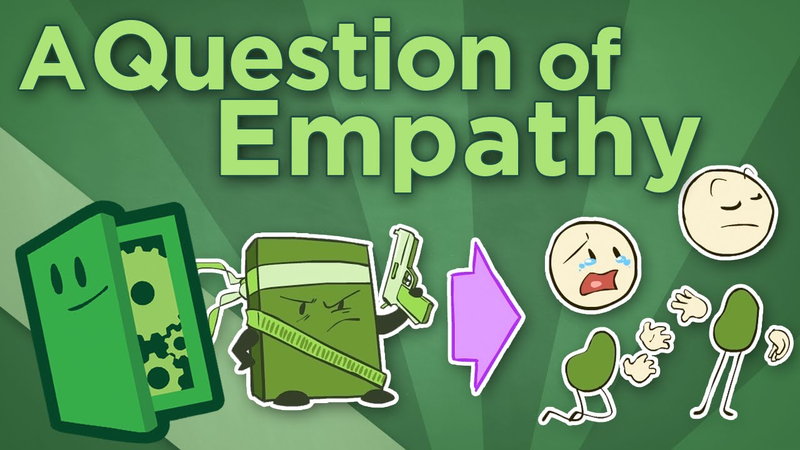
A Question of Empathy - Are There Positive Effects from Gaming? - Extra Credits
The discourse surrounding the relationship between video games and empathy is frequently dominated by studies focusing on potential negative correlations, such as a 2012 Brock University study involving 109 eighth-grade students.
- Video games provide a unique medium for experiential learning that allows players to inhabit the lives of others, potentially bridging the gap between intellectual sympathy and instinctual empathy.
- Games like 'Cart Life' and 'This War of Mine' demonstrate how interactive media can place players in complex, high-stakes scenarios to help them process grief, navigate poverty, and confront moral dilemmas.
- The 2012 Brock University study of 109 eighth-grade students, which suggested a link between violent games and lower empathy, demonstrates correlation rather than causation and fails to account for the possibility that individuals with lower baseline empathy may simply prefer violent media.


The Mobile Gaming Landscape 2015
The global mobile gaming market underwent a transformative expansion in 2015, surpassing $30 billion in total revenue as the industry transitioned from isolated platform silos toward a unified, cross-platform consumption model.
- The global mobile gaming market surpassed $30 billion in revenue in 2015, driven by a transition toward unified, cross-platform ecosystems.
- High-profile industry consolidation, such as Activision Blizzard’s acquisition of King, marks a shift toward integrated gaming business models.
- The Chinese market remains distinct and highly competitive, requiring developers to navigate a fragmented Android ecosystem and numerous local app stores dominated by Tencent and NetEase.
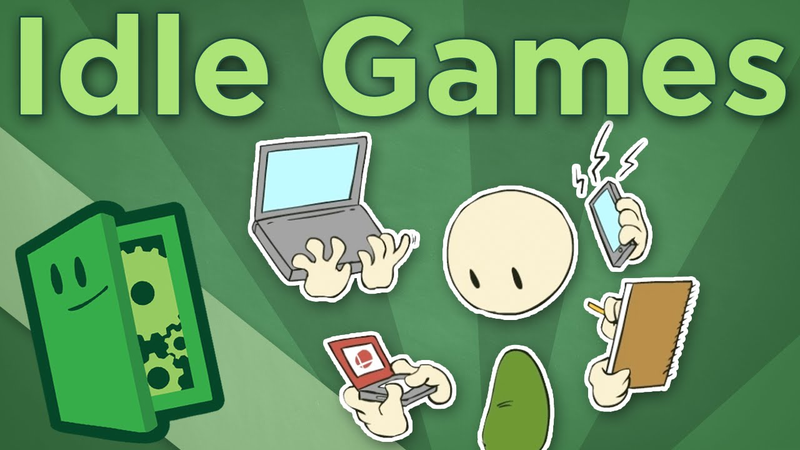
Idle Games - How Games Scratch Your Multitasking Itch - Extra Credits
Idle games have emerged as a significant genre by capitalizing on the modern psychological compulsion to multitask and the human desire for visible progress.
- Idle games succeed by catering to the modern compulsion to multitask, allowing players to maintain a sense of progress while performing other primary tasks.
- The genre functions as a low-stakes, persistent Skinner box that provides a continuous stream of rewards without the aggressive scheduling or monetization tactics common in other social games.
- The rise of idle games is driven by the ubiquity of mobile devices and tabbed browsing, which allow these titles to be seamlessly integrated into daily routines.
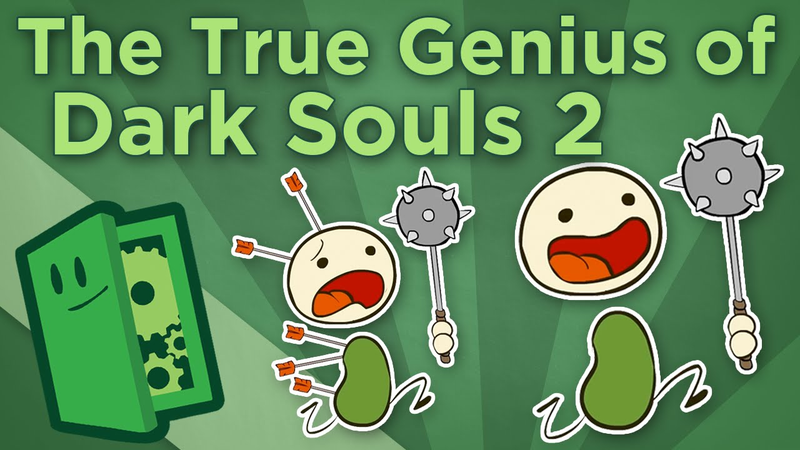
The True Genius of Dark Souls II - How to Approach Game Difficulty - Extra Credits
Game design often relies on static menu-based difficulty settings, a practice that forces players to make uninformed choices before experiencing the game’s mechanics.
- Traditional menu-based difficulty settings force players to make uninformed choices before they understand a game's mechanics, often leading to suboptimal experiences driven by ego rather than skill.
- Dynamic difficulty adjustment systems frequently fail to provide a satisfying sense of agency, as players often perceive them as patronizing or intrusive.
- Dark Souls II demonstrates that integrating difficulty management into core gameplay mechanics—such as character builds, equipment, and cooperative play—is more effective than static menu options.

Digging Deeper - Do Games Have Less Value than Other Media? - Extra Credits
The core thesis of this analysis is that video games are often perceived as having less cultural value than other media because players have been conditioned to passively consume them rather than critically engage with their content.
- Video games are often perceived as having lower cultural value because players have been conditioned to passively consume them rather than critically engage with their content.
- Gaming memories are frequently described as 'spiky,' consisting of long stretches of forgettable filler punctuated by brief, high-intensity moments, rather than the consistent narrative recall associated with books or film.
- The industry’s tendency to market games primarily as adrenaline-fueled escapism discourages the deep, analytical engagement necessary for audiences to appreciate complex narrative themes or 'mechanics as metaphor.'