1 free read left. Create a free account for unlimited reading + AI research.
Create free account
Free to Play Is Currently Broken - How High Costs Drive Players Away from F2P Games - Extra Credits
Key insights
6 takeaways- 01The current F2P model is unsustainable because it relies on less than 10 percent of the player base to generate over 90 percent of total revenue.
- 02Escalating user acquisition costs and development budgets are driven by intense competition for a limited pool of high-value spenders, leading to market instability.
- 03Aggressive targeting of 'whales' creates a negative feedback loop where the alienation of non-spending players forces developers to constantly increase advertising spend to replenish the user base.
- 04Monetization strategies that exploit human psychology to extract thousands of dollars from individual players are increasingly viewed as morally repugnant and detrimental to long-term game design.
- 05Long-term industry viability requires a shift toward monetizing the average player through modest transactions of five to ten dollars rather than relying on singular, massive purchases.
- 06Games like Hearthstone demonstrate that developers can successfully balance casual player engagement with high-spender monetization without resorting to predatory tactics.
Ask AI about this video
Transcript
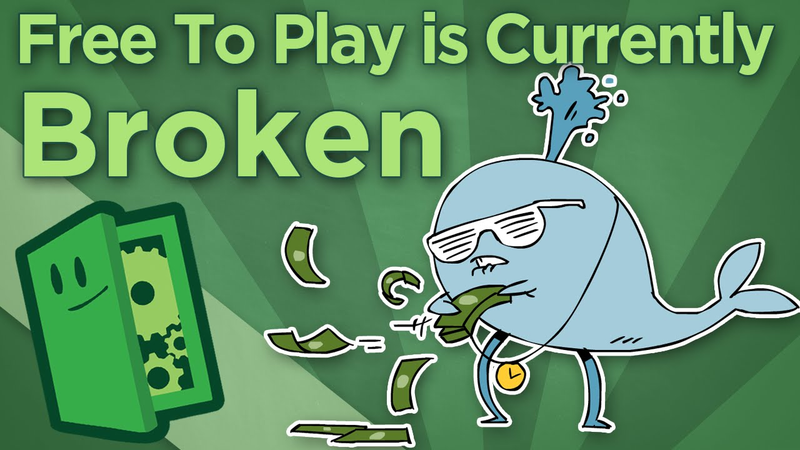
Uh, before we start, real quick, I forgot to put this in the episode itself. This is Dan Jones. He's doing the guest art for the episode this week. He's really cool. Okay, here we go. Okay, so if you watch this show, you probably know that we are believers in the free-to-play model. We think it has the potential to be one of the best things to happen to video games, allowing consumers to pay what they feel a game is worth, while at the same time making sure that game developers don't miss out on customers who might not be able to afford a full retail price, or customers who are willing to pay far, far more than standard retail value for an expanded experience. In an ideal scenario, this model is fantastic. That said, I've had enough. The current free-to-play model is just broken and morally wrong. James has consulted on plenty of free-to-play games, and they are all racing headlong toward the same precipice. You see, many of the free-to-play games of today make 90% or more of their revenues off of less than 10% of their audience. They depend on what they call whales, the people who will spend thousands of dollars on their games. And this mentality is breaking the model for the consumer. It's making
it unprofitable for the businesses trying to compete in it, and it's just morally repugnant anyway. It is something we should be ashamed of. So, let's talk about why this is just bad business, as I think that may resonate most with some of those making these games. So, here's the problem. You've gotten yourself into a free-to-play arms race. There's a limited number of whales out there, and everybody needs them to sustain their games, which means everyone is trying to out-compete each other for these whales. I hate that term. This has led to skyrocketing budgets for free-to-play titles, especially in the mobile and social world, and user acquisition costs that simply climb year after year as incentives and ad space simultaneously become more expensive and less effective. This arms race has, in turn, led us to create games that cater to the whales specifically. Many games in the free-to-play space have moved further and further from allowing a five or ten-dollar purchase to create a satisfying experience for the customer, instead focusing on creating a dominant experience for players who are willing to drop hundreds, if not thousands of dollars in a month. This lack of play for anybody not willing or able to pony up that kind of cash, in turn, means
that the non-whale sections of the player base are getting turned away from these games, which not only causes these games to lose revenue from those customers, but also causes these games to lose those players as content for the whales, which is essential because most of what the whales are looking for from their large-scale expenditures is the satisfaction of helping or crushing these other players. This exodus of the low-spending player and the free player, because of the lack of ability to access a satisfying experience, after a while, leads to higher rates just quitting the game. But, since these players are essential to creating the experience the whale is looking for, it becomes necessary for the company making the game to acquire new players as fast as the old ones are turned out. This, in turn, leads to higher advertising costs and a further increase in user acquisition costs as players cycle out and companies have to reach further and further afield to find the players to serve as content for the whales. The center will not hold. If the free-to-play market continues this way, it is going to collapse in on itself. If the free-to-play industry wants to survive, we have to look to the average player. As designers, I'm not even remotely saying that I think we should
think of these experiences being free. Heck, even as a consumer, I don't think we should think of these experiences as being free. I'm okay spending $5, $10 on a game. I mean, I already buy games all the time for 60 bucks, and I'm happy to pay that for a good game. But, that should be the sort of investment that we should be looking for from our consumer, not $5,000 chunks. Listen, I will be the first person to say I think that the people who decry free-to-play games for not actually being free, who bemoan and badmouth free-to-play companies for not simply giving them a product that cost a company a million dollars to make are acting super entitled. I'll even admit this is one of the hurdles we're going to have to overcome as this sort of entitlement has become a somewhat ingrained part of our internet culture. But, I will also be the first person to defend everybody who says they won't play free-to-play games because they can't afford to actually play them. In the current market with the current standard business model, they're right. I don't have the numbers for it, but I'm willing to wager fairly heavily that more than 10% of Blizzard's revenue from Hearthstone comes from players who spend less than $50 a month on that game. In fact, I'd wager it's far, far north of
that. Why? Because they crafted a satisfying experience that the player can have for $2, and they didn't exclude the whales, either. They didn't exclude the people who wanted to immediately build the best deck and are willing to drop $1,000 to get it right away, but they didn't make themselves slaves to those players, either. That is the sustainable, beneficial free-to-play of the future. I know I sound like I'm mad about this, and I am a little bit. Even beyond the sustainable business issue, I would also argue that today's free-to-play world has crossed a moral line. We have free-to-play games accused of trying to trick children into spending their parents' money and of bankrupting people. Look, I don't begrudge anyone spending money to find joy or a little escapism. I'd be a hypocrite if I did. But, when you're making games and you stop talking about joy or fun or engagement in the office, and instead start talking about how to part people from tens of thousands of dollars of their money for something completely ephemeral, something which is often not even permanent within your game, you have gone down the wrong path. There are plenty of ways to play on the human psyche to part the insecure, the over-rich, or the lonely from their
money, but that is not what games are about. And mark my words, when you are looking to get a person to part with $10,000 for something like bragging rights or virtual friends, there's no way you're doing it without intentionally exploiting the worst parts of the human psyche. And you know it, and you're doing it consciously when you're putting together your design. Is that why any of us decided we wanted to make these things? Look, there are many of us in this industry making a very good living without having to cross that line. A new monetization model doesn't mean we have to compromise that. And we've said it over and over again, this model has incredible potential. Numerous studios are proving it right now. Blizzard, Riot, Valve, Wargaming, Sony, Spry Fox, Grinding Gear Games, this model can be consumer-friendly and incredibly successful without resorting to the predatory tactics. Just for your own sake, knock it off.
Summary
The current free-to-play (F2P) business model is fundamentally flawed and unsustainable due to an over-reliance on a small percentage of high-spending users, commonly referred to as whales. While the F2P model holds significant potential for consumer-friendly monetization, the industry has shifted toward an aggressive, predatory strategy where games generate over 90 percent of their revenue from less than 10 percent of their player base. This approach creates a volatile cycle of rising user acquisition costs and escalating development budgets, as companies compete for a limited pool of high-value spenders.
This reliance on whales creates a negative feedback loop that alienates the broader player base. Because non-spending or low-spending players are essential for providing the social content and competitive environment that whales desire, their exodus from these games forces developers to constantly spend more on advertising to replenish the population. This creates an unstable market that is increasingly prone to collapse. Furthermore, the focus on extracting thousands of dollars from individual players often necessitates the exploitation of human psychology, which is described as morally repugnant and contrary to the core purpose of game design.
To ensure long-term viability, the industry must pivot toward models that provide a satisfying experience for the average player who is willing to spend modest amounts, such as five to ten dollars, rather than targeting massive, singular transactions. Successful examples like Hearthstone demonstrate that it is possible to cater to both casual players and high-spenders without resorting to predatory tactics. By prioritizing engagement and fun over the exploitation of vulnerable users, developers can build sustainable, profitable, and ethically sound businesses that fulfill the original promise of the free-to-play model.
















Comments