1 free read left. Create a free account for unlimited reading + AI research.
Create free account
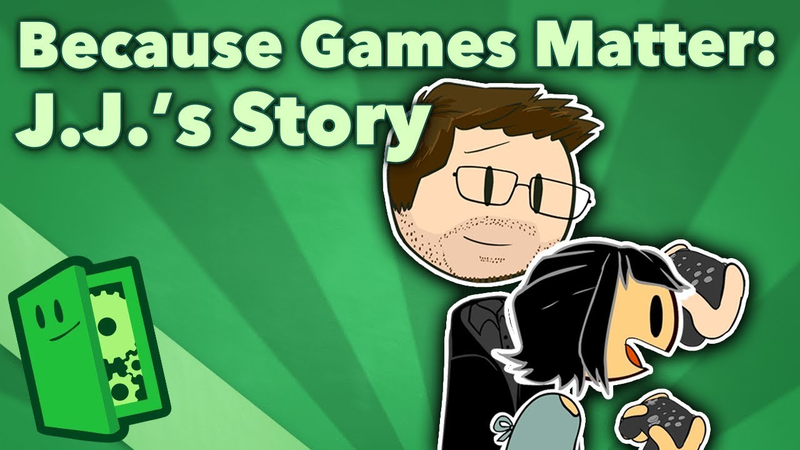
Because Games Matter - J.J.'s Story - Extra Credits
Key insights
5 takeaways- 01The integration of digital technology in pediatric care includes diverse initiatives such as coding lessons, virtual reality, and volunteer-led gaming sessions.
- 02Gaming technology transforms clinical environments into spaces of empowerment, proving that play is a vital component of the pediatric recovery process.
- 03The C.S. Mott Therapeutic Gaming and Digital Technology Program, pioneered by child life specialist J.J. Bouchard, now serves over 3,000 pediatric patients annually.
- 04Therapeutic gaming in clinical settings acts as a critical tool for managing patient stress and pain while normalizing the hospital experience for children.
- 05Child’s Play Charity has expanded the reach of this practice by providing gaming equipment and funding specialized technology positions in approximately 180 hospitals globally.
Ask AI about this video
Transcript
Every year around this time, we share stories of people whose lives have been profoundly impacted by games, showing the real world the good that games can do. So, this year, we're going to start with JJ's story. My name is JJ Bouchard. I'm a certified child life specialist, certified therapeutic recreation specialist, and the patient technology coordinator at C.S. Mott Children's Hospital in Ann Arbor, Michigan. When I was 7, I was diagnosed with type 1 diabetes, and I spent a week at the very hospital I work at now. I was told I could no longer eat candy, and that I'd have to get multiple shots every single day. But, video games helped me get through it. And now, I use video games to help children face illness every day. That week in the hospital, I got poked many times. I was scared. I hated the food. But, my second day there, an activity therapist named Jerry Reed invited me to the hospital playroom. And it was then he introduced me to my first video game ever, Pitfall for the Atari 2600. I was in love. I
spent as much time in the playroom as I could, and I quickly made friends with other patients who were also excited about the game. While playing, my friends and I would talk about our experiences in the hospital, and I no longer felt as scared or alone. Then, when I went home, video games became a big part of my life. My mom even used the promise of purchasing Double Dragon 2 for the Nintendo as incentive for me to give myself my first insulin injection. Fast forward 20 years, and inspired by Jerry and his amazing ability to use video games and toys to make the hospital a fun place, I became a certified child life specialist. My job is to help normalize the hospital experience for patients and families. We provide patients with games and activities to help pass the time. We teach them coping techniques for dealing with painful procedures, and we actively engage them in play while things like shots and stitches are being performed. We also help them cope with the realities of death and dying. It can be a very intense job, but at the very core of it, we're simply trying to make the patients feel safe, empowered, and find some joy. When I started, most child
life specialists used traditional toys like bubbles, I spy books, and a television to help distract patients during painful procedures. Now, these techniques worked well for younger children, but twins and teens often had a hard time due to the lack of engaging distractions. Looking back at my history, I remembered how much video games helped me when I was struggling with injections. So, I began to bring Xbox 360s, Game Boys, and Wiis into the procedure room for patients to use while they were getting spinal taps, IV starts, and stitches. At first, the nurses looked at me like I was crazy, but once they saw how engrossed the patients were in the games and how compliant they were during the procedures, they all got on board. Many patients who used to kick and scream when they had to get poked now sat still and even reported not feeling the injection because they were so engrossed in the game. We soon began to see the benefits of gaming outside procedure support. Patients who I played video games with were much quicker to open up and talk about their hopes and fears. It was as if having a video game to play while talking made the counseling process less formal and intimidating.
Patients also became much more active while playing games because instead of lying in bed watching TV, they were sitting up and using fine and gross motor movements to solve problems. And the games had an added social benefit as well. Patients would often gather around a screen in our activity room and get to know each other through play. And patients' family members had something to do with them when they came to the hospital. In fact, many of the patients' siblings, who were initially scared to visit, were now excited to visit the hospital to come play games with their brother or sister. Then in 2013, I was inspired by a lecture given by Lou Borges, the patient technology coordinator at Mount Sinai Kravis Children's Hospital. Lou's primary role was to support all of the tablets and gaming technology that the child life team was using. And he was able to educate the team about gaming technology so that they could better integrate it into their clinical practice. And it made me wonder, what if I, a trained clinician, could do something similar at my hospital. Then in 2015, things really took a turn for the amazing. I was working my dream job running an activity room at C.S. Mott Children's Hospital,
the very role Jerry had had 25 years earlier, when the Mott Golf Classic Charity announced that they were going to be putting an Xbox 360 in every patient's room. Here was my chance to advocate for a position solely dedicated to overseeing all of the recreational technology in the hospital and educating the staff on how to integrate that technology into their therapeutic practice. And to my delight, our administrators loved the idea. They created the position for me, and with funding from the Mott Golf Classic, the C.S. Mott Therapeutic Gaming and Digital Technology Program was created. And over the next 3 years, I worked tirelessly to engage our local gaming community to help support our patients and families. An after-school program named Game Start School began providing bedside coding lessons and VR experiences. The nonprofit Gamers Outreach started a program called Player 2, where local gamers could volunteer to play video games with patients. And we started a monthly event called Mott Arcade, where we invited all of the patients and their families to play social video games on
big projector screens while enjoying snacks and each others company. We typically get between 50 and 80 patients attending every event. Then in 2016, Eric Blandin from the Child's Play Charity visited our hospital and said he was inspired by the work people like Lou and I were doing. At the time, Boston Children's Hospital was the only other hospital that we knew of with a similar position. But then the Child's Play Charity made it their mission to help create and support patient technology positions like ours all over the world. Since then, they have provided grant funding for almost 20 positions, including two more at C.S. Mott Children's Hospital. And last year alone, our patient technology team provided therapeutic video game activities for over 3,000 patients. I can't imagine what my life would have been like if I hadn't been diagnosed with diabetes, admitted to the hospital, met Jerry, and played Pitfall. Thanks to those fateful turn of events and the hundreds and thousands of gamers who support charities like Child's Play, I'm lucky enough to be at the center of the evolution of a new way of managing the
stress and pain of being in the hospital. In a field that allows gamers to use their passion for video games to make a significantly positive impact on hospitalized kids and teens all over the world. Thank you, J.J., for sharing your story with us and for dedicating your life to the betterment of others through games. And if you at home would like to help this cause, please check out Child's Play Charities via the link below. Not only does Child's Play support hospitals with the gift of games and toys through their wish list program, but they also provide annual monetary donations to 180 hospitals to help purchase technology and equipment needed to enhance the patient experience. And with the help of folks like you, they can continue to improve the lives of children in hospitals and domestic violence shelters through the power of play and the generosity of the gaming community. So, if you're able, please donate towards this amazing cause and help make some difficult days for children a little brighter.
Summary
The therapeutic application of video games in pediatric healthcare serves as a powerful tool for managing patient stress, pain, and emotional isolation. By integrating gaming technology into clinical environments, healthcare professionals can normalize the hospital experience, provide effective distraction during painful procedures, and foster social connections among patients and their families. This approach transforms the hospital from a site of fear into a space of empowerment and engagement, demonstrating that play is a vital component of pediatric recovery.
The narrative of J.J. Bouchard, a certified child life specialist at C.S. Mott Children’s Hospital, illustrates the evolution of this practice. Initially introduced to gaming as a young patient, Bouchard later pioneered the use of consoles and digital technology to assist children undergoing medical procedures. His efforts led to the creation of the C.S. Mott Therapeutic Gaming and Digital Technology Program, which utilizes coding lessons, virtual reality, and volunteer-led gaming sessions to support patients. These initiatives have proven highly effective, with the program now serving over 3,000 patients annually.
The broader impact of this movement is supported by organizations like Child’s Play Charity, which facilitates the integration of gaming technology into medical settings globally. By funding specialized patient technology positions and providing equipment to approximately 180 hospitals, these efforts have expanded the reach of therapeutic gaming. The success of these programs highlights a significant shift in pediatric care, where the gaming community’s generosity directly contributes to improved patient outcomes and emotional well-being for children facing serious illness.