Player Behavior
Documents
East vs. West: Monetization Trends
The study examines how mobile gaming spending patterns differ between Eastern and Western markets, focusing on frequency of purchases, average spend per transaction, and motivational drivers. Findings reveal that Eastern gamers purchase in‑app items more often than Western players; 35 % of East spend frequently versus 36 % in the West, with a higher proportion of occasional and rare spenders in the West. When it comes to transaction size, Eastern users tend to pay more per purchase: 76 % spend over $10 compared with only 42 % of Western users, while a smaller share of East spend under $5 (30 %) versus 8 % in the West. Motivational analysis shows that Western gamers prioritize value and bundles, whereas Eastern players are more attracted to exclusivity, limited‑time items, new offers, and character acquisition. The research covers key markets in Asia—Korea and Japan—and Western regions including the United States, United Kingdom, and broader Europe. Data were collected through a survey of mobile gamers across these regions, with sample sizes sufficient to compare spending behaviors and motivations. The report concludes that monetization strategies should be tailored regionally: value‑based bundles may resonate better in the West, while exclusive content and limited editions could drive higher spend in Eastern markets.
- Eastern mobile gamers demonstrate a significantly higher propensity for large transactions, with 76% of purchases exceeding $10 compared to only 42% in Western markets.
- Western mobile gamers are more likely to make small-scale purchases, with 8% of spenders in the West opting for transactions under $5, contrasted with 30% in the East.
- Monetization strategies in the West should prioritize value-based bundles, as these resonate more effectively with the purchasing preferences of Western players.
- Eastern markets, specifically Korea and Japan, show a stronger consumer preference for exclusivity, limited-time offers, and character acquisition.
- Purchase frequency remains relatively balanced across regions, with 35% of Eastern gamers and 36% of Western gamers identified as frequent spenders.
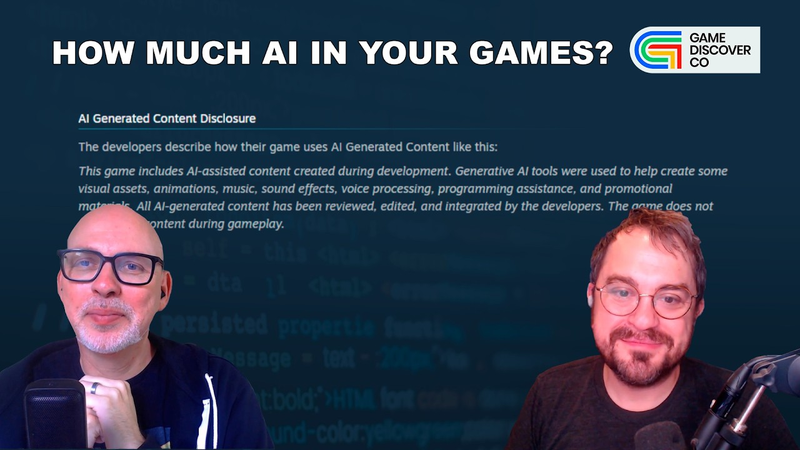
What Good Are AI NPCs?: Lessons from a Large-scale Player Study
The study demonstrates that generative AI‑driven non‑player characters can deliver deeply engaging, emotionally resonant gameplay. In a 122‑hour experiment with 68 participants, the “Dead Meat” demo achieved high immersion scores—97 % UES reward and 94 % focused attention—while keeping mental demand low (NASA‑TLX scores of 64.7 for demand and 52.7 for performance). Qualitative interviews consistently cited the NPCs’ human‑like dialogue and narrative depth as key contributors to player enjoyment.
Quantitative data confirm widespread satisfaction: 96 % of players rated overall enjoyment as high, and 90 % praised the creative freedom afforded by the open‑ended design. Subscale analysis of the GUESS instrument revealed that 60 % achieved a top score for Creative Freedom, 65 % for Personal Gratification, and 80 % for Play Engrossment. Thematic coding identified freedom of expression, challenge‑driven motivation, and immersive conversation as primary drivers of satisfaction, indicating that the game successfully balances agency with sufficient guidance.
Player behavior analysis uncovered seven distinct strategic approaches—such as “Good Cop/Bad Cop” interrogation, “Rule Bender End Justifies the Means,” and “Smart Arse” manipulation—often combined within a single session. Participants responded equally to voiced and text‑based NPCs, and the 20‑minute session length encouraged replayability through role‑playing different characters. Although the brief duration limited long‑term insight, emergent strategies were viewed as a feature rather than a flaw. Future research will explore how authorial adjustments influence player responses across demographic groups, reinforcing the potential of AI NPCs to enrich narrative gameplay on a broad scale.
- Generative AI NPCs drive high player engagement, with 97% of participants reporting high immersion and 96% rating their overall enjoyment as high.
- The integration of AI NPCs maintains a balance between agency and guidance, as evidenced by 80% of players achieving top scores for play engrossment and 90% praising the creative freedom of the open-ended design.
- Cognitive load remains manageable during AI-driven interactions, with participants reporting NASA-TLX mental demand scores of 64.7 and performance scores of 52.7.
- Players adopt diverse, emergent interaction strategies, including interrogation, manipulation, and rule-bending, which suggests that AI NPCs support complex, role-playing-heavy gameplay.
- Player satisfaction is consistent across communication formats, as participants responded equally well to both voiced and text-based AI NPC interactions.
The 2026 State of Web Gaming Report: A Study of Developer and Gamer Perceptions
The study demonstrates that web gaming has evolved from a niche, low‑quality outlet into a central discovery and revenue engine for the industry. Across 2,000 gamers and 400 developers surveyed in 2026, data reveal that 62 % of players discover new titles via the web and 53 % spend more than $50 monthly on games, underscoring a highly engaged, high‑spending audience. Ninety percent of players find games online, yet only 53 % of studios plan to port mobile titles to browsers within a year, highlighting a perception gap between consumer enthusiasm and developer adoption.
Web games thrive in an attention‑saturated media environment because they are short, low‑friction, and can be updated instantly to capture cultural moments. More than half of players listen to music or watch shows while gaming, and 38 % use social media simultaneously, positioning web games as a complementary entertainment layer. Developers cite discoverability (46 %) and gateway potential to other platforms (44 %) as key strengths, while rapid iteration and zero‑install access drive engagement and revenue. Monetisation maturity remains a barrier, yet the medium’s ability to reach players at the top of the purchase funnel is clear.
The data also show that web gaming no longer represents a low‑quality channel; 92 % of players rate HTML5 titles as high quality, and 37 % play multiple times a day. Web platforms drive discovery for 62 % of players, and high‑spending consumers are increasingly found online. Consequently, developers who omit web distribution risk missing a growing, engaged, and monetisable audience that now sits at the forefront of the purchase funnel.
- Web gaming is a significant discovery channel: 62% of web gamers have downloaded or purchased a game after discovering it on the web, and 53% of developers see it as a means to reach new players.
- Web gamers are highly engaged and valuable: 37% play multiple times per day, 86% play at least a few times a week, and 53% spend over $50 on gaming purchases monthly.
- Developers are increasingly embracing web gaming, with 27% planning to port mobile games to browsers in the next 12 months, and 56% agreeing it's a growing channel.
- There's a disconnect between some developer perceptions and reality: 32% of developers believe web gaming is a 'low-quality channel' despite 92% of consumers rating HTML5 web games as 'quite' or 'very' high quality.
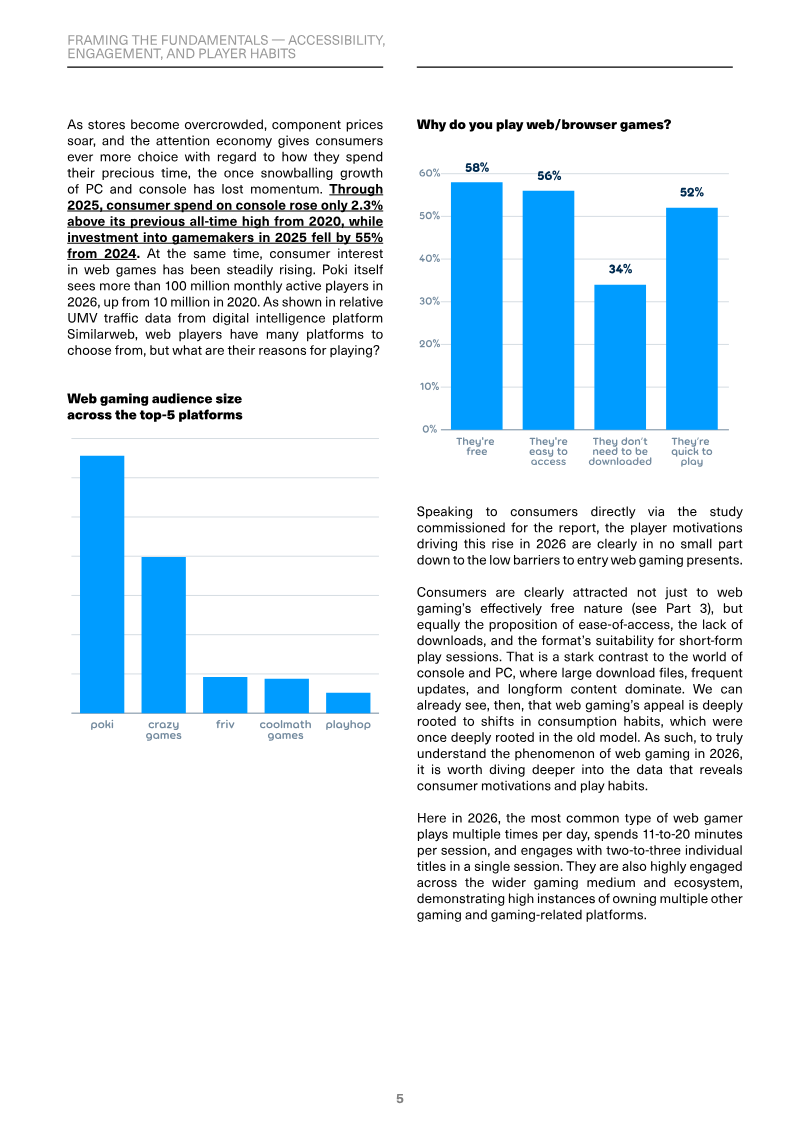
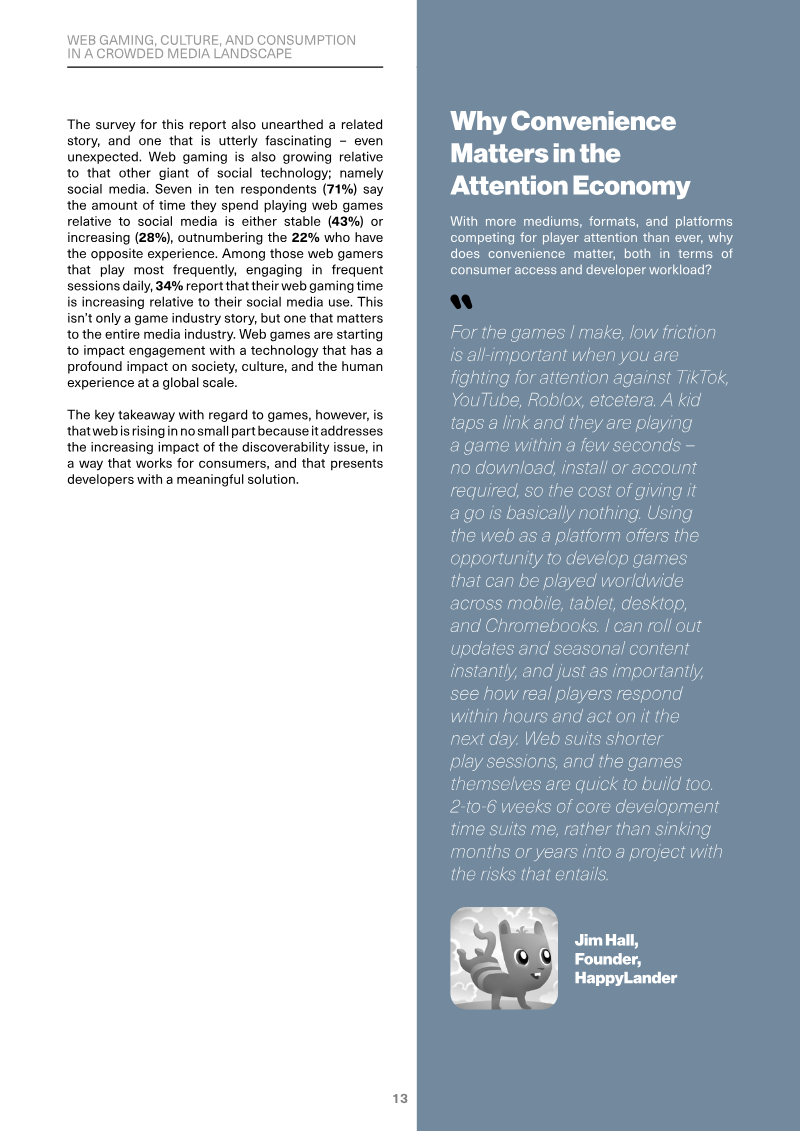
- Web gaming offers low-friction access and high convenience, with 71% of respondents reporting stable or increasing web gaming time relative to social media, and 58% playing because games are free.
Why Players Play: The Psychology Behind Mobile Games
Mobile game development relies on the strategic alignment of product features with fundamental human psychological drivers to maximize player retention and monetization. By integrating core motivations such as mastery, curiosity, and social connection with defensive psychological triggers like loss aversion and the fear of missing out, developers create highly sticky ecosystems. The primary thesis posits that long-term success in the mobile sector is not merely a product of gameplay quality, but the result of a deliberate, evidence-based architecture that increases the perceived cost of player attrition.
The industry utilizes a sophisticated framework known as the Motivation Wheel to categorize game events and align them with specific business objectives, such as increasing average revenue per user or extending session duration. This approach sequences positive reinforcement—such as visible progress and reward systems—with negative motivators that compel action. By layering these mechanics, developers effectively transform natural session exit points into persistent hooks. Features like battle passes, streaks, and time-limited events leverage the sunk cost fallacy, shifting the player’s primary motivation from intrinsic enjoyment to a defensive necessity to protect accumulated progress.
This analytical approach to game design is prevalent across the global mobile gaming market, focusing on the intersection of behavioral psychology and product management. By systematically engineering these psychological deficits, developers ensure that engagement remains high even after the initial novelty of a game fades. Ultimately, the integration of these mechanics serves to minimize guesswork in product planning, allowing studios to foster deep, long-term player investment through the calculated application of urgency, social pressure, and the psychological weight of digital achievement.
- Social connection is the most effective retention mechanic because it creates a switching cost that prevents players from moving to competitors, as they cannot transfer their clan or community identity.
- Win streaks are the most powerful ARPU-driving mechanic because they simultaneously leverage progress, near-miss tension, loss aversion, urgency, and social pressure.
- Visible progress is essential for casual games; players require concrete proxies like progress maps, star counts, or numerical growth to feel a sense of competence and reward.
- Retention can be extended at natural session 'exit points' by using time-limited boosters or curiosity-driven teasers to convert a sense of completion into a new hook.
- Urgency and FOMO are most effective when the time-limited window is restricted to 5–20% of the total event duration, forcing players to choose between missing out or playing harder.
State of the LATAM Games Industry 2026
Latin America has solidified its position as a formidable force in the global gaming landscape, transitioning from a peripheral source of cost-effective labor to a sophisticated hub of creative innovation and live service expertise. Driven by massive, mobile-first player populations in Brazil and Mexico, the region is increasingly defined by high levels of community engagement and a thriving esports culture. While economic challenges such as currency volatility and limited infrastructure persist, the industry is successfully pivoting toward sustainable, long-term business models that prioritize authentic, socially integrated experiences over traditional, short-term monetization strategies.
The regional ecosystem is characterized by a strategic shift toward self-publishing and advanced Live Ops, supported by a deep pool of engineering talent that is increasingly utilizing artificial intelligence to enhance production efficiency. Although major hubs like Brazil and Mexico anchor the market, smaller nations such as Argentina and Ecuador are gaining international visibility through indie innovation and strategic global partnerships. This evolution reflects a broader maturation of the industry, where developers are moving beyond simple localization to address the specific technological and cultural nuances of individual domestic markets.
Success within this territory requires a departure from standardized global frameworks in favor of localized strategies that account for unique payment preferences and regional economic constraints. Despite systemic hurdles regarding access to specialized venture capital and user acquisition, the region offers significant growth potential for developers who commit to long-term engagement. By fostering trust and prioritizing accessibility, the Latin American gaming sector is effectively countering the stagnation currently impacting global mobile markets, establishing itself as a vital, influential player in the international creative economy.
- Brazil and Mexico serve as the region's primary anchors, with Brazil driving engagement across all platforms and Mexico acting as a commercial gateway for global publishers.
- Mexico's gaming industry generated $1.27 billion in revenue in 2024, with mobile and tablet devices accounting for 72% of all gaming activity.
- Brazil hosts a robust ecosystem of over 1,000 developers, while indie game creation in Mexico grew by 30% year-over-year in 2023.
- Successful regional studios like Chile-based TinyBytes have achieved significant scale, with over 100 million downloads and $40 million in lifetime gross revenue from titles like Massive Warfare.
- Growth in the LATAM market is frequently driven by localized payment methods, such as PIX in Brazil and OXXO in Mexico, which are essential for reducing friction in price-sensitive, mobile-first economies.
Bilan du Marché Français: 2025
The French video game market demonstrated significant resilience in 2025, generating €5.856 billion in total revenue, a 2.9% increase over the previous year. This performance marks the second-highest in the industry’s history, solidifying its position as a cornerstone of the national cultural economy. Growth was primarily fueled by a rebound in console hardware sales and a record-breaking 11% surge in the mobile sector, which reached €1.792 billion. The market maintains a balanced ecosystem, with consoles commanding a 44% share, followed by mobile at 31% and PC gaming at 26%.
Software remains the primary revenue driver, accounting for over two-thirds of the total market. While physical game sales faced a double-digit decline, this was effectively mitigated by the expansion of digital content, including microtransactions and downloadable content. Electronic Arts emerged as the leading publisher across console and PC platforms, while the mobile landscape remains almost entirely dominated by free-to-play models, which now represent 94% of mobile revenue.
The industry’s reach expanded to 40.2 million players, characterized by a maturing demographic where adults comprise 88% of the base. High engagement levels persist, with 76% of players gaming on a weekly basis and a growing trend toward cross-platform usage. Alongside this growth, there is a heightened emphasis on responsible gaming. Parental involvement has reached new heights, with 67% of parents actively monitoring gaming habits through PEGI classifications and standardized parental control tools. This commitment to safety, supported by organizations like the SELL and events such as Paris Games Week, ensures that the industry continues to thrive as a mature, socially responsible, and culturally significant sector within France.
- The French video game market reached €5.856 billion in 2025, a 2.9% year-over-year increase and the second-highest revenue in the industry's history.
- Mobile gaming experienced an 11% surge to reach €1.792 billion, with free-to-play models accounting for 94% of that sector's total revenue.
- Market share is distributed across consoles (44%), mobile (31%), and PC (26%), with software sales—driven by digital content and microtransactions—comprising over two-thirds of total revenue.
- The player base has expanded to 40.2 million people, 88% of whom are adults, with 76% of all players engaging with games on a weekly basis.
- Physical game sales suffered a double-digit decline in 2025, necessitating a shift toward digital distribution and downloadable content strategies.
Game no Yakusoku Communication Book
The evolution of gaming from localized, offline experiences to global, interconnected online environments necessitates a modern approach to parental guidance and family communication. The primary purpose of this guide is to bridge the generational gap between parents and children by providing a framework for establishing mutually agreed-upon rules for safe and responsible gaming. It emphasizes that while the technology and accessibility of games have shifted from television-bound consoles to ubiquitous mobile and cross-platform devices, the fundamental need for trust and clear boundaries remains constant.
The analysis highlights significant shifts in the gaming landscape, noting that modern play is no longer restricted by age, geography, or hardware limitations. Because online environments allow for real-time interaction with diverse global participants, the risks and social dynamics have become more complex. To address this, the guide advocates for a collaborative rule-setting process that prioritizes the child’s developmental stage and specific gaming context. Effective agreements should be flexible, evolving alongside the child’s maturity, and should be rooted in open dialogue rather than rigid, top-down restrictions that may fail to account for the realities of online events or social gaming commitments.
Furthermore, the guide underscores the importance of digital literacy for parents, encouraging them to familiarize themselves with common gaming terminology and technical concepts such as in-app purchases, server stability, and online etiquette. By understanding these elements, parents can provide more informed advice regarding security, privacy, and behavior. Ultimately, the document concludes that gaming rules should function as a shared commitment to safety and mutual respect, ensuring that the gaming experience remains a positive and secure activity for children as they navigate increasingly sophisticated digital worlds.
- Modern gaming requires a shift from rigid, top-down restrictions to a collaborative rule-setting process that evolves alongside a child’s developmental maturity.
- The transition from localized, offline play to global, interconnected online environments has increased the complexity of social dynamics and safety risks for children.
- Effective family gaming agreements must be flexible enough to account for the realities of real-time online events and social gaming commitments.
- Parents should prioritize digital literacy by familiarizing themselves with technical concepts such as in-app purchases, server stability, and online etiquette to provide informed guidance.
- Establishing trust and clear boundaries remains the fundamental requirement for safe gaming, regardless of whether the platform is a console or a mobile device.
Videogiocatori in Italia
The Italian gaming landscape is characterized by a strong emphasis on the psychological and social benefits of interactive entertainment. Based on a survey of 1,012 Italian gamers, which forms part of a broader 12-country study involving 12,847 active weekly players, the research highlights that gaming serves as a vital tool for stress relief, cognitive stimulation, and social connection. A significant majority of respondents report that gaming alleviates stress and anxiety, fosters creativity, and enhances problem-solving skills, with 69% of participants noting that the medium stimulates the mind and improves teamwork capabilities.
Social interaction remains a cornerstone of the Italian gaming experience. While solitary play is common on a daily basis, approximately half of the respondents prefer engaging with others through online platforms on a weekly basis. This social dimension is particularly prevalent among male gamers, who show a higher propensity for online multiplayer interaction. Furthermore, the data indicates that gaming acts as a bridge for building new relationships, with many users reporting that they have formed lasting friendships or met significant partners through in-game experiences.
The demographic reach of gaming in Italy is broad, though usage patterns vary by age and gender. Engagement is most concentrated within the 19-34 age bracket, and there is a notable adoption of in-game communication tools, particularly among male players. Ultimately, the findings suggest that gaming is perceived not merely as a pastime, but as a constructive activity that supports mental well-being, facilitates personal development, and provides a reliable framework for community building in an increasingly digital society.
- 69% of Italian gamers report that interactive entertainment stimulates the mind and improves teamwork capabilities.
- Gaming is primarily utilized as a tool for stress relief, anxiety reduction, and the enhancement of cognitive skills like creativity and problem-solving.
- Approximately 50% of Italian gamers engage in online multiplayer sessions on a weekly basis, highlighting the medium's role as a social platform.
- The 19-34 age demographic represents the most concentrated segment of gaming engagement in Italy.
- In-game environments serve as significant social hubs, with many users reporting the formation of lasting friendships and romantic partnerships through digital play.
Video Games as a Tool for Mental Resilience: Italy
Video games serve as a significant mechanism for mental resilience and emotional regulation among the Italian population. A survey of 1,021 respondents aged 16 and older reveals that a substantial majority of Italian players utilize gaming to mitigate negative psychological states. Specifically, 71% of participants report that gaming helps reduce stress, while 60% use it to manage anxiety and 49% rely on it to combat feelings of isolation. These figures demonstrate that gaming functions as a vital outlet for navigating everyday challenges and difficult life transitions, with 50% of respondents explicitly noting that the medium helps them endure personal hardships.
The demographic profile of the Italian gaming community is broad, with the largest segment of players falling into the 45-54 age bracket at 21%, followed closely by those aged 65 and older at 24%. Mobile devices remain the primary platform for 59% of users, significantly outpacing consoles and computers. Social connectivity is a core component of the experience, as 62% of players engage in online multiplayer sessions at least monthly. Beyond emotional support, gaming is perceived as a tool for cognitive development, with 71% of players reporting improvements in cognitive function, 70% in creativity, and 67% in problem-solving skills.
The impact of gaming extends into familial and professional spheres, fostering positive interpersonal dynamics and skill acquisition. Approximately 39% of parents in Italy report that shared gaming experiences have strengthened their relationships with their children. While the influence on career paths remains lower in Italy at 28% compared to the global average of 43%, the medium continues to provide a unique space for pursuing hobbies and educational interests. Puzzle, action, and skill-based games represent the most popular genres, underscoring a preference for interactive experiences that challenge the mind while providing a structured environment for relaxation.
- Gaming is a primary tool for mental health in Italy, with 71% of players using it to reduce stress, 60% to manage anxiety, and 49% to combat isolation.
- The Italian gaming demographic is older than often assumed, with the 65+ age group representing 24% of players and the 45-54 bracket accounting for 21%.
- Mobile devices are the dominant gaming platform in Italy, utilized by 59% of the population compared to consoles and computers.
- Beyond emotional regulation, 71% of Italian players report improvements in cognitive function, 70% in creativity, and 67% in problem-solving skills.
- Social connectivity is a key driver of engagement, with 62% of players participating in online multiplayer sessions at least once a month.
Gamer Motivation Profile: Empirical Research and Data Insights
The Gamer Motivation Profile provides a comprehensive empirical framework for understanding player behavior through a psychometric model that categorizes gaming preferences into twelve distinct motivational drivers. These drivers—organized into six primary clusters including Action, Social, Mastery, Achievement, Immersion, and Creativity—allow developers and marketers to quantify why specific audiences engage with particular game titles. By linking psychometric data with demographic variables and specific game franchises, the model offers a data-driven approach to audience segmentation and product positioning.
The research is built upon a robust dataset derived from over 1.75 million global participants who have completed the Gamer Motivation Profile survey. This large-scale, ongoing collection of data enables real-time analysis of player demographics, such as age, gender, and play frequency, alongside their psychological motivations. The methodology utilizes factor analysis to identify how various gaming preferences cluster together, providing a statistically sound basis for comparing individual titles against broader genre norms.
The primary utility of this research lies in its ability to generate actionable insights for game development and player acquisition. Through a dynamic dashboard, users can perform side-by-side comparisons of different franchises, identify "game neighborhoods" based on shared motivational profiles, and filter titles by specific criteria to uncover underserved market segments. By mapping how individual games deviate from genre benchmarks, the model helps stakeholders prioritize development features, refine marketing messaging, and identify potential competitors even across disparate genres. This analytical toolset is designed to assist industry professionals in making evidence-based decisions regarding portfolio management and the strategic targeting of core and mid-core gaming audiences.
- The Gamer Motivation Profile utilizes a dataset of over 1.75 million global participants to categorize player behavior into twelve distinct motivational drivers across six primary clusters.
- The psychometric model employs factor analysis to link player demographics, such as age and gender, with specific gaming preferences to enable precise audience segmentation.
- Developers can use the framework to compare individual game franchises against broader genre benchmarks to identify how specific titles deviate from industry norms.
- The research enables the identification of 'game neighborhoods' based on shared motivational profiles, allowing stakeholders to uncover underserved market segments across different genres.
- The analytical toolset supports evidence-based decision-making for portfolio management, feature prioritization, and the strategic targeting of core and mid-core gaming audiences.
Gamer Motivation Profile: Empirical Research Methodology
The Gamer Motivation Profile provides an empirical framework for understanding player behavior by categorizing gaming preferences into twelve distinct motivational factors. Developed through psychometric techniques and factor analysis, the model identifies how specific gaming desires—such as competition, immersion, or mastery—cluster together to drive player engagement. The primary thesis posits that gaming motivations exist on a spectrum, where both high and low scores serve as critical indicators of a player’s preferences, allowing for a nuanced analysis of why individuals gravitate toward specific titles or genres.
The research is underpinned by a robust dataset of over 1.25 million unique gamers worldwide, with a demographic composition of 74% male, 22% female, and 3% non-binary, and a median age of 23. The geographic scope is global, with the largest concentrations of participants in North America (33%) and Western Europe (14%). Data collection relied on a five-minute online survey, which achieved high internal and test-retest reliability. By mapping these motivations against a 50th-percentile industry norm, the model allows analysts to visualize which factors are disproportionately important for specific game audiences, effectively linking demographic data with franchise-specific engagement.
The twelve motivations are grouped into six thematic clusters: Action-Social (Destruction, Excitement, Community, Competition), Mastery-Achievement (Challenge, Strategy, Completion, Power), and Immersion-Creativity (Fantasy, Story, Discovery, Design). Each factor is defined by its behavioral anchors, providing a clear distinction between high-intensity, goal-oriented play and more relaxed, expressive, or exploratory experiences. By utilizing this standardized methodology, the research offers an actionable tool for developers and industry analysts to decode player behavior, predict engagement patterns, and better align game design with the psychological needs of diverse gaming audiences.
- The Gamer Motivation Profile categorizes player behavior into twelve distinct factors grouped into six thematic clusters: Action-Social, Mastery-Achievement, and Immersion-Creativity.
- The model is built on a global dataset of over 1.25 million unique gamers, providing a statistically significant foundation for analyzing player engagement.
- The participant demographic is 74% male, 22% female, and 3% non-binary, with a median age of 23 and a primary geographic concentration in North America (33%) and Western Europe (14%).
- Gaming motivations exist on a spectrum where both high and low scores serve as critical indicators, allowing analysts to map specific player preferences against a 50th-percentile industry norm.
- The framework uses psychometric techniques and factor analysis to link demographic data with franchise-specific engagement, enabling developers to predict player behavior and align design with psychological needs.
Gaming the Future: How to Make an Impact With Younger Generations
Gaming has become the dominant entertainment medium for younger generations, with 80 % of under‑18s actively gaming and Gen Z allocating up to 22 % of free time to play. The study, combining first‑party data from SuperAwesome and Anzu with social listening, qualitative research, quantitative surveys, syndicated data, brand lift studies and parent‑tracking panels, covers the UK, France, Germany, the United States and global markets from 2023‑24. A sample of 30 000 children, teens and young adults (ages 4‑24) plus parent responses informs the analysis.
Key findings show that gaming captures more attention than social media for Gen Z, with 55 % of under‑18s reporting a strong affinity for branded in‑game experiences. Younger gamers are highly receptive to ads, with 75 % of Gen Z players in the UK and US saying in‑game ads improve their experience, compared to 34 % of older adults. In‑game advertising drives higher brand recall (+7 pts) and purchase intent (+9 pts) for audiences under 34, and generates a “halo effect” that boosts brand affinity by up to 86 % among under‑18s. Parents report that children influence household spending, with 86 % saying their child’s opinions matter in purchases and 82 % prioritising items for children.
The report recommends a multi‑platform, contextual approach that respects emerging data‑protection regulations and Age Appropriate Design Codes. It emphasizes early engagement before brand loyalties lock at age 16, contextual targeting over behavioural profiling, and rigorous creative vetting to avoid manipulative design. The analysis underscores gaming’s strategic importance for reaching Gen Alpha and Gen Z, offering measurable lift across awareness, consideration and purchase stages.
- Gaming has become the primary entertainment medium for younger demographics, with 80% of under-18s actively gaming and Gen Z dedicating up to 22% of their free time to play.
- In-game advertising significantly outperforms traditional metrics for younger audiences, driving an 86% boost in brand affinity among under-18s and increasing brand recall by 7 points and purchase intent by 9 points for those under 34.
- Younger gamers are notably more receptive to in-game ads than older adults, with 75% of Gen Z players in the UK and US reporting that ads improve their gaming experience compared to only 34% of older adults.
- Children exert substantial influence on household economics, as 86% of parents report that their child’s opinions impact household purchases and 82% prioritize spending on items for their children.
- Gaming captures more attention than social media among Gen Z, with 55% of under-18s expressing a strong affinity for branded in-game experiences.