ReportPoki
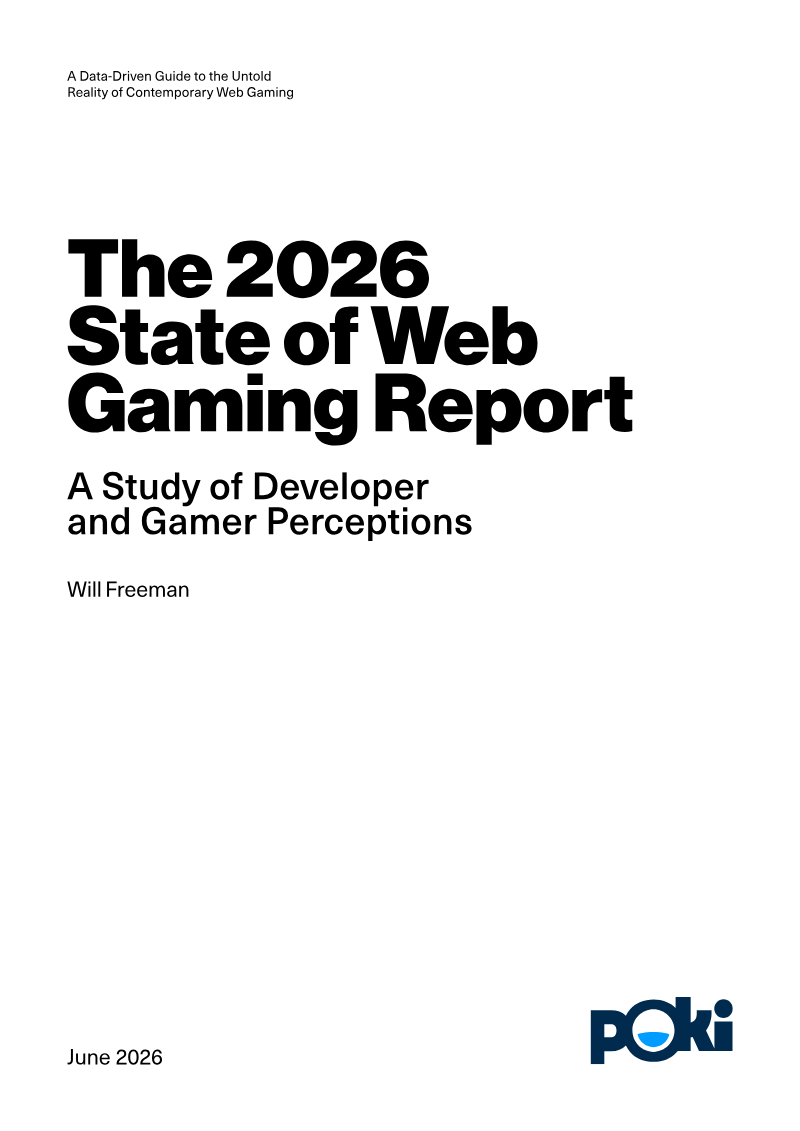
The 2026 State of Web Gaming Report: A Study of Developer and Gamer Perceptions
1 Jun 202622 pages~34 min full read
Key insights
5 slides
The shift
Web gaming has evolved from a niche outlet into a central engine.
The study shows web gaming is now a central discovery and revenue engine for the industry. It is no longer a low-quality channel.
Key number
92% of players rate HTML5 titles as high quality.
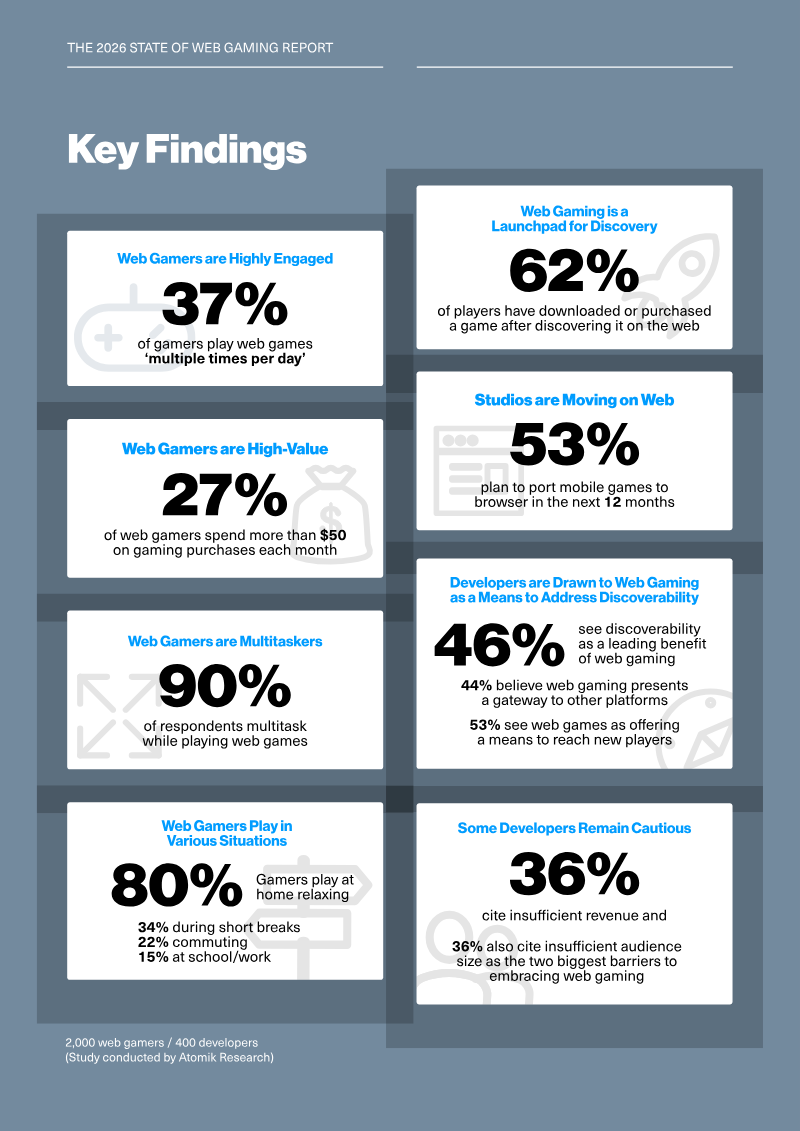
Web gaming no longer represents a low-quality channel. 92% of players rate HTML5 titles as high quality, and 37% play multiple times a day.
Engagement
Web gamers are highly engaged and valuable to the industry.
37% of web gamers play multiple times per day, and 86% play at least a few times a week. 53% spend over $50 on gaming purchases monthly.
Page 8 of the reportLess than a few times a month0
A few times a month14
A few times a week29
Once a day20
Multiple times a day37
What changed
Developers are increasingly embracing web gaming as a growing channel.
27% of developers plan to port mobile games to browsers in the next 12 months. 56% agree it is a growing channel.
Page 9 of the reportYes, a native HTML5 game51
Yes, a game ported from mobile53
Yes, a game ported from PC/console41
No8
The opportunity
Web platforms drive discovery for 62% of players.
Web platforms drive discovery for 62% of players, and high-spending consumers are increasingly found online. Developers who omit web distribution risk missing a growing, engaged, and monetisable audience.
Page 5 of the report62%
of players discover new titles via the web
- of developers see it as a means to reach new players
- 53%
1 / 5
Ask AI about this report