Transcript
Hello, welcome to Game Discover Co Show, your weekly guide to the business and discovery of video games. I am your co-host, Chris Plant, and I'm joined as always by the wonderful co-host, Simon Carlos. How are you doing this week, Simon?
I'm doing great. I have a slightly lighter colored t-shirt on for video watchers this week, which is very exciting because I'm 100% black t-shirts normally, but but for those in audio, you have you have to imagine it. For those in audio, you are missing the uh what looks like a muppet got murdered and is near my face. I'm traveling and I'm using a road mic that it truly looks like um a snafalophagus uh was destroyed and converted into a microphone. But I have more important things to tell you about wonderful listeners. Before we get started, I wanted to ask you for help. You see, the first few months of a new podcast are its uh I would say most precarious in survival. It really takes a village and you by listening you are a member of that village. So we would greatly appreciate if you did one or two
small things that make this like humongous help. The first one, share the show. Share it on social, share it on group chats, share it on email list serves or LinkedIn, wherever you'd like, but even just sharing it with one person that is a tremendous help. And then the second thing is consider leaving a review specifically on Apple Podcast. I know that you hear that in every podcast. I know it is annoying. We live in an algorithm based world and it really does make a difference. I will tell you as somebody who was making podcast for 15 years, it matters and it really does help. All of that said, going to get that out of the way. We can actually get into the show. Uh but doing those things, it is what keeps the show going and keeps it free. Let's get into the episode. We have so much to talk about. We have news stories for this week and we are starting with a piece that I really enjoyed. Uh this is a piece called a history of games through mass extinctions and you will understand
very quickly everyone listening why this matters for this show. Uh it is by game maker and academic Paulo Parachchini and it's basically gets at this idea of we're all familiar with the video game crash of 1983 but there have actually been many extinctions that there is a cycle of extinctions that we have gone through multiple times and by learning from those we can get a better idea of where we are at now and where we are heading. Simon, how did this piece hit you and what did it get you thinking about in terms of what you do dayto-day?
Yeah, I mean it's interesting. Like I'm a I'm definitely a fan of uh Paulo. He's a provocative academic, the classic provocative academic and and does really interesting stuff like a like a local kind of like game exhibition thing where he lives and all kinds of cool stuff. I I ran into this and it's based on a talk he gave because he is talking broadly culturally about sort of what's happened to games and what's happening to other media and and he did latch on to
something that I quietly said in a newsletter probably a year or so ago and then it got picked up by Brian Francis at gamedeveloper.com which is the idea of the depressionalization of video games. Since I'm we're talking to largely a professional audience here, depressionalization is a bit of a scary topic, but I thought it was interesting that he sort of took that and sort of ran with it and talked about how, you know, we know everyone can make games. He he cited Bruce Sterling saying that what whatever happens to musicians happens to everybody. And we've sort of seen a I don't know if it's a depressionalization, but a semi-professionalization of musicians. A lot of musicians do other stuff to make money. So, I thought it was interesting from Paulo's perspective for him to sort of get deeper into that type of thing.
Yeah. To unpack that word a little bit, I think we actually talked about this on post games maybe even a year ago was the idea of video games being in their garage band era. And by that, the idea that like there are thousands, tens of
thousands, hundreds of thousands of bands around the world. And in the old days, you would be a local band and you would kind of understand where you were at economically and like what where were you at in terms of professionalization and that that's harder now when you have instant international distribution no matter where you are. So, we have all these, you know, Garage Band level game studios and it's hard to tell which ones are the pro ones and which ones are the deprofessional ones. And I'm curious for you as someone who talks with like a lot of studios and a lot of game makers, do you get the sense that people broadly have realistic expectations for the games that they're making?
Yeah, I think most of them do. I mean, I think the the more precarious place to be right now, unfortunately, is if you're a small cog in a large machine. I think I think a lot of people who make games from scratch understand it's
difficult to have a hit with an indie game you've made from scratch. So, they will correctly not hire 40 people to work on it. They'll sort of do it a bit more a bit more bootstrappy. I So, I think yeah, I think a lot of people are sort of coming in now, they they've seen the headlines in my newsletter and everywhere about how many games there are. I think they sort of get it. But I think it's just a little tricky. If you have been working as like an animation rigger in the games industry for the past 15 years, then uh there's just a limited amount of places that you can go with that and the depressionalization of games uh might be affecting you there because it is tricky for you to continue to find jobs in the middle of the market. You're sort of like, well, I can work on these 10 games and that's and that's sort of it. So for me, um, this sort of concept, I think most people do understand what's going on, but I think it's tricky if you are a long-term, uh, craft professional, and there is an issue here where some of the highest quality craft may be getting a little bit lost because there's just less games
that can afford to do that craft.
Yeah. Yeah. I um found that it hit very close to home. I gave a talk at the NYU Game Center about the many deaths of video games media and it is hitting that same beat and this idea that basically all of these crafts a group of usually independent cohort create something new. Eventually the money comes in, it invests in it. It grows to its highest possible form. It gets too big or overinvested in. It collapses and we repeat that cycle again. And it does feel like we are at the end of a cycle kind of waiting to see what is next. Um, which is a lot of opportunity I will say at the same time.
Yeah, I I I think it's exciting in many ways. Like I cover games every week in a newsletter that I'm super excited about that are making good money, but they are not always maybe not often made by people who were making games 10 years ago. And so I think that's just an
indication. I think it'll be a little bit more cyclical. you'll have more people coming in. Those people who make good money can carry on making games for a long time. But now I think if you're not if you're not making money of your own valition on your own, I think it's it's going to get a lot trickier. And that's the real truth.
Um I want to go to the next story. Valve has been making some changes to how Steam wish lists work. This is little bit nittygritty. Do you want to explain the basics of of how this new system operates? Yeah, it's just interesting because everyone on the dev side is obsessed with wish lists as we know and and we also know because we at Game Discover Co have done some uh some like public and also we've got permission to look at people's accounts in some cases and we've discovered yeah many people have 100 200 games on their wish list. So realistically they're not they're not getting a ton of information about that. it's all sort of clustered together and I think so so what Steam decided to do uh which I think is smart
is you know they're allowing wish list categorization which is good so you can put your wish list into categories but also they're going to allow notifications to be changed based on that and that's also smart if people do it because it means that you might decide there's a set there's only one set of games you want wish list notifications on so I think uh this is and also related to that they've made gifting much easier you don't you no longer have to be logged in or possibly friends with the person like anyone like your your your uncle can go and gift you a game from a public list and and that was quite difficult before. So that's sort of the sum total of the changes
there. There's a big if here which is yes, will people even bother to use these functions? But like let's say that they do. Would this make it harder to make sense of a game's trajectory using wish lists?
I I think a little bit, but in the end, we know that wish lists convert in radically different ways anyway, and wish lists are only a vague indicator of
what's going on. So, I actually think I see I see wish lists as a sort of an indication that something is going on with a game, but I don't necessarily see it, you know, as a guarantee that you're going to convert that many. So, I think I think it's fine. Like, I do think, and someone commented on this already in I think on the LinkedIn post I made about it, like the amount of the percentage of people who will use this is going to be low. And I think you have to be aware of that. People will just jam stuff on their wish list and they don't look back. So, so I don't think this is going to be heavily used, but I think it's good to have the option. I think I think the gifting stuff might be possibly a bigger headline. There's there's not much devs have to do to take advantage of that, but it's just become a lot easier to have a list of games you want gifted and people to buy them for you. So, that's got to help for uh everyone's birthdays and and Christmases and fundraising. So, yeah.
Yeah. Yeah. Do do you think this is the beginning of revisions that we'll see from Valve in terms of wish listing? cuz it does seem like with each passing
year, the wish list just gets bigger and bigger and bigger. I never thought of myself as having a large wish list. I checked it right before we got on this call. It is useless. It is actually huge and it's only going to get bigger. How does Valve how does Valve account for that?
Uh I don't think they can and I don't think it's their job to do that. I think it's actually fine. They need to provide a mechanism where people can be reminded that a game is on sale or has come out. And I think that um it's just it it's it's beholden on the individual to deal with that. I think this is I don't think that Valve should make any other significant changes to wish list. I think it's a pretty good model. You've actually seen consoles try to take up this model in recent years as well. um and with I think that some success, but it's sort of not quite as comprehensive and not quite as easy to use. So I I think it's a good model. Um I and I don't think Valve should actually change change anything about it. And I think
this added detail is um yeah, probably not as big a deal as it sounds, but it's still going to help help especially people who are fastidious. It's like the inbox zero people who will care, right,
Ken? I I'm going to make one recommendation to anybody from Valve who is listening and I'm sorry to the developers because this is worse for you, better for an audience experience. If there was a popup that came up every 6 months that was like, "Do you want to remove games on your wish list that you've had on it for longer than 3 years?" I would like to have that option. That would be nice. It would be have nice to have something that makes it a little slimmer. Um
yeah, it's actually a really good point. I had not thought about wish list culling and having easier ways to cull wish list. So I actually think that is a really interesting u feature that Valve should consider. Yes.
Yeah. Um okay, last story before we get to the main story. Gamescom is doing well. Um it is full of exhibitors for
the allotted spot. It just continues to grow year after year. Who is the audience for Gamescom or I guess what are the core groups that are composing all of these people who are both coming to it and displaying there?
Yeah, I mean I think Gamescom uh is obviously a joint consumer biz show which are getting increasingly important. But the the thing about Gamescom that I think people who maybe haven't been don't always realize is you the business area. I mean it is it is still a pain because some people want to take their business meetings at the show and some people don't. But if you're taking all your business meetings at the show it the cool thing about it is it's a self-contained business area that was designed by the Cologne Messa and it actually does have kind of buildable booths but it's not out of control. It doesn't have 200 foot ceilings like it's an expo floor. And so um I do think that the design of the venue be being an ex kind of you know person who ran shows
that the the the design of the venue is actually very good for having simultaneous business and consumer uh unlike other other spaces like LACC for E3 was was always terrible. There was no there was no significant business area space off off the giant show floor. Um, and so yeah, so I think that's part of it and that means it can do very well for both business people and consumers. And also it is centrally located in Europe and Europe I think is a more dynamic PC console market than North America is right now partly because of the costs of doing business in North America. I think there's a lot more places in Europe that you and also Europe also has more government funding frankly for PC console games significantly more than than the US does. So, so, um, yeah. So, so I think it's just it's really for everybody. I think the consumer side is just huge and, uh, a little bit of a distraction, but also you do get you do get an absolute ton of people in there and people do come in from elsewhere. So, I think it's clearly the only European consumer show for games that is scaled
right now.
Yeah. I want to pick at two things that you talked about there. One is the LACC issue with E3. I think this is lost in the kind of deification of E3 after its passing that how how poor of an experience it was kind of no matter what you were trying to accomplish. If you had business, the meetings were a pain. If you were press it was impossibly loud and increasingly ineffective. If you were fans, it was unclear if you could or couldn't be that year. Um couldn't attend. Uh it it really was a a struggle I would say towards the end where it does seem like Gamescom and even Tokyo Game Show have responded to that in different ways. But I do also think that you are right about this. Well, I guess I'll put it to you as a question. Is the rise of games coming in and the in the kind of return to growth for Tokyo Game Show is it reflecting the shrinking influence of American AAA
games? Um, I mean, one thing I will say which is worth noting is Gamescom has been up and down and I think it's still up and down on the consumer side. We should not read we should not read this as um, you know, everyone it's like a 1997 E3 sized like there's quite a lot of exhibitors who've just opted out of Gamescom on the consumer side. And I will say they said they sold out of aotted space. I I did note and you said that as well, but I did note in my news story that is aotted space. It's not clear to me. It's it's it's pretty big uh like like the colog messa. So it may well be the space that they had not planned to use or they could tent or other things that they haven't done. So I think in general gamescom is as big or bigger than it has been in the past. Um and I think a lot of it is around to your point. Yeah. I I do think like North American development because of how much it costs is running into more issues in this era of games needed needed to be made cheaper. But I
also think Europe has had a more dynamic scene for for for a long time. And so I actually think that it's not Yeah. I I I I like like more of it is just like I think if there was a um Cologne Messa style venue with a really good set of business halls that could be done inexpensively somewhere in the US then I think then I think there would still be a more dynamic US show. But you know, GDC, which I've been involved in a long for a long time, like GDC does not have uh amazing space to build out build out business areas inexpensively because and and that's true, by the way. But yeah.
Yeah. I was going to say I think I think it's hard for people in America who've attended any of games events here to understand just how big the Gamescom Messa or Makahari Messa in Tokyo are. These things are like multiple aircraft hangers large. they are truly humongous and overwhelming an experience um and and just kind of dwarf I would say anything that I've attended here. Um
yeah.
Yeah. And one thing I do want to say to end because this is important uh and I've ran into this many times in being misreported. Both Gamescom and Tokyo Game Show being very old school use turn style as their total attendance not uniques. And this is often missed. And this means that when Tokyo when Tokyo Game Show and I asked Gamescom about this and it's been hardly reported, but Gamescom when Gamescom says they have 300,000 people at the show. What they mean is they had 300,000 turnstyle pushes into the show. They did not have 300,000 uniques by any means. If people attend multiple days, that is counted as multiple entries.
That is very good to know and something that I did not know and am very happy to know. So for the main story, uh you have been looking into what influence Steam reviews have on Steam consumers and you actually did the poll. You got some feedback and we'll dig deep into it, but
let's answer the top question first, which do Steam reviews matter for Steam consumers?
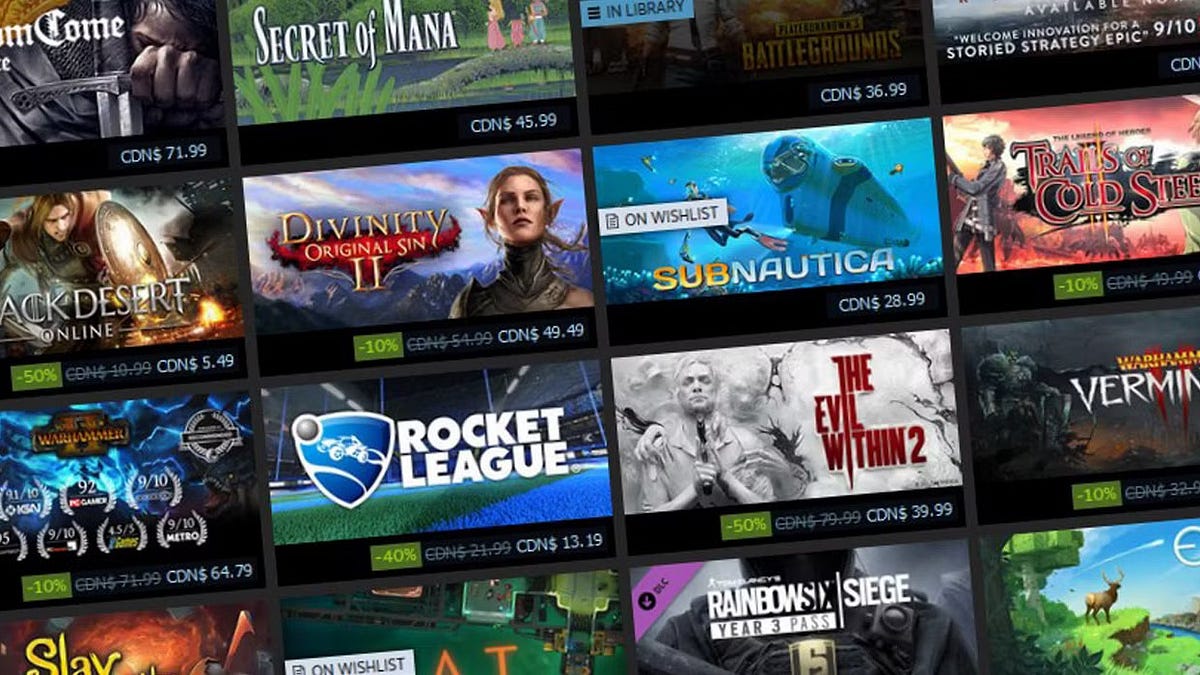
Yeah, I think the answer is that they certainly do. And I think our our top end data says over 40% of people always check reviews before buying and 32% say they do it most of the time. So this is a survey by the way of about 3,800 what we call Steam fans people who who are sort of responding to our to our giveaways. And so I think yeah the very top level is and this isn't surprising. Ste reviews are very prominent on a Steam page probably more prominent than most other um you know console stores. And so as a result people are are definitely paying attention. though.
What What are they looking for in those reviews? Like I I guess what are what are the triggers that get them to buy or not buy a game?
Yeah, I mean I do think overall score is a big deal and we asked about this and I've since spoken to people who feel like potentially these fans are really
even underrating the amount that reviews uh affect your ongoing sales. But what they said cuz we asked them uh what Steam player rating would make you less likely to buy. So we asked them uh the first one we asked them was was it mostly positive or below? So that means you know is it 79% or below? And 20 20% of people said an all-time rating of mostly positive or below will make them less likely to buy. And 31% said mixed or below would make them less likely. And then 35% said mostly negative or below. So, if you're to believe this cohort, they're sort of saying, you know, like 50% of people say, um, you know, like if as as long as your game is mixed, uh, uh, so as long as your game is mostly positive or above, uh, then you should be then you should be in good shape. But, you know, that's quite a large percentage of people, right?
Yeah. I mean, I was interested that you also got information on people who see the reviews and then they're like, "Oh,
I have some questions. This isn't very positive over or overwhelmingly positive." So, they start to skim the actual text of the reviews and once they do that, what are what are you seeing with those people? Yeah, I mean I mean I mean I mean basically uh uh basically what we asked was and this was like more more specifically around uh like recent reviews because the thing about recent reviews is that that they have to be multi they're all language and all reviews have sort of gone to be like language specific nowadays. Yeah. So, um, yeah. So, so we sort of asked like if if they have worse recent reviews, um, uh, like 33% of people will look very carefully at recent reviews and 47% said they'd maybe check it. And this is interesting because um there's definitely some Steam devs right now who are lobbying like basically why if Slay the Spire 2 gets review bombed in China, which it's done had done to it repeatedly, uh why would it it got it showed recent for all languages and then
suddenly those 33% of people are like, "Oh, I need to take a look at this before buying because a lot of people didn't like it recently." And actually it was mainly the the Chinese folks who didn't like it and you won't be able to find those in English language reviews. So that's sort of an interesting interesting bobble there, I'd say.
Yeah, the recent review phenomenon is so strange to me as a user because it is strange. I guess I hadn't really thought about how often this happens to me where I'll see a game with 5,000 10,000 reviews, very positive and then negative uh current reviews. And they immediately I'm like, well, what which one is it? Was it review bombed? Did it have an update that added some quote woke thing? Did it have an update that wasn't free content? Like what what thing really agitated the consumer base? And it is. You you immediately go to it. I saw in um in the data the emphasis on whether a game is just broken or bugs being a
thing that people are skimming for when they're looking through that text. And that's certainly relatable to me um because it is that question of well how did a game go from being beloved to somehow negative with whatever the most recent update was.
Yeah. And it was interesting when we asked people about bad things to your point. We asked them what's worst what do you find least helpful about Steam reviews. And we did find you know 20% of respondents said it was kind of the joke and loweffort reviews. But um next up was review bombing and off-topic drama. And 11% of respondents to this text response sort of said it was an element of that. And that is to that's your exact point. Like you're all excited to buy a game, you turn up, it has recent mixed reviews. Now you have to turn into Sherlock Holmes and be like what what happened? Can I can I still buy this or did they like do something terrible and I and I can't? So I think that's that's when people get a little exercised about it. Yeah.
Yeah. Yeah, I mean I completely sympathize with that Slay the Spire
example because whether it's fair or not, even when I'm excited about the game, even if I know the latest thing is review bombing, you feel that like the negativity carries into your turning on the game experience and being like, well, people don't like it, even though I know it's for this reason. that's just not what you want your player to have in their head as their first experience with your game. Uh and and it does seem like a relatively easy fix. Is there a reason why they want to keep the recent stuff global?
Um I mean I think they just planned this I I would say there needs to be quite high thresholds on this. So I think one of their issues is probably recent recent is not many reviews and as a result um you know like like they already have a threshold on splitting it into Chinese and English. So the worry I think will be the threshold will be so high for a reason that it would effectively rule out u most games. But I
think I think they should think about it. And and what I I what I will say is um this only happens on a small minority of games. And in general, I think people do like and enjoy the Steam review system and find it very helpful. When we ask people what they like the best, there were all kinds of positive effects like finding out about bugs and technical issues. It's great. just seeing overall consensus, you know, the ability to filter and drill down on data, most helpful, most recent reviews. Uh, and also showing dev replies to stuff is really great. And also, um, playtime displays. You can tell when people are kind of yelling at stuff and they've played it for a long time versus a very short time. So, I think there's all kinds of positives in there. But but I do think that you know and like I said I had a comment from someone where they felt like if their game goes to mostly positive it really does significantly affect their long tail. So this is really only player reported behavior and players may behave differently to how they think they behave and that's interesting right
and we've also been talking about the
scenario of having very positive overwhelmingly positive long-term and then negative recent but there is the opposite scenario too right like how it it has a strong influence me on me if I see mixed long-term and now very good recent that that is maybe one of the biggest influences on me actually trying a game because it suggests something really changed and in the era of early access it feels even more important. I I guess what has really struck me about all of this, just taking it as a whole, was Steam has managed to do what Metacritic and Rotten Tomatoes have not been able to do, which is create a reviews aggregate system that actually gets people to read reviews. And I think that is because of the recent versus long-term builds that habit. You want to know why there is a difference between these two things. And the only way to
actually find out is to go and actually start reading. Um, which for me is exciting. Even though that's not, you know, traditional media, people reading reviews is, I think, a net good.
Yeah. And it's so helpful for me as someone who analyzes it. You can very quickly work out a bunch of information about how the game works and what it can be compared to. And that's very difficult to do otherwise. So, I I I love Steam reviews. Yeah. [snorts]
Um, really interesting stuff. Everybody, you should go and read all about this on the game discovery co newsletter. We are going to start wrapping up. We got two more things to hit. One, I want to talk about what popped off last week, what we have to look forward to this week. Catch me up, Simon.
Yeah. So, last week, at least on Steam, I think there were some other things I think like there was the new Splatoon game out on Switch, which I'm sure is doing very well on Switch. I haven't looked at those numbers recently, but on on Steam at least, um there's a game called Shift Shift at Midnight. It's like a $10 game, which is interesting. It's sort of like a spooky kind of uh
online co-op detective horror. It's sort of actually more like a first person supermarket simulator game, but then you have to identify people who might be kind of like zombies or might not be human. So, it's got some mashups in it. And it's very co-opheavy. And it's it's doing great. I mean, I think I think we already have it at six Yeah, we have it at 600,000 copies sold already, and it only came out last week. And so it's one of those classic kind of I mean it's in some very obvious genres that do well right now. The kind of supermarket simulator, the kind of uh papersy gating is this per you know there's a game called called No, I'm not a human or whatever which has done quite well. So it's sort of mashing that all up, but it's done it in a pretty smart way. So that's that's sort of the the the top performer from last week. I guess
there there's one other detail with that game that I want to poke at, which is games that have YouTube style thumbnails as their key art. This game, and people should go look at it, it has this creepy pasta key art of a character that looks
like a YouTuber that turned into a zombie holding up like a driver's license and a cash register and and doing this grin at the camera that again, it looks like a deranged YouTuber. And this is not the aesthetic of the rest of the game. It is a distinct thumbnail aesthetic. And I do wonder how much this helps get people to click your game when people are already trained to look for these sorts of signals elsewhere in in their, you know, internet time.
Yeah. I I I I think I I Yeah, I mean, I think it helps. I mean, the whole thing is a little creepy pasta adjacent and so I think it it it really helps. Uh, by the way, once when I was talking about creepy pasta to someone, I accidentally called it spooky pasta. And so I I [laughter] think I think I think we should use spooky pasta as an alternative to creepy pasta.
Um, but uh but yeah, so so yeah, I think it really helps, but it's just a very memey. I think thumbnails help, but ultimately it's just a very viable
subject, especially because it's co-op and you can play it with your games. So I'm surprised. I also think they might have just on money. I think $10 as a starting price was pretty aggressive. It's obviously worked out for them, but I wonder if they shouldn't have charged a little bit more, but they're really going for the bite-sized kind of everyone everyone jumps on and it becomes viral. So, I think it makes sense. Yeah. So, that's so that's really the main one. Just going through the other stuff. Um, there's a game called Dragon Sword Awakening, which I find quite interesting. It's doing quite well right now because it's basically uh it's basically a gasher, an anime op gasher that explicitly does not have any gasher in it and is $30 uh and and you could just get everything. So there's a bunch of people who play Genchin Impact who are just grumped out by the amount of money you have to spend in that game and they're like, "Okay, it's very similar, but I could just pay 30 bucks and get all of it." So that game is doing, I think, surprisingly well. Yeah.
Yeah.
Any other uh things that kind of peaked into that that area?
Yeah. I mean I mean the other ones I want to mention is there's an Avatar Legends fighting game that is doing
pretty well, which you know there aren't that many 2D fighting games. people like that's that's the not the blue avatars, the other avatars, the the the last day of ender. And so that one's doing quite well. There's a there's a Boba a Boba Cafe simulator that's doing well. All these first person sims always do well. And there's a game called Tears of Metal, which I really quite like uh which is doing pretty good now. And it's it's an interesting game because people compare it to um you know you know maybe um
Muso genre like Warriors. Yeah.
Yeah. I was searching for that name. Yes. Yeah. So, it's kind of like a a western Muso kind of thing. So, it's four player co-op and it's sort of Scottishbased and it's got really solid and nice gameplay and I'm pleased to see, you know, it's a little bit more expensive for the market. It's a $25 game. It's not a $10 game, but yeah, I think we have it at selling 100,000 copies on Steam already, so it should be selling hundreds of thousands of copies over time. And from what I hear, it's it's it's and it's only in early access right now. Uh, from what I hear, it's it's it's a really nice game. I I I like the visuals on it. So, I'm happy that game is doing well. It is a very fascinating
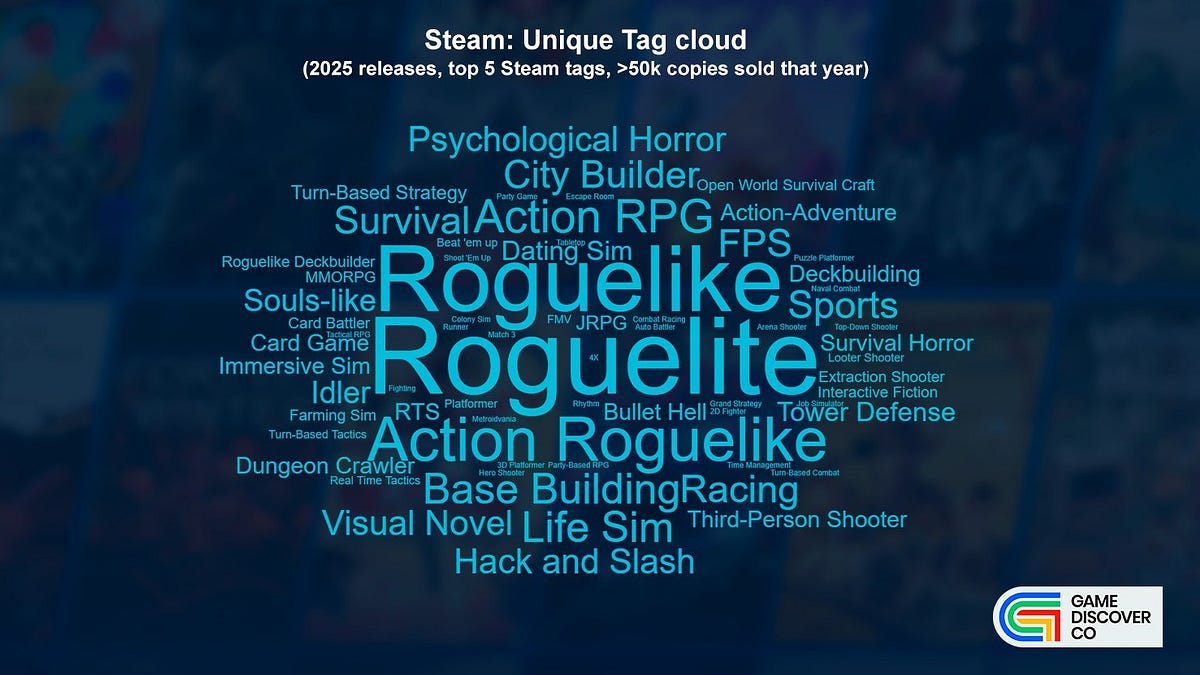
game. I think it's worth checking out for designers because it is part of this trend that I'm seeing right now of genres that maybe were kind of written off or is seen as old that are getting roguel like elements brought into them in a way that refreshes them and attracts an audience that is more modern. I think we saw this with Abselum um and other beat them up games as they're getting rogue likeified with branching paths and different builds and Tears of Metal is doing something very similar. It is taking the Dynasty Warriors model and then throwing in this progression system that is really fascinating. Um it is early access I I would emphasize, but it's pretty solid for early access. Um I think people will enjoy it.
Yeah. And then as for um as for this week uh this actually it's quite busy for this time of year because what's happened is I think there was June nextfest and then people didn't want to
launch because there was summer sale and then summer sale goes pretty long and now there's a bunch of people bringing out games like like last week was busy, this week is busy. So we have um there's a game called Mistful Hunter which is like a souls like ARPG has a ton of wish lists. Uh there's also Halo campaign involved which is the Halo the OG Halo kind of kind of remake which again it has 750,000 wish lists I think we think so that's going to be um I think people are interested in that. Uh there's a there's a farming sim called the ranchers that's been around for years and years and years that finally is coming out. I think some of those wish lists are quite old but we'll see how it does. There's a private city builder Corsair Cove and then there's other a lot of other games that I've heard of like um speed like the speedrunner sequel is coming out. There's there's a game called How Many Dudes, which is from the um the Buttercotch Shenan guys, which is which I've featured in the newsletter, which I think is going to do well probably. There's a game called Machine Party, uh which is a like a very messed up like creepy pasta version of Mario Party, uh which is from the
Buckshot Relet folks, I think.
Oh.
Um and so
yeah, it's it's interesting. I I wonder if it's actually too party gamey, but it does look like it doesn't look like Mario Party if it was made by someone who spent too much time on the internet with like people getting getting hit getting getting hit over the head and exploding. So, I think it's a really interesting angle. So, so, so we'll see how it does. And then, and then there's a game there's a game called Forsaken Realms, which is a sort of a fantasy ARPG that it's odd it hasn't got more hype. Oh, it just came out. I see it came out today. It's It's doing decently right now. So, there's a whole bunch of stuff here that I think people should be excited about.
I I feel like I'm making a trend of uh mentioning a game that is actually the week after the week. We did this with Halo last week, but Simon, I cannot wait to talk to you about Big Walk, the new game from House House, the developers of Untitled Goose Game. I cannot say a
whole lot more right now, but the conversation around this game and Friend slop is going to be something else. And I assume that it's tracking well considering Untitled Goose Game, but very interesting. Very interesting.
I I I think it's tracking well, but but it's going to be interesting, right? Because some of these I I can never work out. either it's going to be absolutely huge or it's not going to do as well as a bunch of the friends slop and everyone will be like why did that happen and I actually can't really tell whi- which one you know is it too sophisticated for friends slop [laughter] so that's I think that I think that's going to be the really interesting question but I would say it is tracking pretty well yes so so it's definitely not going to definitely not going to come out and and disappear so that's great
I think by next week we will be able to go into it more but it it is certainly going to raise those exact questions. Um, we are going to wrap things up. This is where I always have my bonus question of the week. Something to catch you off
guard, something that you might not be ready for. And I want to ask in the Paulo Pedrochini talk that we spoke about at the very beginning, he made the prediction that Grand Theft Auto 6 might underperform because this moment, that era of the hyperreal is on its way out. Obviously, it's not going to flop, but what would underperforming look like for GTA 6?
Um, I don't know. And that's actually something that I think Paulo shouldn't have put in there because when I've shown it to other people that that they attempt to discount his other stuff based on that comment. Um, yeah, I I think based on what I know, the chances of it underperforming seem quite low to me. The only thing I will say is it is at least right now limited by the installed base of of of the Xbox Series and the PlayStation 5. And so I I think there might be an argument that um you
know it really hasn't hit its full potential until it hits PC.
Um but but I think um I yeah I I I don't really see how it is going to underperform. And the main reason I say that is I'm a big believer in um competition is everything. Like how much competition do you have for your game? there is still nothing out there that really competes properly with GTA 5. So, uh it's my it's my belief that everyone who's played GTA 5 is going to be interested in GTA. They've not gone off in another direction, right? So, and also it it it does fit quite well with the there is an issue with console where if you don't have the right type of game for the console audience, then they won't buy it and you're seeing a lot more PC first stuff than you used to. That is not true for Grand Theft Auto. There's been a rich heritage of uh console first interest in that game. So, um, yeah. So, I don't know what that would look like, and I don't think it's gonna happen, but I appreciate it, Paulo, for for putting it out there.
I Yeah, I I I totally get the sentiment of this era is a waning, but it does I
don't know. I I think of GTA 6 as part of a different industry almost altogether. There's all the talk of, you know, the four or five games that make up 60 or 70% of play time. And this is in that zone. It it's also why and we've talked about this a lot other games can release during that window. It is a almost a different business model. The people that I know who are most excited for GTA 6 do not play video games traditionally
and they cannot wait. Um it it's it is it's something else uh entirely. Well,
that's good, bad. I don't know what that is. doesn't really mean much of anything if it's
it's a thing.
Yeah, it it is a thing. It is a thing. Any any other thoughts before we wrap up this week? Things that people should be looking for on the newsletter?
No, I mean I think I think we're going to do some newsletters this week. We're definitely we've been doing a lot of analysis heavy ones recently. So, I'm trying to pivot back to games a little bit. So, we are going to be doing one on Guild Run, which is a game that just had
a very popular demo and I think it has some interesting interesting stuff to say. So, I think that will be out at a similar time uh to this to this podcast. Um, yeah, we're looking forward to doing a lot more analysis. We're also looking into, we have this Steam fan snapshot data, which is kind of fun, which is like we asked Steam fans and we tie it to particular like we tie their demographics to particular games. So, we're sort of doing this thing where we're looking in more detail about if someone played a game for a long time, do they have a different demographic to people who played that same game for a short time? And for very popular games, we have enough data to do that. So, that's some data we're going to be looking at and may talk about in a in a subsequent newsletter. So, that's that's fun. Yeah. I love it. And I didn't prep you for this, but I do want to start ending the show with something uh just small, which is are there any games that you recommend? Is there a game? Doesn't have to be something that is blowing up the charts, but is there something that you see that other people should go give a try?
Yeah, actually Guild Run, which is the subject of of the newsletter. I've not had a chance to try it yet, but it's interesting because it's it's mashing up
specifically Team Fight Tactics, which is, you know, a riot game that is under discussed because it's not on Steam, but a lot of people play. So, it's smashing up a rogike and team fight tactics, and it's doing really well in in in demo form right now. It's um got about 12,000 CCUs and demos. And so, it's a game that I think is a little under the radar because they stealth dropped the Steam page and the demo at the same time. Uh but I think it's going to do very well. And so, that's the game I'd recommend people checking out. Do you have a a game recommendation? Yeah, I I am going to recommend people take a look at Agent 64, Spies Never Die, which I think is microtargeted for probably the age of in demo of people who are listening to this show. It is a spiritual sequel to Perfect Dark in Golden Eye. And I don't think I can talk about any experience with it, but I will say from the trailer what you would clean is it looks just like it. I think this is coming from a mostly solo dev who has been working on
this for many many many years, but it has multiplayer. It has a full campaign. It seems to be taking inspiration from not just uh Golden Eye, but a lot of action films from over the years. And it's very fascinating. If you are looking for something to scratch that itch, I think it's worth checking out.
Awesome. I I will check it out because I I I do like a good a good golden I like. So, that's great.
Yeah. [laughter] Um well, let us wrap it up. Thank you all so much for listening. This has been another episode of the Game Discovery Co. Show. As I said at the very beginning, if you are enjoying this, something that you can do to help keep it going is spread the word. Share it with friends, share it on the group chat, share it wherever, and if you have a moment, leave a review on Apple Podcast. It really does make a world of difference. As always, I am Chris Plant. Simon, thank you so much for doing this.
Yeah, thanks so much. We'll see you guys in the next one. Bye.
Auto-generated captions from YouTube — names and numbers may be misheard.
Key insights
7 takeaways · ~3 min read- 01Steam player reviews are highly influential, with over 40% of surveyed Steam users always checking reviews before a purchase and 32% doing so most of the time.
- 02Steam's review system is uniquely effective at driving engagement because it distinguishes between 'recent' and 'long-term' review scores, forcing users to investigate why a game's sentiment may have shifted.
- 03Steam users find 'joke' or 'low-effort' reviews the least helpful (20% of respondents), followed by 'review bombing' and 'off-topic drama' (11%), which often force potential buyers to perform manual research to determine if a game is still worth purchasing.
- 04Gamescom remains a significant industry event, though its consumer-facing side has experienced fluctuations in exhibitor participation; the venue's design is noted for effectively balancing business meeting spaces with public expo areas.
- 05The 'deprofessionalization' of the game industry reflects a cycle where independent cohorts create new innovations, followed by heavy investment, eventual market saturation, and subsequent collapse, signaling that the industry may currently be at the end of such a cycle.
- 06Steam wishlists are a useful indicator of consumer interest but do not guarantee high conversion rates, as many users add games to their lists without intending to monitor them closely.
- 07Recent trends in game design show a shift toward 'roguelike-ifying' older or niche genres—such as beat-'em-ups—by incorporating branching paths and progression systems to modernize gameplay and attract new audiences.
Ask AI about this video
Cite this video
Citation
Generating citation…








Comments