VideoDeconstructor of Fun
The ESA's Essential Facts: Free Player Data Most Companies Pay For
5 Jun 202656 min video
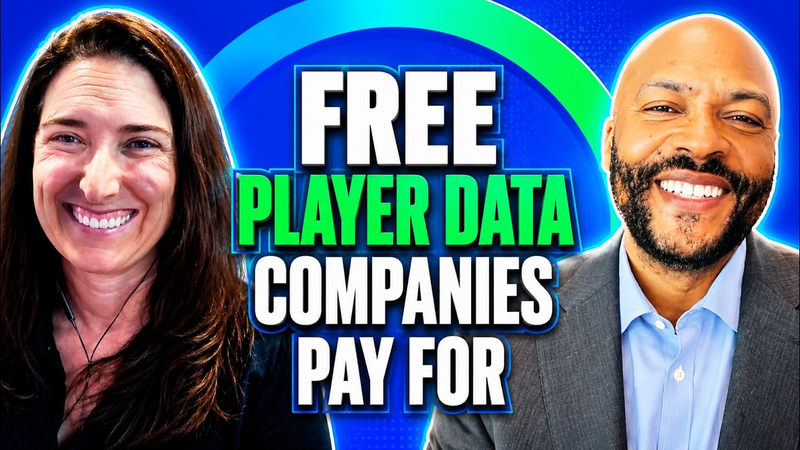
The good news for us is our founding shaped how we address this issue. So, you know, we hearken back to 1994 earlier, Mortal Kombat, a lot of concerns that parents had, which meant government officials had issues with the game industry. And we decided back then that we could do a better job by providing information to consumers and especially parents rather than waiting for the government to legislate this. And I think we've done a good enough job for the government to say, you know what, the way that you provide information is better than us trying to regulate around it. [music] Hello everyone and welcome to the Deconstructor of Fund deep dive interview series. I'm Jen Dano. Today we are going to do a deep dive into the ESA in a new ESA report. So here's what's going on. More than two out of three Americans now play video games each week. That is over 212 million people.
And the average player is 37 years old. Those numbers come from the 2026 Essential Facts Report, the annual study from the Entertainment Software Association. This is the ESA, the group that has represented the US video game industry since 1994. The ESA does a lot of work that most players never see. It defends games in court and in Congress, runs the ESRB rating system, and makes the case that games deliver real value, stress relief, problem solving, and connection across every generation. This year, the report is the biggest the ESA has ever fielded, and it focuses on people playing, who they are, why they play, and how. So, my guest today runs the organization behind it. Stan Pierre Louie is a media and intellectual property lawyer who has led the ESA as president and CEO since 2019. Stan, welcome to the show.
Spot on. So good to be here with you.
Uh you became president back in 2019. You've been with the ESA for a little
while and you're I believe a lawyer by training. So talk to me a little bit about your journey and landing in the world of gaming and how you got to the ESA. Well, first thanks for allowing me to be on this amazing platform. I love what you guys do. I love your audience and excited about this conversation. You know, for me, I have always been into the creative arts and I've also loved innovation. And so, growing up, I always knew I had this passion for artistic endeavors. I'm not great at drawing or anything like that, but I just really appreciated the arts. I actually did quite a bit of music growing up. But as I got through college and thought about what I wanted career-wise, I thought I would go into law and I really thought I was going to be very serious lawyer. I wasn't sure what that meant, but I know that uh law degrees give you lots of opportunities. And I quickly found myself in a law firm in a basement working on a case with millions of documents just going, I thought this was
going to be more fun. [laughter] And then there was this ray of light that occurred which was one of the partners at the law firm needed help on a proono matter and proono for those who aren't familiar with the laws where you provide free services to someone and it happened to be an intellectual property matter. The first one dealt with a visual artist whose husband had been a journalist and his works were going to expire in the under the old copyright system and I helped manage that process for her. And then the second was a young artist who was a theater person and when I was working on those matters they weren't large but I just found that I understood what was happening and realized that maybe this was the direction that I should be heading in. It makes a lot of sense because I grew up in the arts playing music all the way through law school and then I thought I was just going to be this, you know, serious lawyer. And it turns out you can be a serious lawyer and have fun. And that led me down a journey through music law
and then film and television where I spent years at Viacom and then when the opportunity availed itself coming to ESA initially as general counsel and what attracted me there was I knew I'd understood the intellectual property matters related to the industry but I didn't have a lot of the background in the tech and in the innovation and so this provided me with an opportunity to expand the work that I'd been doing you know for the prior for you know 20 plus years and so it led to this opportunity to become CEO but every year you're just learning more and this industry innovates so quickly that if you're not learning then you're behind and that's what's made it a lot of fun for me.
Oh very true. Okay so crucial question what did you play? You said you were in music. What instrument? I played the piano and I played the bass
and there were some other instruments here and there and I played in bands and orchestras and you know all kinds just just anything. I was in a couple of
musicals. I was very passionate about the process but I also loved the academic side of it. So this this has culminated in like the perfect career for someone with my interests.
Oh, nice. Well, I'm an orc dork. I play cello, so I I can relate a little bit. It's been a long time. The perfect project for you would have been Rock Band or Guitar Hero back in the day. I mean that that would have been the intersection of everything that you love.
It would have been. It would have been Well, funny story. While I was at VCOM, they actually purchased Rock Band and then sold it. [laughter]
Oh, there you go. Yeah. To Activision. That's awesome. Well, so take me a little bit into the ESA. As we said up front, this is the Entertainment Software Association. It is a US entity. So we're both obviously based here in the US and many of our audience are not in the US. I think for just for listeners, half our audience is outside of the US. But what's important because the US is such a big market for gaming. I wanted to cover this because a lot of
the insights that come for what the ESA does and the reports that it offer can in a sense be trended globally. So tell us a little bit more about what the ESA does overall. Well, the ESA is like a lot of other trade associations in Washington DC and around the world where they pull together different members of industry to advocate for their interests collectively because there are certain things that impact each industry in a very specific way and then each company may have their own flavor but there are certain things that they have in common. Initially for the video game industry back in the 90s it was survival. M
there were attempts by Congress to legislate the industry out of existence. They were very concerned about some of the content coming out of Mortal Kombat and that whole era of games.
Yeah.
By creating the ESA and creating the ESRB, the industry was actually able to show the federal legislature that they would not only act responsibly but really enhance information for consumers
and especially parents. That didn't mean the states agreed because we have a system of federalism in the United States. And so the states continued to sue until 2011 when the US Supreme Court said the video game industry does is protected by the first amendment and you've got to stop it. So for the first amount of time, we were really helping the industry through a series of litigations, but also lobbying various states and the federal government. Since then, we've been trying to create new opportunities for the industry because as our industry has grown from discs to online, all of those tech issues impact our industry in ways that they affect other similar industries. And so we spend a lot of our time in state houses, in Congress, and with the administration working to make sure they understand what our industry is about. And that ranges from intellectual property issues to all the tech and innovation issues. So privacy, AI, anything related to how
we communicate online that becomes important for them to understand why our industry is different than say social media. So we spend an overwhelming portion of our time really providing them with that information. We also spend a lot of time explaining to the media who we are
because within our industry, if I reeled off facts that we'll talk about from the essential facts, it will make a lot of sense. It will resonate with the audience on this podcast, but for others, it will be a surprise at first and then when we start to unpack it and show them how it impacts their day-to-day lives, it becomes humanized. And so, I'll give an example. I was meeting with a senator now retired from, you know, middle of the country. He was in his 60s. I meant to meet with him and he said, "Oh, video games." And he gave me a little bit of snarky response. And I said to him,
"Does anyone in your life play video games?" He goes, "Well, my grandkids, they play games." He goes, "Well, my wife, she plays Candy Crush just an hour
every night before she goes to bed just to settle down. And I'm an old fighter pilot, so sometimes I get on my Xbox just to do flight simulator."
Yeah. And then he stops and he goes, "Are you calling me a gamer?" I said, 'I do not put labels. But that [laughter] changes the conversation because when they see how they interact or if I'm talking to a group and their parents might be older, maybe in their 80s and say, you know how, you know, your mom or your mother-in-law, your grandmother might be in the waiting room for a doctor's appointment or something and they just pull out the phone and get a quick game of bridge and they go, "Oh my goodness, that happens." you open up the aperture of what it means to play games and then it resonates. It humanizes the industry and then you can have an actual conversation about the trust and safety protocols that we put in and have been putting in since the '90s unlike a lot of other industries. And so a lot of what we do whether it's with the media, whether it's with members of Congress or members of the general public, we try to demonstrate what they already know but
don't know. It's less of a surprise and more a realization that they've been engaging with the industry for years now without really thinking about it in the same way that they do other media.
Oh, I hear that all the time. Every time I get into an Uber, I usually just talk to the driver because in life, we don't often get to talk to people we don't know. And I always ask them what they play. And everybody plays a certain game. And usually I'm with a grandma and I'm like, "Oh, do you are you a gamer?" And she's like, "Oh, no, no, no." I'm like, "Okay, well, what do you play on your phone?" And she'll be like, "Oh, I play, you know, Candy Crush or Royal Batch, you know, three hours a day." And I'm like, "You are a hardcore player." So, so the other thing that I talk about too is branding of the word gamer. So, when we say the word gamer, people think it's a 17-year-old living in their mother's basement drinking, you know, Mountain Dew and slamming the can and like eating a bag of Doritos and getting Little Caesar's takeout. Now what I tell people is if we just use the word
player, player makes it so much more inclusive because anybody can be a player but people think a gamer is a specific thing. So gamer has had a branding fail over time so to speak and I would imagine if you talked to this ex senator and you said oh you know are you a player of games? Oh yeah yeah yeah I play games. uh you get a lot of head nods and so I'm working to like rebrand in everyone's lingo because a lot of what I think we all do is we have to be professors and experts in our field and translate that like uh it's AI right you know AI like I'm 5 years old whether it's chat GPT claude whatever you use and that's the role that you and I play is helping people really understand all the data
there is this age divide where I don't even know if gamer matters anymore so you've got a group of people who think gamer s are the 17-year-olds in the basement as you described it. Then you've got people who I'm a gamer. When you start to look at Gen Z, Gen Alpha,
you would never ask them, do you study history? They do everything. And so for them, video games are just part of their everyday existence. So they don't compartmentalize themselves as one thing or another. It's just everything. And so now asking a younger person if they are a gamer is strange to them because they're like, I don't know what that means. I I play games. I, you know, play soccer. It's just part of the fabric of who they are. So, you're right that opening it up to do you play games widens that aperture so that everyone feels like they're included.
Yeah. Especially when we get to the numbers. I think your numbers are like 80% I've even seen higher of the percentage of Gen Alpha and Gen Z that engage and play say that they play games. A lot of this is self-reported that once it's everybody and it's ubiquitous, your identity then becomes a subsegment of being a player, it's like, oh, well, are you a shooter fan? Are you a competitive player? You do PVP, PvE, and I think it gets a little bit different, which matters more for us. And you know, the folks that you talk to
when you have to explain it more broadly, you you start obviously a lot higher.
Stay ahead of the competition with Sensor Tower. The trusted source for mobile marketing intelligence. Whether you're tracking trends, benchmarking performance, or scouting the next big hit, Sensor Tower delivers the data that drives strategy. Dominate the charts with Sensor Tower.
Kickass Live Ops named Kickass Tools. That's where Heroic Labs comes in. They just released a massive update to their Satori Live Ops platform. And having done my research, I can say with confidence that it's second to none in a single product, you get everything you need, including event capture, player segmentation, feature flags, remote configuration, AB testing, experimentation, live events calendar, messaging, retention, graphing, analytics, and so much more. If you're serious about running live services in a game, get serious about the tools you
use. connect with Roy Labs and make some serious cheese with your live ops.
I wanted to ask you a little bit about a new event from the ESA. It was called Icon. I was lucky enough to be invited. Thank you so much for that. I just couldn't attend because I was deathly sick and I just couldn't make the flight to Vegas. So, talk to me a little bit about this new event and what was the purpose and what was your biggest takeaway coming out of it? One of the things you had asked about ESA and what we do. Obviously, everyone was very familiar with E3. What an amazing show that was for our industry. Started back in 1995 and ran pretty continuously. Obviously, not during COVID and there were a couple of years in there that had changed it, but it became synonymous with who we were. And it was just a great showcase for industry. And even though it was a B2B because it was really intended initially for retailers and then later on other business interests within video game industry, it still shined a light
on us as an industry. It was also one of the rare moments where all the leadership came together. They were competing. They were trying to get attention. They were trying to make sure that the world knew about their new devices and games and products. But it was an opportunity where everyone was in the same place in the same time. And it created a halo effect for our industry quite honestly and really helped us on our advocacy for industry but it also allowed people to appreciate the growth of our industry. A sub history of E3 was that we used to be part of another trade show and we kept getting pushed back and back and back as other industries were growing and we as an industry felt it was time to shine a light on our industry and that proved to be very preient. Clearly postco what we realized was there was an opportunity to switch course and not continue down that path. People weren't coming together in person for a while but also the industry realized they needed to figure out different ways to communicate their marketing messages. A lot of that was digital but some of it was more BTOC. So
you end up going to you know Gamescom or some of the other shows where consumers can see things and really felt like it was time to sunset E3. But one of the things that we noticed was while the other gatherings were really strong for what they were, there was no area for our industry to come together not only as an industry but to demonstrate the power of our industry through the larger market. So we didn't want to replicate or cannibalize some other conference because for us we wanted to do something that was additive or else we wouldn't want to do it. M
but what we found is there are so many industries that are gifying or whatever the terms are but they're using interactive entertainment as some form of growth. You know a really simple example is sports. You know there are sports games that you play. Okay great that's playing sports game. Well what does that actually do? Well for the
sports league yes it's additional revenue through licensing but it's also brand extension right? It's also consumer engagement, particularly in the off season. They're getting a lot out of the game play. They're also getting a new level of talent that understand how playbooks work because they were reading playbooks when they were playing Madden or whatever the sport was. And they actually found that the players who had played games actually were adapting to the playbook a lot faster because they were used to that experience. There are all these symbiotic things that happen and those stories get replicated in all manner of industries and we thought there was no place to shine a light on the impact our industry has in other industries.
ICON was our effort to demonstrate how interactive entertainment is having an impact in other industries and vice versa and to bring those leaders together to create new opportunities hopefully some business opportunities. And so the panels that we showcased included healthc care and games or uh a
lot of sports conversations, tech and AI. So we were able to bring different disciplines together on stage to talk about that impact and to allow people offstage to have those conversations in the hallways and in the side rooms and in the game theater that we created. And it really created this synergy around the excitement about what games do and for, you know, organizations and companies that are not in our industry. They want to harness the power of games, but also how we engage with our audiences and how we grow those audiences. And so they found a lot of benefit in hearing from our executives. And that means you also attract investors and media. So I think we were trying to demonstrate how games impact other industries and create a new halo effect around not just games for game sake but games as a force multiplier in the economy and in business growth all
around. So year one was exciting. We learned a lot from it and we're still getting feedback to figure out how we'd want to finetune it tune it moving forward. But it was a lot of fun. You know we had Tony Hawk on stage. You mean,
oh, I am so I am literally so bummed I I couldn't make it because I saw a bunch of the names of folks that were there. Like you said, it was very senior leadership across different industries coming together to talk about the power of games from a product, from a marketing perspective. I think it is a little bit unique. DICE has a place, GDC has a place, but this felt a little bit smaller. And the trend that I'm seeing a lot with these kinds of events is if you can keep it smaller and focused and allow for off thereord highle conversations that's where I see value not you know endless panels where people say a lot and don't say anything and that is not what I heard about your event. I heard a lot of positives. People obviously couldn't. A lot of media weren't allowed to talk about it just cuz of this purpose, right? Like
and that's fine. Not all of it can go public, but if you can go and get the value, I think that's great. So, I look forward to next year. I hope it sticks around.
And what we've done now is put up some of the panel discussions onto the YouTube page for Icon Official. So, if you go to YouTube, you can see several of the panel discussions because we thought it'd be nice for people to see what they missed and maybe if they don't get a sense of the exchanges that happened off the floor, at least they can see what was happening on stage.
Oh, awesome. Thank you. I didn't know that. So, I will go check that out and and see if I can cover some of that. All right. So, that was icon. I just wanted to get that in there. So, let's shift a little bit to the report essential facts. So, this is the 2026 version. Basically, you know, I did a little research and I think it started in 2002 to 2004. So, I went and did a little comparison just for fun. I came into the game industry after being in the toy industry first in '97. So, a lot of my
formative years in gaming were at E3 in the late '9s. So, I I spent many a fun year at at those E3s. And, you know, I am sad to see it go as a Los Angeles person as well. Although, ironically, this weekend is Summer GameFest, which is the third or fourth year of Summer Gamefest, and so it's not quite the same thing, but the evolution is it's interesting to see a little bit more consumer oriented and how that's evolved. All right, so let's do some fun things. The average player age 2004, so 22 years ago, if I can do math, was 29. Today it's 37. So the average age has gone up mainly because of me because I still play royal match all the time. So I think I'm skewing it on all the data right there. Players aged 50 and up were 9% in 1999, 17% in 2004. Today it is 29%. So players over 50 are 30%. Mobile play
was 33% in 2012 and now it's 80%. [laughter] I think many of us talk about the dominance of mobile. Uh we know just from like news and other organizations, mobile represents half of all of the game revenue out there and we're seeing it here with u player reported data. Online play was 18% in 1999 and it's roughly 90%. And then now you actually partner with Yuggov. And so this is a survey that was done in February. 13,500 respondents. That is I think triple what your past number of respondents was. So we can feel really good about the sampling which is over the course. So first let me just ask you as you as we did the little look back before we get dig in like what jumps out as you as being the most interesting there? It's interesting that the growth continues at every level with every demographic and
people continue to play. You know, I think economically back in say 2005 we were probably a 10.5 billion business. 2015 we were about 30 30.5 billion. This past year reported about 60 billion. So that growth continues as well. And I I think it just talks about how this industry finds a way to reinvent itself and to keep people engaged and to find ways to reach players where they are, including gamers, but not only gamers, but players. [laughter]
You can still say gamer. My new language hasn't caught on yet. So the other thing is as I looked at the report over the last few years to see how it's progressed, it's moved from toward this like consumer oriented player attitude, you know, share of time, share of wallet. It appeared to drop some of the business aspects and you know before we recorded you said that might have just shifted. So talk to me about how this report and the focus that you took this
time was a little bit different than how you've done it in the past.
Yeah, sure. Well, every year we want to make sure we understand consumer demographics, attitudes, behavior surrounding games, and I'll just add because I'll get to in a moment. This year we also wanted to get a broader sense of what do non-players think about the the industry. And so we have a little bit of that to report as well.
I think in the past we were trying to figure out what would be useful for various audiences to understand. So if you're in the industry, what should you know about your own industry? because these were individual companies trying to figure out where they wanted to go but not understand the full scale and I think by forming the trade association began to see where they stood on things and where they agreed and and and where the areas that were they weren't going to agree on.
I think as the industry grew they began to see that there were different audiences that they needed to focus more on and one of those audiences is government officials. M
if they don't understand the scope and scale of the industry, they may not pay
as much attention to it. Or as we say in Washington, if you're not at the table, you're on the menu. And there were many instances in which other industries were facing a lot of bad press or bad policy and they could just directed towards video games. And by establishing, for example, that we are larger than music, we're larger than film, that changes the scope of the conversation because you're impacting not only a larger industry, but an economic engine. As I said before, we're a force multiplier. And because we engage so deeply with users, they're passionate. And at every level, at every age group, it means that when you're affecting games, you're affecting your constituents. So everything for a government official relates to who is your constituency. If you're a member of Congress or if you're a state representative, it's your population. It's the people you represent. And so they're impacting the people they represent. So I think part of that is being able to explain to policy makers
the impact they're going to have on their constituents. And I think that that's part of it.
We continue to do the economic report, but I think because of the timing of when this gets released, the economic report happens a little earlier in the year. So we still report out how is the industry doing from a revenue standpoint but that happens in January, February and this is obviously coming out in June this year.
Oh got it. So it's just a little bit separate this year versus fully integrated. And there are other folks that do that whether it be, you know, the Nuzus, the Sakas, the sensor towers. There's a lot of that that happens. You know, Nuzu does a great kind of global lens of it that helps us understand the the industry globally is almost 200 billion dollars. You know, 60 70 million billion of that being US-driven is is super crucial. When you mention the government officials, one of the things that's in the news a lot right now is online safety. There is a a certain company that has lots of lawsuits against it right now. And how does what
you do help to highlight what should be happening with, you know, COPA, which is Children's Online Protection,
Privacy Protection Act,
Privacy Protection Act, and there's KU. How do you work to help on those specific instances? because it seems to be becoming something top of mind for a lot of parents.
Yeah. The good news for us is our founding shaped how we address this issue. So, you know, we hearken back to 1994 earlier, Mortal Kombat, a lot of concerns that parents had, which meant government officials had issues with the game industry. And we decided back then that we could do a better job by providing information to consumers and especially parents rather than waiting for the government to legislate this. And I think we've done a good enough job more than good enough for the government to say, you know what, the way that you provide information is better than us trying to regulate around it. And so one
of the reasons you haven't seen efforts at federal legislation is because what we committed to doing in 1994 continues to be enhanced. And so when there's a new type of disclosure that should be made to parents or to consumers, we make sure we're upfront and we also make sure not only parents know about it, but the policy makers know here's what we're doing and why and here's why we think it will help your constituents. So I think because of that experience, um we know that when we're doing something that helps the broader public, we ought to make sure that it gets highlighted. So, as we've become more of an online industry, you've seen companies enhance their trust and safety protocols, and that's everything from report buttons on game sites to mute buttons to now the use of AI to try to identify what does toxic behavior look like? Because at the end of the day, if you enter an online environment that doesn't feel safe or welcoming, you're not going to come back. And so it's in the vested interest of the industry to
make sure that they're creating a really welcoming environment that makes people want to have fun. And this does not mean that toxicity is driven down to zero because you can only do so much. But if you do your best at it and you provide the information and you continue to innovate around it, people see the difference. And I think one of the things that that experience gave us was a lead on say social media companies which are now trying to come up with ways of providing information to parents and and have parental controls and some are hitting the mark and some are not. But we've been able to demonstrate for more than 30 years now that we not only care about it but we invest in it. And for our industry it's not a competitive issue. We share information and make sure that we're applying it across the board as an industry because we know that the whole ecosystem needs to feel welcoming, not just one company or one platform. I think that's that's what differentiates games from a lot of what
you're seeing in social media. And we share that story at the state and federal level so that they can see that games are different. And when you make that case, they understand it because they can say, "Well, I did set up, you know, the Xbox or the PlayStation or the Switch for my family and I did go through those as opposed to just grabbing a mobile phone and you're on or a computer and you're on." So, they see the difference in what happens with our industry and how games treat this with reverence.
H how about loot boxes or, you know, gotcha mechanics? There are a number of countries, Elgrim being one that comes to the top of mind at Bandit. Is there any anything we should be worried about as as legislation on that I think it's in New York and New Jersey. They're looking at some of the aspects of this around Counter Strike 2.
Loot boxes became a big issue in the US policy sphere around 2018, 2019, maybe end of 2017. And one of the first things we did as an industry was to make sure we enhanced
our ESRB content descriptors to say there are in-game transactions of the following types. So parents, you should be aware. And by the way, if you're on one of our platforms, you can control the amount of time on the system. You can control the amount of money being spent. It can be no money. What kinds of games? So empowering parents and consumers with ways of limiting access has helped our industry when it comes to that. I think what you're referring to is an investigation by the New York Attorney General's office in a counter strike and you know Valve is not one of our members so it's I I I can't get into exactly how theirs is structured and what the investigation looks like. I know that with respect to all the things that our members have done, it's gotten a lot of praise from government agencies, including the Federal Trade Commission, which says that the video game industry is the best of all the media industries in terms of providing information to consumers and to parents and also enforcing. So when they would do these mystery buys and go to a Best
Buy or GameStop, you buy a DVD, you buy a CD, and you buy a a game cartridge, you'd get paused on the game cartridge, maybe not the others, because we've done so much training around games that they found that there was always enforcement or a high level of enforcement on the game front.
Yeah, I I have seen that a lot. I know there's a lot of disclosures even in marketing. think I mentioned I'm a game marketer and we have to be careful of how we even advertise items that you can get inside of a gotcha takeaway. So you have to disclose that in the advertising that you do
and I know a number of companies members or non-members or viewers have been involved in a lot of those discussions. So well thank you for you know helping on that because it it would be extremely detrimental to our industry if loot boxes get regulated away. I have mixed feelings on them personally, but you know, it is a it's a core component of our industry and our monetization.
We can only do what we do, which is here in the US, but there are obviously other
countries that are trying different things. And the question is, do they work? You know, there are all these reports now about, you know, social media bans or phone bans in schools and do they work? And so you're seeing different jurisdictions, whether it's Australia or Brazil or others, who are looking at different kinds of restrictions, whether it's social media or maybe even in-game purchases or communications. And the question is, is that the way to solve the problem? Because people are sometimes able to get around those bands. We're certainly making sure that at least in the United States, we're able to manage that. And then we're connecting with colleagues abroad to see what they're going through so that we can learn from that experience in case one of those jurisdictions catches fire.
You know, people can sometimes get around that. They can always get around it. I have, you know, my stepkids are now 20 and 17, but when they were like eight and six, they had already figured out how to get around the Minecraft, Roblox, Fortnite, agegating system by setting up emails for each other. And so
they are little devils. They will always figure it out. But is there is there a chance in any of that like legislation with social media being banned in certain countries that games would be put into that? I mean what's crazy is that a number of the games are seen as social media for kids. And I I guess that kind of got overlooked as legislation happened.
Yeah. I think one of the things we remain vigilant about as well as our counterparts abroad is how they're defining social media or online access because different countries and different states in the US even will describe it differently until you go in and explain why it's different, right? Why is a UGC site different than, you know, a game that you're playing, you know, with your friends? And so there's a little bit of frustration that legislators and frankly parents have everywhere where they just see a lot of
things happening and don't have time to distinguish between where the issues lie with their concerns. And so part of our role is to slow everyone down and say, "Let's think through this because we're going to have unintended consequences if we overlegislate." So we spend time just slowing down the conversation so we can explain how games are different. And I know our counterparts abroad do the same thing.
That makes sense. A lot of it is clarity of definition. Um I I'm sure you encounter this all the time. I'll talk to parents and they just don't have the vocabulary to be able to distinguish these different things. They also don't know what their kids are doing inside these games or what it is capable of. I was working on a game that targeted a lot of Gen Alpha early gen Z and we had to be very careful about the feature set that we were looking at because you're like well that is going to be a lot more moderation that we're going to have to deal with and do we want to take that on web stores you've seen what good looks
like but have you experienced great app charge is the direct to consumer platform that powers over half a billion dollars in transactions each year for top studios. They're not just another vendor. They're backed by Supercell and built by monetization veterans from Moonactive, Plague Tikica, and other industry giants who understand the difference between merely functional and the truly exceptional. What sets them apart? Deeply personalized web stores with custom design offers, industry-leading monetization features, seamless in-game payment integration, and a robust SDK. While 70% of top grossing games already have web stores, the ones scaling the fastest are doing it with Appcharge. Ready to transform good into great? Learn more at appcharge.com. In today's hyperco competitive digital landscape, understanding your app's journey from discovery to download isn't
just insightful, it's the difference between scaling and stagnating. Enter Appslier, the undisputed leader in mobile attribution and marketing analytics. They've mastered the science of making every ad dollar work harder by revealing exactly where your players come from and how they interact with your app. Their platform transform mountains of complex data into clear, actionable intelligence that separates winning campaigns from budget draining experiments. And I know that many of the top game companies leverage Appslier and are a key partner in their success. Appslier, where your app's potential meets performance.
Let's be honest, you're tired of chasing installs across the same crowded networks. We all are. That's why Wibes built a new playbook. They're the fastest growing gamified rewards platform, and they are helping studios scale smarter, not just bigger. Their AI powered targeting means you will finally hit the audience you want. And with
their new rorowass optimization engine, performance doesn't just grow, it actually levels up. So, if you're looking for growth with a fresh angle, check out Vibes. It's built different. It's designed for growth and it's powered by good vibes. So, head over to vbs.co and get yourself some good vibes. So, back to the essential facts report. What number, what stat kind of jumped out at you as something that was really interesting that you didn't really expect?
Sure. Well, a few things. One, you mentioned up top more than 212 million Americans are playing. That's the highest number since 2021. So, we were on a growth trajectory of people playing and then COVID hit and obviously people were indoors. They wanted to find ways of you know connecting with each other and finding some solace and having fun and so the numbers really spiked and then as we predicted it would fall a
little bit after co but now it's coming back up and so I think it demonstrates that people still find a lot of joy in play and you also mentioned the demographics shifts the fact that people are playing longer into their lives suggests that games fill an important piece of our lives and we're not the only ones noticing many people may be familiar with the AARP.
Uh, [laughter]
I certainly am now. [clears throat]
Well,
I mean, I don't know. No, I don't know anything about that stamp.
The most popular page on their site is their game page where they either have games or talk about games and they've noticed a shift in people playing. I think they did a study maybe three or four years apart and their silver gamer as they call it, that number has grown. You know, video games are popular at every age. And while you might expect most those categories feature more men than women, the numbers not only split for the most part, but among boomer women, as you all know, more women than
men play. And so I think that's kind of a fun stat to think about the fact that you have this diverse audience of people playing games and the assumed roles aren't necessarily what you would expect to be the outcome given what we're seeing. Another one of our takeaways is that a majority of Americans, not just players, find that video games have a positive role in people's lives. And so that's probably it's it's a subtle shift and maybe for people who play games, they go, "Oh, of course." But I think when we talk about that broader population, they understand now that games provide stimulation, stress release, they can be educational, they can help build empathy, and all those soft skills. So I think that's been a real positive for us. I also love that when you ask people beyond the mental benefits what kind of value they get out of games in terms of the benefits of
games, they find that it offers one of the best economic values.
And that's more so than video streaming and music streaming. And even though you get a lot out of those are all they all rate highly, the fact that you have like a 100 hours of gameplay that you can get out of this purchase heightens their appreciation for the value you get out of it. So, in terms of, you know, when you're talking about affordability and where everyone is, the fact that they're seeing tremendous value out of gameplay, more so than other streaming that everyone knows is very popular today, I think is is pretty meaningful.
This report has a lot of help for marketers. And Stan, I think you're cosplaying as a marketer here. And the stat that actually jumped out at me was for boomers, it has flipped for women to be 52% of the boomer audience who play games versus 47% for men. And it's the first time that that's ever happened. As somebody who led marketing on Farmville for many, many years, I can tell you
that no duh. Like, but but the trend in that and by the way that I was working on Farmville back in like 2014, so it's been over 10 years since I've even done that. And so now it's just, you know, there are more and more games that are available for that audience. And really it is an untapped in a it's a well that game companies can go and mine because that generation and that that gender that demographic is looking for those experiences very well. I also think I've been spending a lot of time in like the casual games space. It's my personal, it's what I enjoy to do as a player. uh just over time I my Xbox is sitting back there a little bit unused these days. But what I see a lot is that games are the new emotional support animal for people and you hit on a lot of that when you talk to people about what they love about games. You know whether it's boredom, whether it's I need to wake up, whether it's I need to wind down, there's all these different emotional benefits that you're seeing and it's
great to see your data validating that as well. So, I encourage marketers to kind of go in, especially if you're at a smaller company and you don't have access to a lot of psychoraphic, behavioral, and demographic data. This report gives you a lot of that broken by these generations and and age demos and gender demos that you can uh use for kind of targeting, for messaging, for understanding your audience a little bit more. So, it's probably an unintended benefit for you to help some of the smaller game developers who don't have a massive research budget.
I mean, we want to hit on all those points because when we talk about stress relief or stimulation, but also connecting with others and playing together,
all those things come naturally to people who play games,
but they don't have the vocabulary for it because they just do it. And so, for those in industry, it provides them with the information. But for those whether they're marketers or government officials,
you're learning about this population which is 2/3 of Americans and one in
three people on the globe.
Yeah.
Because when we did our power of play report which we released last year and we did one two years ago, you're seeing similar excitement about games across cultures
across South America, Europe, Asia, Australia, Africa. you're seeing that games do provide this really important component emotionally for people all over the world. So, I think it speaks to the power of games and it doesn't matter where you live, you can connect and play with someone and get these benefits.
Yeah, I um just got data from Nikico Partners who focuses on the east, the eastern markets. They do 13 markets and they just launched their brand new report that just says exactly what you're saying, which is, you know, the players are growing. women, especially in countries that you wouldn't think. Mina, the percentage of of women playing is 42% now. Um, and so all of these trends are continuing up to eventually,
you know, game, you know, if you're if you're not playing a game, you're just not going to be human basically anymore. It's everything is a game. Especially if you were to ask them any if you want to learn Dualingo or language, almost everything is gamified these ga these days. So, it's super interesting. One other point I wanted to ask you about is it was pretty interesting. You had a monthly median spend of $20. What do you think that starts to say and does that go into the other point when you said it earlier about value is one of the things we used to say all the time back when I was at EA, not ESA but EA. I would say, you know, when you would spend $60, you would get, you know, at the time, you know, 60 to 100 hours of gameplay. And for $60, you get a couple of movie tickets, some popcorn in an hour and a half. And I think nowadays people are recognizing the value. Although, I will say that with my, again, my stepson, I spent $1,000 on Fortnite skins and he's moved on to Valerant now, and so those skins sit in his account, and I'm like,
"Oh, $1,000." [laughter] So sometimes value is different. I don't know. So thoughts on what you uncovered around player spend.
Well, I think what you're seeing is not necessarily extreme amounts, but you're seeing some consistency because there is value associated with progressing and being in the game or whether it's skins or new downloadable content that people want to play. It extends the life of the game. And so, you know, more and more people enjoy the games that they love, you know, and this is like the gift and curse of the industry where a lot of game developers are noticing it's hard to break new IP, but people do love the IP that they love. And so, I think what you're seeing is people engaging with the IP that they love on a consistent basis. And that allows them to extend it beyond the initial gameplay that they purchased, but in a way that's still affordable because 20 bucks is still less expensive than a movie. And by the way, today people might have to hire a
babysitter, right? [laughter] That makes the movie all the more expensive. Yeah, I think people are finding that, you know, one of the arguments we used to make as well is that gaming is recession proof in that you always need some sort of escape and gaming can provide that level of escape and so people will cut back in other areas of their lives especially now with a lot of the challenges in the economic state and affordability. What else coming out of the report that you want to surface that you think people should pay attention to? You made a comment earlier about how people have an idea of what a gamer is. Some of the fun stats in here are about, well, what is a gamer?
And you're seeing that employment rates or people who have finished high school, college, and secondary education or the income levels in terms of people who are contributing to society. Games cover the gambit. And it just again humanizes our industry because it just shows that
people who play video games aren't also people who contribute to society in the highest ways. And I don't think people think about that when they think about video games, people who play. But when you look at how people engage, whether it's politically or in the workforce, they're adding meaningful things to the economy and to civic life. And he says, you know, that's bad for you. So I had to give him a talk about how this is actually better than the video that you have your son Pavlovian
watching, right? Like this is engagement. This is learning. This is heightening your awareness about STEM but also giving you emotional cues.
Whereas just watching videos while they pass the time don't actually engage in a meaningful way. And he kind of looked sad. I enjoyed the opportunity to minister and to spread the gospel of games to someone on a flight.
Amen. Amen. Thank you for doing that because one of the things that I did in my career when I was at EA, we were working with Hasbro and Monopoly,
Scrabble, Trivial Pursuit, Nerf. We brought a family game night. We brought all of these games and our our mission was, you know, you used to bring families together around the dinner table to play a board game, but you can also do that and really involve your kids by doing it at the time around the Wii or around the DS. And now it's obviously it's the Switch. And there are so many families that came up to me and said, "Thank you so much. I didn't know how to get my kid 11, 12, 13 to interact with us and just by playing and I know how to play Connect Four and Battleship and Monopoly and we were all able to do it together and it and it caused this family bonding and so I think you had also like
you know a little bit more educational components to that but there is also this social component that I think gaming can cross generations that people don't don't realize because a kid will want to engage engage with that.
Another mundane point, but I found kind of fun was when people play. And what
you find is that the playing at the highest levels occurs on the weekends and then also kind of in the evenings. And so video game play isn't a thing where people are necessarily doing all day, but rather in the moments where they can focus and dial in because games are something that really are immersive and capture your attention. And so you don't second screen your game. You kind of play your game and you engage with maybe people through chat or some other thing. But I thought it's really interesting about like when people talk about all these distractions that are occurring in in the workplace or in life and it really isn't games. It really is these other things because people really enjoy. So there are all these like different humanizing aspects about games and gameplay and the people who play that to people in our industry and people who play games will seem very pedestrian. But it's powerful to share that with people who have a misperception of games. And increasingly that's not the case because when you're at 2/3 you're one person away within
your household of understanding what we're talking about. But we have to sometimes make the connection because stereotypes and misconceptions can be really strong defaults for people.
Yes, absolutely. A as we kind of wrap up here, is there anything that we in the game industry, you know, many of the folks listening, we're all game industry people, whether developers at studios or publishers. What is it that we could help you with?
Well, one of the reasons we put this report out is to democratize it. is to give everyone that information. You may find yourself at a PTA meeting and someone says something that's not as informed as it could be. And by having one or two colonels in your back pocket, you're able to share the information, evangelize in a way that's subtle, but also empowers people to understand that games are actually beneficial. So, I think, you know, one of the things we hope we do is keep things really simple for people and to find something that resonates with them that they can carry
on in their conversation. And then also to really elevate what games are because it is easy to fall into a trap of allowing people to define us. And what we want to do is make sure that we're defining who we are, what we do, and why we're so excited about the role games play in our lives, in our communities, and then for me in our economy and all the other things we do. But really, it's about protecting the ability for game makers to make great, innovative, creative games so that we can enjoy them and bring people together.
Love it. And then what can we expect from you and the ESA? What is next that we can be on the lookout for?
You know, we're always advocating for games and we're always making sure that we're creating opportunities not only within ESA but with others. So, we will partner with other groups. We will show up at panels at other conferences because we want to make sure that we are part of that community and that we're helping to highlight all the great things that others are doing as well. From our perspective, the more people we
have in this tent together, the better we are as an industry. And so, we don't play a competitive role. We play an additive role to the things that are going on within the industry so that it bolsters the opportunity that everyone has.
That and I'll look forward to seeing you at night to unite at GDC next year. I've been to two. They've been lovely. I cry every time when the the awards go to the the high schoolers who get a scholarship. It's just like the coolest thing ever. and I usually take home some sort of silent auction item. So, thank you for all of that as well.
Oh, terrific. So glad you've done that. I love that every year. And I love the people who we help, but also just the camaraderie in the room and that feeling of fellowship.
It feels like, you know, the Oscars or the Academy Awards of the of the game industry. I mean, it is, you know, on our podcast, we we talk about a lot of people and so running running into them in person is a little bit um interesting and awkward, but
Yeah. And they're actually dressed up a little. [laughter]
Yeah, that's the hard part for me is I'm
at GDC all day and then I have to like figure out what I'm going to wear that night. [laughter]
Well, Stan, thank you for spending the time. Thank you for the essentials facts report that is now available. I think you can go to thea.com. I'm sure it'll direct you there. Also for us, we can post it in our Deconstructctor Fund Slack channel and then we'll have uh probably a blog post on our website as well. So, thank you for spending time with us.
Thank you for a great conversation and for sharing your platform.
Awesome.
You did it. You made it to the end of the episode. As a fan of the show, it would help us out if you'd subscribe and leave us a review on the podcast service of your choice. Those stars and likes, well, small action on your part mean a lot to us and help to grow the show. More importantly, are you a member of the Deconstructor Fund Slack group? If you have 5 years or more of games industry experience, go to deconstructoroffund.com/slack and apply to join. Join the games
industry best professional community filled with peers always willing to lend a hand or subscribe to our newsletter to get all the latest insights from the deconstructor of fun content creators. Thanks for listening.
Auto-generated captions from YouTube — names and numbers may be misheard.
The gaming industry has evolved into a pervasive cultural and economic force, with over 212 million Americans—roughly two-thirds of the population—engaging in weekly play. With an average player age of 37 and a notable rise in participation among older demographics, such as boomer women, the traditional stereotype of the gamer has been replaced by a diverse, inclusive player base. This shift underscores the industry’s transition into a mainstream form of entertainment that serves as a primary social outlet and a tool for emotional well-being, all while maintaining a high-value proposition with a median monthly spend of just $20.
Beyond its role as entertainment, the industry is increasingly recognized as a critical economic force multiplier, with applications spanning healthcare, sports, and artificial intelligence. By positioning interactive media as a sophisticated, mature sector, stakeholders are actively working to differentiate gaming from social media. This strategy relies on a proactive commitment to consumer transparency, robust parental controls, and the long-standing ESRB rating system. These self-regulatory measures have successfully earned government recognition, effectively mitigating the push for restrictive federal oversight by demonstrating that the industry prioritizes user safety and responsible engagement.
Ultimately, the industry leverages this comprehensive demographic and behavioral data to advocate for its interests in Washington, focusing on key policy areas such as intellectual property, privacy, and the ethical integration of AI. By framing gaming as a recession-proof, socially connective activity that fosters learning and family bonding, the industry aims to dismantle lingering misconceptions. This data-driven approach ensures that policymakers view gaming not as a niche hobby, but as a vital, contributing component of modern society that warrants continued support and industry-led governance.

Deconstructor of Fun · 2026

Deconstructor of Fun · 2026

Deconstructor of Fun · 2026

Deconstructor of Fun · 2026

Deconstructor of Fun · 2026

Deconstructor of Fun · 2026

Deconstructor of Fun · 2026

Deconstructor of Fun · 2026

Deconstructor of Fun · 2026

Deconstructor of Fun · 2026

Deconstructor of Fun · 2026

Deconstructor of Fun · 2026
Entertainment Software Association · 2025
Anzu · 2025
Circana · 2024
Entertainment Software Association · 2022
GameRefinery · 2022
Newzoo · 2022
Entertainment Software Association · 2013
Entertainment Software Association
Entertainment Software Association

Newzoo

Niko Partners · 2026

Anzu · 2026
Comments