Monetization reports and market data
Documents

Google and Epic upend Android mobile game monetisation | Week in Mobile Games podcast E71
The mobile gaming landscape is undergoing a structural transformation driven by significant legal settlements and shifting consumer engagement patterns.
- A Google and Epic Games antitrust settlement mandates a new Android fee structure through 2032, capping fees at 9% for cosmetic items and non-game apps while imposing a 20% fee on gameplay-impacting purchases and loot boxes starting in late 2025.
- Pokémon Trading Card Game Pocket has achieved significant market success, reaching 150 million installs and generating $1.3 billion in its first year through nostalgia-driven content.
- The Nintendo Switch 2 has set a new industry sales benchmark, selling 10.36 million units in 118 days and outpacing the launch trajectories of both the original Switch and the PlayStation 5.
That Epic-Google deal, Supercell's mo.co revamp, Sandsoft, October's top games, more
The mobile game industry is currently navigating significant shifts in platform regulation, studio stability, and market performance.
- A proposed Epic Games-Google agreement could reshape the Android ecosystem by enabling alternative app stores and introducing a tiered commission structure from March 2026 to June 2032, charging 20% on gameplay-advantage purchases and 9% on non-power content.
- Market volatility persists among top titles, with Honor of Kings leading October revenue at $34 million, Last War holding steady at $125 million, and White Out Survival dropping below the $100 million monthly revenue threshold.
- The squad battler X Clash saw a massive surge to 18.5 million installs in October, a growth spike attributed to aggressive user acquisition strategies involving misleading mini-game advertisements.

Chaos Zero Nightmare Review: 20 Systems in 7 Minutes & players love It
Chaos Zero Nightmare has established itself as a significant contender in the mobile gaming landscape, generating approximately $8 million in revenue during its initial two-week launch window.
- Chaos Zero Nightmare generated approximately $8 million in revenue during its initial two-week launch window.
- The game maintains high engagement with approximately 800,000 daily active users by blending roguelike deck-building mechanics with gacha meta-progression.
- Localized dominance in specific regions, particularly Japan, is the primary driver of monetization efficiency and superior revenue-per-download metrics compared to global averages.
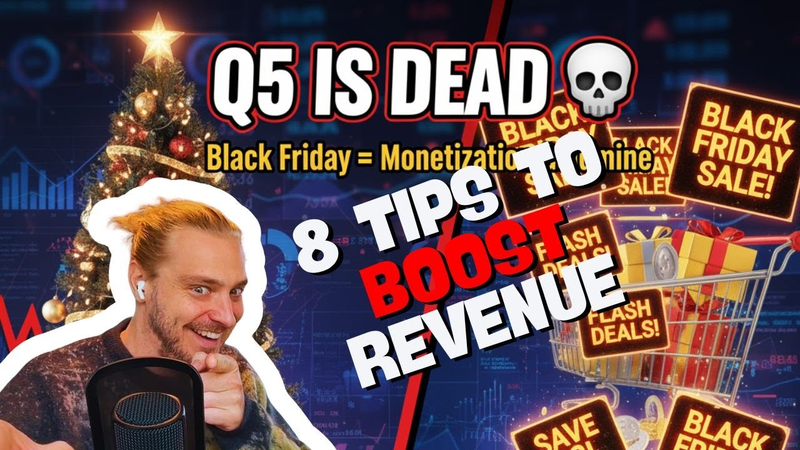
💰 8 Tips to Boost Your Q4 Ad Revenue by Felix Braberg
Mobile game developers can optimize Q4 ad revenue by shifting focus from the traditional late-December "Q5" period to the high-traffic Black Friday and Cyber Monday weekend.
- Prioritize the Black Friday and Cyber Monday window over the late-December 'Q5' period, as eCPM rates typically surge by 15% to 55% during this time.
- Increase ad supply by reducing interstitial cooldown periods by 15% to 20% and shortening banner refresh rates to five or ten seconds.
- Optimize ad demand by setting bid floors at 4% to 5% of average eCPM for banners and 7% to 10% for interstitials to drive higher auction prices.

Rockstar’s Union Gets Busted, Runescape’s MTX Vote & Amazon Unalives New World | Games For Breakfast
The gaming industry is currently navigating a period of significant structural and strategic volatility, characterized by labor disputes, shifting monetization models, and the failure of high-capital corporate strategies.
- Amazon Games is sunsetting the title New World and canceling its Lord of the Rings MMO, signaling a failure of high-capital corporate strategies that lack a niche-focused, sustainable growth model.
- Rockstar Games faces allegations of union-busting following the termination of dozens of employees, highlighting increasing friction between major studios and labor organizations.
- Jagex is shifting toward player-centric monetization by allowing Runescape players to vote on the removal of controversial microtransactions.

Monopoly Bingo Review: The most underrated genre in mobile gaming
Monopoly Bingo occupies a strategic position within the $400 million global bingo market by leveraging the recognizable Hasbro intellectual property to attract a demographic aged 35 to 54.
- Monopoly Bingo targets the 35–54 demographic within the $400 million global bingo market by utilizing Hasbro’s intellectual property to drive brand recognition.
- Since its early 2025 soft launch, the game has secured 60,000 to 70,000 daily active users and currently leads the bingo genre in total download volume.
- The game differentiates itself through a multi-card mechanic and a high-stakes progression system modeled after the economy of Golf Clash.



Digital Market Index: Q3 2025
Global mobile app consumer spending reached a record $43.2 billion in the third quarter of 2025, representing an 11.3% year-over-year increase.
- Global mobile app consumer spending reached a record $43.2 billion in Q3 2025, an 11.3% year-over-year increase driven by a 20% surge in non-game revenue.
- Generative AI tools emerged as a significant revenue driver, contributing $1.5 billion to the mobile app market during the third quarter.
- U.S. digital advertising spend rose 12% to $35.9 billion, with mobile app advertising identified as the fastest-growing segment at 42% year-over-year.

How Valve (And Apple) Broke Game Sales | Design Club
The digital distribution landscape has undergone a profound transformation, shifting from a model defined by physical retail to one dominated by centralized storefronts like Steam.
- Steam has fundamentally altered consumer price anchoring by normalizing frequent, deep discounts, training players to wait for sales rather than purchasing games at full price.
- Developers are now forced to build 'sale-proof' pricing models, ensuring that even after significant discounts, the revenue per unit remains profitable after platform fees.
- The frequency and depth of Steam discounts have increased significantly over time, with standard promotions moving from 10–20% to 30–60% or higher to capture consumer attention.
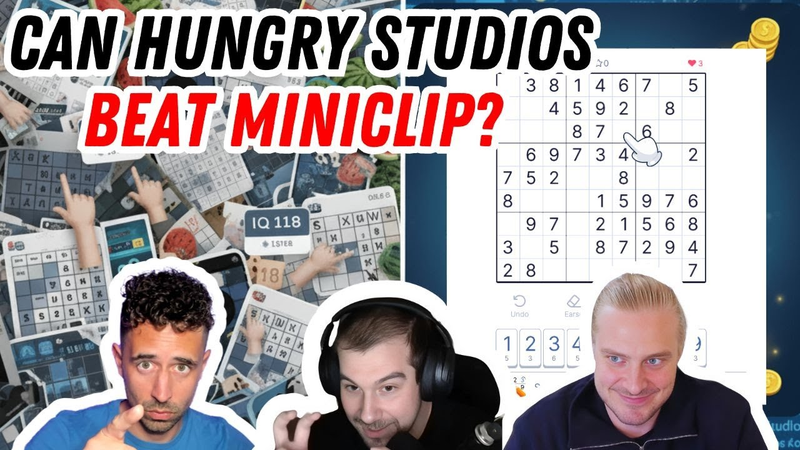
🧠 Sudoku Master Review: The 6,000-Ad War Between Hungry Studio & Miniclip
Hungry Studio is aggressively challenging established market leaders like Miniclip in the mobile puzzle genre by applying a high-velocity, data-driven growth model to its title, Sudoku Master.
- Hungry Studio has scaled Sudoku Master to 600,000 daily active users by prioritizing high-velocity creative iteration over genre innovation.
- Success in the saturated puzzle market is driven by the ability to deploy thousands of ad variations per month to combat the rapid decay of ad performance.
- The studio’s growth model relies on a war of attrition in user acquisition, where the frequency of A/B testing and creative deployment determines market share against incumbents like Miniclip.

🐶 X-Clash: The Fake UA funnel & Fake Ads Masterclass. How to 10x your revenues?
Chinese studio Binuang Network and developer Glacier Games have successfully scaled titles like X-Clash by leveraging aggressive, misleading user acquisition funnels.
- Glacier Games and Binuang Network scaled X-Clash by using 'fake ads' that feature viral mini-game mechanics like 'Save the Dog' to drive downloads for a core 4X strategy game.
- The studio maintains a massive library of over 9,000 unique creatives to combat creative fatigue and sustain high-volume user acquisition on Google and YouTube.
- This strategy effectively bridges the gap between casual players and the high-value monetization loops typical of the 4X strategy genre.
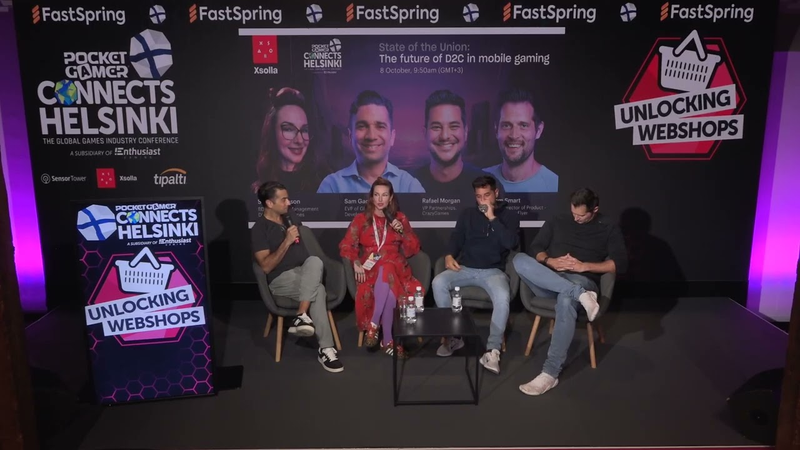
Panel: State Of The Union: The Future Of D2C In Mobile Gaming.
The mobile gaming industry is undergoing a fundamental transformation as developers pivot toward direct-to-consumer (D2C) strategies to bypass the traditional gatekeeping of major app stores.
- Recent legal rulings in the United States, such as the court decision against Google, are forcing app stores to allow third-party payment systems and direct-to-consumer (D2C) redirects, fundamentally shifting the mobile distribution landscape.
- Industry experts project that within five years, 50% to 60% of mobile gaming payments will be processed through D2C channels as developers seek to bypass traditional store fees and gain more control over their revenue.
- D2C webshops provide essential access to alternative payment methods in emerging markets like Brazil and India, where traditional app store payment options often fail to accommodate unbanked users.
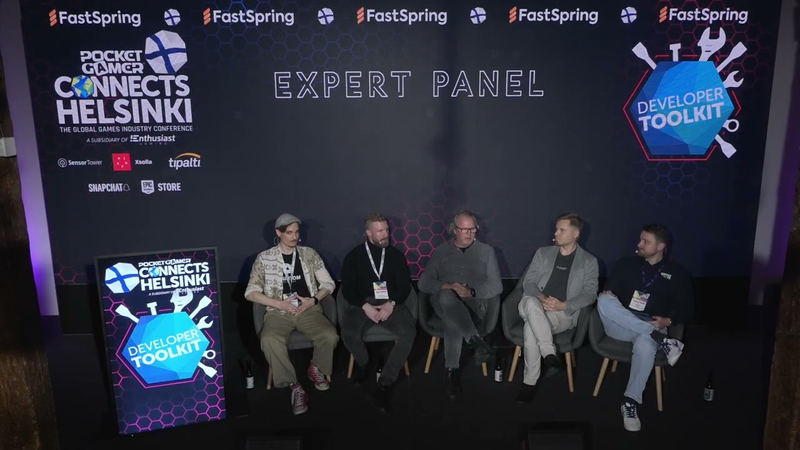
Panel: How To Ship A Top-Tier Game Without A Top-Tier Budget: Practical Tips For Cost-Effective.....
Achieving high-quality game production with limited capital requires a disciplined, lean operational strategy that prioritizes agility and long-term efficiency over traditional large-scale development models.
- Prioritize 'buy' over 'build' for core infrastructure, as small teams lack the resources to maintain custom tech stacks, which are only cost-effective for massive companies like Supercell that require specific competitive advantages like millisecond-level load time optimizations.
- Avoid over-funding in early stages; raising the minimum necessary capital forces a disciplined, lean mindset and prevents the common pitfall of hiring too many people before achieving product-market fit.
- When selecting third-party services, prioritize providers that offer access to source code or clear exit strategies to avoid vendor lock-in, as seen when the sudden shutdown of analytics platforms like Omniata forced studios to rebuild their entire tech stack.