Monetization reports and market data
Documents
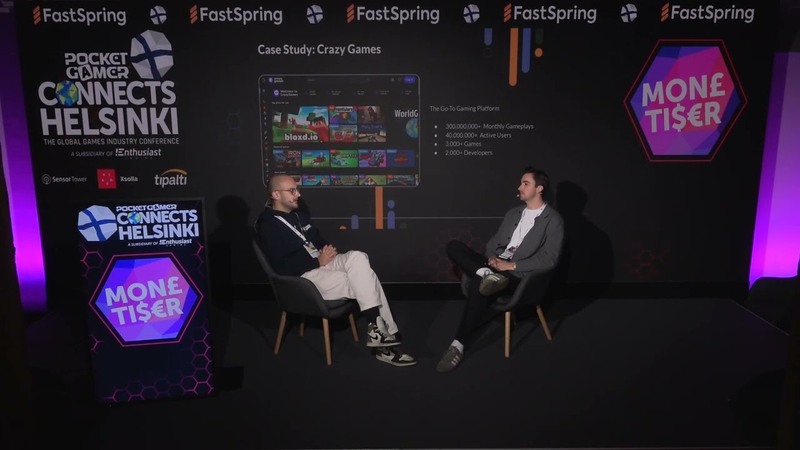
Fireside Chat: How Crazy Games Streamlined Global Payouts & Boosted Developer Relationships...
Crazy Games, a global web-based gaming platform hosting approximately 3,000 titles and serving over 40 million monthly unique users, has successfully modernized its financial operations to support its rapid scaling.
- Crazy Games, a platform hosting 3,000 titles for 40 million monthly users, transitioned from manual, spreadsheet-based payouts to an automated accounts payable hub to manage its global revenue-sharing model.
- Automating the payment process reduced the time required for monthly developer payouts from a labor-intensive manual task to just a few hours.
- The implementation of a secure, developer-facing portal shifted the burden of tax compliance and payment data maintenance to the creators, resulting in a near-perfect transaction success rate.
Session: What Processing $500M In Transactions Taught Us About DTC Web Stores - Miikka Luotio.
Direct-to-consumer (DTC) web stores have become a critical component of mobile game monetization, as evidenced by data derived from $500 million in processed transactions.
- Segmentation is the most critical driver of web store performance, with personalized offers yielding a 20% improvement in conversion compared to generic storefronts.
- Web stores demonstrate high repeat-purchase potential, as 50% of first-time buyers make a second purchase within seven days, and 70% of players who reach four transactions continue to a fifth.
- First-time web store visitors show strong retention, with 80% returning to the store within a median of 2.6 days after their initial transaction.
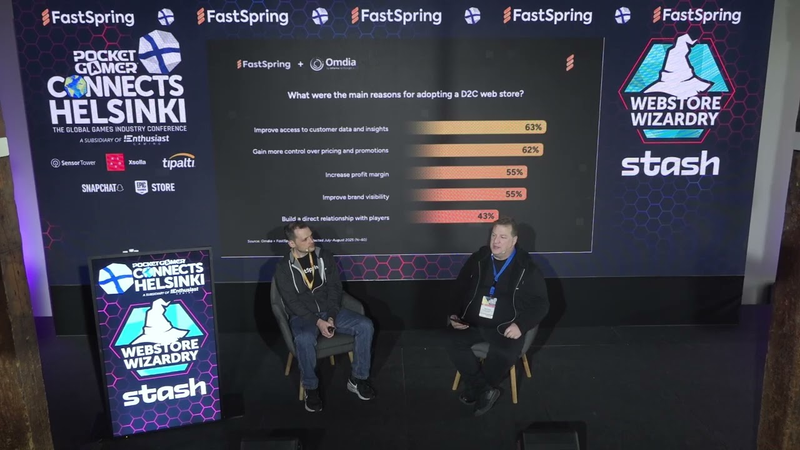
Fireside Chat: Surprising Drivers For D2C Adoption & Success - Chip Thurston & Peter Gerson.
Direct-to-consumer (D2C) web stores have become a central strategic focus for the gaming industry, driven by a desire for deeper player insights rather than solely for profit margins.
- Nearly all game publishers surveyed are either currently operating a direct-to-consumer (D2C) web store or plan to launch one within the next 12 months.
- While increased profit margins were the primary driver for D2C adoption in the past, current motivations have shifted toward gaining deeper access to customer data and insights and achieving greater control over pricing and promotions.
- A successful D2C strategy functions as a flywheel where revenue shifted from traditional app stores is reinvested into more sophisticated, data-driven user acquisition, which in turn grows the player base and further increases web store revenue.
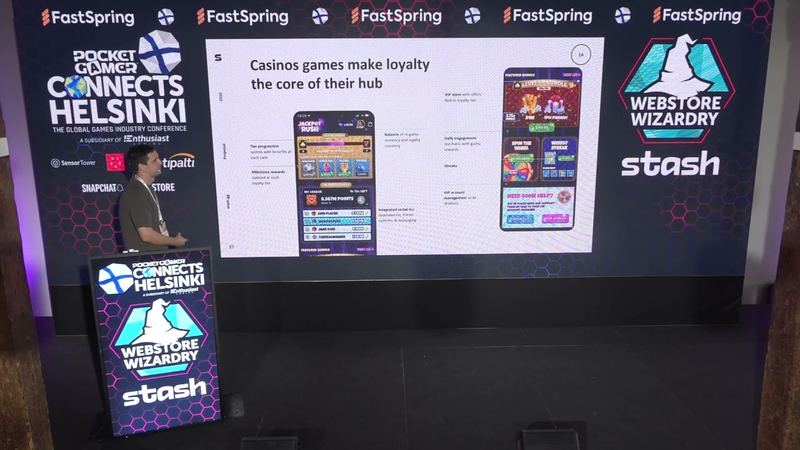
Session: Unlocking D2C Growth: Embedded Payments + Reward-Driven Incentives - Archie Stonehill.
Direct-to-consumer (D2C) growth in the gaming industry is increasingly driven by the strategic integration of embedded payments and reward-based loyalty programs.
- Direct-to-consumer (D2C) loyalty programs are highly effective for channel shifting, allowing studios to remain profitable even when giving away up to 25% of value because of the increased margins captured by bypassing platform fees.
- Android's upcoming regulatory changes in the US are expected to significantly expand alternative distribution and native app payment options, potentially surpassing the current scope of iOS linkout policies.
- Loyalty programs should be designed as a core hub for the D2C experience, utilizing rank-based benefit multipliers that increase rewards as players spend more, thereby incentivizing long-term adoption of the web store.

TWIG #354 Google's New Payment-Link Era and Rovio's End of an Era
The gaming industry is currently undergoing a structural shift characterized by a move toward direct-to-consumer payment models and a consolidation of development resources.
- Regulatory shifts forcing Google to allow third-party payment links are not increasing developer profit margins, as savings are being redirected into rising user acquisition costs.
- Cross-platform commerce is emerging as a critical strategic battleground for firms like Unity and Epic Games, who are leveraging payment solutions to aggregate user data for ad-tech applications.
- The industry is shifting toward a 'fewer, bigger, better' production philosophy, exemplified by Rovio's recent restructuring following the underperformance of key titles.

🎮 Huntopia: The $100K/Day Idle RPG that monetizes everything. Literally everything!
Huntopia represents a significant case study in aggressive mobile game monetization, demonstrating how an idle RPG can generate substantial daily revenue—ranging between $50,000 and $100,000—by prioritizing constant financial conversion over traditional gameplay depth.
- Huntopia generates between $50,000 and $100,000 in daily revenue by prioritizing aggressive, constant monetization over traditional gameplay depth.
- The game integrates monetization directly into core user interactions, using contextual prompts during routine tasks like claiming rewards or advancing battle pass tiers.
- The design utilizes a menu-heavy, automated progression loop that requires minimal active input, effectively funneling users through a high-converting monetization path.
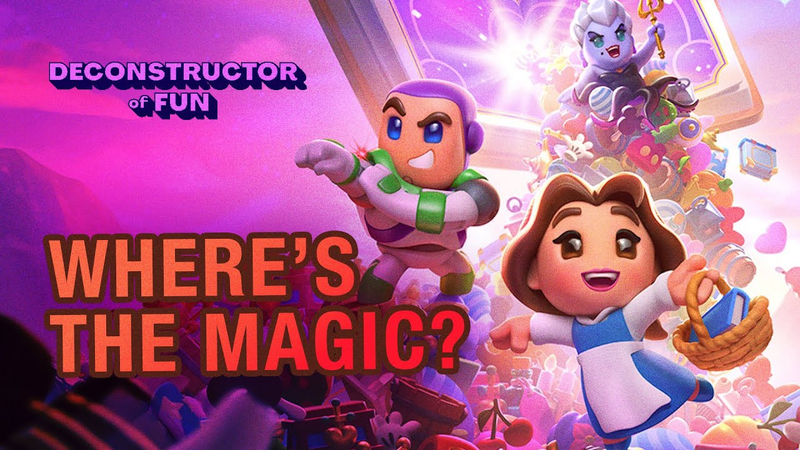
Disney Enters Match 3D — But the Magic’s Missing
Disney’s Magic Match, developed by Jam City, represents a recent entry into the competitive Match 3D mobile gaming subgenre.
- Disney’s Magic Match, developed by Jam City, is struggling to gain traction in the Match 3D subgenre due to its late entry against established leaders like Match Factory, which has dominated the market since late 2023.
- The game fails to implement effective monetization because it lacks early-game difficulty, with playtests showing zero fail states within the first 50 levels.
- Unlike traditional match-three games that use adaptive drop algorithms to drive revenue, Match 3D titles rely on time-based pressure and dexterity, which Magic Match fails to leverage for economic tuning.

The Present & Future of Digital Tabletop RPGs
The tabletop role-playing game market has evolved into a robust $30 billion industry, currently experiencing an 11.8% annual growth rate fueled by a post-pandemic resurgence in social, unplugged entertainment.
- The tabletop RPG industry is currently experiencing a growth rate of 11.8%, outpacing the video game industry as players increasingly seek social, non-isolationist entertainment.
- Successful digital TTRPG platforms must integrate five core functionalities: character sheets, rulebooks, encounter builders, support for user-generated content, and a virtual tabletop (VTT) interface.
- To avoid cannibalizing physical sales, publishers are adopting hybrid models where digital subscriptions provide basic functionality while physical products remain premium, collectible items that offer a tactile experience.

The EU's Digital Fairness Act and what it means for the games industry explained
The European Commission’s proposed Digital Fairness Act represents a significant shift in the regulatory landscape for the gaming industry, aiming to modernize consumer protection standards across the European Union.
- The EU's proposed Digital Fairness Act aims to modernize consumer protection by targeting monetization strategies, addictive design elements, and the protection of vulnerable users.
- Industry stakeholders are concerned that the legislation may misclassify standard promotional mechanics, such as time-sensitive offers and limited-edition items, as prohibited dark patterns.
- New mandates requiring the display of fiat valuations for mixed-source virtual currencies are being challenged as technically flawed and potentially disruptive to free-to-play economic models.

Pokémon Poop & All the Gaming Stories Z-A Blocked Up | Games For Breakfast
The contemporary gaming landscape is defined by a tension between established franchises, platform-level mismanagement, and the aggressive monetization of player behavior.
- Major franchises like Pokémon are experiencing development stagnation, prioritizing iterative quality-of-life updates over innovation due to a lack of competitive pressure.
- The gaming industry is facing increased regulatory scrutiny, particularly from the European Union, regarding predatory monetization models like loot boxes and multi-currency systems.
- Twitch is struggling with systemic operational failures, including inadequate event security and a lack of substantive platform feature updates.

🏰👠 The Tower GD Masterclass Review: The ultimate Cinderella story
The Tower serves as a compelling case study in the mobile free-to-play market, demonstrating that deep mechanical complexity and community-driven engagement can generate substantial revenue, even in the absence of high-fidelity art or traditional production values.
- The Tower has generated over $50 million in total revenue with daily earnings peaking at $80,000, proving that minimalist, data-heavy interfaces can drive significant financial success.
- The game achieves long-term retention by prioritizing a core loop of macro-management and grinding, eschewing traditional energy-based monetization in favor of deep progression systems.
- A lean team of four full-time employees manages the project, utilizing a hybrid growth strategy where 50% of installs are organic, driven by an active Discord community and a creator code program.
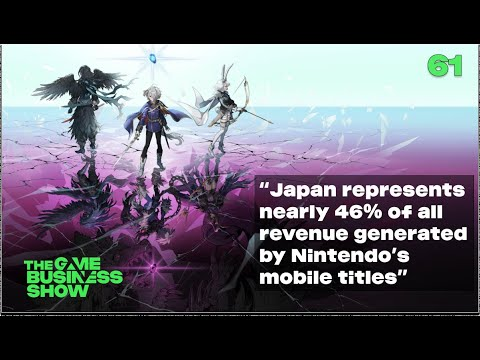
Nintendo has generated nearly $2.2 billion from mobile games so far
The global gaming industry is currently navigating a period of significant volatility, marked by high-profile commercial setbacks and organizational instability.
- Nintendo has generated nearly $2.2 billion in total revenue from its mobile gaming portfolio.
- Japan is Nintendo's most critical mobile market, accounting for approximately 46% of total mobile earnings due to higher per-user spending.
- Fire Emblem Heroes is the primary driver of Nintendo's mobile success, contributing roughly 50% of the company's total mobile revenue.