Monetization reports and market data
Documents

Level Devil Review - NOT A TROLL GAME! haha really? Solo Dev, Millions of Installs. Profit!
Level Devil, a solo-developed mobile title launched in February 2024, represents a significant case study in viral organic growth within the hyper-casual gaming sector.
- Level Devil, a solo-developed mobile game launched in February 2024, achieved over 35 million downloads and nearly 1 million daily active users through viral organic growth.
- The developer is currently under-monetizing the title, generating a $2.5 million annual revenue run rate despite a massive, self-sustaining user base.
- Implementing competitive ad mediation could potentially double the game's annual revenue to between $5 million and $6 million.

Panel: Press Continue: How To Hit The Mark With Ads In Your Games.
The mobile gaming industry is undergoing a strategic shift toward hybrid monetization models that integrate advertising as a core component of the user experience rather than an intrusive afterthought.
- Rewarded video ads are the preferred monetization strategy for new game designs because they integrate seamlessly into user flow and allow for higher engagement without negatively impacting retention.
- In-game advertising should be treated as a distinct format rather than repurposed social media content; developers must account for longer user focus times and higher ad frequency capabilities unique to the gaming environment.
- Hybrid monetization models—combining in-app purchases, rewarded ads, and interstitials—consistently provide incremental revenue growth without harming core product health metrics when implemented correctly.

Session: Seizing The Mobile Market Shift: Why Act Now - Gokce Kozandagi, Xsolla.
The mobile gaming industry is undergoing a fundamental structural shift, moving away from total reliance on traditional platform-controlled payment ecosystems toward direct-to-consumer (D2C) models.
- The mobile gaming industry is shifting toward direct-to-consumer (D2C) models to bypass platform fees, a transition accelerated by legal rulings starting in May 2025 that permit external payment links.
- Implementing a web shop can generate a 65% revenue uplift, which doubles when integrated with in-game buy buttons, allowing studios to recapture the 20% to 30% of revenue typically lost to platform fees.
- The web shop market is currently valued at $16 billion, with data showing a 40% conversion rate for first-time visitors and an 80% repeat-purchase rate among new buyers.
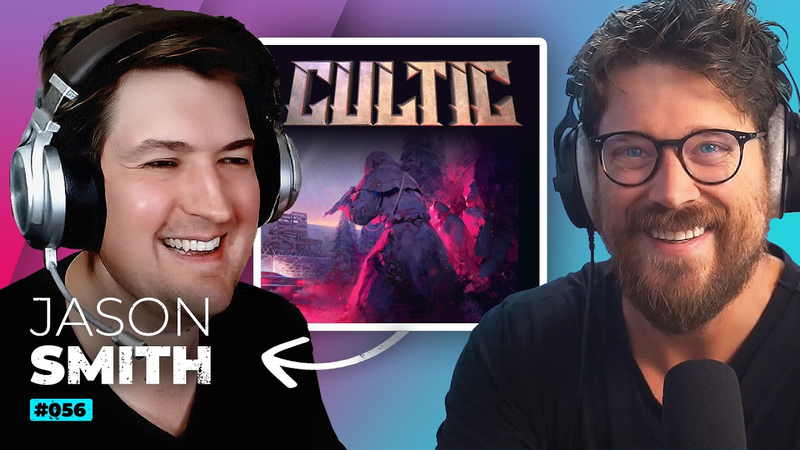
Jason Smith: How He Sold 100,000 Copies Of His Game (w/ Overwhelmingly Positive Reviews) | Ep. #056
The development of the boomer shooter Cultic serves as a case study in the challenges of scaling a solo-led project into a multi-chapter experience.
- Jason Smith achieved success with the boomer shooter 'Cultic' by focusing on long-term project viability rather than short-term trends, aiming for a game with multi-year staying power.
- To address player feedback from Chapter 1, Smith expanded the scope of Chapter 2 by increasing level variety and length, despite the original game already holding a 97-98% positive rating.
- Smith and his collaborator Nick utilized a collaborative level design process where they traded maps back and forth, leading to distinct design styles that were occasionally criticized, such as the open-ended nature of the 'Fairgrounds' level.

Switch 2 Is Breaking Records — The Console Wars Aren’t Dead Yet
The gaming industry is currently defined by two distinct narratives: the resilient performance of traditional console hardware and the complex, high-growth, yet margin-pressured trajectory of platform-based digital ecosystems.
- Nintendo’s next-generation console is outperforming its predecessor with 10 million units sold pre-holiday, positioning it to potentially exceed 20 million units by year-end.
- Roblox reported 151 million daily active users in Q3 2025, representing a 70% year-over-year increase and a 47% surge in engagement hours across the U.S. and Canada.
- Despite record-breaking user metrics and rising free cash flow, Roblox stock declined as investors prioritized margin expansion over raw user acquisition.

Why is Google policing how the world's top mobile games monetise? | Week in Mobile Games podcast E72
Google and Epic Games have proposed a tiered fee structure for the Play Store that distinguishes between cosmetic items, taxed at 9%, and gameplay-advantage items, taxed at 20%.
- Google and Epic Games have proposed a tiered Play Store fee structure that charges 9% for cosmetic items and 20% for items providing gameplay advantages.
- An analysis of the top 50 mobile games shows that every title currently employs monetization mechanics, such as loot boxes or boosters, that would trigger the higher 20% fee.
- Direct-to-consumer revenue streams are gaining traction, evidenced by Playtika reporting 20% growth in this sector during the third quarter through strategic entertainment brand partnerships.

Game Analytics 04 - Monetizing
Monetization in the gaming industry is fundamentally an outcome of understanding player motivation rather than a technical layer added to a product.
- Monetization should be treated as an extension of player motivation rather than a technical layer, requiring a balanced hybrid model of IAP, subscriptions, and advertising.
- Advertising serves to raise the revenue floor by monetizing non-paying users, while rewarded video ads can be offered to all players to enhance retention without disrupting the user experience.
- Developers should avoid binary spender/non-spender classifications and instead analyze the spending spread between 'minnows' and 'whales' to cater to distinct segments like time-rich versus time-poor players.
TWIG #357 Royal Match $200M Splurge, Arc Raiders AI Controversy and AI Duolingo's Broken Streak,
The current landscape of the interactive entertainment industry is defined by intense scrutiny over monetization strategies, corporate restructuring, and the integration of emerging technologies.
- The mobile puzzle market is facing diminishing returns, as evidenced by Dream Games' Royal Kingdom failing to see proportional growth despite massive user acquisition spending.
- The court rejected the Epic Games and Google settlement, signaling continued legal scrutiny over app store fee structures and concerns that such agreements stifle independent competition.
- Square Enix is centralizing operations through significant layoffs in its Western divisions, a move that risks weakening the cultural expertise required for effective product localization.

How to Make Money in XR - 10 Tips for Success | Develop:Brighton 2024
The extended reality market demands a strategic focus on high-quality, immersive interactions that provide a distinct value proposition over traditional gaming platforms.
- Successful XR titles prioritize high-quality interaction mechanics, such as the tactile feedback in 'Walking Dead: Saints and Sinners' or the physical movement requirements in 'Gorilla Tag', to create memorable gameplay.
- Data from November 2023 indicates that top-performing XR games correlate with higher review counts per sale, and there are specific price points—often around £22.99—that show a higher likelihood of achieving top-50 sales status.
- Market growth is driven by three distinct segments: core XR enthusiasts who play multiple times a week, 'XR curious' users who bought headsets during COVID-19, and a rapidly expanding demographic of younger players.

Battlefield 6 Goes Free-to-Play
Battlefield 6 is undergoing a strategic pivot by adopting a free-to-play model for its new RedSec mode, a move designed to compete directly with Call of Duty’s Warzone.
- Battlefield 6 is adopting a free-to-play model for its new 'RedSec' mode, featuring a 100-player battle royale format to compete directly with Call of Duty: Warzone.
- Monetization for the new mode will center on a 'Battlefield Pro' pass and a weapon blueprint system, both designed to increase average revenue per user (ARPU) and improve long-term player retention.
- Modern shooter success is increasingly dependent on rapid content pipelines, with studios turning to machine learning and AI to meet the high production demands of live-service models.
Epic-Google shenanigans, EA payouts, Squad Busters, Take-Two, Playtika, Rainbow 6, Horizon, more
The mobile gaming industry is currently navigating a period of significant structural and financial shifts, characterized by high-stakes legal developments, major executive compensation disclosures, and evolving platform strategies.
- Take-Two Interactive's mobile segment accounted for 46% of its net revenue in Q3 2025, signaling a shift where mobile performance is outpacing the company's console portfolio.
- Gaming-related digital advertising spend reached $8.7 billion during the first three quarters of 2025, highlighting the growing importance of ad-based revenue streams.
- Legal proceedings indicate that the proposed Epic Games-Google settlement is unlikely to be approved, as critics argue the terms disproportionately favor Epic's business model over broader industry reform.

Why are sticker albums taking over? From Royal Match to Mid-Core by Jakub Remiar
The sticker album mechanic has emerged as a dominant engagement and monetization feature across the mobile gaming industry, particularly within the casual genre.
- Sticker albums have become a primary engagement and monetization driver in mobile gaming, popularized at scale by Monopoly Go starting in April 2023.
- The mechanic adds depth to shallow game economies by using gacha-style booster packs, duplicate card sinks, and high-value grand prizes to incentivize whale spending and retention.
- Standard sticker albums typically feature 135 to 200 cards over a 30- to 60-day seasonal cycle, utilizing recurring art assets to minimize technical and design complexity.