Monetization reports and market data
Documents
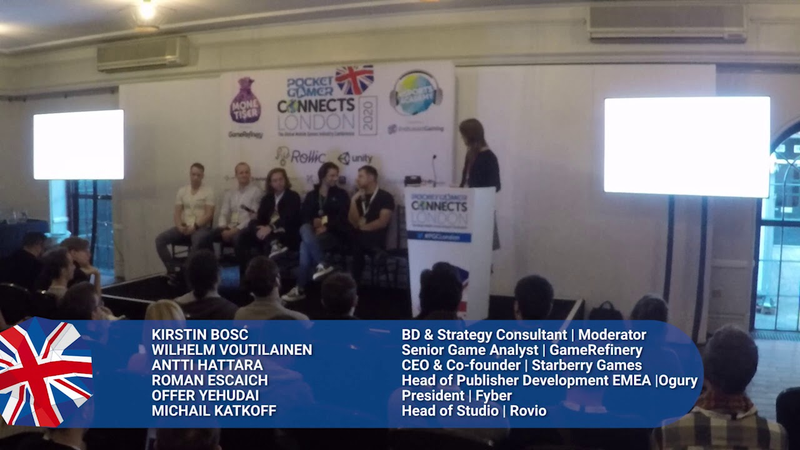
Panel: Choosing the Monetisation Mix for Your Game
The mobile gaming landscape has shifted toward hybrid monetization models as a necessary response to rising user acquisition costs and the dominance of established titles.
- Hybrid monetization—combining in-app purchases, subscriptions, and advertising—is now a necessary strategy to combat rising user acquisition costs and competition from established titles.
- Successful hybrid models treat revenue streams as a cohesive ecosystem where mechanics reinforce each other rather than operating as isolated silos.
- Rewarded video ads should be implemented as non-intrusive, value-added gateways to premium content to enhance player retention rather than detract from the user experience.

Building a Successful Ad Monetisation Strategy: What can Mobile Gaming Learn from Other Verticals?
The mobile gaming industry is undergoing a significant shift in its monetization strategy, moving away from a reliance on in-app purchases toward a more robust, ad-supported model.
- Mobile gaming should shift from a reliance on in-app purchases and performance-based game ads toward brand-centric advertising models used by non-gaming applications.
- Developers can attract premium brand budgets from retail and consumer goods sectors by treating their games as 'shop windows' that offer high-quality, non-intrusive ad placements.
- To appeal to premium advertisers, developers must prioritize brand safety and leverage recognizable intellectual property rather than relying solely on hyper-casual ad models.

How Does Brand Advertising Fit into Your Monetisation Strategy?
Mobile game publishers can significantly enhance their monetization strategies by integrating brand advertising into their existing revenue models.
- Compliance with supply chain transparency standards—specifically app-ads.txt, sellers.json, and the OpenRTB supply chain object—is now a mandatory prerequisite for accessing brand budgets from major buyers like The Trade Desk and Google.
- Only approximately 30% of top-tier mobile apps are currently compliant with industry transparency standards, leaving a significant portion of the market excluded from brand advertising revenue.
- Publishers should move away from global price floors and instead implement regional pricing tiers to effectively capture demand across diverse international markets.

Beyond Game Economy Design - Increasing Profit Through Intelligent Revenue Optimisation
Revenue optimization in mobile gaming extends beyond core gameplay design, requiring sophisticated, data-driven strategies to maximize player retention and monetization.
- Implementing automated loyalty programs can significantly boost key performance metrics, with one case study showing a 21% increase in day-one retention, a 24% increase in time spent in-app, and a 75% increase in average revenue per user (ARPU).
- For games heavily reliant on ad revenue, loyalty programs can act as a gamification layer that drives engagement, resulting in observed increases of 56% in day-one retention and 93% in total ad revenue.
- Effective revenue optimization requires moving beyond core gameplay loops to analyze thousands of player data signals, allowing developers to predict behavior and deliver personalized 'next best actions' for individual users.

Holistic LTV: A Unified View to Drive Growth & Efficiency
Maximizing user lifetime value (LTV) requires moving beyond fragmented, siloed data to a unified, holistic approach that integrates user acquisition, monetization, and product development.
- Transitioning from siloed metrics like ARPDAU and eCPM to a holistic LTV model is necessary to capture the total revenue generated by a user across their entire lifecycle.
- Fragmented data and reliance on waterfall-based ad reporting obscure true revenue performance, whereas programmatic bidding provides the granular, impression-level data required for accurate LTV calculations.
- Organizational silos between user acquisition, product, and monetization teams often lead to conflicting goals, such as increasing ad load to boost short-term revenue at the expense of long-term retention.
It’s 2020, Time to Change Your Ad Monetisation Strategies!
The mobile game advertising industry is undergoing a significant shift in 2020, moving away from traditional, inefficient waterfall monetization models toward real-time bidding (RTB) and unified auctions.
- The mobile game industry is shifting from inefficient, legacy waterfall monetization models to real-time bidding (RTB) and unified auctions to better capture the true market value of individual impressions.
- Unified auctions utilize first-price auction mechanics to provide developers with increased pricing transparency and more dynamic competition among ad networks, DSPs, and brands.
- Approximately 35% of surveyed companies have already tested in-app bidding, with an additional 35% planning to implement the technology within the next year.
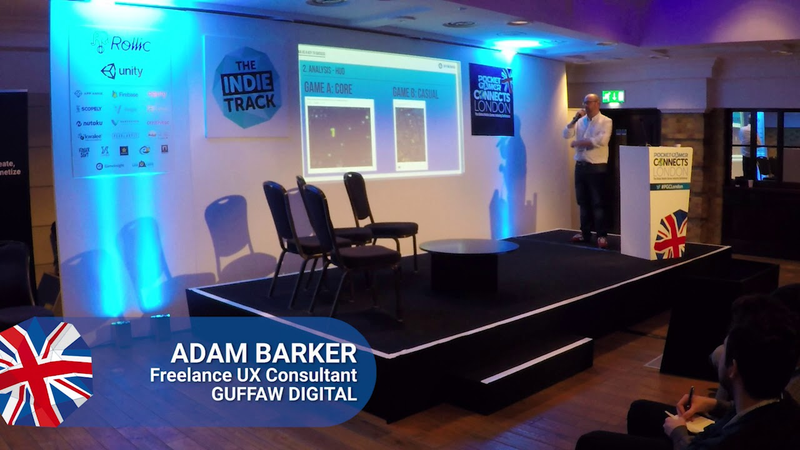
How a Well Designed UX can Improve Monetisation, UA and Retention and Keep Users Satisfied.
User experience (UX) design serves as a critical driver for monetization, user acquisition, and retention in mobile gaming.
- Approximately 30% of users abandon mobile games during the initial onboarding process, highlighting the critical need for optimized tutorial design.
- UX research and testing should be integrated early in the production cycle, ideally before coding begins, to validate design assumptions and identify friction points.
- To reduce tutorial drop-off, developers should use a 'chunking' strategy that delivers essential mechanics in small, action-oriented segments rather than overwhelming players with full system information.
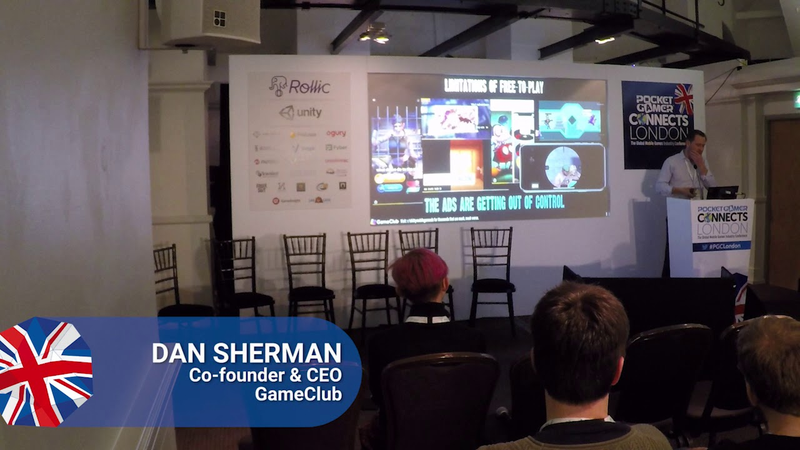
The End of Game Ownership – How the Subscription Model is Disrupting Mobile Games
The mobile gaming industry is currently undergoing a significant shift as subscription models emerge to challenge the dominance of the free-to-play (F2P) paradigm.
- The mobile gaming market is bifurcating into two distinct models: casino-style free-to-play (F2P) entertainment and subscription-based home entertainment.
- Subscription models prioritize user experience by eliminating intrusive advertisements and in-app purchases, shifting the monetization focus from individual game transactions to network-wide retention.
- Subscription services like GameClub, Xbox Game Pass, and Nintendo Switch Online drive higher content discovery, with data showing that subscribers engage with a broader variety of genres than under traditional purchase models.

Stop Believing Benchmark Metrics for Your Game
Standard industry benchmarks for mobile game performance—such as the widely cited 40/20/10 retention model for days 1, 7, and 28—are often misleading and should not be used as universal indicators of success.
- Generic industry benchmarks, such as the 40/20/10 retention model for days 1, 7, and 28, are misleading and should not be used as universal indicators of project viability.
- Developers should replace external averages with custom models that integrate daily installs, retention duration, and net ARPDAU to determine actual product sustainability.
- A game with lower retention can remain highly profitable if it maintains high organic install volumes or superior monetization efficiency compared to titles that meet standard benchmarks.
Bringing a Desktop Subscription Model to Mobile
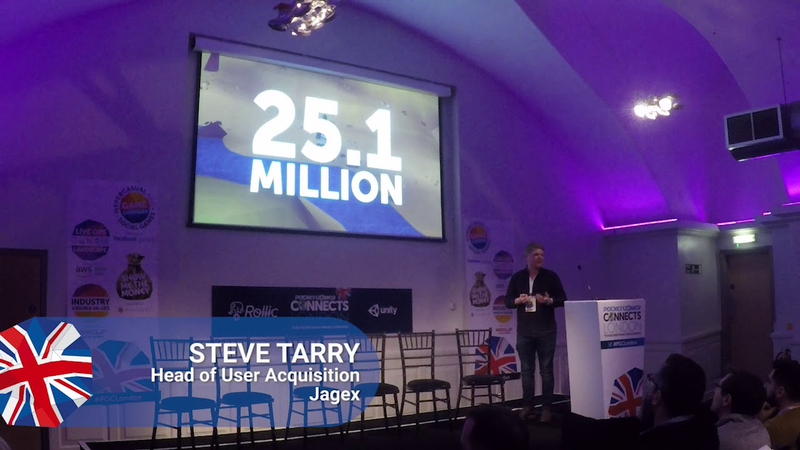
Jagex successfully expanded its desktop MMORPG, Old School RuneScape, to mobile platforms by prioritizing a seamless, cross-platform experience that allows players to maintain progress across PC and mobile devices.
- Jagex generated 25 million in gross revenue and 8.6 million installs by expanding Old School RuneScape to mobile, proving the viability of a cross-platform subscription model.
- To maintain a unified view of user value across PC and mobile, the company integrated internal data with mobile measurement partners, enabling more effective scaling of advertising spend.
- The mobile launch strategy utilized pre-order campaigns on the Apple App Store and Google Play, which drove the game to the top of free-to-play charts in the US and UK within 24 to 72 hours.
What we Have Learnt from 100 Million Hypercasual Downloads
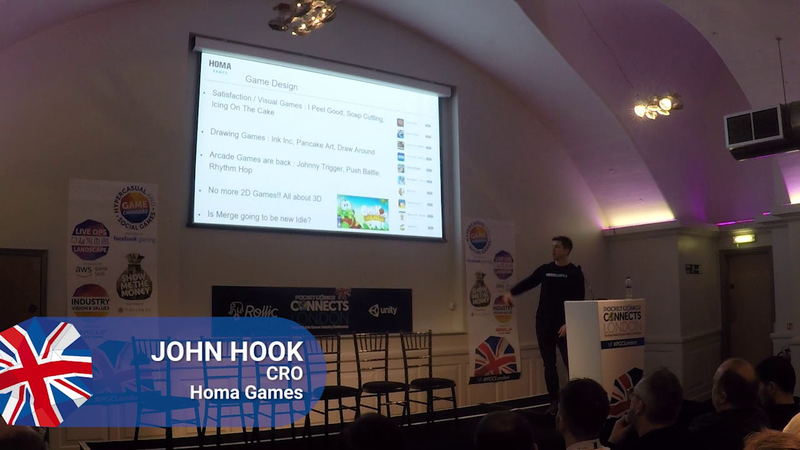
The hypercasual gaming sector is currently undergoing a significant evolution, transitioning from simple, high-volume mechanics toward more complex, hybrid models that prioritize long-term value over raw download counts.
- The hypercasual market is shifting toward hybrid-casual and idle models to improve lifetime value (LTV) and session duration, moving away from the traditional focus on raw download volume.
- Retention benchmarks for arcade-style titles show a significant gap, with top-tier games achieving 15% day-seven retention compared to just 8% for average titles.
- Publishers are utilizing impression-level data to implement personalized bidding and ad strategies, allowing for the segmentation of players based on their preference for in-app purchases versus ad-supported experiences.

Can Showing Fewer Ads in Your App Lead to More Money?
Maximizing revenue in the hypercasual gaming sector requires shifting focus from short-term ad frequency to long-term user lifetime value.
- Aggressive ad frequency in hypercasual games frequently triggers user attrition, which undermines total lifetime value (LTV) and long-term financial health.
- Developers should shift focus from maximizing short-term per-user ad income to finding an equilibrium between user experience and monetization.
- Data-driven monitoring of eCPM decay curves allows developers to identify the specific impression threshold where additional ads yield diminishing returns.