1 free read left. Create a free account for unlimited reading + AI research.
Create free account
How Does Brand Advertising Fit into Your Monetisation Strategy?
Key insights
6 takeaways- 01Brand advertisers are segmented into three distinct groups: traditional awareness buyers, brand-focused user acquisition teams, and direct-to-consumer challenger brands.
- 02Compliance with supply chain transparency standards—specifically app-ads.txt, sellers.json, and the OpenRTB supply chain object—is now a mandatory prerequisite for accessing brand budgets from major buyers like The Trade Desk and Google.
- 03Adopting transparency measures directly correlates with increased bid responses and higher overall revenue for mobile game publishers.
- 04Only approximately 30% of top-tier mobile apps are currently compliant with industry transparency standards, leaving a significant portion of the market excluded from brand advertising revenue.
- 05Publishers should move away from global price floors and instead implement regional pricing tiers to effectively capture demand across diverse international markets.
- 06Publishers can optimize inventory by using a tiered placement strategy, positioning awareness-focused brand ads in lower-waterfall placements while reserving higher priority for performance-driven buyers.
Ask AI about this video
Transcript
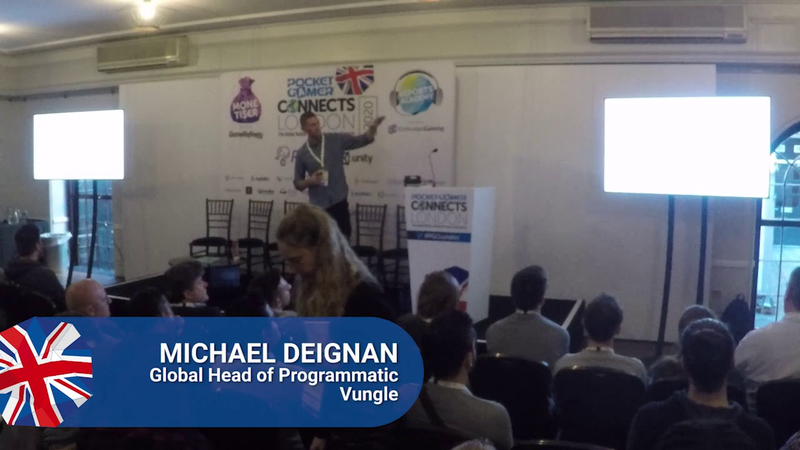
[Music] everybody all right let's see this is my swag bag I'm gonna announce this at the end also but this is introducing our new v5 SDK so make sure you grab one of those on the way out all right [Music] yeah awesome cool well hey everybody my name is Mike Degnan it's it's a real pleasure to hear so thanks for having me believe it or not I've actually been with Vogel for almost seven years so there's actually in the beginning I started out on a publisher supply team so there's a chance that
some of us may have crossed paths pub monetization is something I've thought a lot about for a long time so excited to be here for the last five years been working with bungles brand specific team really building out our brand business and adding in that extra additional mix to to helping pubs monetize your content so today we're gonna be really focused on brand strategy really around two specific things that are both very actionable so again how does brand fit into your monetization strategy we're gonna first start out by discussing the different types of brand buyers really bucketing them into three then we're gonna go into some of the key initiatives that are driving the industry forward then we're going to talk about some very tactical approaches to placements to increase opportunities for brand monetization first off actually before we get too far into it how many folks in the audience we have that are focused on pub monetization handful here okay cool that's great so
hopefully this is some pretty relevant stuff interesting if you're like me if you look at this screen some obviously popular games but also what you'll notice is a lot of different brand banner placements that's predominantly where I see brand advertising what I'm playing mobile games but I don't see a whole ton of what we really focus on fullscreen video now obviously if somebody who's very focused on brand advertising this is what I'm selling to our clients there's a lot of demand for it but it's also pretty tricky and oftentimes difficult to EXCI it against in terms of matching the supply with what the advertisers needs are so again that's really what we want to focus on today so we're looking at our different brand types we're bucking in them in two three we look at it based on the buying model that they have the goals that they have as well as their techniques and what's required to work with those types of clients so the first one are actually your your most common brand awareness buyers these are 1,400 fortune 50 guys that we all see and know on TV - of
course near and dear to all the products that we buy these guys are buying on a cost per thousand or a cost per completed view model obviously they're looking to drive awareness and intent for you to make purchases for their products a lot of them are pretty advanced buyers buying across lots of different types of inventory and formats so they're pretty adept at barring programmatically a lot of them are gonna create PMPs are selling through deal IDs this is kind of their preferred way of reaching supply in order to activate these types of buyers it's a heavy sales and marketing effort lot involved and we're actually getting into a little bit of supply chain in a minute the next bucket is somebody who's a lot more Jason to what we see in gaming user acquisition these are our brand apps these guys are very focused on driving news new subscribers new users to their applications a lot of the same techniques a lot of the same attribution companies are exactly the same as gaming so in fact we've seen over the last couple years a huge migration of UA
buyers or growth account managers go from gaming into this brand UA app so it's pretty cool because these are guys that we all know they understand a lot about the techniques that are available on mobile and apps specifically and a very important bucket the last one is relatively new these are our challenger brands our direct to consumer type clients and they're out there that were born in digital and they're attacking the fortune 50 1400 brands by being more stealthy more creative in terms of how they're buying and hyper hyper focused on driving sales so a cost per acquisition is really the model that they prefer because they purely survive on driving incremental sales because they're born in digital they're definitely strong and self-serve programmatic channels also search and social in order to be successful for them really a CPA or a row as model is gonna be what it takes so we'll come back to these three different buckets but I really just wanted to set that
context as we as we get into the presentation next up so I mentioned one of the the key things that's driving brands spend into our space specifically is the establishment of brand safety we know that mobile gaming has fantastic content it's it's brand safe inherently it's casual it's stuff that everybody's playing on the tube on their way to work but brands have a little bit of a challenge warming up to it and a few of these things that we're gonna discuss or really what's allowing them to take the next step before we get into that I want to walk you through what the supply chain looks like so how does the world's leading brand advertiser Unilever actually buy media from a studio like voodoo they just pick up the phone and connect and say hey we'd like to run some ads with you probably not although some of us would wish would be a lot easier like that they get a good chuckle thanks not the case more than likely this is actually going to be what the supply chain and of course this is like a simplified version there's a lot
more elements in here but you're gonna have the brand they're gonna be working with their agency that's going to help them develop the plan the buying strategy the agency more than likely is then gonna be pulling the levers within a demand-side platform in this case the trade desk second-largest DSP in the market behind Google's TV 360 the DSPs will be then plugged into the supply side platform and/or the networks such as bungle in this case who then is representing the inventory for the actual publisher so this is the the general supply chain that allows Unilever to run ads within Vudu 20:19 was a big year the IAB which stands for the internet ad Bureau developed these techniques that really created a lot of supply transparency basically giving confidence to the buy-side that there was less fraud less bad actors and really allowed supplied to market itself that's more viable for
these brands so we're gonna walk through these three initiatives then really drive home how it applies to us as we monetize traffic so the first one is this app - ads text anybody in the audience familiar with this cool few hands going up but relatively new content so what this is is actually a very straightforward text file that a publisher will list on their domain so for example vudu.com slash app - ads text and on that text page we'll have all the different sellers of their inventory the sellers of their inventory will be marked out as direct and resellers and effectively it just basically says I'm Vudu these are all the people that can sell my inventory if they're not included on that list they shouldn't technically be selling that inventory so it's a way of causing excuse me it's a way of calling out the bad actors that are posing as sellers of traffic the second piece this is the sellers
JSON this effectively is a mirror of the ads text it's the network's in this case so vongole comm slash sellers JSON we're actually listing out all the publishers that comprised of our network so as you can see here I did a kind of two-way match in a little trust badge as the DSPs get bid request from companies like vongole they actually go from the App Store they'll click onto the URL where these two pages are hosted they're actually gonna do a two-way matching and they're gonna say hey Vudu says that vongole can sell their inventory is this in fact true and vice versa and that's what creates the trust there so really kind of closing the loop these two things are happening mostly offline the third element to this is what really has been most excited this is the open RTB supply chain object and so what we're doing here is in the actual bid request so back in one step up when Vogel wants to sell our inventory routed
or app networks inventory we're establishing a connection with our demand-side platforms and in that request that information that gets sent to them part of its gonna actually now follow the different hops and its separate so the DSP can see exactly where the inventory originated and it's really cool because as a company that's been selling our sdk for a handful of years now being able to tell this story has mostly been qualitative like fungal has sdk direct traffic and this is the value of it but now with these three initiatives buyers truly can see who in fact has the closest access to the supply and that it's coming through a transparent pipeline so it's pretty good stuff and necessarily you know you shouldn't necessarily just take my word for it but this is what's been put out there this is at exchangers is from a couple months ago the trade desk and Google the takeaway here is that buyers can no longer purchase inventory that isn't ads dot text compliant so trade desk in
Google have gone the extra measure for their brand advertisers and they've said hey look we're gonna take the hard work off your plates if the publishers are not compliant with the ads dot text we're actually just not going to purchase their inventory on your behalf so basically they created a scenario where you're either in or you're out it's that straightforward if you're a publisher trying to sell inventory and you're not compliant the DSP is the largest brand buyers in the world will not purchase your inventory so looking at some data here trade desk actually imposed this this new mandate for the in-app space on October 1st bungle was ready we actually had all of our publishers lined up - ready to go with their app - add text files and we had the supply chain object in place so as soon as they mandated it we were there ready to sell our traffic in a way that they're ready to buy we saw an 8x increase in open market bid responses which correlated in a 3x increase in revenue for for our
publishers in ourselves so it was one of those rare moments where you see an immediate impact of a product or engineering update so I was super excited about it and to me it just really drives home the fact that these brand advertisers care deeply about getting access to the most transparent clear supply paths and in turn they're willing to pay for it all right let's look at the adoption this is pretty cool so there's a company there born on web to supply-side platform called pub Matic they actually released a dashboard and this is the industry-wide adoption curve and so as you can see this started happening about midway through last year we've kind of plateaued at about 30% unfortunately so there's a lot of work to be done but you can see there was a couple steps and then it just kind of petered out and what that looks like is on Android we're seeing 337 at the top thousand apps on iOS to 72 so only about 33% of Android
and 27 percent on iOS what that means is if you have an Android app right now two-thirds of those Android apps aren't even in the realm of consideration for the brand advertisers to purchase their inventory three-quarters of iOS apps all right now on one hand that's a huge opportunity we got to do a lot of work to get those publishers to update their text entries on the other hand if you do happen to be in those yellow buckets if you're one of the third or one of the quarter you're actually sitting in a position where you can capitalize from this opportunity because those brands are able to spend on your inventory excuse me so as I mentioned a little bit earlier on there's two demarcations when publishers list this ads text entry there's the direct path and then there's a reseller path and from that same article previously we're seeing that the brand buyers as well as the publishers are actually cutting off those reseller
paths and everybody's focusing on as direct as possible so this is a really interesting opportunity when we look at that across the industry as far as market share Google is a clear leader in both total market and also those direct listings but two and three in the industry our unity and vongole so we're super focused on being a direct seller in fact the result here I believe it's the same for unity I think both of those are just accidents I think publishers listed those two companies as resellers because it's small percentage and frankly Vogel doesn't have any way of buying off network so it's not actually incorrect but the direct column is really where you want to focus so as a seller of your inventory knowing that those reseller channels are effectively getting compressed you want to make sure you're working with monetization partners that get you as close to the point of access to those brand advertisers as you can just super quickly I'm just going to show you what it looks like this is a sample file where Vogel is listing out our publisher network and then next up this is
actually the RTV supply chain object so you can see in the top corner the RTV request that's the publisher information then as it moves through to Vogel who's the direct seller and then on to the DSP and then it's going to go back the other way so it's pretty cool the publisher can see that the path is going directly to the DSP and the DSP can see exactly where that ad impression originated so before you publish your monetization folks out there I participated in a cleaner supply chain we're gonna remove bad actors that could potentially be posing as sellers of your inventory and ultimately by doing so you're gonna increase your opportunity to generate brand revenue so that's gonna recap that IB initiative the next up we're gonna discuss a little bit more about placements just out of familiar for the publishers teams out there are you guys using placements in your monetization strategy how to imagine so yeah yeah widely
adopted stuff here so we're looking at it from a brand lens and the number one thing that wanted to get out there is to think about it also from a global perspective in many cases a lot of times what our front we found that our teams will do is they'll create a global floor of let's just say 10 bucks to make sure that they're holding value in some of the higher premium markets it's like the US for example and which is a great opportunity for those higher markets however if you only have one global floor they're missing out on a lot of different opportunity so for example we see tons of at opportunities clearing in Russia in the 3 to 5 dollar range in Indonesia typically within one to three Latin America one to two dollar so what we push our publisher am teams to then push their supply partners is to go with a global tiered approach to make sure that you're maximizing your inventory now it may not seem like a lot to get a dollar CPM and Indonesia for example but if you happen to have millions of views there the demand is absolutely there and ready to spend so
it's all about maximizing your opportunity I would recommend connecting with your pub supply person at the networks that you work with and talk to them just say hey at these different countries what are the tears that I should be setting my placements at and they'll tell you they'll tell you where they have the most demand and also tell you what those right price points are in fact we were trying to catch gold so as and as many opportunities as we can to create that is the best approach okay so from the beginning we talked about these three different brand buckets now we're going to use those different buckets and talk about a placement strategy to try and set yourselves up for each one your traditional CPM brand awareness fire they're most interested in reach volume so they want to see as many eyeballs as they possibly can these are your storytellers they want you to understand what they're trying to sell you the story that they're pitching and so in return they also really value high completion rates so that's why rewarded
placements are pretty critical for this type of client but a little you know you may not expect this but brand advertisers because they've been trained on online video and mobile web they actually don't spend at the price point that you would think they would they're actually a little bit lower in terms of their CPM thresholds which is really challenging especially within mobile gaming because gaming ads in gaming publishers drive such a high yield or a high eCPM is very difficult for brand clients to compete there so what we recommend is find places lower down in the waterfall that still have big reach that we can set a lower price point to we all know that a lot of the install activity is happening up in higher price higher price and higher placements which is great so finding those niche opportunities a little bit lower and a little bit cheaper is for these types of brand clients next up is our brand user acquisition guys as I mentioned earlier they're very similar to your gaming clients so unlike the previous slide these guys actually
do want to be higher up in the waterfall we got to find those right opportunities to drive a conversion in return you are gonna see a mid to a higher price point so because they're getting higher into the waterfall they know they have to be competitive in there so again also rewarded placements are pretty high opportunity for for this type of buyer lastly when we're looking at the d2c guys it's kind of a little bit of a mix between the two previous the biggest thing for them is gonna be frequency I don't know about you guys but I don't buy a mattress every day and they usually take a while to buy one so if I'm thinking about Casper they have to reach consumers quite often at a pretty high clip so by doing so they want to do it across all kinds of different formats so if your publisher app has banner interstitial and video opportunities this is a guy that's going to want to work its way through those different placements because they're driving for a cost per acquisition or a purchase they know that they need to be higher up in
the waterfall so you're gonna command a little bit higher premium price there but performance is king so driving those conversions wherever you can find it is really what's going to be most important for this client so we talked about two two things today the IAB initiatives that are driving advertiser interest in brands meant into our market as well as some tactical opportunities for round placements so the first key takeaway is to update your app - ad suck text entry again you saw the data only about 30% of our top thousand publisher apps are compliant muse is a huge opportunity for anybody who's not to get in and then with placements you know work with your pub supply teams to carve out those opportunities brand advertisers are trying to spend within mobile mobile gaming specifically and it's just very difficult so if you can find those placements to create opportunity you'll be in a good position so what we're saying today is if you want to connect
with us and consult with our supply team and our brand team we'd love to it we'd love to take this opportunity so there's my email address feel free to reach out and set up a consultation we'd be more than happy to if you'd be really fun this is stuff that we do with our pub supply team all the time and the other thing is I had three things to remember that's one of them the second is we have this piece of paper introducing our newest SDK and the third I got this is where we're actually going to be presenting at White Nights on Thursday so if anybody's going from here to Amsterdam look us up we'd love to connect with you there as well and lastly does anybody have any questions yeah hold on I'll get a mic over to you oh yeah I got swag I guess what I just wanted to ask in terms of obviously as like a publisher CPMs of kind of key for me but if I'm using a platform like
vongole to you know get a higher CPM surely that's dictated by the DSP and not you or have I misunderstood something here yes and no actually that's a good question so to kind of walk that through so you're you're obviously concerned about effective CPM and the question was you know is this is that brand buyer CPM dictated by the DSP who's doing the actual buying or a company like bungle and the question is a little bit 2-fold in some regard absolutely so we break it down as open market in private in an open market environment the best thing that we can do is position your inventory making sure that we're passing all the necessary attributes to allow that DSP to value that ad opportunity but you're right at that point they're determining the price point that they're bidding against in the private marketplace it's actually slightly different and we're actually selling through specific private marketplaces are tranches of inventory at a set CPM so in that regard we actually are setting more of the price that's going to be competitive for
you as a publisher trying to monetize and just to like put that in perspective we're about 60/40 in terms of angles revenue on the P and P side of business 40% on open market so we're actually driving most of the value in that regard yeah now you got it would you like a pair of socks or think of minutes anybody else other questions hey there's mints or socks on the line here come on yeah yeah this is it we got a swag guys all right I know if you'll think of something probably in about an hour and a half from now at all it always works that way do you guys have a blue fender no boots but uh reach out in it reach out anytime and we'd love to connect so thank you all oh and hey Michael thank you for sponsoring the event we really appreciate that [Applause]
you [Music]
Summary
Mobile game publishers can significantly enhance their monetization strategies by integrating brand advertising into their existing revenue models. While traditional user acquisition remains a primary focus for many developers, brand spend represents a growing opportunity to diversify income. Brand advertisers are categorized into three distinct groups: traditional awareness buyers seeking reach and high completion rates, brand-focused user acquisition teams targeting new subscribers, and direct-to-consumer challenger brands prioritizing incremental sales and high-frequency conversions.
A critical prerequisite for attracting this brand demand is establishing supply chain transparency. Industry initiatives led by the Internet Advertising Bureau—specifically the implementation of app-ads.txt, sellers.json, and the OpenRTB supply chain object—are essential for building trust with demand-side platforms. Data indicates that major buyers, such as The Trade Desk and Google, now mandate compliance with these standards, effectively excluding non-compliant publishers from brand budgets. Adopting these transparency measures has been shown to yield substantial increases in bid responses and overall revenue, yet adoption remains limited, with only approximately 30% of top-tier mobile apps currently compliant.
To maximize revenue, publishers should adopt a tiered placement strategy that aligns with the specific goals of different brand buyers. Rather than relying on a single global price floor, publishers should implement regional pricing tiers to capture demand across diverse markets. Furthermore, publishers should work closely with supply-side partners to position inventory strategically within the waterfall. While performance-driven buyers may require higher placement priority, awareness-focused brands can be effectively served through lower-waterfall placements that still offer significant reach. By optimizing these technical and tactical elements, publishers can successfully bridge the gap between mobile gaming inventory and the increasing demand from major brand advertisers.













Comments