Monetization reports and market data
Documents

Holistic LTV: A Unified View to Drive Growth & Efficiency
Maximizing user lifetime value (LTV) requires moving beyond fragmented, siloed data to a unified, holistic approach that integrates user acquisition, monetization, and product development.
- Transitioning from siloed metrics like ARPDAU and eCPM to a holistic LTV model is necessary to capture the total revenue generated by a user across their entire lifecycle.
- Fragmented data and reliance on waterfall-based ad reporting obscure true revenue performance, whereas programmatic bidding provides the granular, impression-level data required for accurate LTV calculations.
- Organizational silos between user acquisition, product, and monetization teams often lead to conflicting goals, such as increasing ad load to boost short-term revenue at the expense of long-term retention.
It’s 2020, Time to Change Your Ad Monetisation Strategies!
The mobile game advertising industry is undergoing a significant shift in 2020, moving away from traditional, inefficient waterfall monetization models toward real-time bidding (RTB) and unified auctions.
- The mobile game industry is shifting from inefficient, legacy waterfall monetization models to real-time bidding (RTB) and unified auctions to better capture the true market value of individual impressions.
- Unified auctions utilize first-price auction mechanics to provide developers with increased pricing transparency and more dynamic competition among ad networks, DSPs, and brands.
- Approximately 35% of surveyed companies have already tested in-app bidding, with an additional 35% planning to implement the technology within the next year.
How a Well Designed UX can Improve Monetisation, UA and Retention and Keep Users Satisfied.
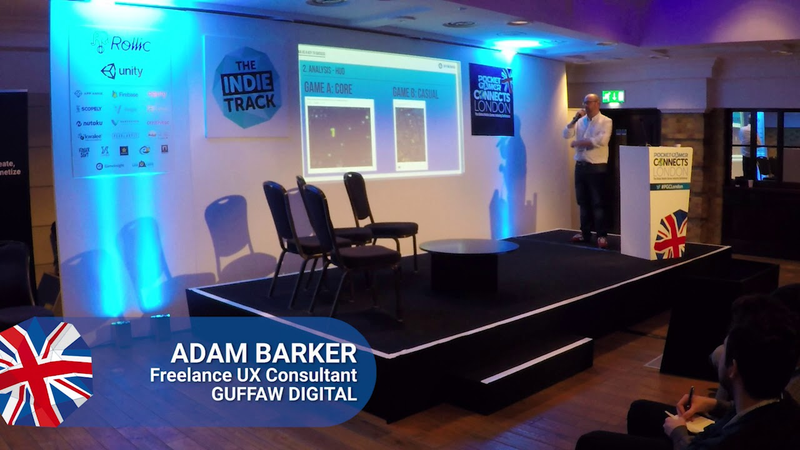
User experience (UX) design serves as a critical driver for monetization, user acquisition, and retention in mobile gaming.
- Approximately 30% of users abandon mobile games during the initial onboarding process, highlighting the critical need for optimized tutorial design.
- UX research and testing should be integrated early in the production cycle, ideally before coding begins, to validate design assumptions and identify friction points.
- To reduce tutorial drop-off, developers should use a 'chunking' strategy that delivers essential mechanics in small, action-oriented segments rather than overwhelming players with full system information.
The End of Game Ownership – How the Subscription Model is Disrupting Mobile Games
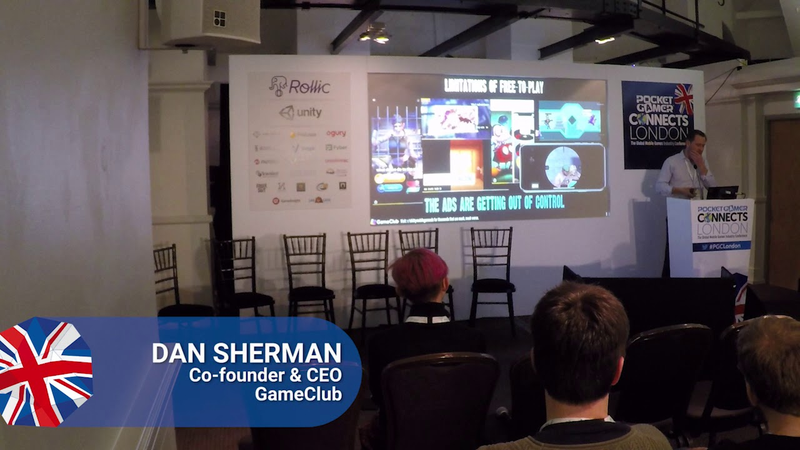
The mobile gaming industry is currently undergoing a significant shift as subscription models emerge to challenge the dominance of the free-to-play (F2P) paradigm.
- The mobile gaming market is bifurcating into two distinct models: casino-style free-to-play (F2P) entertainment and subscription-based home entertainment.
- Subscription models prioritize user experience by eliminating intrusive advertisements and in-app purchases, shifting the monetization focus from individual game transactions to network-wide retention.
- Subscription services like GameClub, Xbox Game Pass, and Nintendo Switch Online drive higher content discovery, with data showing that subscribers engage with a broader variety of genres than under traditional purchase models.

Stop Believing Benchmark Metrics for Your Game
Standard industry benchmarks for mobile game performance—such as the widely cited 40/20/10 retention model for days 1, 7, and 28—are often misleading and should not be used as universal indicators of success.
- Generic industry benchmarks, such as the 40/20/10 retention model for days 1, 7, and 28, are misleading and should not be used as universal indicators of project viability.
- Developers should replace external averages with custom models that integrate daily installs, retention duration, and net ARPDAU to determine actual product sustainability.
- A game with lower retention can remain highly profitable if it maintains high organic install volumes or superior monetization efficiency compared to titles that meet standard benchmarks.
Bringing a Desktop Subscription Model to Mobile
Jagex successfully expanded its desktop MMORPG, Old School RuneScape, to mobile platforms by prioritizing a seamless, cross-platform experience that allows players to maintain progress across PC and mobile devices.
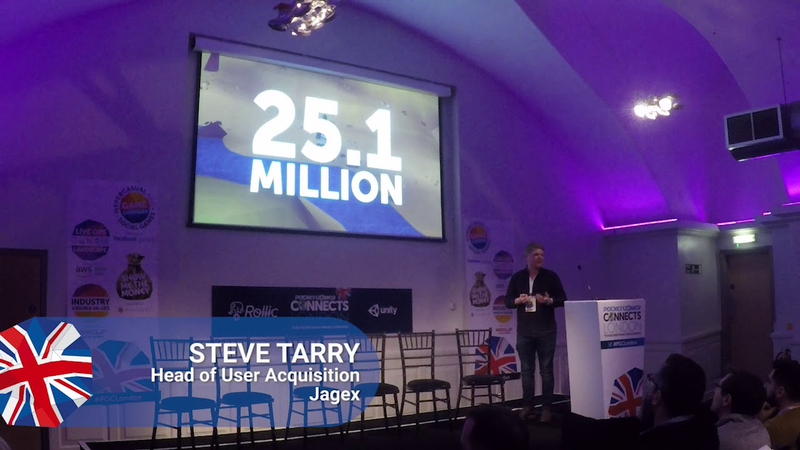
- Jagex generated 25 million in gross revenue and 8.6 million installs by expanding Old School RuneScape to mobile, proving the viability of a cross-platform subscription model.
- To maintain a unified view of user value across PC and mobile, the company integrated internal data with mobile measurement partners, enabling more effective scaling of advertising spend.
- The mobile launch strategy utilized pre-order campaigns on the Apple App Store and Google Play, which drove the game to the top of free-to-play charts in the US and UK within 24 to 72 hours.
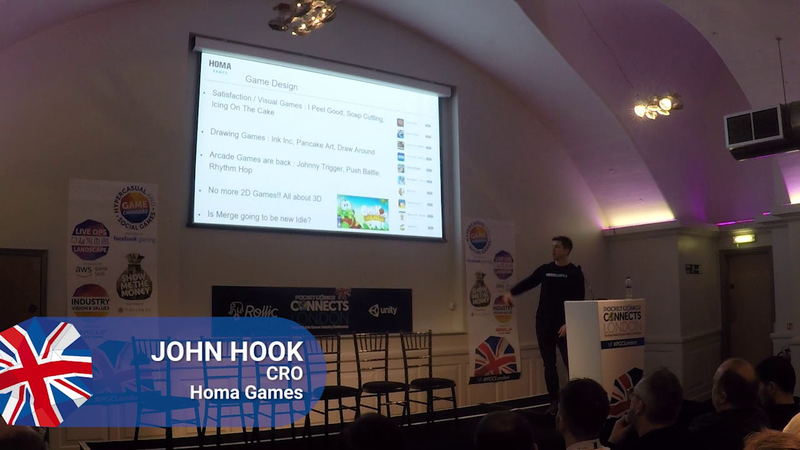
What we Have Learnt from 100 Million Hypercasual Downloads
The hypercasual gaming sector is currently undergoing a significant evolution, transitioning from simple, high-volume mechanics toward more complex, hybrid models that prioritize long-term value over raw download counts.
- The hypercasual market is shifting toward hybrid-casual and idle models to improve lifetime value (LTV) and session duration, moving away from the traditional focus on raw download volume.
- Retention benchmarks for arcade-style titles show a significant gap, with top-tier games achieving 15% day-seven retention compared to just 8% for average titles.
- Publishers are utilizing impression-level data to implement personalized bidding and ad strategies, allowing for the segmentation of players based on their preference for in-app purchases versus ad-supported experiences.
Can Showing Fewer Ads in Your App Lead to More Money?
Maximizing revenue in the hypercasual gaming sector requires shifting focus from short-term ad frequency to long-term user lifetime value.
- Aggressive ad frequency in hypercasual games frequently triggers user attrition, which undermines total lifetime value (LTV) and long-term financial health.
- Developers should shift focus from maximizing short-term per-user ad income to finding an equilibrium between user experience and monetization.
- Data-driven monitoring of eCPM decay curves allows developers to identify the specific impression threshold where additional ads yield diminishing returns.

Monetisation Trends & Tips for 2020
Mobile ad monetization serves as a critical revenue pillar for the modern gaming industry, particularly as global mobile ad spend continues to rise.
- Global mobile ad spend is projected to increase by 26% in 2020, with industry forecasts suggesting ad revenue may surpass in-app purchase (IAP) revenue for the first time.
- Approximately 94% of free-to-play mobile games now incorporate in-game advertising, with a growing year-over-year trend of developers generating between 40% and 100% of their total revenue from ads.
- Rewarded ad placements are a critical strategy for monetizing the non-paying user base ('the fish') while simultaneously boosting retention and IAP performance for 'whales'.
Privacy First! Mobile Engagement in the Fast Emerging New World
Mobile engagement strategies are currently undergoing a significant shift, moving away from traditional server-side push notifications toward on-device, edge-computing models.
- On-device edge computing solves data privacy compliance issues for GDPR, GDPR-K, and COPPA by keeping user data and unique identifiers on the device rather than transmitting them to the cloud.
- Push notifications should be treated as a core component of user experience, as 68% of user journeys for apps like Twitter begin with a notification.
- Moving notification logic to the device allows for real-time, context-aware delivery based on user behavior—such as device unlock patterns or charging status—rather than relying on server-side scheduling.
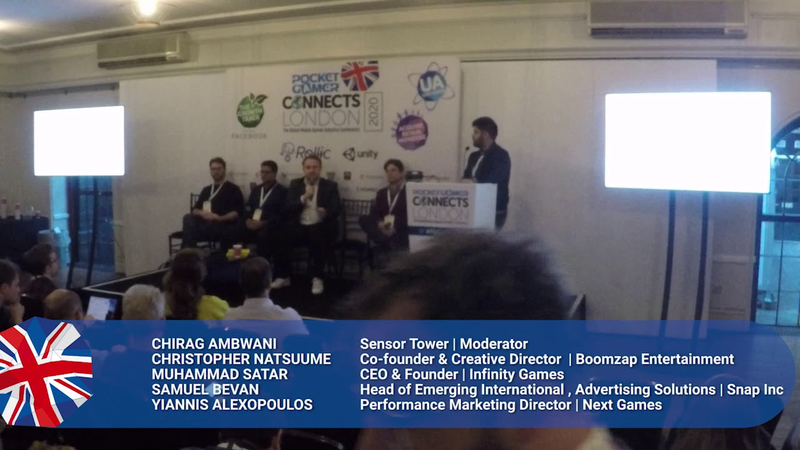
Panel: Tactics for Low CPI and High User Quality
Modern user acquisition strategies in the mobile gaming industry have shifted from prioritizing raw install volume to focusing on long-term Return on Ad Spend and high-quality user retention.
- User acquisition strategies have shifted from prioritizing raw install volume to focusing on long-term Return on Ad Spend (ROAS) and high-quality user retention.
- Creative assets must accurately reflect core gameplay to attract users likely to monetize, rather than relying on high-volume ads that generate low-intent clicks.
- Developers are reducing reliance on the Facebook and Google duopoly by diversifying into platforms like TikTok, Snapchat, and Reddit to achieve more precise targeting and lower costs per install.
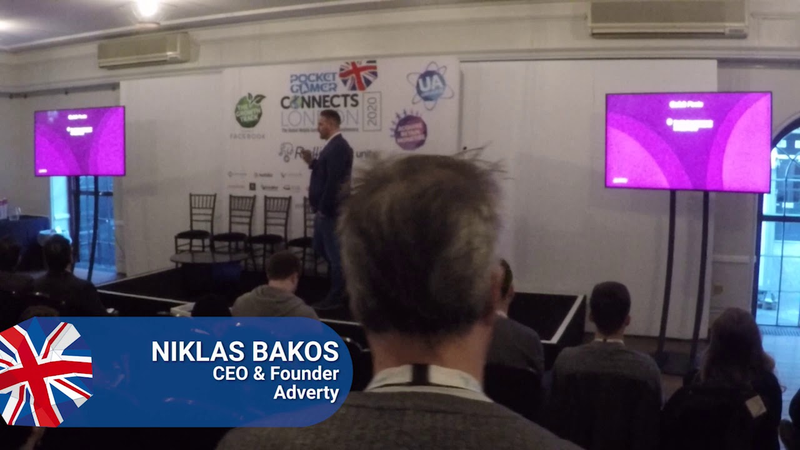
There's a New Ad Format in Town
The emergence of seamless in-game advertising represents a strategic shift in mobile and digital game monetization, moving away from intrusive, disruptive formats toward contextual, non-obstructive brand integration.
- Seamless in-game advertising allows for monetization of 100% of gameplay time by embedding non-intrusive ads directly into virtual environments like billboards.
- Testing across 40 million ad impressions in a AAA mobile title confirmed that this integration has no negative impact on user retention, daily active users, or app store ratings.
- There is a significant market disconnect where 70% of major brands' target audiences are reachable via gaming, yet only 5% of total ad spend is currently allocated to the channel.