Monetization reports and market data
Documents

Understanding the iPhone: Current Usage and Trends
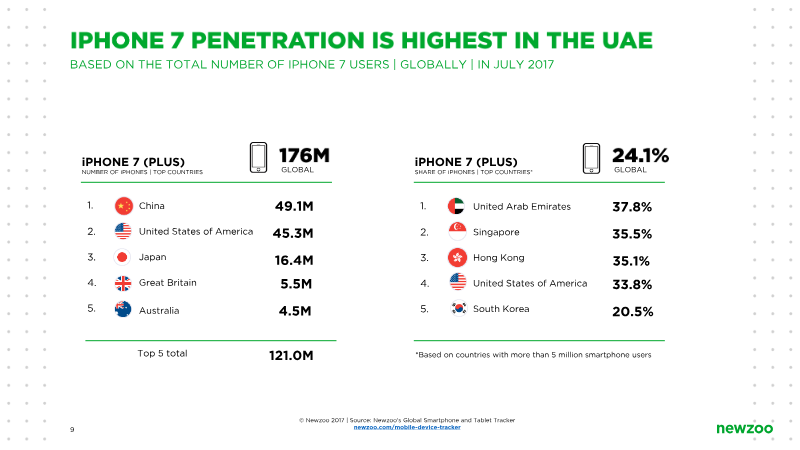
As of July 2017, the global landscape of iPhone usage reflects a decade of significant market penetration, with 730 million active devices worldwide.
- As of July 2017, there are 730 million active iPhones worldwide, representing approximately 10% of the global population.
- 61% of all iPhones ever sold since the 2007 launch remain in active use, with 82% of those active devices released in 2014 or later.
- China is the largest market for iPhone adoption with 243 million active users.

Betting on Billions: Unlocking the Power of Mobile Gamers
Mobile gaming represents a significant, underutilized opportunity for brands to engage a vast and influential consumer base.
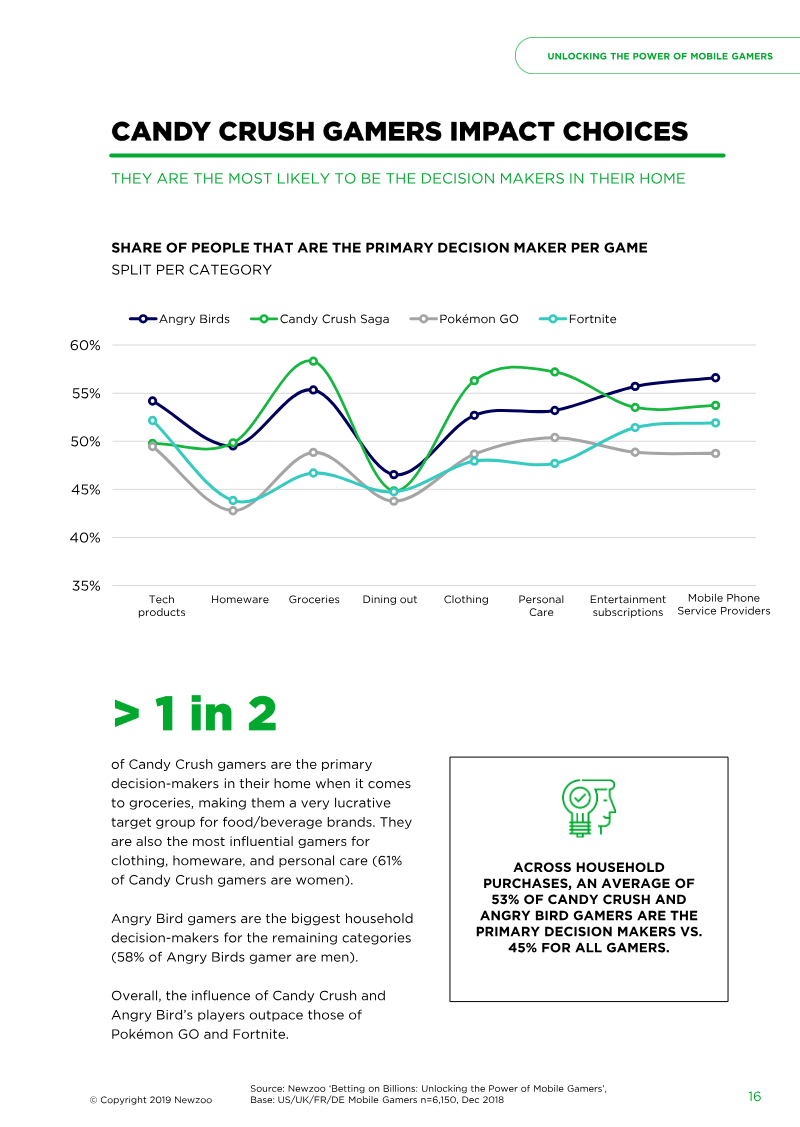
- Mobile gamers are 23% more likely than non-gamers to influence the purchasing decisions of their peers, family, and colleagues.
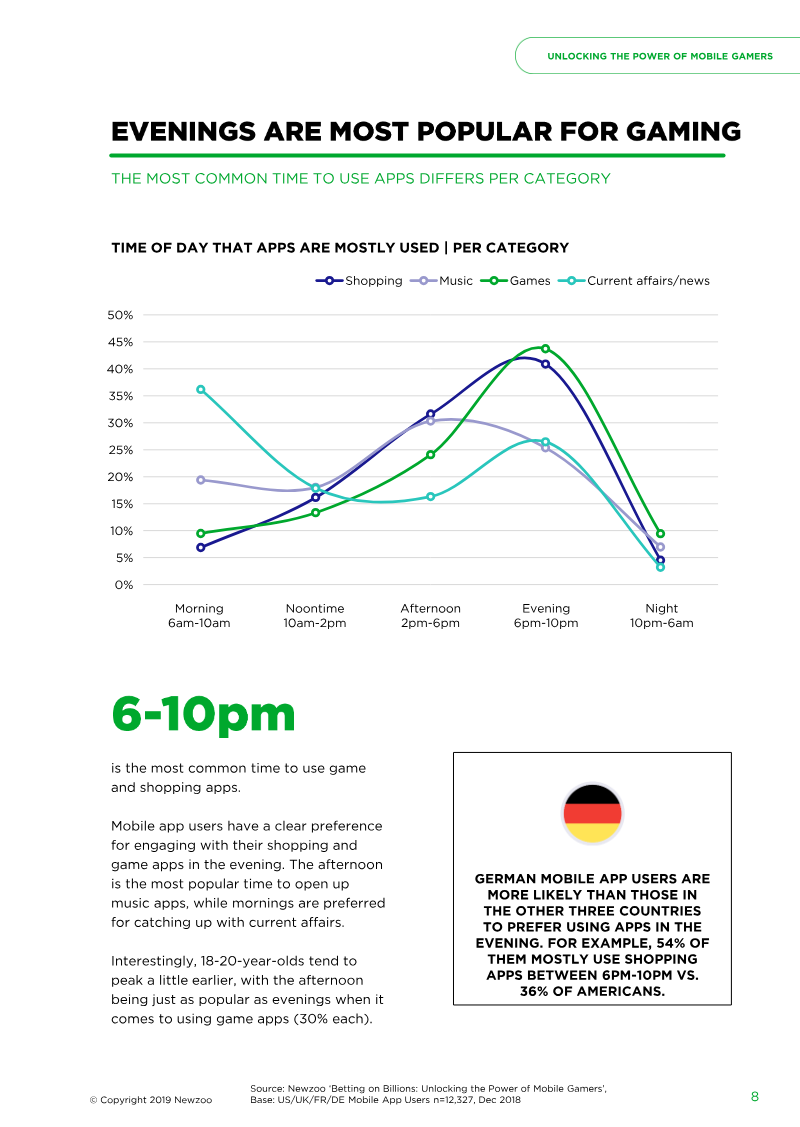
- Gaming is the third-most-popular app category globally, with 50% of surveyed users engaging with games on a weekly basis.
- Over half (53%) of mobile gamers report that they are receptive to advertising, viewing it as a helpful way to stay informed about products and services.

Casino Gaming Report & Data: US Social Casino Market
The social casino market in the United States exhibits high levels of engagement and monetization, characterized by a diverse player base that frequently interacts with multiple franchises.
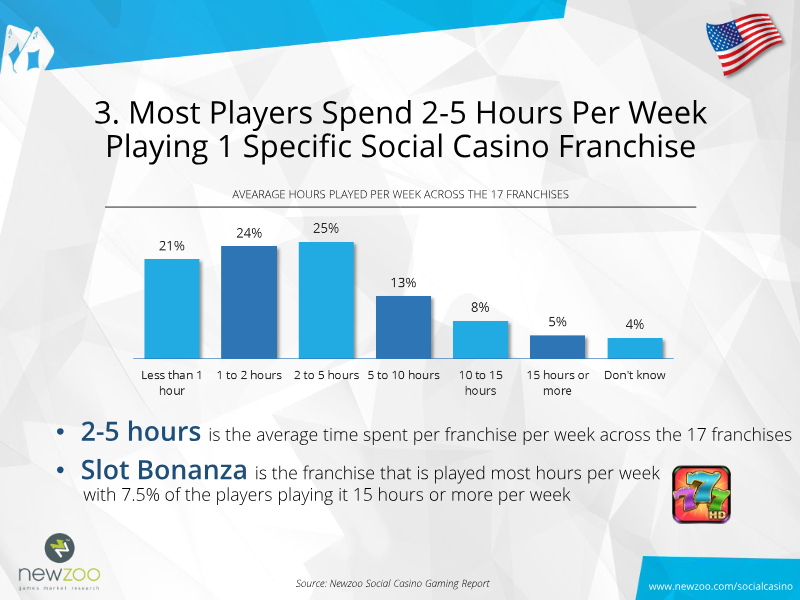
- The US social casino market is highly fragmented, with the average user actively engaging with 5.6 different gaming titles.
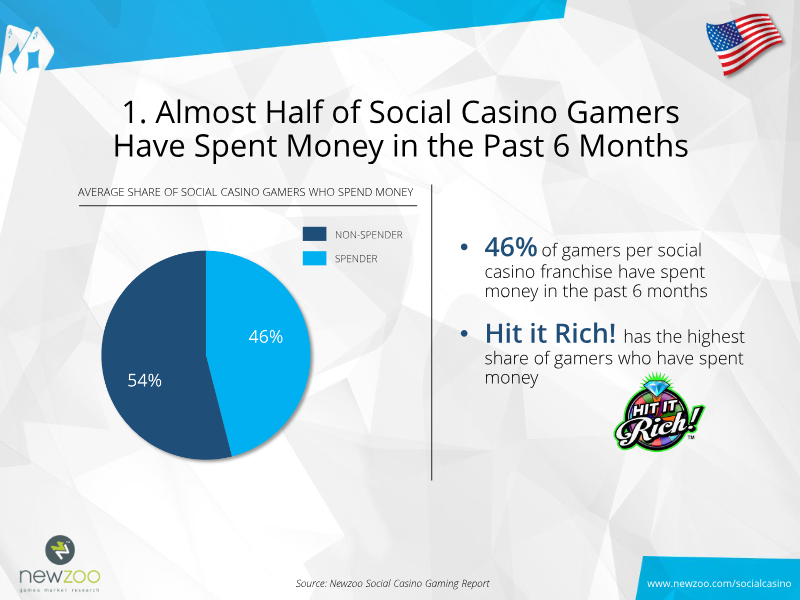
- Monetization is robust, as 46% of social casino gamers have made in-game expenditures within the last six months.
- Men aged 21 to 35 represent the largest segment of paying users, accounting for one-third of total industry spend.
Spotting the Mobile Spenders: An Analysis of Paying Smartphone and Tablet Gamers
The mobile gaming industry is experiencing significant expansion, with global revenues projected to reach $25 billion in 2014.
- Mobile gaming is projected to reach $25 billion in global revenue by 2014, with mobile expected to account for 50% of total game revenues by 2017.
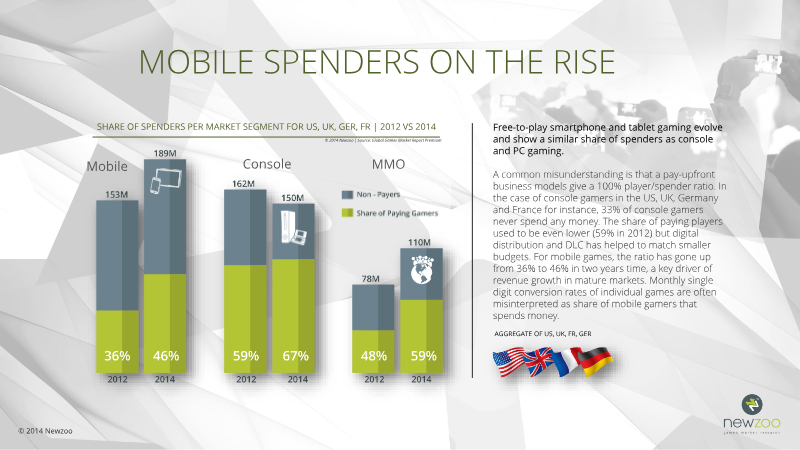
- The share of paying mobile users in Western Europe and the United States grew from 36% to 46% over the last two years, debunking claims of market saturation.
- The Amazon Appstore is an undervalued channel, as its users demonstrate a higher propensity to spend money compared to those on Google Play or Apple platforms.
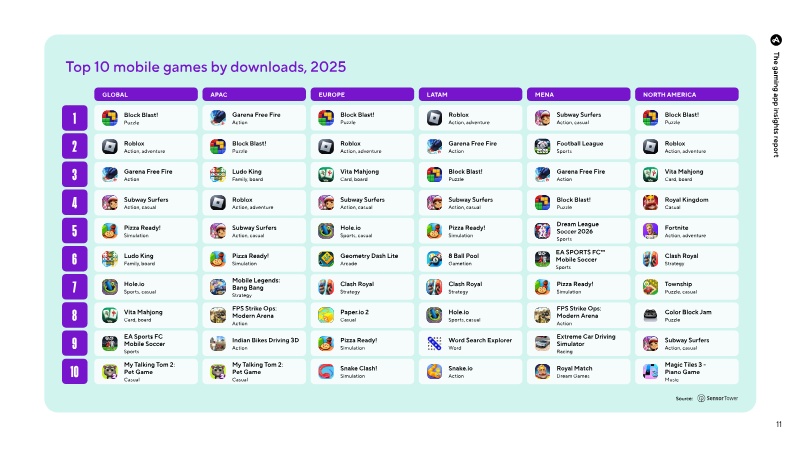
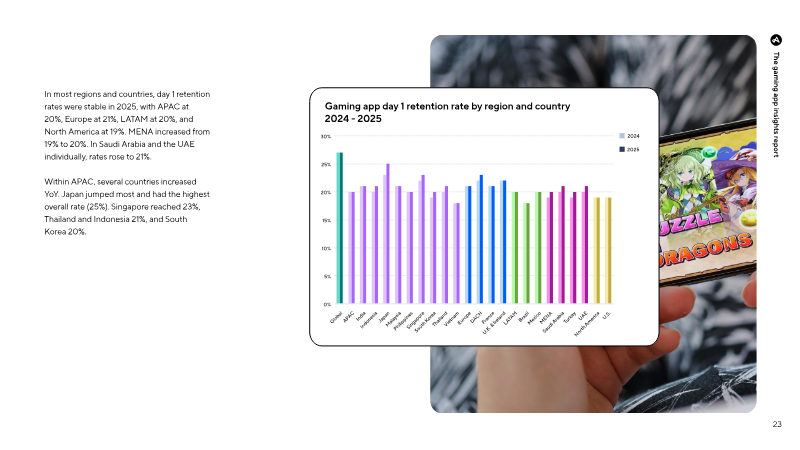
The Gaming App Insights Report: 2026 Edition
Adjust's 2026 gaming app report argues that the mobile gaming market has moved from a volume-driven model to one centered on retention and lifetime value, as acquisition costs climb and growth in installs slows.
- Global gaming app CPC rose 33% from $0.03 to $0.04 between 2024 and 2025, while global CPM increased 20% from $3.63 to $4.34.
- Hyper-casual games maintained the largest market share of installs at 29.1% in 2025, while action games dominated session share at 17.1%.
- Strategy games saw the most significant increase in session length, growing 18% to 37.51 minutes, and experienced a 133% surge in CPC from $0.03 to $0.07.

China Steam & PC Gaming Market Report: 2025
The Chinese PC gaming market has reached a valuation of approximately $11–12 billion within a broader national gaming industry worth RMB 350.78 billion.
- Steam dominates the Chinese PC gaming market with an 87% share, contributing to a total PC gaming valuation of approximately $11–12 billion.
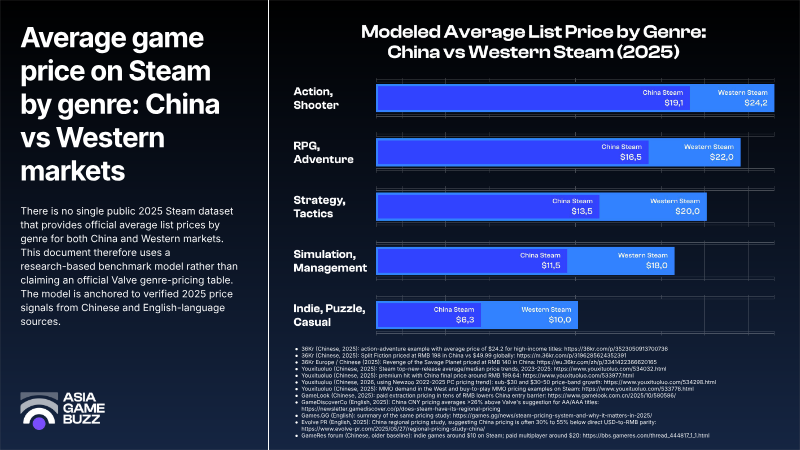
- Pricing for Steam titles in China must be adjusted 21% to 37% lower than Western benchmarks to align with local purchasing power and consumer expectations.
- Market discovery is driven by community-led engagement on platforms like Bilibili, TapTap, Heybox, and Sonkwo rather than traditional store-page traffic.

Direct-to-Consumer: A $17 Billion Market for Mobile Gaming
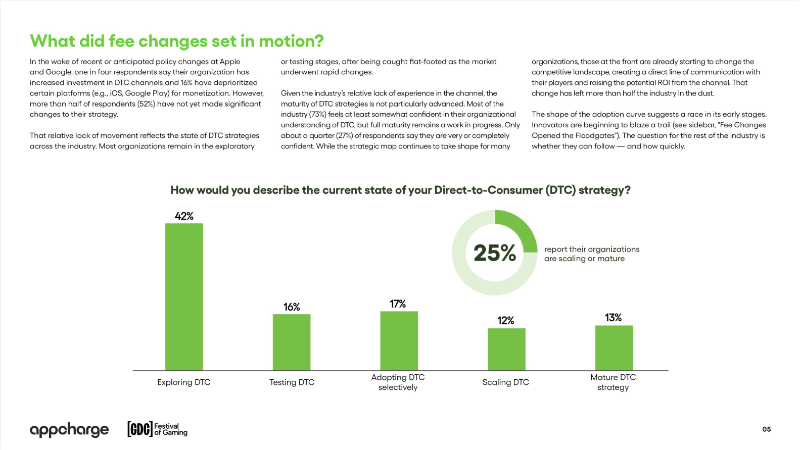
The mobile gaming industry is undergoing a fundamental structural shift toward direct-to-consumer (DTC) distribution models, a transition that has already established a $17 billion market.
- The mobile gaming direct-to-consumer (DTC) market has reached a valuation of $17 billion as publishers shift away from traditional app store ecosystems to reclaim platform fees.
- The global in-app purchase market is projected to grow to $721.4 billion by 2034, signaling a long-term shift toward DTC distribution across the digital economy.
- DTC models allow publishers to secure ownership of first-party player data, which is being used to drive long-term retention and competitive differentiation.

Essential Facts about Video Games in Italy: 2025
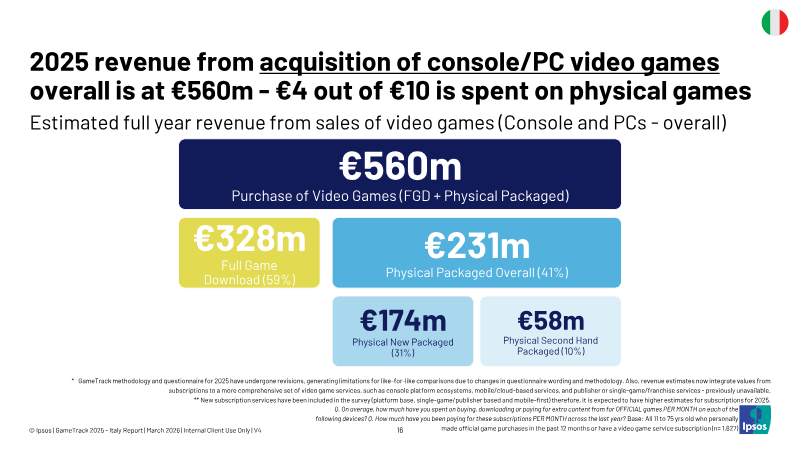
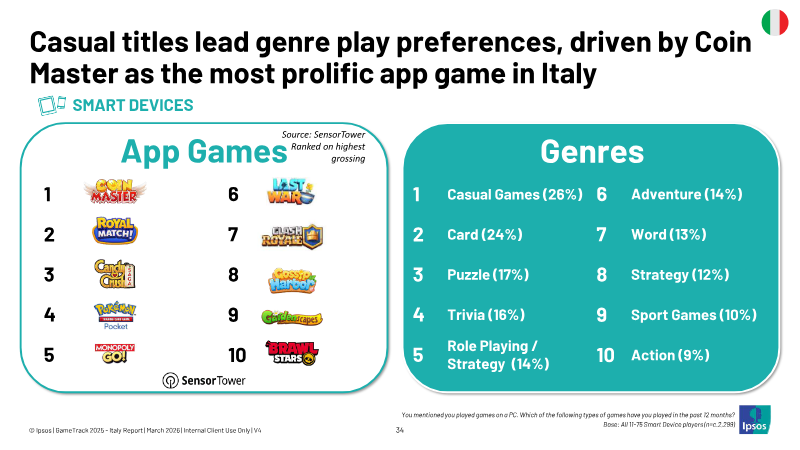
In 2025, roughly 14.2 million Italians—about a third of the population aged six to seventy-five—engage in video gaming, with a pronounced male bias and a concentration of players under 35.
- The Italian video game market generated €2.4 billion in 2025, with game sales accounting for 77 percent (€1.8 billion) of total revenue.
- App-based gaming dominates the market, representing over half of total revenue with a freemium model where only one percent of earnings come from upfront purchases.
- Smart devices are the primary revenue driver at €929 million, while console gaming accounts for €643 million, supported by an average of eight hours of gameplay per week across the population.

Public Mobile Gaming Publishers: Resilience & Adaptation in a Shifting Landscape
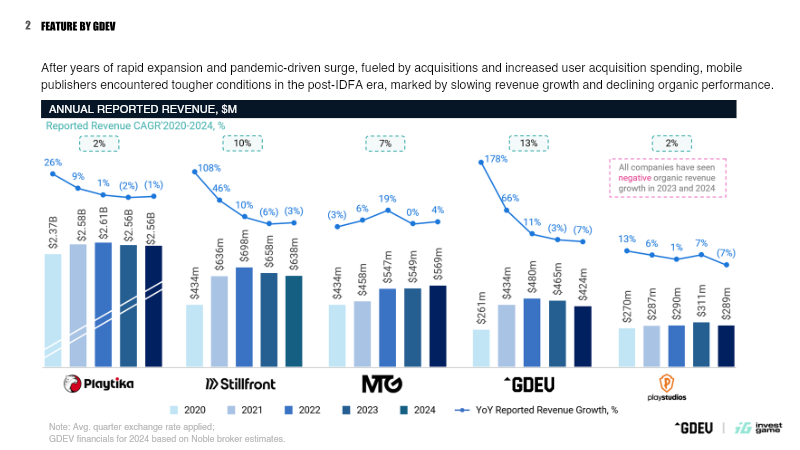
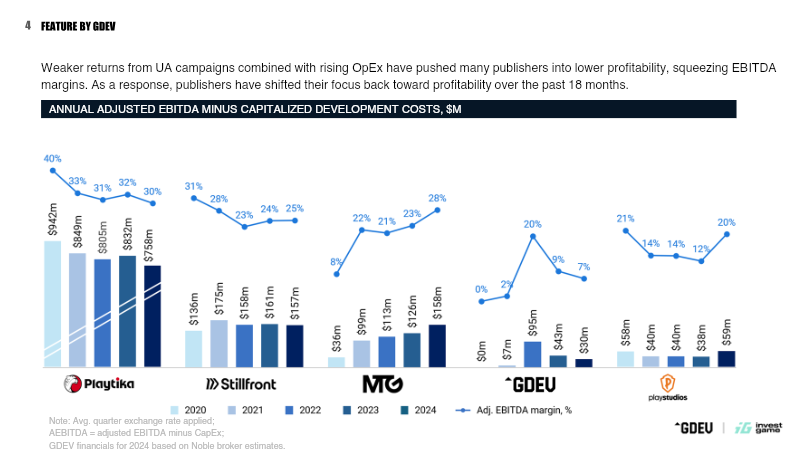
The analysis examines the post-IDFA mobile gaming landscape, focusing on revenue dynamics, user acquisition spending, profitability trends, and market valuation shifts across key publishers.
- Aggregate market capitalization for major mobile gaming publishers has plummeted by more than 50% since January 2022, with most stocks remaining below pre-IDFA valuation peaks.
- User acquisition costs have surged to as high as $40 million per firm, while diminishing returns on these campaigns have compressed EBITDA margins and forced a shift toward cost control.
- MTG outperformed the broader market with a 50%+ share price increase and 9% organic growth in Q4 2024, driven by disciplined M&A and operational efficiency.

Enabling Growth: Cohort User Acquisition Financing
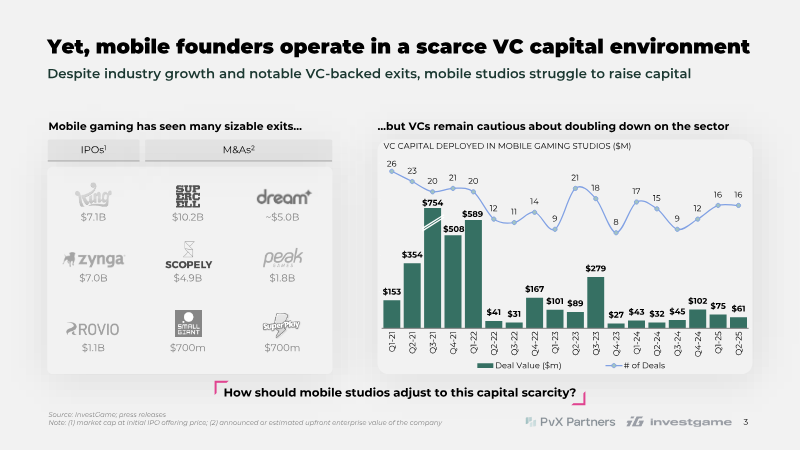
Mobile gaming has rebounded from the downturn of 2022-23, with a projected compound annual growth rate of 5.0% from 2020 to 2025, driven largely by a 16.2% rise in in-app advertising and the continued popularity of casual puzzle titles.
- Mobile gaming is projected to grow at a 5.0% CAGR from 2020 to 2025, supported by a 16.2% increase in in-app advertising and AI-driven ad tech.
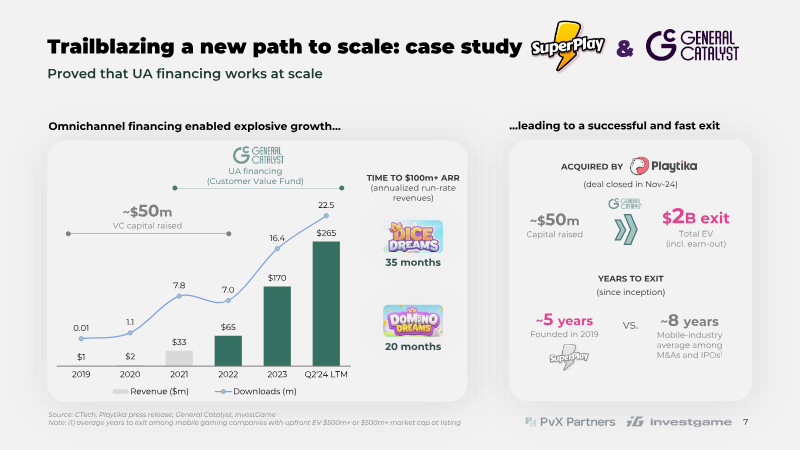
- Cohort-based UA financing allows studios to fund up to 80% of monthly acquisition costs by leveraging future revenues, providing an alternative to scarce venture capital.
- Studios utilizing cohort-based financing have demonstrated the ability to increase monthly marketing spend by 16–38% while maintaining founder control over equity and IP.

The 2025 Benchmark Report: Roblox Platform Trends
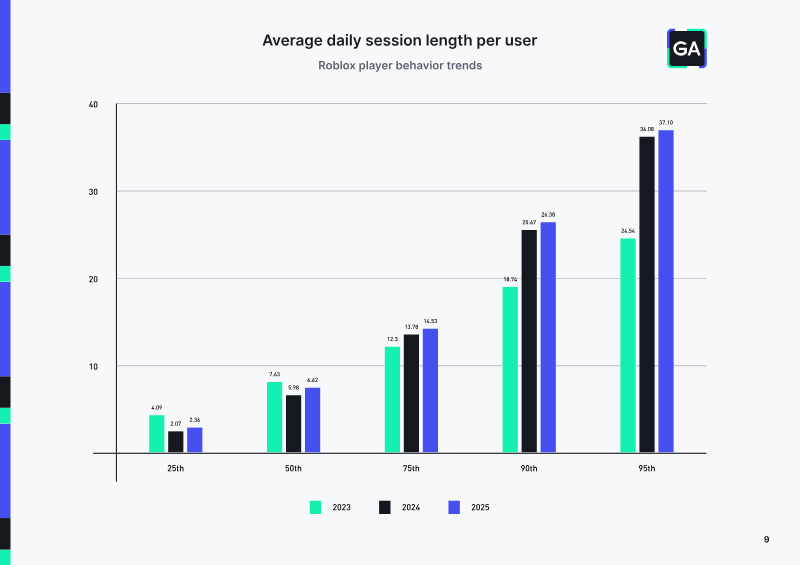
The report establishes that Roblox’s player base is sharply divided between casual users who spend only a few minutes per session and core players who log in multiple times daily, often exceeding 30-minute sessions.
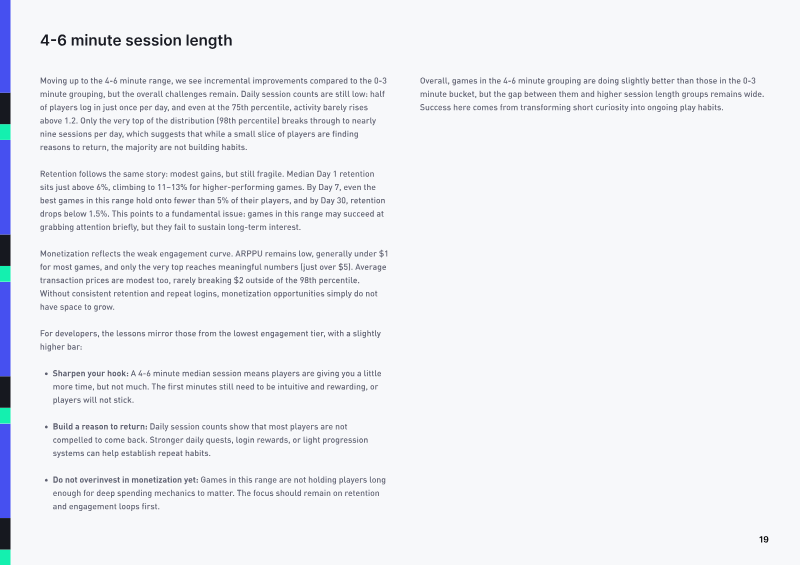
- Games with median session lengths under six minutes suffer from negligible Day-1 retention of approximately 6% and ARPPU below $1, while top-tier titles achieve ARPPU exceeding $6 with average transaction values of $3–$4.
- The top 5% of Roblox games generate over $20 per day from a single player, demonstrating that sustained engagement is the primary driver of high-value monetization.
- Platform discovery algorithms prioritize games with consistent 7-day spend and high engagement, causing low-engagement titles to fall below 5% Day-1 and 2% Day-7 retention.
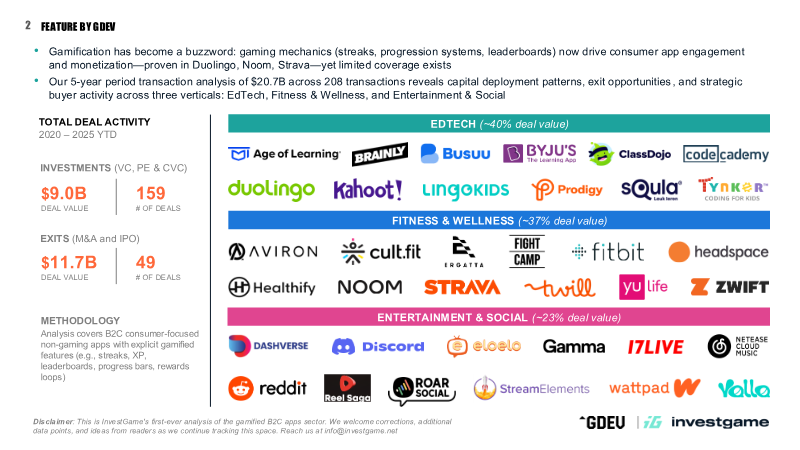


Beyond the Game: How Gamification is Becoming Mainstream
The analysis examines how gamification—applying game-like mechanics such as streaks, leaderboards, and reward loops—to non-gaming consumer apps has shifted the mobile app economy over a five-year period (2020-2025).
- Gamified non-gaming apps have surpassed mobile games in net revenue, generating $21.2 billion in Q2 2025 compared to $19.8 billion for games.
- Gamified apps are driving a 24% year-over-year growth in mobile consumer spending, while traditional mobile gaming revenue has stagnated.
- EdTech, Fitness & Wellness, and Entertainment & Social account for $20.7 billion in transaction value, with EdTech dominating deal volume (43%) and exit activity (45%).