Monetization reports and market data
Documents
How to Win on Mobile in LATAM: 2021
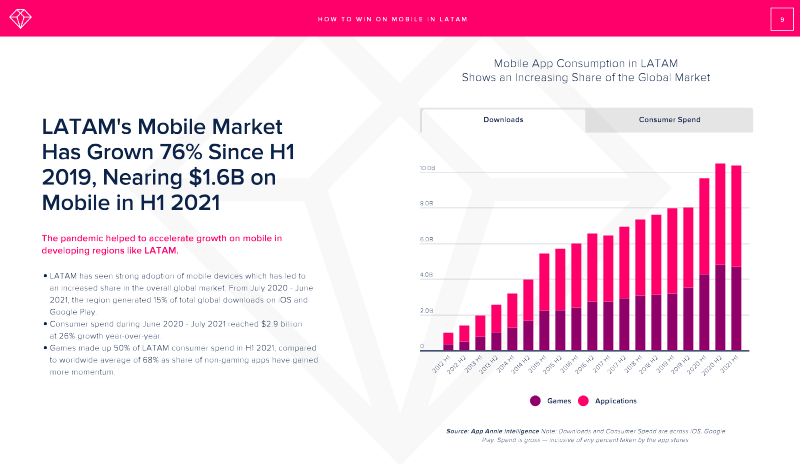
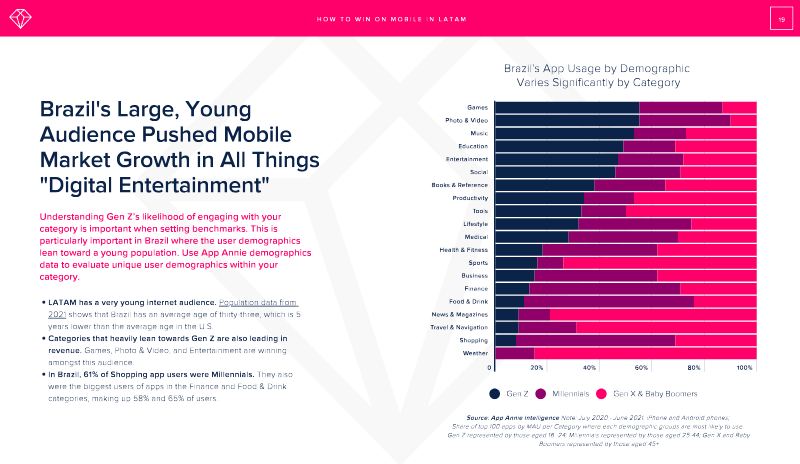
The analysis focuses on Latin America’s mobile ecosystem from July 2020 to June 2021, revealing a region that has accelerated digital adoption and monetization amid the pandemic.
- LATAM mobile downloads surged 76% year-on-year to 21 billion, while consumer spending grew 26% to $2.9 billion between July 2020 and June 2021.
- Android dominates the market with 89% of total downloads, yet iOS commands 56% of total consumer expenditure in the region.
- Brazil and Mexico are the primary drivers of the regional market, collectively accounting for 73% of all mobile downloads.
Mobile Game Genre Report: Comparing & Contrasting Eastern and Western Markets 2021
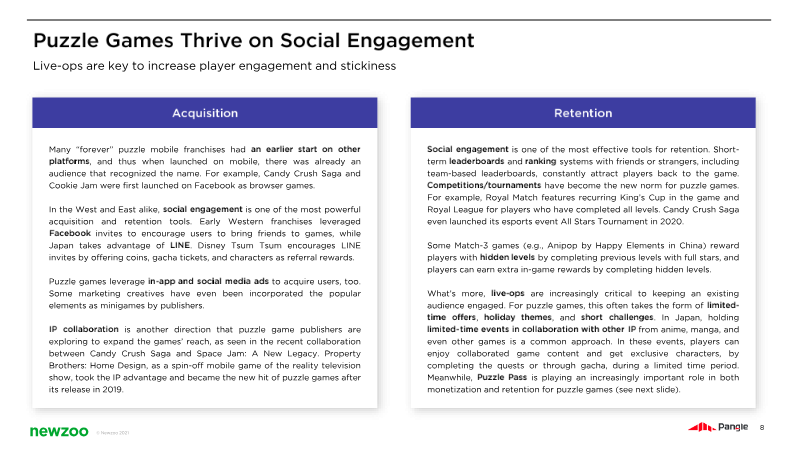
Mobile puzzle games are the focus of this joint Pangle and Newzoo genre report, the first in a series comparing Eastern and Western mobile markets across the U.S., the U.K., Japan, and South Korea (with China also covered in revenue data).
- Western markets prioritize casual genres like puzzle and arcade, while Eastern markets demonstrate a stronger preference for competitive, immersive titles such as Battle Royale and RPGs.
- Monetization strategies differ by region, with Western titles leaning toward in-game advertising (IAA) models, while Japanese players show a higher propensity for in-app purchases (IAP).
- Puzzle games are a global staple, but Western implementations focus on narrative and decoration, whereas Eastern versions prioritize character collection, deep economies, and gacha mechanics.
Mobile Game Genre Report: Role-Playing Games 2021
Role-playing games represent the most lucrative segment of the global mobile gaming market, generating $18.5 billion in 2020 and accounting for nearly a quarter of all mobile gaming revenue.
- Mobile RPGs generated $18.5 billion in 2020, representing nearly 25% of total mobile gaming revenue.
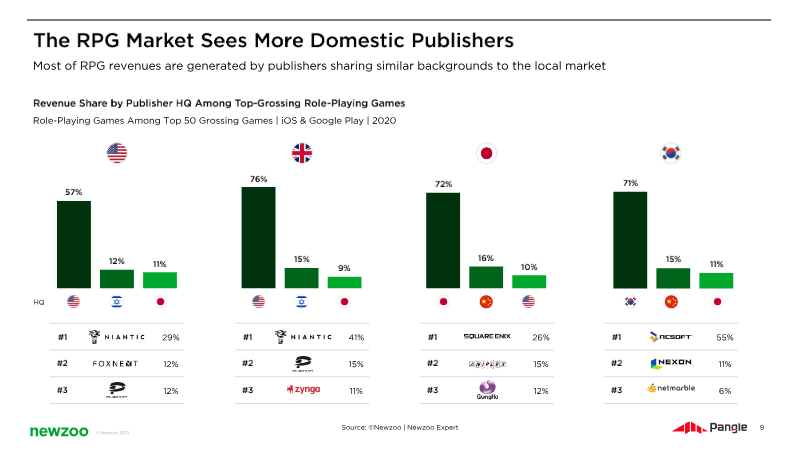
- The market is heavily concentrated in East Asia, with China, Japan, and South Korea accounting for over 70% of global RPG earnings.
- Approximately 50% of top-performing RPG titles rely on established intellectual properties, such as the Marvel franchise, to drive player acquisition and revenue.

Innovate to Win on the Next Level with Hybrid Genre Games
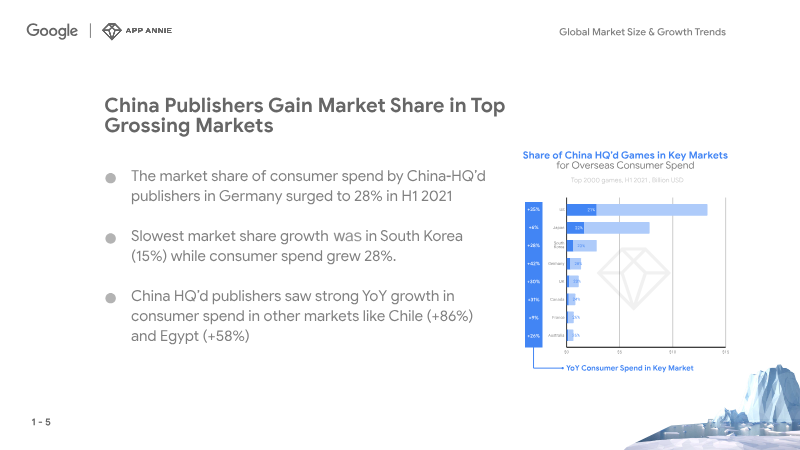
The global mobile gaming landscape has entered a period of sustained growth following the pandemic, with overseas consumer spending reaching $36 billion in the first half of 2021.
- Mobile gaming consumer spending reached $36 billion in H1 2021, marking a 73% increase since 2018, with China-based publishers now capturing 23% of the international market.
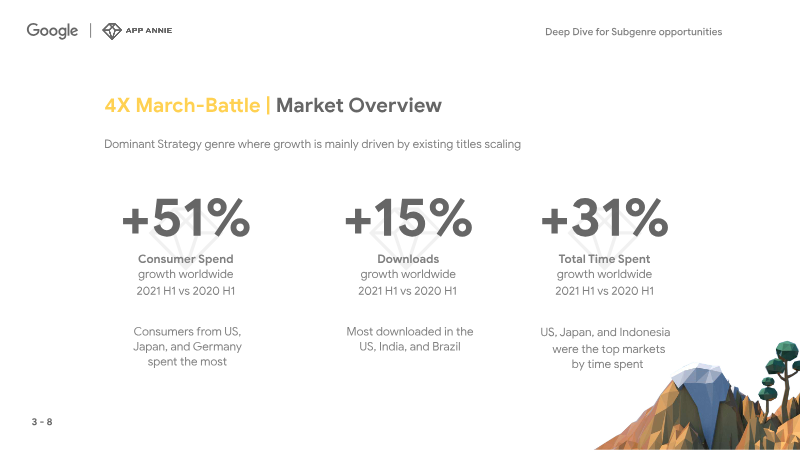
- The industry is pivoting toward hybrid game design, which integrates casual mechanics like farming or social features into hardcore frameworks to diversify monetization and broaden demographics.
- The Idol Training subgenre saw a 129% surge in consumer spending, signaling the growing global influence of Asian cultural themes and 'Nijigen' aesthetics.
Games Marketing Insights 2021
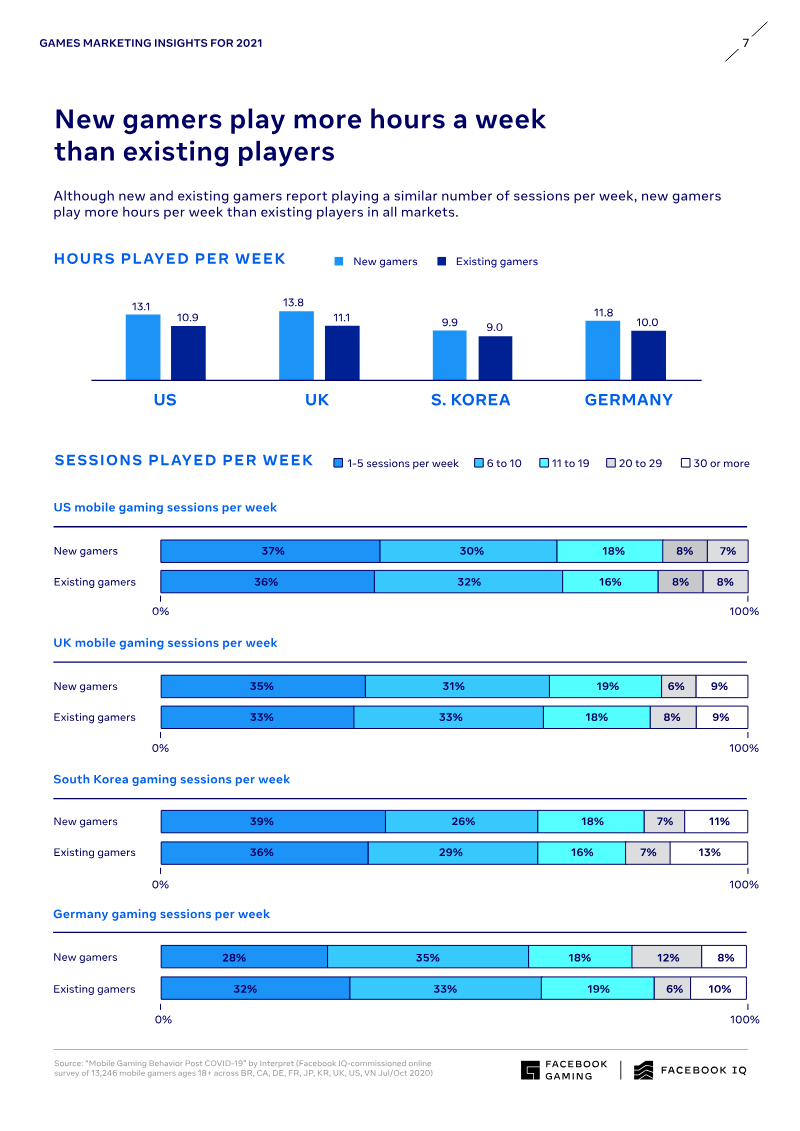
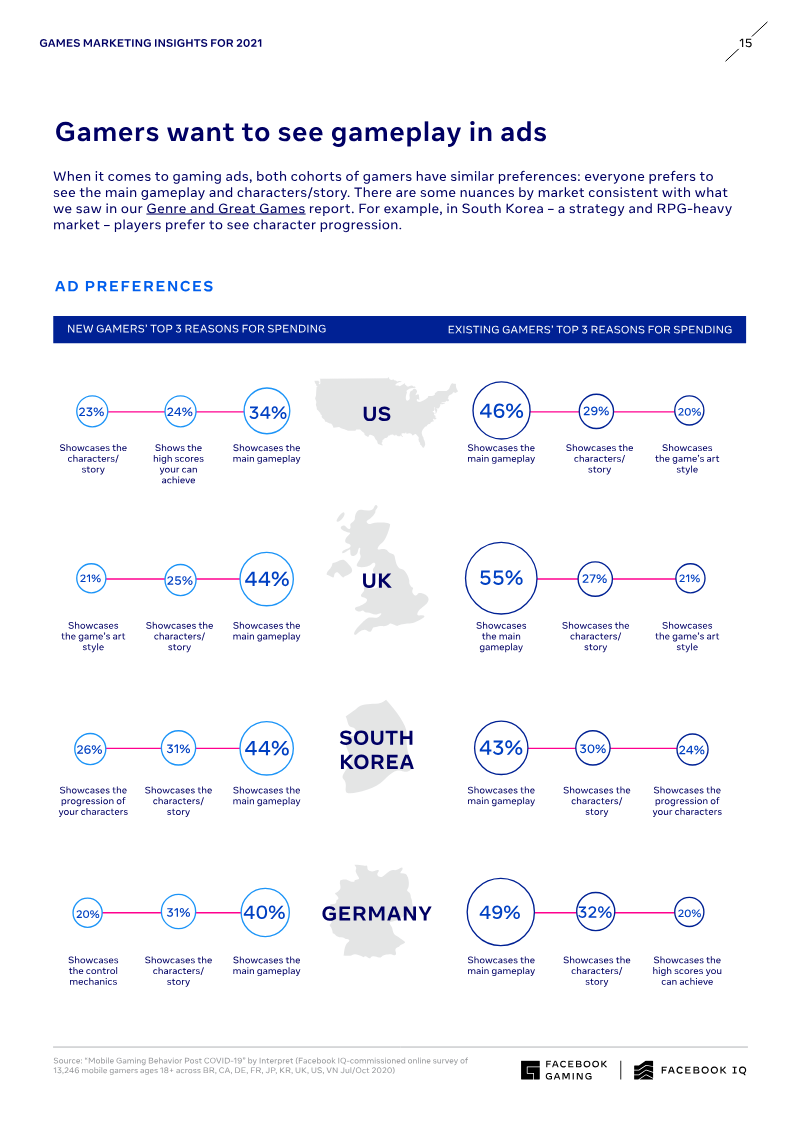
Facebook's 2021 gaming marketing report examines how COVID-19 reshaped mobile gaming audiences, behaviors, and purchasing, and offers guidance for developers and marketers.
- New gamers who entered the market after the COVID-19 outbreak are spending more on in-game purchases monthly than veteran players, who have actually reduced their spending despite increased engagement.
- Mobile marketing is increasingly reliant on brand familiarity, as less than 25% of players in Western markets are willing to try games they have not heard of before.
- Live-streaming platforms experienced record growth during the pandemic, with Facebook Gaming reaching over one billion hours watched in Q3 2020.
Mobile Game Taxonomy Report 2021
The mobile gaming landscape underwent a transformative shift in 2020, catalyzed by global lockdowns that accelerated adoption across all major categories.
- Hypercasual games became the dominant volume leader in 2020 with 6.3 billion downloads, a 123% year-over-year increase that surpassed the Arcade genre.
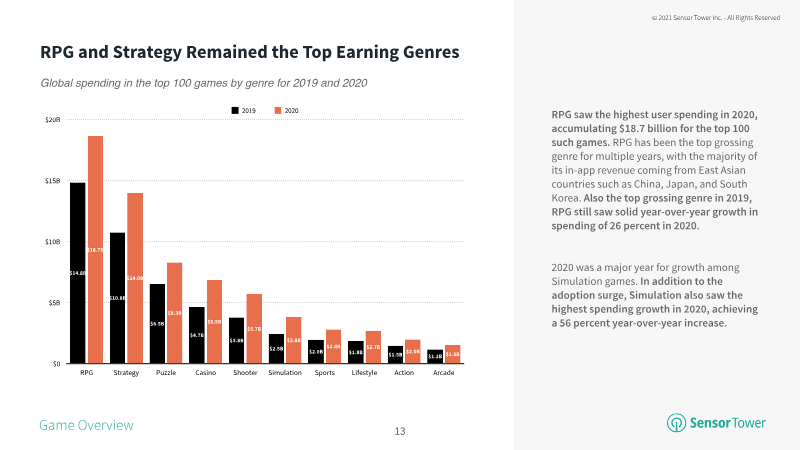
- RPG and Strategy titles maintained their financial stronghold, collectively generating 50% of the total global revenue among top-performing mobile games.
- Simulation games experienced the highest spending growth in 2020, recording a 56% increase in consumer expenditure.
Social Casino Gaming Apps Report
Social casino gaming is growing, but it is becoming harder to win in. Pandemic-era casino closures lifted the segment to $6.2 billion in global gross gaming revenue in 2020, with a forecast of $7.5 billion by 2026.
- The social casino market is projected to grow from $6.2 billion in 2020 to $7.5 billion by 2026, though high barriers to entry and market saturation make scaling difficult for new entrants.
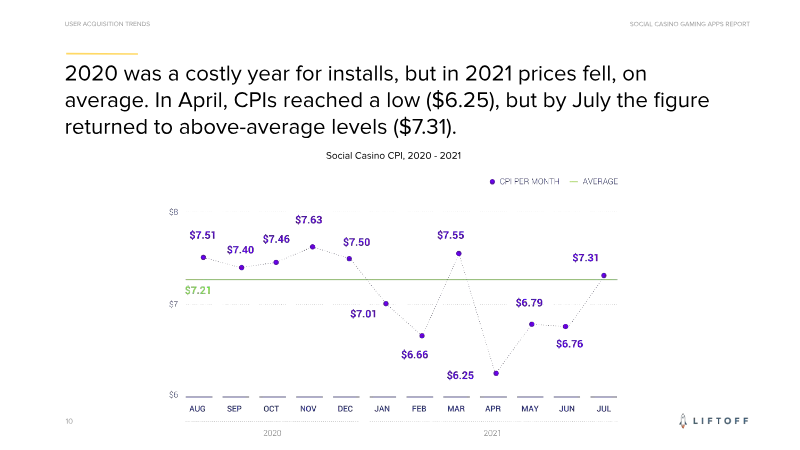
- Acquisition costs vary significantly by platform, with iOS CPI reaching $11.09 compared to $5.00 on Android, while Latin America offers the lowest entry point at $1.43 per install.
- Developers are increasingly adopting 'mid-core' features to drive engagement, with battle pass integration growing from 5% to 36% adoption in a single year.
The Modern Mobile Gamer: 2021 Gen Z Edition
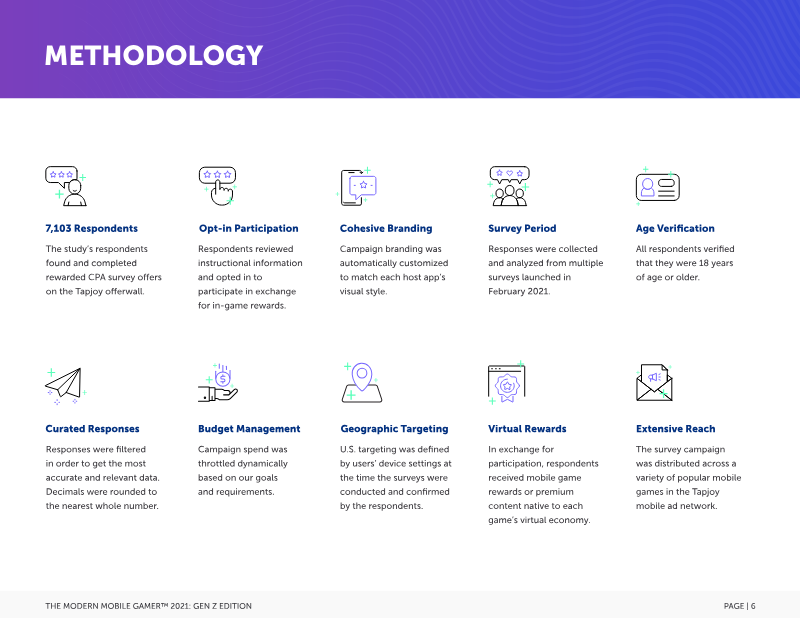
This analysis examines the mobile behaviors, gaming habits, and advertising preferences of Generation Z, defined as individuals born in 1997 or later.
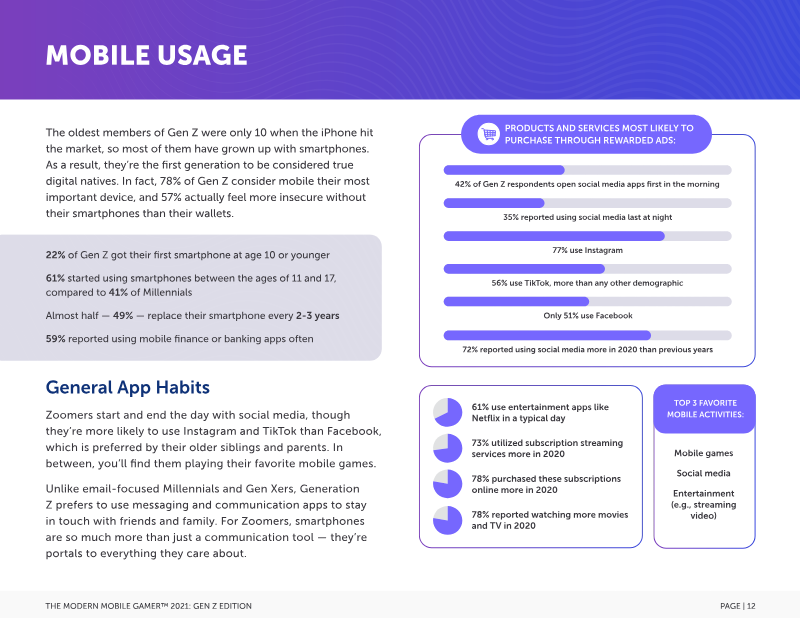
- Mobile is the dominant gaming platform for Gen Z, with 86% of the demographic using smartphones for gaming compared to only 42% who use consoles.
- Rewarded advertising is the most effective engagement strategy for this group, with 54% preferring rewarded ads and 53% engaging with them, significantly outperforming Instagram (38%) and TikTok (23%).
- The COVID-19 pandemic significantly accelerated mobile gaming adoption, with 71% of Gen Z respondents reporting increased mobile gameplay during 2020.
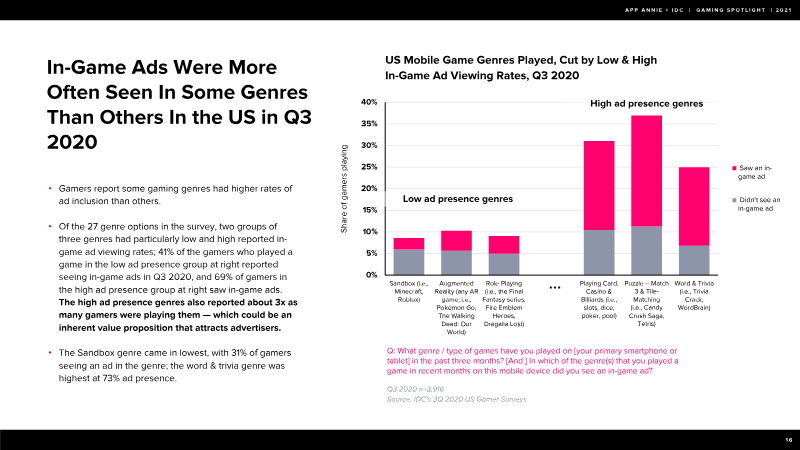

Gaming Spotlight 2021: The Year in Review
Mobile gaming has solidified its position as the primary driver of digital games consumption, with global spending projected to extend its lead to 2.9 times that of PC/Mac and 3.1 times that of home consoles in 2021.
- Mobile gaming is the dominant market force, with 2021 spending projected to reach 2.9 times that of PC/Mac and 3.1 times that of home consoles.
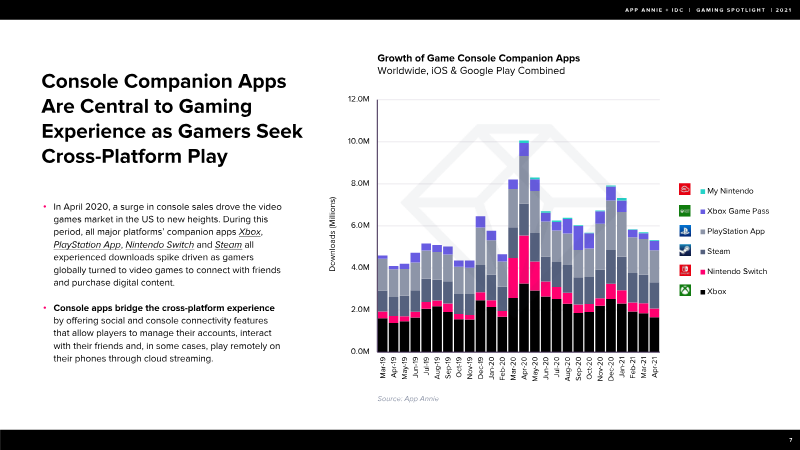
- Pandemic-driven engagement peaked in Q1 2021 with over 1 billion weekly game downloads, a 30% increase over pre-pandemic levels, and weekly consumer spending rising 40% to $1.7 billion.
- Cross-platform play and real-time social features are now essential for engagement, as evidenced by the success of titles like Roblox and Genshin Impact.
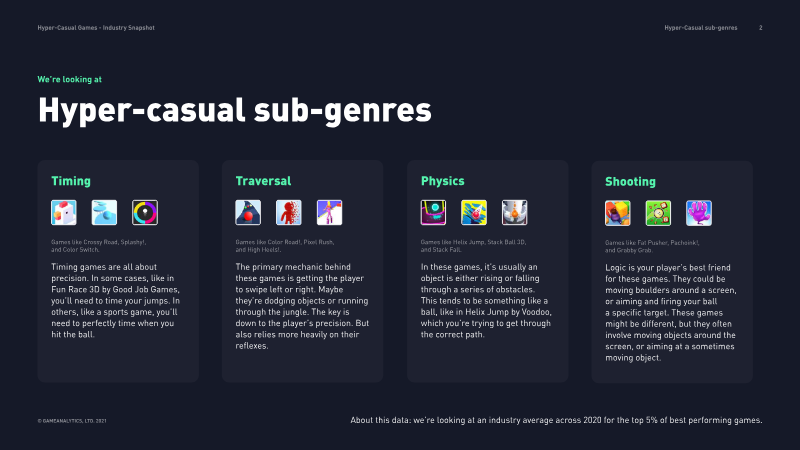

Deconstructing the Superstars: The Metrics Behind Hyper-Casual Games 2020 Industry Snapshot
GameIntel's 2020 industry snapshot breaks hyper-casual mobile games into sub-genres (timing, traversal, physics, shooting, spatial, crafting and matching) and sets out the KPIs developers should target in each.
- A Day 1 retention rate of 40% serves as the critical threshold for commercial viability, with titles failing to meet this benchmark requiring immediate iteration or abandonment.
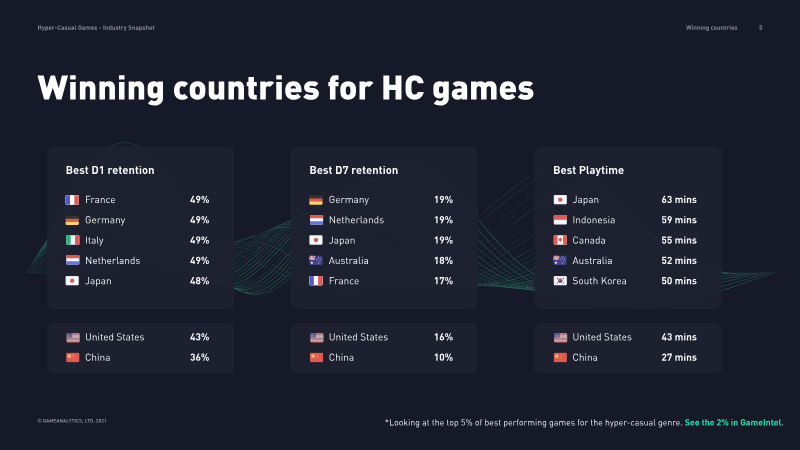
- European markets lead global engagement, with France, Germany, Italy, and the Netherlands achieving a 49% Day 1 retention rate.
- Japan exhibits the highest average playtime at 63 minutes, significantly outperforming the United States at 43 minutes and China at 27 minutes.

IP Licensing for Small Teams featuring Mel Kirk | Game Dev Unchained Episode 246
Securing high-profile intellectual property licenses serves as a primary engine for growth and risk mitigation within the independent game development sector.
- Securing high-profile IP licenses acts as a primary growth engine by reducing marketing expenditures and providing immediate access to established, dedicated fanbases.
- Studios should adopt a hybrid business model that balances reliable work-for-hire licensing agreements with the development of original IP to ensure financial stability and low employee turnover.
- Licensors prioritize financial reliability and proven execution, requiring developers to demonstrate technical proficiency through high-quality prototypes or vertical slices before pursuing major partnerships.

Is The Indie Game Dev Dream Real? - The Full Truth
Achieving long-term success in the independent game development industry requires a fundamental shift from viewing game creation as a purely artistic endeavor to treating it as a disciplined, entrepreneurial business.
- Long-term sustainability in indie game development requires transitioning from an artistic-focused mindset to a disciplined, entrepreneurial business model.
- Financial stability should be built by diversifying income streams through crowdfunding, platform partnerships, and personal branding rather than relying solely on individual game sales.
- Developers must cultivate a loyal audience through consistent social media engagement and email marketing to guarantee a reliable customer base for future projects.