1 free read left. Create a free account for unlimited reading + AI research.
Create free account
How much MONEY did my STEAM/SWITCH game make?
Key insights
6 takeaways- 01The game Never Song generated $90,000 in gross revenue from over 12,000 units on Steam and $30,000 from nearly 3,000 units on the Nintendo Switch within its first five months of release in May 2020.
- 02Total financial performance for a title like Never Song extends beyond storefront sales, with undisclosed Kickstarter funding and publisher advances acting as significant, necessary components of total studio income.
- 03Long-term financial sustainability in indie game development requires a diversified revenue model that combines storefront sales with crowdfunding, publisher advances, and personal brand cultivation.
- 04Developers should treat their studios as entrepreneurial ventures by managing multiple income streams and marketing channels simultaneously to mitigate the volatility of individual game releases.
- 05Building a personal brand through social media, email marketing, and content creation serves as a critical mechanism to drive traffic and ensure a sustainable drift of income after the initial development phase.
- 06Relying solely on organic discovery within storefronts is insufficient due to high market competition, making a proactive marketing system essential for consistent visibility.
Ask AI about this video
Transcript
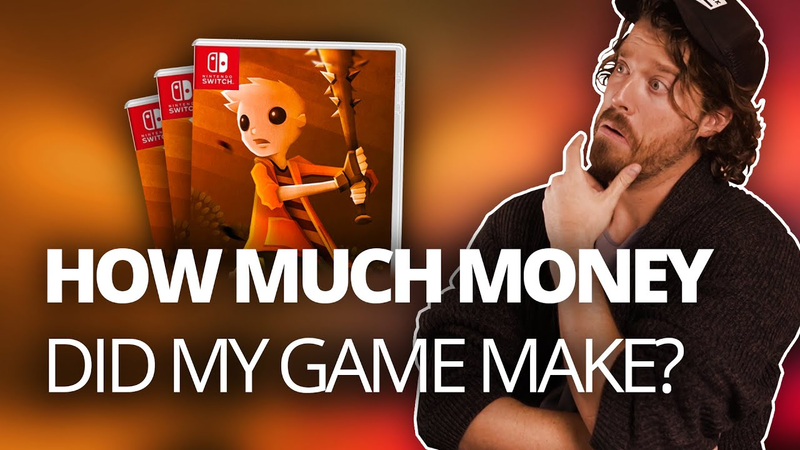
Hey guys, how's it going? My name is Thomas Brush and I make indie games for a living. All right, so here we go. I wanted to give you the current numbers for Never Song and that's my latest commercial release and it's a game about a little boy in a coma and I launched this in May of 2020 this year. Now, I'm not going to give you Pinstripe's number and that's my first commercial release. Um, I'm not going to give you those numbers. Then maybe we can do another video for that. We're just going to focus on Neverong. That said, I do want to be clear here, guys. I'm going to exclude a few platforms from Neverong's total revenue because I can't legally disclose those numbers. Kind of makes me feel a little bit nervous, but I can disclose Steam's numbers and Nintendo Switch's numbers generally. So, I'm going to give you a general idea of the units sold and also the gross revenue. Let's go ahead and start with Steam.
Okay, so since launch, Neverong has sold over 12,000 retail units and that revenue total is around $90,000. Obviously, because of publishing agreements and Valve's wonderful 30% cut, guys, I don't get all that money, okay? And also, don't forget about that little thing called Satan. Not Satan, I'm sorry, taxes. Taxes. Don't forget about taxes. And that's probably going to be around 25% to 30% if you're in the states, but it really depends on what country you're in. Now, just remember guys, I raised around $90,000 on Kickstarter, uh, about 2 years before I even launched Neverong. And then I also partnered with a publisher, so they paid me in advance. I can't tell you what the advance is, but that's some revenue there as well. And, you know, there's also other income streams as well. And I call these income streams income farms. Basically, they just build revenue for your studio um without you really needing to do other things. The income farms in Northern Ireland
sings forth new abundant life, ensuring the local game devs don't starve to death. And we're going to talk about what those farms are, what those secrets to building revenue for your studio outside of actually selling your game. We're going to talk about those towards the end of this video. So, be sure to stick around. So yeah, in addition to the $90,000 on Steam and some Kickstarter revenue and some publisher revenue, I also made a decent amount of money from Nintendo Switch. Now, here's the thing about Nintendo Switch. If I had launched Neverong in, let's say, 2018, oh man, I promise you I'd be getting those two Mercedes right now. But I didn't launch in 2018, did I? And it's a shame. That's because in 2018, there weren't a lot of games on Nintendo Switch, guys. And so, if you jumped into the storefront in 2018, people were going to buy your game because you had a lot of exposure. Things are a lot more competitive now.
But hey, we sold almost 3,000 units over the summer. So, that's really cool. That's around $30,000 gross. And honestly, guys, that doesn't make me unhappy at all. I'm actually very pleased with that. So, all in all, guys, with Switch and Steam, that's around $120,000 gross in five months. And that again doesn't include a big portion of the pie that I just can't disclose from other platforms. So, there's a lot of revenue that was made outside of Steam and Nintendo Switch. And so, that's kind of my point with this video. Um, I'm not bragging. I'm not trying to tell you guys how much money I made to brag. Or maybe I'm not bragging. Maybe I'm embarrassing myself. Maybe you guys thought that I made a lot more money. I don't know what the case is. I'm really just trying to tell you that making money from your indie games is more than just selling your game on Nintendo Switch and Steam. Selling your indie games can be as simple as making a hit or let's be honest, hitting that wave at the right time and selling millions of
dollars worth of copies on Steam or some other platform. or if you're like me, it's about utilizing all the platforms out there at once. Maybe slowly building on top of one another. And not only that, guys, using email marketing, social media, YouTube, Kickstarter, publishers, and pretty much everything in between to make money from your indie games. Okay, so I know what you're thinking. You're thinking, "I don't even know how to make a single game, let alone market myself. Is Thomas just constantly checking email and managing all of his revenue streams instead of making games? Actually, yeah. Yes, that's what I'm spending my time doing lately. See, the thing is is you have seasons in your life. Sometimes you spend a lot of time building systems to market yourself and market your game and propel them into the atmosphere and build that sustainable income. Other times, you just make your games, right?
So sometimes I'm I'm building marketing systems and building my social media presence and my personal brand. Other times guys, I'm just making games. So for example, once a game launches on Nintendo Switch and maybe I spend a month fixing bugs, that's it. The game is ready to go. And guys, it's going to be a sustainable drift of income for like 3 years. That's awesome. So I don't really need to do anything with that game. Another example is I actually released on Apple Arcade and that was with the help of my publisher. This was really difficult to get this game Neverong made for Apple Arcade. It was a lot of work and we really had to focus our energy on that. But now guys that plate is spinning and so I can go focus on other plates to spin. So as you can see I have a lot of plates spinning and I'm propelling those plates. Use let's go with the metaphor here of plates. I'm propelling those plates into the atmosphere with my personal brand, with
social media marketing and email. See, here's the thing about building an indie game studio. Guys, it's entrepreneurship. A lot of you have said, "I don't want to be an entrepreneur." Well, you you kind of have to be if you're going to be a solo indie game dev or maybe a team of two or three people, you kind of have to be an entrepreneur. You're going to need to build a sustainable studio and you need to slowly build up a series of income streams all related to you selling your work. Now, just so I don't get some comments about Thomas is admitting that he only makes money from YouTube, that's actually not what I'm saying. The majority of my revenue comes from sources and platforms selling Neverong and they're completely outside of YouTube. However, that does not stop me from creating a personal brand on YouTube, on Twitter, Instagram, and pursue email marketing, and other sources of income. I'm going to do all of it so that I can build a sustainable income stream that lifts my studio up in
the long term. So, ultimately, guys, the point is this. Even though personally I make money selling my games on storefronts, those games are propelled by my personal brand. This method is actually kind of the way of the future, guys. If you're not building a personal brand around you and your games, then making money is about as easy as, I don't know, buying a lottery ticket from a gas station and hoping you make some money. Or here's another metaphor. It's kind of like trying to sell, I don't know, corn in the middle of Antarctica. Sure, you've got some great corn, but nobody knows about your corn. Tell people about the corn. Tell people about the corn. Write that down. And in order to tell people, you've got to build a personal brand and market yourself, guys. Market yourself and your games. Well, guys, thanks for listening to me ramble. Also, don't forget to What am I
trying to say? What's the last thing here? Oh, there's a 2D game kit. If you want a free 2D game kit, click the link below and I will send that to you immediately. All right, guys. I will talk to you later. Thanks. Bye. See you. Oh, and merry Christmas. Merry Christmas.
Summary
The primary objective is to illustrate the financial realities of independent game development by analyzing the performance of the title Never Song. The central thesis posits that long-term financial sustainability in the indie sector requires a diversified approach to revenue generation, moving beyond simple storefront sales to include crowdfunding, publisher advances, and the cultivation of a personal brand. By treating the studio as an entrepreneurial venture, developers can create multiple income streams that function independently once established.
Financial data for Never Song, released in May 2020, indicates that the game generated approximately $90,000 in gross revenue from over 12,000 units sold on Steam, alongside $30,000 from nearly 3,000 units on the Nintendo Switch within the first five months. These figures exclude additional revenue from other platforms, Kickstarter funding, and publisher advances, which are noted as significant but undisclosed components of the total income. The analysis emphasizes that while storefronts provide the core revenue, the market has become increasingly competitive, making reliance on organic discovery alone akin to a lottery.
To mitigate market volatility, the strategy involves building a personal brand through social media, email marketing, and content creation to drive visibility. This approach functions as a marketing system that propels games into the market, ensuring that even after the initial development and bug-fixing phases, titles continue to provide a sustainable drift of income. The methodology focuses on the concept of spinning multiple plates—simultaneously managing various platforms and marketing channels—to ensure that the studio remains financially viable regardless of the performance of any single release.













Comments