Monetization reports and market data
Documents
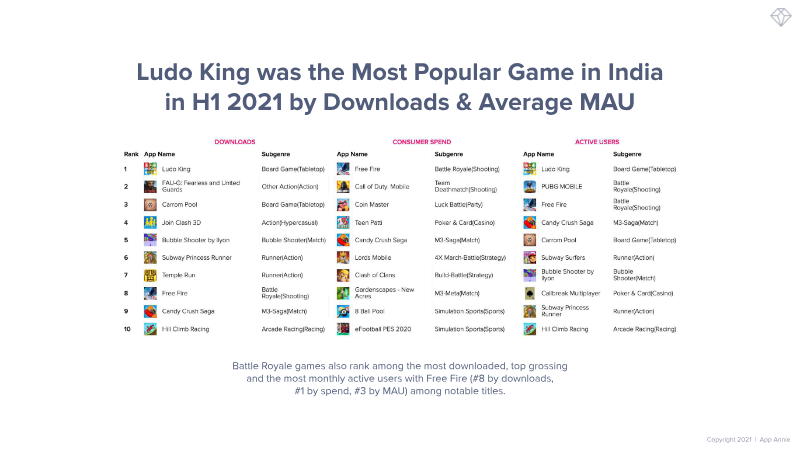


India: Mobile Market Spotlight: A Booming Mobile Economy
India has solidified its position as a global mobile powerhouse, currently ranking second worldwide in total app downloads.
- India is a global mobile-first leader, ranking second in total app downloads with 24 billion installs in 2020, a 28% year-over-year increase.
- India became the world's largest market for game downloads in the first half of 2021, accounting for nearly 20% of global installs.
- Daily mobile usage per user surged from 3.3 hours in 2019 to 4.8 hours by Q3 2021, fueled by pandemic-driven engagement.

Exploring The Opportunities of In-Play Advertising - PG.Biz Roundtable
In-play advertising represents a strategic evolution in mobile game monetization, shifting away from disruptive interstitial and rewarded video formats toward immersive, context-aware brand integrations.
- In-play advertising provides a non-disruptive revenue stream by embedding brand content directly into game environments, such as billboards or signage, rather than relying on interstitial or rewarded video formats.
- The primary barrier to scaling in-play advertising is the current lack of standardized measurement frameworks, which prevents risk-averse media agencies from shifting budgets into gaming.
- While rewarded video currently generates higher eCPMs, in-play advertising serves as a vital complementary revenue stream that protects player retention by avoiding gameplay interruptions.

Nature vs. Nurture: Unpacking Player Spending in F2P Games
Free-to-play monetization relies on a consistent industry reality where only one to five percent of the total player base generates revenue.
- Only one to five percent of a free-to-play player base generates revenue, making these individuals a distinct behavioral segment with a high propensity to spend across multiple titles.
- Developers should shift from vanity metrics to correlation analysis to identify specific KPIs that directly impact average revenue per user (ARPU) and lifetime value (LTV).
- Pricing entry points should typically range between five and twenty-five dollars, as setting prices too low conditions players to expect lower costs and limits long-term revenue potential.

Star Atlas | Metaverse Game on the Solana Blockchain
Star Atlas functions as a AAA-quality, space-themed grand strategy metaverse built upon the Solana blockchain.
- Star Atlas is a AAA-quality space strategy metaverse built on the Solana blockchain, which utilizes a high-throughput architecture capable of processing 50,000 transactions per second.
- The game utilizes a dual-token economic model where ATLAS functions as the primary currency for commerce and POLIS serves as a governance token for the project's Decentralized Autonomous Organization.
- The platform operates on an invest-to-play paradigm, utilizing NFTs for all in-game assets to grant players true ownership and the ability to extract real-world value from their digital investments.
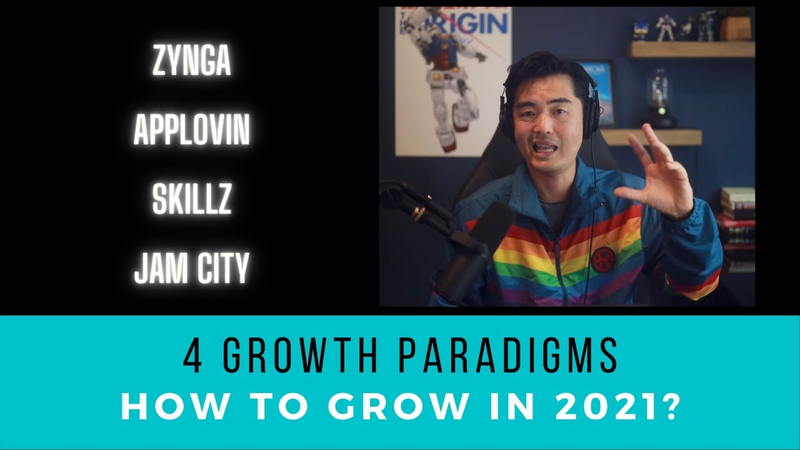
Game Company Growth Strategies in 2021 | Zynga, Applovin, Skillz, and Jam City
The mobile gaming industry is undergoing a fundamental transformation as traditional content-based mergers and acquisitions yield diminishing returns.
- The mobile gaming industry is shifting away from traditional content-based M&A toward vertical integration and cross-platform models to counter the impact of IDFA deprecation on user acquisition.
- AppLovin is attempting to transition from an ad-tech provider to a content-focused powerhouse, risking the alienation of its external client base by creating a potential walled garden.
- Zynga is pursuing ad-tech integration and cross-platform expansion, though its strategy faces significant industry skepticism regarding data privacy and trust.

Understanding the New Opportunities in Mobile Game Audio | PocketGamer.biz RoundTable
Audio has evolved from a secondary production element into a primary driver of player engagement and monetization within the mobile gaming industry.
- Mobile game audio has transitioned from a secondary production element into a primary driver of player engagement, monetization, and emotional connection.
- In-game audio advertising is emerging as a critical non-intrusive revenue stream to offset the impact of privacy-related data restrictions such as iOS 14’s IDFA changes.
- Developers are leveraging AI-driven voice synthesis and social audio to create immersive environments that align with modern multitasking and social interaction habits.
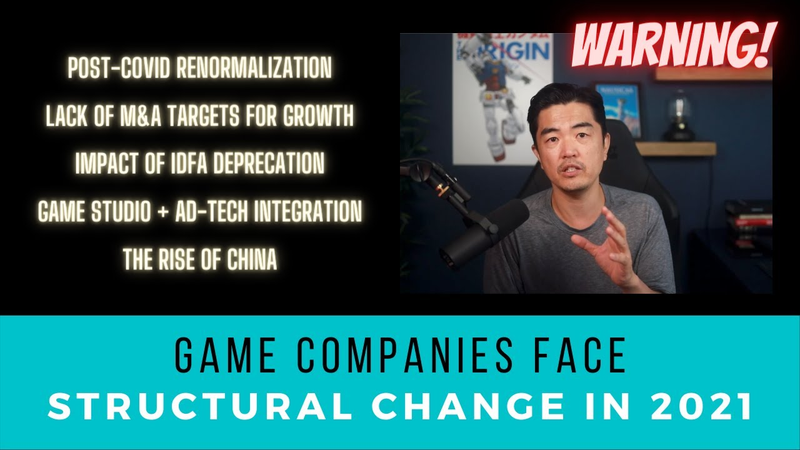
Game Companies Face Structural Change in 2021 | The Warning!
The gaming industry faces a period of significant structural transformation in 2021, driven by five converging factors that threaten to disrupt established business models.
- The gaming industry is transitioning from the 2020 pandemic-driven hyper-growth phase to a more complex, data-constrained environment characterized by normalized user behavior.
- The deprecation of Apple’s Identifier for Advertisers (IDFA) is eroding the efficacy of user acquisition, specifically threatening the monetization models of hyper-casual game developers.
- A scarcity of viable mid-tier M&A targets is forcing major firms to pivot toward riskier, larger public transactions or smaller, pre-revenue acquisitions to maintain growth.
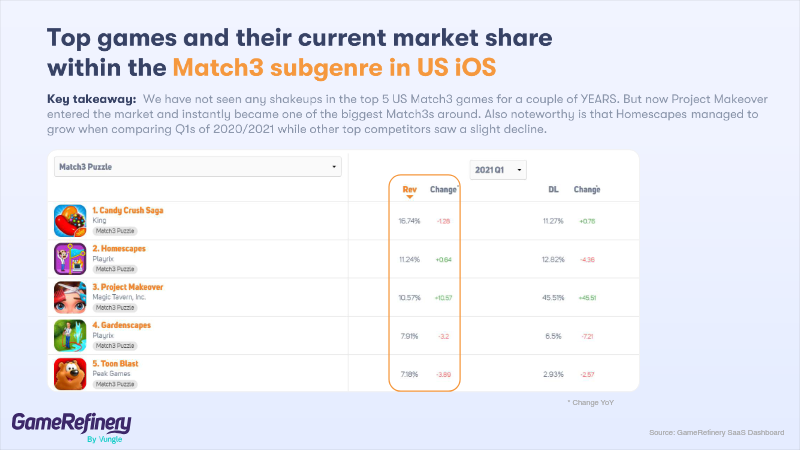

Match3 Genre Snapshot: US iOS (May 2021)
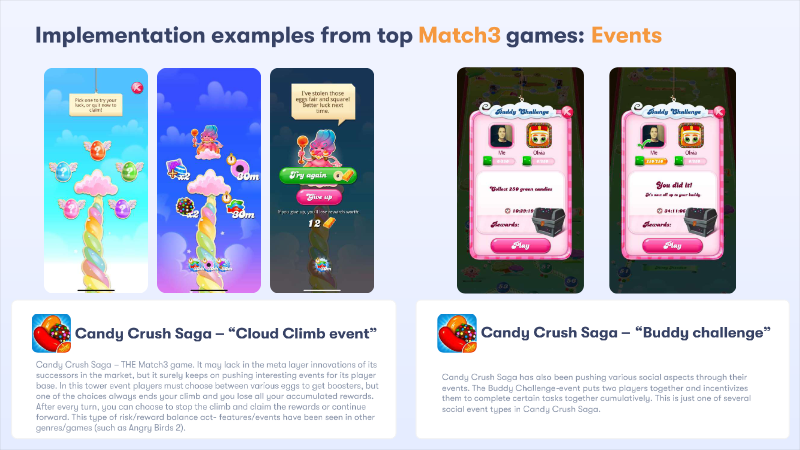
The Match3 subgenre remains the most lucrative segment within the US iOS mobile gaming market, accounting for approximately 16% of total regional revenue.
- As of May 2021, the Match3 subgenre accounts for approximately 16% of total US iOS mobile gaming revenue.
- No new Match3 titles entering the top 500 grossing rankings over the last 18 months utilize standard swapping mechanics, indicating a shift toward gameplay diversification.
- Modern Match3 success is increasingly driven by meta-layers, specifically decoration and customization features seen in titles like Royal Match and Project Makeover.
Top 3 Mistakes of Angry Birds 2
This analysis outlines the primary development and design challenges encountered during the lifecycle of Angry Birds 2, as presented by the game’s former product lead.
- Prioritize the experience of high-value players over non-paying users, as focusing resources on the majority of non-monetizing players can neglect the primary revenue drivers.
- Avoid underestimating player capability by over-simplifying interfaces; adding depth through features like arenas and daily challenges significantly increases engagement.
- Ensure that core gameplay remains the primary focus, as retention mechanics like daily login rewards are ineffective at converting disinterested players if the fundamental experience is not enjoyable.

TWIG 131 | Apex Legends Mobile, Fortnite Leaks and $9B Rev, Activision Q1 Results, JK Final Episode!
The gaming industry is currently navigating a period of significant structural and financial transition, characterized by aggressive investment strategies and shifting platform dynamics.
- Epic Games litigation revealed that Fortnite generated $9 billion in revenue between 2018 and 2019, with the PlayStation ecosystem accounting for 47% of that total.
- Mobile platforms continue to underperform in monetization and retention compared to consoles, casting doubt on the success of new mobile entries like Apex Legends Mobile.
- Apple’s IDFA opt-in prompts have seen a sluggish adoption rate of only 6–10%, creating ongoing challenges for mobile advertising measurement and monetization strategies.
Panel: Live Ops Strategies That are a Must for Every Game Developer
Live Ops functions as a foundational pillar of modern game development, serving as a critical mechanism for driving long-term player engagement and recurring revenue.
- Live Ops should be integrated into the development process as early as possible, rather than treated as an afterthought, to allow for iterative testing and audience discovery.
- Developers should externalize game configurations from the client code, allowing for real-time adjustments to events and tuning without requiring new client-side builds.
- One-size-fits-all strategies are ineffective; developers must tailor Live Ops to specific regional markets and player segments, as performance often varies significantly between regions like APAC and Western Europe.
Why Developers Fail on Alternative App Stores & How to Succeed
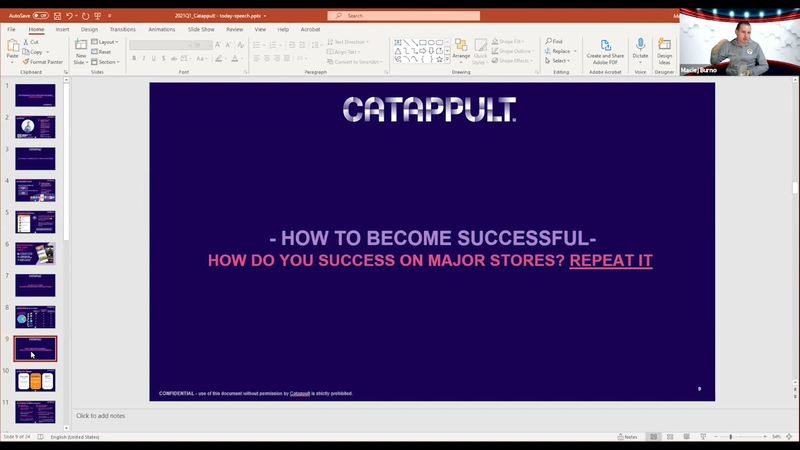
Expanding into alternative app stores represents a critical growth strategy for game developers seeking to bypass the limitations of the traditional iOS and Google Play duopoly.
- Diversifying distribution beyond the iOS and Google Play duopoly can increase game revenue by 20% to 25% over a two-year period.
- Success on alternative app stores requires treating them with the same operational rigor as primary storefronts, including consistent update schedules and standardized bundle IDs.
- Developers should shift from passive distribution to a proactive, relationship-driven approach, including regular communication with store representatives to secure featured placements.