Monetization reports and market data
Documents
The Messy Middle - From Trend Gamification to a Profitable Hypercasual Game
The hypercasual gaming sector continues to experience significant growth, currently accounting for approximately one-third of all mobile game downloads with a 20% annual growth rate.
- The hypercasual gaming market remains a high-growth sector, expanding at nearly 20% annually and accounting for one-third of all mobile game downloads.
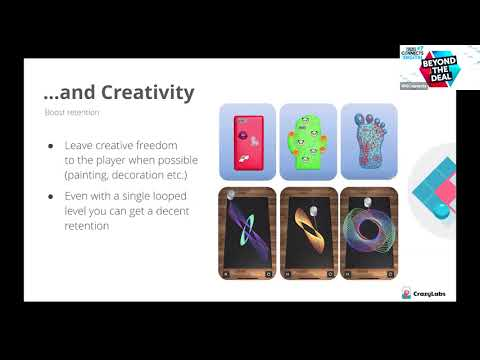
- Achieving profitability requires moving beyond a low-CPI prototype to optimizing engagement KPIs, which CrazyLabs defines as the 'messy middle' phase of development.
- Improving game controls to be more responsive—such as reducing physics-based friction—can significantly increase player engagement, with one case study showing a 50% increase in rounds played per day.

Superstar Session: Publishing Isn’t ‘One Size Fits All’ - What Does Your Game Need?
Hyper-casual gaming maintains its position as a cornerstone of the mobile market, currently representing one-third of all mobile downloads and sustaining a robust 20 percent annual growth rate.
- Hyper-casual gaming accounts for one-third of all mobile downloads and is maintaining a 20 percent annual growth rate.
- The hyper-casual development cycle is high-velocity, requiring ideation to global release to occur within a four-to-eight-week window.
- Success relies on a fail-fast methodology that prioritizes rapid prototyping and iterative testing to validate concepts before scaling.

Panel: The Truth About Ads: Is it a Disruption, a Requirement or an Opportunity for Game Makers?
Advertising in the modern gaming landscape functions as a strategic exchange mechanism rather than a mere disruption.
- Modern game advertising functions as a strategic exchange where rewarded videos and context-aware placements provide a sustainable revenue model that supports free-to-play access.
- Integrating ad experiences directly into the core game loop can improve player retention rather than acting as a disruptive force.
- Studios can mitigate financial risk by using early-stage video ads and playtests to validate core mechanics and monetization strategies before full production.

Superstar Session: Unlocking Gaming's Potential as a Media Channel
Gaming has evolved into a dominant global media channel, currently reaching an audience of over three billion players.
- Gaming has reached a global scale of over three billion players, positioning it as a primary media channel for long-term brand building.
- The industry is shifting from fragmented, custom brand activations toward a scalable, automated infrastructure that integrates ads natively into gameplay.
- To ensure sustainability, the model prioritizes non-intrusive, native ad formats over disruptive, performance-based advertising to protect user retention.
How to Maximise Engagement (& Fun!) Through Live Ops Strategies
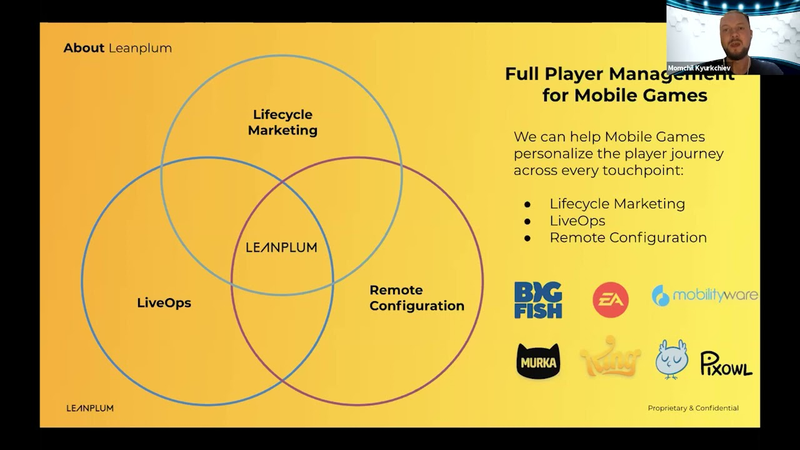
Maximizing player engagement and long-term retention in the modern gaming landscape requires a shift toward unified, personalized player journeys that integrate lifecycle marketing, live operations, and remote configuration.
- Transitioning from scheduled communications to real-time, behavior-triggered messaging can increase revenue by up to five times.
- Behavioral segmentation based on the recency and frequency of player activity consistently outperforms traditional demographic targeting and can double revenue per message.
- Studios should utilize remote configuration tools to test new events and game experiences rapidly, bypassing the need for full-scale development cycles or app store submission delays.

Panel: How to Optimise Revenue & Retention for Your Games
Long-term success in the modern gaming industry requires a fundamental shift toward integrating monetization and retention strategies directly into the core design process.
- Integrate monetization and retention strategies directly into the initial game design document to prevent post-launch reworks and avoid churn-inducing imbalances.
- Prioritize non-intrusive monetization methods, such as native product placements and in-game billboards, over disruptive advertising formats to maintain player retention.
- Establish a unified analytics framework that breaks down silos between monetization tools and player behavior metrics to create a data-driven operational backbone.

Superstar Speed Panel: Rethinking InGame Advertising
The gaming industry is undergoing a fundamental shift in monetization, moving away from intrusive, disruptive ad models toward immersive, non-interruptive integrations.
- The gaming industry is shifting from intrusive, disruptive ad models toward immersive, non-interruptive integrations to protect player retention and long-term revenue.
- Monetization strategies must be integrated during the early stages of game design rather than treated as an afterthought to ensure placements feel native to the virtual environment.
- Measurement frameworks are evolving beyond basic viewability metrics to prioritize meaningful engagement, attention, and tangible real-world impact.

Uma Musume Pretty Derby - What is this game? ft. Junde Yu from App Annie
Uma Musume Pretty Derby represents a significant case study in the Japanese mobile gaming market, blending the traditionally male-dominated genre of horse racing simulation with the idol-training mechanics typically favored by female audiences.
- Japan accounts for over 70 percent of global downloads and more than 85 percent of global revenue for the idol-training subgenre, highlighting extreme regional concentration.
- Uma Musume Pretty Derby successfully hybridizes male-dominated horse racing simulation mechanics with female-oriented idol-training systems to broaden its demographic reach.
- The game utilizes high-production-value assets and established anime intellectual property to justify premium pricing within its gacha-based monetization model.

TWIG #141 Reactions to XCOM mobile bleeds to debate on free-to-play games
The recent soft launch of the XCOM mobile title serves as a focal point for broader industry tensions regarding the adaptation of core gaming intellectual property (IP) for mobile platforms.
- Adapting core gaming IP for mobile creates a strategic dilemma where simplifying mechanics to reach mass-market audiences risks alienating the loyal, core fan base.
- Franchises with highly distinct, mechanics-driven identities—such as XCOM, Command & Conquer, and Civilization—face significantly higher resistance to gameplay changes than IP that can easily decouple from specific genre expectations.
- The soft launch of the XCOM mobile title demonstrates that high production values and strong narrative elements are insufficient to overcome fan backlash when core strategic gameplay is perceived as diluted.

PocketGamer.biz Mobile Games Awards 2021
The mobile gaming sector reached a pivotal maturation point in 2021, solidifying its position as the dominant force in the global interactive entertainment market.
- The mobile gaming sector reached a valuation between $91 billion and $120 billion in 2021, accounting for approximately 50% of the total global games market.
- The industry experienced significant financial consolidation and investment, characterized by over $60 billion in mergers and acquisitions alongside increased venture capital funding for studios and service providers.
- Growth is increasingly driven by high-fidelity experiences and sophisticated live operations, with industry leaders like TiMi Studio Group, Tencent, and Supercell setting the standard for development.
Ni No Kuni Cross Worlds to $100M in 11 Days | Talk with Junde Yu GM Gaming at App Annie
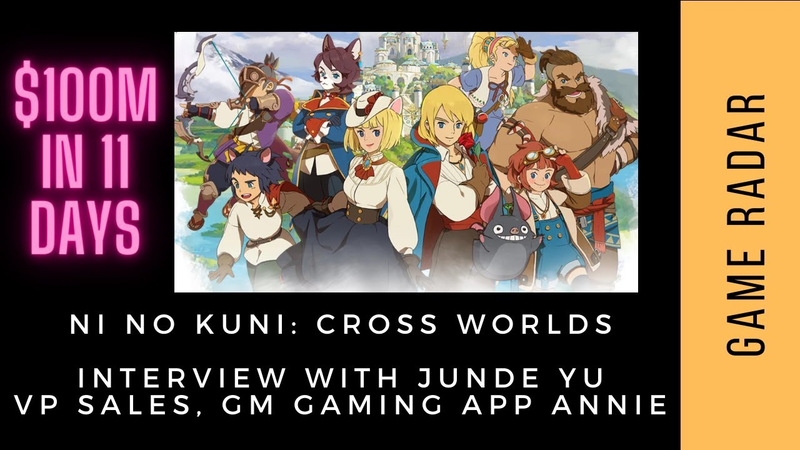
Ni No Kuni: Cross Worlds achieved significant commercial success upon its initial release in select Asian markets, generating $100 million in gross revenue within just 11 days.
- Ni No Kuni: Cross Worlds generated $100 million in gross revenue within 11 days of its initial launch in Japan, South Korea, Taiwan, and a few other Asian markets.
- The game combines kingdom-building mechanics with an action MMORPG structure, featuring a meta-narrative where the player character is a beta tester trapped inside a virtual reality game.
- High production values linked to the established Ni No Kuni IP allow for premium pricing on gacha items, as players are already familiar with the characters, voice acting, and storylines.

Casual Puzzle Category Review 2021
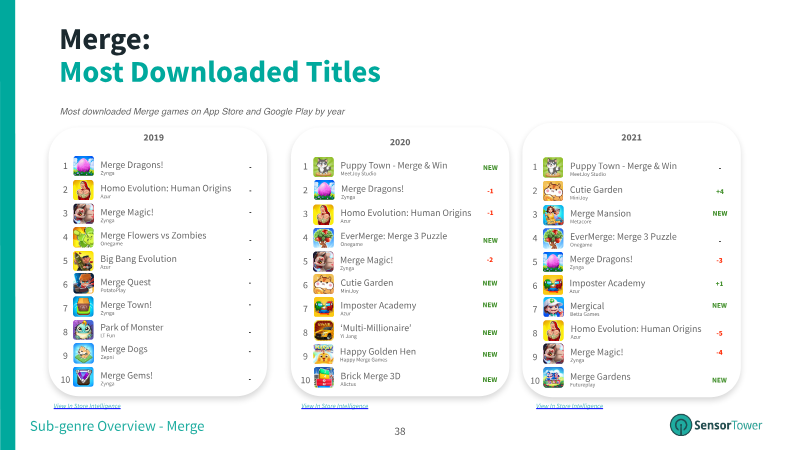
The casual puzzle market experienced a period of significant expansion and structural transformation between 2020 and mid-2021, characterized by a 17% increase in monthly revenue and a surge in successful new releases.
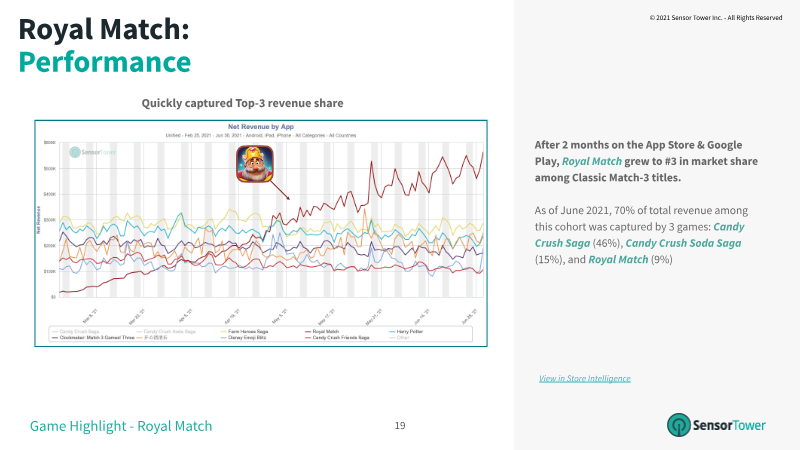
- The Puzzle & Decorate sub-genre has overtaken Classic Match-3 as the primary revenue driver, led by titles like Project Makeover and Royal Match that utilize narrative-driven 3D customization.
- The Merge sub-genre is the fastest-growing segment, achieving a 498% four-year compound annual growth rate and a 44% revenue increase over 18 months.
- Market consolidation remains high in the Puzzle & Decorate segment, where Playrix and AppLovin control 88% of total downloads and revenue.