Monetization reports and market data
Documents

Keynote: Powering Real Economies: How Programmable Money Unlocks Monetisation & Activity in Games
The integration of programmable money into gaming environments represents a significant shift in how developers manage monetization, player engagement, and value transfer.
- Integrating Bitcoin and the Lightning Network into games enables near-zero fee, instant, and bi-directional value transfer, replacing traditional closed-loop credit systems with liquid, real-world economies.
- Early implementations of these payment rails have demonstrated a doubling of player retention rates through day 45.
- Partners utilizing programmable money infrastructure have reported return on ad spend (ROAS) improvements ranging from 20% to 125%.

Keynote: How to Monetise Mobile Games Beyond the App Stores
The mobile gaming industry faces a significant limitation in revenue growth due to its reliance on closed ecosystems, such as the Apple App Store and Google Play Store.
- Reliance on closed ecosystems like the Apple App Store and Google Play Store excludes approximately 260 million potential paying players globally who lack access to standard payment methods.
- Implementing alternative payment methods in Europe could expand developer reach by 40%, capturing an additional 3 million paying customers.
- Major growth markets including Brazil, China, South Korea, Russia, Japan, and Turkey rely heavily on local payment solutions like Pix, Boleto, digital wallets, and cash-based systems that are currently unsupported by major app store infrastructure.

The 'Flappy Bird' That Laid the Golden Egg: Success in Hyper-Casual
The hyper-casual game industry has evolved into a high-volume, data-driven market that prioritizes rapid prototyping and aggressive user acquisition over traditional game design depth.
- Hyper-casual games now account for over 50% of all mobile game downloads, driven by a business model centered on the arbitrage of rewarded video ads.
- Publishers like Voodoo utilize a 'swarm' strategy, testing hundreds of prototypes simultaneously to identify hits based on day-one retention and cost-per-install metrics.
- Success in the sector is dictated by mathematical efficiency and rapid prototyping rather than creative innovation, mirroring the pop music industry's focus on a singular, addictive hook.

Keynote: Thriving in the App-ocalypse
The mobile app marketing landscape has undergone a significant transformation due to privacy-centric changes, most notably the deprecation of the Identifier for Advertisers (IDFA) and the implementation of Apple’s App Tracking Transparency (ATT) framework.
- Approximately 80% of mobile users now opt out of tracking following the implementation of Apple’s App Tracking Transparency (ATT) framework and the deprecation of the Identifier for Advertisers (IDFA).
- Developers can maintain profitable growth by shifting from deterministic, IDFA-reliant tracking to probabilistic modeling and alternative data signals.
- Purchase behavior targeting, which identifies high-value users based on transaction history rather than device identifiers, is a highly effective method for improving return on ad spend (ROAS) and reducing acquisition costs.
Scaling Blockchain Games: The Fundamentals
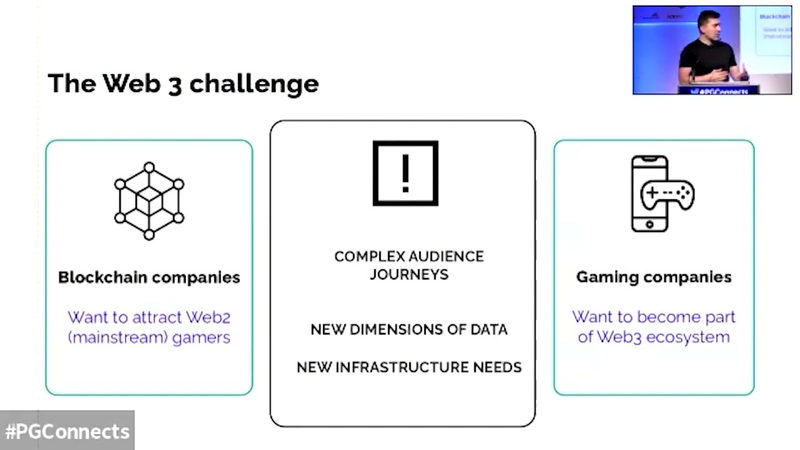
Scaling blockchain games requires a shift from relying on organic hype to implementing performance-driven growth strategies similar to those used in the mobile free-to-play market.
- Sustainable growth in blockchain gaming requires shifting from speculative hype to performance-driven strategies modeled after the mobile free-to-play market.
- The sector has demonstrated significant momentum, evidenced by a 100x year-over-year increase in active wallets and a high concentration of total blockchain transactions originating from gaming.
- Developers must integrate traditional gaming audiences with crypto-native users by creating high-quality, accessible products that prioritize genuine utility over speculative asset models.
Panel: CFO Confidential: Best Practice Tips & Tricks
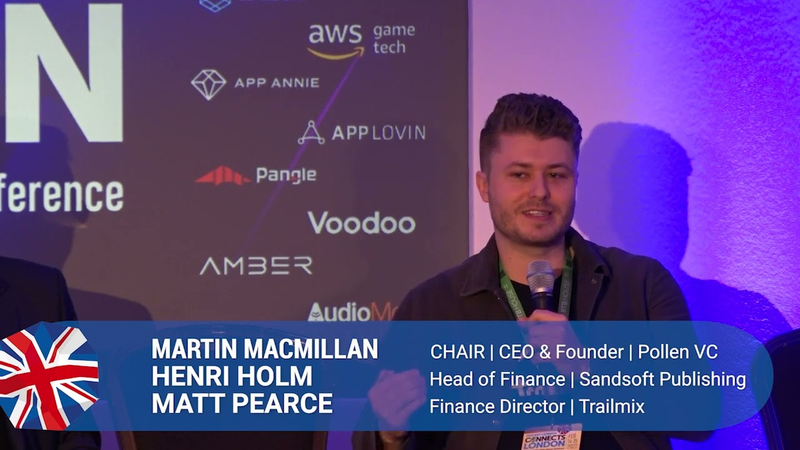
Scaling a gaming company requires a transition from informal financial management to the integration of a dedicated, full-time finance leader as the business approaches Series A funding.
- Companies should transition from informal financial management to a dedicated, full-time finance leader as they approach Series A funding to manage increasing complexity in cap tables and investor relations.
- Finance must be treated as a core strategic pillar for long-term growth and resource allocation rather than a purely transactional or accounting function.
- Operational efficiency is best achieved by dismantling silos and adopting a game-centric structure where finance, user acquisition, and product teams are aligned around specific titles.
Keynote: Building a Scale-up Financial Model
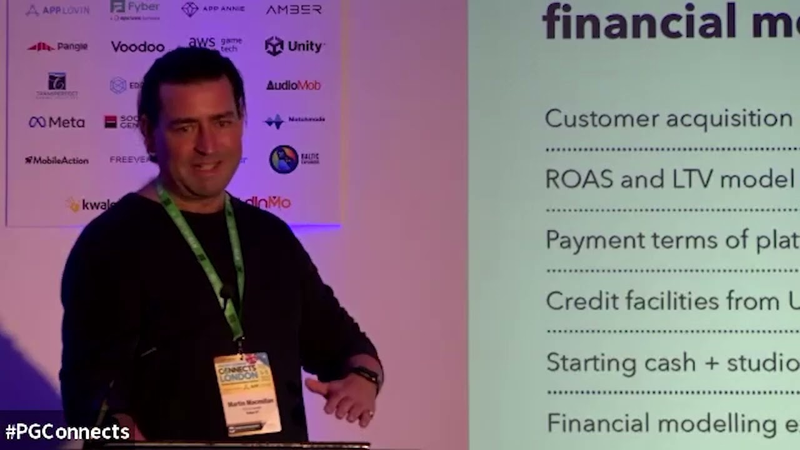
Building a scale-up financial model for gaming studios requires a sophisticated approach that integrates user acquisition (UA) metrics, cash flow management, and strategic capital allocation.
- Studios must transition from simple profit-and-loss accounting to granular, cohort-based financial models that map the specific time-lag between user acquisition (UA) spend and revenue realization.
- To maintain operational clarity, studios should isolate UA and monetization cash flows from general operating costs, treating UA as a repeatable investment formula rather than a generic expense.
- Financial models must account for industry-standard payment delays of 15 to 90 days, which create significant liquidity gaps that can be mitigated by leveraging credit facilities from ad networks.
Keynote: Turn up the Volume: Let Your Users PlayOn With In-game Audio Ads
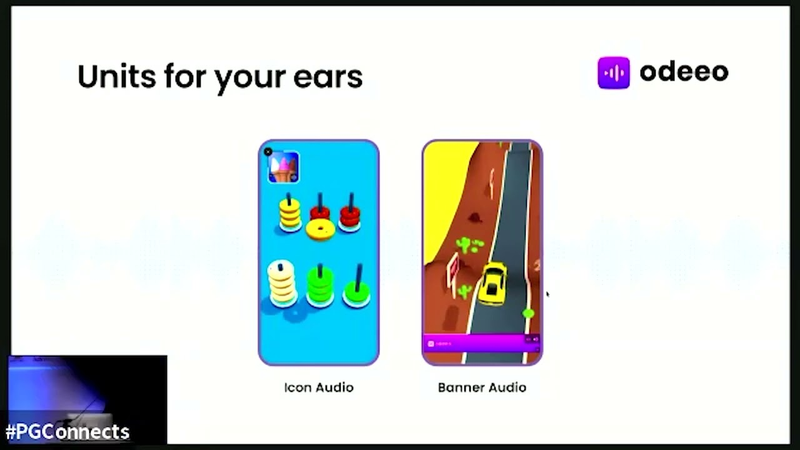
In-game audio advertising represents a strategic evolution in mobile game monetization, designed to replace intrusive visual formats with a seamless, non-disruptive user experience.
- In-game audio ads increase average revenue per daily active user (ARPDAU) by 10% to 15% by offering a non-disruptive alternative to intrusive visual formats.
- Standard CPM rates for audio ads in tier-one markets typically range from $5 to $15, with direct deals occasionally reaching $30.
- Proprietary SDKs ensure ad delivery by performing real-time, on-device analysis of device volume, mute status, and competing audio sources to prevent playback conflicts.
State of Mobile Gaming 2022
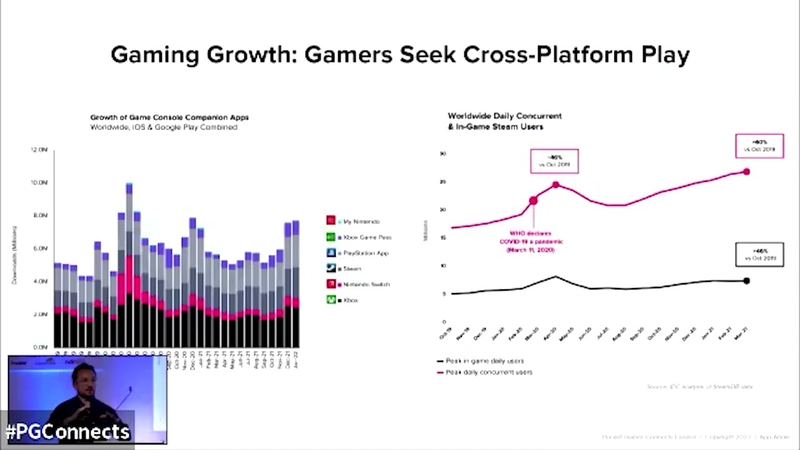
The mobile gaming industry experienced significant growth in 2021, characterized by a shift toward sustained high engagement and increased consumer spending.
- Global mobile gaming consumer spending surged to $170 billion in 2021, marking a 42% increase over pre-pandemic levels.
- The number of mobile games generating over $100 million in annual consumer spend rose to 174 in 2021, a 20% year-over-year increase.
- Global mobile gaming downloads reached 230 billion in 2021, representing a 13% increase compared to pre-pandemic figures.
Superstar Session: Living Assets: Evolutive NFTs for Playing Fair in the Metaverse
The integration of non-fungible tokens (NFTs) into the gaming industry represents a polarizing shift, often characterized by skepticism regarding their long-term viability and environmental impact.
- The gaming industry must shift from speculative play-to-earn models, which risk creating unsustainable economic pyramids, toward 'living assets' that evolve based on active in-game user behavior.
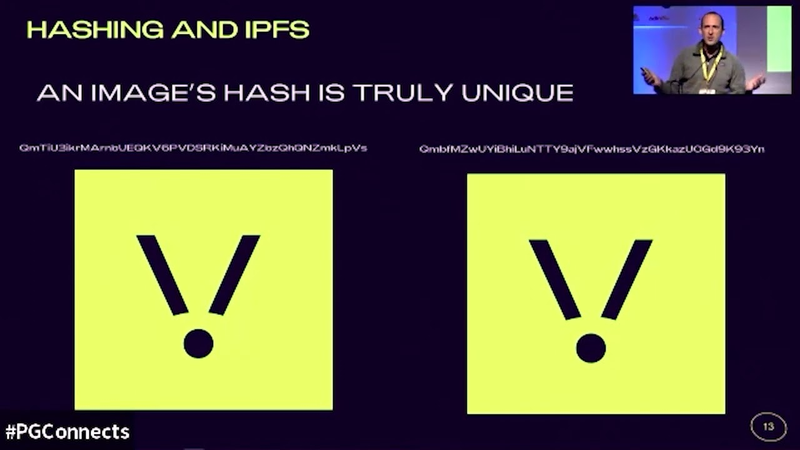
- Evolutive NFTs allow developers to embed metadata directly onto the blockchain, ensuring assets are secure, persistent, and reflective of a player's actual time and effort investment.
- Formalizing in-game item trades via blockchain technology allows developers to capture recurring revenue while eliminating the 'gray market' of unauthorized third-party trading platforms.

Steam Deck, Blockchain & NFTS is bad for gamers, game developers?
The integration of blockchain technology and non-fungible tokens (NFTs) into the gaming industry has sparked significant debate regarding their utility, ethical implications, and long-term viability.
- The gaming industry remains deeply divided over blockchain and NFTs, as critics argue these technologies offer no functional improvements over existing centralized systems like loot boxes or auction houses.
- A primary concern is that play-to-earn models commodify leisure, effectively transforming gaming into labor and raising significant ethical questions regarding predatory financial schemes.
- Industry adoption of blockchain is currently facing high levels of player resistance, mirroring the initial backlash against loot boxes before they were rebranded into more acceptable formats like season passes.
Seizing the Trends in Asia: Three Top Trends Game Publishers Should Prepare for in 2022
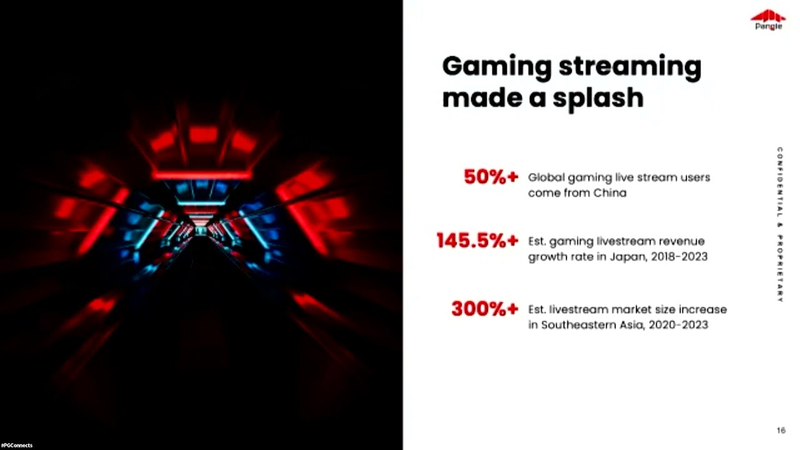
The Asian gaming market represents a significant opportunity for global publishers, accounting for 50% of the global gaming industry with approximately 1.5 billion players.
- The Asian gaming market accounts for 50% of the global industry, representing approximately 1.5 billion players and offering higher ROI potential for publishers who move beyond simple localization.
- RPGs dominate revenue in the Asian market, requiring publishers to implement complex, event-driven gameplay and frequent live operations to maintain player engagement.
- In-game revenue correlates strongly with regional e-commerce shopping events, such as the 11.11 Singles Day, which publishers should leverage to boost in-game spending and eCPM.