Monetization reports and market data
Documents
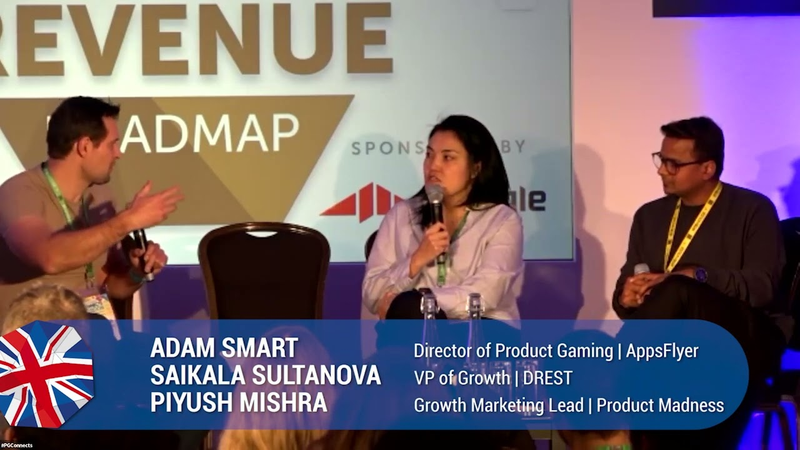
In Conversation: Growth Hacking 2022
This discussion explores the evolving landscape of user acquisition (UA) and growth marketing within the mobile gaming industry as of early 2022.
- The mobile gaming industry is shifting from granular, user-level data tracking to contextual targeting and creative-led strategies due to privacy-centric changes on iOS and Android.
- Traditional metrics like cost-per-install (CPI) have become unreliable, forcing a transition toward 'cost-per-player' as a more accurate indicator of campaign performance.
- Marketers must move away from platform-provided targeting and instead utilize internal audience insights and impression-level data to execute smart, contextual campaigns.

Keynote: Maximising IAP Revenue Through Localised Pricing & Promotions
Maximizing in-app purchase (IAP) revenue in mobile gaming requires a two-tiered strategy: establishing optimized global pricing on a per-country basis and implementing personalized promotional pricing for individual users.
- Developers should abandon one-size-fits-all pricing models in favor of a two-tiered strategy that combines optimized global pricing with personalized, user-level promotional offers.
- Global pricing must be adjusted per country by layering macroeconomic data like GDP and exchange rates with game-specific metrics such as device penetration and genre popularity.
- Lowering price points in emerging markets like India, Brazil, and Indonesia can significantly increase payer conversion rates and total transaction volume.
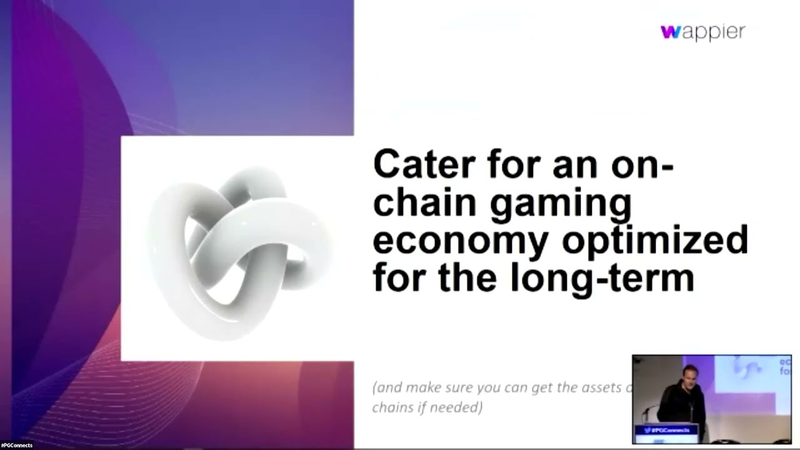
Make the On-chain Kingdoms Last: Welcome to 2001
The gaming industry is currently undergoing a transition toward on-chain ecosystems that mirrors the early mobile era of 2001, characterized by fragmented "walled gardens" and experimental business models.
- To achieve long-term sustainability, publishers must transition from simplistic play-to-earn mechanics and speculative NFT drops toward integrated economies where NFTs and traditional in-app purchases coexist.
- Mass adoption of on-chain gaming requires abstracting Web3 complexity by leveraging existing store-compliant payment methods rather than forcing consumers into complex decentralized workflows.
- Scaling global operations necessitates moving away from manual NFT management toward automated infrastructure, including cross-chain asset management, oracle-based minting, and dynamic pricing models.

Why audio advertising is the new frontier with Wilfrid Obeng from AudioMob
Audio advertising represents an emerging frontier in mobile gaming, offering a non-intrusive alternative to traditional visual formats.
- Audio advertising in mobile games has demonstrated a 2,000 percent increase in engagement compared to standard banner ads.
- AudioMob’s technology integrates ads into game environments by monitoring device volume thresholds and offering in-game rewards to users who unmute.
- The platform is currently utilized by over 50 game development studios, scaling from indie projects to titles with 50,000 to 100,000 daily active users.
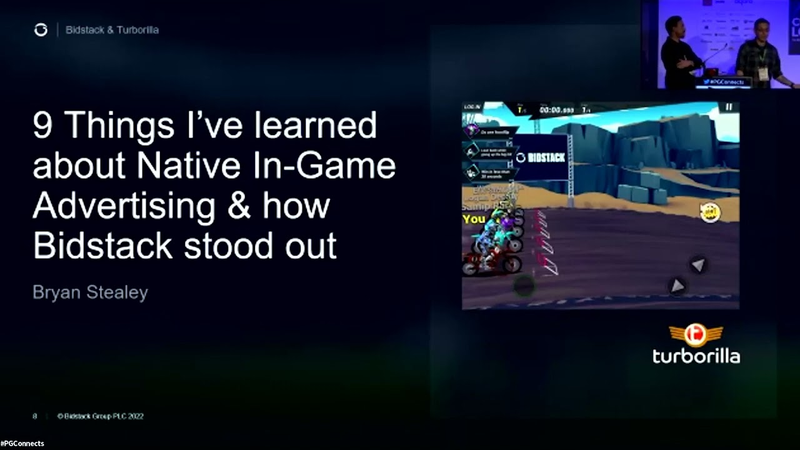
Superstar Session: Bidstack x MadSkills Motocross 3: Tech Drives Effective In-game Advertising
The session explores the integration of native in-game advertising as a sustainable, non-intrusive revenue stream for game developers.
- Native in-game advertising can serve as a significant revenue driver, with a partnership between Bidstack and Turborilla demonstrating that these placements accounted for 30% of the studio's monthly revenue.
- Integrating ads as native environmental elements, such as trackside billboards or branded gear, enhances player immersion and realism rather than disrupting the user experience.
- Developers must avoid generic programmatic backfill to prevent contextually irrelevant or poorly cropped ads that degrade game quality.
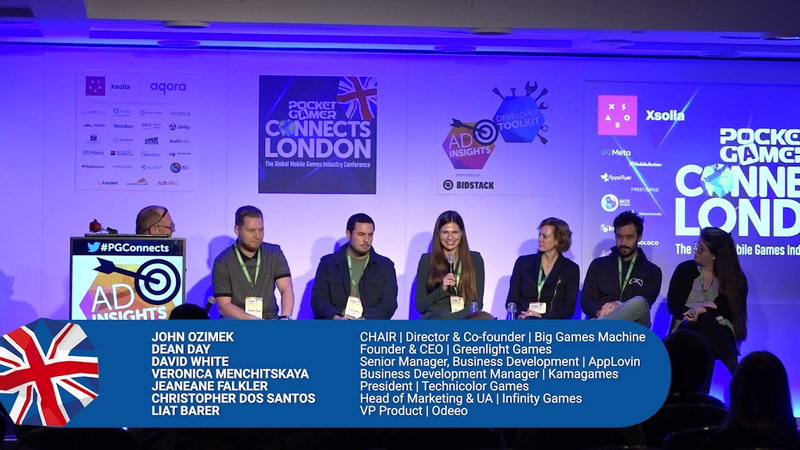
Panel: How Can We Create Authentic & Engaging Ads?
Mobile gaming advertising is undergoing a critical transition away from deceptive, high-frequency tactics toward strategies rooted in authenticity and user-centric design.
- Mobile gaming advertising is shifting away from deceptive clickbait toward authentic creative content that accurately reflects the actual gameplay experience to improve long-term retention.
- Developers are increasingly prioritizing opt-in engagement formats, such as interactive playables and rewarded videos, to replace forced, intrusive ad interruptions.
- Synthetic audio ads and sonic branding are emerging as effective, non-disruptive alternatives that maintain the game's atmosphere while ensuring high brand memorability.
Why are Audio Ads Here to Stay?
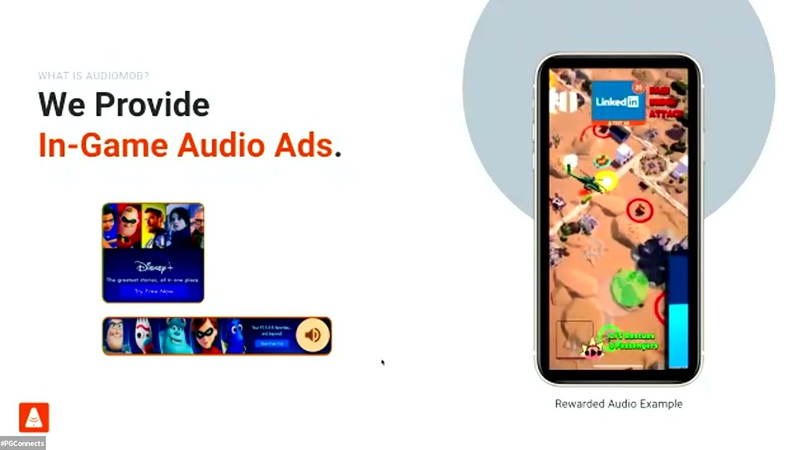
Audio advertising has emerged as a significant monetization strategy for the gaming industry, offering a non-intrusive alternative to traditional video and banner ads.
- Audio advertising provides a privacy-compliant monetization alternative to traditional ads by relying on contextual data like game genre and geography rather than granular user tracking.
- The format is highly viable for mobile gaming, as 61% of players keep their audio enabled during gameplay.
- Audio ads offer a robust revenue stream for developers with CPMs ranging from $5 to $15.
Panel: What is the Future of Mobile Advertising?
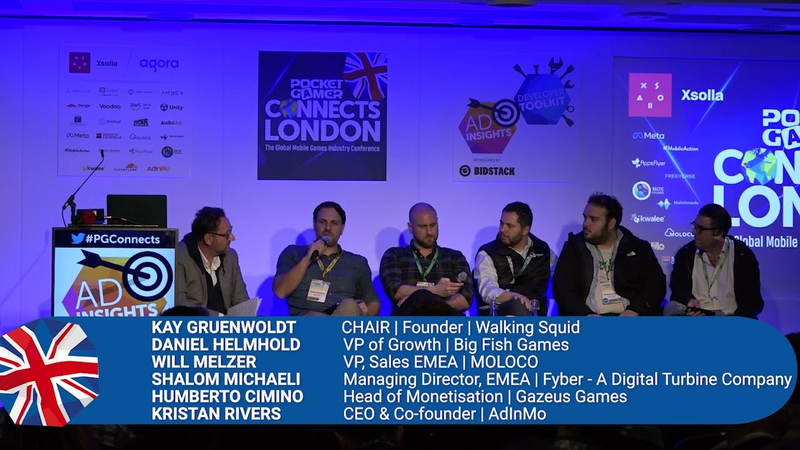
The mobile gaming industry is undergoing a fundamental transition, moving away from intrusive, performance-only advertising toward a hybrid model that prioritizes brand integration and user retention.
- Mobile gaming is shifting from intrusive performance-only advertising to a hybrid model that integrates monetization into the initial game design phase to protect user retention.
- Rising user acquisition costs and stricter privacy regulations are forcing a move away from traditional waterfall models toward header bidding and seller-defined audiences.
- Ad formats are evolving from standard video toward high-fidelity playable ads and immersive, avatar-based brand experiences within virtual environments.

The Metacast by Naavik: Crypto Corner #15 - Crypto Gaming 101
Crypto gaming represents a fundamental shift in digital entertainment by leveraging blockchain technology to provide players with verifiable ownership of in-game assets.
- Crypto gaming shifts digital entertainment by providing verifiable ownership of in-game assets through blockchain technology, moving beyond closed ecosystems to allow for interoperability and data-driven player acquisition.
- Economic sustainability is the sector's primary challenge, as early play-to-earn models frequently collapsed due to inflationary instability caused by unbounded token supplies.
- Technical architecture requires navigating the blockchain trilemma, forcing developers to balance security, decentralization, and speed when selecting between Layer 1 and Layer 2 network solutions.

Deconstructing Thetan Arena - the game that combines F2P and P2E
Thetan Arena serves as a critical case study for revitalizing underperforming free-to-play titles by integrating blockchain-based play-to-earn mechanics.
- Thetan Arena achieved 10 million downloads in two months by repurposing the codebase of the struggling game Hero Strike, which had only reached four million downloads over three years.
- Blockchain integration served as a powerful marketing catalyst for user acquisition, particularly in competitive markets like Brazil and the Philippines.
- The game's economic model faces sustainability issues due to inflationary pressure, as it relies on new capital inflows to subsidize the earnings of early adopters.

Smarter in-game ad integration with Tony Deane from AppLovin
Mobile marketing platforms play a critical role in the gaming industry by enabling developers to scale user acquisition while simultaneously maximizing revenue through efficient ad monetization.
- Machine learning tools like AppLovin’s Axon platform, launched in 2020, have driven significant industry growth, including a reported 400 percent increase in platform performance over the past year.
- Developers are increasingly leveraging first-party data from internal game development to maintain effective, privacy-compliant targeting in response to tightening global data protection regulations.
- The primary objective for mobile game developers remains achieving profitability by optimizing return on ad spend (ROAS) through advanced user behavior prediction and campaign matching.

The Metacast by Naavik: Roundtable #36 - New Game Ideas, Costs of Buggy Launches, & YouTube’s NFTs
Successful game development relies on a strategic balance between a studio’s core competencies and rigorous, data-driven market analysis.
- Studios prioritizing new game ideas generally follow one of two strategies: iterating on a single core IP to achieve perfection, or taking multiple 'shots on goal' across different genres to identify market fit.
- The cost of buggy game launches is significant, as poor day-one performance can permanently alter consumer purchasing behavior, leading players to wait months or years before buying new titles.
- Early access models, such as the one used by Supergiant Games for 'Hades,' allow developers to iterate based on player feedback over time, which helps avoid the 'hype-versus-reality' trap that often plagues high-profile, day-one launches like 'Cyberpunk 2077.'