Monetization reports and market data
Documents

The Tabletop Renaissance
The tabletop gaming industry is currently experiencing a significant renaissance, driven by a widespread consumer shift away from digital fatigue toward the tangible, social rewards of in-person play.
- Tabletop gaming is experiencing a renaissance driven by a consumer shift away from digital fatigue toward the tangible, social rewards of in-person play.
- Tabletop studios are becoming prime acquisition targets for entertainment conglomerates due to their high-margin, evergreen business models that avoid the costly live-ops infrastructure required by video games.
- The industry prioritizes high-quality physical production and unboxing experiences to create a competitive moat against the ephemeral nature of digital entertainment.

AppQuantum’s Victoria Beliaeva and Alexey Gavrilov On How To Identify And Build A Hit Game
The mobile gaming industry is characterized by increasing competition and rising user acquisition costs, necessitating a structural, data-driven approach to game development.
- Success in the free-to-play market requires integrating marketing and analytics from the earliest stages of production to mitigate risk and ensure alignment with market demand.
- Developers should adopt a 'fail fast and cheap' strategy, using early prototype testing to validate core mechanics before committing significant resources to full-scale development.
- Marketing metrics like cost-per-install are primary indicators for hyper-casual titles, while RPGs and strategy games require a focus on long-term retention and monetization mechanics.
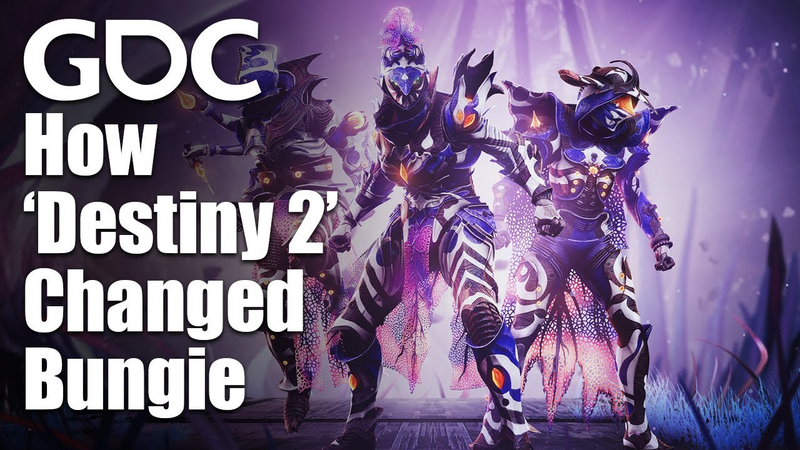
From Box Products to Live Service: How 'Destiny 2' Transformed Bungie
The transition of Destiny 2 from a traditional box product to a sustainable live service model serves as a blueprint for modern game development, emphasizing long-term player engagement over initial launch performance.
- In February 2018, Destiny 2 faced a critical retention crisis where projections indicated the entire player population would be exhausted within five weeks, forcing Bungie to shift from a box-product mindset to a live-service model.
- Success in live services is defined by velocity—the speed at which a studio can iterate based on community feedback—rather than the game's position or state at launch.
- Bungie transitioned from a 'heroic' development culture, which relied on final-push crunches to ship polished products, to a rigorous, sustainable cadence that treats development as a continuous train station where new content must be ready before the previous release departs.

Multiscription’s Teis Anker Mikkelsen On Unleashing Your Game’s Exposure With A Subscription Service
The mobile gaming industry is increasingly adopting subscription models to combat market volatility and improve long-term player retention.
- Multiscription’s Unleashd service utilizes a cross-publisher subscription model to bundle free-to-play mobile games, aiming to stabilize revenue and improve long-term player retention.
- The revenue-sharing model allocates 70 percent of the five-euro monthly subscription fee to publishers, with the remaining 30 percent covering platform fees.
- Publisher payouts consist of a fixed bounty for the initial user conversion—which persists for the duration of the subscription—and a variable component based on time spent within specific titles.

Assetario’s Matej Novak On Using Machine Learning To Predict Player Needs And Make A Profit
Assetario provides machine learning as a service to mobile game publishers, focusing on predictive analytics to optimize monetization, user acquisition, and pricing strategies.
- Assetario’s machine learning platform enables mobile game publishers to increase player lifetime value (LTV) by up to 30%, as demonstrated by clients like Century Games.
- The platform utilizes predictive analytics to identify individual player spending patterns and needs within the first 24 hours of gameplay, allowing for immediate optimization of user acquisition campaigns.
- Assetario automates monetization strategies including personalized in-app purchase offers, global pricing adjustments based on regional economic indicators like GDP per capita, and user acquisition forecasting.
Odeeo's Amit Monheit On Growing Your Game's Daily Revenue And LTV With Audio Ads
In-game audio advertising is emerging as a significant monetization strategy for mobile game developers, offering a non-intrusive alternative to traditional, aggressive ad formats.
- In-game audio advertising provides a 5% to 15% incremental uplift in average revenue per daily active user (ARPDAU) by offering a non-intrusive alternative to traditional ad formats.
- The audio ad model allows players to continue gameplay while listening in the background, contrasting with the frequent interruptions typical of hyper-casual and casual mobile gaming.
- Over 400 live games currently utilize direct SDK integrations for audio advertising, with studios such as Superfine and TapNation using the technology to diversify their monetization stacks.
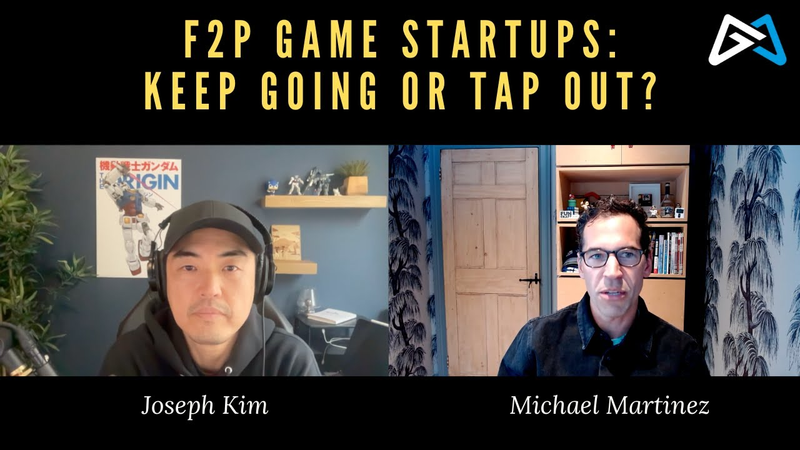
F2P Game Startups: Keep Going or Tap Out? ft. Michael Martinez (CEO of FunCraft)
The mobile gaming industry has transitioned into a period of extreme volatility, characterized by the end of pandemic-driven expansion and the restrictive impact of Apple’s App Tracking Transparency policies.
- The mobile gaming market has shifted from the accessible environment of the early 2010s to a static landscape dominated by evergreen titles, making entry for new startups significantly more difficult.
- Startups must abandon high-risk, single-title strategies in favor of agile portfolio management, which involves developing smaller, faster-to-market games to increase the probability of success.
- Success in the current climate requires a multi-dimensional operational model that integrates rigorous data analysis, precise user acquisition, and optimized ad monetization.
Leanplum’s Yeshas Nakshathri On Reinventing Live Ops And Deciphering Your Data
Modern mobile game development requires a fundamental shift toward efficient, data-driven live operations to maintain user engagement and revenue growth.
- Implementing automated, hyper-personalized in-app messaging can drive a 300% increase in event-based revenue while simultaneously reducing dependency on engineering resources.
- Modern live operations must shift from manual, engineering-heavy workflows to automated platforms that empower marketing teams to execute complex campaigns independently.
- Effective hyper-personalization relies on behavioral triggers that engage users at context-aware moments, fostering habit formation rather than relying on static content updates.

Making sure integrated NFTs deliver utility | Rafael Vivas from Applovin
The integration of non-fungible tokens (NFTs) into mobile gaming succeeds primarily when these assets provide tangible, immediate utility within the game environment rather than serving as speculative financial instruments.
- NFTs in mobile gaming succeed only when they provide immediate, tangible in-game utility rather than serving as speculative financial instruments.
- Data from 15 to 16 active mobile game integrations shows that players prioritize assets that offer functional benefits, such as exclusive content or unique cards, over investment potential.
- Successful NFT price points are modest, typically ranging from 50 cents to a few dollars, which encourages engagement based on gameplay value.

Know your pain points | Jan Kuhlmann from Xsolla
The global video game commerce landscape is defined by extreme fragmentation, particularly regarding monetization and payment infrastructure.
- Developers can mitigate the administrative and legal burdens of international scaling by utilizing centralized payment platforms that integrate over 700 global payment methods.
- The industry is shifting toward direct-to-consumer models to bypass gatekeepers, allowing developers to retain greater control over revenue and access essential player data for monetization optimization.
- Sustainable growth in the current market requires developers to precisely identify specific operational bottlenecks, such as regional market entry or payment processing, before seeking external solutions.

The days of black box ad networks are gone | Maggie Mesa from Chartboost
The advertising landscape for mobile game developers has shifted toward a model defined by transparency, data-driven iteration, and privacy compliance.
- The mobile advertising industry has shifted away from opaque black-box models toward transparent platforms that provide granular performance data via dashboards and APIs.
- Privacy regulations, specifically Apple’s App Tracking Transparency (ATT) and GDPR, have forced advertising platforms to fundamentally restructure their targeting methodologies.
- Success in user acquisition and monetization now requires a collaborative data-sharing model between developers and their DSP/SSP partners to refine targeting algorithms.
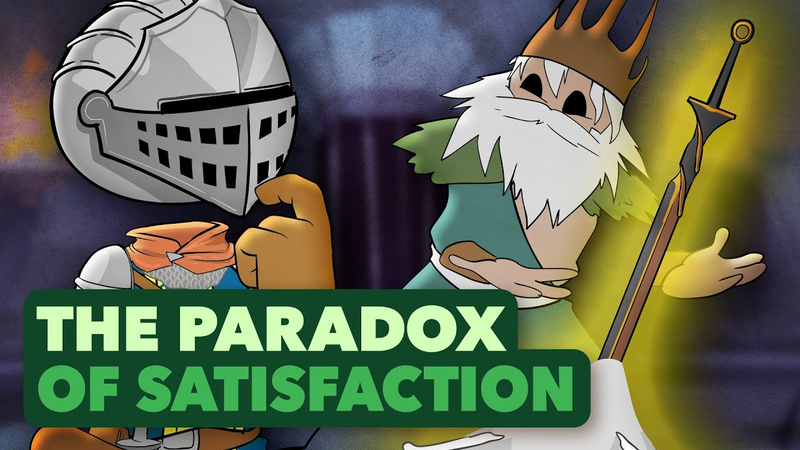
Why Games are Designed to Leave You Wanting
Modern game design frequently employs a psychological strategy known as the paradox of satisfaction, which intentionally denies players a sense of complete fulfillment to ensure long-term engagement.
- Modern game design utilizes the 'paradox of satisfaction' to intentionally deny players complete fulfillment, ensuring long-term engagement through a state of perpetual craving.
- Developers structure games to avoid definitive narrative or mechanical closure, which keeps players within a cycle of consumption for sequels, season passes, and microtransactions.
- Competitive multiplayer games leverage performance metrics and progression treadmills to ensure that even after a victory, players feel compelled to queue for additional matches.