Monetization reports and market data
Documents

WHOW Games’ Tobias Edl On Growth Hacks And Top Tips For Standing Out In The F2P World
Tobias Edl, Director of Marketing and New Business at WHOW Games, outlines strategies for achieving sustainable growth and player loyalty in the competitive free-to-play (F2P) social casino market.
- Long-term growth in the social casino market is achieved by prioritizing immersive, gamified product design and multi-year media partnerships over short-term performance marketing tactics.
- WHOW Games differentiates its 'My Jackpot' title by applying casual puzzle game mechanics, such as mission-based progression and real-time competitive events, to the casino genre to drive retention.
- The company maintains a 'test-everything' culture that continuously iterates on creative assets to optimize performance while ensuring all marketing materials remain authentic and non-deceptive.
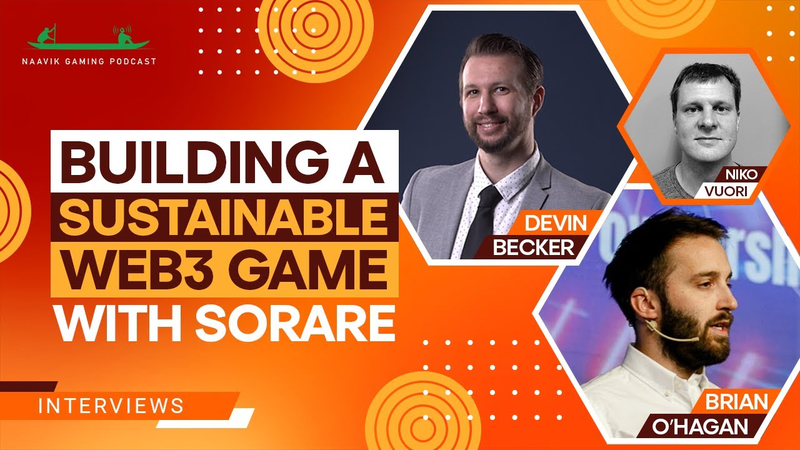
Building a Sustainable Web3 Game With Sorare
Sorare establishes a sustainable model for Web3 gaming by prioritizing consumer-first utility over the volatile, speculative tokenomics that characterize many blockchain projects.
- Sorare prioritizes long-term engagement by anchoring digital collectibles to real-world athlete performance data rather than speculative, volatile tokenomics.
- The platform avoids systemic financial risks by eschewing proprietary game tokens in favor of Ethereum as a transaction rail while supporting fiat payments for non-crypto users.
- To prevent pay-to-win dynamics and maintain competitive integrity, the game utilizes mechanics like point caps that prioritize analytical skill and sports knowledge over financial investment.
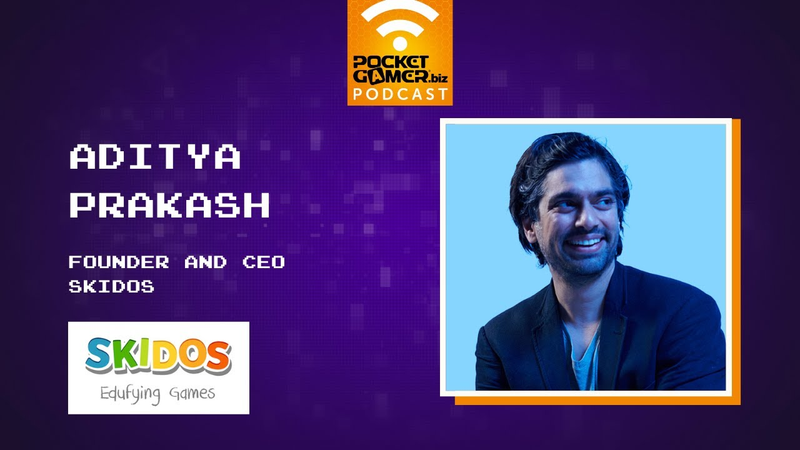
SKIDOS’ Aditya Prakash On Mastering Organic Growth And Multiple Demographic Targeting
The edutainment sector is undergoing a significant transformation through the integration of pedagogical content into casual mobile gaming.
- SKIDOS operates an ecosystem of over 50 applications developed through a network of 30 studio partnerships, focusing on integrating pedagogical content into casual mobile games for children aged two to ten.
- The business model replaces traditional advertising and predatory in-app purchases with a subscription-based framework that provides parents with granular progress tracking and performance reporting.
- Organic growth is achieved through a sophisticated App Store Optimization strategy that leverages a vast portfolio of game versions to capture a wide array of search keywords.

Games For Good
The integration of social impact and physical health into mobile gaming represents a burgeoning shift in the industry, where developers are successfully merging mass-market free-to-play mechanics with corporate social responsibility.
- Integrating social impact into core gameplay loops, such as real-world tree planting, has successfully driven the planting of over 550,000 trees.
- Purpose-driven mechanics significantly enhance player loyalty and organic growth, proving that mission-driven games can be commercially viable when high-quality design is prioritized over didactic messaging.
- Studios that adopt a triple bottom line approach—balancing profit, social impact, and sustainability—are more effective at attracting mission-aligned talent.

Top 5 Mobile Game Launches: Honkai Star Rail, Monopoly Go, Survivor!.io, Marvel Snap, Frozen City
The mobile gaming sector remains a robust and evolving landscape, characterized by high production values and sophisticated live-ops strategies that defy narratives of industry decline.
- Future mobile gaming success is increasingly dependent on cross-platform accessibility and the integration of complex progression systems rather than reliance on traditional app store metrics.
- Monopoly Go utilizes an aggressive, high-spend acquisition strategy backed by major intellectual property, though it faces challenges regarding long-term profitability and extended payback periods.
- Survivor!.io has achieved sustainable growth by leveraging AI-driven creative assets and a balanced monetization model that splits revenue between in-app purchases and advertising.

Solid Bash's Matthew Zoern On An Approach That Amplifies A Game's "Fun Factor"
The core philosophy of modern game development centers on a features-based iterative process that prioritizes the refinement of a game’s fundamental fun factor over rigid, milestone-driven production schedules.
- Prioritize rapid prototyping and iterative development of core gameplay loops to validate the 'fun factor' before committing to full-scale production.
- Shift from rigid, milestone-driven schedules to an organic development model that emphasizes player agency and proven mechanics.
- Utilize analytics to observe authentic player behavior rather than reacting to direct user requests, which can inadvertently compromise the quality of the gaming experience.

Can Esport Leagues Be Profitable?
Esports organizations are currently undergoing a critical transition from volatile, passion-driven entities into professionalized, data-centric businesses.
- Esports organizations must pivot from a reliance on media rights to diversified revenue streams, including strategic sponsorships, co-developed consumer products, and formal revenue-sharing agreements with game publishers.
- The industry is addressing a sustainability crisis where talent acquisition costs exceed revenue by adopting a 'Moneyball' strategy that prioritizes developing rookie talent over signing expensive, established stars.
- Long-term profitability is hindered by a lack of ownership over game titles, as publishers retain control over rules and intellectual property, forcing organizations to build brand loyalty independent of specific games.
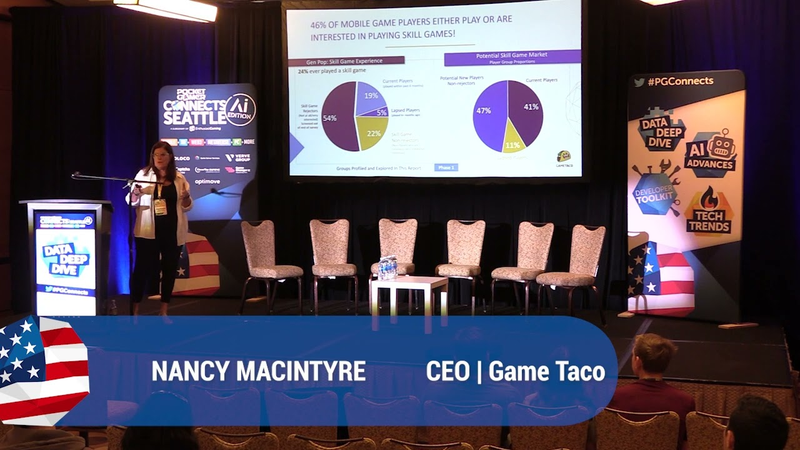
Evolving the Skill Gaming Business for a Diverse Audience, Generation, Gender and Gaming Styles
The skill gaming industry represents a significant, evolving sector of the mobile gaming market, characterized by a transition from traditional casual play to competitive, real-money tournaments.
- The skill gaming sector is a high-growth market defined by competitive, real-money tournaments based on physical or mental ability rather than luck.
- The core demographic is older and female-skewing, with approximately one-third of players aged 45 or older and a majority identifying as female.
- Skill gamers are high-value users who exhibit 'hardcore' gaming behaviors, spending more time and money across multiple platforms than the average mobile consumer.
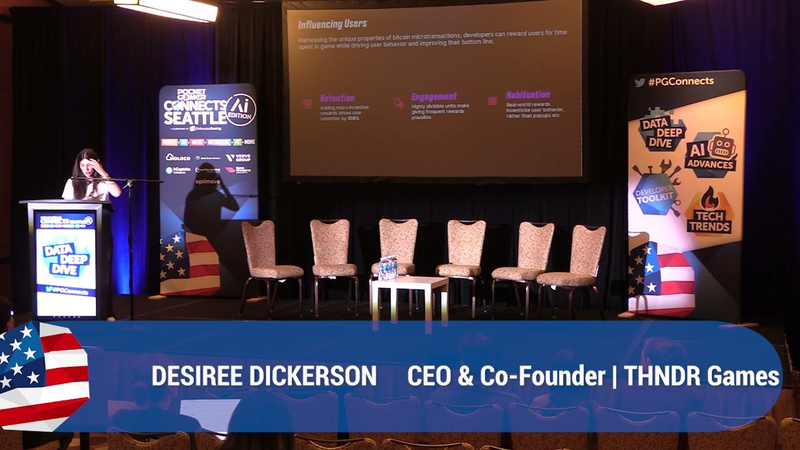
Session: Value Transfer in the Social Graph of Gaming, Desiree Dickerson, THNDR Games
The integration of real-world micro-rewards into mobile gaming serves as a powerful mechanism to enhance user engagement, retention, and social connectivity.
- Integrating Bitcoin micro-rewards into mobile games increased long-term user retention rates by over 516 percent compared to traditional in-game soft currencies.
- Bitcoin’s high divisibility and near-zero transaction costs allow for the distribution of 'Satoshis,' enabling high-frequency micro-incentives that are economically unfeasible under traditional fiat payment rails.
- Real-world value transfer shifts game monetization away from developer-centric exploitative models like loot boxes toward a user-centric model that fosters community ownership.

Panel: Your new BFF: Data As A Game Development Tool.
Modern game development increasingly relies on sophisticated data analysis to drive user segmentation, monetization, and long-term retention.
- Developers must shift from reliance on third-party identifiers like IDFA toward transparent, first-party data collection to ensure regulatory compliance and accurate player insights.
- Effective data strategy requires a move away from opaque, automated advertising platforms in favor of cross-ecosystem analysis that accounts for specific genre and market nuances.
- Studios should conduct rigorous post-mortem analyses on both successful and failed features to mitigate confirmation bias and prevent the premature abandonment of viable game mechanics.
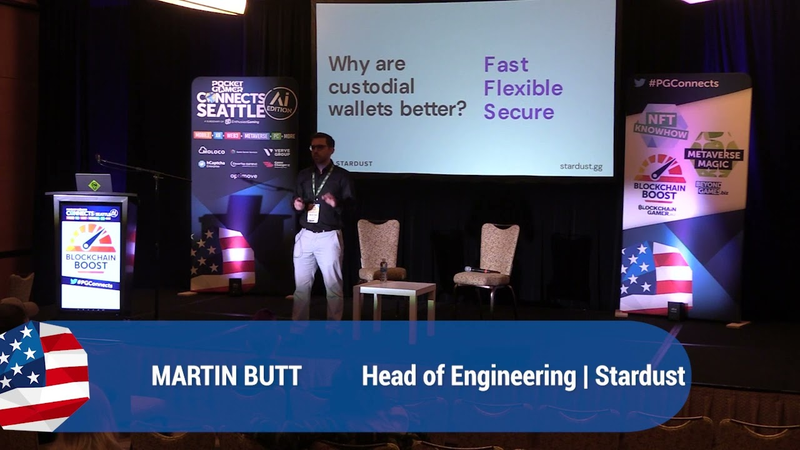
Session: Unlocking 1 Billion Users With Custodial Wallets - Martin Butt, Stardust
The primary objective of integrating custodial wallets into gaming is to overcome the significant user experience barriers that currently hinder the mass adoption of blockchain technology.
- Custodial wallets remove the barrier of private key and seed phrase management, which is essential for onboarding casual players who lack technical blockchain expertise.
- Developers can integrate blockchain functionality like minting and transferring tokens through standard RESTful APIs, mirroring traditional web2 development workflows.
- Custodial solutions allow developers to delay the introduction of web3 elements until after a player is engaged, ensuring the value proposition is clear before blockchain complexity is introduced.
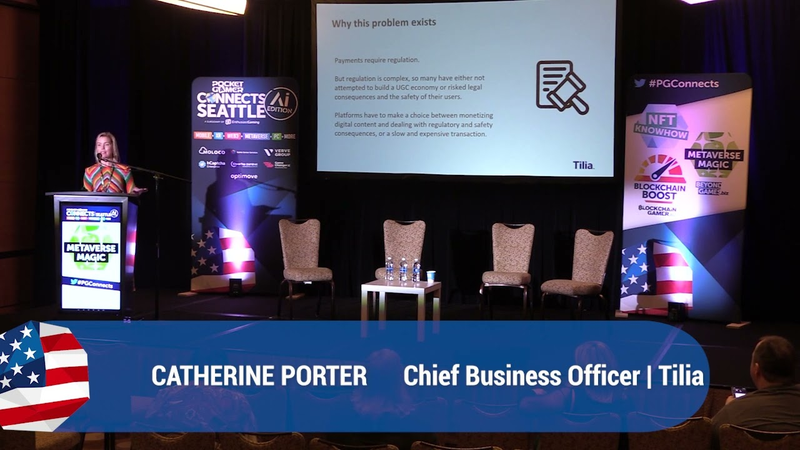
Session: Empowering User Generated Content in Digital Economies - Catherine Porter, Tilia
The digital economy, particularly within the gaming and metaverse sectors, faces a significant bottleneck regarding the monetization of user-generated content (UGC).
- Current payment infrastructures are ill-equipped for UGC monetization because high transaction costs force platforms to impose prohibitive minimum payout thresholds and complex administrative burdens.
- The friction in compensating creators for micro-transactions drives users toward risky, off-platform 'gray market' transactions that undermine platform integrity and user safety.
- Regulatory complexity creates a significant barrier to entry, as platforms struggle to reconcile the global, pseudonymous nature of digital communities with rigid, territory-specific financial licensing requirements.