1 free read left. Create a free account for unlimited reading + AI research.
Create free account
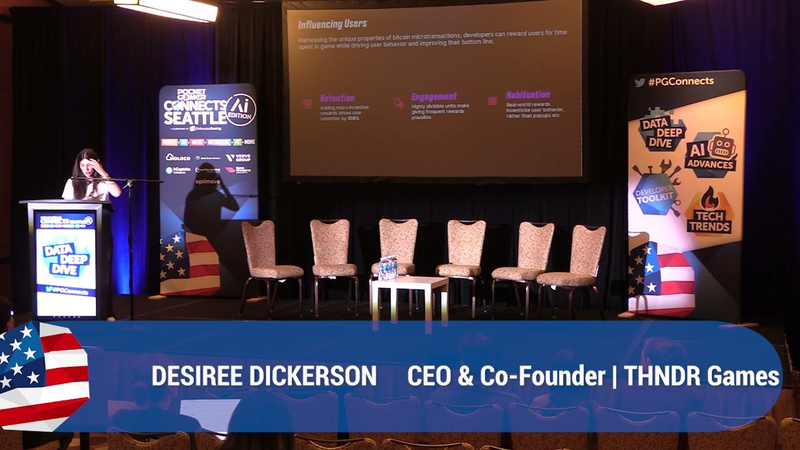
Session: Value Transfer in the Social Graph of Gaming, Desiree Dickerson, THNDR Games
Key insights
6 takeaways- 01Bitcoin’s high divisibility and near-zero transaction costs allow for the distribution of 'Satoshis,' enabling high-frequency micro-incentives that are economically unfeasible under traditional fiat payment rails.
- 02Integrating Bitcoin micro-rewards into mobile games increased long-term user retention rates by over 516 percent compared to traditional in-game soft currencies.
- 03The psychological reinforcement provided by frequent, small rewards strengthens the player 'habit loop' and primes users for deeper financial commitment to the game ecosystem.
- 04Real-world value transfer shifts game monetization away from developer-centric exploitative models like loot boxes toward a user-centric model that fosters community ownership.
- 05Value transfer acts as a social layer that allows developers to incentivize user-generated content, such as memes and community moderation, effectively turning players into active participants in the platform's economy.
- 06THNDR Games utilizes Bitcoin as a medium for value transfer to bypass the high transaction fees, regulatory complexities, and minimum denomination thresholds inherent in traditional payment systems.
Ask AI about this video
Transcript
[Music] thank you [Music] and I wanted to invite Daisy hey Dickinson to to the stage from Thunder games as our next speaker give a warm welcome please okay awesome um yeah and I have slides okay um well hello everyone and thank you for having me my name is Desiree Dickerson and I am CEO and co-founder of Thunder games and we are a mobile gaming platform for competitive connected play powered by frictionless rewards and so today we're going to talk about how real world micro Rewards or micro incentives
can actually influence user behavior and really enhance some of the social layer of gaming and we're actually going to talk about this as it specifically relates to bitcoin oh awesome um so value transfer is inherently social and it is definitely weaved into the fabric of society and because gaming is social it's actually only natural for Value transfer to be woven into the games that we play to some degree so I'm not going to get into the entire history of value transfer in games and I'm sure a lot of folks here are very up to speed um but you know if we go back into the dawn of human kind um you're seeing value transfer you're seeing barter um you're seeing um you transfer or value transfer for goods but also at the same time you're seeing the rise of gaming in competitive play just the idea
of just play very early in prehistoric prehistoric times then in medieval Renaissance you're seeing games and sporting events where participants are competing for honors or recognition but on top of that actually starting to win monetary prizes as well the 18th and 19th century with the rise of board games card games and those really becoming popular gambling wagering betting kind of starts reigning Supreme then we can kind of Rush forward through the 60s with arcades and kind of a real idea of like pay to play and then the 90s um you know we're going more virtual and we're seeing payments and games kind of really start to evolve with double dragon Ultima Online obviously becoming one of the first MMO games to incorporate real money economies allowing players to buy and sell in-game items with a real world currency and
then you know EverQuest in the 90s popular Rising really popularizing the subscription model 2010s MMOs really continued to dominate and we're really seeing the push of virtual currencies in in-game purchases becoming more popular and then the 2010s and really kind of the burgeoning of the mobile gaming Frontier and the rise of premiums of freemium models and in-app purchases um really becoming um becoming like a namesake in the gaming industry so that's actually just continuing to evolve you know payments are kind of really really trying to find their way in and we're seeing this with the emergence of web3 blockchain and nfts as the next evolution of value transfer in games so there's obviously been a lot of issues um and you know we've had more
advancements with value transfer in games real world value transfer and games and then some steps backwards and there's a ton of challenges and limitations um there's a lot of barriers and reasons why this hasn't happened earlier and one of the um most glaring I'm actually gonna it's last on here but I'm going to cover it first is really around player dissatisfaction and if we see in the 2010s how value transfer and economies are introduced into games they're really around the intentionality behind them is revenue generation for a company a developer rather than being pushed by the user base so we're seeing it in 2010s people very dissatisfied with these Payment Systems these in-game economies you know two examples that are you know very notorious is battlefronts loot boxes we could purchase randomized items with real money Players really
felt that was kind of you know they felt exploited and it was creating unfair advantages for those individuals who were willing to or even just able to kind of spend money in game and obviously most notorious really the Diablo auction house and you know players were very very vocal about this um you know kind of stating that this was a distraction for the sense of immersion um In fairness and you know eventually this was removed but there are a few other issues I won't dwell on them some of the technical issues around security and privacy you add real world value to a game and the first thing that's going to happen is people are going to find ways to cheat and to be total fraud so you know even at Thunder adding super super small rewards to our games we've had to really work on developing sophisticated anti-cheat and anti-fraud tools also privacy is a big issue around user data protection especially
involving transaction data regulation this becomes incredibly tricky especially in the traditional Fiat rails gaming is global I can play games with anywhere in the world really with the rise of connected play and when you add in real world value to a game you can technically send value anywhere in the world and that gets into kind of the realm of cross-border payments which is really plagued with Regulatory Compliance legal issues and it's it's a huge huge Challenge and we'll get into kind of how Bitcoin fixes that a little bit but you know this hasn't really been all that possible just due to kind of the resource and financial constraints um that are necessary to actually put payments in games then obviously walled Gardens I won't get into this much you know you have Apple and Google who are never going to be happy about this we
are always fighting to stay in the App Store and Google um Google play but it's really kind of sad because you know we talk about um you know payments and games or even if you buy something in the App Store there's very much a threshold for the lowest denomination and um you know we we have a lot of users in emerging countries who can't afford 99 Cents they can but you know that's makes up a lot of their monthly income so they're not really able to participate in games to the fullest degree because of some of the limitations of the traditional Fiat rails um so these are some problems and you know I'm offering Bitcoin as a solution it doesn't solve everything but there are some really unique prop properties um about Bitcoin as a virtual currency that not only kind of address these problems but also open up new opportunities um and you know new aspects
um that developers can harness to like really improve um some of the gameplay and some of the social aspects so I'm just going to go over a few of them here that are relevant to this discussion but there's many more um one being around microtransactions Bitcoin is highly divisible you can divide it into infinitesimally small units I'm not sure what bitcoin price is at today funny enough it's between 26 and 30 000 per Bitcoin but we actually don't really transact at that level we're not sending thirty thousand dollars in a game so there is a denomination called a Satoshi and one Satoshi equals 1 100 millionth of a Bitcoin so in our games we reward users with one Satoshi which is actually two ten thousandths of a cent so this is like insanely small we don't have currencies um that in fiat currency we don't have these like very small denominations and we're able to really incentivize our
users to do things in games with these very small rewards that don't really impact our bottom line and I'll get into that more in a bit um then there's nearly zero fees you know this is a new technology and so these fees are like incredibly like almost unfairly cheap so we're talking like one 100 000 of a penny and like that doesn't necessarily scale with the transaction size so I can send a hundred dollars for in the transaction fee might be like one ten thousandth of a cent so it's like insanely insanely cheap so very much undercuts to additional Fiat rails then we have the high frequency these are instantaneous settlements um really like I mean it's just me sending money to my users um with you when you get it instantaneously there's no intermediaries there's no payment processors these happen incredibly quickly and so you can really kind of take advantage of that on positive
feedback loop um cross border again removing intermediaries and allowing for the ability for frictionless direct payments a lot of like traditional fintech companies are starting to adopt Bitcoin and other currencies but uh most notably probably cash app folks are familiar with um you know they're only available in the US but they have developed or they've devoted a lot of resource to bitcoin so they can become really the the first global fintech app and um in fintech wallet in the world um we'll get over into some social stuff in a second but these are just some of the properties that solve some of that issues but really what's interesting is kind of the new opportunities that Bitcoin opens up for game developers so by adding these micro incentive rewards via Bitcoin we can drive retention engagement and habituation so when we
talk about engagement these rewards we can send tiny tiny rewards for anything a player does in the game and that really kind of drives the sense of achievement and this a sense of progression throughout the game and we can also influence what they do in the game like hey we launched a new feature um you know check it out and you'll receive one Satoshi and this is a real world reward then kind of the one that I'm always the most excited about is actually retention these are small but yet they're very very meaningful rewards and they happen very frequently very frequently I love Bitcoin but I'm not about to add it to the game just because I think it's cool um you know I run a venture-backed startup and I have to have a bottlene line so um you know we really believe in Bitcoin because it can increase your LTV and ultimately bigger LTV means greater monetization better games better company
and we've actually a b tested this um adding Bitcoin to the games actually increases long-term retention over 516 percent and that number just continues to grow all of our games are in the top 10 percent retention rates in their categories and then around habituation I don't know if most folks are probably familiar with the Habit Loop you know the more recent construct of that was with the book Atomic habits but there's this idea of like this four stages of developing a habit and that's Q craving response and reward and that's how we develop all of our habits um day in and day out and if we're able to add more weight to one of those stages we can drive these habits even further so we're adding more weight to the reward stage of the Habit Loop and by doing that when there is a cue the craving is greater and the response is greater and you can influence that response more
heavily and so by weighting that you really create a flywheel effect with your users and keeping them engaged more and for longer again and also this just reinforces their connection with the game and their commitment to the community and one thing I don't have up here that we're really experimenting with is when you actually give your users their first money to spend in the game Real World money they're actually more likely to spend their own money in the game later on and so really the idea of giving the first funds primes the user to continue spending external funds in the game for longer periods of time and that's something that we're continuing to experiment with then moving on to another area that's super interesting and this kind of brings us full circle so the social fabric layer that lays on top of play can be incredibly enriched by adding
this you know additional dimensionality via value transfer and this becomes increasingly important as gaming becomes even more social gaming is very quickly becoming the next social network especially for younger Generations so if we do this right value transfer can actually amplify social interaction and really we think about it in three different areas ownership loyalty opportunity and Community when we think about ownership if we're giving our users the power to transact to send to buy to take money out of the game to put money out into the game we're allowing our users to generate their own in-game economies obviously you know there is you know some bumpers we have to have and we can guide its growth but when users have the feel of ownership in the economy and feel ownership in the game they have skin in the game and they're going to be
more invested and more involved this construct is way more social than a in-game economy being driven by a developer and something that's more social is going to grow a lot faster and it's going to have a lot more staying power so the idea of ownership really is like developing games according to Collective desires so again we talked about ownership if people have ownership they have skin in the game what does that lead to that leads to Greater loyalty so another really great aspect of these micro incentives is that you can kind of give them out all the time for anything and in the games we see that we see loyalty to the games because you know people are coming they're playing they're winning they're earning instantly and they can cash out the rewards are theirs there's no cash out thresholds if you want to cash out two ten thousandth of a cent that is yours and you can do that but receiving that creates a lot of loyalty so they
know when they're coming back and earning more they're going to actually receive that prize but even just within the community we're able to drive loyalty um with these rewards um you know there are Discord tip Bots where you can tip with Bitcoin and we're able to like kind of grow our loyal Community through this we have users who help out you know when there's a problem they debug they're creating memes and tournaments in our Discord and we're able to reward those users with tiny tiny payments 10 satoshi's here a few cents here and there rather than just like Kudos or an emoji this is much more meaningful because there is real real world value related to this and these rewards accumulate over time so again that strengthens socially strengthens the positive feedback loop of you know people engaging and actively being a part of a gaming community then thinking through opportunity and
this is really around monetization um you know everyone's talking about user generated content we have so many people in our community who are creating skins and soundtracks and memes and just random videos and you know we use these they literally create value for our company we have a great Twitter following um you know we have like an awesome Tick Tock Channel and these all the content is coming from our users and you know I find it unethical to be using that and generate value for myself and you know for my investors without giving them something in return and it's not a lot but it's a lot more than a thumbs up or a smile Emoji I mean it's something that they can retain and you know start to accumulate a good amount of Bitcoin and we're actually we're actually seeing this I pay people for like our soundtracks a lot of them are user created and I've paid them for it so it's kind of neat then um the third or
the fourth one is really just around Community interaction and we're running out of time so it won't get into too much but you know we have games that really only target specific um user personas uh you know we have like a match three Bubble Shooter that's super relaxing and fun but it's we don't really see like our competitive players engaging in that but with these rewards even outside of the game we're able to create new aspects of competitive play for these these more casual games so um we do tournaments um where you know they're really kind of enhances the social aspect the Rivalry there's leaderboards there's just time tons of like different gameplay that you can layer onto your just like base level um gameplay by harnessing this like idea of micro incentive rewards also with cooperative play um you know we do like quests or team challenges um and put a prize at the end and it's
really unique because we think of Esports and prizes and you know just any type of competition has a very large reward but with these small amounts we're able to host daily hourly tournaments and people are super engaged and are playing and are winning and we're only able to do that because it's like oh hey the price pulls ten dollars that doesn't really make sense to split up across 10 different winners in a normal normal situation you can't even send a payment um you know via apple or any type of payment processor for less than a dollar most of the time you can't even do that so I'm using Bitcoin it is not only possible but it is actually feasible um kind of in a business sense um and oh yeah yeah yeah no I'm rapping um anyways um so that is just a little bit about what we're doing at Thunder and we have six games right now in the App Store and Google play um all built on our platform um obviously check out
the games because they think they're awesome and you know people are very addicted to them so warning but I really um really ask you to check them out just to see kind of what is possible when you start harnessing the idea of micro incentive real world rewards so check it out um and you know my DMs are open on Twitter but I would love to chat more foreign [Applause] it was perfect it was perfect timing um I know we're a bit out of time but if anyone has a question we can stretch a little bit if you want to ask something oh wonderful hey I saw your metrics there do you have um a b testing on giving people SATs versus in-game
rewards currency or no or no rewards at all um not no rewards but we do in-game currency so the 516 is yeah yeah just like a soft currency yeah okay so you tried the soft currency and giving people stats is a much higher yes and it's what's really interesting is We we played around with giving higher prizes so like now you win like five sets a hundred SATs we've experimented don't tell our users this but we experimented with giving much higher rewards um and that actually didn't increase engagement at all interesting thank you yep it's just that small dopamine hit [Music] thank you foreign
Summary
The integration of real-world micro-rewards into mobile gaming serves as a powerful mechanism to enhance user engagement, retention, and social connectivity. By utilizing Bitcoin as a medium for value transfer, developers can overcome the limitations of traditional fiat-based payment systems, which are often hindered by high transaction fees, regulatory complexities, and minimum denomination thresholds. This approach shifts the focus from developer-centric revenue generation—often associated with exploitative practices like loot boxes—to a user-centric model that fosters genuine community participation and ownership.
The primary thesis posits that Bitcoin’s unique properties, specifically its high divisibility and near-zero transaction costs, enable the distribution of "Satoshis" (infinitesimally small units of value). These micro-incentives function as a psychological reinforcement tool within the "habit loop," where small, frequent rewards drive consistent player behavior. Empirical data from A/B testing indicates that this model significantly outperforms traditional in-game soft currencies, with observed long-term retention rates increasing by over 516 percent. Furthermore, these rewards prime users for future spending, as the initial experience of receiving real-world value encourages deeper financial commitment to the game ecosystem.
Beyond individual engagement, value transfer acts as a social layer that empowers players to generate their own economies. By rewarding user-generated content—such as soundtracks, memes, and community moderation—developers can foster loyalty and create a sense of collective ownership. This model facilitates daily, high-frequency competitive play and cooperative challenges that would be economically unfeasible under traditional payment rails. Ultimately, the integration of frictionless, global value transfer transforms games into social networks where players are not merely consumers, but active participants with a tangible stake in the platform’s success.












Comments